WORLD
WORLD
All articles
Explore all published articles about mythology, folklore, gods, heroes, spirits and legendary creatures.
Last articles

Wawalag
Wawalag refers most often to two ancestral sisters in the traditions of Yolngu peoples of north-eastern Arnhem Land in the Northern Territory of Australia. They are also known in English-language sources as the Wawilak o…
Anatiwa
Anatiwa is a poorly documented name sometimes presented online as belonging to South American mythology. Unlike well-attested figures such as Mama Quilla, Anhangá, or the Mapuche Antu, Anatiwa does not have a securely es…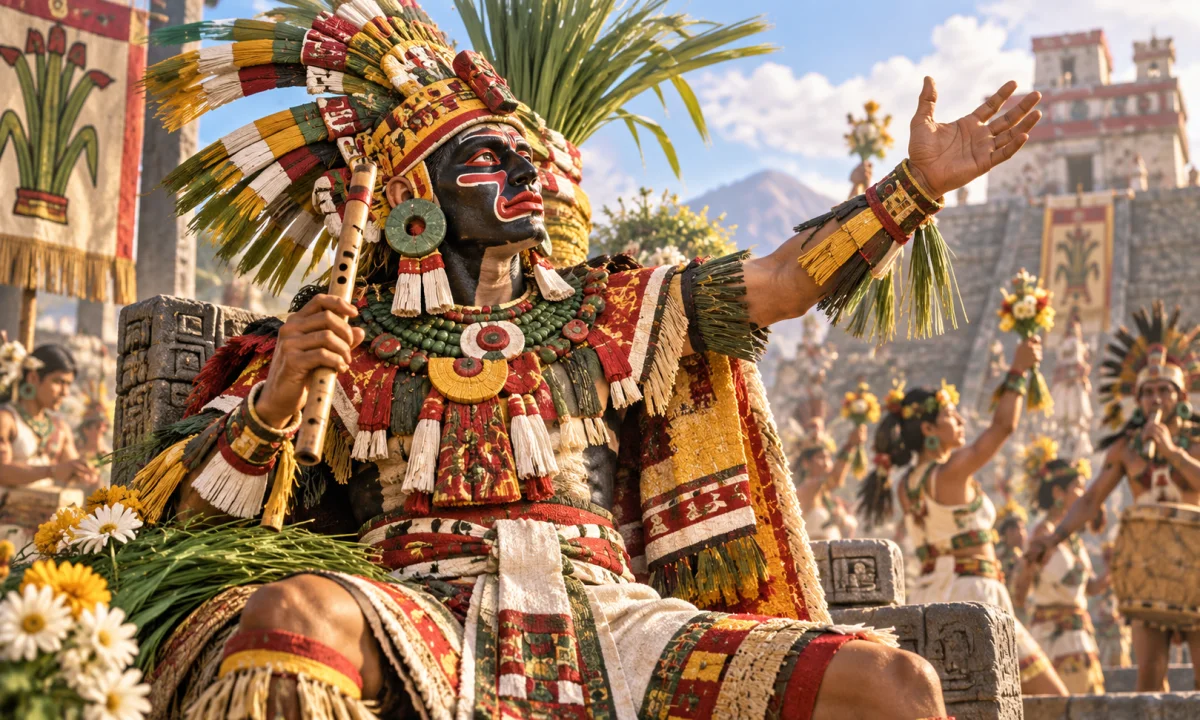
Macuilmalinalli
Macuilmalinalli is a relatively obscure figure in the religious traditions of central Mexico. The name is usually translated from Nahuatl as “Five Grass” or “Five Grass-Stalk,” combining macuil, “five,” with malinalli, a…
Nanook
Nanook, more accurately written Nanuq in many Inuit-language contexts, is the polar bear as a powerful being in Inuit religious traditions and oral histories. The name can refer both to the animal itself and to the spiri…
In
In is not a clearly identifiable, independently attested deity, spirit or legendary creature in the principal traditions of Japanese mythology. As a name written only in Roman letters, “In” is highly ambiguous: it may re…
Ogun
Ogun (also written Ògún or Ogún) is a major òrìṣà of Yoruba religious tradition. He is especially associated with iron, metalworking, hunting, warfare, clearing paths, labour, technology and the difficult work required t…
Amymone
Amymone is a figure in Greek mythology, best known as one of the fifty daughters of Danaus and as the mortal woman associated with the spring of Lerna. In the most familiar version of her story, the god Poseidon rescues …
Rig
Rígr is a figure in Norse mythology who appears chiefly in Rígsþula (“The Lay of Rígr”), a poem preserved among the poems associated with the Poetic Edda. In the poem, Rígr travels through the human world, fathers or est…
Flauros
Flauros is a demon listed in early modern European grimoires, most notably the Ars Goetia, the first section of the Lesser Key of Solomon. He is described as a powerful duke who initially appears as a leopard and can tak…
St. Peter Of Tarentaise
St. Peter of Tarentaise, also known as Peter II of Tarentaise or Pierre de Tarentaise, was a twelfth-century French Cistercian monk and archbishop. He is remembered within the Christian tradition as a reforming churchman…
Widjingara
Widjingara is a name associated in some modern English-language references with Australian Aboriginal mythology, but its identity is not securely established across the traditional records of any single Aboriginal nation…