 WORLD
WORLD
Japanese mythology
Articles about Japanese mythology within Asia.
Last articles
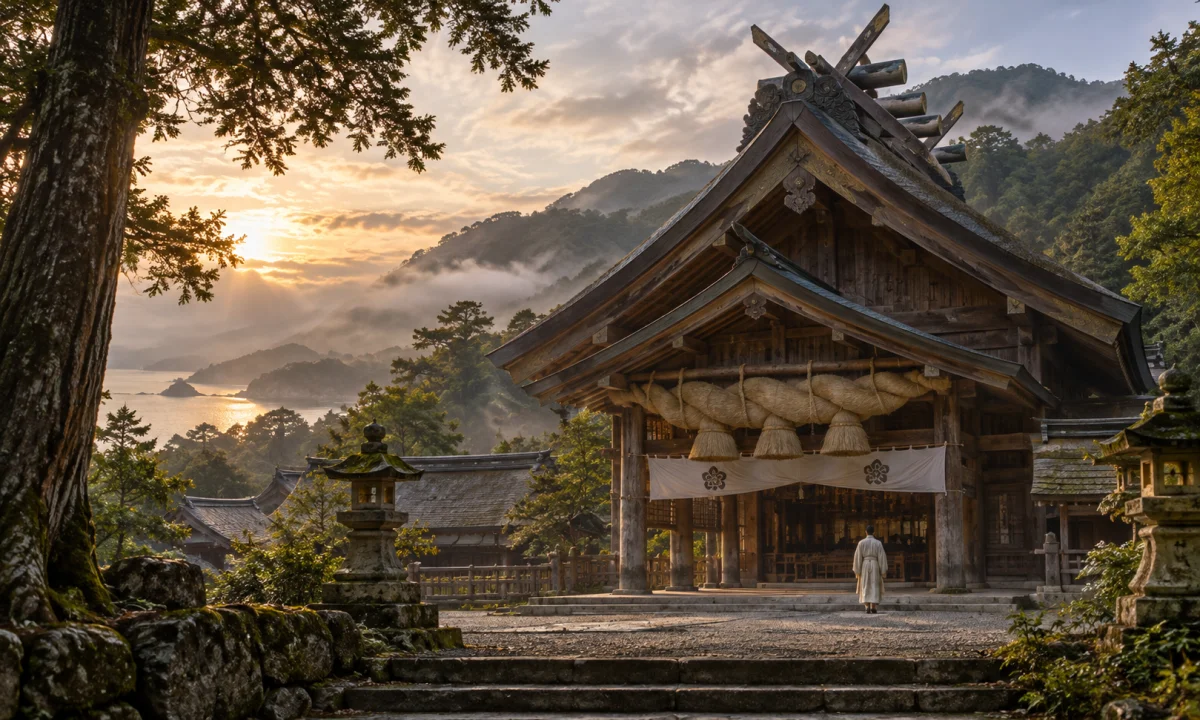
Izumo
Izumo is an ancient region of Japan associated with some of the most important narratives in Japanese mythology. Located in what is now eastern Shimane Prefecture along the Sea of Japan, Izumo appears in early chronicles…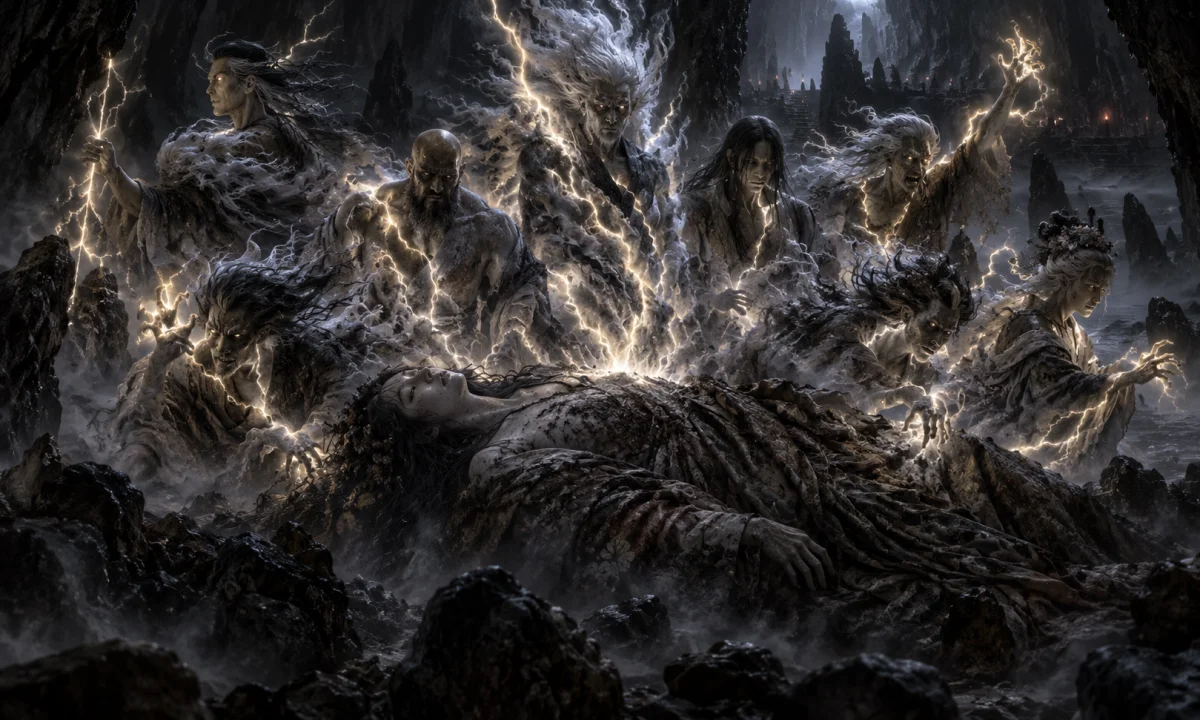
Yakusa-no-ikazuchi-no-kami
Yakusa-no-ikazuchi-no-kami is the collective name for the eight thunder deities who appear in the Japanese creation narrative preserved in the Kojiki. They are born from the body of Izanami after her death and later purs…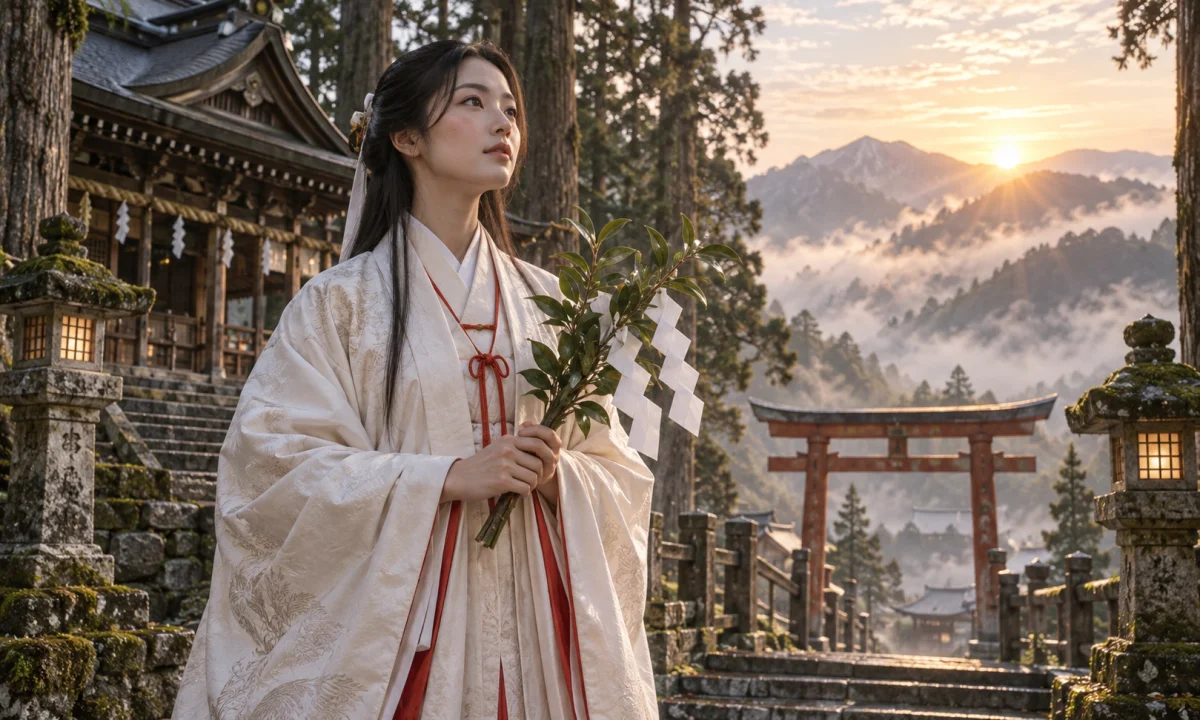
In
In is not a clearly identifiable, independently attested deity, spirit or legendary creature in the principal traditions of Japanese mythology. As a name written only in Roman letters, “In” is highly ambiguous: it may re…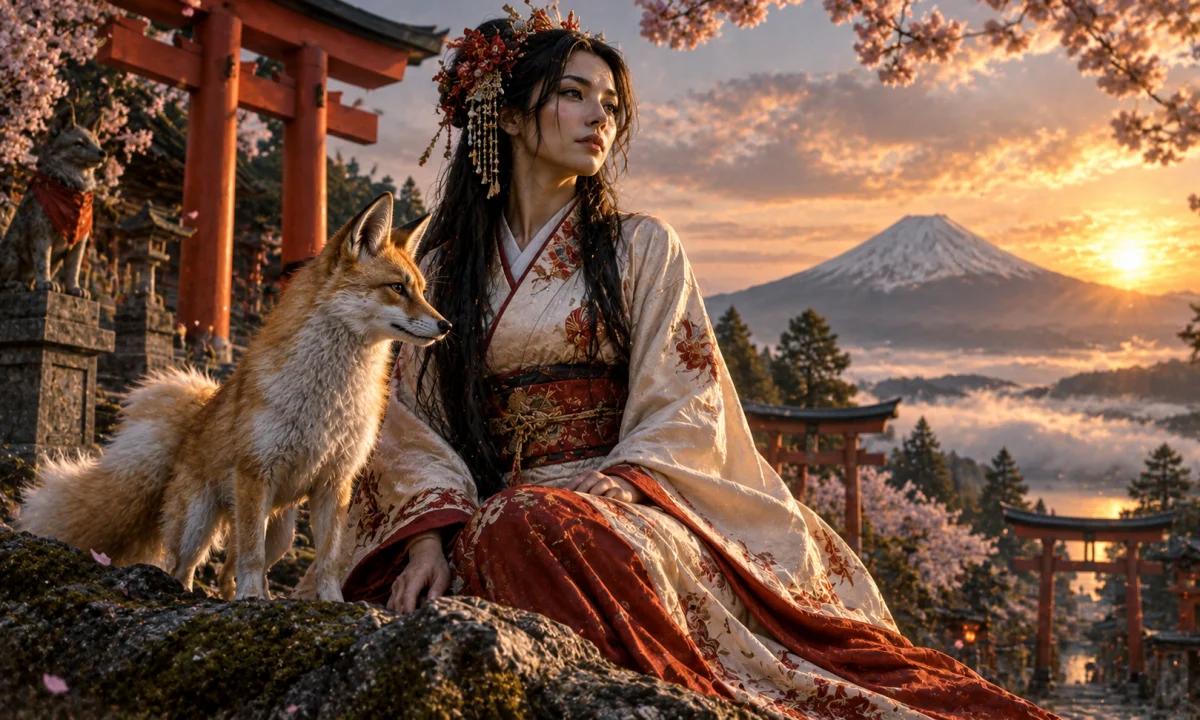
Inari
Inari is one of the most widely worshipped kami in Japan, associated especially with rice, agriculture, food, prosperity, commerce and the well-being of households. Inari belongs primarily to Japanese Shinto, although ce…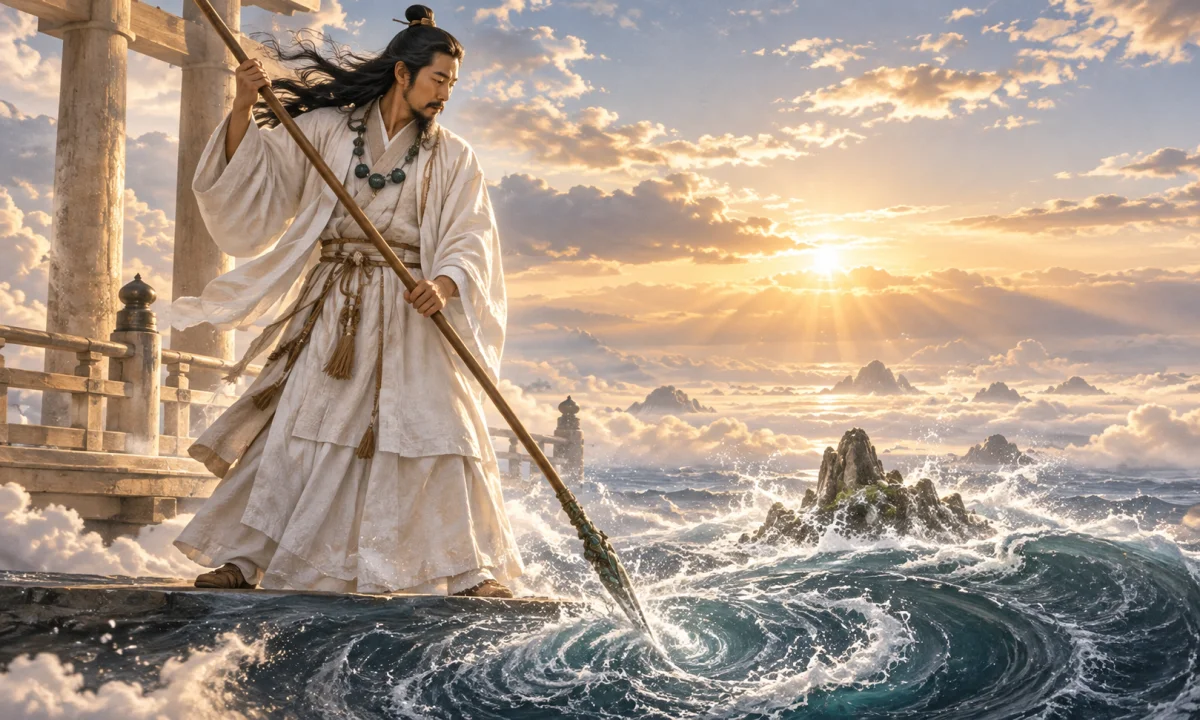
Izanagi
Izanagi, also known as Izanagi-no-Mikoto, is a major creator kami in Japanese mythology and one of the central figures of the Kojiki and Nihon Shoki, Japan’s earliest surviving mythological and historical chronicles. Tog…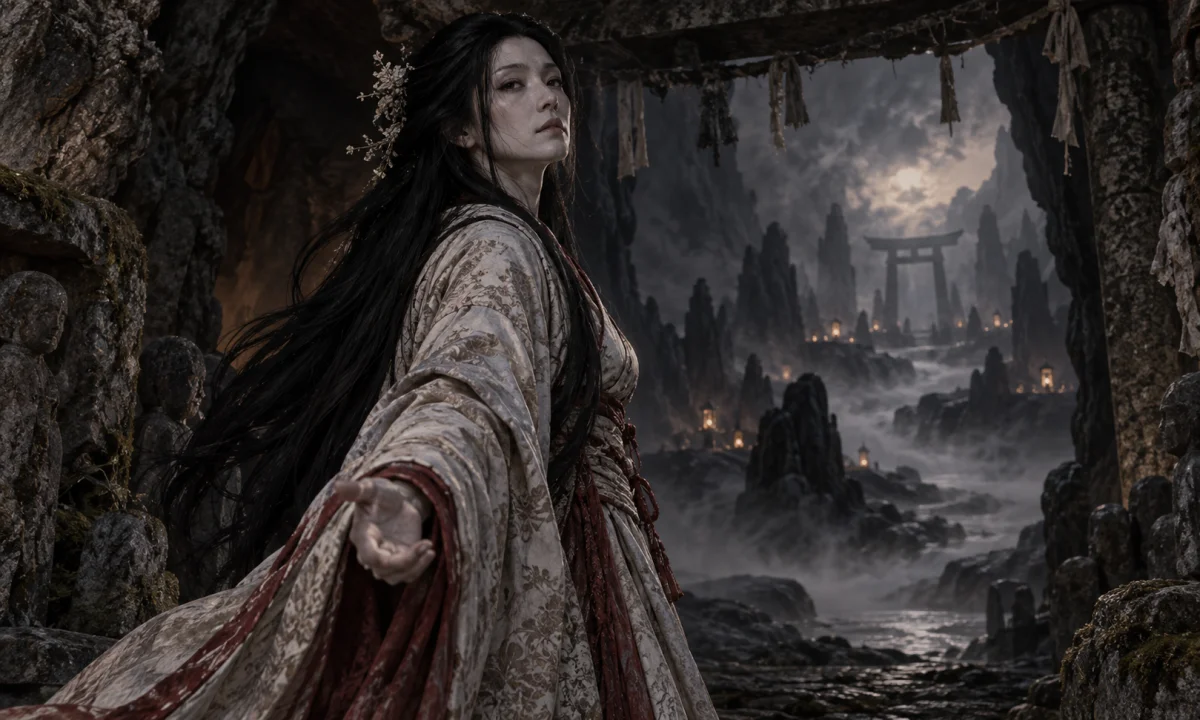
Izanami
Izanami, also known as Izanami-no-Mikoto, is one of the principal creator kami of Japanese mythology. She appears most prominently in the Kojiki, compiled in 712, and the Nihon Shoki, completed in 720. In these early myt…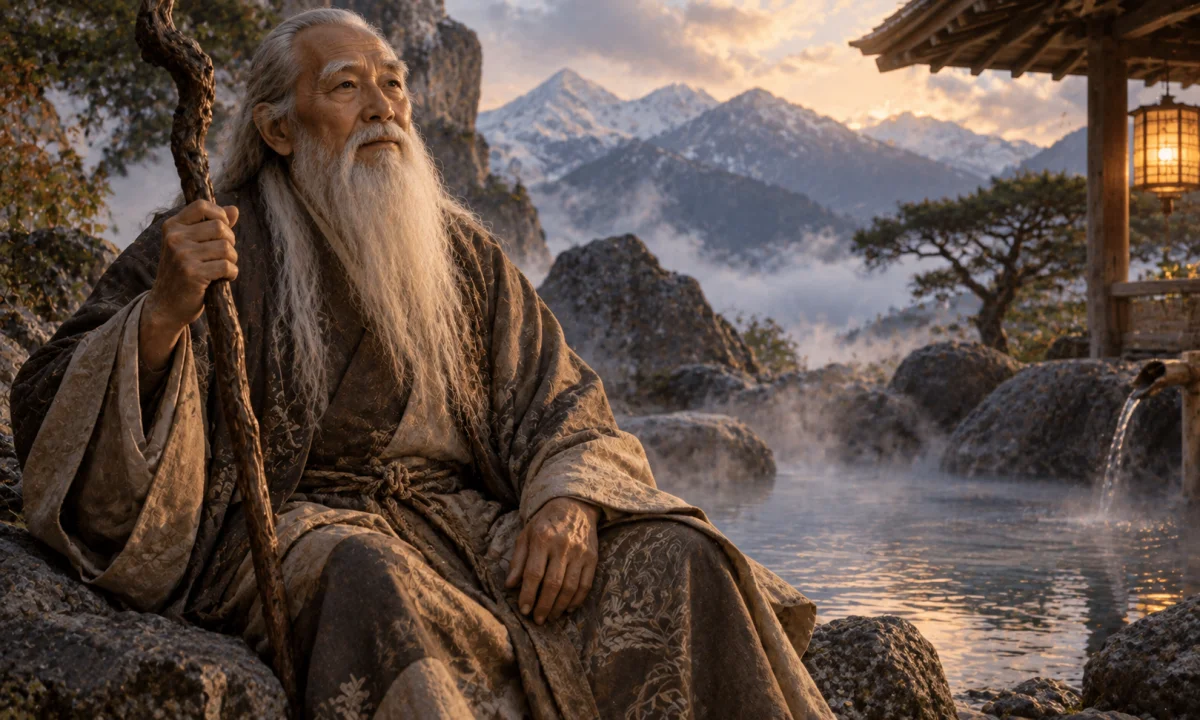
Jo
Jo is not a securely identifiable god, spirit, monster or hero in the surviving corpus of Japanese mythology under that spelling alone. The name appears to be an abbreviated or incomplete romanization, a transliteration …
Jurojin
Jurojin is a Japanese god of longevity and one of the Shichifukujin, the Seven Lucky Gods. Usually portrayed as an elderly man with a long white beard, a staff, and a scroll, he represents a long life guided by wisdom, h…
Sanbo-kojin
Sanbō Kōjin (also written Sanbo Kojin or Sambō Kōjin) is a Japanese deity associated with fire, the hearth, the kitchen and the protection of the household. The name is usually translated as “the Rough Deity of the Three…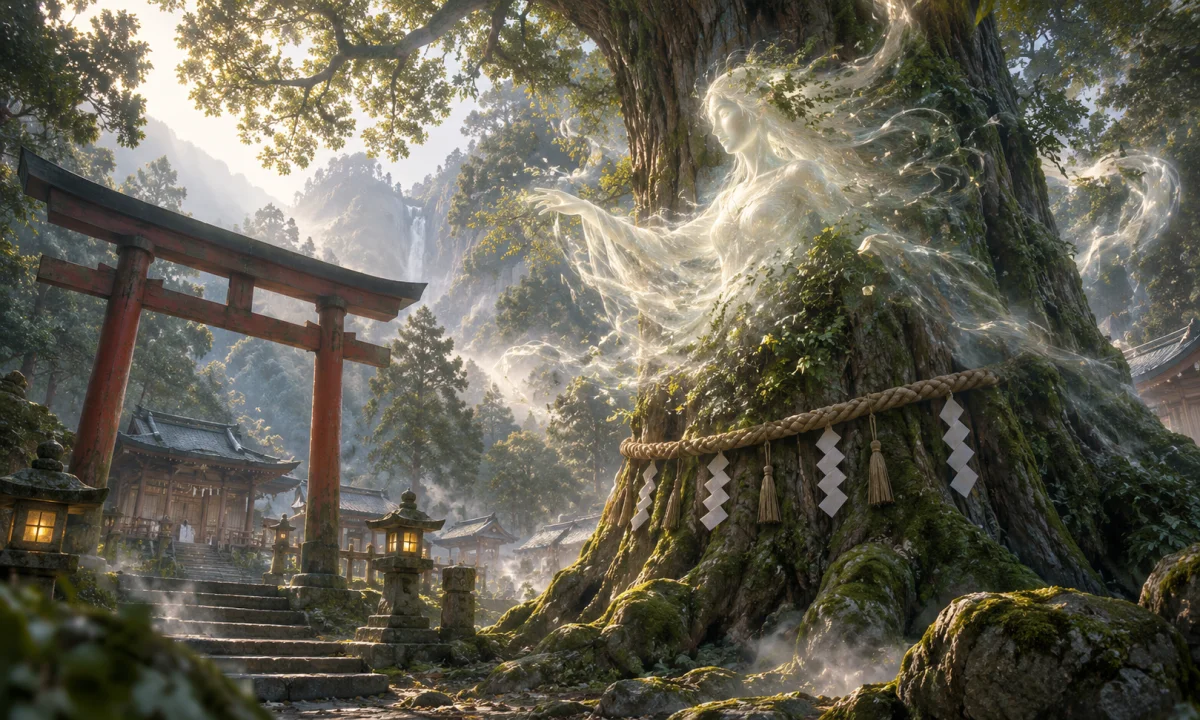
Kami
Kami is the Japanese term commonly translated as “god,” “deity,” or “divine spirit.” In Shinto, kami may be associated with natural phenomena, particular places, ancestral figures, legendary heroes, imperial ancestors, o…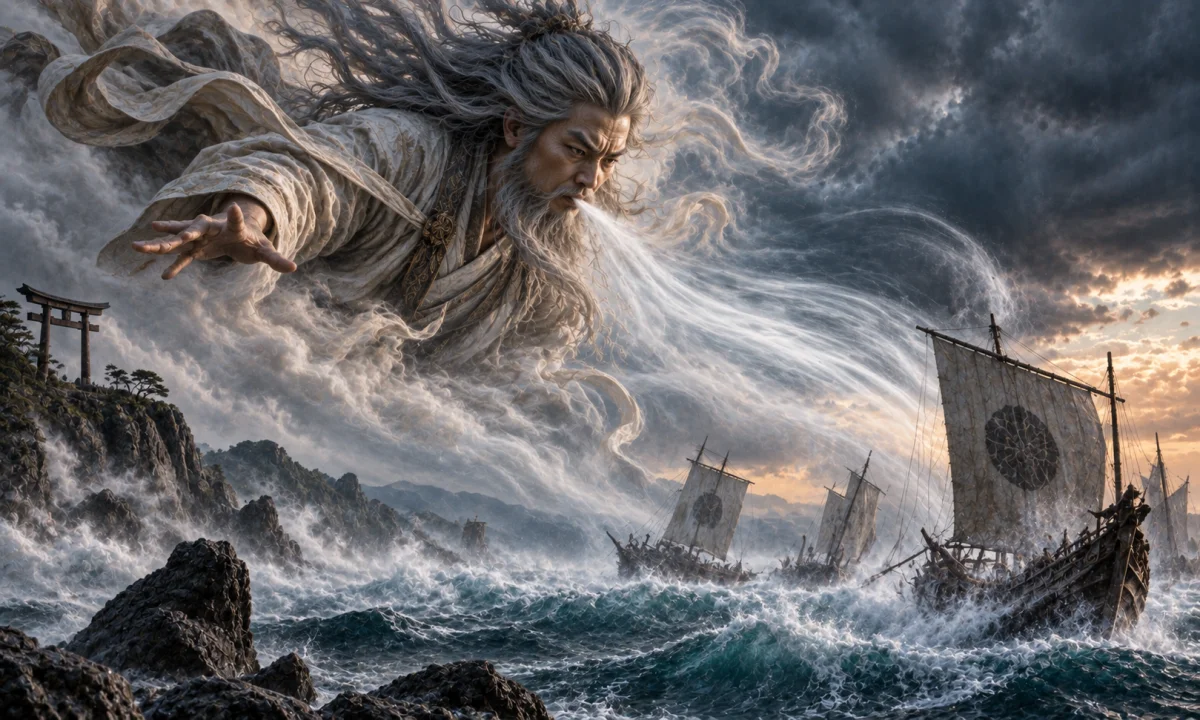
Kami-kaze
Kami-kaze, more commonly written kamikaze in English, means “divine wind” or “wind of the kami.” In Japanese religious and historical tradition, it is not normally the name of a single god, monster or supernatural creatu…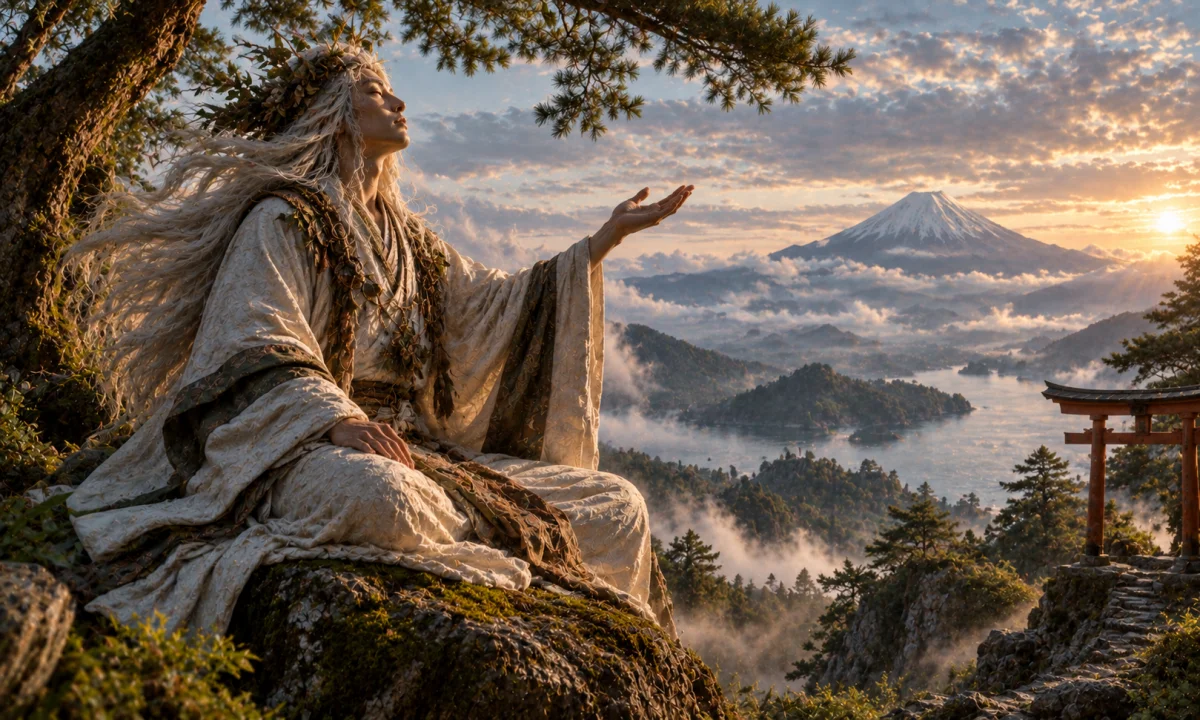
Kamui
Kamui is a Japanese rendering of the Ainu word more commonly written kamuy. It does not usually name a single god or monster. Rather, it refers to the powerful spiritual beings of Ainu religious tradition, including deit…Japanese mythology: myths, traditions and legends
Japanese mythology encompasses the sacred narratives, divine beings, ancestral traditions and supernatural stories associated with the Japanese archipelago. Its best-known early accounts concern the creation of the islands, the divine couple Izanagi and Izanami, the sun deity Amaterasu, the storm-associated Susanoo and the descent of heavenly ancestors connected with the imperial lineage. Japanese mythology was never one fixed system shared uniformly across all regions and periods. Court chronicles, local shrine traditions, Buddhist teachings, folk beliefs and later literature preserve overlapping but sometimes very different understandings of gods, spirits, heroes and the supernatural world.
The academic term mythology can refer to culturally significant sacred narratives and does not imply that such traditions are simply false stories. Many Japanese mythological figures remain important within Shinto worship and wider cultural practice. At the same time, some familiar supernatural beings belong more properly to folklore, Buddhist tradition or later literature than to the earliest creation narratives. Understanding Japanese mythology therefore requires distinguishing ancient court texts from living religion, regional belief and modern popular culture.
Early sources and their limitations
The most important early written sources are the Kojiki, completed in 712, and the Nihon Shoki, completed in 720. Both were compiled under the authority of the imperial court and preserve accounts of divine origins, legendary rulers and the ancestry of important lineages.
The Kojiki presents genealogies and narratives in a literary form shaped by oral traditions and court politics. The Nihon Shoki often preserves several alternative versions of the same event, showing that multiple traditions already existed when it was compiled.
These texts are extremely important, but they should not be treated as complete descriptions of religion throughout ancient Japan. Their compilers selected and organised traditions in ways that supported court authority and imperial genealogy. Local communities maintained their own deities and ritual histories, many of which received little attention in the central chronicles.
Other evidence comes from regional records, poetry, shrine traditions, archaeology and later religious texts. Archaeological evidence can illuminate ritual sites, burial practices and material culture, but it cannot independently verify the supernatural events described in mythology.
Kami and the problem of translation
The Japanese term kami is often translated as god or deity, but neither English word captures its full range. Kami can include major divine beings, local landscape powers, ancestral figures and sacred presences associated with particular natural or social phenomena.
Kami are not necessarily all-powerful, morally perfect or immortal in the same way as the supreme deity of a monotheistic tradition. Myths describe kami forming alliances, making mistakes, becoming polluted, expressing anger and even dying.
Some kami possess importance throughout Japan, while others belong primarily to one shrine, clan or locality. Their identities can also merge or change through historical processes.
The category should not be equated automatically with spirits, ghosts or nature gods. Although mountains, rivers, trees and other features can have sacred associations, Shinto traditions do not simply teach that every natural object contains an identical type of spirit.
The beginning of heaven and earth
Japanese creation traditions begin with the emergence of divine beings before the world has assumed its familiar form. The Kojiki describes several early kami appearing during a primordial stage when heaven and earth are only beginning to separate.
These first beings are followed by generations of deities culminating in the pair Izanagi and Izanami. They are commanded to establish and consolidate the land below and receive a heavenly spear for this purpose.
Standing upon a bridge of heaven, they stir the primordial waters with the spear. Drops falling from its point form an island, where the pair descend and establish a dwelling.
Modern retellings often present Izanagi and Izanami as the absolute creators of everything. The early texts instead place them within an existing genealogy of divine beings and portray their activity as one important phase in the formation of the inhabited world.
Izanagi, Izanami and the birth of the islands
Izanagi and Izanami perform a marriage ritual and generate islands and numerous kami associated with features of the natural and cultural world. Their first attempt does not proceed correctly according to the ritual sequence, and the couple repeats the ceremony before successful births follow.
The narrative has sometimes been used to support later ideas about gender hierarchy because Izanami speaks first during the unsuccessful ceremony. This interpretation reflects the surviving text, but it should not automatically be projected as a timeless rule governing all Japanese religious thought.
Izanami eventually gives birth to the fire deity Kagutsuchi and is fatally injured. Her death introduces mortality and pollution into the divine genealogy. Izanagi kills Kagutsuchi in grief, and further kami emerge from the blood and body of the slain fire deity.
Creation therefore includes both generative and destructive processes. Divine life emerges not only through birth but through death, violence and transformation.
Yomi and the separation of life and death
After Izanami dies, Izanagi travels to Yomi, the land of the dead, seeking to bring her back. She tells him that she has already eaten the food of that realm and cannot easily return.
Izanagi eventually sees her transformed condition and flees in terror. Izanami pursues him with beings of the underworld until he blocks the passage between Yomi and the world of the living with a massive rock.
The pair then exchange declarations that establish the continuing relationship between death and birth. Izanami threatens to take human lives, while Izanagi responds that even more people will be born.
Yomi is not equivalent to the later Christian concept of hell. It is primarily a realm of death and pollution rather than a universal place of moral punishment. Later Japanese traditions developed additional ideas about the afterlife through Buddhism, folk religion and regional belief.
Purification and the birth of major kami
After escaping Yomi, Izanagi performs ritual purification to remove the pollution associated with death. As he washes himself, numerous kami emerge from his clothing and body.
Three especially important deities appear during this purification: Amaterasu from his left eye, Tsukuyomi from his right eye and Susanoo from his nose. This episode connects purification with renewed divine creativity.
The importance of cleansing in the myth has strong parallels with Shinto ritual concepts of harae and misogi. Pollution is not identical to moral sin. It can arise through contact with death, disorder or other disruptive conditions and may require ritual restoration.
Amaterasu and solar sovereignty
Amaterasu Ōmikami is the sun-associated kami and one of the most prominent figures in Japanese mythology. She is especially connected with the imperial ancestral tradition and with the Grand Shrine of Ise.
Amaterasu is given authority over the heavenly realm known as Takamagahara. Her role combines cosmic light, political legitimacy and ancestral importance.
Later imperial ideology placed great emphasis on descent from Amaterasu. This relationship became particularly significant in historical understandings of the emperor, although the political meaning of divine ancestry changed greatly across different periods.
Amaterasu should not be treated merely as the Japanese equivalent of a Greek or Roman sun god. Her identity belongs to a particular network of shrine worship, genealogy and sacred kingship.
Susanoo and divine disorder
Susanoo is a powerful and difficult figure associated especially with storms, the sea and disruptive behaviour. His role varies between the Kojiki, Nihon Shoki and later traditions.
Before leaving the heavenly realm, Susanoo visits Amaterasu. A ritual contest between them produces further divine beings, but their relationship deteriorates as Susanoo commits increasingly destructive acts.
He damages Amaterasu’s fields and sacred spaces and causes the death of a weaving woman in one account. His behaviour leads Amaterasu to withdraw into a cave, plunging the world into darkness.
Susanoo is later expelled from heaven, yet his story does not end with him as a simple embodiment of evil. On earth he becomes a heroic figure who defeats a dangerous serpent and establishes new relationships.
The heavenly rock cave
Amaterasu’s withdrawal into the cave known as Ama-no-Iwato is one of the central narratives of Japanese mythology. With the sun deity hidden, darkness spreads and harmful powers become active.
The assembled kami attempt to persuade her to return. The goddess Ame-no-Uzume performs an exuberant dance that causes the other deities to laugh loudly. Curious about the celebration outside, Amaterasu approaches the entrance.
A mirror is used to attract her attention, and the gods eventually draw her from the cave, restoring light to the world. A sacred rope prevents her from retreating again.
The episode connects performance, laughter, ritual objects and communal cooperation with the restoration of cosmic order. Mirrors later become particularly important within Shinto symbolism and imperial tradition.
Susanoo and Yamata no Orochi
After his expulsion from heaven, Susanoo descends to the region associated with Izumo. There he encounters an elderly couple whose daughters have been consumed one by one by the great serpent Yamata no Orochi.
The serpent is described as possessing eight heads and eight tails. Susanoo agrees to save the final daughter, Kushinada-hime, and prepares a trap involving strong alcoholic drink placed in several containers.
When the serpent becomes intoxicated, Susanoo kills it. From one of its tails he discovers a remarkable sword that is later presented to Amaterasu.
The weapon becomes associated with Kusanagi, one of the objects connected with the Japanese imperial regalia. The serpent narrative therefore links heroic monster-slaying with political and sacred symbolism.
Ōkuninushi and the traditions of Izumo
Ōkuninushi is a major figure associated with the land, medicine, relationships and the traditions of Izumo. His narratives reveal a mythological world that cannot be reduced entirely to the descendants of Amaterasu.
He undergoes persecution by his brothers, encounters supernatural helpers and survives several dangerous trials. One famous episode concerns a wounded hare whom Ōkuninushi teaches how to heal after others have deceived it.
Ōkuninushi eventually becomes associated with the development and ordering of the terrestrial land. His position is later challenged by representatives of the heavenly deities.
The relationship between Izumo traditions and the imperial mythology preserved in court chronicles has often been interpreted in political terms. Although such interpretations may illuminate historical competition, individual mythological episodes should not be treated as literal records of one specific conquest unless independent evidence supports the claim.
The transfer of the land
A major narrative describes the heavenly deities sending messengers to secure authority over the terrestrial realm associated with Ōkuninushi. After several negotiations and confrontations, Ōkuninushi agrees to withdraw under specified conditions.
This episode is commonly called the transfer or yielding of the land. It establishes the conditions for the descent of Amaterasu’s descendants to rule the earthly realm.
The story can be read as a sacred explanation of political authority, but its relationship to actual prehistoric events remains uncertain. It may preserve memories of changing alliances or the integration of regional cults, yet direct historical reconstruction is difficult.
Ninigi and the heavenly descent
Amaterasu sends her grandson Ninigi-no-Mikoto from the heavenly realm to the earth. His descent establishes the divine ancestry later attributed to the imperial line.
Ninigi is associated with sacred objects that later tradition identifies with the imperial regalia: the mirror, sword and jewel. Their exact historical development is complex, but mythologically they express legitimate authority and continuity with the heavenly kami.
Ninigi marries Konohanasakuya-hime, a figure associated with blossoms and Mount Fuji in later tradition. Her pregnancy leads to a test of fidelity in which she gives birth inside a burning structure to demonstrate the divine legitimacy of her children.
The genealogical sequence eventually leads toward Jimmu, traditionally regarded as the first emperor of Japan.
Emperor Jimmu and legendary kingship
Jimmu appears in the early chronicles as the founder of the imperial dynasty and as a descendant of Amaterasu through Ninigi. His journey from southern Kyushu toward the Yamato region establishes a sacred geography of conquest and rulership.
The traditional date assigned to his accession in 660 BCE belongs to the chronological system of the chronicles and is not supported as a historical date by archaeological evidence. Modern historians do not treat Jimmu’s biography as securely documented in the same manner as later historical rulers.
His significance lies primarily within imperial mythology and traditions of sacred ancestry. From the modern period, his story became particularly important in state ideology and national narratives.
Distinguishing mythic genealogy from historical evidence is essential when discussing Japan’s earliest rulers.
Tsukuyomi and the moon
Tsukuyomi is associated with the moon and emerges alongside Amaterasu and Susanoo during Izanagi’s purification. Compared with the other two, Tsukuyomi receives relatively limited narrative attention.
One tradition describes Tsukuyomi killing a food-producing deity after taking offence at the manner in which food is created. Amaterasu responds by separating herself from Tsukuyomi, providing a mythic explanation for the separation of sun and moon.
Versions differ, and in some sources Susanoo rather than Tsukuyomi participates in a related food myth. The variation is important because modern summaries sometimes present one account as universally authoritative.
Food, agriculture and divine origins
Japanese mythology contains stories explaining the sacred origins of cultivated plants and food. In one narrative, valuable crops emerge from the body of a slain food deity.
The exact divine figure involved varies among sources, including Ōgetsuhime and Ukemochi. These stories connect death with nourishment and agricultural renewal.
Rice acquired exceptional importance within ritual and political culture. Offerings of rice, sake and other foods remain central to many shrine ceremonies.
The religious significance of agriculture reflects historical relationships among seasonal cycles, community survival and divine reciprocity rather than a single abstract category of fertility gods.
Shinto and Japanese mythology
Japanese mythology is closely associated with Shinto, but the relationship requires historical care. Shinto is a broad term for traditions centred on kami, shrines, ritual purity, festivals and community worship.
The word Shinto became especially useful when differentiating kami traditions from Buddhism after Buddhism entered Japan. Before that distinction became necessary, local cults did not necessarily form one organised religion with a central doctrine.
Shrines preserve particular relationships with kami through offerings, prayers and festivals. Worship does not depend entirely upon knowing elaborate myths about the enshrined deity. Some important kami possess extensive narratives, while others have little surviving mythology.
Modern Shinto institutions were also shaped by major political changes, particularly during the Meiji period. Ancient mythological texts therefore should not be equated directly with every later form of organised Shinto.
Buddhism and religious combination
Buddhism entered Japan through continental East Asian networks and became deeply integrated with existing kami traditions. For much of Japanese history, kami and Buddhist beings were worshipped within overlapping religious systems rather than completely separate religions.
Theories known broadly as honji suijaku interpreted kami as local manifestations of Buddhist deities and bodhisattvas. These relationships allowed sacred figures from different traditions to be understood within shared religious frameworks.
Buddhist temples and Shinto shrines often developed close institutional connections. Religious specialists, festivals and sacred sites could combine elements now classified separately as Buddhist or Shinto.
The formal separation of kami and Buddhist institutions during the Meiji period disrupted many of these long-standing relationships. Modern distinctions should therefore not be projected unchanged into earlier Japanese history.
Yōkai and the boundaries of mythology
Yōkai is a broad term applied to strange, uncanny or supernatural phenomena and beings. Famous examples include kappa, tengu and many shape-changing animals. They belong primarily to folklore, popular religion and later artistic traditions rather than to one ancient mythological pantheon.
Yōkai can be frightening, humorous, dangerous or helpful. Some are associated with specific places, while others developed through literary and artistic creativity.
The category itself changed historically. Early supernatural beings could be reclassified by later writers, and Edo-period artists helped standardise the appearances of many creatures through illustrated collections.
Modern media often present yōkai as if they were a fixed species of Japanese monsters. Traditional stories are more varied, and the boundaries between yōkai, kami, ghosts and transformed animals can be fluid.
Oni and dangerous supernatural beings
Oni are powerful beings commonly represented in later art with horns, fierce faces and large weapons. Their image developed through interactions among Buddhist ideas, indigenous supernatural traditions, Chinese influence and folklore.
Oni may punish wrongdoers, inhabit dangerous places or serve rulers of hell in Buddhist imagery. Other stories present them as enemies defeated by heroes.
They should not simply be translated as demons in the Christian theological sense. Oni belong to different religious and folkloric frameworks and are not defined primarily as fallen spirits rebelling against a supreme creator.
Festival practices such as Setsubun include the symbolic expulsion of oni through the throwing of beans, linking supernatural imagery with purification and seasonal transition.
Tengu and changing identities
Tengu developed from complex religious and folkloric traditions. Early references drew partly upon a Chinese celestial-dog concept, but Japanese tengu became increasingly associated with mountains, Buddhism and unusual supernatural powers.
Medieval texts often portrayed tengu as disruptive beings connected with arrogance, dangerous magic and religious disorder. Some were imagined as the transformed spirits of proud monks.
Later traditions increasingly represented them as mountain guardians or masters of martial knowledge. Their familiar long-nosed human appearance developed over time and should not be projected onto every early account.
Foxes, transformation and Inari
Foxes play major roles in Japanese folklore as intelligent shape-shifters capable of deception, possession and relationships with humans. Some fox stories are dangerous, while others describe loyalty, gratitude or marriage between humans and transformed animals.
Foxes also became closely associated with Inari, an important kami connected especially with rice, prosperity and later commercial success. Foxes are generally understood as Inari’s messengers rather than as identical with Inari.
Popular culture often calls all supernatural foxes kitsune as though they formed one species with a fixed sequence of magical powers based on the number of tails. Traditional beliefs and stories are considerably more diverse.
Heroes and legendary warriors
Japanese legendary tradition includes warriors whose stories combine history, folklore and supernatural elements. Yamato Takeru, for example, appears in the Kojiki and Nihon Shoki as an imperial prince whose campaigns involve disguise, sacred weapons and encounters with dangerous powers.
Later medieval heroes such as Minamoto no Yorimitsu became associated with stories of defeating oni and supernatural enemies. Some of these figures are historically attested individuals whose biographies accumulated legendary material over time.
Heroes should therefore be distinguished according to source. A court chronicle, military tale, shrine tradition and Edo-period folktale may portray the same person very differently.
Mountains, sacred landscapes and local tradition
Mountains have long held religious importance in Japan. They may be associated with kami, the dead, Buddhist ascetic practice and dangerous supernatural beings.
Mount Fuji became a major sacred mountain connected with pilgrimage, asceticism and deities such as Konohanasakuya-hime. Other mountains developed their own cults and religious communities.
Traditions broadly associated with Shugendō combine mountain asceticism with Buddhist, kami and esoteric practices. Their historical development demonstrates how Japanese religious life repeatedly crossed categories later treated as separate.
Local myths often explain unusual rocks, waterfalls, caves and trees through encounters with kami or legendary figures. These stories connect supernatural tradition with specific landscapes rather than with a universal national mythology.
Purity, pollution and ritual restoration
Ideas of purity and pollution are central to many Shinto practices and appear prominently in mythology. Izanagi’s purification after returning from Yomi provides one of the clearest narrative examples.
Pollution, often discussed through the concept of kegare, can be associated with death, blood, disease or serious disruption. It should not be translated directly as moral guilt or sin.
Purification rites restore appropriate relationships and prepare participants for contact with sacred spaces. Water, ritual words and symbolic actions may all play roles.
These concepts have changed across historical periods and interacted with Buddhist, social and legal ideas. No single ancient story defines every later purity practice.
Imperial mythology and modern political use
The connection between Amaterasu and the imperial lineage became politically significant throughout Japanese history, but its interpretation changed considerably over time.
During the Meiji period and the development of the modern Japanese state, early mythological narratives were incorporated into national ideology and education. Imperial descent from the heavenly kami was presented in increasingly systematic political terms.
State institutions promoted particular shrine practices and interpretations of sacred history. These modern developments should be distinguished from the diverse local religious traditions of earlier centuries.
After the Second World War, the political relationship between the emperor, state and religious institutions changed fundamentally. Mythological narratives nevertheless remain important within Shinto tradition, cultural identity and historical study.
Folklore, theatre and later literature
Japanese supernatural traditions developed extensively through medieval tales, Noh and Kabuki theatre, illustrated scrolls, popular books and oral storytelling. Ghosts, shape-shifters, oni and yōkai acquired new appearances and narratives as artistic genres changed.
Edo-period publishing encouraged the classification and illustration of supernatural beings. Artists could invent or transform creatures for entertainment, meaning that not every famous yōkai represents an ancient folk belief.
Ghost stories known broadly as kaidan became especially influential in theatre and literature. Some drew from earlier religious concepts concerning resentment and restless spirits, while others were shaped primarily as dramatic works.
Modern popular culture and common misconceptions
Japanese mythology has had enormous influence on manga, anime, film, games and fantasy literature. Modern works frequently combine kami, yōkai, Buddhist beings, historical warriors and newly invented creatures within the same fictional universe.
These adaptations can introduce traditional names to global audiences, but their rules and character relationships should not be mistaken for religious or historical sources. A figure given a fixed set of powers in a game may have possessed very different roles in shrine tradition or folklore.
Another misconception treats Shinto as an unchanged prehistoric religion recorded perfectly in the Kojiki. Japanese religious traditions developed continuously through political change, Buddhism, local worship and reinterpretation.
Japanese mythology is best understood as a layered field in which ancient court narratives, living kami worship, Buddhist cosmology, regional folklore and later artistic traditions intersect. Its stories of creation, divine conflict, death, purification and sacred ancestry remain central to understanding the historical development of Japan’s religious imagination.