 WORLD
WORLD
Australian Aboriginal mythology
Articles about Australian Aboriginal mythology within Oceania.
Last articles
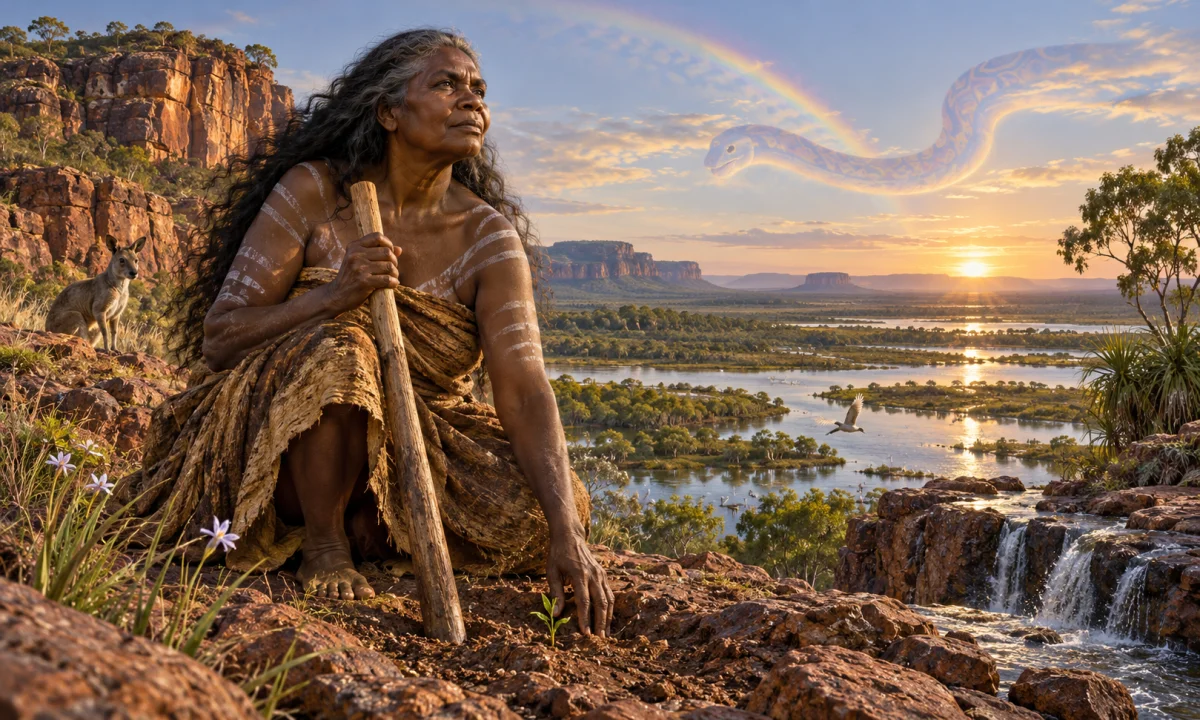
Waramurunggundji
Waramurunggundji is an ancestral creator figure associated particularly with Aboriginal traditions of western Arnhem Land in the Northern Territory. Her name is also written as Warramurrungundji, Waramurrungundji and in …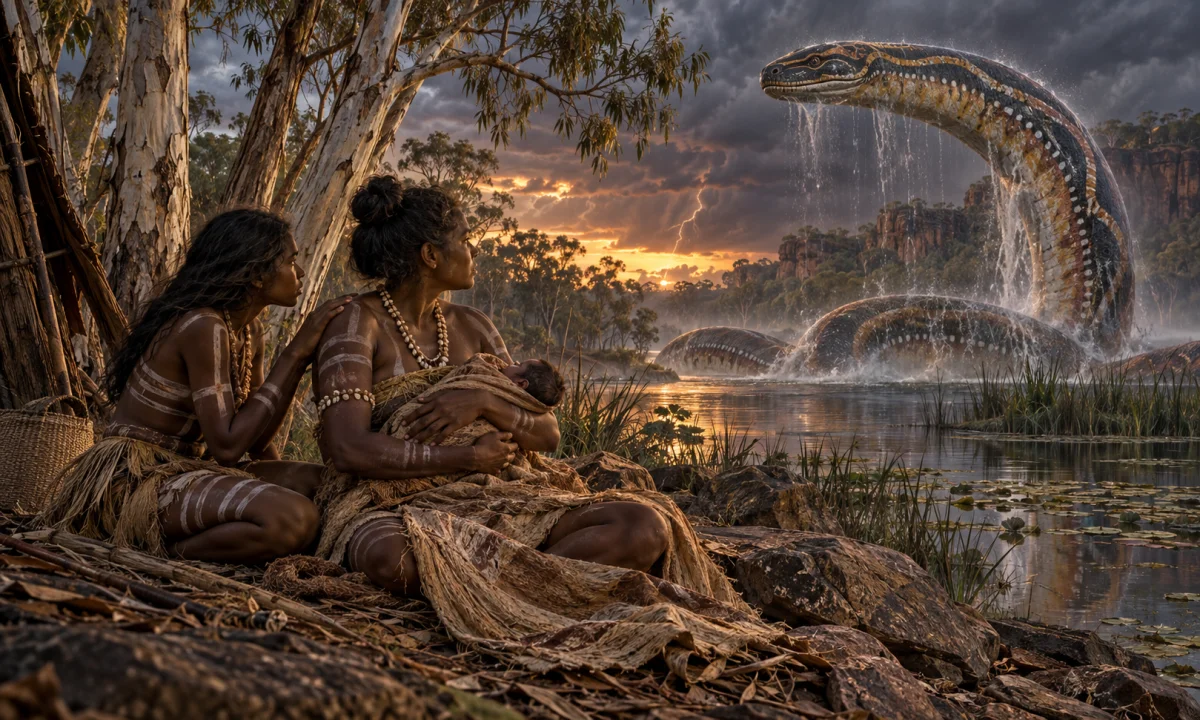
Wawalag
Wawalag refers most often to two ancestral sisters in the traditions of Yolngu peoples of north-eastern Arnhem Land in the Northern Territory of Australia. They are also known in English-language sources as the Wawilak o…
Widjingara
Widjingara is a name associated in some modern English-language references with Australian Aboriginal mythology, but its identity is not securely established across the traditional records of any single Aboriginal nation…
Wuluwait
Wuluwait is a name associated in some modern accounts with Australian Aboriginal mythology, particularly with a spirit or supernatural being connected with rain, weather, or the sky. The identification is uncertain, howe…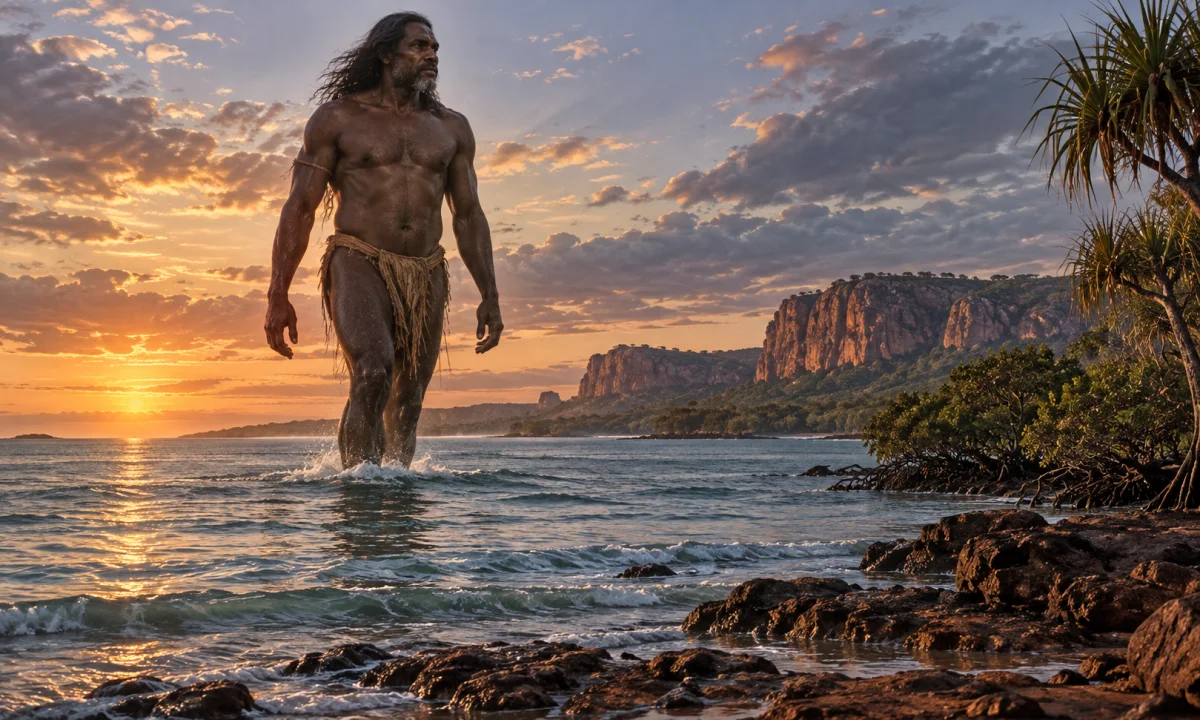
Wuraka
Wuraka is a name associated in some modern lists with Australian Aboriginal mythology, but its identity is not securely established in the surviving record. Unlike better-documented figures such as Baiame, Bunjil, Daramu…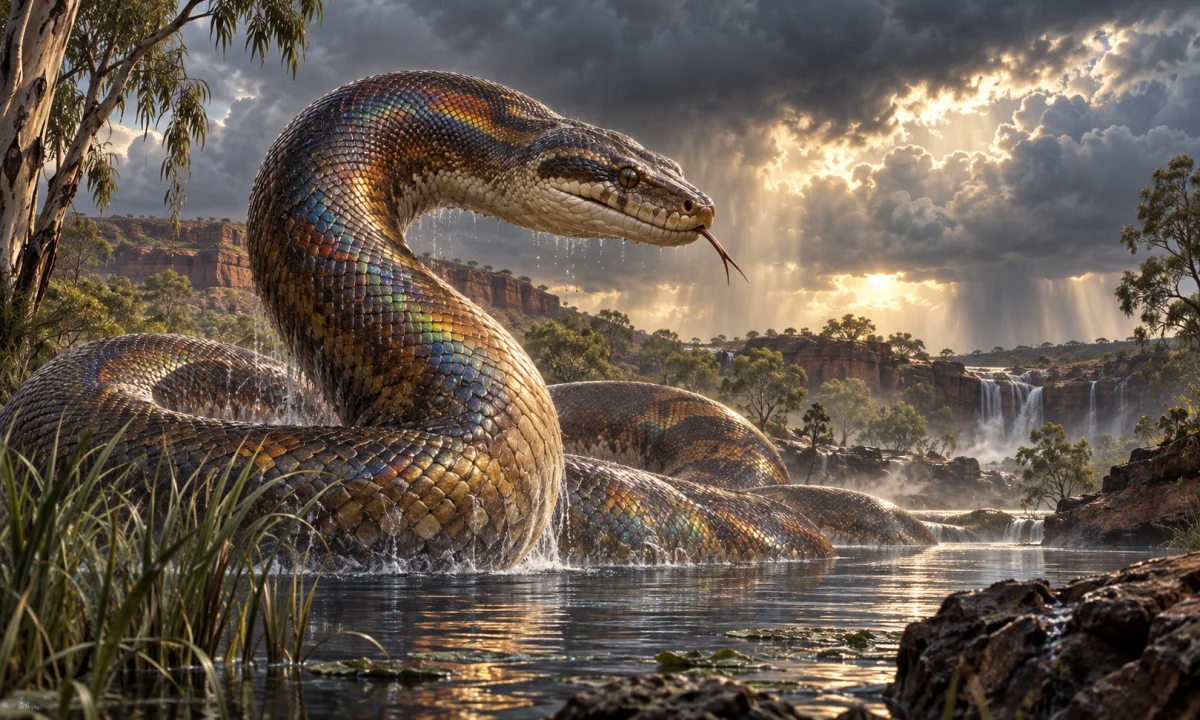
Yalungur
Yalungur is a name associated in some modern reference works with an Australian Aboriginal water or serpent being. The available information is limited, and the name is not supported by a single, widely documented tradit…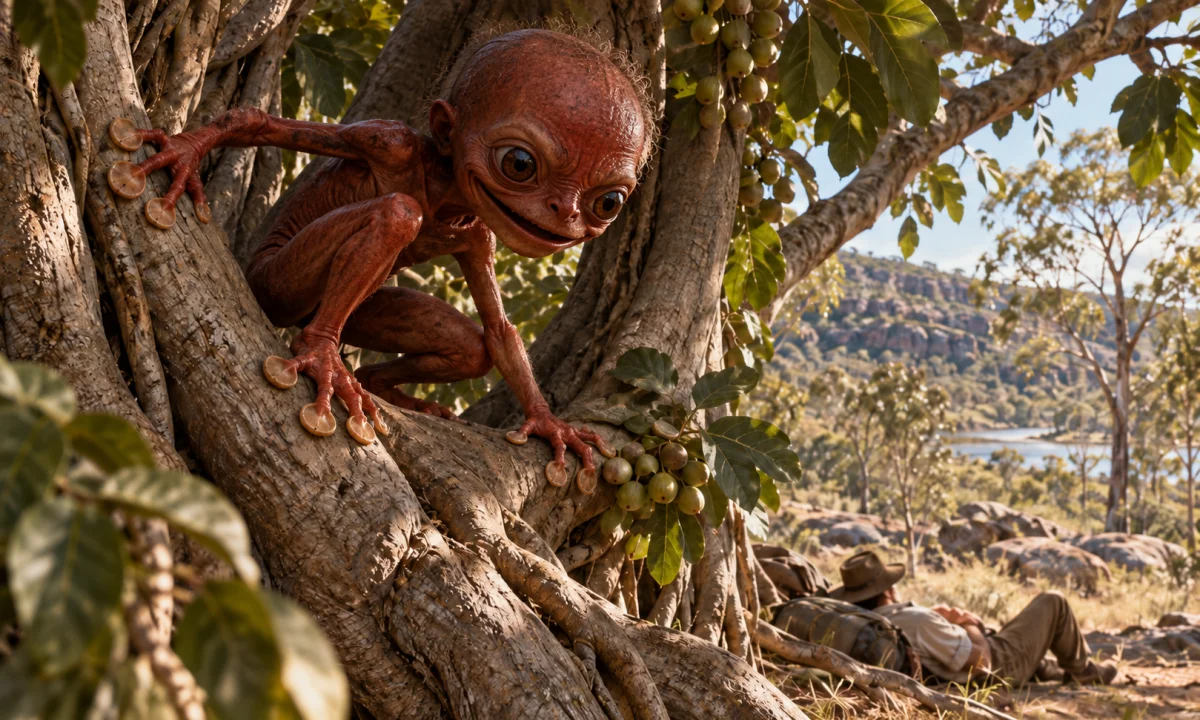
Yara-ma-yha-who
Yara-ma-yha-who is a dangerous blood-drinking being associated with Aboriginal tradition in Australia. In commonly repeated accounts, it is a small red figure that waits in a fig tree and attacks people who come within r…
Yhi
Yhi is a name commonly used in modern accounts of Australian Aboriginal mythology for a female being associated with the sun, light, warmth and the awakening of life. Stories connected with Yhi describe light entering a …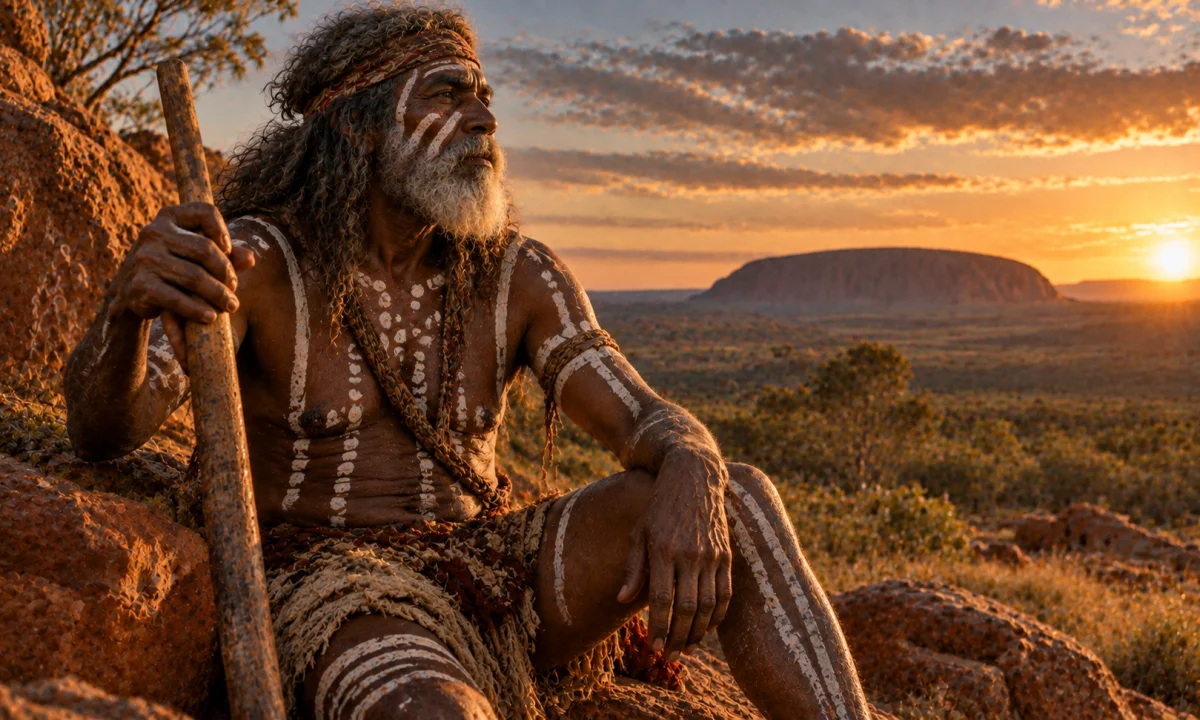
Yingarna
Yingarna is an ancestral creator being in the traditions of the Kunwinjku people of western Arnhem Land in northern Australia. She is commonly described as a powerful female Rainbow Serpent and as an ancestral mother ass…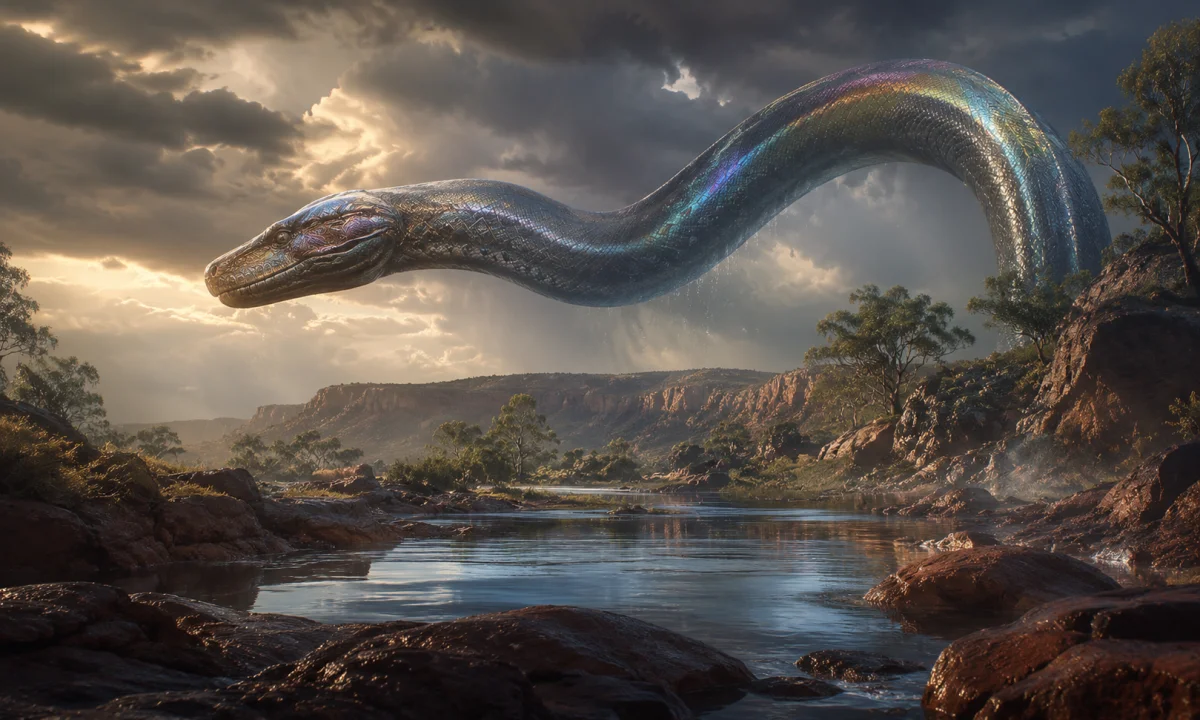
Yurlungur
Yurlungur is the name of a powerful Rainbow Serpent figure in Australian Aboriginal mythology, especially associated with Arnhem Land in the Northern Territory. The details of the being vary from group to group and from …Australian Aboriginal mythology: myths, traditions and legends
Australian Aboriginal mythology encompasses the sacred narratives, ancestral histories, laws, ceremonies and relationships with Country maintained by hundreds of distinct Aboriginal nations and language groups. It is not a single mythology, religion or collection of interchangeable creation stories. Each community possesses its own traditions connected to particular territories, kinship systems, ancestral beings and custodial responsibilities. The English word mythology is useful as an academic category, but it must not imply that these traditions are false, fictional or disconnected from living religious and cultural practice.
Many Aboriginal traditions describe ancestral beings whose journeys shaped the land, established relationships among humans and other forms of life, created water sources and geographical features, and introduced laws governing social and ceremonial conduct. These events are not always understood as belonging only to a remote past. They remain present in Country, ritual, song, art, language and inherited responsibility. Knowledge is transmitted according to community authority, and some narratives are public while others are restricted by kinship, gender, initiation, age or custodial status.
Diversity among Aboriginal traditions
Aboriginal Australia contains extraordinary cultural and linguistic diversity. Before British colonisation, the continent was home to hundreds of nations and many more local groups, each with its own territory, language varieties, laws and ceremonial traditions. Modern state and territory borders do not correspond to these older cultural boundaries.
General expressions such as Aboriginal mythology can therefore obscure important differences. A narrative recorded in Arnhem Land cannot automatically be applied to communities in the Western Desert, the Kimberley, Cape York, southeastern Australia or the central regions. Even neighbouring communities may preserve different names, episodes and interpretations concerning related ancestral figures.
Shared patterns can result from long histories of trade, marriage, ceremony and cultural exchange. Songs, objects and religious knowledge travelled through extensive networks, but this movement did not create one uniform system. Similarities must be understood alongside local ownership and variation.
Torres Strait Islander traditions are also distinct and should not be merged indiscriminately with mainland Aboriginal traditions. Although communities across northern Australia, the Torres Strait and New Guinea interacted over long periods, each developed its own languages, histories and sacred frameworks.
The Dreaming and related concepts
The Dreaming is a widely used English term for a group of Aboriginal concepts concerning ancestral creation, law, identity, Country and continuing sacred reality. It is sometimes also called the Dreamtime, but that expression can misleadingly suggest a completed period in the distant past or an experience resembling ordinary sleep.
No single Aboriginal word corresponds exactly to the English term. Different languages contain their own concepts, including forms such as Tjukurpa, Jukurrpa, Altyerr and others, each rooted in a particular cultural and linguistic setting. These terms should not be treated as simple translations of one universal doctrine.
The Dreaming may involve ancestral journeys, the establishment of social rules, the origins of species and the shaping of the landscape. It also concerns the present responsibilities of people toward Country, relatives, ceremonial knowledge and other living beings. Past, present and future may be connected through ceremony and place rather than separated according to a purely chronological model.
Descriptions of the Dreaming as merely a collection of creation myths are therefore incomplete. Narratives form part of systems of law, ethics, land ownership, ritual authority and education. Their meaning cannot always be separated from the places, performances and relationships through which they are transmitted.
Ancestral beings and the formation of Country
Ancestral beings are often described as travelling across an emerging or transforming landscape. Their actions created hills, rivers, waterholes, rocks, animal species and other features of Country. They also established ceremonies, kinship relationships, restrictions and patterns of behaviour.
These beings may appear in human, animal, plant, elemental or composite forms. The distinction between a creator, ancestor, animal and spirit is not always applicable in the same way as in European religious classifications. A being may transform repeatedly, leave part of its body in the landscape or continue to exist within a sacred site.
Ancestral beings are not necessarily gods in the sense of ruling the universe from a separate heavenly realm. Their authority is often connected to particular journeys, places, species and communities. Some are known across wide regions, while others belong to a limited territory or group of custodians.
Their narratives establish relationships rather than simply explaining physical origins. A waterhole may be sacred because an ancestral being emerged there, travelled through it or left power within it. The community connected to that place may inherit responsibilities concerning its protection, ceremony and correct use.
Country as a living relationship
In many Aboriginal contexts, Country means more than land as property or scenery. It can include waters, skies, plants, animals, ancestral presences, people, stories and responsibilities. Country is relational and living, and people may describe themselves as belonging to Country rather than merely owning it.
Sacred narratives connect particular events to visible features of the environment. A rock formation may mark an ancestral transformation, while a group of waterholes may trace a journey. Place names can preserve historical, ecological and religious knowledge that becomes difficult to recover when languages are lost or communities are displaced.
Knowledge of Country includes practical expertise concerning seasons, fire, water, plants and animals. This knowledge is not separate from religious or ancestral tradition. Ecological observation, law and sacred narrative may reinforce one another through generations of experience.
It is misleading to summarise this relationship through the vague claim that Aboriginal people believed all nature was sacred. Different places, species and resources have different meanings and restrictions. Sacredness is structured through specific histories, custodians and obligations rather than applied uniformly to everything.
Songlines and ancestral journeys
The English term songline refers broadly to sequences of songs, places and ancestral events connected across Country. Songlines may preserve routes, names, ecological information, ceremonial knowledge and relationships among communities. They are sometimes described as maps, but this comparison captures only part of their significance.
A songline can cross several language territories. Different groups may hold responsibility for particular sections while participating in a larger network of shared ceremony and exchange. Knowledge of the complete journey may therefore be distributed among multiple custodians.
Songs can encode features of the landscape and guide movement, but they also renew relationships with ancestral events. Performance may be connected to dance, painting, objects and visits to particular sites. The route is not simply remembered; it is maintained through cultural practice.
Popular accounts sometimes present songlines as a mysterious method of navigation available to all Aboriginal people. In reality, access to particular songs and routes depends on community, language, training and authority. Some material can be shared publicly, while other knowledge remains restricted.
The Rainbow Serpent and regional variation
Serpentine ancestral beings associated with water, fertility, weather, creation and danger appear in several Aboriginal traditions. The broad English label Rainbow Serpent is often used for these figures, but it can create the false impression of one continent-wide deity with a standard name and story.
Different communities recognise distinct beings with their own names, genders, journeys and relationships. Some are connected with rain, rivers and the formation of waterholes. Others guard sacred places, enforce restrictions or punish inappropriate behaviour. A figure may be life-giving and dangerous without being divided into categories of good and evil.
The association with the rainbow is important in some traditions, but water, subterranean movement and seasonal renewal may be equally significant. Artistic images grouped under the Rainbow Serpent label can represent different local beings rather than versions of one universal character.
Modern Australian art and public culture have made the Rainbow Serpent one of the most widely recognised Aboriginal religious images. This visibility should not erase the authority of the individual communities to which particular names, stories and designs belong.
Creation, emergence and transformation
Aboriginal traditions include many accounts of human origins, the emergence of animals and the transformation of an initially different world. There is no single Aboriginal creation narrative. Some stories describe ancestral beings bringing forms into existence, while others concern beings who already inhabit the world and shape it through travel, conflict, ceremony or transformation.
Creation is not always represented as an event in which one supreme being produces the universe from nothing. Narratives may focus instead on organising the land, differentiating species, opening water sources or establishing correct social relationships.
Transformation is a recurring feature. Beings become animals, rocks, stars or landscape features, and parts of their presence remain available through place and ritual. Such transformations explain why Country can be understood as carrying ancestral identity.
These narratives cannot be interpreted accurately through isolated plot summaries alone. The same episode may relate to kinship, initiation, resource management and territorial authority. Its significance may also depend on ceremonial details that are not available to the general public.
Animals, plants and other forms of life
Animals and plants can be connected to ancestral beings, clan identities, ceremonies and restrictions. Kangaroos, emus, dingoes, goannas, snakes, birds, insects and numerous plant species appear in different traditions, but no animal has one universal mythological role across the continent.
A species may be linked to a particular ancestral journey or kinship group. People may inherit responsibilities toward it, including knowledge about its habitat, behaviour and ceremonial significance. These relationships should not be reduced to the idea that a group simply worships its totem animal.
The word totem has been widely used in anthropology, but Aboriginal systems of affiliation are more varied than the term suggests. Relationships may involve individuals, families, clans, moieties, places and ceremonial responsibilities. Different communities use their own concepts and names.
Stories involving animals can communicate knowledge about behaviour, seasonal movement and the consequences of greed or disrespect. Animals may speak and act as persons without functioning merely as symbolic disguises for humans.
Kinship, law and social order
Aboriginal sacred traditions are closely connected to kinship and law. Kinship systems regulate marriage, responsibility, ceremonial participation and relationships among people, Country and ancestral beings. These systems vary substantially between communities.
English words such as law, custom and religion divide areas that may be deeply connected in Aboriginal life. An ancestral narrative may establish a marriage rule, define custodianship of a site and provide the foundation for a ceremony at the same time.
Breaking established restrictions can have social, physical and spiritual consequences. Narratives frequently demonstrate the results of selfishness, violence, improper desire, unauthorised knowledge or failure to respect boundaries.
Law is not simply inherited as a fixed memory of the past. It is interpreted and maintained by living communities. Elders and custodians hold authority, but communities have also adapted to new political, environmental and social conditions.
Ceremony, art and performance
Stories are transmitted through ceremony, song, dance, body painting, rock art, bark painting, sculpture and other forms of expression. These media do not merely illustrate narratives. They can enact ancestral events, demonstrate rights and maintain relationships with Country.
Designs may carry several levels of meaning. A public interpretation may describe an animal, journey or landscape, while deeper ceremonial knowledge remains restricted. The meaning of an image cannot always be understood by visual analysis alone.
Contemporary Aboriginal painting often uses forms adapted to modern materials and the art market. These works can express ancient cultural knowledge while also responding to colonial history, land rights and contemporary identity. Modern format does not make them culturally inauthentic.
At the same time, commercial reproduction can detach designs from their owners and ceremonial restrictions. A publicly displayed artwork does not imply that every related story or symbol may be copied freely.
Death, spirits and dangerous beings
Aboriginal traditions include many understandings of death, ancestral presence and nonhuman beings. The dead may continue to affect the living, while spirits can inhabit particular places or appear under certain conditions. Beliefs and funerary practices vary widely.
Some beings are associated with danger, punishment, sorcery, illness or remote parts of Country. They may enforce restrictions, threaten vulnerable people or explain unusual experiences. Calling them demons or monsters can distort their roles by imposing categories derived from other religions.
Stories about dangerous beings often communicate rules concerning travel, water, food, children or ceremonial boundaries. Fear can therefore serve an educational and protective function without exhausting the meaning of the tradition.
Colonial collectors sometimes sensationalised these beings while ignoring their connection to law and place. Modern horror and internet folklore can further transform them into generic supernatural creatures detached from specific communities.
Oral transmission and custodianship
Oral tradition does not mean that narratives are casual or unstable. Songs and stories can be preserved through formal systems of training, correction and ceremonial authority. Variation may reflect local ownership, different levels of knowledge or adaptation to a particular performance context.
Some knowledge is available only after initiation or according to gender and kinship. Restrictions are not evidence that a hidden universal mythology exists behind public stories. They reflect the way knowledge is organised and protected within particular communities.
Written versions produced by outsiders may omit performance, place and language. Translators have sometimes replaced Aboriginal concepts with terms such as god, devil, heaven or magic, creating misleading similarities with European religion.
Recordings made during the colonial period can preserve material threatened by displacement and language loss, but they may also contain knowledge collected without full consent. Archives and museums increasingly face questions about access, ownership and the return of culturally sensitive material.
Colonisation and religious disruption
British colonisation caused widespread violence, disease, displacement and loss of access to Country. Missions and government institutions suppressed languages, ceremonies and religious practices. Children removed from their families were often prevented from learning their communities’ knowledge.
Colonial authorities frequently described Aboriginal traditions as superstition or primitive myth. This language was used to deny the existence of law, land ownership and sophisticated systems of knowledge. The claim that the land belonged to no organised society supported dispossession.
Christianity was adopted, resisted and reinterpreted in different ways. Some Aboriginal communities became strongly Christian while maintaining cultural responsibilities and connections to Country. Others revitalised ceremonies that had been prohibited or practised in secrecy.
Religious change should not be described simply as the replacement of Aboriginal belief by Christianity. Communities developed varied responses shaped by local histories, mission institutions, family experience and continuing cultural authority.
Historical evidence and ancient continuity
Archaeology demonstrates that Aboriginal peoples have lived in Australia for tens of thousands of years. This deep history supports extraordinary continuity of occupation and environmental knowledge, but archaeology cannot assign every present-day narrative unchanged to the distant past.
Some oral traditions may preserve memories of environmental changes, including altered coastlines or volcanic events. Scholars study these possibilities by comparing narratives with geological and archaeological evidence. Such connections can be plausible, but they must be evaluated individually rather than used to claim that every story is a literal scientific record.
Continuity does not mean cultural immobility. Aboriginal societies experienced migration, trade, climatic change, technological development and political transformation long before European colonisation. Traditions could develop while remaining connected to ancestral law and Country.
Common misconceptions
One frequent misconception is that all Aboriginal peoples share the same Dreaming stories. In reality, traditions belong to specific nations, places and custodians. Similar themes do not erase local distinctions.
Another error is treating the Dreaming as a finished creation period. Ancestral presence and responsibility continue through Country and ceremony. The concept is therefore not equivalent to a remote mythological age separated from present life.
Aboriginal ancestral beings should not automatically be called gods, spirits or monsters. Such translations may be useful in limited contexts, but none captures every aspect of their identity.
It is also misleading to assume that all knowledge can be published because it has been recorded. Cultural authority remains relevant, and some names, images, ceremonies and narratives are not intended for unrestricted circulation.
Living tradition and modern representation
Australian Aboriginal mythology is sometimes presented in tourism, children’s literature, film and popular art as a colourful collection of animal tales. Simplified retellings can remove narratives from Country, omit their legal and ceremonial meanings, or combine traditions from unrelated communities.
More responsible interpretations identify the nation, language group and custodians associated with a narrative. They also distinguish public knowledge from restricted material and recognise that Aboriginal cultures are contemporary rather than remnants of a vanished past.
Aboriginal writers, artists, filmmakers, musicians and scholars continue to interpret ancestral traditions in relation to land rights, environmental protection, language revitalisation and the consequences of colonisation. Creative adaptations may introduce new forms while remaining accountable to community knowledge.
These traditions remain significant because they connect sacred narrative with place, kinship, law and responsibility. Their diversity cannot be compressed into a single pantheon or creation story. Understanding them requires attention to the individual peoples and Countries through which ancestral knowledge continues to be maintained.