 WORLD
WORLD
Roman mythology
Articles about Roman mythology within Mediterranean & Near East.
Last articles
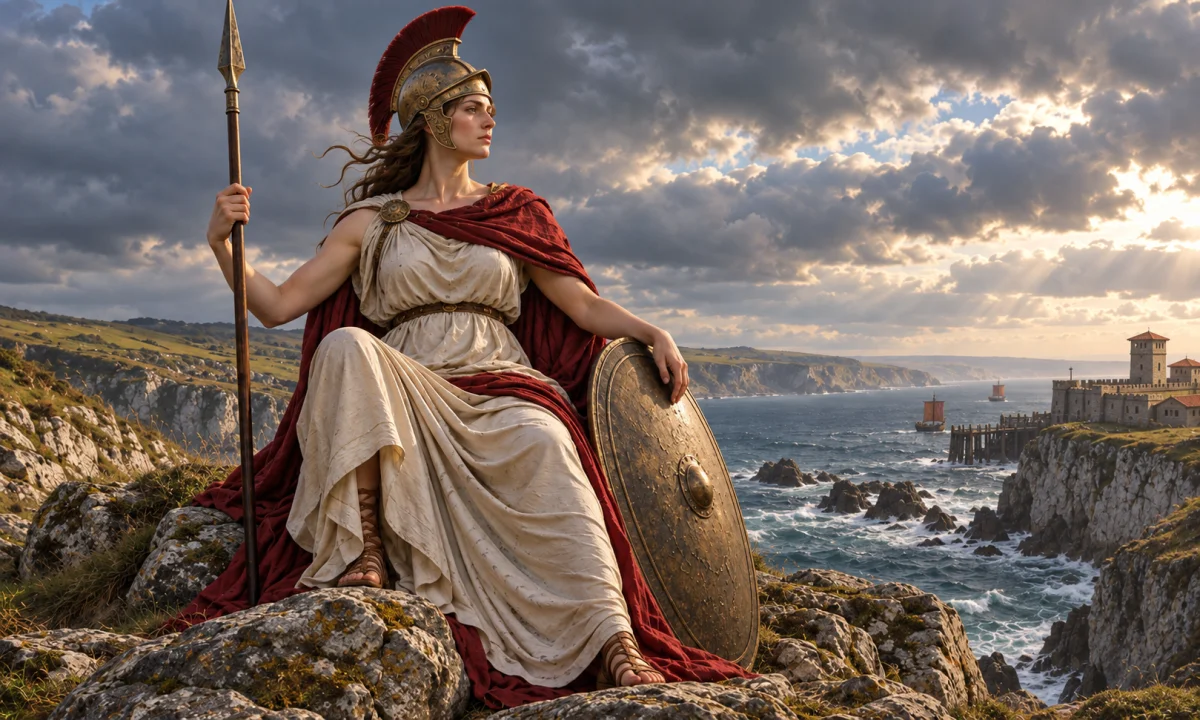
Britannia
Britannia is the Roman personification of Britain and the province that Rome established in parts of the British Isles. She is usually represented as a helmeted woman seated beside a shield, holding a spear or military s…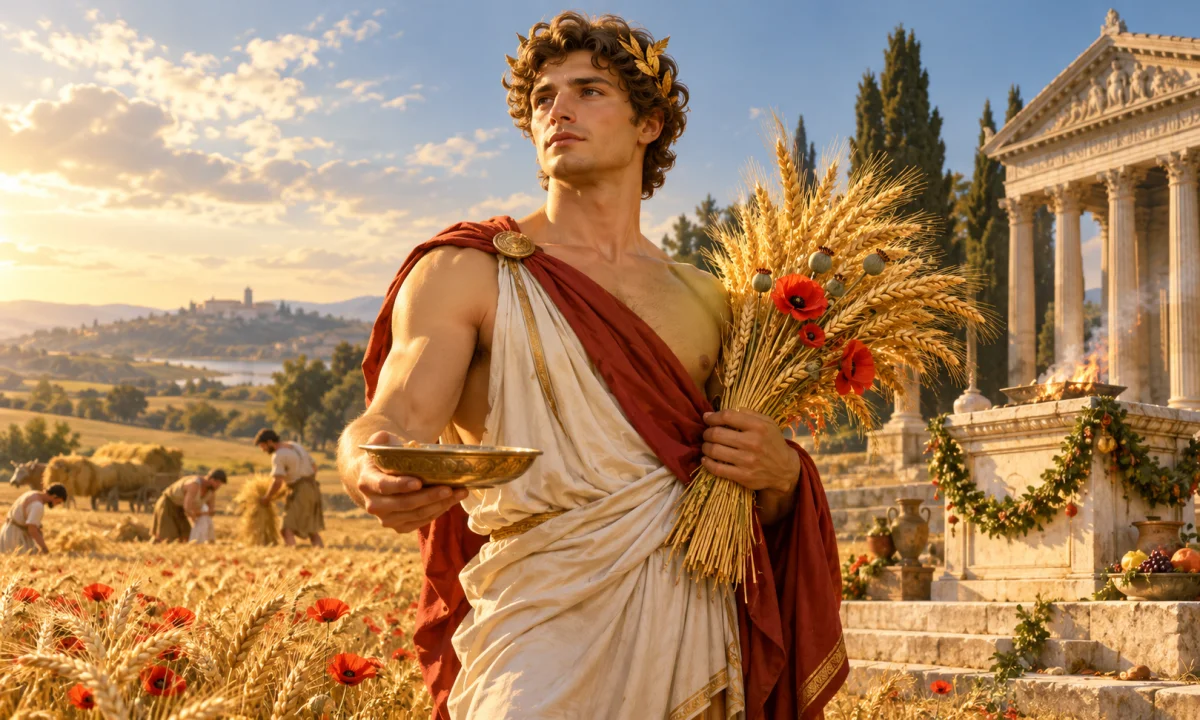
Bonus-eventus
Bonus Eventus was a Roman divine personification of a successful or favourable outcome. His name literally means “good result” or “fortunate outcome”: bonus means “good”, while eventus means “outcome”, “issue” or “result…
Mens
Mens was a Roman divine personification of the mind, understanding, intelligence and sound judgment. Although the Latin word mens is an ordinary noun meaning “mind” or “intellect,” Roman religious practice could treat su…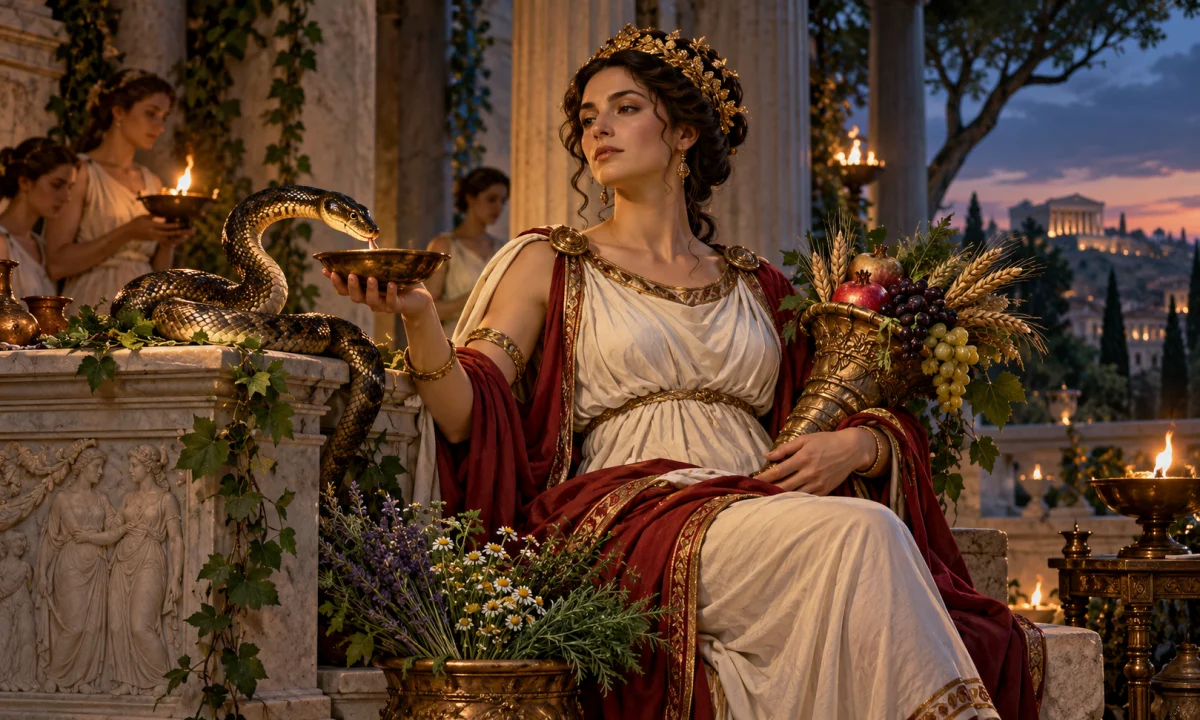
Bona-dea
Bona Dea, whose name means “the Good Goddess,” was a Roman goddess associated with women, fertility, healing, and protection. Her worship was among the most secretive rituals of ancient Rome. Men were excluded from her p…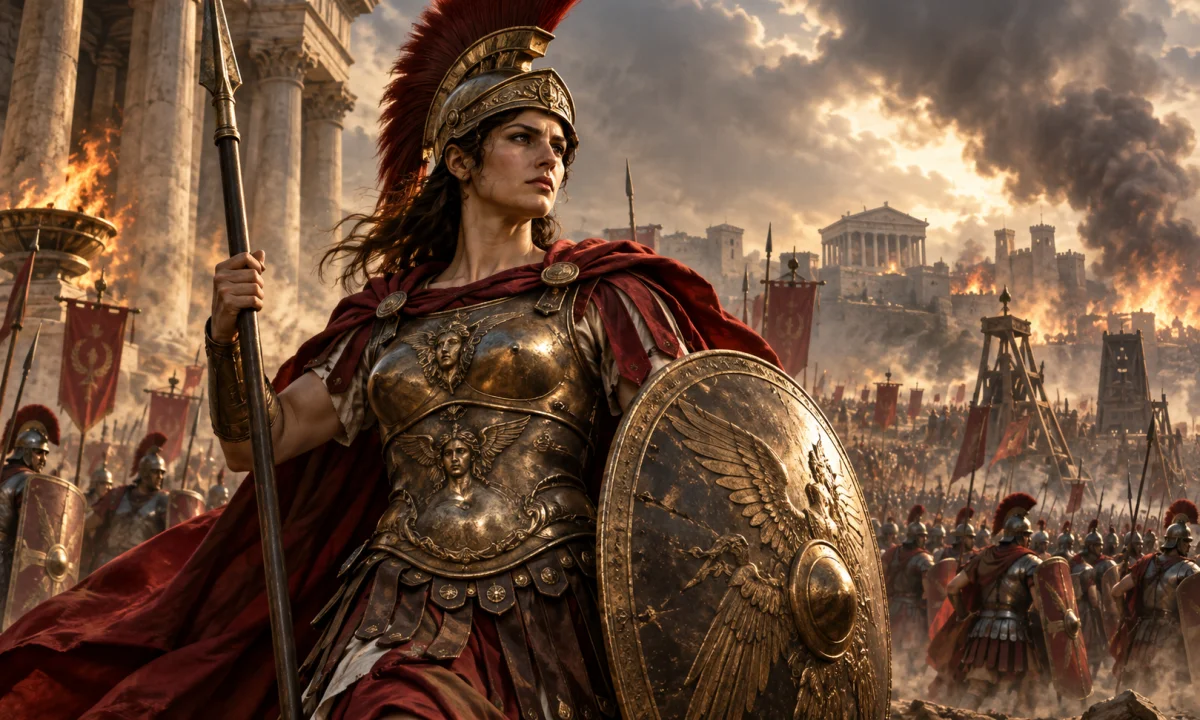
Bellona
Bellona is a Roman goddess associated with war, military violence and the dangerous power of armed conflict. Her name is closely related to the Latin word bellum, meaning “war,” and she was sometimes represented as a hel…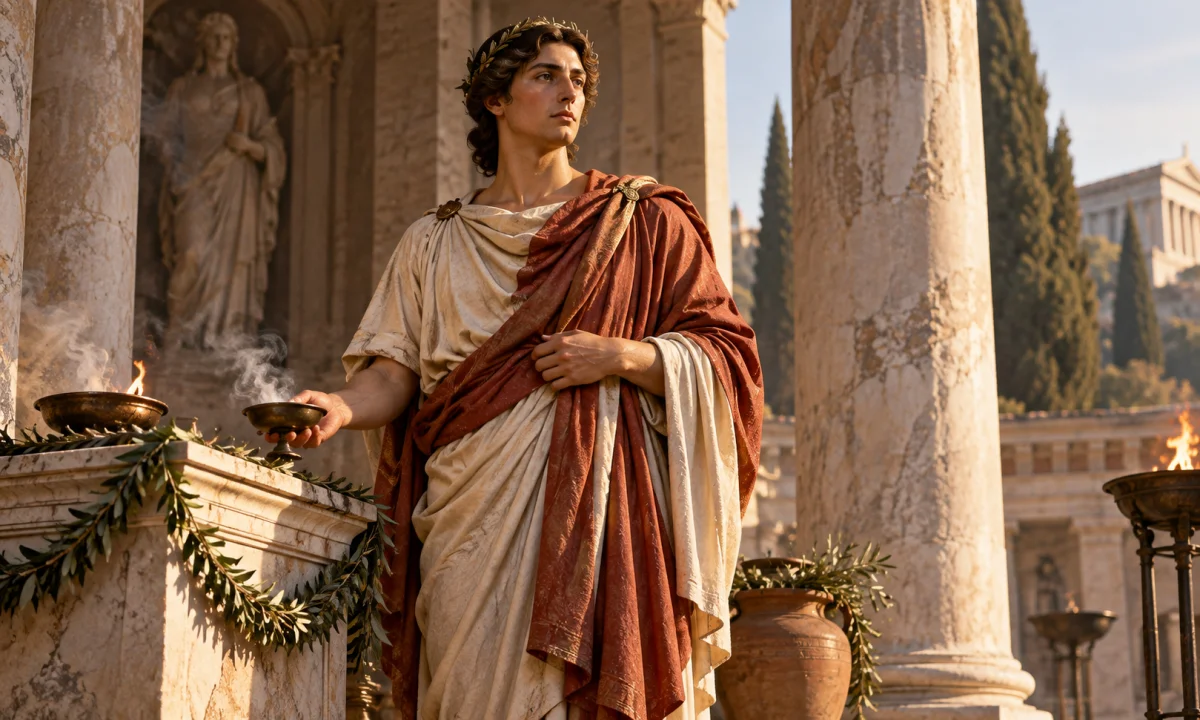
Bellifluficus
Bellifluficus is not a securely attested deity, spirit, hero or legendary creature of ancient Roman mythology. The name does not appear as a recognised figure in the standard body of Roman religious evidence, and no reli…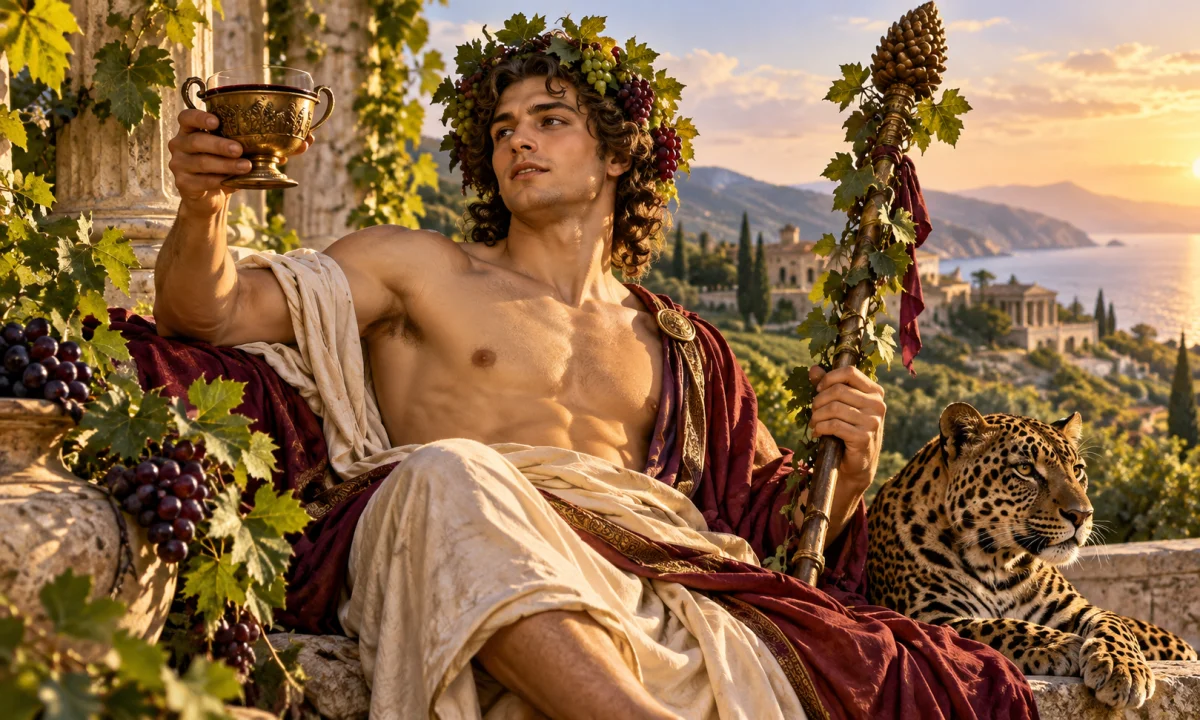
Bacchus
Bacchus is the Roman god associated with wine, ecstatic celebration, fertility, theatre and the loosening of ordinary social boundaries. He is closely identified with the Greek god Dionysus, and Roman writers often use t…
Auster
Auster is the Roman personification of the south wind. In Latin poetry and natural philosophy, he is associated with the warm, damp air that comes from the south, bringing clouds, rain, storms and, at times, oppressive h…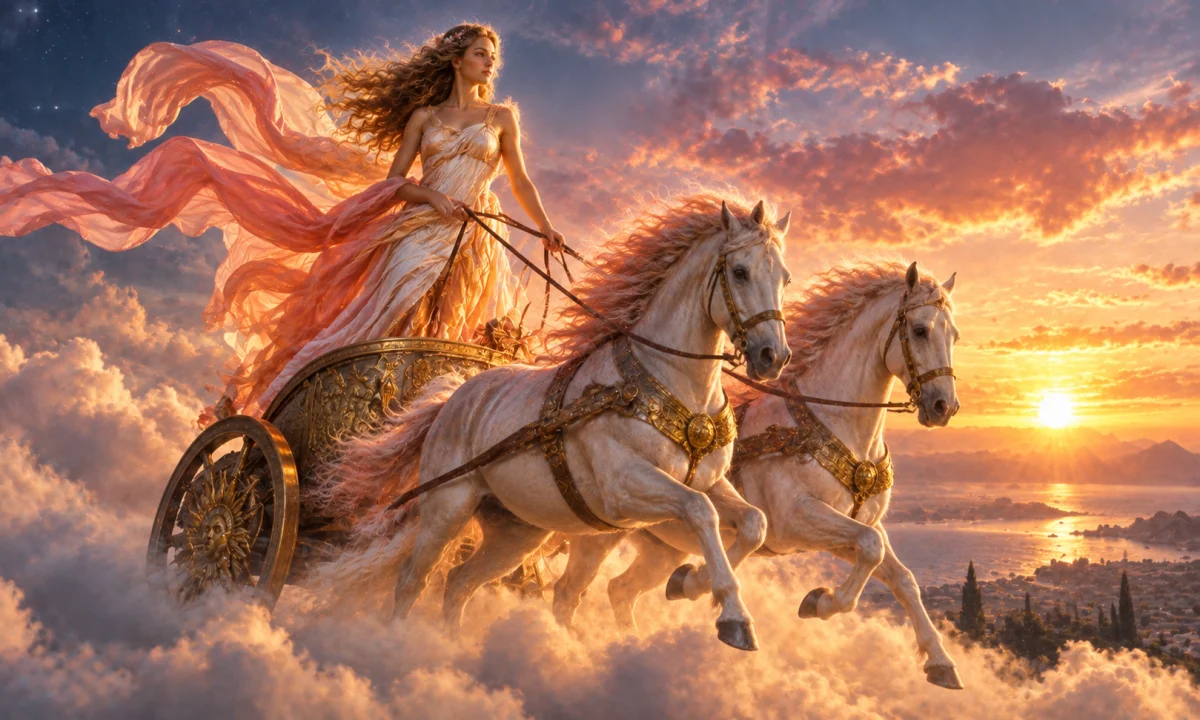
Aurora
Aurora is the Roman goddess and poetic personification of the dawn. Each morning she brings light to the eastern horizon, opening the way for the sun and marking the transition between night and day. Her name is also the…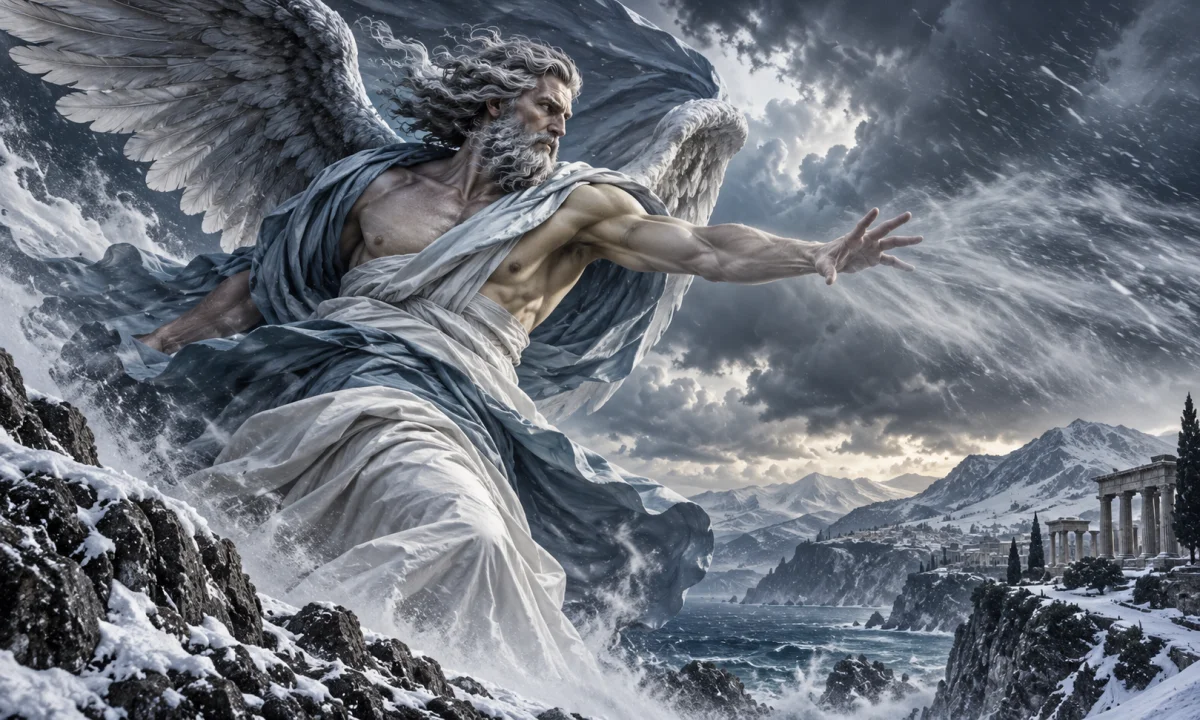
Aquilo
Aquilo is the Roman personification of the north wind, or in some systems the cold wind blowing from the north-northeast. He belongs to the Roman tradition of naming and humanising the principal winds, which were importa…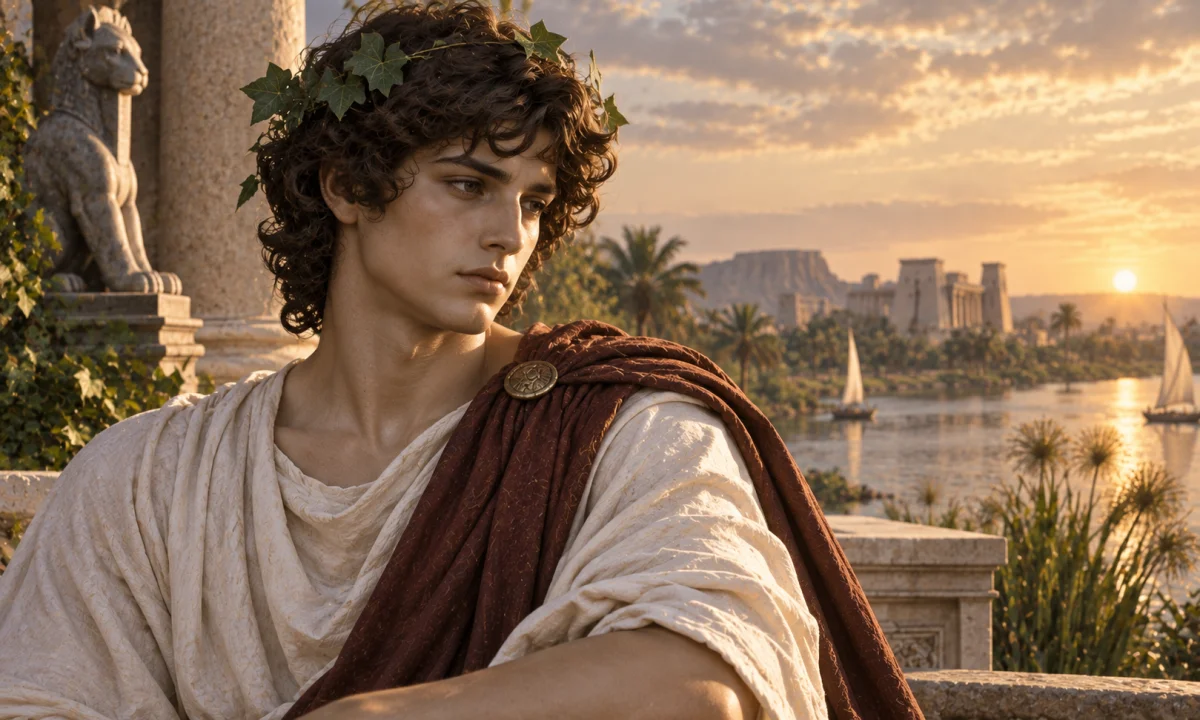
Antinous
Antinous was a young man from Bithynia who became the beloved companion of the Roman emperor Hadrian and, after his death, the focus of a widespread religious cult. Unlike most figures classified under Roman mythology, A…
Anna-perenna
Anna Perenna is a Roman goddess associated with the yearly cycle, continued life and the renewal of time. Her festival was celebrated on 15 March, the Ides of March, with outdoor feasting, drinking, songs and prayers for…Roman mythology: myths, traditions and legends
Roman mythology encompasses the sacred narratives, divine figures, foundation legends and symbolic traditions associated with ancient Rome and the wider Roman world. It includes stories about the origins of the city, the ancestry of the Roman people, the deeds of legendary kings and the relationships between gods, communities and political institutions. Roman mythology developed within a living religious system based on ritual, sacrifice, vows, divination, festivals, household worship and the maintenance of correct relations with divine powers. It was never simply a renamed version of Greek mythology, although sustained contact with Greek culture profoundly influenced Roman literature, art and the interpretation of the gods.
The term mythology refers here to culturally significant narratives concerning divine action, sacred origins and collective identity. It does not imply that Roman religious traditions were merely fictional. Myth, history, genealogy and political memory often overlap in Roman sources. Stories of Aeneas, Romulus, Numa and the early kings were treated as part of Rome’s meaningful past, even though modern historical and archaeological methods cannot confirm every event as narrated.
Scope and cultural setting
Roman mythology grew from the religious traditions of Rome and other communities in ancient Italy. Early Roman religion developed through contact with neighbouring Latin, Sabine, Etruscan and Greek-speaking peoples. As Roman power expanded, it incorporated deities, rituals and sacred traditions from across the Mediterranean and beyond.
The Roman world was culturally diverse. Local communities in Italy, Gaul, Iberia, North Africa, Egypt, Syria and other provinces continued to honour regional gods while participating in Roman civic religion. A deity might be identified with a Roman god without losing a local name or character.
There was no single authoritative scripture defining every Roman god or myth. Public priesthoods maintained ritual traditions, while poets and historians offered different literary versions of divine stories. Household religion and local cult could differ considerably from the mythology celebrated in elite literature.
Sources and their limitations
Roman mythology is known through poetry, historical writing, inscriptions, calendars, ritual texts, sculpture, coins, temples and archaeological evidence. Important literary authors include Virgil, Ovid and Livy, but their works were created in particular political and artistic settings.
Virgil’s Aeneid presents the Trojan hero Aeneas as an ancestor of the Roman people and connects his journey with the future greatness of Rome. Written during the reign of Augustus, the poem explores duty, war, loss and imperial destiny. It is an epic work of literature rather than a neutral historical record.
Ovid’s Metamorphoses preserves numerous divine and heroic narratives, many derived from Greek traditions but reshaped through Roman poetry. His accounts became extremely influential in later European art and literature, yet they do not represent every form of Roman belief.
Livy and other historians recorded stories about the foundation and early rulers of Rome. They often acknowledged uncertainty and conflicting traditions. Archaeology can illuminate early settlement, political development and ritual practice, but it cannot verify complete legendary biographies.
Roman religion and Greek mythology
Roman and Greek gods became closely identified over centuries of cultural exchange. Jupiter was associated with Zeus, Juno with Hera, Minerva with Athena, Venus with Aphrodite and Mars with Ares. These pairings were influential but did not make the deities identical in every respect.
Roman gods possessed their own cult titles, festivals, priesthoods and civic functions. Mars, for example, shared the martial character of Ares but held a more central role in Roman identity, agriculture, ancestry and state protection. Venus became associated with Greek Aphrodite while also serving as an ancestral figure for the family of Julius Caesar.
Roman writers adopted Greek genealogies and narratives because Greek literature offered a prestigious and highly developed mythological language. At the same time, Roman ritual often preserved older or distinctly Italian traditions not explained through Greek myth.
The relationship was therefore one of adaptation, identification and creative reinterpretation rather than simple copying. Roman mythology is best understood through both its Italic foundations and its participation in the wider Greco-Roman cultural world.
Divine powers and ritual relationships
Roman religion placed great importance on maintaining proper relations with divine powers through correct ritual. The principle commonly described as pax deorum, the peace of the gods, concerned the harmonious relationship between the community and the divine world.
The Latin word numen can refer to divine will, presence or effective power. It should not be treated simply as the name of a class of vague nature spirits. Roman worship addressed gods through precise names and titles, often identifying the particular aspect of divine power relevant to a ritual.
Prayer, sacrifice and vows followed established forms. Accuracy mattered because errors could require repetition or correction. This concern with ritual precision did not mean that Roman religion lacked emotion or personal devotion; it reflected a religious culture in which obligation, reciprocity and public order were closely connected.
Jupiter and the authority of the state
Jupiter was the leading god of the Roman state and was associated with the sky, thunder, oaths, law and political authority. His major temple on the Capitoline Hill was shared with Juno and Minerva, forming the Capitoline Triad.
As Jupiter Optimus Maximus, Jupiter Best and Greatest, he received vows from magistrates and offerings associated with military victory. Triumphing generals processed to his temple, acknowledging that success belonged within the divine and civic order.
Jupiter’s Roman identity cannot be reduced to the literary adventures of Zeus. Although Greek mythology shaped stories told about him, his cult was deeply connected with treaties, public office and the sovereignty of Rome.
Juno and the life of the community
Juno was associated with marriage, childbirth, female life, political authority and the protection of the Roman people. She possessed many titles reflecting different functions and local cults.
As Juno Regina, she was a queenly protector. As Juno Moneta, she was connected with warning or counsel, and Rome’s mint was later located near her temple, contributing to the history of words related to money.
Greek influence identified Juno with Hera and introduced myths concerning the marriage and conflicts of Jupiter and Juno. These literary narratives should not obscure the broader civic and ritual importance of the Roman goddess.
Minerva and skilled intelligence
Minerva was associated with craftsmanship, knowledge, strategy, medicine and professional skill. She belonged to the Capitoline Triad and was honoured by artisans, teachers and other specialised groups.
Her identification with Athena brought Greek narratives of divine birth, heroic assistance and contests of skill into Roman literature. However, Minerva’s Roman cult developed through Italian and possibly Etruscan contexts as well as Greek influence.
The festival of Quinquatria became associated with Minerva and with people engaged in intellectual or artistic work. Her religious role therefore extended beyond the simplified modern description of a goddess of wisdom.
Mars and Roman ancestry
Mars was one of the most important Roman gods. He was associated with warfare, military protection, agriculture and the strength of the Roman community. His sacred season was closely connected with spring, when both farming and military campaigning resumed.
Unlike the frequently disruptive Ares of Greek epic, Mars occupied a respected ancestral position in Roman tradition. He was said to be the father of Romulus and Remus through the Vestal priestess Rhea Silvia.
Priests known as the Salii performed ceremonies involving sacred shields and ritual movement in his honour. Mars also received numerous local titles linking him with particular military, territorial or protective functions.
Venus and the destiny of Rome
Venus was associated with attraction, fertility, beauty and generative power. Through identification with Aphrodite, she became the mother of the Trojan hero Aeneas and therefore an ancestor of the Roman people.
Julius Caesar’s family claimed descent from Venus through Aeneas’s son Iulus. Caesar promoted the cult of Venus Genetrix, Venus the Ancestress, connecting family prestige with divine genealogy.
Augustan literature further developed Venus’s relationship with Roman destiny. Her identity combined older Roman religious functions with Greek myth and political claims about ancestry.
Vesta and the sacred hearth
Vesta was the goddess of the hearth, both within the household and at the centre of the Roman state. Her sacred fire represented the continuity and security of the community.
The Vestal Virgins maintained the public flame and performed important rituals. They were selected as children, served for many years and held an unusual legal and social status compared with most Roman women.
Popular accounts often focus on the severe punishment imposed for violating their vow of chastity. Their wider importance lay in preserving sacred objects, participating in ceremonies and embodying the integrity of Rome’s ritual life.
Vesta was identified with the Greek Hestia, but Roman state worship gave her priesthood and public fire a distinctive civic significance.
Janus and beginnings
Janus was associated with beginnings, transitions, doorways, gates and the passage of time. He was commonly represented with two faces looking in opposite directions, reflecting his authority over movement between conditions.
Prayers and ceremonies often invoked Janus at the beginning because he opened access to other divine powers. The first month of the modern calendar, January, bears a name derived from him.
The doors of the shrine of Janus were traditionally said to stand open during war and closed during peace. Ancient writers treated their closure as a rare and significant event.
Janus has no exact Greek equivalent. His importance demonstrates that Roman religion contained major divine figures whose identities were not dependent upon Greek mythology.
Saturn and the memory of a golden age
Saturn was associated with agriculture, sowing, abundance and a legendary period of prosperity. Roman tradition claimed that he came to Italy after being displaced by Jupiter and ruled during an ancient golden age.
His festival, the Saturnalia, involved feasting, gift-giving, public celebration and a temporary relaxation of some social conventions. Enslaved people could receive unusual freedoms within the festival, though the social hierarchy was not permanently abolished.
Saturn was identified with the Greek Cronus, bringing the Greek succession myth into Roman tradition. His Roman image nevertheless emphasised agriculture and the memory of an idealised ancient order.
Quirinus and the transformed founder
Quirinus was an ancient Roman deity whose original character remains uncertain. He may have been associated with the organised citizen body, the community under arms or an early form of martial and civic power.
Later Roman tradition identified Quirinus with the deified Romulus. According to this interpretation, Rome’s founder disappeared from the human world and returned in divine form.
Quirinus belonged with Jupiter and Mars in an early group of major gods reflected in the offices of the highest-ranking flamines, or specialised priests. His declining prominence in later mythology shows how divine importance could change over time.
Aeneas and Trojan ancestry
Aeneas is a Trojan hero who survives the destruction of Troy and leads a group of refugees toward Italy. Greek literature knew him as a Trojan warrior, but Roman tradition transformed him into a foundational ancestor.
In the Aeneid, Aeneas is defined by pietas, a quality involving duty toward gods, family and community. He carries his father Anchises from burning Troy, protects household gods and accepts personal suffering in order to fulfil a larger destiny.
His relationship with Dido, queen of Carthage, ends when he leaves to continue his mission. The episode links personal tragedy with Roman historical hostility toward Carthage, although it belongs to poetic myth rather than documented early history.
Aeneas eventually reaches Italy, forms alliances and fights a war that prepares for the future emergence of the Roman people. The poem presents Roman power as the distant outcome of exile, sacrifice and violent integration.
Romulus and Remus
Romulus and Remus are the legendary twin founders associated with the beginnings of Rome. Their mother, Rhea Silvia, is described as a Vestal, while Mars is named as their divine father in the dominant tradition.
The twins are abandoned near the River Tiber and nursed by a she-wolf before being raised by the shepherd Faustulus and his wife. The image of the wolf became one of Rome’s most recognisable foundation symbols.
After restoring their grandfather to power, the brothers decide to found a new city but quarrel over its location, divine signs and authority. Romulus kills Remus or is responsible for his death in most versions.
The story presents Rome as founded through divine ancestry, survival and fraternal violence. It also raises questions about political boundaries, since Remus’s fatal act is often connected with crossing or mocking the new city wall.
The Sabine women and social incorporation
Roman foundation tradition describes the early city as lacking women and therefore unable to continue through future generations. Romulus invites neighbouring communities to a festival, during which Roman men seize Sabine women.
The event is often called the rape of the Sabine women, using an older sense of the word referring to abduction, although the story involves forced marriage and violence. It should not be romanticised as a simple courtship legend.
When the Sabine men later attack Rome, the abducted women intervene between their fathers and husbands, preventing further bloodshed. The resulting settlement unites the communities.
The narrative presents conflict and incorporation as central to Roman identity. It also reflects later Roman ideals about marriage, citizenship and the absorption of outsiders into the political community.
Numa and the creation of religious order
Numa Pompilius, the legendary second king of Rome, is credited with establishing many priesthoods, rituals and institutions. Whereas Romulus represents warfare and foundation, Numa represents peace, law and sacred organisation.
Tradition associates him with the nymph Egeria, who advises him concerning religious matters. Their relationship reflects the belief that Roman institutions possessed divine approval and ancient authority.
Many rituals attributed to Numa probably developed across long periods rather than being created by one individual. Roman writers used his figure to explain the sacred origins of religious practices whose true histories were difficult to reconstruct.
Household gods and ancestral protection
Roman religion extended into the household through worship directed toward the Lares, Penates, the household hearth and the genius of the family’s male head. These categories were related but not identical.
The Lares were protective powers associated with households, neighbourhoods, roads and other places. Household shrines often contained images of dancing Lares together with representations of family and prosperity.
The Penates were connected with stored food, domestic continuity and the protection of the household. Roman state tradition also recognised public Penates associated with the survival of the Roman people.
The genius represented generative or protective power associated with a person, family or institution. The corresponding female concept was sometimes expressed through the Juno of a woman, though beliefs and terminology varied.
The dead, Manes and funerary obligation
Romans maintained relationships with the dead through burial, offerings, commemorative meals and festivals. The Di Manes were the divine dead or collective spirits of ancestors, often invoked on funerary inscriptions.
Proper burial and remembrance helped preserve peaceful relations between the living and the dead. Neglected or restless spirits could become dangerous in later religious and literary imagination.
The Lemuria festival involved household rites intended to address threatening dead known as lemures. Other festivals honoured ancestors more peacefully, demonstrating that Roman traditions distinguished among different conditions of the dead.
Literary descriptions of the underworld drew heavily upon Greek mythology, especially through stories of Hades, the rivers of the dead and figures such as Charon. These images existed alongside Roman family-based rituals that focused on tombs and ancestral memory.
Augury, omens and divine communication
Roman public decisions could require consultation of divine signs. Augurs interpreted the flight and behaviour of birds, while other specialists examined lightning, unusual events or the entrails of sacrificed animals.
Divination did not usually attempt to predict an unavoidable future in every detail. It sought to determine whether divine powers approved a proposed action and whether ritual conditions were favourable.
Prodigies such as strange births, unusual weather or unexplained natural events could be reported to the authorities. Priests recommended ceremonies intended to restore correct relations with the gods.
Political competition sometimes influenced the interpretation of signs, but that does not mean divination was regarded merely as fraud. It formed a recognised part of Roman public religion and decision-making.
Priests and religious offices
Roman religion had no single sacred book or unified priestly class comparable to a modern church. Religious authority was distributed among several colleges, priesthoods and magistrates.
The pontifices supervised important aspects of ritual law and the calendar. Augurs interpreted signs, while the quindecimviri consulted the Sibylline Books during major crises. Specialised flamines served particular gods.
Many priests were also politicians. Religious office formed part of elite public life, reflecting the close relationship between ritual, law and government.
The Sibylline Books were a state-controlled collection of prophetic texts consulted under official authority. They should not be confused with every later collection of writings attributed to prophetic Sibyls.
Imperial cult and deified rulers
Roman emperors became associated with divine honour in several ways. Deceased emperors could be formally declared divine by the Senate, while living rulers received cult in forms that varied between Rome and the provinces.
The imperial cult linked loyalty, public ceremony and the religious unity of the empire. In some eastern cities, traditions of honouring rulers as divine were already well established before Roman rule.
Romans did not necessarily believe that an emperor was identical to Jupiter or another major god. Cult could focus on the ruler’s genius, divine status after death or his position within the sacred order of the state.
Refusal to participate could become politically dangerous, particularly for some early Christians, although patterns of persecution differed across periods and regions.
Foreign cults in the Roman world
Roman religion continually incorporated deities and rituals from other cultures. Cybele, known in Rome as the Magna Mater, arrived from Anatolia during the Second Punic War. Egyptian cults of Isis and Serapis spread widely, while Mithras became important in male initiation groups during the imperial period.
These traditions should not all be merged into Roman mythology as though they were minor members of one pantheon. They retained distinct histories, priesthoods and ritual practices even as they adapted to Roman society.
Roman authorities could welcome, regulate or suppress foreign rites depending on political circumstances. Religious exchange was therefore shaped by both cultural openness and state control.
Christianisation and the end of public cult
Christianity developed within the Roman Empire and eventually received imperial support during the fourth century. Traditional sacrifices and temples did not disappear immediately, and religious change varied greatly across regions.
Christian writers reinterpreted Roman gods as demons, false deities, allegories or deified humans. Temples could be abandoned, reused or converted, while some festivals and customs changed meaning over time.
Roman mythological literature continued to be copied because of its educational and artistic value. Medieval and Renaissance readers therefore inherited stories of Roman gods even after their public worship had ended.
Later reception and common misconceptions
Roman mythology profoundly influenced European literature, political symbolism, painting, sculpture and astronomy. Renaissance artists often used Roman names such as Venus, Mars and Jupiter even when depicting stories derived from Greek sources.
Modern summaries frequently present Roman gods as Greek gods with different names. This overlooks Roman ritual, political institutions, local deities and concepts such as Vesta’s public hearth, the Lares, Janus and the imperial cult.
Another misconception treats Roman foundation legends as straightforward historical records. Aeneas, Romulus and Numa shaped Roman understanding of ancestry and authority, but their narratives combine cultural memory, religious explanation and literary construction.
Roman mythology is distinguished by the close relationship it establishes among sacred narrative, ritual duty, family ancestry and political power. Its gods were present not only in poetic adventures but in treaties, households, military campaigns, funerals, public offices and the ceremonies through which Romans understood their place within an expanding and religiously diverse world.