 WORLD
WORLD
Native American mythology
Articles about Native American mythology within North America.
Last articles
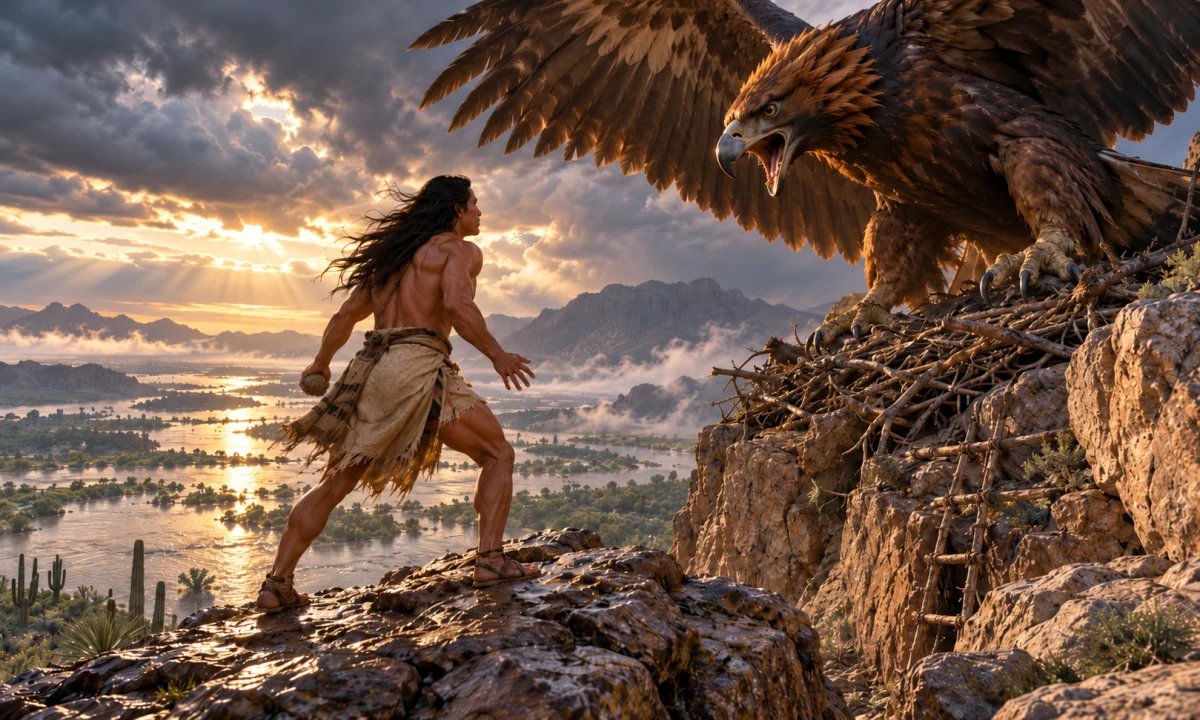
Szeukha
Szeukha is a name associated in some modern reference works with a gigantic bird of Native American mythology. The identification is uncertain, however. Unlike well-documented figures such as the Thunderbird, Szeukha is …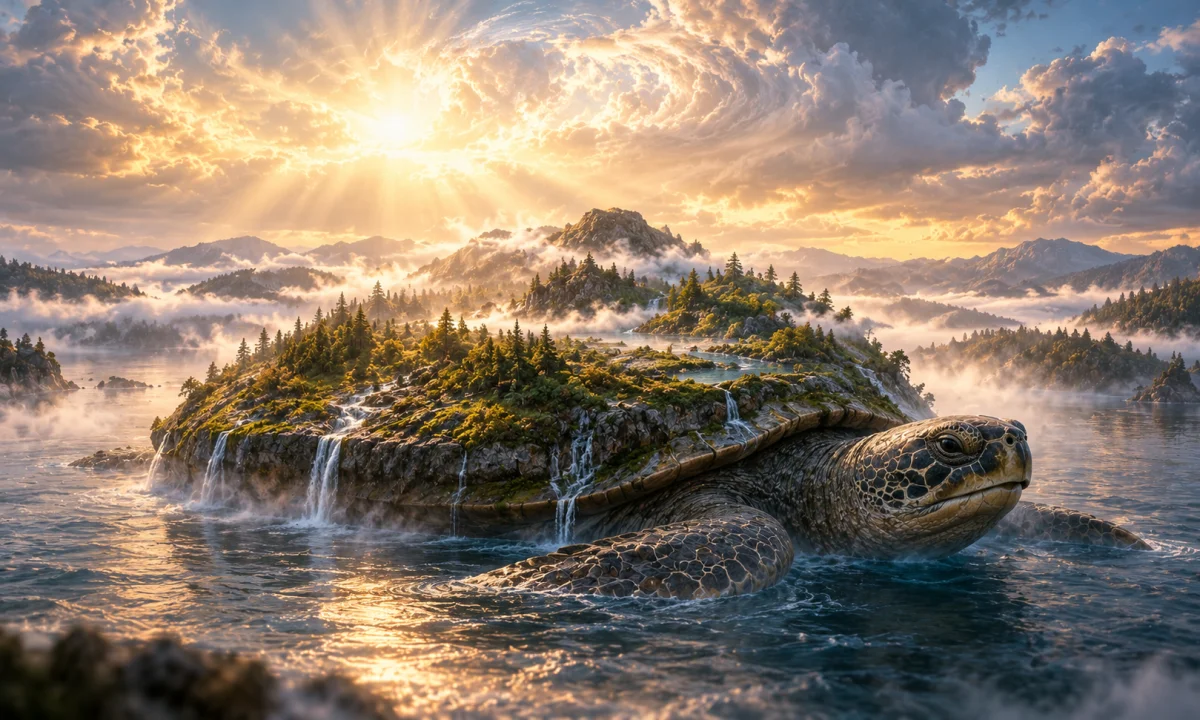
Tabaldak
Tabaldak is a creator figure in Abenaki traditional narratives, a body of Indigenous traditions from the northeastern woodlands of North America. The Abenaki are part of the wider Wabanaki cultural and linguistic world, …
Tamit
Tamit is an obscure name associated in some modern reference lists with Native American mythology, but its traditional identity is not securely established. No single, widely recognized Indigenous tradition can be identi…
Tawiscara
Tawiscara is a powerful adversarial figure in traditions associated especially with the Wendat (Huron) and with other Iroquoian-speaking peoples of northeastern North America. He is commonly described as the hostile or d…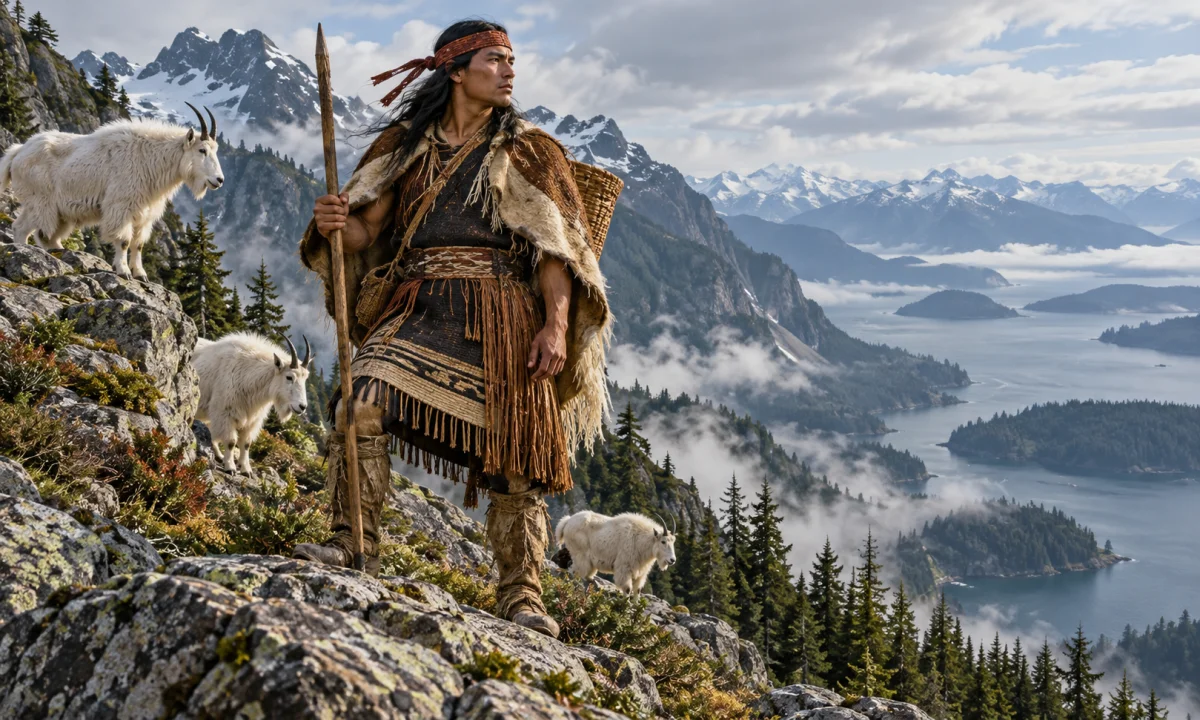
Tewi’xilak
Tewi’xilak is a name associated with the traditional narratives of the Kwakwaka’wakw, an Indigenous peoples of the central and northern coast of British Columbia. In English-language summaries, Tewi’xilak is usually desc…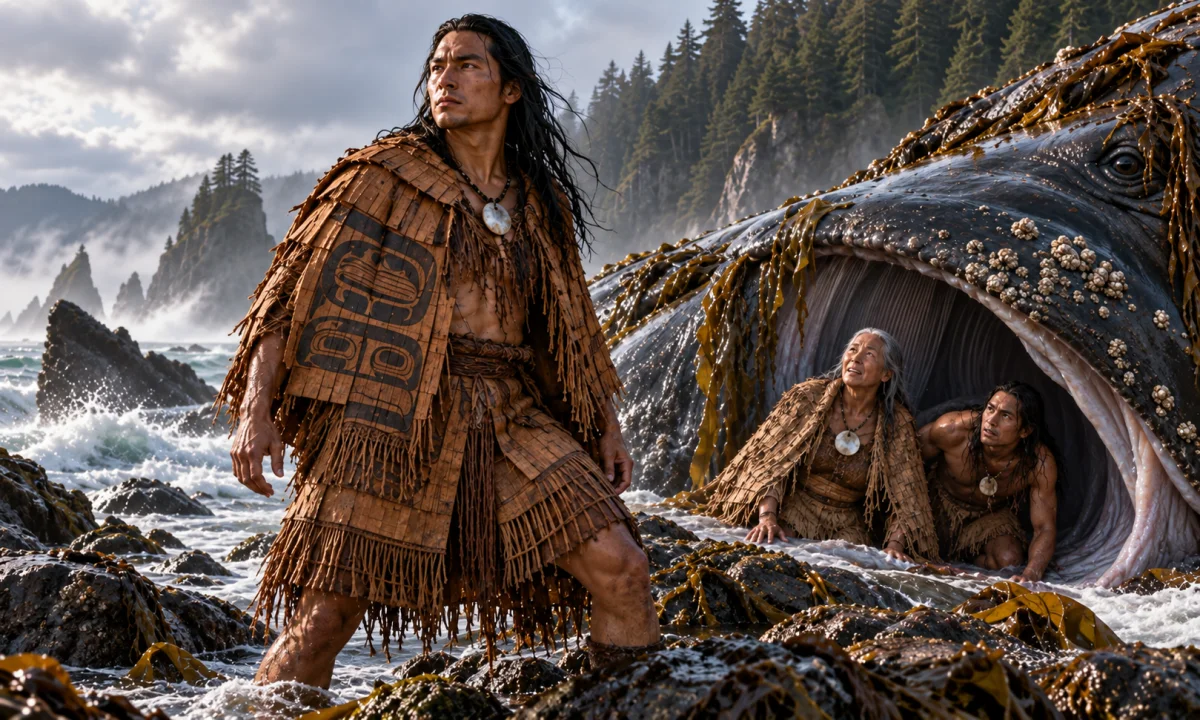
Tihtipihin
Tihtipihin is an obscure name associated in some modern English-language references with Native American legendary beings, especially dangerous monsters connected with water. Its exact identity, community of origin and t…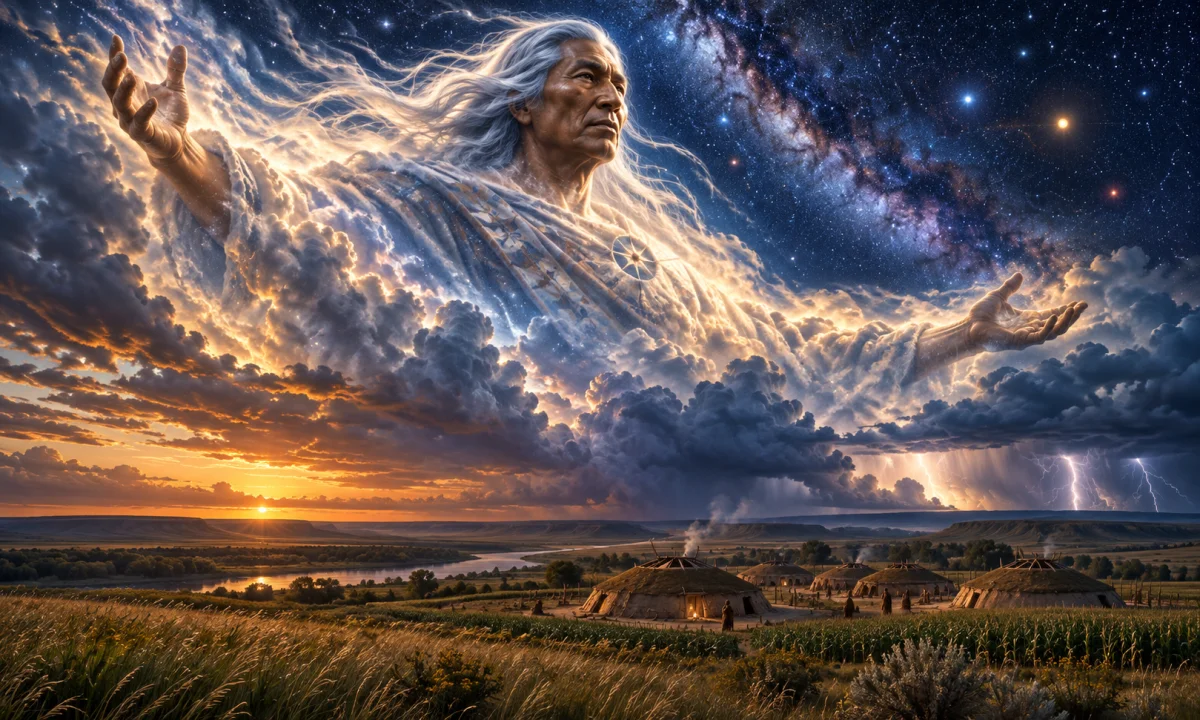
Tirawa
Tirawa is the name commonly used for the supreme power or creator in Pawnee religious tradition, especially in English-language descriptions of the religion of the Pawnee people of the Great Plains. The name is also writ…
Tolmalok
Tolmalok is a name associated in some modern reference lists with Native American mythology, but its traditional identity is uncertain. It is sometimes presented as a spirit or deity connected with death, the underworld,…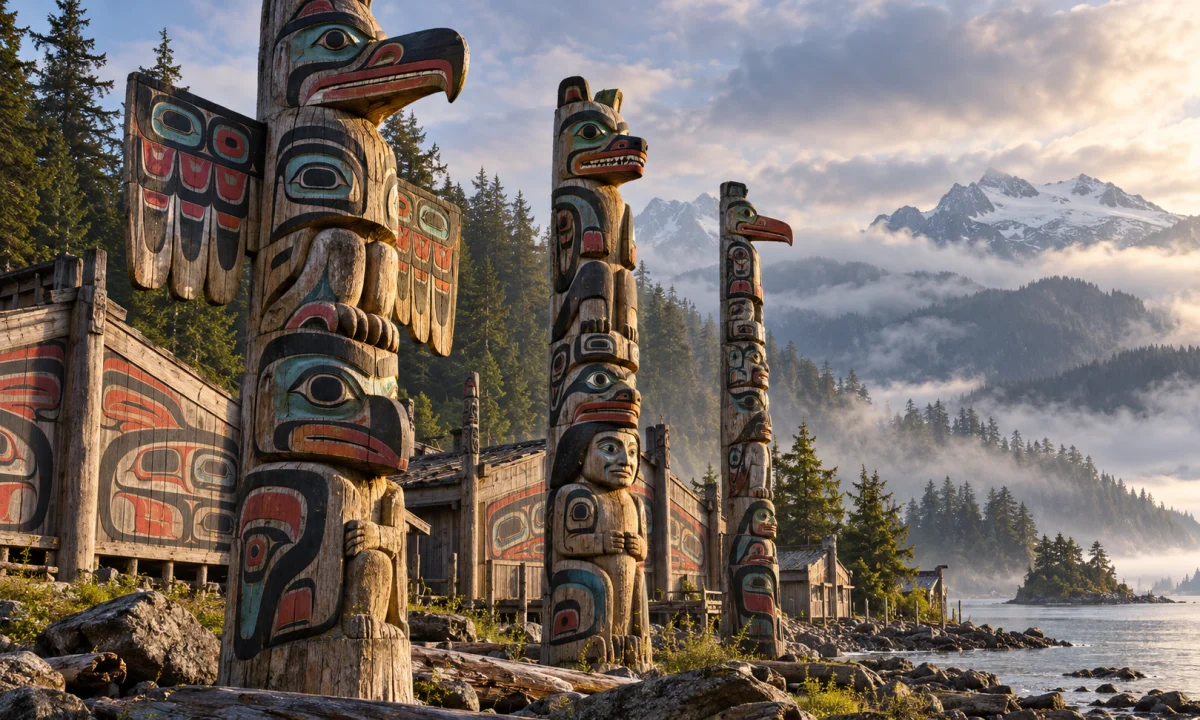
Totem Poles
Totem poles are monumental carved posts associated mainly with Indigenous peoples of the Pacific Northwest Coast of North America. They are especially connected with Haida, Tlingit, Tsimshian, Gitxsan, Nisga'a, Haisla, H…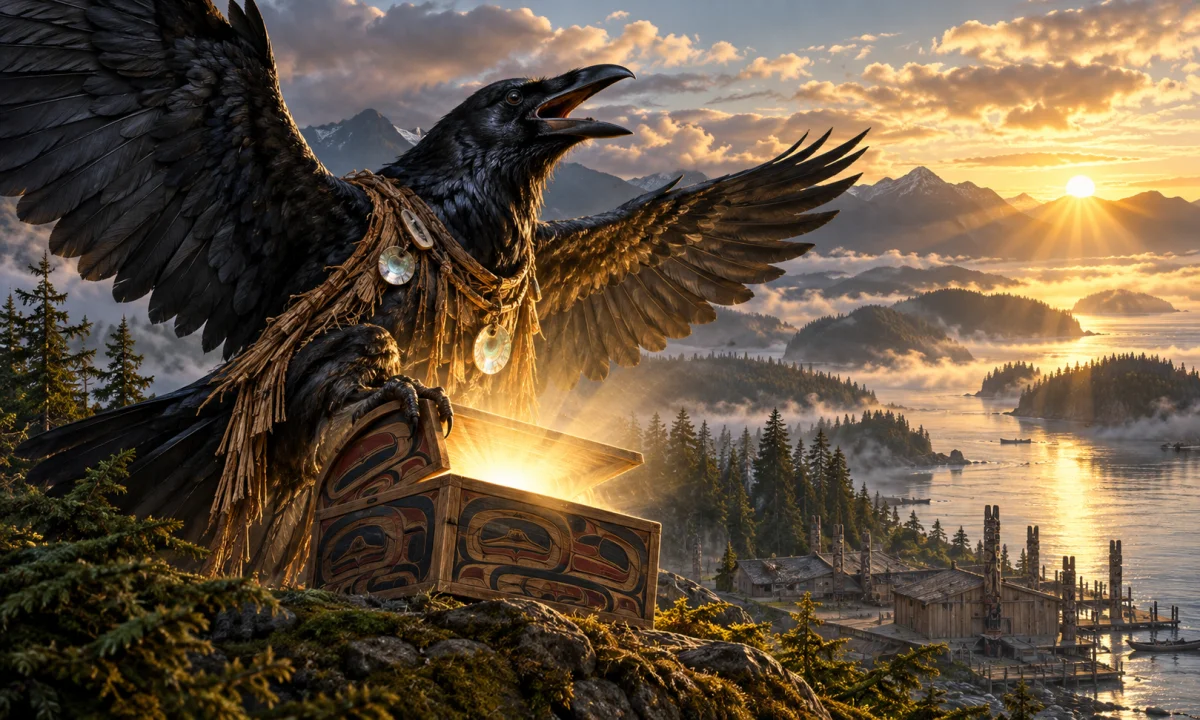
Txamsem
Txamsem is the Raven culture hero of Tsimshian tradition in the Pacific Northwest of North America. He is associated with the Tsimshian peoples of what is now coastal British Columbia and southeastern Alaska, especially …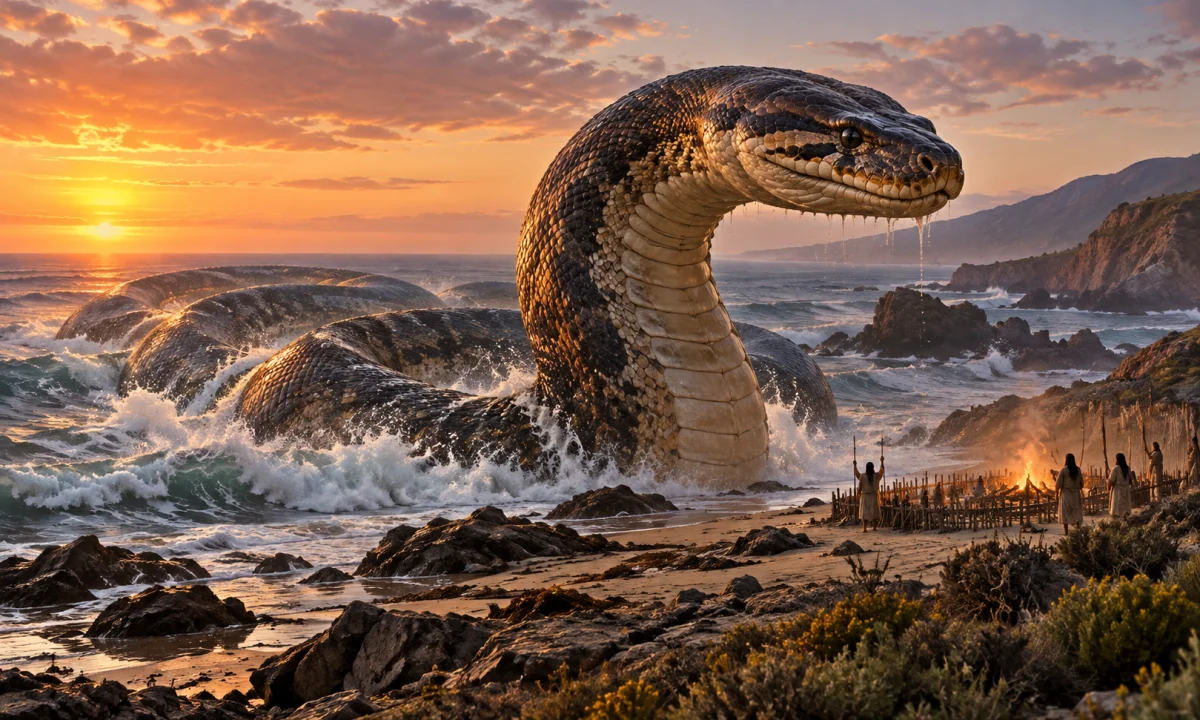
Umai-hulhlya-wit
Umai-hulhlya-wit is an obscure name associated in some modern catalogues with Native American mythology. Its precise cultural origin, meaning and identity are uncertain. Unlike better-documented figures such as Coyote, R…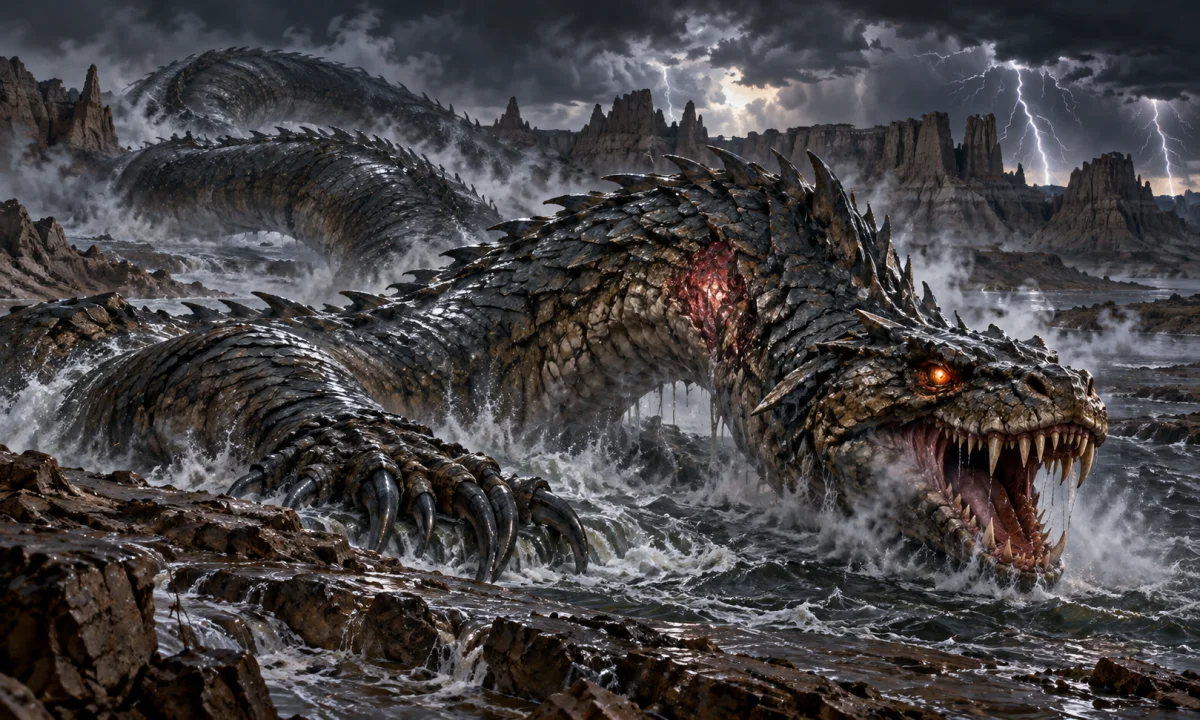
Uncegila
Uncegila, also written Unhcegila, is a great serpent or water monster found especially in Lakota traditional narratives. The name is often rendered in English as “the great serpent,” although translations and spellings v…Native American mythology: myths, traditions and legends
Native American mythology is a broad comparative term for the sacred narratives, origin traditions, culture heroes, supernatural beings, ancestral histories and ceremonial concepts of the many Indigenous peoples of North America. It does not describe a single religion, mythology or pantheon. Hundreds of distinct nations developed their own languages, political systems, sacred landscapes and religious traditions, from the Eastern Woodlands and Great Plains to the Southwest, Pacific Coast, Subarctic and Arctic. Stories involving figures such as Raven, Coyote, Nanabozho, Sky Woman or Thunderbird belong to particular cultural and linguistic traditions and should not be combined into one universal Native American mythology. The academic term mythology can refer to culturally significant sacred narratives without implying that they are false or merely fictional, and many Indigenous traditions remain part of living religious and cultural practice.
Most of these traditions were transmitted orally through storytelling, songs, ceremonies, ritual instruction and community memory rather than through a single written scripture. European colonisation, warfare, forced relocation, missionary activity, boarding schools and language suppression profoundly disrupted their transmission. At the same time, Indigenous communities preserved, adapted and revitalised their traditions. Much published material was recorded by outsiders during periods of intense colonial pressure, making it essential to distinguish community knowledge from missionary interpretation, ethnographic reconstruction and modern popular stereotypes.
The limits of the category
The term Native American is itself broad and historically variable. In common English usage it often refers particularly to the Indigenous peoples of the present-day United States, although related discussions may include Indigenous peoples of Canada and the wider North American continent.
No single supernatural system belongs to all these peoples. Cherokee traditions are not interchangeable with Hopi traditions, Lakota sacred narratives cannot be assumed to represent the Haudenosaunee, and beings known from Algonquian-speaking communities should not automatically be placed in the traditions of the Northwest Coast.
Shared themes can result from long histories of cultural contact, related languages or similar environments, but resemblance alone does not prove that two beings are identical or derived from one universal source.
Oral tradition and cultural authority
Traditional narratives have often been preserved through oral performance. Storytelling may depend upon season, audience, clan, age or ceremonial status, and some narratives are not intended for unrestricted public circulation.
This means that published folklore collections represent only part of the religious and narrative knowledge maintained within Indigenous communities. Different storytellers may preserve distinct versions without one necessarily being considered incorrect.
Translation presents another difficulty. Terms rendered in English as god, spirit, monster, soul, medicine or magic may represent concepts with no exact English equivalent. Older collectors frequently imposed Christian or European supernatural categories upon traditions they did not fully understand.
Creation and emergence
Native North American traditions preserve many different accounts of human and cosmic origins. Some describe people emerging from an earlier world beneath the earth. Others explain the formation of land from a primordial body of water, the actions of animals or the work of powerful creator and transformer beings.
Among several Indigenous peoples of the Southwest, emergence from earlier worlds is an important theme, although the details differ strongly between Hopi, Diné and other Pueblo or Southwestern traditions.
Elsewhere, Earth-Diver narratives describe animals descending beneath primordial waters to obtain earth from which land can be formed. Related stories appear among several peoples of the Eastern Woodlands and beyond, but each tradition has its own characters and theological setting.
There is therefore no single Native American creation story.
Sky Woman and Haudenosaunee tradition
Among Haudenosaunee peoples, widely recorded creation traditions describe Sky Woman descending from a celestial world toward a watery realm below.
Animals help her, and land is eventually established upon the back of a great turtle. Later portions of the narrative concern descendants whose actions shape the human world.
The details differ among Mohawk, Oneida, Onondaga, Cayuga, Seneca and Tuscarora traditions, and modern simplified retellings often remove the theological and ceremonial meanings embedded within them.
The image of the earth on a turtle has become widely known outside Haudenosaunee communities, but it should not be presented as the universal Indigenous North American creation belief.
Animals as persons and participants
Animals occupy major roles throughout many Indigenous North American narratives. They can speak, make decisions, transform, marry humans, establish customs or participate in the creation of the world.
Such stories should not automatically be reduced to symbolism. In many traditions, animals participate in relationships of reciprocity involving hunting, food, territory and ritual responsibility.
The characteristics assigned to animals also depend heavily on environment. Buffalo traditions naturally occupy particular importance on the Plains, while salmon can have profound cultural significance in the Pacific Northwest and marine mammals in Arctic societies.
Coyote
Coyote is one of the most widespread figures in the oral traditions of western North America. He can appear as creator, transformer, culture hero, sexual trickster, fool or source of disorder depending on the nation and story.
Coyote often achieves important results through deception, curiosity or accident rather than heroic perfection. In some narratives his selfishness creates problems that humans must thereafter endure.
It is misleading to construct one universal biography for Coyote from stories collected among unrelated peoples. Plateau, Great Basin, California, Plains and Southwestern traditions can portray him very differently.
His widespread presence demonstrates both historical cultural connections and the flexibility of trickster storytelling.
Raven
Raven is especially prominent in the traditions of Indigenous peoples of the Northwest Coast and parts of Alaska. Among Tlingit, Haida, Tsimshian and other peoples, Raven may function as transformer, trickster or culture hero.
Well-known stories describe Raven acquiring or releasing important resources such as light, but versions differ according to cultural tradition.
Raven can be clever, greedy, powerful and ridiculous within the same body of stories. Modern categories such as good god or evil trickster therefore fail to capture his complexity.
Raven traditions should also not be merged indiscriminately with those of Arctic or other northern peoples simply because the bird appears across a wide geographical area.
Nanabozho and Algonquian traditions
Nanabozho, whose name has many spellings and related linguistic forms, is an important culture-hero and transformer figure in several Anishinaabe traditions.
Stories connect him with the shaping of the world, animals, human customs and episodes of trickery or instruction. His identity cannot be reduced to a generic rabbit or trickster figure, although animal associations occur in various traditions.
Related figures appear among other Algonquian-speaking peoples, but linguistic relationship does not make every story identical.
Thunderbird traditions
The English term Thunderbird is used for powerful bird-associated beings in the traditions of several Indigenous peoples, particularly in parts of the Great Plains, Great Lakes and Pacific Northwest.
These beings can be associated with thunder, storms and celestial power. Their names, relationships and religious meanings differ significantly between nations.
The popular image of Thunderbird as one universal Native American giant eagle is therefore misleading. The English label groups together culturally specific traditions that should be understood individually.
In some societies, Thunderbird beings also participate in wider relationships with water-associated powers, but these oppositions should not be universalised across North America.
Water beings and horned serpents
Powerful serpentine or underwater beings appear in several Native North American traditions, especially in the Eastern Woodlands, Great Lakes and Southeast.
Among Cherokee traditions, Uktena is a formidable horned serpent associated with dangerous supernatural power. Other nations possess their own underwater serpents or great aquatic beings with different names and characteristics.
European-language descriptions often call these beings dragons, but that comparison can introduce expectations derived from medieval European folklore. Their relationships with water, sacred power and human conduct belong to distinct Indigenous cosmologies.
The Great Spirit and translation problems
Popular culture frequently claims that all Native Americans traditionally worshipped one being called the Great Spirit. This is an oversimplification.
Some Indigenous languages contain important concepts that missionaries and interpreters translated with expressions such as Great Spirit, Great Mystery or Creator. These concepts do not necessarily describe the same being or theological system.
Christian missionaries also adopted Indigenous terms when explaining Christianity, further complicating the historical evidence.
Using Great Spirit as a universal Indigenous equivalent of the Christian God erases major differences between Native religious traditions.
Sacred power and the problem of “medicine”
The English word medicine has historically been used to translate a wide range of Native concepts involving sacred power, ritual knowledge, healing or spiritually effective practices.
Terms such as medicine man are therefore imprecise when used as universal labels. Different nations possess their own names for healers, ceremonial specialists and religious authorities.
Healing may involve plants, prayer, song, ceremony, diagnosis and relationships with sacred powers. Dividing these practices strictly into physical medicine and supernatural magic can impose modern categories that do not reflect Indigenous systems.
Sacred landscapes
Mountains, rivers, caves, springs, lakes, rocks and other places can possess profound religious importance. Many Native American narratives are inseparable from particular landscapes.
A story may recount where an ancestral being emerged, where a supernatural encounter occurred or why a community has ceremonial responsibilities toward a particular place.
These sacred geographies often extend beyond modern reservation boundaries. Colonial displacement therefore affected not only land ownership but also access to places essential to religious practice and cultural memory.
The Plains and the buffalo
For many Plains peoples, buffalo were central to subsistence, social organisation and sacred relationships. Narratives and ceremonies concerning buffalo differ by nation but frequently emphasise reciprocity and gratitude.
Among the Lakota, the sacred figure commonly called White Buffalo Calf Woman is associated with important ceremonial traditions and the sacred pipe.
She should not be treated as a generic buffalo goddess shared by all Plains peoples. Her identity belongs specifically to Lakota religious tradition and related cultural histories.
The catastrophic destruction of buffalo herds during United States expansion therefore had spiritual and social consequences as well as economic ones.
Southwestern traditions
The Indigenous Southwest contains highly developed and diverse ceremonial traditions. Hopi, Zuni, Diné and other peoples maintain distinct sacred narratives, ritual societies and relationships with the landscape.
Katsinam are especially important among Hopi and several Pueblo communities, but they are not a generic category of Native American nature spirits. Their identities, ceremonies and community roles are culturally specific.
Diné ceremonial narratives involve their own complex beings and sacred histories, while Pueblo traditions vary significantly from one community to another.
Modern pan-Indigenous presentations often flatten these distinctions into a single Southwestern mythology.
The Northwest Coast
The Northwest Coast preserves some of North America's richest traditions of monumental visual art, hereditary privilege and ceremonial storytelling.
Carved poles, masks and other artworks can represent ancestors, crest beings and episodes connected with family histories. Calling every such image a totem or god is inaccurate.
The word totem itself derives from an Anishinaabe linguistic context and was later applied very broadly by anthropologists to unrelated systems.
Northwest Coast crest traditions belong to particular families and nations, and their imagery cannot be interpreted safely without cultural context.
Wendigo traditions
The being commonly called the Wendigo or Windigo belongs primarily to traditions of several Algonquian-speaking peoples.
Stories associate it with extreme hunger, cannibalism, greed, winter and the loss of proper human relationships. Names and characteristics vary across communities.
Modern horror has transformed the Wendigo into a standard monster, often giving it antlers or a deer skull. That appearance is largely a modern popular-cultural development rather than a universal feature of traditional narratives.
The Wendigo should therefore not be presented as a monster recognised throughout Native North America.
Little People and hidden beings
Several Indigenous nations preserve traditions concerning small human-like beings associated with forests, mountains, rocks or remote places.
Cherokee stories about the Little People, for example, belong to a specific cultural tradition and should not be merged with similarly sized beings from Plains or other Indigenous narratives.
Calling all of them Native American fairies imposes a European category that can obscure different roles, taboos and relationships with sacred landscapes.
Transformation and shape-changing
Transformation between human and animal forms occurs in numerous Native American stories, but there is no universal Indigenous category of shapeshifter.
A culture hero becoming an animal, a supernatural animal assuming human appearance and a human using dangerous ritual power are very different narrative situations.
Modern horror frequently combines them, especially through sensationalised stories taken from Diné cultural concepts. Sacred or culturally restricted traditions should not be converted indiscriminately into generic monsters for entertainment.
Ancestors and the dead
Relationships with ancestors vary substantially between Native nations. Some traditions emphasise continuing connections between deceased family members and the living, while others maintain strong restrictions concerning the dead or their names.
Burial practices likewise differ according to culture and historical period. Archaeological remains cannot be treated as detached objects without recognising that descendant communities may regard ancestral human remains and funerary objects as culturally and spiritually significant.
There is no universal Native American afterlife comparable to one common heaven or underworld.
Seasonal storytelling
In some Indigenous communities, particular sacred or traditional stories are told only during specific seasons, often in winter.
Seasonal restrictions can regulate proper relationships between storytelling, animals, ceremonial cycles and community life.
Published collections often remove narratives from these temporal contexts, creating the impression that stories functioned as freely available folklore at any time of year.
The timing of a narrative can be part of its cultural meaning.
Colonisation and religious suppression
European colonisation profoundly altered Native American religious traditions. Warfare, epidemic disease, land seizure and forced migration devastated communities, while missionaries frequently attempted to suppress ceremonies and replace Indigenous religious institutions.
In the United States and Canada, government policies later targeted Indigenous languages and cultural practices through boarding and residential schools. Some ceremonies were restricted or criminalised.
These processes interrupted transmission but did not eliminate Native religions. Families and communities preserved knowledge privately, adapted ceremonies and later revitalised traditions under changing political circumstances.
Ghost Dance movements
The Ghost Dance illustrates the development of new Native religious movements under colonial pressure. Different forms emerged in the nineteenth-century American West, especially through prophetic teachings responding to profound social disruption.
The later movement associated with the Northern Paiute prophet Wovoka spread among several Indigenous nations, but communities interpreted its teachings in different ways.
It should not be described simply as an ancient pan-Native ceremony. It was a historically specific religious movement shaped by dispossession, colonial violence and hopes for renewal.
Pan-Indianism and modern invented traditions
Modern representations frequently combine symbols from unrelated Native nations: a Plains-style tipi, Southwestern imagery, dreamcatchers, totem poles and a generic feathered headdress may be presented together as one Indigenous spirituality.
Historically, each belongs to particular cultural settings. Dreamcatchers, for example, have roots especially in Ojibwe tradition before becoming widely adopted and commercialised.
The idea that every Native person possesses a personal spirit animal selected according to personality or birth date is likewise a modern generalisation that does not accurately describe the diverse traditions of Indigenous North America.
Archaeology and Indigenous oral history
Archaeology provides essential information about ancient settlements, trade, agriculture, ceremonial architecture and demographic change. Oral traditions provide another form of historical and cultural knowledge concerning migrations, ancestors and sacred landscapes.
The two kinds of evidence sometimes illuminate one another, but neither should simply be forced to reproduce the other. Archaeological cultures are modern classifications and do not always map neatly onto contemporary tribal identities.
Claims that ancient North American monuments must have been built by vanished non-Indigenous peoples have a long history connected with colonial attempts to deny Native achievements. Archaeological evidence instead demonstrates deep Indigenous histories of complex construction, agriculture, exchange and political organisation.
Living traditions and cultural sovereignty
Native American sacred narratives belong to living peoples rather than solely to museums, folklore archives or historical reconstruction. Contemporary Indigenous nations continue to maintain ceremonies, languages, oral histories and relationships with sacred places while also practising Christianity and other religions in many communities.
Some knowledge is deliberately public, while other teachings remain restricted. Respecting these boundaries is particularly important because sacred stories and ceremonies have repeatedly been recorded, commercialised or imitated without community consent.
Modern Indigenous authors, filmmakers, artists and language teachers also reinterpret traditional figures within contemporary cultural life. Such work may address colonisation, environmental change, identity and historical memory while remaining distinct from outsider fantasy adaptations.
Modern monsters and cultural distortion
Internet folklore and horror entertainment have dramatically reshaped public perceptions of Native American supernatural traditions. Wendigo stories from Algonquian cultures, culturally sensitive Diné traditions and beings from completely unrelated nations are frequently combined into a single catalogue of frightening creatures.
This approach removes beings from the languages, environments and moral relationships that originally gave them meaning. Coyote is not one universal trickster god, Thunderbird is not one species shared by every nation, and the Great Spirit is not a universal name for a single Native American deity.
Regional and national specificity remains essential: Haudenosaunee creation narratives, Lakota sacred traditions, Cherokee stories, Hopi ceremonies, Anishinaabe culture heroes, Northwest Coast Raven narratives and the religious traditions of hundreds of other Indigenous peoples each possess their own historical authority, terminology and relationship with living communities.