WORLD

Guachemines
Guachemines is a little-known name associated with Inca mythology and the wider religious world of the Andes. It is usually treated as referring to supernatural beings or spirits rather than to a major Inca god, culture hero or ancestor. Information about the Guachemines is extremely limited, and descriptions differ between modern reference works. No single, well-preserved traditional narrative establishes their appearance, genealogy or powers with certainty.
The name therefore needs to be handled cautiously. Guachemines do not occupy a clearly documented place beside prominent Inca figures such as Inti, Viracocha, Pachamama, Mama Quilla or Illapa. Their classification as “Inca” may reflect a broad use of that term for Andean religious traditions, rather than evidence that the Guachemines were worshipped throughout the Inca Empire or belonged to the official cult of Cusco.
Origins and cultural setting
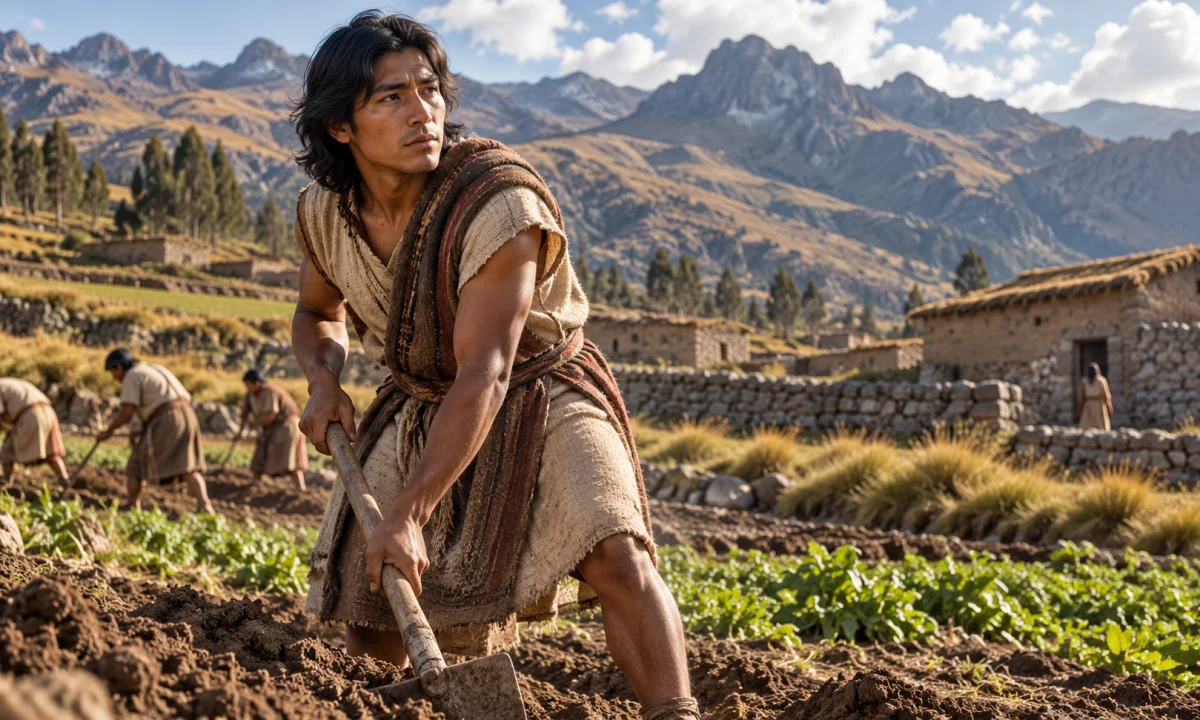
The Inca Empire ruled a large and culturally diverse region of western South America, including much of present-day Peru, Bolivia and Ecuador, as well as parts of Chile, Argentina and Colombia. Its state religion incorporated older local traditions and allowed many communities to retain their own sacred places, ancestors and supernatural beings. Consequently, “Inca mythology” is not a single uniform body of stories comparable to a neatly organized classical pantheon.
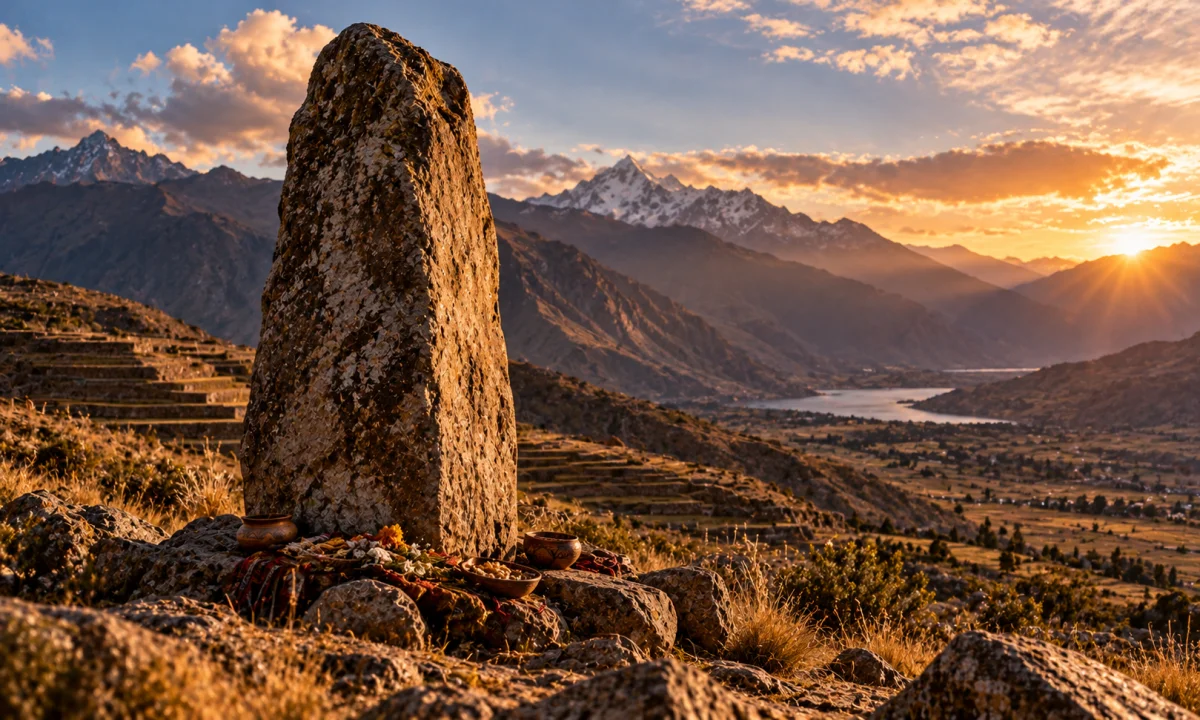
Andean religious life was strongly connected with particular places. Mountains, springs, caves, stones, fields and ancestral burial sites could possess sacred power. Mountains known as apus, for example, were treated in many Andean communities as powerful beings or guardians. Other locations could be associated with local ancestors, dangerous forces, healing powers or the origins of a community. A spirit recorded under an Inca label might therefore have belonged originally to a particular region or local tradition.
Most surviving information about pre-colonial Andean religion was written down after the Spanish conquest. These records were produced by missionaries, colonial officials, Indigenous writers and later scholars, often in different languages and under very different circumstances. Some chroniclers attempted to describe Indigenous beliefs faithfully, while others interpreted them through Christian categories such as God, devil, angel, idol or demon. Names could also be spelled inconsistently when Quechua and other Andean languages were written with the Spanish alphabet.
These conditions are especially important in the case of Guachemines. The surviving evidence does not provide a widely accepted foundational myth or a consistent account of their cult. Much of what appears in modern lists is brief, derivative or difficult to trace to a specific Indigenous tradition. The name should not automatically be treated as proof of a distinct, empire-wide group of beings.
Name and classification
The identity of the Guachemines is uncertain. Modern summaries commonly place them among minor Inca spirits, supernatural beings or malevolent entities, but they do not agree on the exact category. Some descriptions imply that they were dangerous spirits; others use broader language that could include ghosts, local beings or uncanny forces. There is no secure basis for assigning them a detailed hierarchy or for presenting them as a clearly defined species of demon in the Christian sense.
The word “demon” is particularly problematic when used for Andean religion. Spanish observers sometimes applied Christian vocabulary to Indigenous beings they considered harmful or opposed to Christian teaching. Such translations can conceal important differences. An Andean spirit might be dangerous in one situation and beneficial in another, or it might be powerful without being morally evil. Its relationship with humans could depend on ritual respect, offerings, locality and circumstance.
For that reason, the most cautious classification is minor or poorly documented Andean spirits associated in modern sources with Inca mythology. It is safer than claiming that the Guachemines formed a standardized pantheon, served a particular god or possessed a single universally recognized function.
Attributes and supposed nature
Descriptions of the Guachemines are too sparse and inconsistent to support a reliable physical portrait. There is no well-established traditional image showing them with a particular body, costume, animal form or supernatural weapon. Claims that they had a fixed appearance should therefore be regarded as uncertain unless tied to a clearly identified regional tradition.
Their supposed character is more often described in general terms: they are treated as troubling, dangerous or uncanny beings. This may explain why some reference works group them with spirits feared by people or with entities thought to inhabit wild and liminal places. Yet even this description should not be expanded into a detailed list of powers without evidence. There is no securely documented account that gives the Guachemines a recognized ability to cause a specific disease, control a particular natural force or attack humans in a standard manner.
The uncertainty surrounding their attributes is not unusual in the study of Andean religion. Many sacred beings were known through ritual practice, local oral tradition or their association with a particular place rather than through long written myths. A colonial record might mention a name without recording the stories connected with it. Conversely, a broad term for a type of spirit might later be mistaken for the proper name of a single supernatural race.
Stories and relationships
No major surviving Inca narrative gives the Guachemines a central role comparable to the stories of Viracocha, the founding ancestors of the Inca dynasty or the deeds of the culture hero Ayar Auca and his brothers. They are not securely connected with the royal family, with the sun cult or with a recognized divine spouse or parent.
There is also no well-attested cycle of stories describing their origin, their conflict with the gods or their punishment by a culture hero. Modern retellings may present them as a collective group with a unified history, but that kind of narrative structure should not be assumed to come from pre-colonial tradition. It may result from the way later encyclopedias and mythology websites turn short dictionary entries into more definite characters.
The absence of a famous story does not mean that the name had no significance. Local spirits often mattered precisely because they were connected with everyday risks and obligations. A community might recognize the power of a place, an ancestral presence or a dangerous being without preserving a single canonical tale about it. Still, the evidence available for the Guachemines does not allow a specific local story to be reconstructed with confidence.
Religious context and possible significance
Andean religion traditionally emphasized relationships between humans, ancestors, natural forces and sacred places. These relationships were maintained through offerings, festivals, prayers and acts of reciprocity. The concept often translated as huaca referred broadly to a sacred person, object, place or power, although its meaning varied according to context. Such a religious world cannot be divided neatly into “gods” and “monsters” using categories borrowed from European mythology.
Within this setting, a group of obscure spirits such as the Guachemines could be understood as part of the wider landscape of unseen powers rather than as members of a formal divine family. If they belonged to a local tradition, their importance may have rested on where they were believed to exist and how people were expected to behave around them. Fear, respect and ritual caution were not necessarily signs of worship in the narrow sense, nor did they imply a permanent opposition between the spirits and all human beings.
Colonial Christian interpretation may also have affected the way such beings were described. Missionaries frequently sought to replace Indigenous ceremonies and sacred practices, and they sometimes portrayed local supernatural figures as devils or servants of the devil. Later writers, reading these accounts without their historical context, could then present every threatening spirit as an inherently evil demon. That interpretation may say as much about the colonial record as it does about the original belief.
Evidence and uncertainty
The main difficulty with Guachemines is not simply that the tradition is ancient. It is that the name is not supported by a substantial, consistent body of early testimony. The surviving record does not clearly establish where the term was used, which language produced it, whether it referred to one being or several, or how widely the belief was shared.
Modern reference entries can preserve valuable traces of lesser-known traditions, but they should not be treated as equivalent to Indigenous oral testimony or an early primary account. A short classification may be repeated from one book or website to another until it appears more certain than the evidence warrants. Details such as a precise habitat, a distinctive appearance or a particular supernatural power can become attached to a name through repetition rather than through independent documentation.
Spelling also presents a potential problem. Quechua and other Andean languages were recorded using changing Spanish orthographies, while modern authors may reproduce unfamiliar names in different ways. However, not every similar-looking word is necessarily a variant of Guachemines. Without reliable linguistic or regional evidence, names that merely resemble it should not be merged with it.
Distinguishing Guachemines from other Andean beings
Guachemines should not be confused with the apus, the powerful mountain beings recognized in many Andean traditions. Apus are associated with mountains and continue to have religious significance in living Andean communities. They are not simply interchangeable with obscure spirits classified by modern writers as Inca demons.
They should also be distinguished from Supay. Supay is a complex Andean figure whose meaning changed through colonial interpretation. In some contexts, the name refers to a powerful spirit or being associated with the dead; in colonial and later Christian usage, Supay was often equated with the devil. Guachemines do not have an equally well-documented identity or a demonstrable historical relationship with Supay.
Nor should they be identified with huacas as though both words described the same thing. Huaca is a broad category connected with sacred power and can refer to places, objects, ancestors or beings. Guachemines, by contrast, are a specific and poorly documented name. Treating the two as synonyms would erase an important distinction between a general religious concept and an uncertain proper name.
Later reception
Guachemines have not become a prominent figure in international popular culture. They appear mainly in compilations of mythology, lists of lesser-known supernatural beings and online discussions of Inca or South American folklore. These settings often encourage concise, definite descriptions even when the historical evidence is fragmentary.
Modern fantasy writers, game designers or artists could freely reinterpret the Guachemines as spirits, monsters or guardians, but such portrayals would be creative adaptations rather than secure evidence about traditional belief. A responsible modern depiction should acknowledge the uncertainty of the source material instead of presenting an invented appearance or mythology as an established Inca tradition.
The most accurate understanding of the Guachemines is therefore modest: they are a little-documented name associated with Inca or broader Andean supernatural belief, probably referring in modern classifications to minor spirits or threatening beings. Their exact origin, nature and traditional role remain uncertain, and the available evidence does not justify giving them a detailed mythology that the historical record does not preserve.