 WORLD
WORLD
Norse mythology
Articles about Norse mythology within Europe.
Last articles
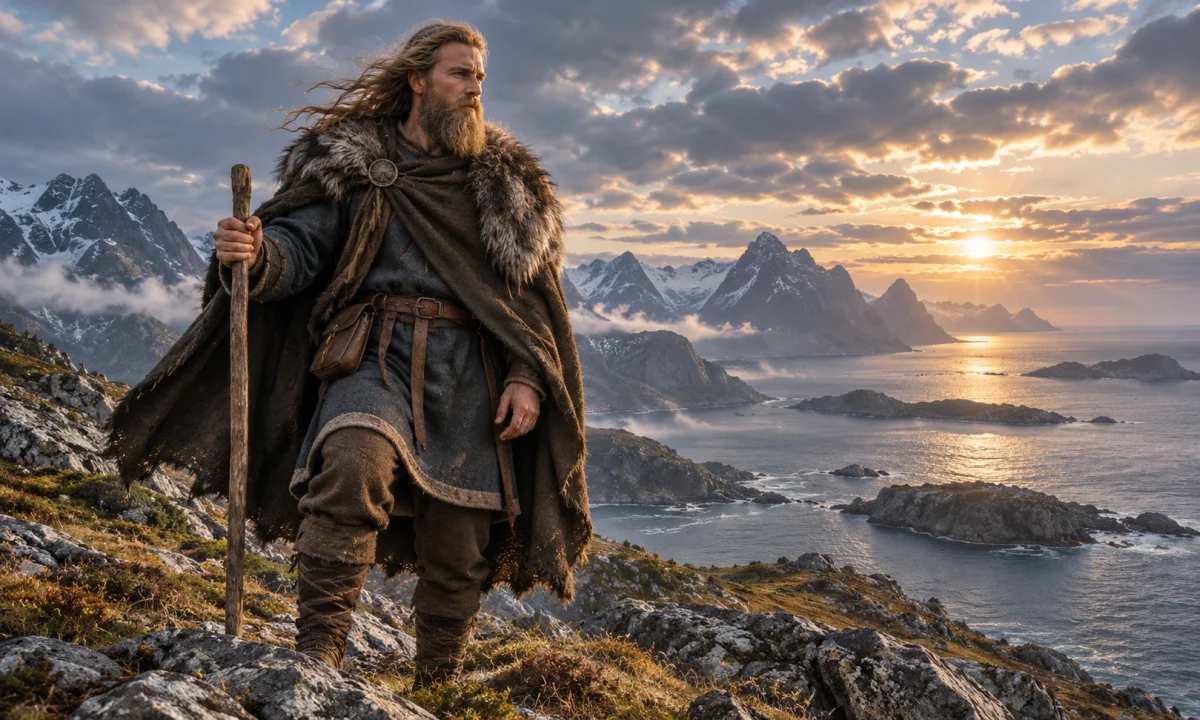
Ód
Ód, more fully written in Old Norse as Óðr, is a little-known figure associated with Freyja in Norse mythology. He is described primarily as her husband and as the father of Hnoss and Gersemi. Unlike Odin, Thor or Freyja…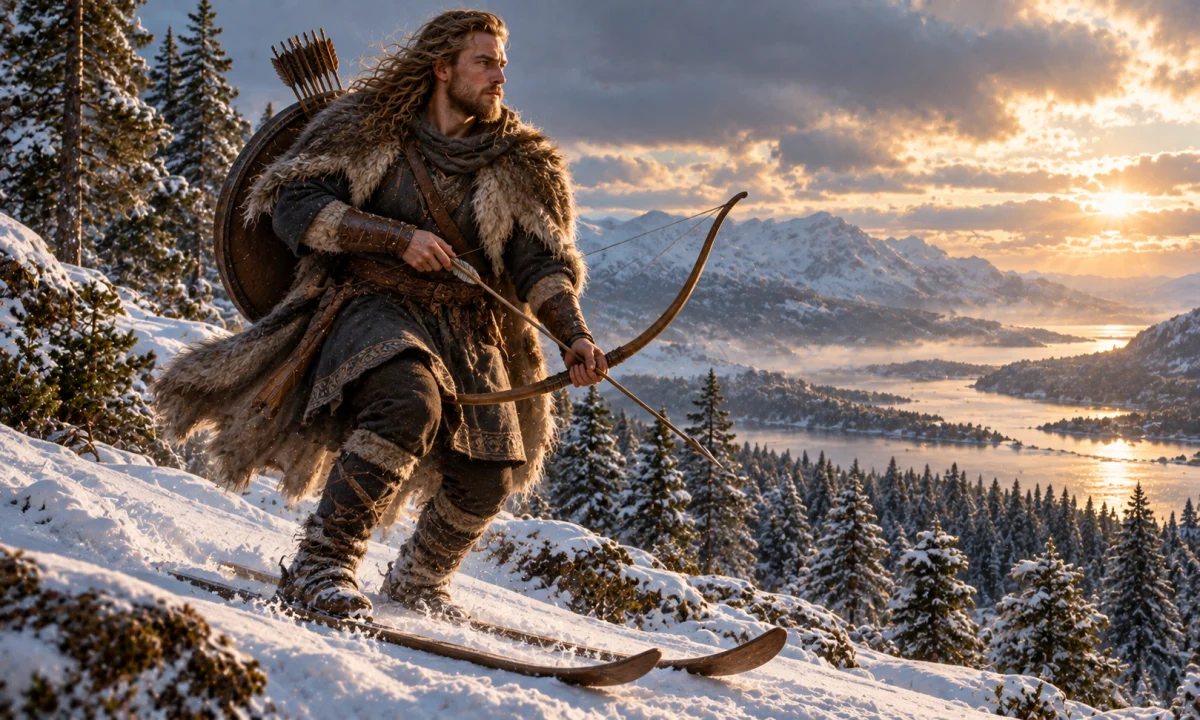
Ull
Ullr is a comparatively obscure god of Norse mythology, associated in surviving sources with archery, shields, skiing and possibly hunting. He belongs to the religious world of pre-Christian Scandinavia, but the myths pr…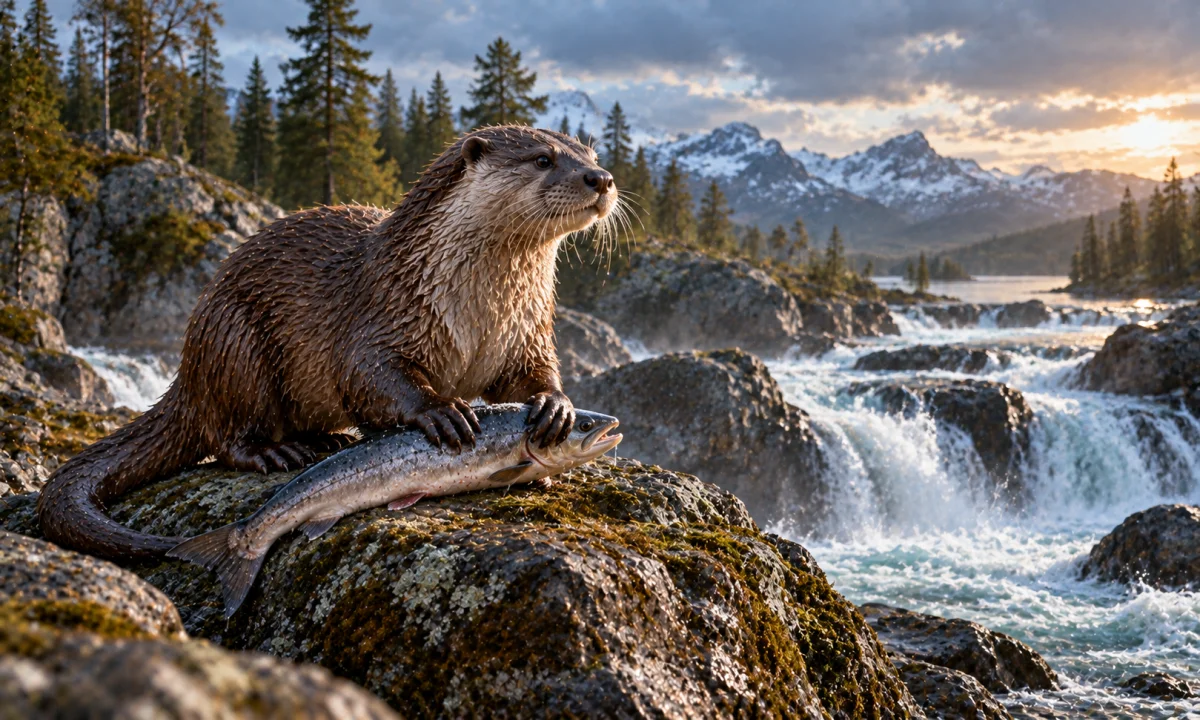
Otr
Otr, or Ótr in Old Norse, is a shapeshifting figure in the Völsung tradition of Norse mythology. He is the son of Hreidmar and the brother of Fafnir and Regin. By day, Otr takes the form of an otter and catches fish; by …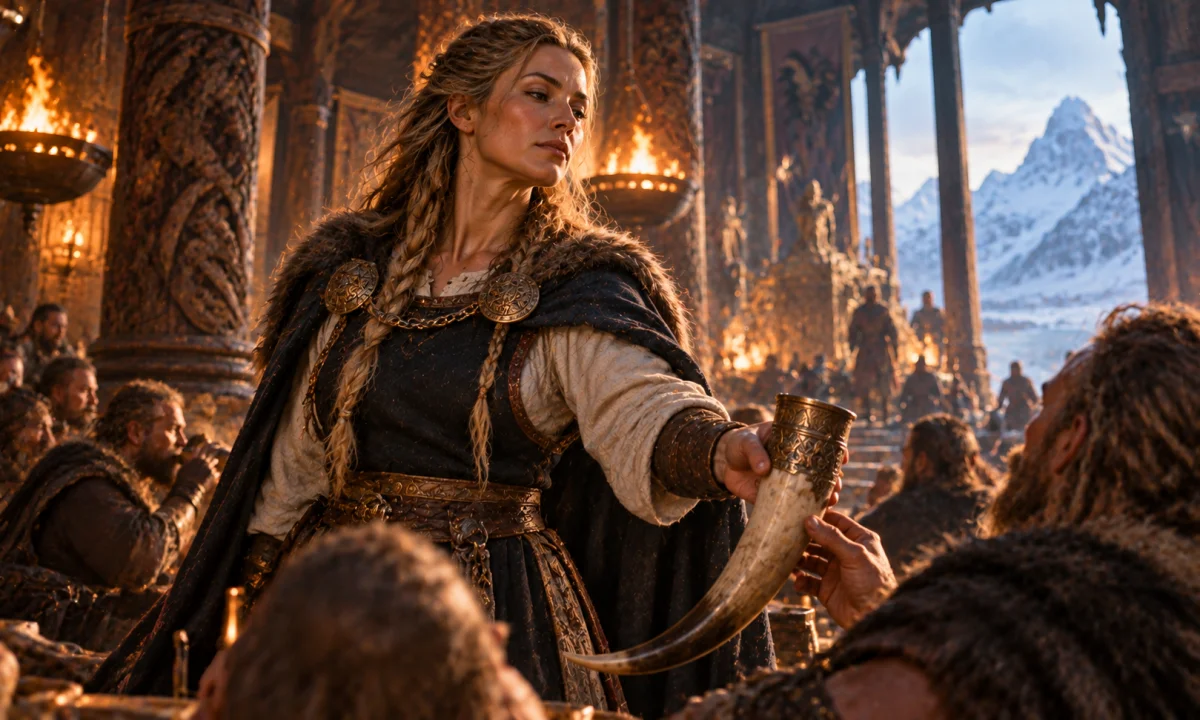
Radgridr
Radgridr, usually written Ráðgríðr in Old Norse, is a named valkyrie in the surviving literature of Norse mythology. She is one of the female figures associated with choosing or serving the fallen warriors who are taken …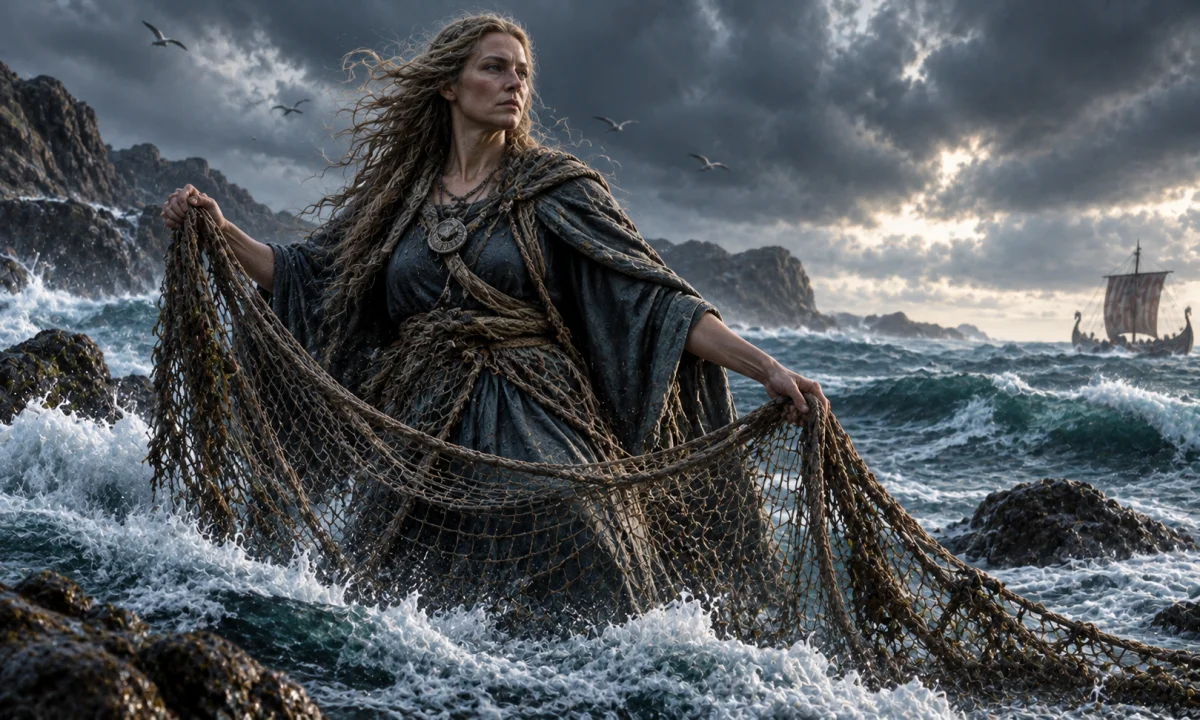
Ran
Rán is a female figure associated with the sea in Norse mythology. She is best known as the wife of Ægir, a personification or divine being connected with the ocean, and as the owner of a net used to seize people who ven…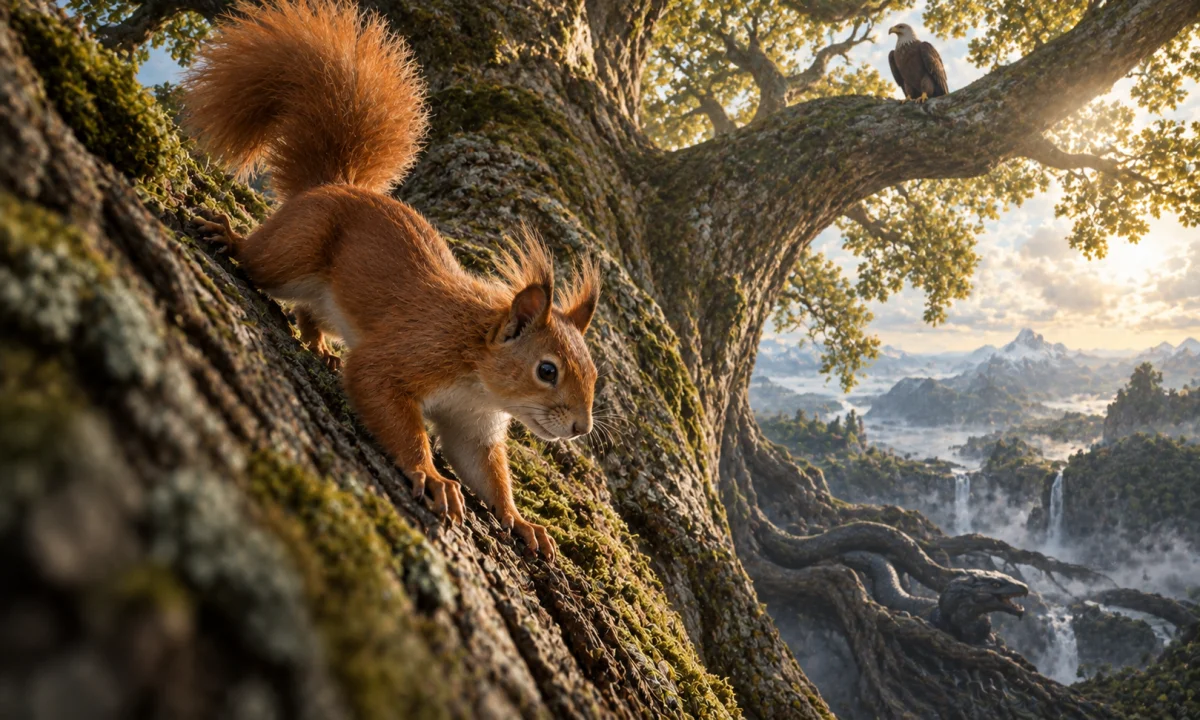
Ratatoskr
Ratatoskr is a squirrel-like creature in Norse mythology, known for running up and down the world tree Yggdrasil. According to the surviving medieval poems and prose, Ratatoskr carries hostile messages between the great …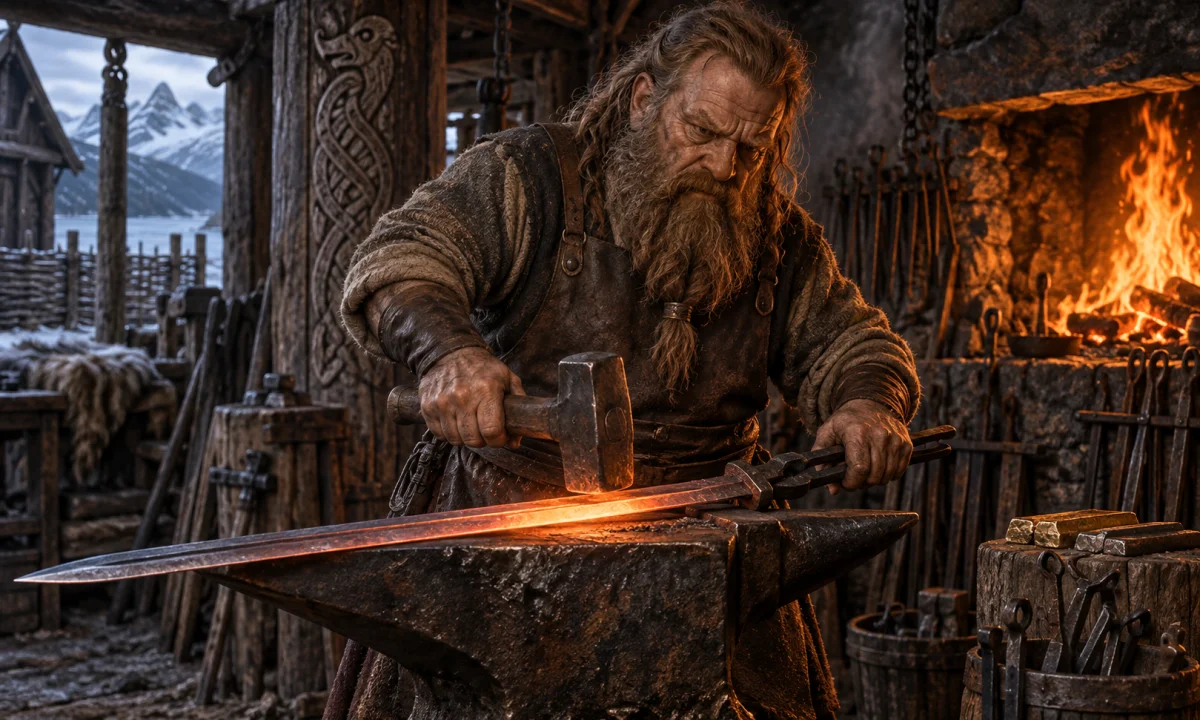
Regin
Regin is a legendary smith, counsellor and foster father in the Norse story of Sigurd and the dragon Fafnir. He belongs to the heroic tradition surrounding the Völsung family rather than to the group of worshipped Norse …
Rig
Rígr is a figure in Norse mythology who appears chiefly in Rígsþula (“The Lay of Rígr”), a poem preserved among the poems associated with the Poetic Edda. In the poem, Rígr travels through the human world, fathers or est…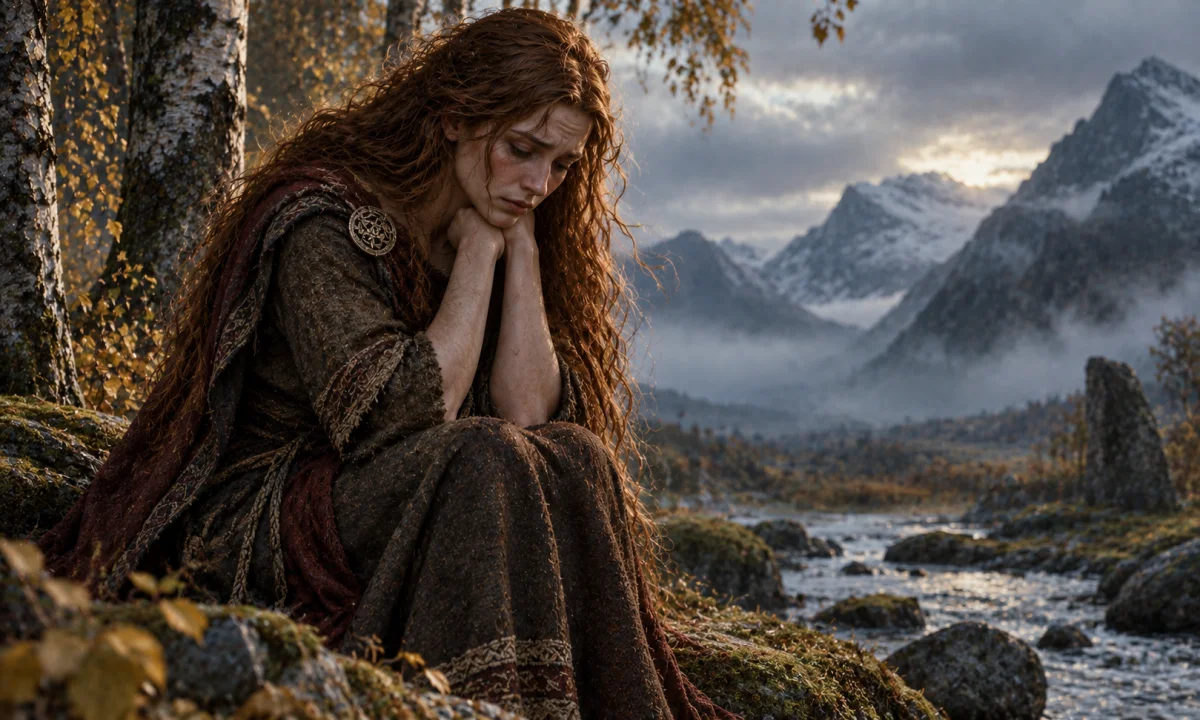
Rind
Rind, also recorded in Old Norse as Rindr and in Latinised Scandinavian tradition as Rinda, is a little-known female figure associated with Odin and the birth of Váli, the son who avenges the death of Baldr. She belongs …
Róta
Róta is a little-known female figure in Norse tradition, usually classified as a valkyrie. Her name appears in medieval lists of valkyries preserved in Old Norse literature, especially material associated with the Prose …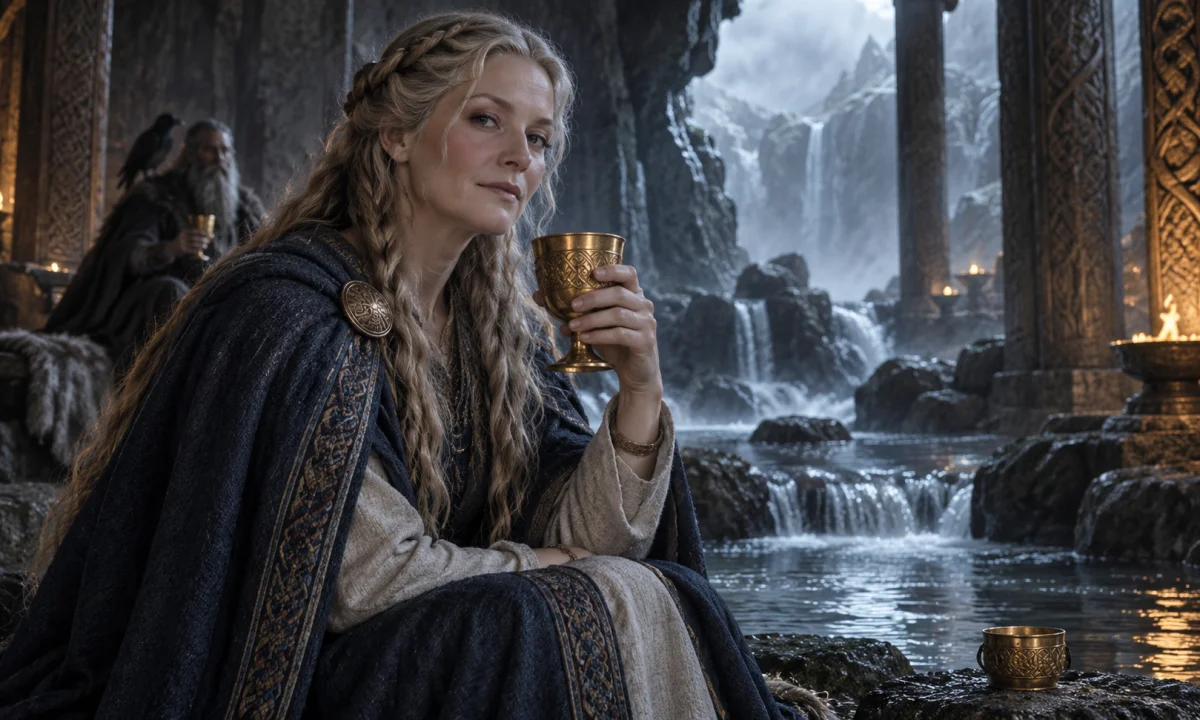
Sága
Sága is a little-known female figure in Norse mythology, counted among the ásynjur, the goddesses or women of the divine Æsir. Her name is associated with the Old Norse word-family connected with speech, saying and what …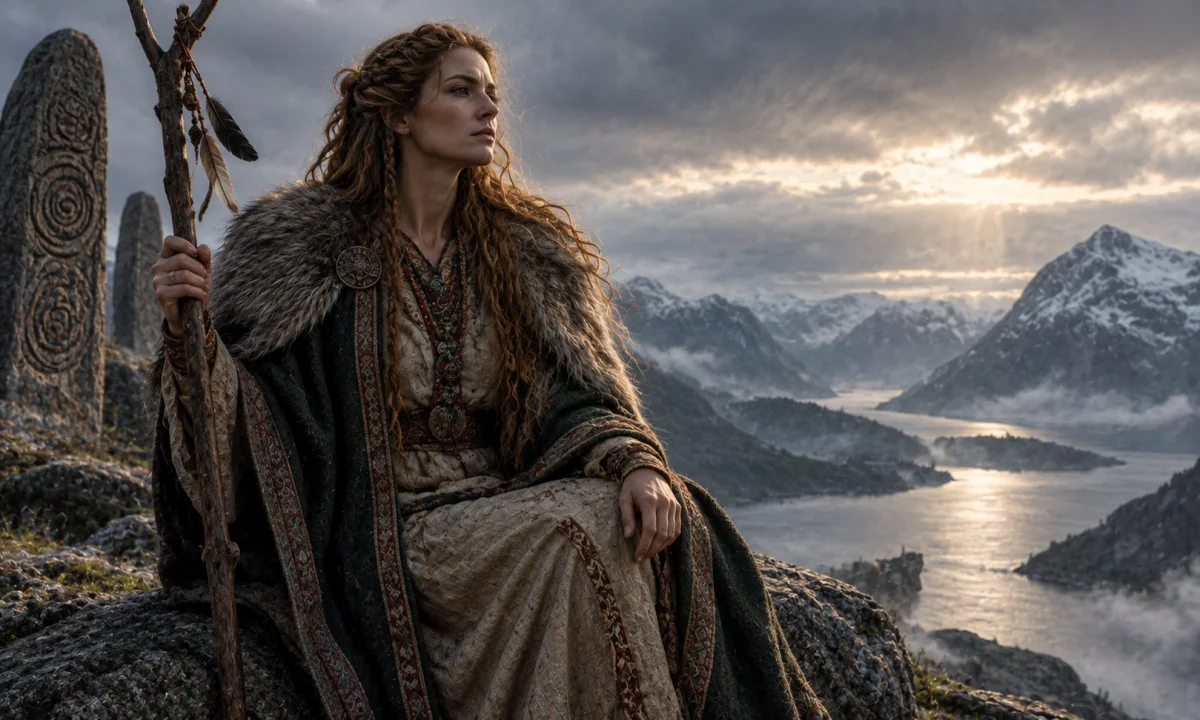
Síbilja
Síbilja is not a securely attested goddess, giantess, valkyrie, or other independent figure in the surviving mythology of medieval Scandinavia. The name appears in some modern lists of “Norse gods and beings”, but those …Norse mythology: myths, traditions and legends
Norse mythology encompasses the sacred narratives, cosmological ideas, divine beings and heroic traditions associated with the pre-Christian peoples of Scandinavia and the wider Norse-speaking world. Its best-known figures include Odin, Thor, Freyja, Frigg, Loki, Freyr and Tyr, alongside giants, dwarfs, elves, valkyries, serpents and powerful beings connected with the dead. These traditions did not form a single standardised religion with a fixed scripture or universally agreed pantheon. Beliefs and rituals varied by region, community, social status and historical period, while much of the surviving literature was written in medieval Iceland after conversion to Christianity.
The word mythology refers to narratives concerning gods, creation, sacred order and the fate of the world. It does not imply that such traditions were regarded merely as invented stories. Norse myths belonged to a wider religious culture involving sacrifice, feasting, burial, divination, oath-taking, ancestor traditions and relationships with local powers. The surviving texts provide rich evidence, but they cannot reproduce the complete religious life of Viking Age Scandinavia.
Historical and cultural setting
Norse mythology developed within the broader family of Germanic religious traditions. Related gods and concepts appear in Old English, continental Germanic and earlier archaeological evidence, but these traditions were not identical. The Norse material is associated particularly with Denmark, Norway, Sweden, Iceland and Norse settlements across the North Atlantic and parts of the British Isles.
The Viking Age, conventionally dated from the late eighth to the eleventh century, was a period of travel, settlement, raiding, trade and political change. Norse communities encountered Sámi, Finnic, Slavic, Celtic, Christian and Islamic societies. Cultural contact influenced art, language and storytelling, although similarities between traditions do not automatically prove direct borrowing.
Modern Scandinavian borders do not correspond exactly to older cultural regions. Local rulers and families may have favoured particular gods, ceremonies or sacred places. Norse religion was therefore more varied than modern summaries based on one literary pantheon often suggest.
Literary and archaeological sources
The principal literary sources are the Poetic Edda and the Prose Edda. The Poetic Edda is a modern title for a collection of anonymous Old Norse poems preserved mainly in a thirteenth-century Icelandic manuscript. Some poems may contain older material transmitted orally, but their precise dates remain uncertain.
The Prose Edda was written in the early thirteenth century by Snorri Sturluson. It explains poetic language, traditional stories and the complex metaphors used by skaldic poets. Snorri preserved essential mythological material, but he was a Christian author writing for a medieval audience and sometimes imposed an orderly structure upon traditions that may originally have been less systematic.
Additional evidence comes from skaldic verse, sagas, chronicles, runic inscriptions, place names, foreign observers and archaeology. Amulets, carved stones, picture stones, burials and ritual deposits can illuminate religious practice, though they rarely explain complete myths without supporting texts.
The beginning of the world
Norse creation narratives describe a primordial void called Ginnungagap between regions of fire and cold. Heat from Muspel and frost from Niflheim meet, producing the first giant, Ymir, and the cosmic cow Audhumla. Ymir becomes the ancestor of many giants, while Audhumla reveals Buri, ancestor of the gods, by licking the salty ice.
Odin and his brothers kill Ymir and construct the ordered world from his body. His flesh becomes the earth, his blood the sea, his bones the mountains and his skull the sky. Creation is therefore presented as transformation through violence rather than creation from nothing.
The first humans, Ask and Embla, are formed from pieces of wood discovered by divine beings. Different sources identify the participating gods differently and vary in the qualities they provide. These differences show that even fundamental stories existed in more than one version.
Yggdrasil and the cosmic realms
The cosmos is centred upon Yggdrasil, an immense tree connecting divine, human and otherworldly regions. Its roots extend toward important wells and realms, while its branches reach across the world. The tree is a place of wisdom, destiny, vulnerability and renewal.
An eagle occupies its upper branches, while the serpent or dragon Nidhogg gnaws below. The squirrel Ratatosk carries hostile words between them, and deer feed upon the tree. The Norns, powerful female beings associated with destiny, are connected with one of the wells near its roots.
Modern diagrams commonly arrange nine worlds around Yggdrasil. Old Norse sources mention nine worlds but do not provide one definitive map. Asgard, Midgard, Jotunheim, Hel and other realms are described differently depending on the text. They should not be treated as planets or dimensions organised according to modern fantasy geography.
The Æsir and the Vanir
Norse sources distinguish two major groups of gods: the Æsir and the Vanir. Odin, Thor, Frigg and Tyr belong among the Æsir, while Njord, Freyr and Freyja are associated with the Vanir. The division is important, but the two groups become integrated after a conflict and exchange of hostages.
The war between them is described only fragmentarily. Some scholars have interpreted it as evidence of historical religious change or contact between different communities, but no single theory has been proven. Within the myths, the conflict helps explain how divine groups associated with different powers became part of one shared order.
The Vanir are often linked with fertility, wealth, sexuality and prosperity, while the Æsir are connected more strongly with rulership, warfare and social authority. These distinctions remain broad because individual gods possess overlapping functions.
Odin and the pursuit of knowledge
Odin is associated with rulership, war, poetry, magic, wisdom and the dead. His character combines authority with deception, inspiration with danger and generosity with ruthless calculation. He is frequently presented as a leading god, but surviving evidence does not prove that every Norse community regarded him as universally supreme.
Odin sacrifices one eye to drink from Mimir’s well and hangs wounded upon Yggdrasil for nine nights to obtain knowledge of the runes. These stories present wisdom as something gained through suffering, sacrifice and the crossing of dangerous boundaries.
His ravens Huginn and Muninn travel through the world and return with information. He is also accompanied by the wolves Geri and Freki and rides the eight-legged horse Sleipnir.
Odin receives selected warriors among the dead in Valhalla. These fighters, known as the Einherjar, prepare for Ragnarök. His relationship with warriors is unpredictable because he may grant victory and later withdraw protection when he wants a champion to join him.
Thor and the defence of order
Thor is the god most closely associated with thunder, strength and the protection of gods and humans. Place names and archaeological finds suggest that devotion to him was widespread. Hammer-shaped amulets became especially visible during the period when Christianity was expanding in Scandinavia.
Thor’s hammer, Mjölnir, was forged by dwarfs. It returns after being thrown and serves both as a weapon and as an object of blessing. Literary sources connect it with ceremonies involving marriage, birth and the restoration of order.
Many stories follow Thor into the lands of giants. He relies on physical strength and direct action, yet even he can be deceived by illusion or defeated in contests designed to reveal the limits of divine power.
His greatest enemy is Jörmungandr, the serpent surrounding the human world. At Ragnarök, Thor kills the serpent but dies after walking nine steps because of its venom.
Freyja, Freyr and Njord
Freyja is associated with sexuality, beauty, fertility, wealth, magic and the dead. She practises seiðr, a form of magic involving divination, altered states and influence over events. She also receives part of those killed in battle in her domain, Fólkvangr.
Freyr is associated with peace, prosperity, favourable weather, fertility and sacred kingship. He possesses a ship that can be folded and a boar connected with divine splendour. In order to obtain the giant woman Gerðr, he gives away a sword capable of fighting by itself, leaving him without it at Ragnarök.
Njord, the father of Freyr and Freyja, is connected with the sea, wealth, fishing and successful voyages. His marriage to Skaði fails because she prefers the mountains while he prefers the coast. Their story illustrates the difficulty of reconciling incompatible environments and ways of life.
Loki as helper and adversary
Loki is one of the most difficult Norse figures to classify. He helps the gods solve problems in some stories but creates danger and humiliation in others. He is clever, deceptive and capable of changing shape and gender.
Loki’s ancestry connects him with the giants, although he lives among the gods and shares a special relationship with Odin in one poem. He becomes the mother of Sleipnir after taking the form of a mare.
His children include Fenrir, Jörmungandr and Hel. The gods attempt to contain these beings after learning that they will play destructive roles in the future. Their efforts to prevent prophecy help create the conditions through which it is fulfilled.
Loki becomes fully hostile through his involvement in the death of Baldr. He is eventually bound while venom falls above him, and his suffering continues until Ragnarök.
Baldr and the failure of protection
Baldr is remembered for beauty, goodness and a death that marks the decline of the divine world. His mother Frigg obtains promises from beings and materials not to harm him but overlooks mistletoe.
The gods amuse themselves by throwing weapons at the apparently invulnerable Baldr. Loki arranges for the blind Höðr to throw mistletoe, killing him. An attempt is made to recover Baldr from Hel, but it fails when one being refuses to mourn him.
The story survives in substantially different forms. Saxo Grammaticus presents Baldr and Höðr as rival heroic figures involved in a humanised conflict. The Eddic account is better known but should not automatically be treated as the only ancient version.
Tyr and the binding of Fenrir
Tyr is associated with law, oaths, courage and warfare. His best-known story concerns Fenrir, the wolf whom the gods fear because of prophecy. When ordinary restraints fail, dwarfs create a magical binding from impossible materials.
Fenrir agrees to be bound only if one of the gods places a hand in his mouth as a guarantee. Tyr accepts the condition and loses his hand when the wolf realises that the gods do not intend to release him.
The episode represents sacrifice for communal security but also exposes the gods’ use of deception. Tyr’s loss demonstrates that preserving divine order can demand a personal cost.
Giants and divine ancestry
The Old Norse beings commonly translated as giants are called jötnar and by related terms. They are not always physically enormous and should not be treated as a single race of evil monsters. They may embody ancient, dangerous and creative powers associated with wilderness, weather, wisdom and regions beyond divine society.
The gods and giants repeatedly fight, yet their families are deeply connected. Odin has giant ancestry, Thor’s mother is associated with the giants and several gods form relationships with giant women.
Some giants possess knowledge that the gods need. Odin consults them, competes with them and sometimes deceives them to obtain wisdom. Their opposition to the gods is therefore more complex than a simple conflict between good and evil.
Dwarfs, elves and land spirits
Dwarfs are skilled craftsmen who create many of the gods’ greatest possessions, including Mjölnir, Odin’s spear and Freyr’s ship. They are associated with stone, underground places, treasure and specialised knowledge.
Elves are less clearly defined. Old Norse poetry and place names suggest their religious importance, but surviving narratives provide limited information. They may be associated with beauty, fertility, ancestry or dangerous supernatural influence.
Snorri distinguishes light elves from dark elves, but it is uncertain whether this reflects an older widespread belief or medieval systematisation. The relationship between dark elves and dwarfs is particularly unclear.
Landvættir are spirits connected with particular landscapes and territories. Their presence indicates that Norse religion concerned local places as well as the major gods described in mythological poetry.
Valkyries and the chosen dead
Valkyries are female supernatural beings associated with battle, death and Odin. Their name is commonly interpreted as choosers of the slain. They influence the outcome of combat and select warriors for the world of the heroic dead.
Some poems portray them as terrifying agents of fate, while heroic literature may present them as supernatural lovers or protectors. The distinction between valkyrie, warrior woman and otherworldly maiden is not always clear.
Valhalla is not a general heaven for every brave or virtuous person. It is Odin’s hall for selected warriors preparing for the final battle. Other dead may belong to Freyja, enter Hel, remain connected with burial mounds or follow destinations described in local traditions.
Magic, prophecy and runes
Norse traditions include prophecy, ritual magic and the manipulation of supernatural forces. Seiðr is associated with divination, altered states and influence over fate or perception. Freyja and Odin both practise it, although literary sources connect it with gender expectations that made its use controversial for men.
A female seer was known as a völva. The poem Völuspá presents such a figure revealing the beginning and destruction of the world to Odin. Saga descriptions of seeresses include ceremonial staffs, elevated seats and specialised songs, though these accounts were written after conversion.
Runes served primarily as a writing system used for names, memorials and short messages. They could also carry magical or protective functions in some settings. Modern systems assigning one fixed divinatory meaning to every rune are largely later reconstructions rather than a fully preserved Viking Age practice.
Death and burial
Norse burial customs varied widely. Cremation and inhumation were both practised, and graves might contain weapons, tools, jewellery, animals, ships or objects connected with social identity. Wealthy burials do not necessarily reflect the practices of most people.
Hel is both a female being and the name of a realm receiving many of the dead. It is not equivalent to the Christian hell, although Christian ideas influenced some later descriptions. Entry into Hel was not simply punishment for moral failure.
Saga literature also describes revenants known as draugar. These physically powerful dead may guard burial mounds, defend property or attack the living. Their stories belong to later literary and folkloric tradition as well as to beliefs concerning the continuing power of the dead.
Ragnarök and renewal
Ragnarök is the final crisis of gods and world. It is preceded by warfare, social collapse and the severe winter called Fimbulwinter. Fenrir, Jörmungandr, Loki and other destructive powers break free from restraint.
Odin is killed by Fenrir, Thor and Jörmungandr destroy one another, and Freyr falls before Surtr. Loki and Heimdall kill each other, while fire consumes the world.
The catastrophe is followed by renewal. The earth rises again, surviving gods gather and Baldr returns. The humans Líf and Lífthrasir survive and begin a new human generation.
Scholars debate the extent to which Christian apocalyptic imagery influenced the surviving accounts. The narrative contains possible Christian parallels, but it also depends upon distinctly Norse gods, enemies and concepts of cyclical destruction.
Ritual and religious practice
Norse religion was expressed through ceremonies as well as stories. Sacrificial rites known as blót involved offerings, feasting and relationships with gods, ancestors or local powers. Animals were sacrificed in some contexts, and written sources also describe human sacrifice, although its frequency and meaning remain debated.
Rituals took place in halls, groves, outdoor sacred spaces and specialised buildings. Archaeology has uncovered structures interpreted as cult houses and deposits of animals, weapons and valuable objects.
Rulers and household leaders could perform religious roles by organising feasts and maintaining relationships with sacred powers. Political authority, agricultural fertility and ritual responsibility were closely connected.
Christianisation and preservation
The conversion of Scandinavia occurred gradually over several centuries. Missionaries, trade, royal authority and political alliances all contributed to the spread of Christianity. The process was neither peaceful nor uniform.
Older practices survived during periods of religious overlap. Thor’s hammer amulets and Christian crosses were both used, and mythological stories continued after formal conversion.
Christian writers sometimes explained the gods as ancient rulers, deceptive spirits or humans later mistaken for divine beings. These interpretations allowed mythological poetry to be preserved while rejecting pre-Christian worship.
Modern reception and misconceptions
Norse mythology has shaped literature, opera, fantasy, comics, film and games. Modern adaptations frequently transform the personalities and relationships of the gods. Many familiar portrayals of Thor and Loki derive more from recent entertainment than from medieval sources.
Viking warriors did not normally wear horned helmets in battle. The popular image developed largely through nineteenth-century art and theatrical costume rather than Viking Age evidence.
Modern fiction also portrays the nine worlds as a precise map and the gods as fixed members of one royal family. The surviving sources are less consistent and preserve multiple traditions.
Contemporary religious movements inspired by pre-Christian Germanic traditions reconstruct beliefs and rituals using texts, archaeology and folklore. They are living modern religions rather than unchanged survivals of Viking Age practice. Norse mythology remains important because it preserves a world in which gods seek wisdom, order depends upon fragile boundaries and even divine powers must face fate, destruction and renewal.