 WORLD
WORLD
Finnish mythology
Articles about Finnish mythology within Europe.
Last articles
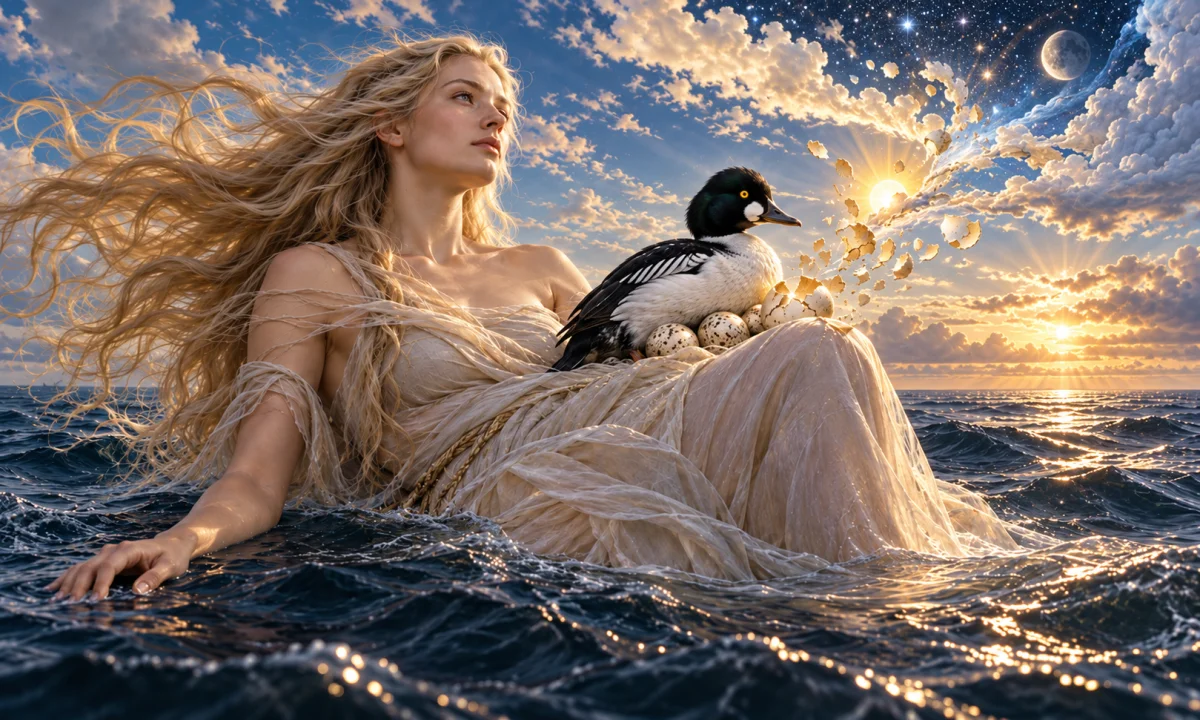
Ilmatar
Ilmatar is a female figure in Finnish mythology best known from the Kalevala, the national epic compiled by Elias Lönnrot in the nineteenth century. She is described as a maiden of the air and as the mother of Väinämöine…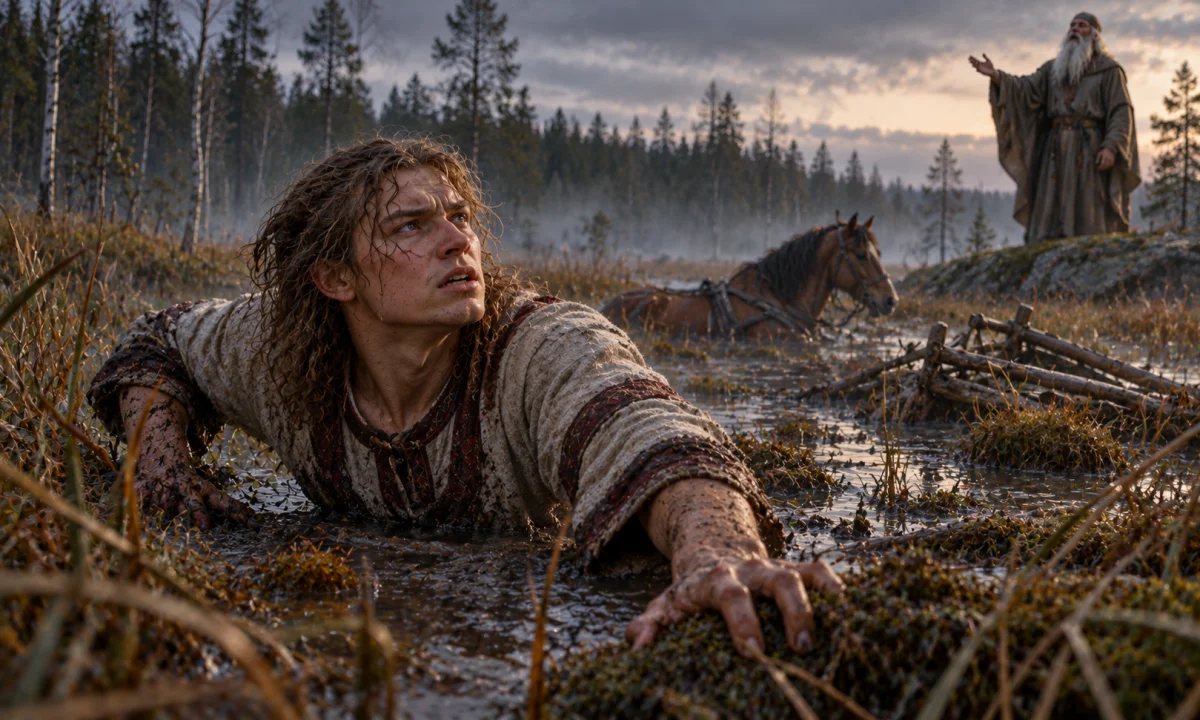
Joukahainen
Joukahainen is a young human figure in Finnish mythic poetry, best known from the Kalevala, Finland’s national epic. He is a proud and inexperienced singer who challenges the older sage Väinämöinen to a contest of knowle…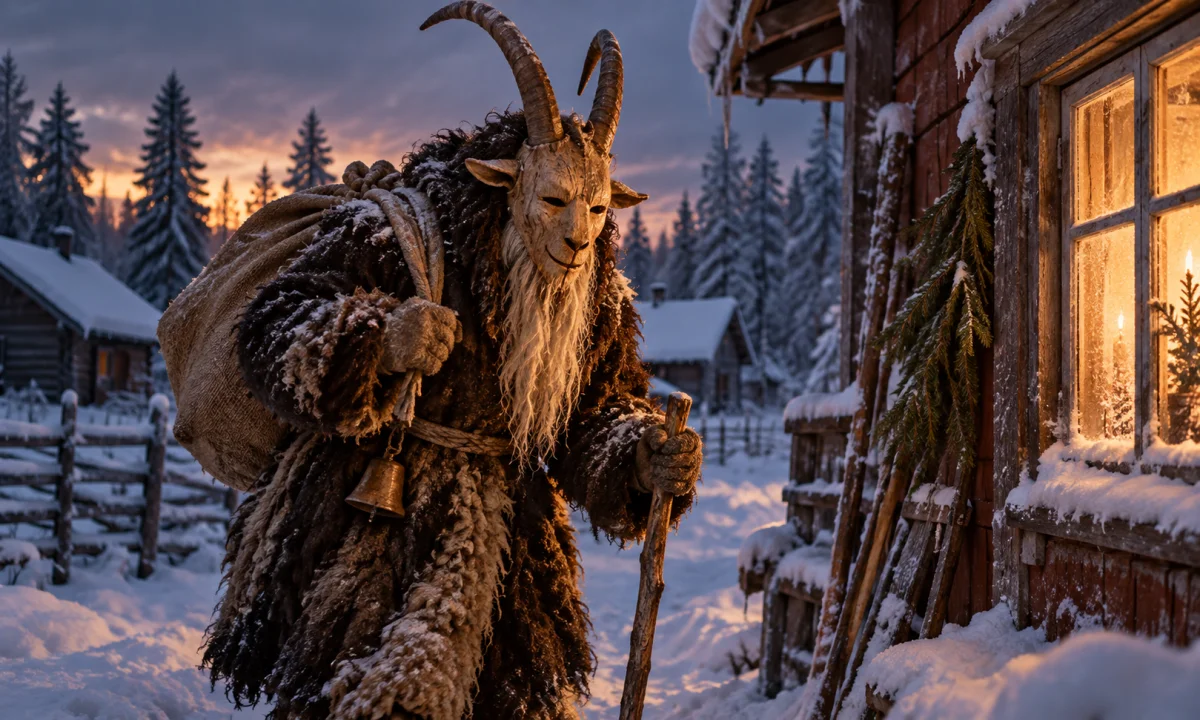
Joulupukki
Joulupukki is the Finnish Christmas gift-bringer, but his name and older imagery do not originally describe the same figure as the modern international Santa Claus. In Finnish, joulupukki literally means “Christmas goat”…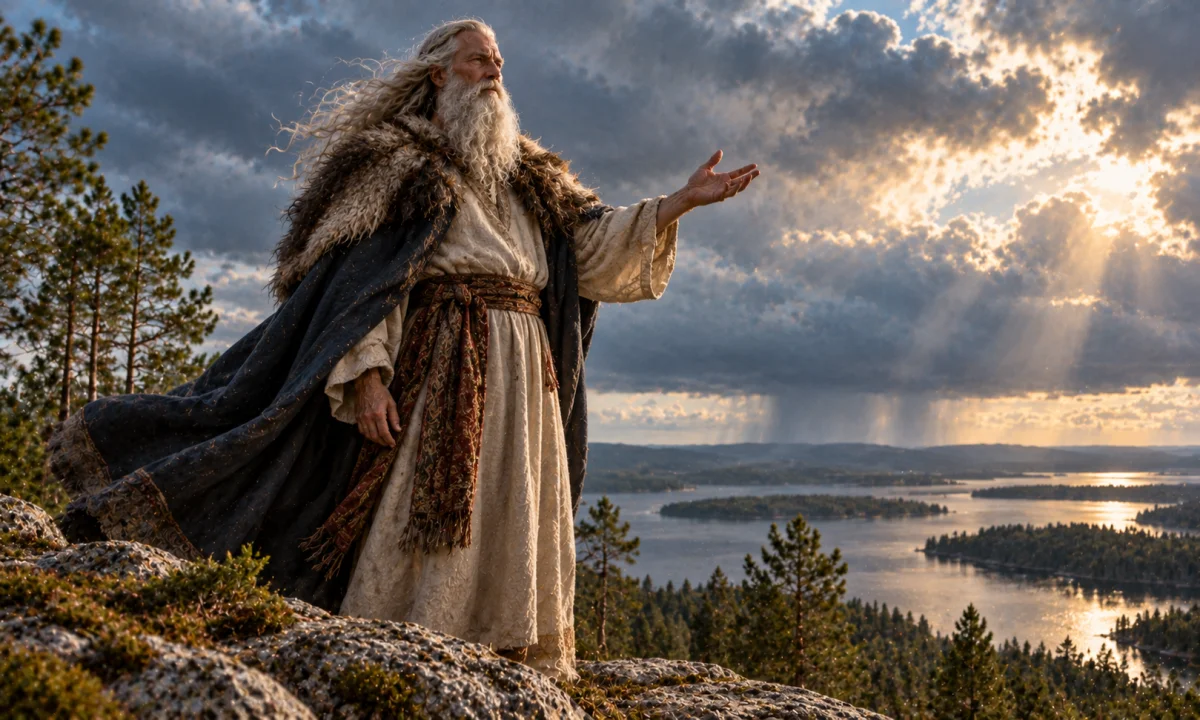
Jumala
Jumala is a Finnish word with two closely connected but historically distinct uses. In traditional Finnish religion, jumala could mean a god, deity, or supernatural power, while Jumala later became the Finnish name for t…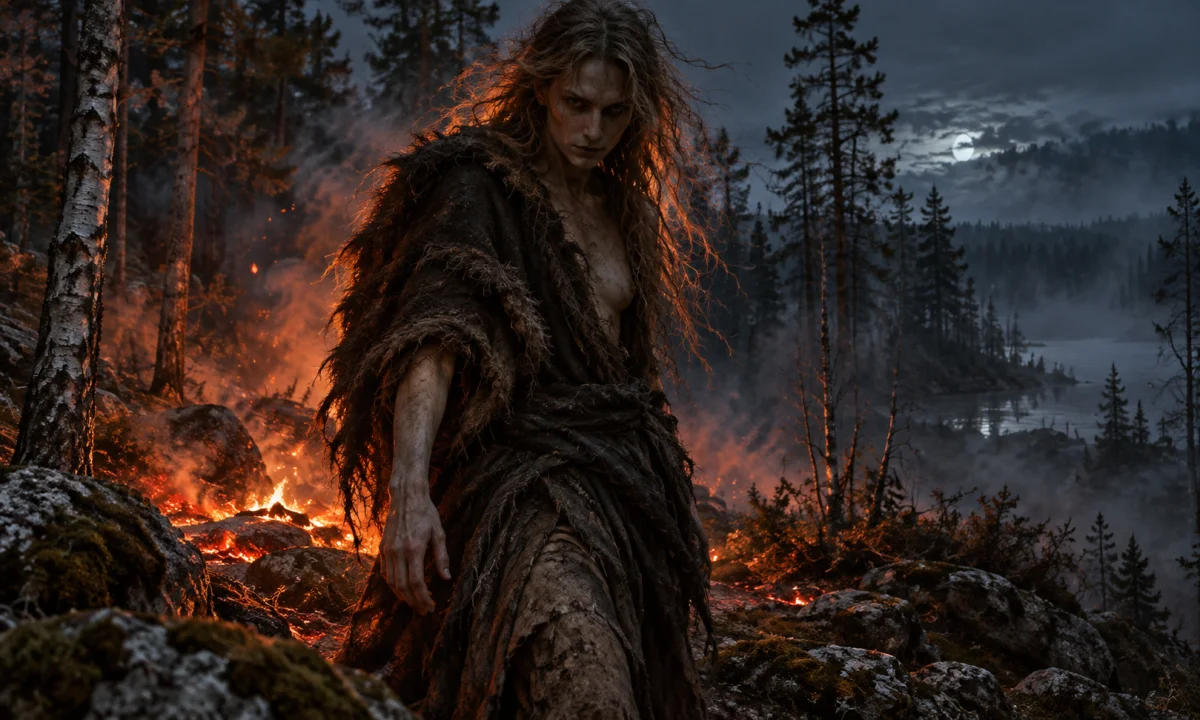
Lempo
Lempo is a figure of Finnish mythology whose identity changed significantly across time. In older layers of Finnish oral tradition, the name may have been connected with love, sexual attraction, or a powerful spirit of t…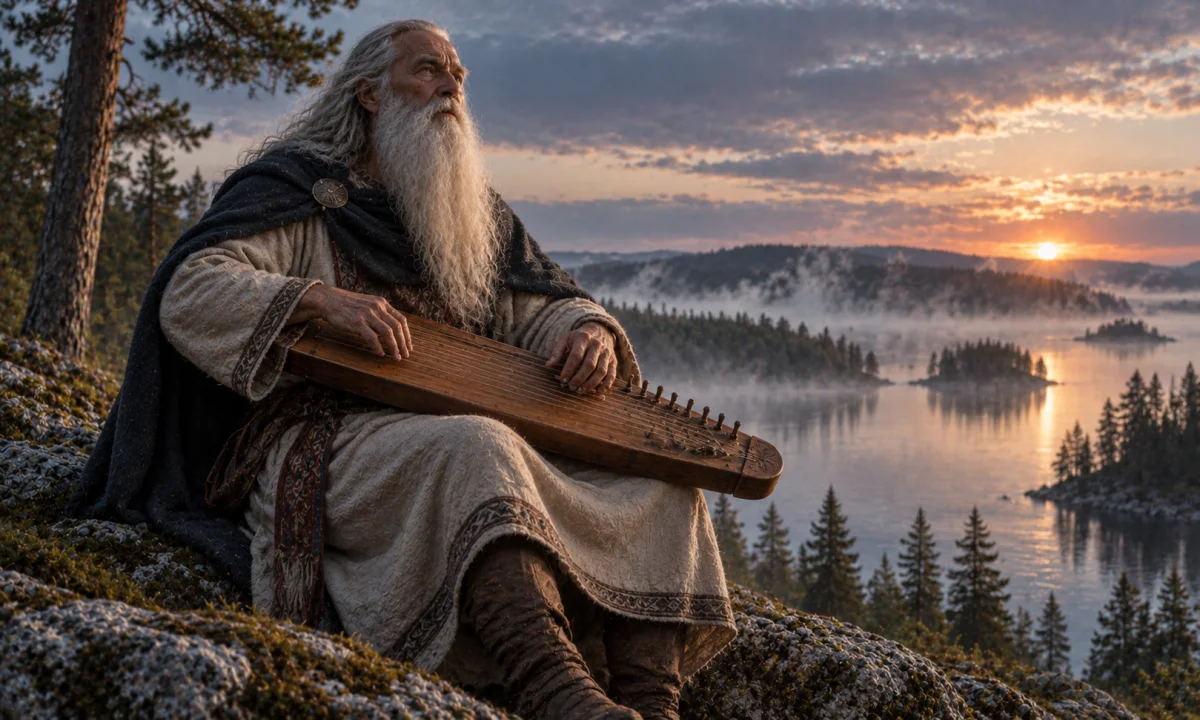
Kalevala
The Kalevala is Finland’s national epic and one of the most important written records of Finnic oral poetry. It presents a world of powerful singers, smiths, spirits, enchanted objects and rival communities, especially t…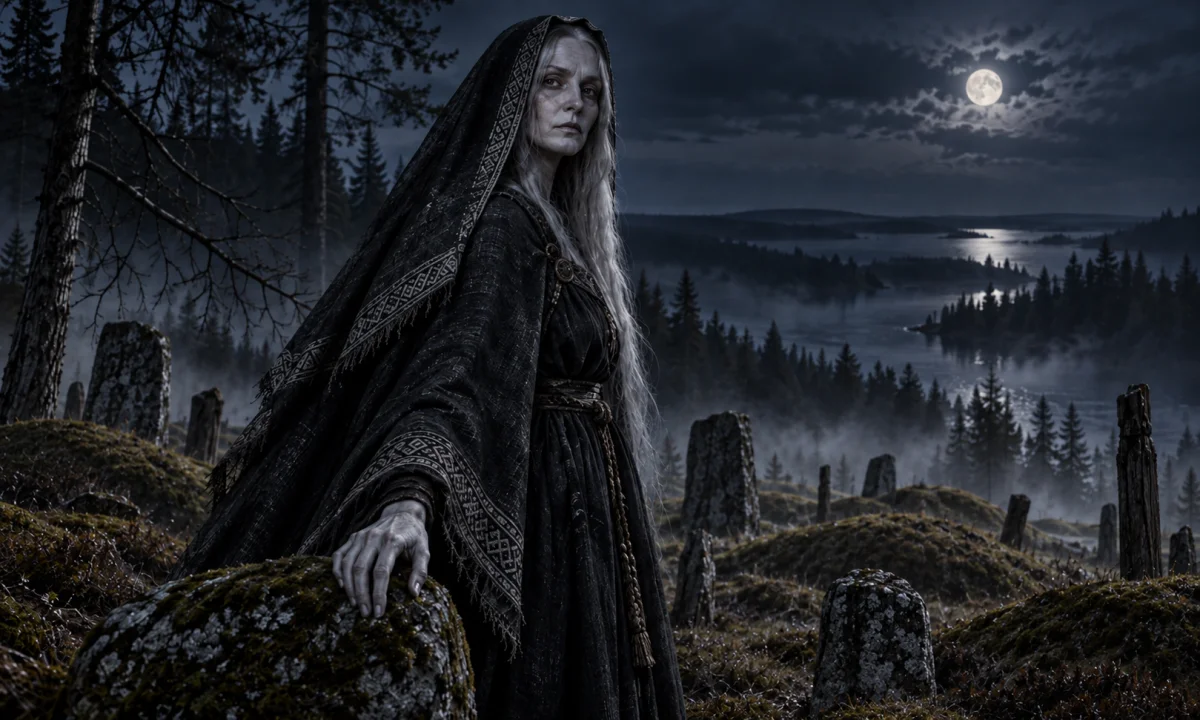
Kalma
Kalma is a death-related figure or supernatural presence in Finnish mythology and folklore. The name is associated with death, graves, corpses and the smell of decay. In modern summaries of Finnish mythology, Kalma is of…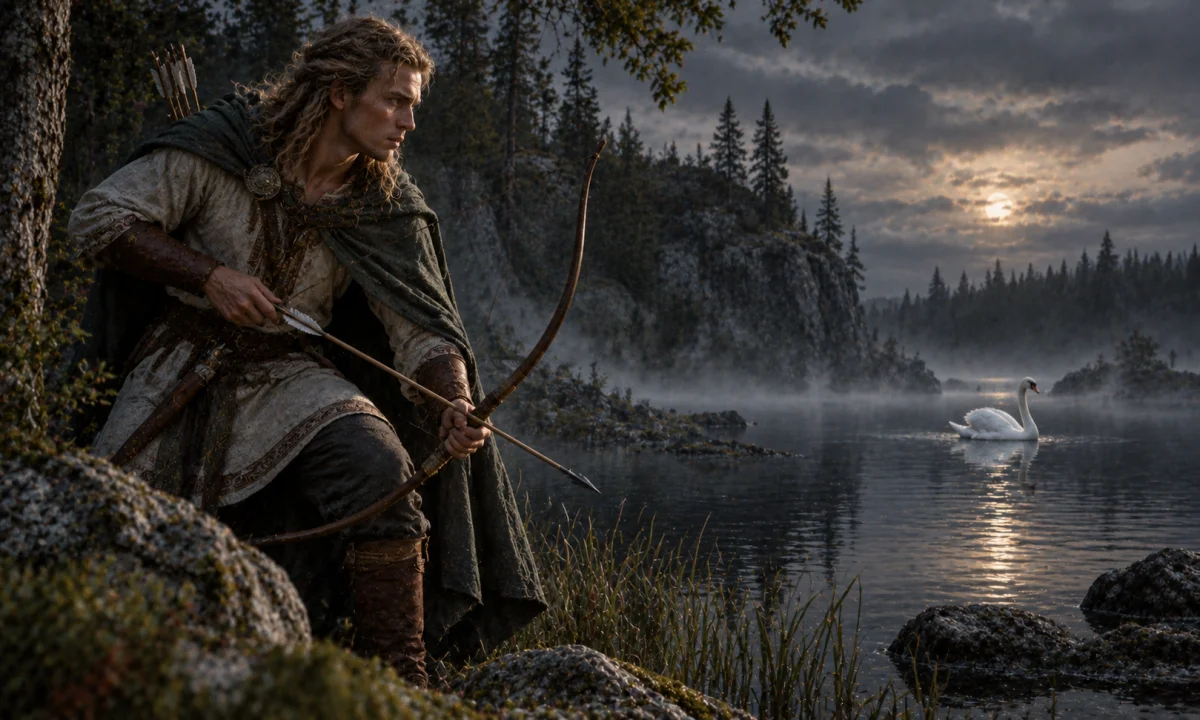
Lemminkäinen
Lemminkäinen is one of the best-known heroes of Finnish mythology, especially through the Kalevala, the nineteenth-century epic compiled by Elias Lönnrot from Finnish and Karelian oral poetry. He is portrayed as handsome…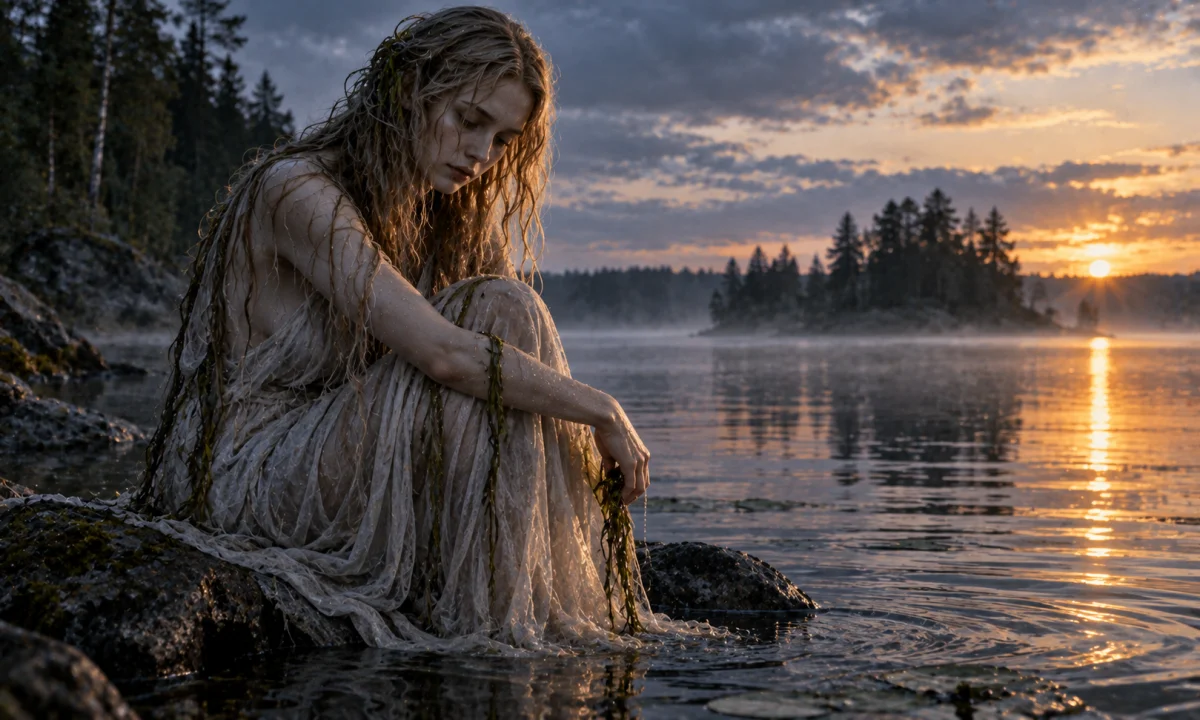
Kipu Tytto
Kipu-Tyttö, also written Kiputyttö or translated as “Pain Girl,” is a little-known figure associated with Finnish folk belief and healing incantations. The name appears to personify pain as a female being, but Kipu-Tyttö…
Kivutar
Kivutar is a female figure associated with pain, illness and suffering in Finnish mythic and incantation traditions. She belongs especially to the supernatural world described in Finnish healing charms, where diseases an…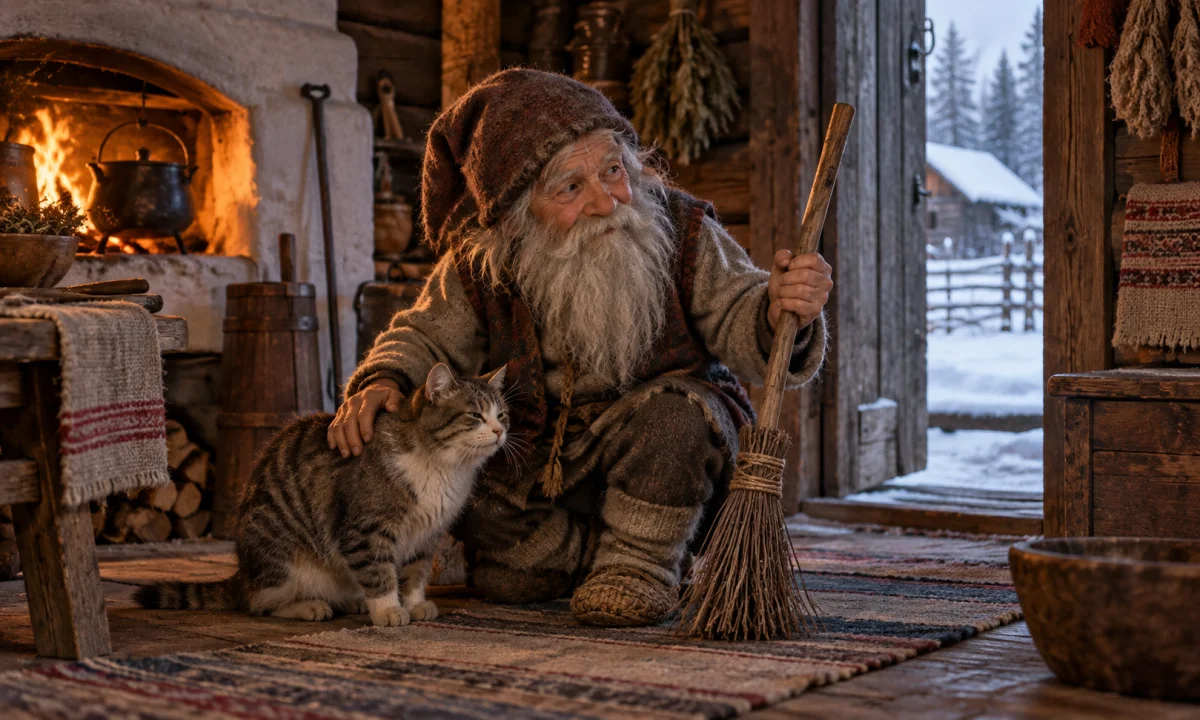
Kotihaltija
Kotihaltija is a Finnish household spirit associated with the protection, prosperity and proper running of a home. The name is usually understood as “the guardian of the home” or “the household spirit”: koti means “home”…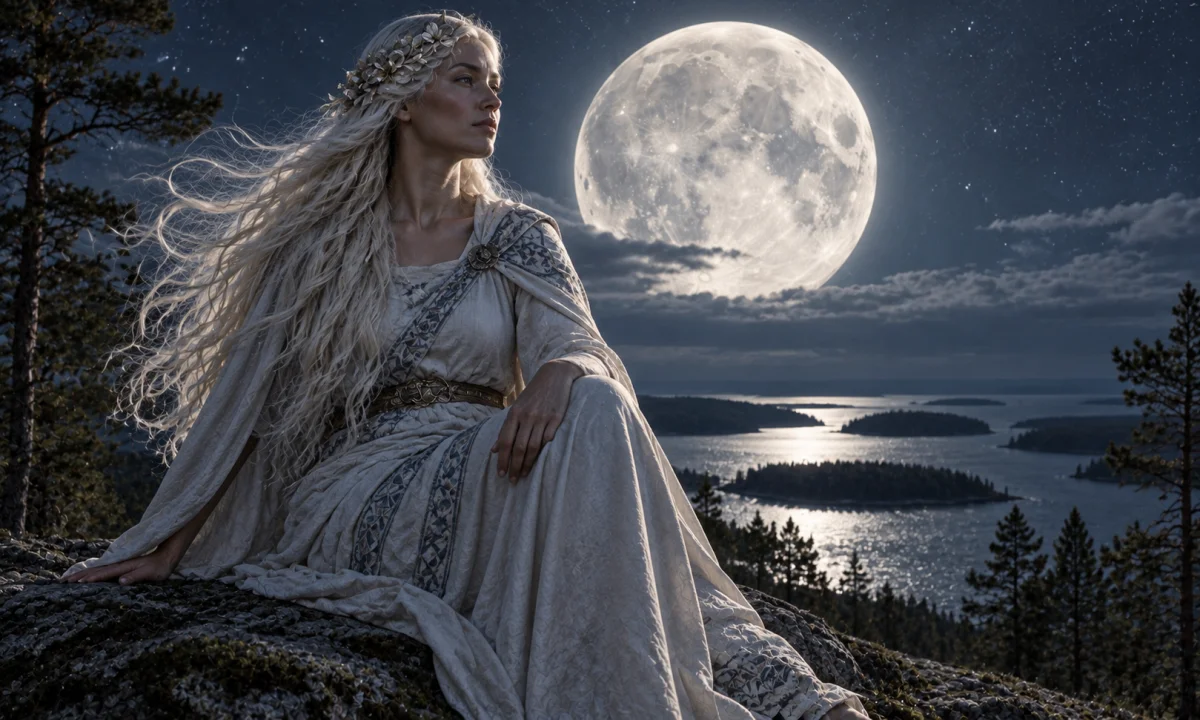
Kuu
Kuu is the Finnish word for the Moon and, in discussions of Finnish mythology, may refer either to the celestial body itself or to a personified lunar power. It is sometimes presented in modern summaries as a Finnish moo…Finnish mythology: myths, traditions and legends
Finnish mythology encompasses the sacred narratives, ritual traditions, cosmological ideas, heroic poetry and supernatural beings associated with Finnish-speaking communities, especially those preserved through oral poetry and later folklore collections. It was never a single standardised religion with a fixed pantheon or authoritative scripture. Beliefs varied by region, livelihood and historical period, and they changed through contact with Sámi, Baltic, Scandinavian, Slavic and Christian traditions. Much of what is now called Finnish mythology was recorded after centuries of Christian influence, so older religious elements often survive beside medieval legends, folk Christianity and later literary interpretation.
The best-known presentation of Finnish mythology is the Kalevala, the national epic compiled by Elias Lönnrot from oral poems during the nineteenth century. The Kalevala preserved and popularised important traditional material, but it is not an unchanged pre-Christian sacred text. Lönnrot selected, combined and reorganised independent songs into a continuous literary narrative. Finnish mythology therefore extends beyond the Kalevala and must be studied through oral poetry, charms, laments, ritual customs, historical records, archaeology and the broader traditions of Finland and Karelia.
Scope and terminology
The category commonly includes traditions recorded in Finland and among closely related Finnic-speaking communities, particularly in Karelia, where many archaic poems survived into the modern period. Finnish and Karelian traditions overlap substantially, but they should not be treated as completely identical. Individual singers preserved local versions, names and episodes, and some of the material used in the Kalevala was collected outside the borders of modern Finland.
Modern national boundaries provide an imperfect framework for older traditions. Finnish-speaking communities interacted with neighbouring peoples through trade, migration, warfare and intermarriage. Shared motifs may reflect common Finnic inheritance, long-term contact or wider northern Eurasian patterns. Similarity alone does not prove that one tradition borrowed directly from another.
The word mythology can also be misleading when it suggests a collection of fictional stories separated from religious life. Traditional poems, incantations and narratives could explain origins, support healing, establish ritual authority or communicate knowledge about relationships between humans, animals and the unseen world. Myth, folklore and practical ritual were often closely connected.
Sources and preservation
Finnish mythology is known mainly through materials recorded after Christianisation. Medieval written evidence is limited, and most oral poems and charms were collected between the eighteenth and twentieth centuries. These records preserve older forms and themes, but they also reflect centuries of cultural change.
One important early source is the list of deities and sacred figures included by the reformer Mikael Agricola in the preface to his Finnish translation of the Psalms in 1551. Agricola associated different beings with crops, weather, hunting and other aspects of life. His list is valuable, but it was written from a Christian perspective and should not be treated as a complete or neutral description of Finnish religion.
Folklore collectors later recorded thousands of songs, charms, proverbs, legends and ritual descriptions. Performers often used a distinctive poetic form now called Kalevala metre, characterised by alliteration, parallelism and a regular rhythmic pattern. A poem could vary considerably between singers and regions, and collectors sometimes edited language or combined separate versions.
Archaeology provides evidence of burial practices, offerings, sacred places and material culture, but it rarely identifies mythological names or complete narratives. Interpretations are strongest when material evidence can be considered alongside linguistic, historical and folkloric sources.
The Kalevala and literary reconstruction
Elias Lönnrot published the first version of the Kalevala in 1835 and an expanded edition in 1849. He arranged traditional poems into a broad narrative concerning Väinämöinen, Ilmarinen, Lemminkäinen, Kullervo, Louhi and the struggle surrounding the mysterious Sampo.
The poems from which the epic was created did not originally form one unified book. Singers performed creation songs, wedding poems, charms, heroic episodes and laments independently. Characters could occupy different roles in different traditions, and episodes placed together by Lönnrot may not previously have belonged to one continuous cycle.
The Kalevala nevertheless remains enormously important. It preserved material that might otherwise have received less attention and played a central role in the development of Finnish national culture. Its influence on literature, music and visual art has also shaped how traditional figures are understood.
Using the Kalevala as evidence requires distinguishing between oral tradition and Lönnrot’s editorial structure. A detail present in the published epic may derive from authentic collected poetry while its position, relationships or narrative significance may reflect nineteenth-century composition.
Creation and the cosmic egg
One of the best-known Finnish creation traditions describes the world emerging from the fragments of a bird’s egg. In the Kalevala’s version, Ilmatar, a female spirit associated with air, floats upon the primordial waters. A bird lays eggs upon her knee, and when the eggs fall and break, their pieces form the earth, sky, sun, moon and clouds.
Egg-based creation narratives occur in several Eurasian traditions, but their relationships and historical transmission remain debated. Finnish versions should be understood within their own poetic contexts rather than treated as proof of one universal northern creation myth.
Creation songs could also possess ritual significance. Knowledge of an object’s origin was believed in some magical traditions to provide power over it. A healer might recite the mythical origin of fire, iron, disease or a dangerous animal as part of a charm intended to control its effects.
The creation of the world was therefore not always a remote theological subject. Origin knowledge could become a practical instrument used in healing and protective magic.
Väinämöinen, singer and sage
Väinämöinen is the most prominent figure in the Kalevala and in many traditional poems. He is portrayed as an ancient singer, sage, magician and culture hero whose power lies especially in words, knowledge and song. His name and precise identity vary across sources, and he should not be reduced to a simple god of music.
Väinämöinen performs acts of creation, competes in magical singing contests and travels in search of knowledge. His songs can alter reality, defeat opponents or calm natural forces. This reflects the broader importance of verbal power in Finnish and Karelian ritual tradition.
He is strongly associated with the kantele, a traditional plucked instrument. In one famous episode, an instrument is fashioned from the jawbone of a giant pike. Väinämöinen’s playing enchants humans, animals and natural beings, expressing the power of skilled performance to unite different parts of the world.
Väinämöinen is not always presented as morally flawless. Some poems portray him as wise and authoritative, while others show pride, rivalry or failure. His departure at the end of the Kalevala, following the arrival of a miraculous child, was arranged by Lönnrot as a symbolic transition from an older mythological order toward Christianity.
Ilmarinen and supernatural craftsmanship
Ilmarinen is a master smith and one of the central heroic figures of Kalevala tradition. His name is related to ilma, meaning air or weather, and some interpretations connect him with an earlier celestial or atmospheric being. In the surviving epic tradition, however, he is known primarily through his skill as a craftsman.
Ilmarinen is credited with forging the Sampo, a mysterious object commissioned by Louhi, ruler of Pohjola. The exact nature of the Sampo is never defined consistently. It has been interpreted as a mill producing prosperity, a cosmic pillar, a treasure, a ritual object or a literary symbol of abundance and political power.
Attempts to identify the Sampo with one physical object often go beyond the evidence. Its importance lies partly in its productive power and in the conflict created by its possession. When it is broken during the heroes’ escape from Pohjola, fragments still bring fertility and prosperity.
Ilmarinen’s craftsmanship demonstrates the sacred and dangerous character of skilled labour. The smith transforms raw material through fire and knowledge, occupying a position between ordinary human work and supernatural creation.
Louhi and Pohjola
Louhi is the powerful mistress of Pohjola, a northern or otherworldly region that frequently opposes the heroes of Kalevala tradition. She is a ruler, magician and guardian of wealth rather than simply an evil witch. Her actions can be hostile, but they are often connected with defending her household, daughters and political authority.
Pohjola is difficult to identify with one real geographical location. In different poems it functions as a distant northern land, a wealthy rival community, a realm of danger or a partly supernatural otherworld. Later national readings sometimes interpreted it as a political enemy, but traditional poetry does not support one simple historical equation.
Louhi sets difficult tasks for suitors seeking her daughters and controls the Sampo after Ilmarinen forges it. During the heroes’ attempt to steal the object, she transforms into a powerful bird-like form and pursues them. Her ability to command illness, weather and transformation makes her one of the most formidable figures in the tradition.
Lemminkäinen and heroic danger
Lemminkäinen is a warrior, adventurer and reckless suitor whose stories combine courage, sexuality, pride and vulnerability. Different traditional figures may have contributed to the character assembled under his name in the Kalevala.
His best-known cycle involves a journey to Pohjola and an attempt to kill the swan of Tuonela. Lemminkäinen is killed, dismembered and cast into the river of the underworld. His mother searches for the fragments of his body, reassembles them and restores him to life through ritual knowledge.
The episode has sometimes been compared with resurrection and dismemberment myths from other cultures. Such comparisons can be useful, but they do not prove direct borrowing. Within Finnish tradition, the story emphasises maternal devotion, magical reconstruction and the dangers of entering forbidden realms.
Lemminkäinen’s repeated failure to respect warnings distinguishes him from an idealised heroic champion. His adventures often expose the costs of impulsiveness and social conflict.
Kullervo and tragic fate
Kullervo is the central figure in one of the darkest narrative cycles associated with the Kalevala. Born into a family destroyed by conflict, he possesses immense strength but lacks the social bonds and guidance needed to use it constructively.
He is enslaved, mistreated and driven by revenge. Through a tragic failure of recognition, he seduces a woman who is later revealed to be his sister. After learning the truth, she kills herself, and Kullervo eventually destroys his enemies before ending his own life.
The Kullervo cycle concerns inherited violence, alienation, vengeance and the consequences of a person being raised outside a stable community. It has often been interpreted through modern psychological and literary frameworks, but these should be distinguished from the meanings of the original oral poems.
Kullervo influenced later writers, including J. R. R. Tolkien, who drew on the story while developing elements of his own legendarium. Such reception demonstrates the cycle’s literary power but does not form part of traditional Finnish belief.
Ukko and the powers of the sky
Ukko was an important figure associated with the sky, thunder, weather and agricultural fertility. His name means old man or grandfather and could function as a respectful title. Agricola presented him as a major deity whose power influenced weather and crops.
Thunder was associated with Ukko’s weapon, described in different traditions as a hammer, axe, club or other striking object. The Finnish word ukkonen, meaning thunderstorm or thunder, preserves his name in modern language.
Communities sought favourable weather and rainfall through ceremonies and offerings. A spring or early summer celebration known as Ukon vakat is described in historical sources, although surviving details are limited and filtered through Christian observers.
Ukko is often compared with Scandinavian Thor and Baltic thunder gods such as Perkūnas. Historical contact and related Indo-European traditions may have influenced some features, but Ukko should not be treated as merely a Finnish version of another deity.
Tapio and the forest
Tapio is associated with the forest and the animals hunted within it. Hunters addressed Tapio and other forest powers when seeking success, permission or protection. The forest was not simply an empty wilderness but a domain governed by its own inhabitants and relationships.
Mielikki is often described as Tapio’s wife or as the mistress of the forest. Other members of the forest household appear in songs and charms, although their identities vary. Hunters might use respectful and flattering language toward these beings, treating the forest as a social world that required negotiation.
The expression metsänpeitto, often translated as forest cover, describes a condition in which a person or animal becomes hidden, disoriented or inaccessible within the forest. Folklore explains it through altered perception or the power of the forest rather than ordinary geographical confusion alone.
Forest traditions reflect the economic importance of hunting and woodland resources. They also establish rules concerning respect, restraint and the correct treatment of animals.
Water beings and Ahti
Ahti or Ahto is commonly associated with water, fishing and the wealth of aquatic environments. The name also appears in heroic poetry, where Lemminkäinen is sometimes called Ahti, making it necessary to distinguish divine, poetic and personal usages.
Vellamo is connected with water and is frequently presented as the mistress or wife of Ahti. Fishermen could address aquatic powers through songs and charms, seeking favourable catches and safe travel.
Water was both productive and dangerous. Lakes, rivers and rapids contained fish and transportation routes but also concealed unpredictable forces. Folklore includes water spirits and beings that could lure, frighten or drown people.
The Finnish näkki, associated with dangerous waters, developed within a broader northern European field of water-spirit traditions. Its later folkloric forms were shaped by regional exchange and should not automatically be projected unchanged into the earliest Finnish religion.
Tuonela and the realm of the dead
Tuonela is the realm of the dead in Finnish and Karelian tradition. It is often imagined as a dark land separated from the living world by a river. The dead may continue a diminished form of existence there rather than receiving reward or punishment according to a single moral judgment.
Tuoni and Tuonetar are associated with the rule of the underworld, while other members of their household appear in traditional poetry. The terminology varies, and the surviving songs do not form one complete theology of death.
Heroes and ritual specialists may attempt to enter Tuonela in search of knowledge or to complete dangerous tasks. The boundary is difficult to cross, and those who enter risk being trapped or killed. The swan of Tuonela, made famous through the Kalevala and later art, belongs to this dangerous otherworldly landscape.
Christian ideas of heaven, hell and judgment later interacted with older traditions. Folkloric descriptions of the dead can therefore contain several historical layers.
Haltija, väki and local powers
The term haltija can refer to a guardian, holder or governing spirit associated with a person, household, place or natural environment. A house, sauna, mill, forest or body of water could possess its own haltija. The being’s favour depended on respectful conduct and established custom.
Väki can mean people or force and, in magical contexts, refers to the collective power associated with a domain such as water, forest, fire, death or iron. This power could be dangerous when it entered the human body or crossed an improper boundary.
Healers and ritual specialists used charms to identify, command or return such forces to their proper places. Illness might be explained as the intrusion of a harmful väki rather than as the action of one individual spirit.
These concepts do not fit neatly into modern categories of gods, ghosts or magical energy. They reflect a relational world in which places, materials and natural processes possess forms of power that require knowledge and careful behaviour.
Hiisi and changing religious meanings
The word hiisi appears to have referred originally to sacred places, especially groves or sites connected with ritual. After Christianisation, its meaning shifted, and hiisi became associated with dangerous spirits, giants, goblin-like beings and demonic forces.
This transformation illustrates how religious change can alter supernatural classifications. A sacred place condemned by church authorities could become a feared or morally negative location, while its inhabitants were reinterpreted as hostile beings.
Later folklore presents hiidet in inconsistent ways. They may build enormous stone structures, inhabit remote landscapes or behave as powerful but foolish creatures. These stories belong partly to the folkloric afterlife of an older religious term rather than to one stable pre-Christian category.
The bear and ritual respect
The bear held exceptional significance in Finnish and wider northern traditions. It was feared as a powerful animal and treated through respectful names and ritual language. The ordinary word for bear was often avoided, contributing to the survival of numerous euphemisms and titles.
After a successful bear hunt, communities could hold a ceremonial feast known as peijaiset. Songs and rituals honoured the animal and addressed its return or relationship with the community. The bear’s skull might be placed in a tree, although practices varied by region and period.
Bear traditions have sometimes been presented as evidence of one ancient circumpolar bear religion. Comparisons across northern Eurasia may reveal meaningful patterns, but Finnish practices must be interpreted through their own sources.
The bear was not merely a hunted resource or a modern national symbol. It occupied a relationship of danger, respect and ritual negotiation between human society and the forest.
Magic, charms and ritual specialists
Verbal magic was central to Finnish and Karelian folk tradition. A skilled practitioner could use charms, songs and knowledge of origins to heal illness, stop bleeding, protect livestock or control dangerous forces.
The tietäjä, whose title is related to knowing, was a ritual specialist distinguished by knowledge, memory and command of powerful words. The tietäjä could diagnose supernatural causes, confront harmful agents and restore order through incantation.
The older term noita has been translated as shaman or sorcerer, but its meanings changed over time and under Christian influence. The relationship between early Finnic ritual specialists and Sámi noaidi traditions remains debated and should not be simplified into one shared institution.
Christian names, prayers and sacred formulas were frequently incorporated into later charms. This does not make the material purely Christian or purely pre-Christian. Folk healing developed through the interaction of several religious layers.
Christianisation and cultural change
Christianity spread into the regions of modern Finland gradually through eastern and western contacts, political expansion and church organisation. Older practices did not disappear immediately. Sacred places, healing traditions, household rituals and beliefs about the dead continued in altered forms.
Church authorities condemned offerings, divination and the invocation of older powers, but Christian saints and figures also entered folk tradition. The Virgin Mary, Jesus and Christian formulas appear in charms alongside mythological origin narratives and local supernatural beings.
This coexistence should not be described simply as a hidden pagan religion beneath Christianity. Rural communities could understand themselves as Christian while continuing practices inherited from earlier generations.
Nationalism and modern reception
During the nineteenth century, Finnish-language folklore became central to the movement for national cultural identity. The Kalevala was interpreted as evidence of an ancient Finnish heroic past and inspired artists, composers and writers.
This national role sometimes encouraged the presentation of Finnish mythology as a coherent pre-Christian system comparable to Greek or Norse mythology. The actual evidence is more fragmentary and regionally varied. Many familiar relationships among figures were strengthened by literary compilation.
Modern fantasy, music, games and spiritual revival movements continue to reinterpret Väinämöinen, Louhi, Ukko and other figures. These adaptations may draw meaningfully on tradition while introducing new appearances, powers and narratives.
Finnish mythology is best understood as a layered body of oral poetry, ritual knowledge and folklore rather than a fixed pantheon. Its surviving traditions reveal a world shaped by song, craftsmanship, forest and water, ancestral memory and the belief that knowledge of origins grants power over the forces affecting human life.