 WORLD
WORLD
South America & Caribbean
Explore myths, traditions and legendary beings grouped under South America & Caribbean.
Last articles

Manco Capac
Manco Capac is the legendary founder and first ruler of the Inca dynasty, traditionally associated with the establishment of Cusco in the Andean highlands. He belongs to the origin traditions of the Inca, or Inka, whose …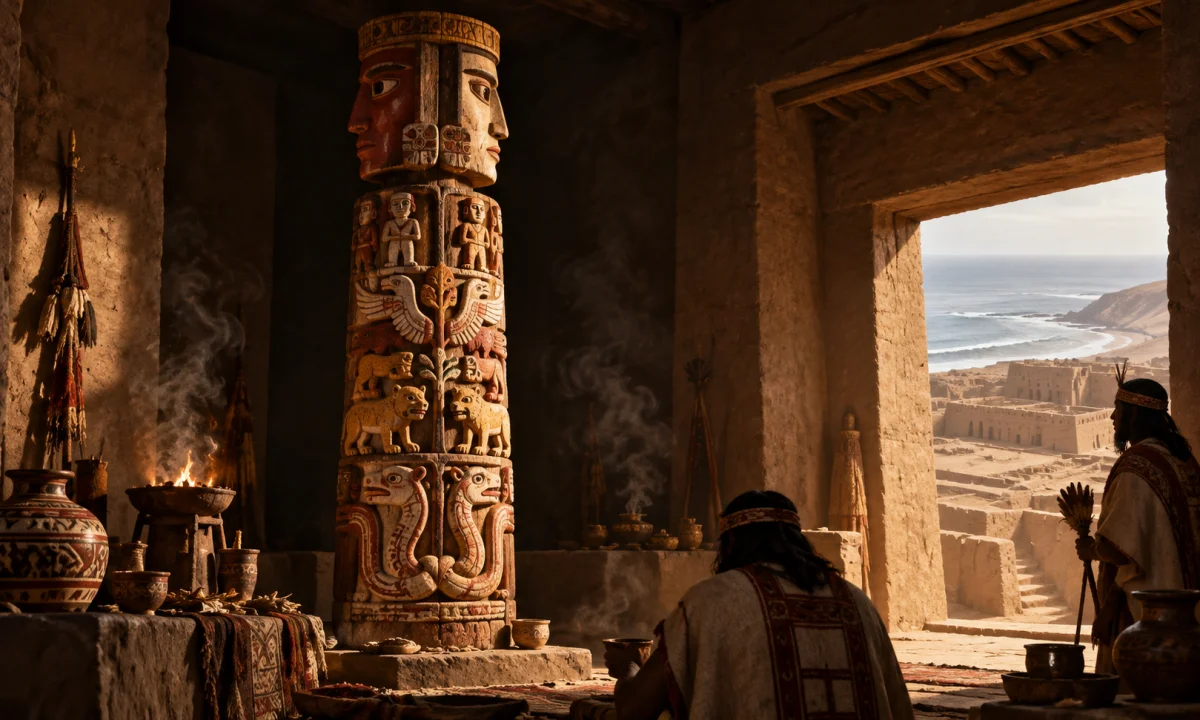
Pachacamac
Pachacamac was a major deity and oracle of the central Peruvian coast, worshipped at the large ceremonial centre now known as Pachacamac, south of modern Lima. Although often described as an Inca god, Pachacamac was prob…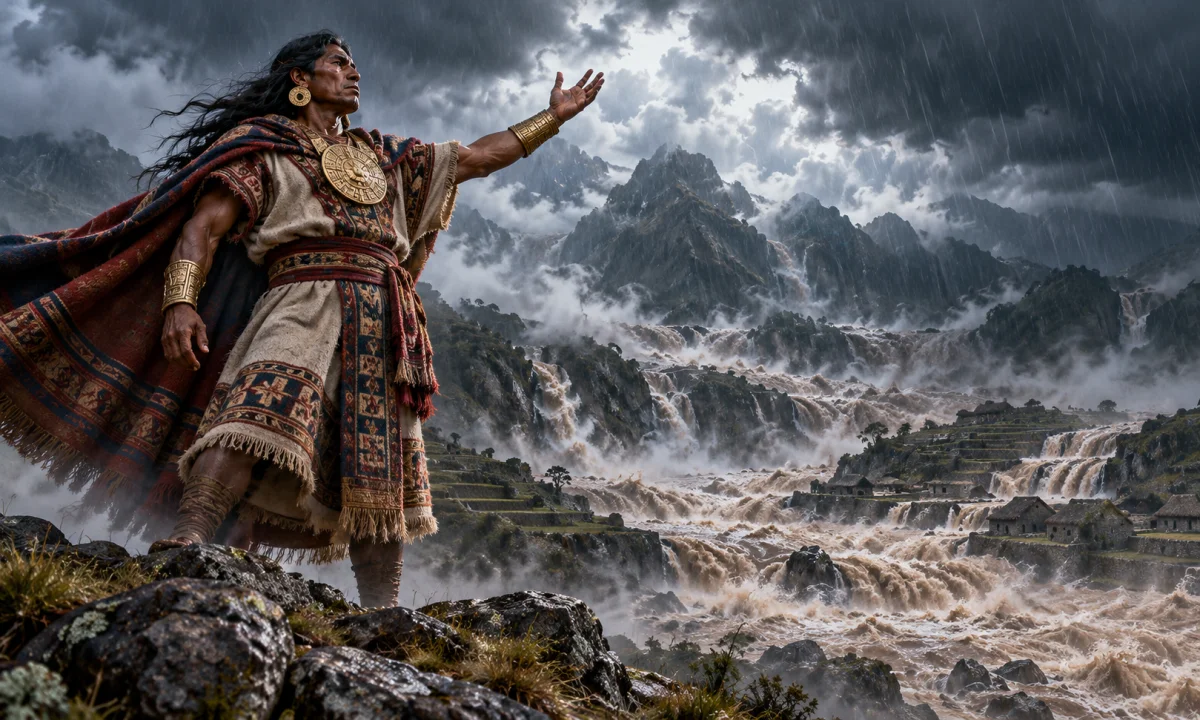
Paricia
Paricia is a little-known figure associated in some modern accounts with Inca mythology, particularly with rain, floods and the destruction of an early human age. The evidence for Paricia is limited, however. Unlike bett…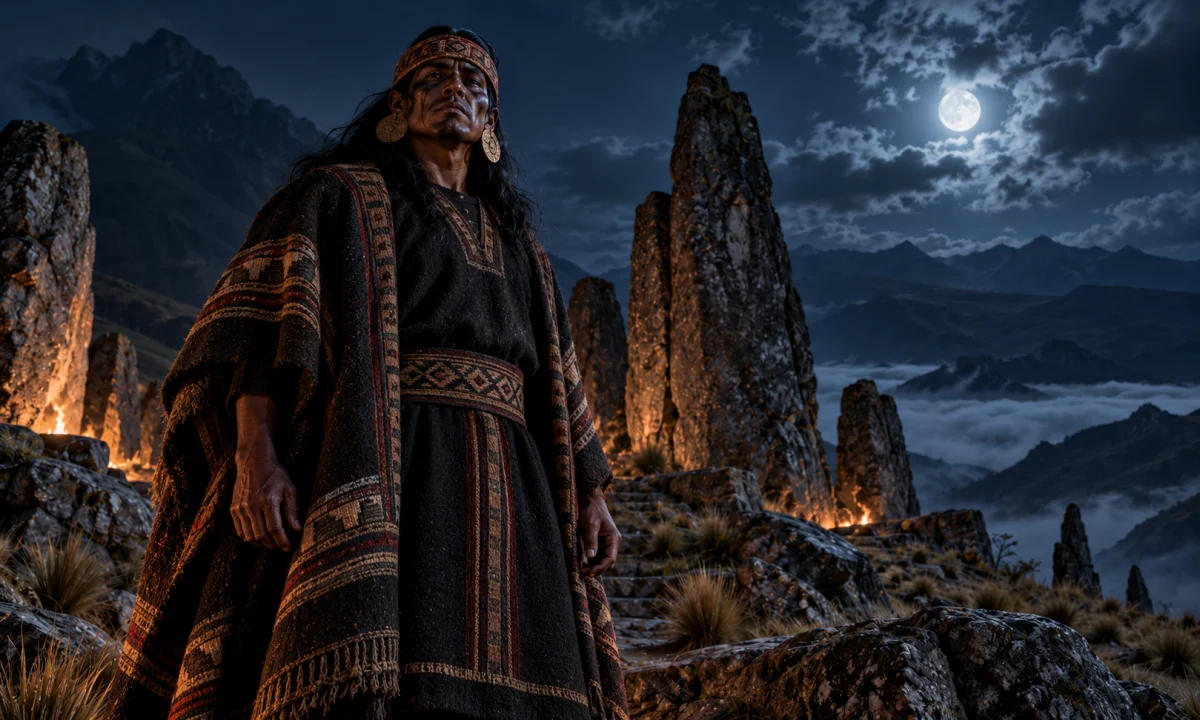
Piguerao
Piguerao is an obscure name associated with Inca mythology, but its identity is not securely established in the surviving record. Modern lists of Inca beings sometimes describe Piguerao as a supernatural bird, usually co…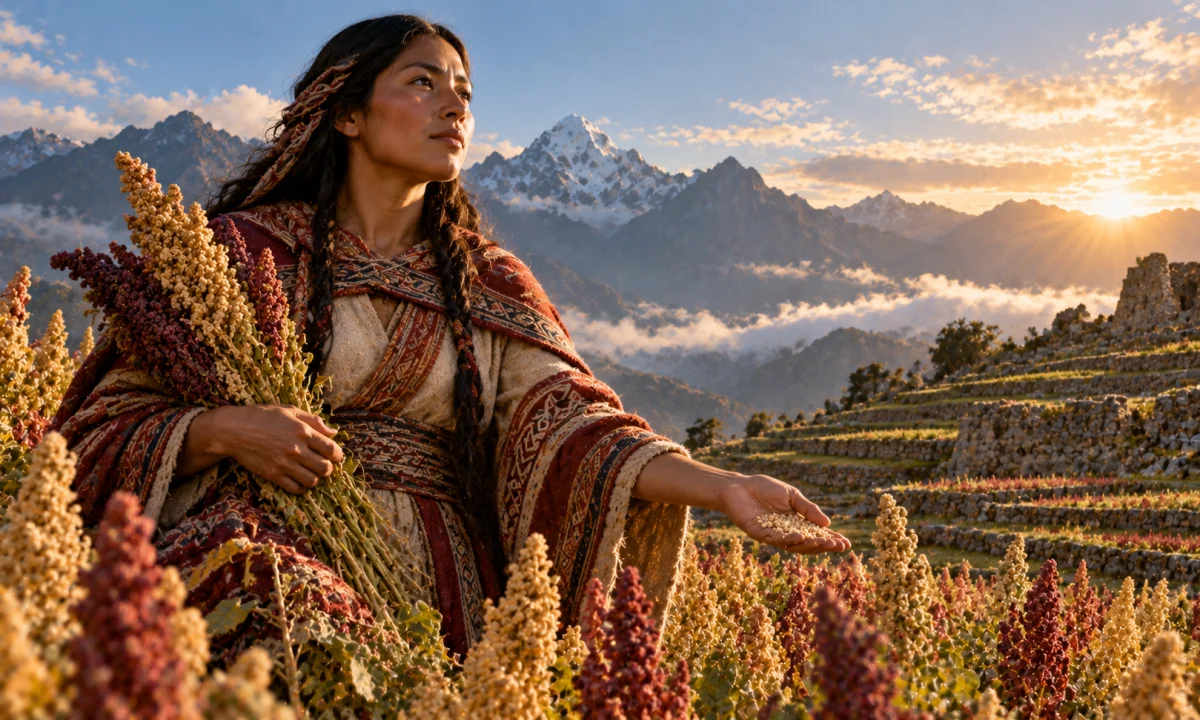
Quinoa-mama
Quinoa-mama is a name used for a mother or female spiritual presence associated with quinoa, the highland Andean grain known scientifically as Chenopodium quinoa. It is often presented in modern accounts as an Inca godde…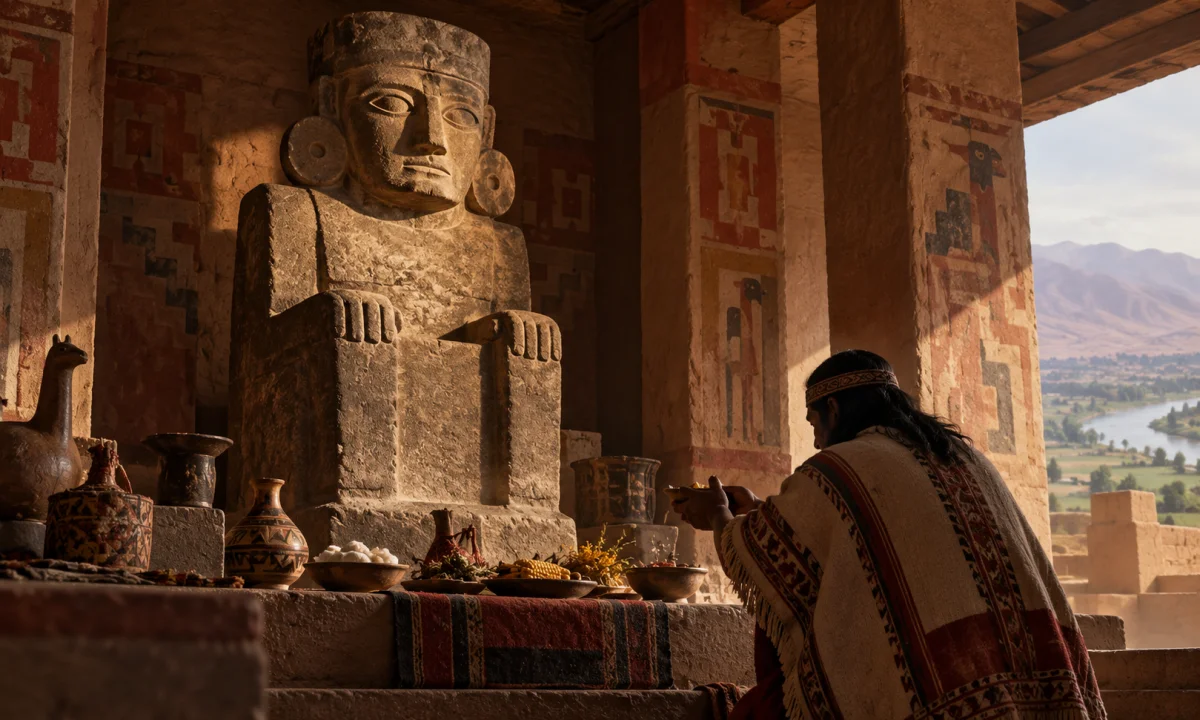
Rímac
Rímac is best understood as a sacred river and an associated spiritual presence of the central Peruvian coast rather than as a clearly defined, universally recognized Inca god. The name belongs to the Quechua word rimaq,…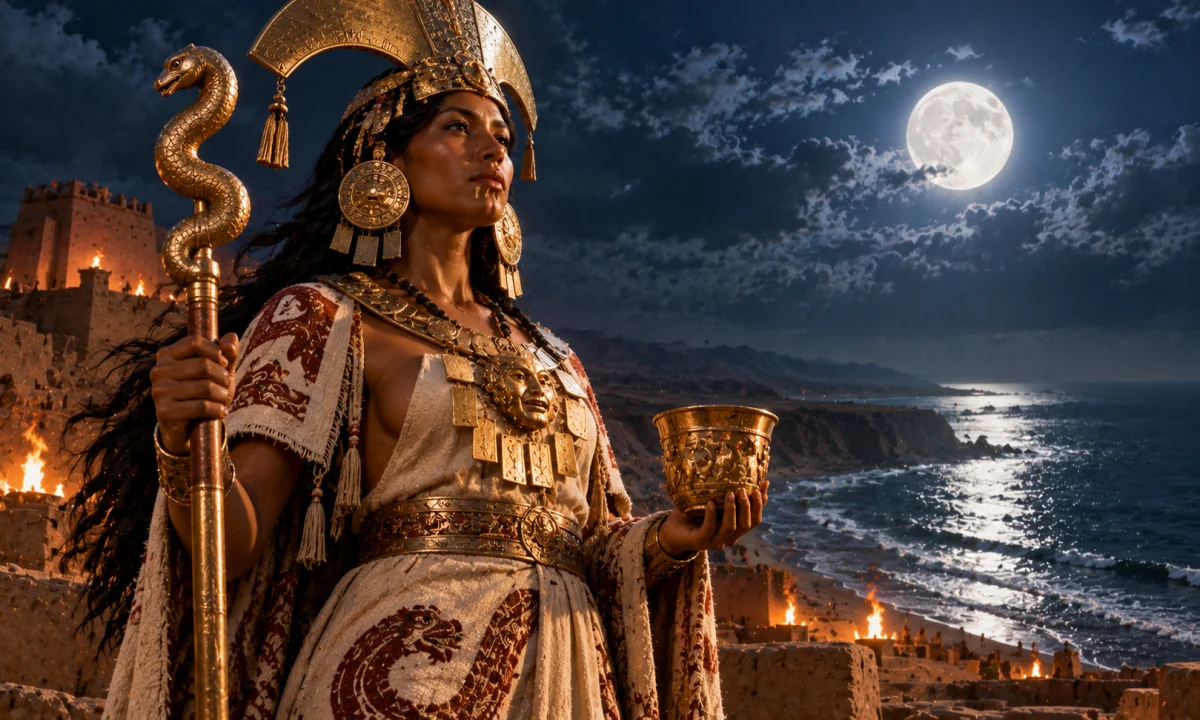
Si
Si is a name sometimes listed in modern references as an Inca lunar goddess. The identification is uncertain, however. In the best-documented accounts of Inca religion, the Moon is called Quilla or Killa and is personifi…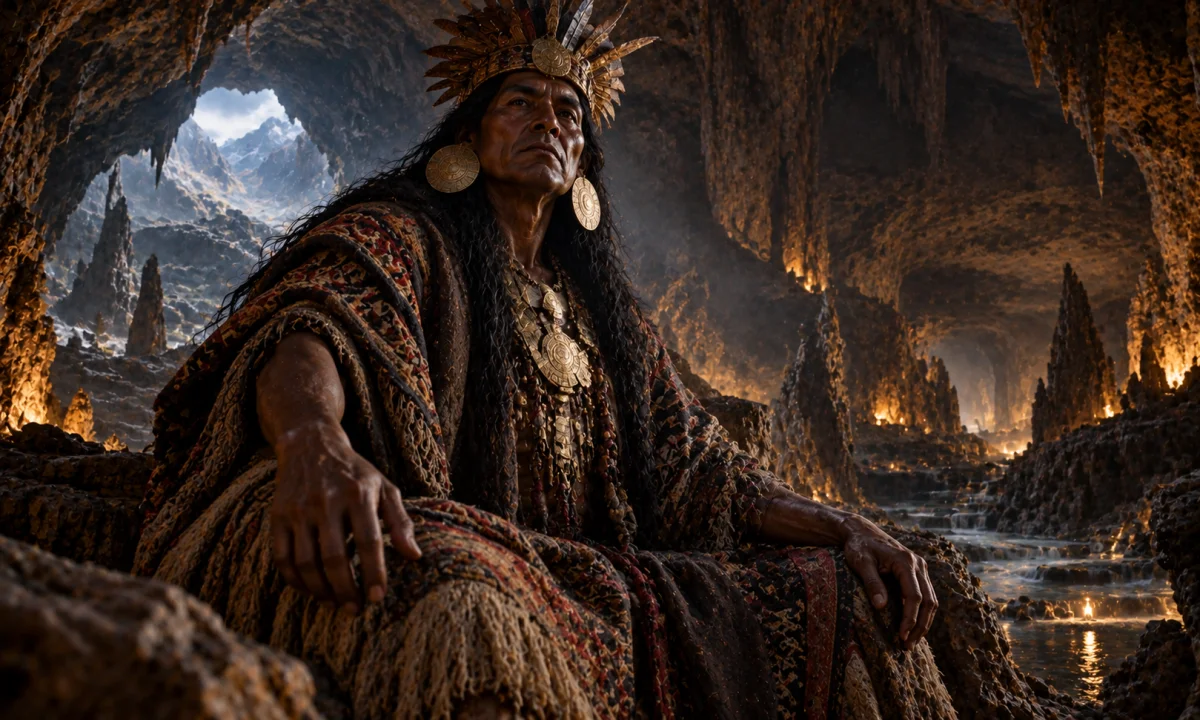
Supay
Supay is a name from the Quechua-speaking Andes that Spanish missionaries and later writers commonly translated as “devil,” “demon,” or “evil spirit.” It is often presented as an Inca god of death or the underworld, but …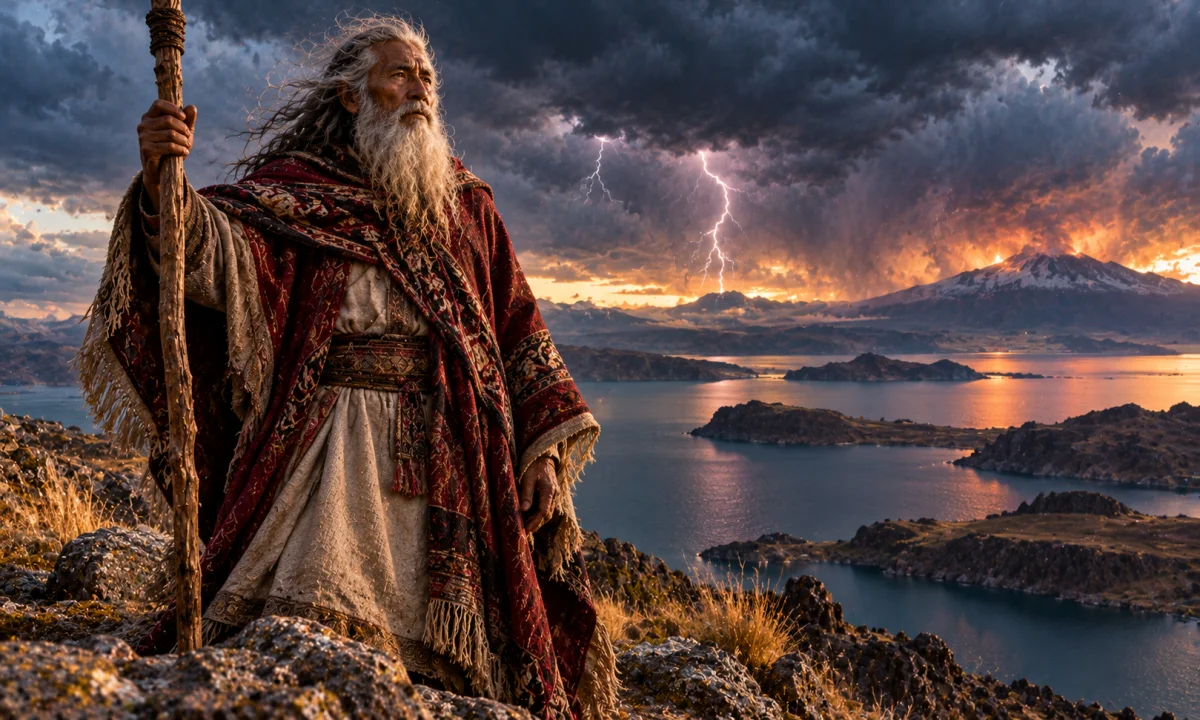
Tunupa
Tunupa is a sacred and highly variable figure of the central Andes, associated especially with the highlands of present-day Bolivia and southern Peru. He is often described as a wandering creator, prophet, culture hero o…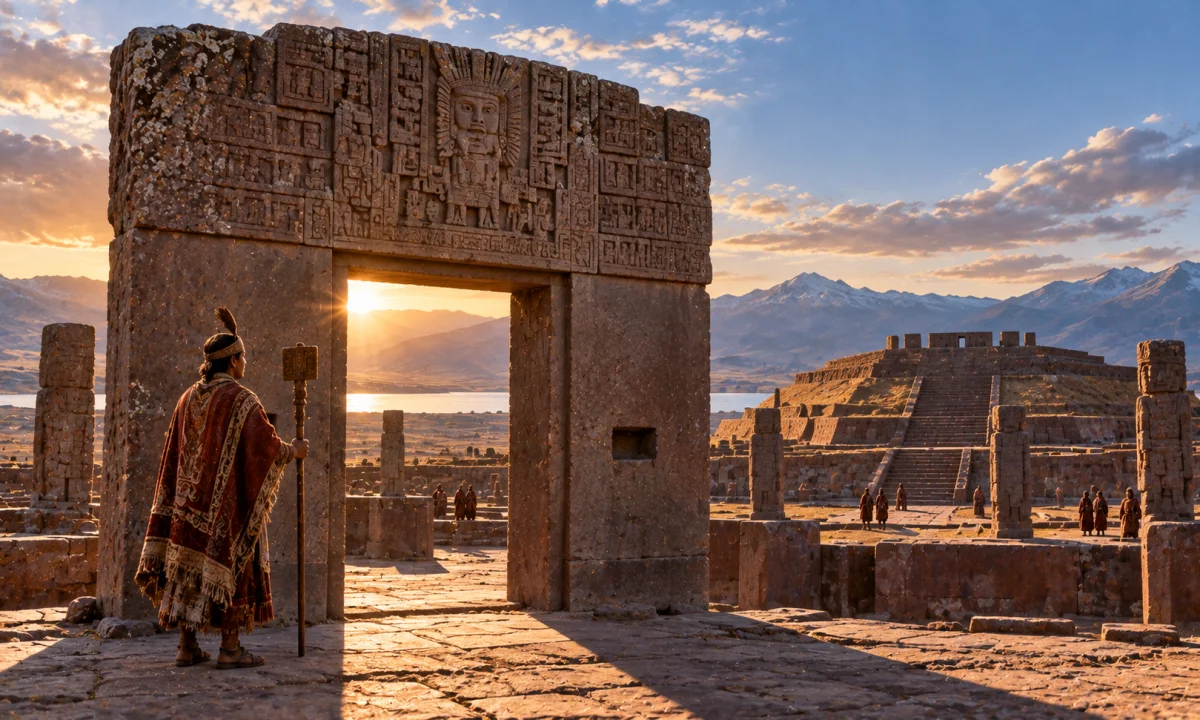
Tiwanaku
Tiwanaku is an ancient ceremonial and political centre in the southern Andes, near the southern shore of Lake Titicaca in present-day Bolivia. It is often placed under Inca mythology because later Inca traditions connect…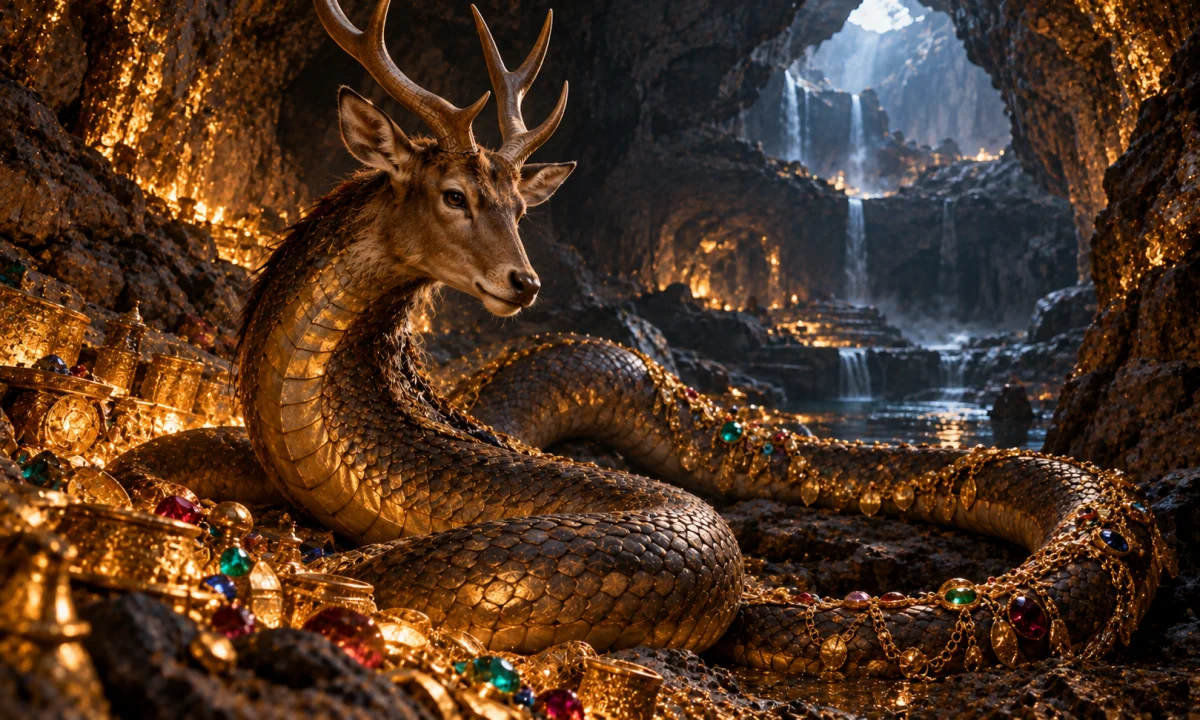
Urcaguary
Urcaguary is a little-known figure associated with Inca mythology and the hidden wealth of the earth. In modern descriptions, Urcaguary is usually presented as a subterranean guardian of gold, silver, precious stones and…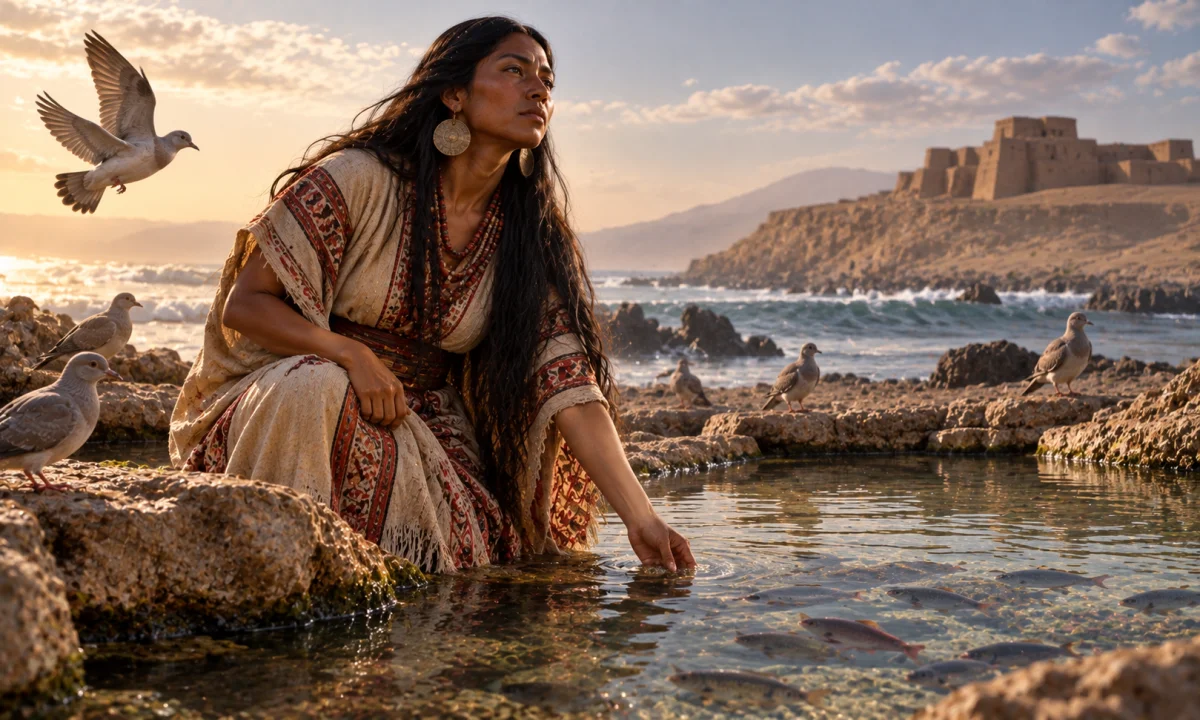
Urpay Huachac
Urpay Huachac—also written Urpayhuachac, Urpay Huachac, or with other colonial spelling variations—is a female sacred being recorded in the mythology of the central Andes. She is best known from the Huarochirí Manuscript…Mythology and folklore of South America & Caribbean
South American and Caribbean mythology encompasses a vast range of Indigenous religious traditions, sacred histories, oral narratives, ancestral beliefs and supernatural beings shaped by the continent, its islands and their surrounding seas. The category includes traditions associated with the Andes, Amazonia, the Guianas, the Orinoco basin, the southern plains, Patagonia and the Caribbean archipelago, together with later religious and folkloric traditions created through Indigenous, African, European and Asian cultural contact. It does not represent a single mythology or a unified system of belief. Each community developed its own relationships with deities, ancestors, landscapes, animals and spiritual powers.
The surviving evidence is highly uneven. Some traditions are known through archaeology, monumental architecture, ceramics, textiles and colonial chronicles, while others continue through oral storytelling, ritual practice, song, dance and the knowledge of living communities. Colonial conquest, forced conversion, enslavement, epidemic disease and displacement destroyed or transformed many institutions through which sacred knowledge had been transmitted. Written records must therefore be interpreted carefully, especially when they were produced by missionaries, colonial officials or outsiders who misunderstood Indigenous and African religious concepts.
Geographical and cultural scope
South America and the Caribbean form a broad organisational region rather than a single cultural area. The Andes supported large states and agricultural societies adapted to mountains, high plateaus and coastal deserts. Amazonia contained extensive networks of riverine and forest communities with distinct languages, political systems and ritual traditions. The Caribbean linked islands, coastal settlements and mainland societies through travel, migration and trade long before European colonisation.
Modern national borders do not correspond precisely to older cultural territories. Quechua-speaking and Aymara-speaking communities extend across several Andean countries. Guaraní traditions are found across parts of Paraguay, Brazil, Argentina and Bolivia. Mapuche communities live on both sides of the modern border between Chile and Argentina. Amazonian peoples often inhabit territories divided by state boundaries that were created without regard for existing Indigenous relationships.
The category also includes the historical development of Afro-Caribbean and Afro-South American religions. These traditions emerged under colonial slavery through the preservation and transformation of African religious knowledge in contact with Christianity, Indigenous practices and new social conditions. They are distinct religious systems rather than incomplete copies of African traditions.
Ancient societies and archaeological evidence
South America was home to complex societies long before the rise of the Inca Empire. Archaeological cultures associated with Chavín, Moche, Nazca, Tiwanaku, Wari and many other traditions produced temples, ceremonial centres, burials, textiles, metalwork and painted vessels containing religious imagery. Their original languages, divine names and narratives are often unknown.
Archaeologists can identify recurring figures, ritual practices and relationships between religious imagery and political authority, but visual similarity does not always prove that two cultures worshipped the same deity. A feline, serpent, bird or staff-bearing figure may have carried different meanings in different periods. Later Andean traditions can suggest possible interpretations, although continuity must be demonstrated rather than assumed.
Moche art depicts ceremonies, supernatural beings, warfare, sacrifice and interactions between human and nonhuman figures. These images provide unusually detailed evidence, but their narrative sequences remain debated. Nazca lines and geoglyphs likewise had ceremonial significance, possibly connected with movement, water, landscape and pilgrimage, yet claims that they were designed for extraterrestrial visitors have no credible archaeological basis.
The archaeological record of Amazonia has also challenged older claims that the rainforest could support only small and isolated populations. Earthworks, managed soils, settlement remains and landscape modification demonstrate that some regions sustained large and organised communities. However, archaeology alone cannot reconstruct the exact myths or religious identities of societies that left no deciphered written records.
Inca religion and imperial traditions
The Inca Empire brought many Andean peoples under the authority of a state centred on Cusco. Inca religion included imperial cults, local sacred places, ancestor traditions, agricultural ceremonies and devotion to major divine powers. The empire incorporated existing cults rather than replacing every local tradition with one standard system.
Inti, the sun, was closely associated with imperial authority and the ruling dynasty. Viracocha appears in colonial accounts as a creator or ordering power, although descriptions differ and may reflect attempts to translate Andean ideas into Christian categories. Illapa was connected with thunder, lightning and rain, while Pachamama remains associated with earth, fertility and reciprocal relationships in many Andean communities.
The term huaca could refer to a sacred place, object, feature of the landscape, ancestral being or other source of extraordinary power. Mountains, springs, stones, temples and mummified ancestors could all function within sacred networks. Translating huacas simply as gods or idols obscures their variety and their connection with territory, community and ritual obligation.
Inca rulers maintained relationships with royal ancestors whose preserved bodies could possess estates, receive offerings and participate symbolically in political life. The state also organised major festivals, sacrifices and pilgrimages. Local communities continued to honour their own sacred beings and places, although imperial administration could reshape their public significance.
Andean cosmology and reciprocity
Many Andean traditions understand the world through relationships among human communities, ancestors, animals, mountains, weather and cultivated land. These relationships frequently involve reciprocity: people make offerings and perform ceremonies while seeking fertility, protection, water and social balance.
Reciprocity should not be reduced to a commercial exchange with supernatural beings. It forms part of broader systems of mutual responsibility linking households, communities, landscapes and sacred powers. Neglected obligations may be associated with illness, crop failure or social disorder, while correct ritual conduct helps maintain productive relationships.
Mountains can be understood as powerful beings, sometimes called apus in Quechua-speaking regions. Their identities and importance are local rather than interchangeable. One community may recognise a particular mountain as a protector or ancestral presence, while neighbouring communities maintain different sacred geographies.
Andean ideas concerning space and time often emphasise transformation, alternation and the connection between past and present. The Quechua term pachakuti can refer to a major reversal or transformation of the world, but its meaning depends on context. Modern interpretations sometimes present it as a fixed prophecy, although historical usage is more complex.
Amazonian cosmologies and living worlds
Amazonian mythology includes the traditions of hundreds of distinct peoples whose religious lives are closely connected with rivers, forests, animals, plants, ancestors and spirit beings. There is no single Amazonian cosmology. Communities may share certain patterns because of long regional contact, but their languages, rituals and classifications differ significantly.
In many traditions, animals and other nonhuman beings possess forms of personhood, social organisation or spiritual agency. Myths may describe an earlier time when humans and animals communicated directly or changed forms. These narratives do not simply treat animals as symbols. They can express ethical and practical relationships involving hunting, food, kinship and respect.
Hunting often requires more than physical skill. Hunters may observe dietary restrictions, ritual precautions or obligations toward animal owners or masters. Excessive killing, disrespect or failure to share can bring spiritual consequences. The exact nature of these beliefs varies and should not be generalised across all Amazonian societies.
Rivers may connect human settlements with dangerous or fertile supernatural realms. Aquatic beings can control fish, weather, sexuality, illness or wealth. Forest spirits may protect animals, mislead travellers or punish improper behaviour. Western labels such as monster, demon or nature spirit may fail to convey their social and cosmological roles.
Ritual specialists, healing and transformation
Religious specialists in many South American traditions act as healers, diviners, singers, mediators or travellers between visible and spiritual worlds. The general term shaman is widely used in scholarship, but it originated in Siberia and may conceal important local distinctions. Communities have their own names for specialists, methods and sources of authority.
Healing can involve plants, songs, breath, tobacco, dreams, spirit communication and the removal or return of harmful substances or powers. Illness may be understood through physical, social and spiritual causes rather than divided into separate categories. Rivalry, broken obligations, sorcery or disturbed relationships may be considered alongside bodily symptoms.
Some traditions use psychoactive preparations within controlled ceremonial settings. Ayahuasca, for example, is used in several Amazonian and related traditions, but its names, ingredients and ritual meanings vary. Modern tourism often removes these practices from their cultural setting, presents them as a universal Indigenous spirituality or creates unsafe ceremonies led by unqualified operators.
Ritual specialists may receive knowledge through apprenticeship, inherited relationships, dreams, illness or encounters with nonhuman beings. Their power can be protective or dangerous, and communities may distinguish carefully between legitimate healing and harmful sorcery.
Creation, ancestry and cultural origins
Origin narratives across South America describe humanity emerging from caves, lakes, mountains, trees, animals or transformed ancestral beings. Some explain the formation of landscapes, the origin of crops or the separation of human communities. Others establish relationships among clans, territories and ritual responsibilities.
Inca origin traditions include several accounts rather than one fixed narrative. Some describe ancestral figures emerging from a cave at Pacaritambo, while others connect Manco Cápac and Mama Ocllo with Lake Titicaca. Colonial authors recorded these stories in different forms, and the versions may reflect regional claims, imperial politics and European interpretation.
Guaraní traditions include accounts of divine beings, the creation of the world and quests for a land without evil. The concept often translated as the Land Without Evil has been interpreted in religious, historical and political terms. Its meaning has differed among Guaraní-speaking communities and should not be reduced to a single utopian myth.
Mapuche traditions include narratives concerning powerful beings, ancestors, sacred places and conflicts between forces associated with land and water. The widely known story of Trentren and Caicai appears in multiple versions involving catastrophe, survival and the shaping of the landscape. It belongs to a living cultural tradition rather than a detached tale of two generic serpents.
Animals, spirits and legendary beings
South American folklore includes shape-shifters, forest guardians, river beings, giants, dangerous nocturnal entities and protectors of animals or cultivated land. Their names and characteristics vary between communities, and later national folklore often combines Indigenous, African and European elements.
The yacuruna of western Amazonian traditions is associated with underwater realms and may appear in narratives involving seduction, abduction or transformation. The curupira of Brazilian folklore is commonly represented as a forest protector with backward-facing feet, although descriptions vary and modern retellings have standardised a more diverse body of traditions.
Stories of the boto, or Amazon river dolphin, often describe a being that assumes human form and enters social gatherings. These narratives can address sexuality, unexplained pregnancy, danger and the uncertain boundary between human settlements and river worlds. They should not be treated merely as whimsical animal legends.
The pombero, found in Guaraní and regional folklore, is associated with forests, night, animals and human conduct. Its attributes differ across Paraguay and neighbouring areas. As with many folkloric beings, printed descriptions may combine distinct local versions into one supposedly definitive form.
Caribbean Indigenous traditions
Before European colonisation, the Caribbean was inhabited by diverse Indigenous peoples, including Taíno communities in the Greater Antilles and other groups across the Lesser Antilles and surrounding mainland regions. Their religious traditions were not uniform, despite colonial writers often applying broad labels to many islands.
Taíno sacred beings and ancestral powers are commonly described through the term cemí, which could also refer to material objects through which such powers were represented or approached. Cemíes were associated with ancestors, fertility, weather, political authority and community identity. Calling them idols imposes a narrow European theological judgment.
Colonial accounts describe figures such as Yúcahu, associated with cassava and agricultural abundance, and Atabey, connected with water, fertility and motherhood. The names and relationships preserved in Spanish sources are valuable, but the record is incomplete and shaped by rapid colonial destruction.
Areytos combined song, dance and collective memory and could preserve genealogies, histories and sacred narratives. Much knowledge was lost through violence, enslavement and epidemic disease, although Indigenous ancestry and cultural continuity remain important throughout the Caribbean.
African diaspora religions
The Atlantic slave trade brought people from many regions of West and Central Africa to the Caribbean and South America. Enslaved communities preserved and transformed religious knowledge under extreme conditions, creating traditions shaped by African inheritance, colonial Christianity, Indigenous contact and local history.
Haitian Vodou developed through several African religious traditions, especially those linked to West and Central Africa, within the conditions of colonial Saint-Domingue and the history of Haiti. Its spirits, commonly called lwa, belong to organised ritual families and relationships. Vodou should not be confused with fictional “voodoo” magic or reduced to curses and dolls.
Cuban Santería, also known as Regla de Ocha, developed mainly from Yoruba-derived traditions in interaction with Catholicism and other influences. Its orishas are related to West African divine powers but have their own Cuban histories and ritual forms. Palo traditions draw especially on Kongo religious heritage and should not be treated as variants of Santería.
Brazilian Candomblé includes several ritual nations shaped by Yoruba, Fon, Ewe, Kongo and Angolan traditions. Umbanda developed later through Afro-Brazilian religion, Spiritism, Catholicism and Indigenous imagery. These religions are internally diverse and continue as living communities rather than collections of folkloric supernatural characters.
Colonisation, Christianity and religious change
Spanish and Portuguese conquest caused enormous disruption across South America and the Caribbean. Missionaries destroyed sacred objects, prohibited ceremonies and classified Indigenous and African powers as demons. Colonial authorities also reorganised communities, labour and land ownership.
Conversion to Christianity did not produce a complete or uniform disappearance of earlier traditions. Indigenous and African communities adopted saints, festivals, crosses and Christian narratives while maintaining or transforming local relationships with ancestors, sacred landscapes and spiritual beings.
Apparent similarities between a saint and an earlier deity do not always prove direct substitution. Associations may emerge through shared symbols, calendar dates, ritual functions or practical strategies for preserving traditions under persecution. Each case requires specific historical evidence.
Popular Catholicism in the Andes and Caribbean often includes pilgrimages, local patrons, miraculous images and festivals shaped by regional history. These practices are genuinely Christian while also reflecting Indigenous and African forms of community, music, dance and sacred geography.
Folklore, national identity and cultural reinterpretation
During the nineteenth and twentieth centuries, writers and folklorists collected local legends as symbols of national identity. Their work preserved important material but also reshaped oral traditions for literary audiences. Diverse beings were sometimes presented as members of a unified national mythology that had not previously existed in that form.
National folklore often blurred distinctions among Indigenous, African and European traditions. A legend might combine an Indigenous place, a Christian moral framework and motifs introduced through colonial storytelling. Such combinations are historically meaningful, but their different layers should not be mistaken for evidence of an unchanged pre-Columbian narrative.
Political movements have also invoked Inca, Taíno, Mapuche, Guaraní and other identities to support claims about ancestry, resistance or national heritage. These uses may express genuine cultural pride while also simplifying internal diversity or appropriating traditions from living communities.
Modern representation and common misconceptions
South American and Caribbean mythologies are increasingly represented in novels, film, animation, games and online media. These adaptations can make neglected traditions more visible, but they often combine unrelated figures from distant regions or present religious beings as generic fantasy creatures.
Modern entertainment frequently portrays the Inca as the only major civilization of South America, overlooking earlier Andean societies and the diversity of Amazonian, southern and coastal traditions. The Caribbean is likewise often represented mainly through piracy or fictional magic, obscuring Indigenous histories and living Afro-Caribbean religions.
Claims about lost continents, ancient astronauts or mysterious vanished races remove archaeological achievements from the peoples who created them. Monumental architecture, landscape modification and astronomical knowledge can be explained through human societies, accumulated expertise and organised labour without speculative external intervention.
Living Indigenous and African diaspora communities continue to practise, debate and reinterpret their traditions. Their religions and narratives are not frozen remnants of a vanished past. They remain connected to language, territory, family, political struggle, artistic creation and changing forms of cultural identity.