 WORLD
WORLD
Mesoamerica
Explore myths, traditions and legendary beings grouped under Mesoamerica.
Last articles

Chalchiuhtecólotl
Chalchiuhtecólotl is an obscure figure associated with Nahua, especially Mexica or “Aztec,” religious traditions. The name is commonly translated as “Precious Owl” or “Jade Owl,” from Nahuatl elements connected with a pr…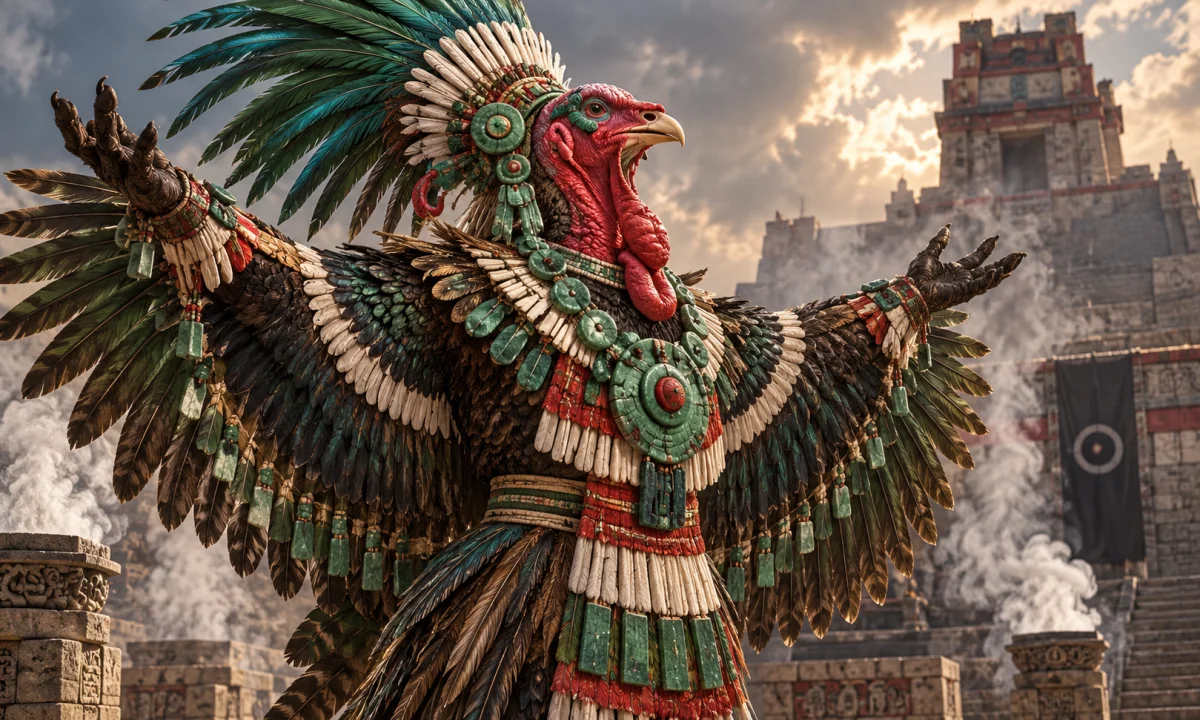
Chalchiuhtotolin
Chalchiuhtotolin is a deity or divine manifestation in Nahua religious tradition, especially the religious world commonly called Aztec. His name is usually translated as “Jade Turkey” or “Precious Turkey.” He is most clo…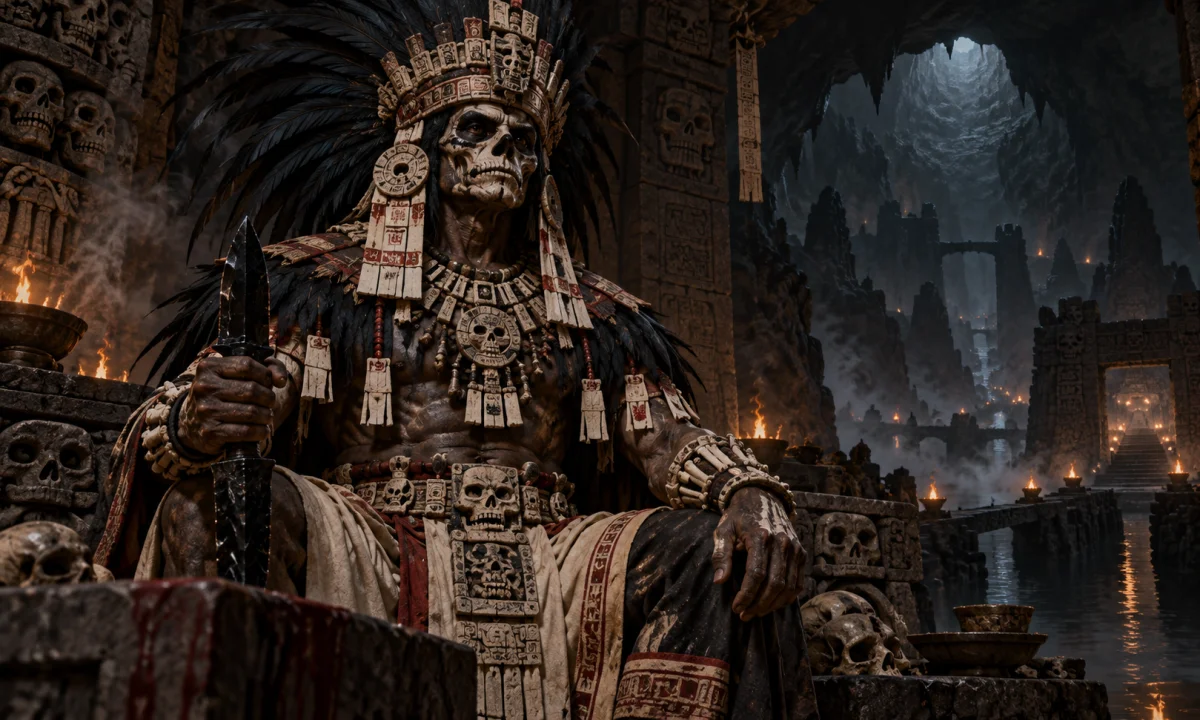
Chalmecatecuhtli
Chalmecatecuhtli is an obscure figure associated with Aztec, or more precisely Nahua, religious tradition in central Mexico. His name appears in colonial-era records and later catalogues of Nahua deities, but surviving e…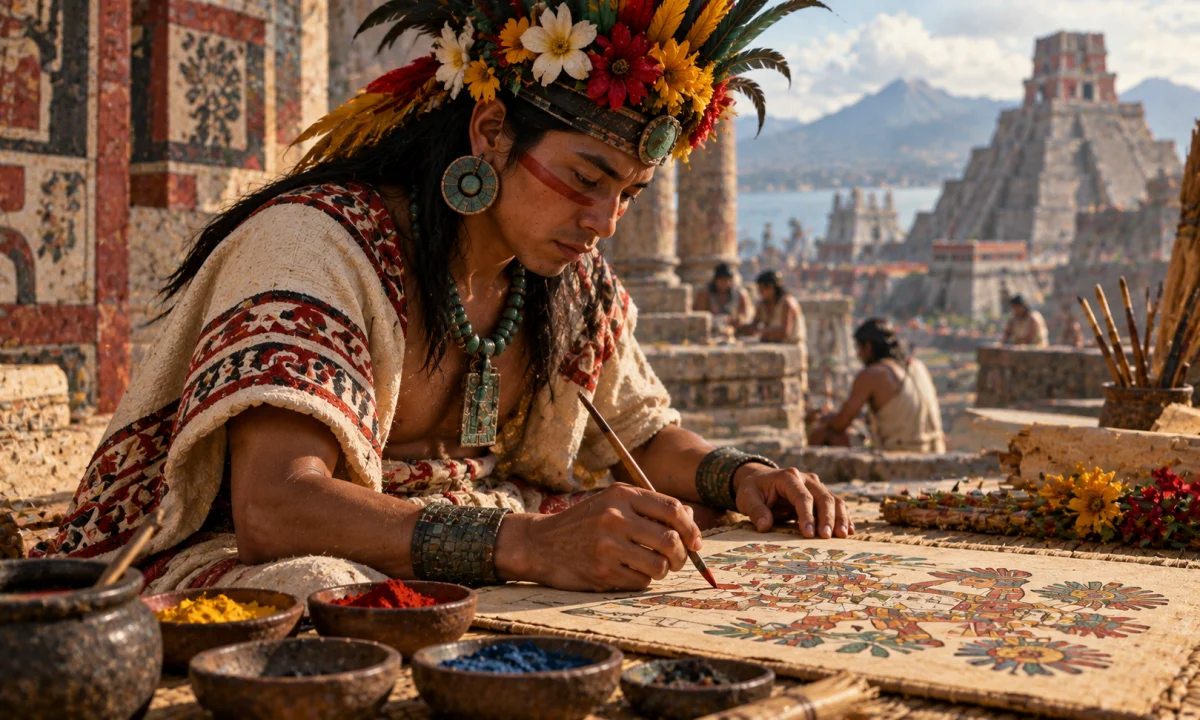
Chicomexochtli
Chicomexochtli is a little-known figure in the religious traditions of central Mexico. His name is usually written in English as Chicomexochtli or Chicomexochitl and is commonly interpreted from Nahuatl as “Seven Flower.…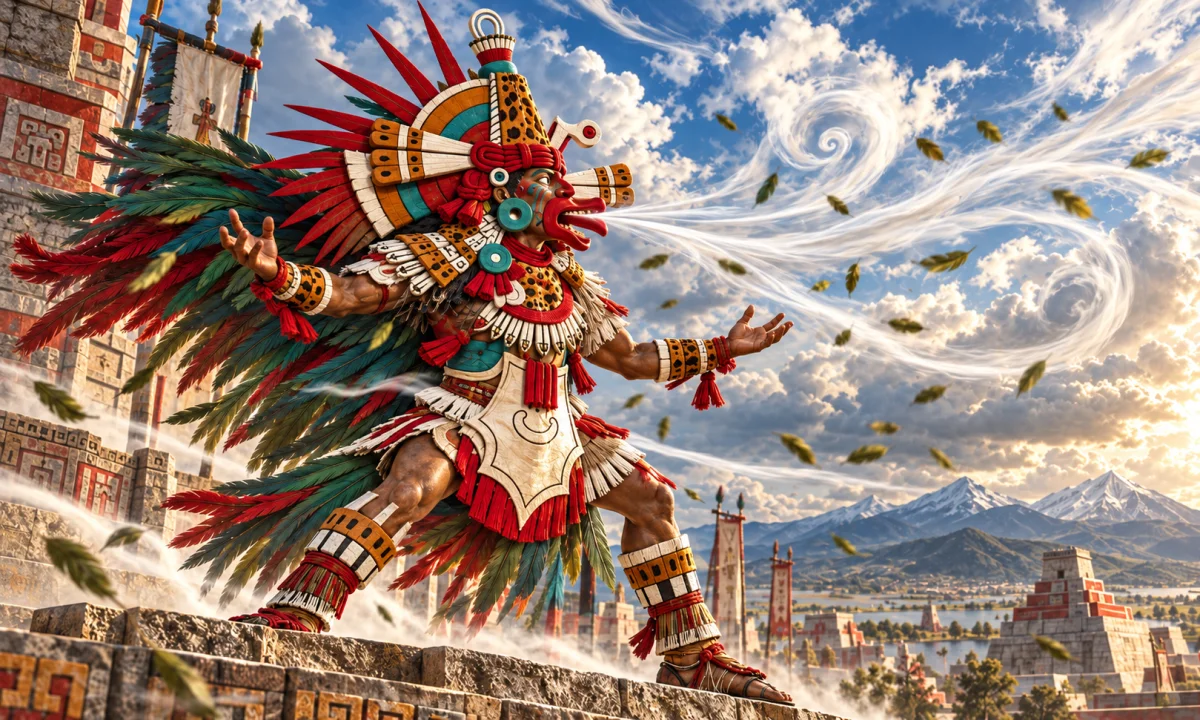
Chiconahuiehecatl
Chiconahuiehecatl is a Nahuatl name usually interpreted as “Nine Wind” or “Nine Wind-Breath.” In discussions of Aztec religion, it is most safely understood as a calendrical name, title or aspect associated with Ehecatl,…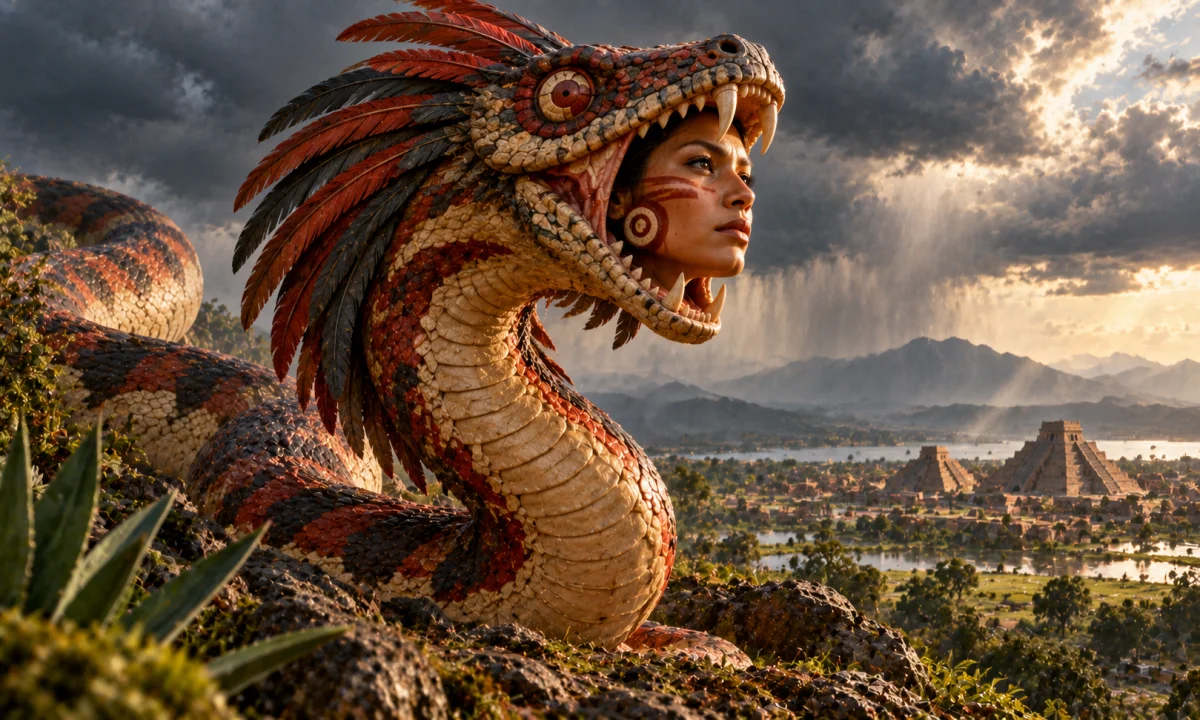
Cihuacoatl
Cihuacoatl was an important female deity and political title in the religious and governmental world of the Nahua peoples, especially the Mexica, commonly called the Aztecs. Her name is usually translated as “Serpent Wom…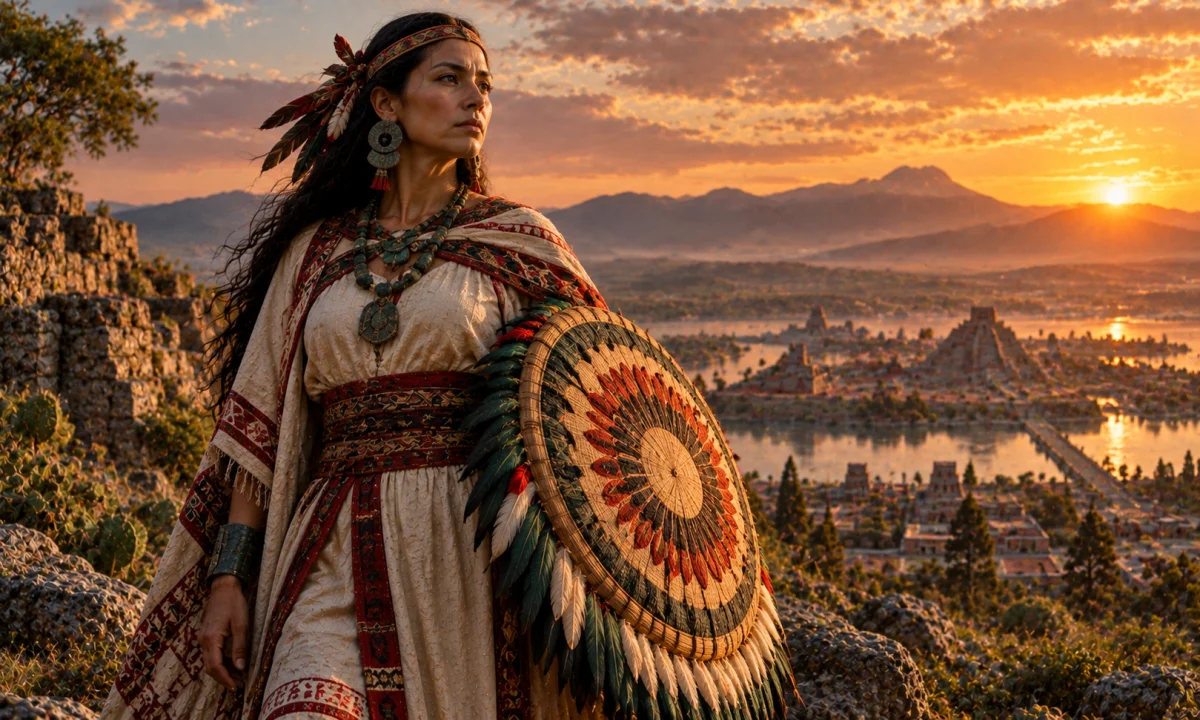
Chimalman
Chimalman, also written Chimalma, is a female figure in Nahua and Aztec-era mythological traditions, best known as the mother of Quetzalcoatl and the companion of Mixcoatl. She is important chiefly through her place in t…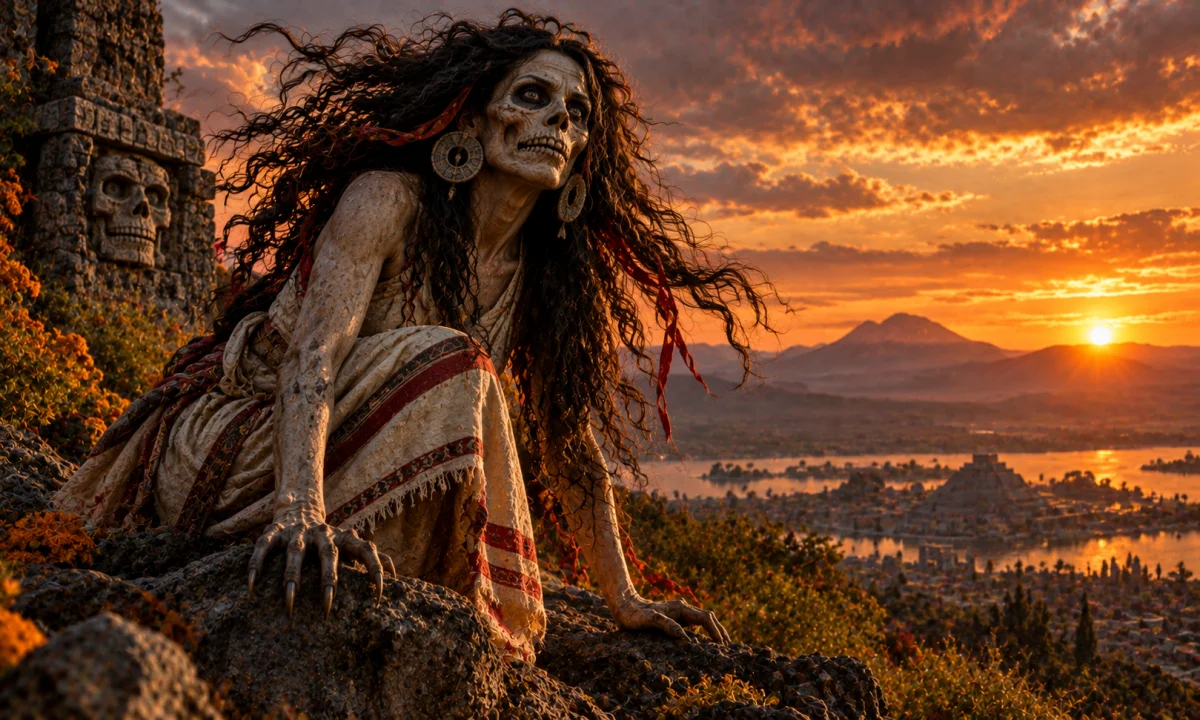
Cihuateteo
Cihuateteo are the sacred and dangerous spirits of women who died in childbirth in the religious traditions of the Nahua peoples of central Mexico, including the Mexica commonly known as the Aztecs. Their name is usually…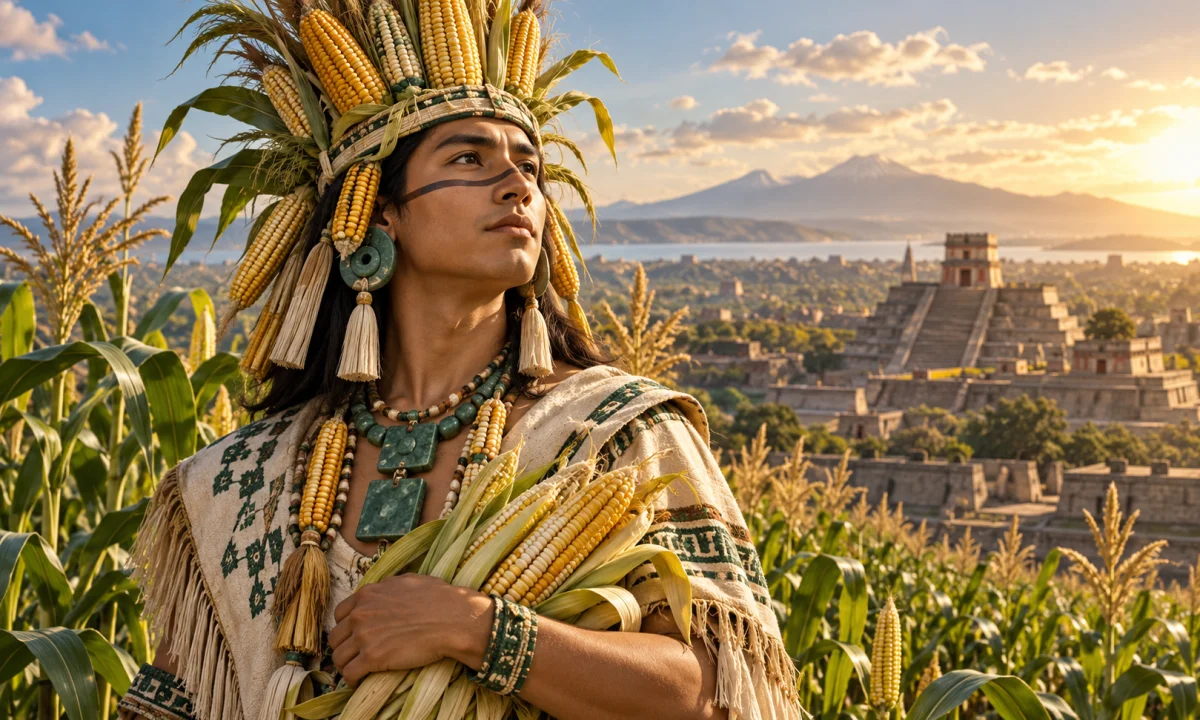
Cinteotl
Cinteotl is a Nahua maize deity associated with corn, agricultural fertility, nourishment, and the generative power of the earth. The name is often written Centeotl, Centéotl, or Cintéotl in English-language works. Cinte…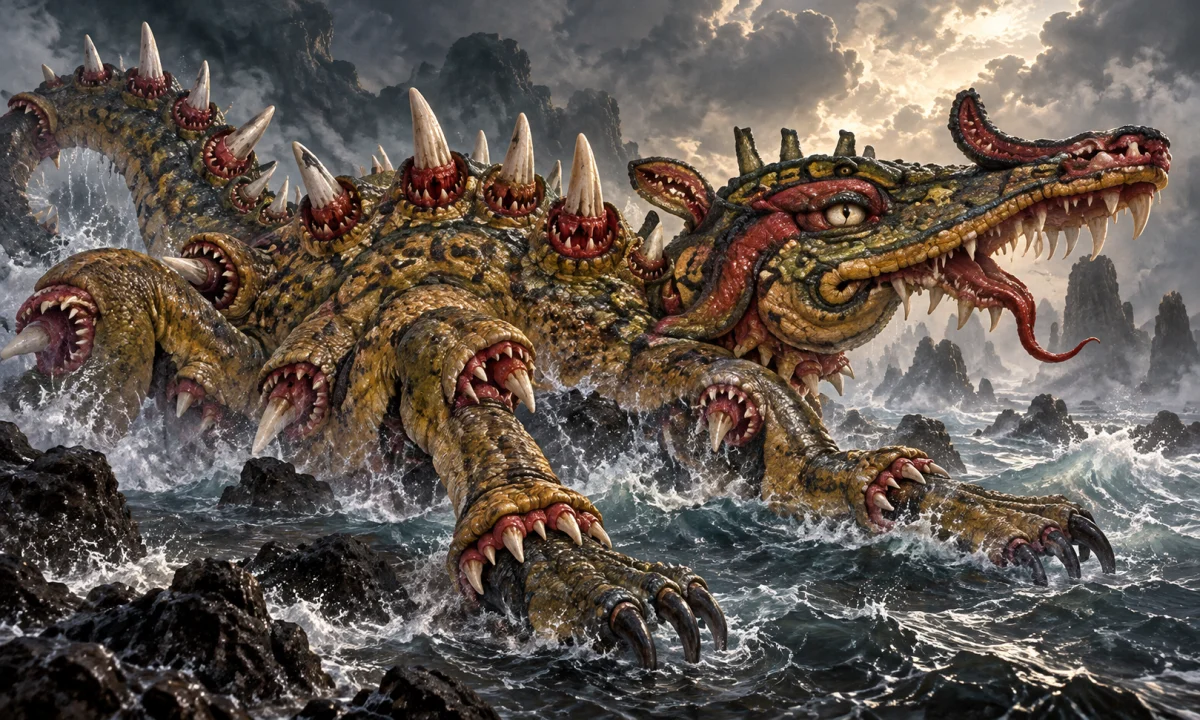
Cipactli
Cipactli is a primordial aquatic monster in Aztec and broader Nahua creation traditions. Described as a crocodile-like, fish-like, or otherwise monstrous creature that lived in the waters before the ordered world existed…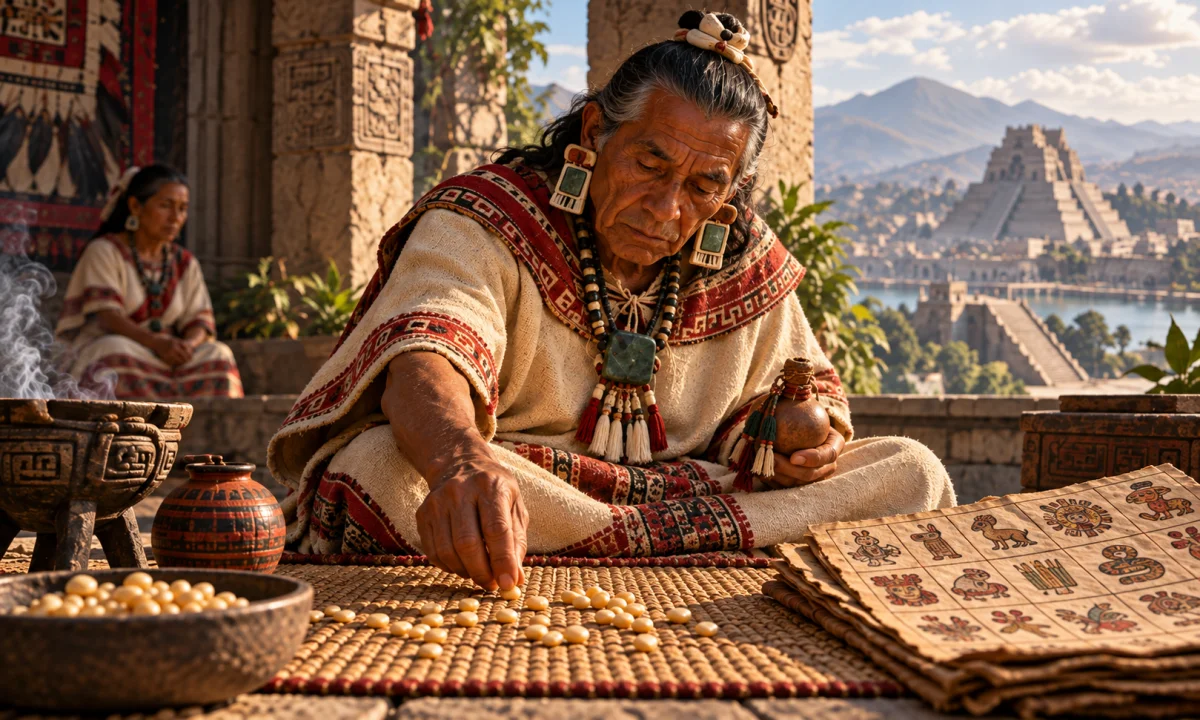
Cipactonal
Cipactonal is a primordial figure in Nahua religious tradition, commonly associated with Oxomoco, his female counterpart. He appears in several early colonial accounts as one of the first human or semi-divine beings, an …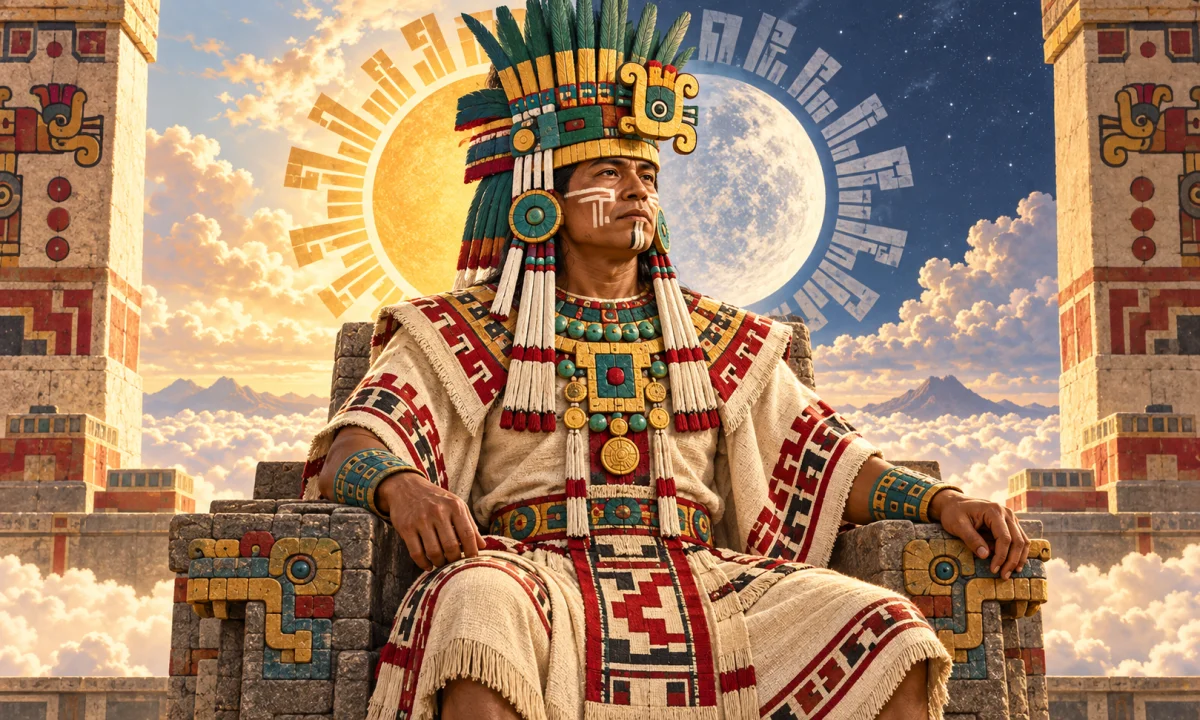
Ometecuhtli
Ometecuhtli is a creator figure in Nahua religious thought, especially in accounts associated with the Aztec or Mexica world. His name is usually translated as “Lord Two” or “Two Lord.” He is commonly presented as the ma…Mythology and folklore of Mesoamerica
Mesoamerican mythology encompasses the religious traditions, sacred histories, cosmologies, ritual narratives and supernatural beings associated with the Indigenous civilizations of central and southern Mexico and parts of northern Central America. The region included many distinct peoples, languages and political systems, among them the Maya, Mexica, Zapotec, Mixtec, Teotihuacan, Toltec, Totonac and earlier societies conventionally described as Olmec. These cultures did not share one unified mythology, although centuries of trade, warfare, migration and political contact produced recurring symbols, ritual practices and related ways of organizing sacred time and space.
Mesoamerican traditions are known through archaeology, monumental art, inscriptions, painted manuscripts, colonial-era documents and living Indigenous communities. The available evidence is extensive but uneven. Maya writing preserves dynastic and ritual information from several periods, while knowledge of Mexica religion depends heavily on accounts produced shortly before and after the Spanish conquest. For many earlier cultures, interpretation relies mainly on architecture, sculpture, ceramics and imagery whose original names and narratives are no longer known with certainty.
Geographical and cultural scope
Mesoamerica is a historical and cultural region rather than a modern country or a single ethnic territory. Its boundaries changed over time, but it generally extended from parts of central and northern Mexico through southern Mexico, Guatemala, Belize, El Salvador and western Honduras. Communities within this area shared certain technologies, crops, calendrical systems and ritual traditions while retaining distinct languages and political identities.
The region contained highland valleys, tropical forests, dry plains, volcanic landscapes and long coastlines. These environments influenced agriculture, settlement and sacred geography. Mountains, caves, springs, lakes and cultivated fields could be understood as places of origin, sources of fertility or entrances to supernatural realms.
Modern labels such as Maya, Aztec and Zapotec describe broad cultural traditions that included numerous cities and communities. Maya civilization, for example, was never one centralized empire with a single religious system. Different Maya kingdoms maintained their own dynasties, patron deities and local histories. The Mexica were one Nahua-speaking people among several, although their capital, Tenochtitlan, became the centre of a powerful empire during the Late Postclassic period.
Evidence and surviving sources
Mesoamerican religious traditions survive through several kinds of evidence, each with its own limitations. Temples, tombs, offerings, ceremonial precincts and domestic shrines reveal patterns of ritual activity, but material remains do not always disclose the names or meanings associated with them. Images of deities and supernatural beings can be identified more confidently when inscriptions or later traditions provide supporting information.
Maya inscriptions record royal accessions, warfare, ritual events, genealogies and interactions with gods and ancestors. Painted vessels and surviving manuscripts preserve additional cosmological and calendrical material. Most pre-Columbian Maya books were destroyed or lost, however, and only a small number of securely recognized codices remain.
Central Mexican painted manuscripts include calendrical, genealogical, ritual and historical information. Some were produced before the Spanish invasion, while others were created during the colonial period by Indigenous scribes working within changing political and religious circumstances. These documents preserve important traditions but may also reflect adaptation, censorship or attempts to explain Indigenous concepts to European audiences.
Colonial authors recorded myths, prayers, ceremonies and interpretations from Indigenous informants. Their works are indispensable, yet they were shaped by Christian theology, missionary aims, translation difficulties and the violence of colonial rule. Descriptions of native gods as devils or idols reflect European religious judgments rather than neutral Indigenous classifications.
Cosmology and the ordered universe
Many Mesoamerican traditions conceived the universe as a structured and dynamic system composed of multiple levels or directions. The earthly realm could be positioned between celestial regions and an underworld, while the four cardinal directions were associated with colours, trees, gods, winds or calendrical forces. These patterns varied across cultures and periods and should not be reduced to one universal model.
The world was often imagined as vulnerable to disorder and dependent on continuing relationships among humans, gods, ancestors and natural forces. Ritual action helped sustain these relationships. Agricultural fertility, rainfall, political legitimacy and the regular movement of time were not regarded as automatic processes entirely separate from religious responsibility.
Creation narratives frequently describe earlier worlds, failed human beings or repeated attempts to establish a viable cosmic order. The surviving Maya K’iche’ work known as the Popol Vuh recounts successive efforts to create beings capable of recognition and worship before the formation of humans from maize. Central Mexican traditions also describe a sequence of world ages or suns, each ending through catastrophe before the present era.
These accounts do not form one standardized Mesoamerican creation story. They were preserved in particular languages, communities and historical settings. Similarities may reflect long-term regional exchange, but the differences remain essential to understanding their religious significance.
Sacred time and calendrical systems
Calendrical knowledge was central to Mesoamerican religion, political life and divination. Several cultures used a ritual cycle of 260 days alongside a solar cycle of approximately 365 days. The combination of these systems created a larger repeating sequence commonly called the Calendar Round.
Days and periods could possess particular qualities associated with gods, directions, numbers and historical precedents. Ritual specialists interpreted these combinations in relation to naming, marriage, agriculture, warfare, rulership and other decisions. The calendar was therefore not simply a method of measuring time but a system through which sacred forces were understood and negotiated.
Maya communities also used the Long Count to record dates across extended spans of time. Monumental inscriptions placed royal events within historical and cosmic chronologies. Modern claims that the Maya predicted the destruction of the world in 2012 misrepresented the calendar and ignored both scholarly understanding and contemporary Maya perspectives.
Calendrical systems were related across Mesoamerica but not identical in every region. Names, rituals and methods of interpretation differed, and knowledge could change through political contact or religious reform.
Gods and sacred powers
Mesoamerican religious traditions included numerous gods associated with rain, maize, fire, fertility, warfare, rulership, death, the sun, the moon, wind and particular forms of knowledge. Divine identities were often complex. A deity could appear under several names or aspects, share attributes with another figure or be represented differently according to place and period.
Among the Mexica, Huitzilopochtli was closely connected with warfare, solar power and the political identity of Tenochtitlan. Tlaloc was associated with rain, storms, mountains and agricultural fertility. Quetzalcoatl, the Feathered Serpent, had a long and varied history across Mesoamerica and could be linked to wind, priestly authority, knowledge and cultural order. These figures were not merely personifications of isolated natural forces.
Maya traditions include rain deities often known through the name Chaac or related regional forms, as well as gods connected with maize, celestial bodies, trade, writing and royal power. The identification of Maya deities is complicated by changes over time, variant names and the partial decipherment of some inscriptions.
Zapotec, Mixtec and other traditions possessed their own sacred beings and ritual systems. Similar iconographic features do not necessarily indicate that two gods were identical. Shared symbols could be adapted to local religious and political purposes.
Maize, rain and agricultural life
Maize held profound economic, social and religious importance throughout Mesoamerica. It was a staple crop, a symbol of human sustenance and, in some traditions, a substance connected with human creation. Agricultural life depended on seasonal rains, cultivated land and communal labour, linking religious practice closely to the cycles of planting and harvest.
Rain gods were often associated with mountains, caves, lightning and bodies of water. Mountains could be imagined as containing water or agricultural abundance, while caves served as entrances to the earth and places of communication with sacred powers. Offerings made in such locations sought rain, fertility or protection.
Maize deities and narratives frequently express death and renewal. Seeds disappear beneath the soil before producing new growth, creating a powerful relationship between agriculture, burial and regeneration. Such symbolism varied by culture and should not be treated as a single universal maize myth.
Drought, excessive rain and crop failure threatened communities directly. Ritual responses to these dangers were embedded within political and social institutions, and rulers could be judged by their ability to maintain favourable relationships with the forces governing fertility.
Rulers, ancestors and sacred authority
Mesoamerican kingship often possessed a religious dimension. Rulers performed ceremonies, commissioned monuments and presented themselves as intermediaries between human communities and supernatural powers. Their legitimacy could be connected to divine ancestry, calendrical destiny, military success and ritual responsibility.
Classic Maya rulers recorded genealogies and ceremonial acts on monuments. They invoked gods and ancestors, commemorated accessions and represented political events within a sacred historical framework. Royal bloodlines were important, but authority also depended on alliances, warfare and control of resources.
Mixtec painted manuscripts preserve genealogical and historical narratives involving rulers, marriages, conquests and sacred origins. Figures such as Eight Deer Jaguar Claw belong to traditions that combine historical actors with ritual and legendary dimensions.
Among the Mexica, the ruler of Tenochtitlan governed within a wider system of nobles, priests, warriors and tributary relationships. Imperial ideology connected military expansion with religious obligation, but subject communities retained their own identities and frequently experienced Mexica power as domination rather than shared sacred unity.
Blood, sacrifice and ritual obligation
Offerings were a fundamental part of Mesoamerican religious practice. They could include food, incense, flowers, animals, precious objects, blood and human lives. Sacrifice was understood within systems of reciprocity, political authority and communication with sacred powers rather than as meaningless violence.
Bloodletting was performed by rulers, priests and other participants in several traditions. Maya monuments and objects depict royal bloodletting connected with visions, ancestors and ceremonial legitimacy. Such rituals expressed the responsibility of elites to sustain relationships with gods and the historical order.
Human sacrifice occurred in multiple Mesoamerican societies, but its scale, meaning and frequency differed by place and period. It could be associated with warfare, agricultural renewal, temple dedication, calendrical ceremonies or the embodiment of a deity. Spanish sources sometimes exaggerated Indigenous violence to justify conquest, while modern attempts to deny all evidence of sacrifice are equally misleading.
Captives taken in warfare could hold particular ritual significance. In some contexts, sacrifice transformed military victory into a sacred and political statement. Archaeology, Indigenous texts and external descriptions must be considered together rather than relying on sensationalized accounts.
Death and the underworld
Mesoamerican ideas about death were often determined by the manner of death, social role or ritual context rather than by a universal judgment based solely on moral conduct. Different forms of death could lead to different destinations or relationships with the supernatural world.
Maya traditions describe underworld regions associated with death, danger, disease and transformation. In the Popol Vuh, the Hero Twins confront the lords of Xibalba through trials involving deception, sacrifice and regeneration. This narrative belongs specifically to the K’iche’ Maya tradition preserved in the colonial period, although it contains elements related to much earlier Maya imagery.
Central Mexican sources describe Mictlan as a destination of the dead ruled by Mictlantecuhtli and Mictecacihuatl. The journey could involve difficult stages, but Mictlan should not be equated directly with the Christian concept of hell. It was not primarily a place of eternal punishment for moral wrongdoing.
Ancestors could remain important to families, dynasties and communities. Tombs, funerary offerings and commemorative rituals preserved relationships with the dead, while royal ancestors could continue to support political legitimacy.
Heroes, twins and culture-bringers
Mesoamerican narratives include heroic figures, divine twins, founders, migrants and culture-bringers. Their stories explain political origins, ritual practices, celestial events and transformations in the landscape. Some are known from texts, while others survive through imagery or living oral traditions.
The Hero Twins Hunahpu and Xbalanque are among the best-known figures of the Popol Vuh. They defeat the lords of the underworld through intelligence, skill and repeated transformation. Their story is connected with ballgame imagery and possibly with earlier Maya mythological traditions, although not every ancient image can be identified securely with the colonial narrative.
Quetzalcoatl appears both as a deity and within accounts of legendary rulers or priests. Later sources sometimes connect the name with Topiltzin Quetzalcoatl of Tollan. The relationship between divine myth, political memory and later historical reconstruction remains debated.
Migration narratives were particularly important in Central Mexico. The Mexica described a journey from an ancestral place known as Aztlan before the foundation of Tenochtitlan. The location and historical nature of Aztlan remain uncertain, and later nationalist uses of the story should be distinguished from its pre-Columbian and early colonial contexts.
Animals and supernatural beings
Animals frequently possessed sacred, calendrical and political associations. Jaguars could represent night, caves, warfare and royal power. Eagles were connected with the sun, the sky and military identity. Serpents could signify water, fertility, celestial movement or political authority.
These meanings were not fixed. The same species could hold different roles according to context, and composite beings combined attributes of several animals. The Feathered Serpent is one of the most widespread examples, appearing in different forms across centuries and cultures.
Supernatural beings could inhabit mountains, caves, forests, water and the night. Some protected resources or communities, while others caused illness, misfortune or dangerous transformations. Colonial writers often classified such beings as demons, obscuring their more varied Indigenous roles.
The modern category of monster may not fit many Mesoamerican beings. Figures that appear frightening in art could represent protective forces, embodiments of sacred power or necessary parts of cosmic order rather than purely evil creatures.
The ritual ballgame
The Mesoamerican ballgame was played in different forms across the region for many centuries. Ballcourts appear at cities from various periods, and the game could have athletic, political, ceremonial and mythological significance.
Some surviving narratives associate the ballgame with conflict between human or heroic players and underworld powers. Maya art also connects ballgame imagery with sacrifice, rulership and regeneration. These associations differed by time and place, and not every match necessarily had the same ritual meaning.
Ballgames could mark political relationships, public ceremonies or competition between communities. The idea that every game ended with the sacrifice of a player is not supported by the evidence. Sacrifice was associated with the ballgame in some contexts, but its precise relationship to ordinary play remains uncertain.
Regional traditions and historical change
Mesoamerican religion changed across the Preclassic, Classic and Postclassic periods. Cities rose and declined, political networks shifted and religious imagery was reinterpreted. Traditions associated with Teotihuacan influenced distant regions, while later Toltec identity became a powerful symbol of prestige in Central Mexican histories.
The civilization conventionally called Olmec produced influential art and ceremonial centres during the Preclassic period. Scholars have proposed connections between Olmec imagery and later Mesoamerican gods, but many interpretations remain debated because the original names and stories are unknown.
Classic Maya religion differed among kingdoms and developed over many centuries. Postclassic Maya communities maintained older elements while forming new political and commercial networks. Mexica religion likewise drew on earlier Central Mexican traditions while reshaping them to support Tenochtitlan’s imperial institutions.
Shared features should therefore be understood as the result of long interaction and adaptation rather than proof that one civilization created a complete religious system inherited unchanged by all others.
Conquest, conversion and cultural continuity
The Spanish invasion and subsequent colonial rule caused catastrophic demographic, political and religious disruption. Temples and sacred objects were destroyed, Indigenous ceremonies were prohibited and Christian institutions were imposed across the region.
Conversion was neither immediate nor uniform. Indigenous communities adopted Christianity under unequal conditions while preserving languages, local identities and selected ritual practices. Saints, crosses, pilgrimage sites and Christian festivals could acquire meanings shaped by older relationships with ancestors, sacred landscapes and agricultural cycles.
Colonial religious traditions should not be dismissed as disguised pre-Columbian religion. They developed through genuine engagement with Christianity as well as continuity, resistance and reinterpretation. The relationship between Indigenous and Christian elements differs substantially among communities.
Maya, Nahua, Zapotec, Mixtec and other Indigenous peoples continue to maintain living languages and religious traditions. Their contemporary beliefs are not static remnants of the ancient past, but the products of centuries of adaptation and cultural continuity.
Modern representation and common misconceptions
Mesoamerican mythology is frequently presented through a narrow focus on human sacrifice, apocalyptic calendars and supposedly mysterious lost civilizations. These themes distort the complexity of the region’s intellectual, religious and political traditions.
The Mexica are often called Aztecs, although the terminology requires care. Aztec can refer broadly to peoples connected through migration traditions and Nahuatl language, while Mexica more specifically identifies the group that founded Tenochtitlan and Tlatelolco. Neither term should be applied indiscriminately to all cultures of ancient Mexico.
Maya peoples did not disappear when Classic-period cities declined, nor did their civilization end with the Spanish conquest. Millions of Maya people live today, preserving distinct languages and cultural traditions. Treating Maya civilization as extinct erases these contemporary communities.
Popular culture often combines Maya, Mexica and other traditions into a generic mythology of pyramids, feathered serpents and blood sacrifice. A more accurate understanding respects the differences among languages, cities and historical periods while recognizing the extensive networks through which Mesoamerican societies exchanged ideas, symbols and ritual practices.