 WORLD
WORLD
African mythology
Articles about African mythology within Africa.
Last articles
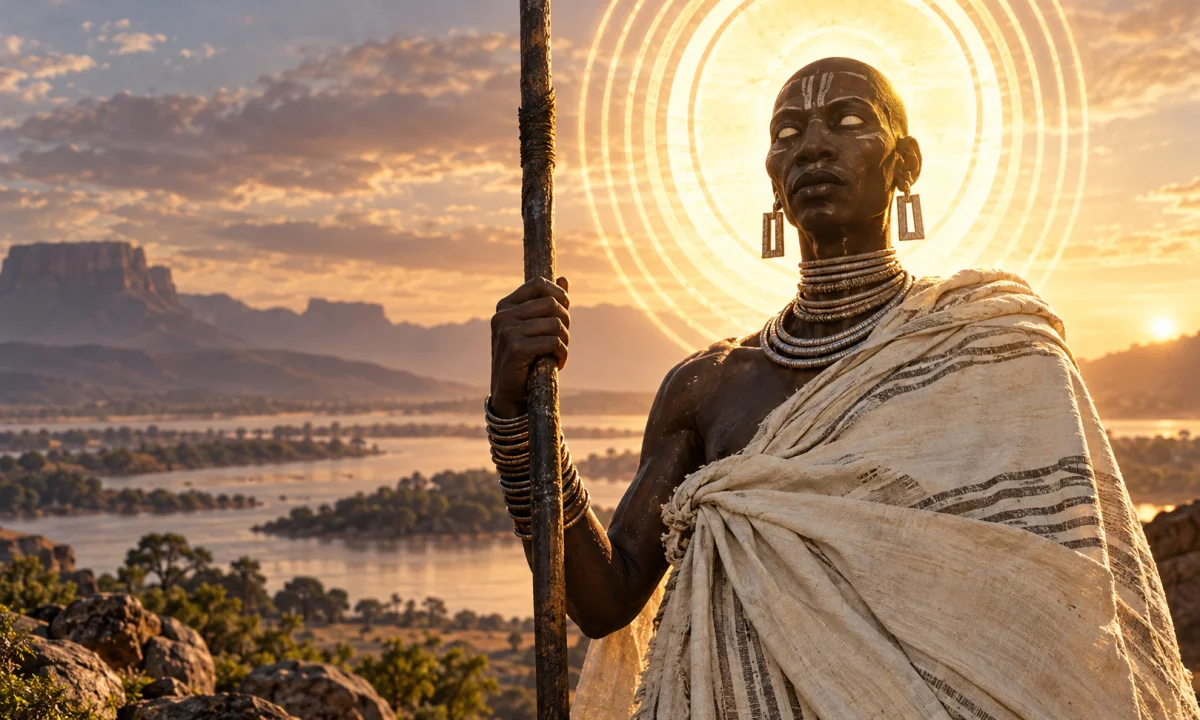
Adro
Adro is a name associated with the religious traditions of the Lugbara people of north-western Uganda and the adjoining areas of the Democratic Republic of the Congo. In English-language writing, the name may also appear…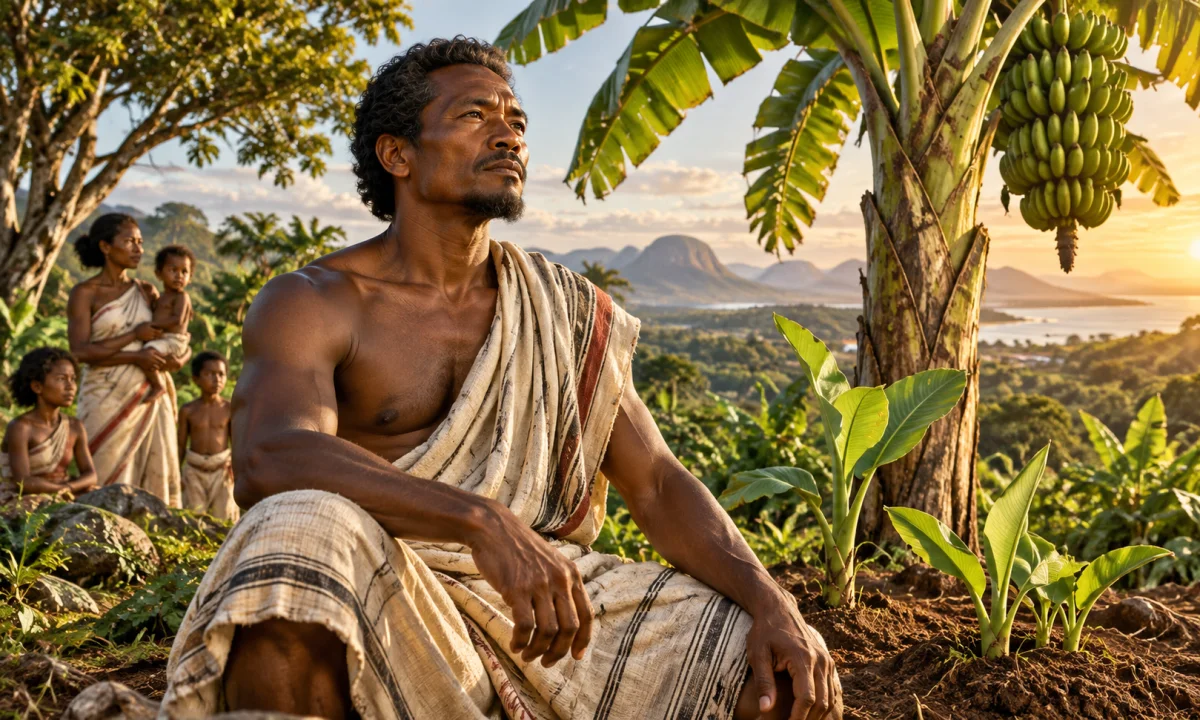
Andriambahomanana
Andriambahomanana is a figure associated with Malagasy mythology, the traditional religious and storytelling cultures of Madagascar. He is commonly described in modern summaries as the first human or an early ancestor of…
Achimi
Achimi is an obscure name associated with African mythology in some modern English-language catalogues of gods, spirits and legendary beings. Its identity, cultural origin and traditional role are not securely establishe…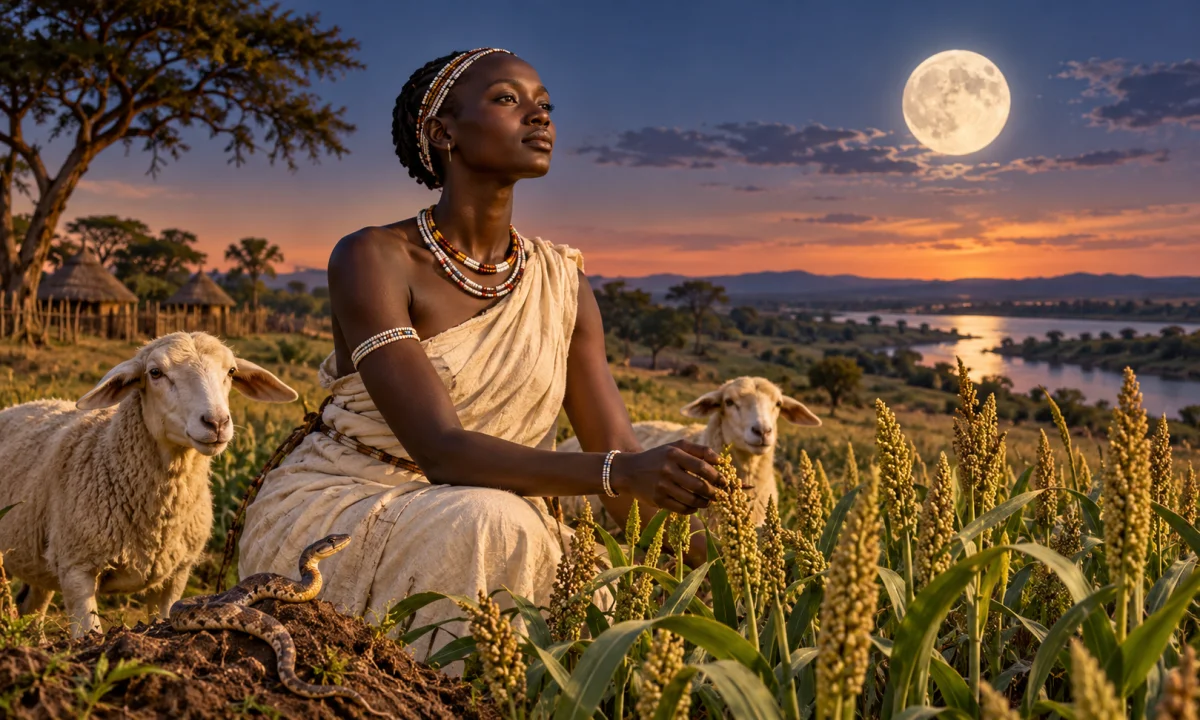
Abuk
Abuk is a female figure in the traditional religious world of the Dinka people of South Sudan. She is commonly described as the first woman, a mother of humanity, and a goddess or sacred ancestral figure associated with …
Abassi
Abassi is a creator and supreme deity associated primarily with the traditional religion of the Efik people of southeastern Nigeria and the adjoining Cross River region. In English-language references, the name is also w…
A-bol
A-bol is an obscure name associated with African mythology in some modern listings, but its identity and cultural origin are uncertain. Unlike widely documented figures such as Anansi, Mami Wata, or the Yoruba orisha, A-…
Nyambe
Nyambe is the supreme creator figure in the traditional religious thought of the Lozi people of western Zambia, especially in the cultural region historically known as Barotseland. He is generally described as the maker …
Nyame
Nyame is the supreme creator and sky deity in many Akan religious traditions of West Africa, especially among Akan-speaking peoples in present-day Ghana and parts of Côte d’Ivoire. Akan religion is not based on one unive…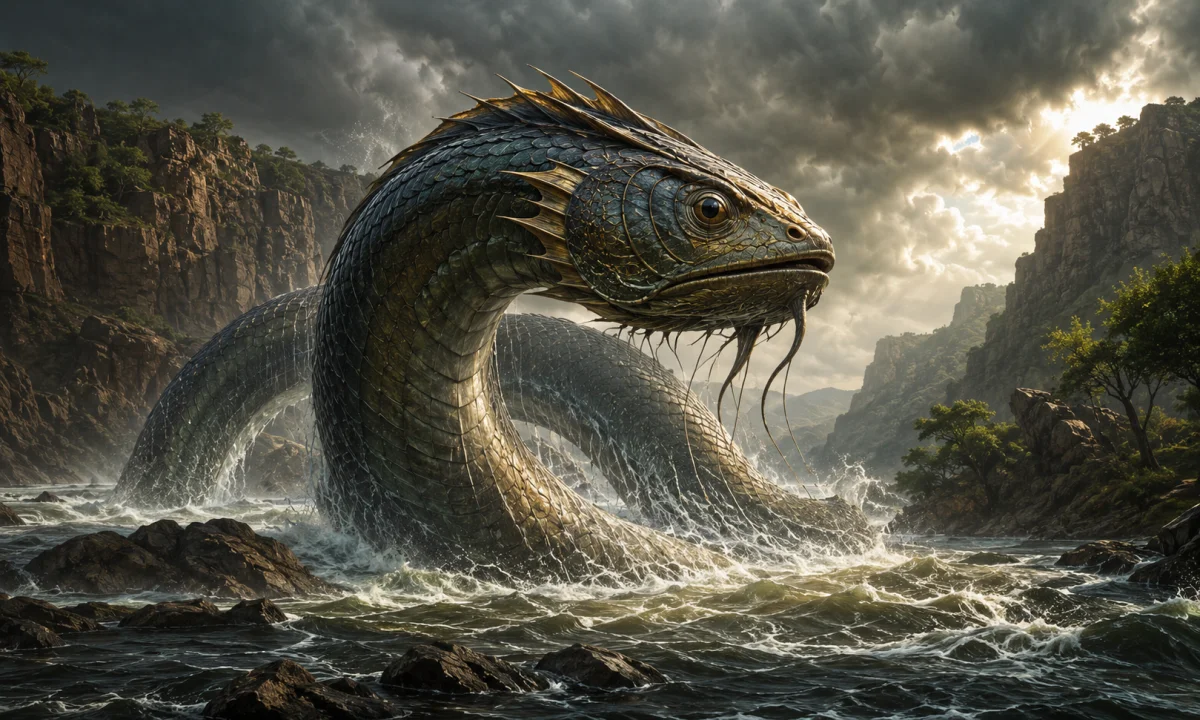
Nyami Nyami
Nyami Nyami is a powerful river spirit associated with the Zambezi River and with the BaTonga people of southern Zambia and northern Zimbabwe. In English-language writing, the figure is often called the “Zambezi River Go…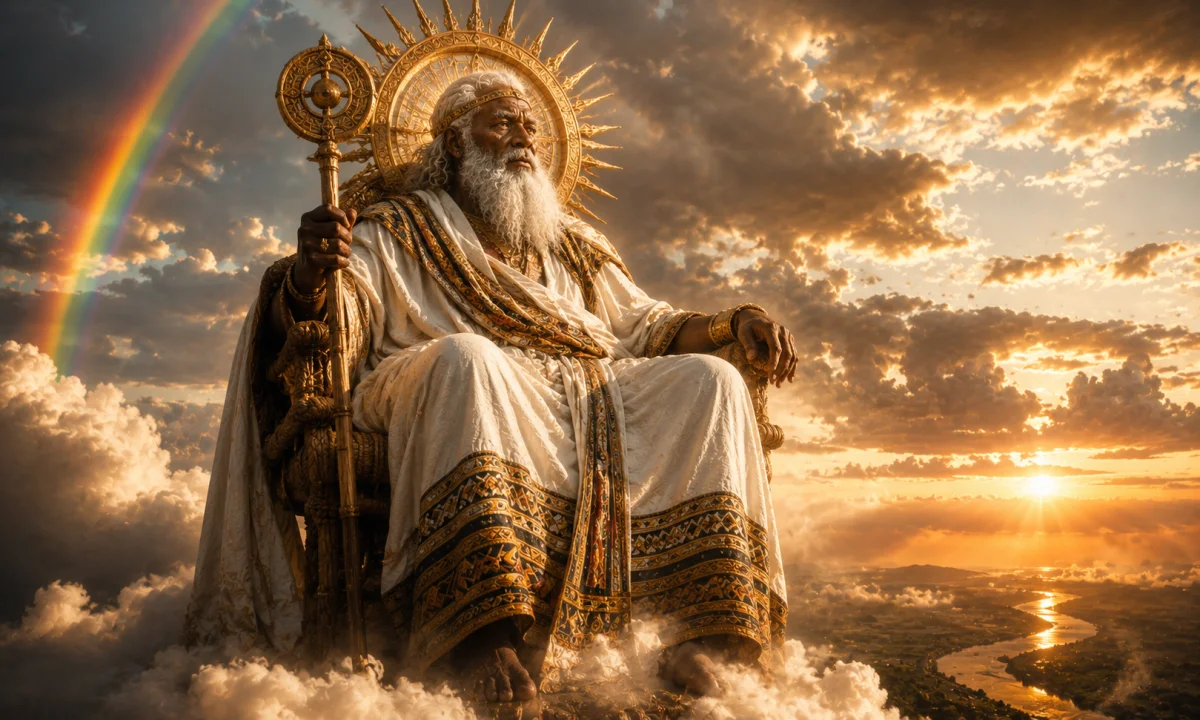
Nyankopon
Nyankopon is a name for the supreme divine power in Akan religious traditions of West Africa, especially among Akan-speaking peoples in present-day Ghana and parts of Côte d’Ivoire. The name is also written Nyankɔpon or,…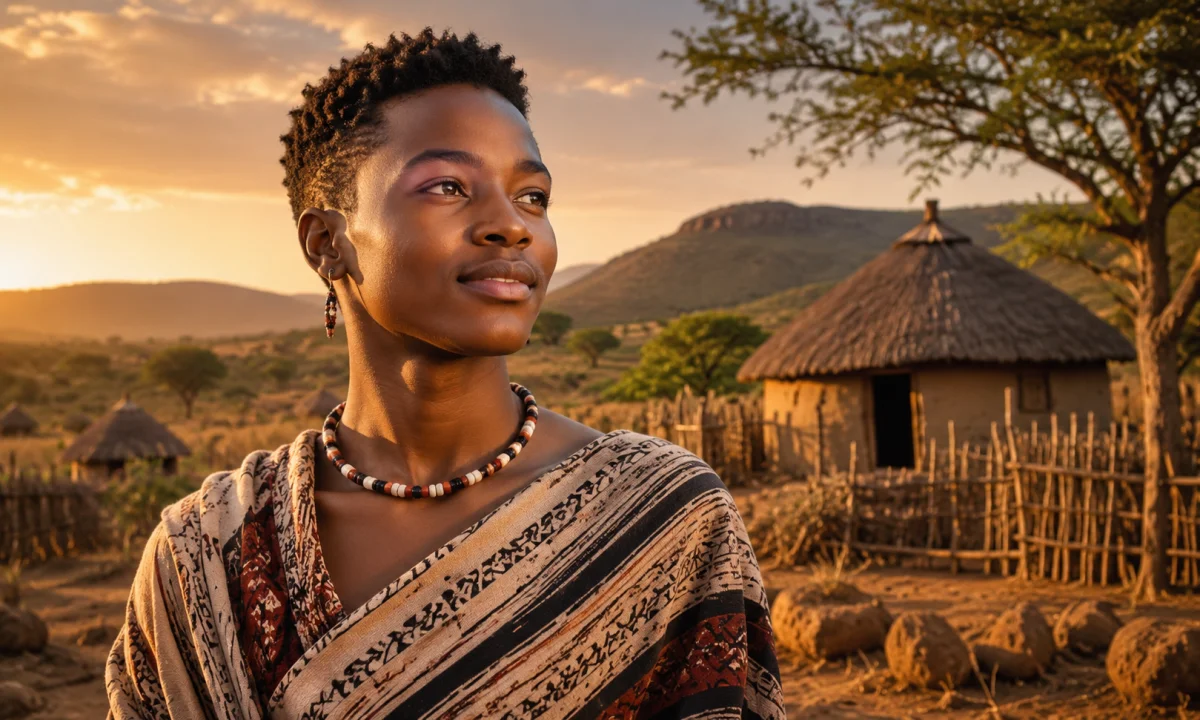
Nyiko
Nyiko is not securely documented as a single, widely recognised god, spirit, hero or monster in African mythology. In many contemporary references, the name is associated with Tsonga or Xitsonga-speaking communities of s…
Nyokon
Nyokon is a name sometimes presented in English-language lists of African mythological beings, but its identity and cultural origin are uncertain. There is no widely recognised, pan-African tradition centred on a deity, …African mythology: myths, traditions and legends
African mythology encompasses the sacred narratives, cosmologies, ancestral traditions, legendary histories and supernatural beings associated with the continent’s many peoples. It is not a single mythology, religion or shared pantheon. Africa contains thousands of communities with distinct languages, political histories, ritual institutions and relationships with land, ancestors and spiritual powers. Traditions identified broadly as African may differ substantially between neighbouring peoples, while related stories can extend across several modern countries through migration, trade, intermarriage and long-standing cultural exchange.
The academic term mythology can refer to culturally significant narratives concerning creation, divine beings, ancestors and the ordering of the world. It does not automatically mean that these narratives are false or merely fictional. Many African traditions remain part of living religions and community identities. Their stories may be performed through speech, song, dance, ritual, praise poetry, masquerade and visual art rather than preserved in a fixed written canon.
Scope and cultural diversity
African mythology includes traditions from North, West, Central, East and Southern Africa, as well as the Horn of Africa, the Sahel, the Sahara and the continent’s island regions. These geographical divisions are useful for organisation but do not define exact cultural boundaries. Peoples, languages and religious practices frequently cross the borders of modern states.
Broad labels such as West African mythology or Bantu mythology can also conceal major differences. The term Bantu refers primarily to a large family of related languages rather than one ethnic group or uniform religious system. Communities speaking Bantu languages developed diverse traditions across Central, Eastern and Southern Africa over many centuries.
North African traditions have been shaped by Indigenous Amazigh cultures, ancient Egyptian religion, Mediterranean contact, Judaism, Christianity and Islam. West African traditions include those of Yoruba, Akan, Fon, Ewe, Dogon, Mande and many other peoples. Central African traditions include Kongo, Luba, Lunda, Mongo and numerous forest and riverine communities. Eastern and Southern Africa contain equally varied systems involving ancestors, territorial powers, creator beings, sacred rulers, healers and spirit mediums.
No single figure, creation account or religious practice can represent the whole continent. Similar themes should be studied through specific languages, communities and historical evidence rather than presented as universal African beliefs.
Oral tradition and performance
Oral transmission is fundamental to many African mythological traditions. Narratives may be preserved by elders, ritual specialists, praise singers, historians, musicians and other recognised custodians. Their performances can communicate genealogy, political legitimacy, sacred history, moral teaching and community memory.
Oral tradition does not mean that stories are transmitted carelessly. Some forms require extensive training, formal correction and knowledge of specialised language. Particular versions may belong to royal courts, lineages, initiation societies or religious offices. Access can depend on age, status, gender or ceremonial responsibility.
Variation is an expected feature of oral performance. A storyteller may adapt emphasis, imagery or sequence to suit an audience and occasion. Different communities may preserve competing versions of a founder’s ancestry or a kingdom’s origin. These differences can reflect political relationships and local authority rather than mistakes in transmission.
Written collections preserve valuable material but capture only particular performances. Translating songs, proverbs and sacred names into European languages can remove wordplay, rhythm and cultural associations. Early collectors sometimes reshaped stories to resemble biblical narratives, classical myths or European folktales.
Creation and the origins of humanity
African creation traditions describe many different origins for the world, humanity, animals, death and social order. Some involve a supreme creator who establishes the universe but later becomes distant from ordinary human affairs. Others describe creation through speech, craftsmanship, descent from the sky, emergence from the earth or the separation of previously joined cosmic realms.
In several traditions, divine beings or culture heroes assist in forming humans or making the world habitable. Creation may occur through cooperation, rivalry, error or repeated attempts. Such stories can explain why human beings are mortal, why communities possess particular customs or why divine power is approached through ancestors and lesser spiritual beings.
The widespread presence of a creator does not mean that all African religions are variations of one original monotheism. Supreme beings differ in character, ritual importance and relationship to other powers. Some receive regular prayer and sacrifice, while others are acknowledged as creators but approached less directly.
Narratives explaining the separation between heaven and earth appear in several regions. A deity may withdraw because humans violate a restriction, make excessive noise or misuse divine access. These stories address the distance between the human and spiritual worlds, but their details and meanings remain culturally specific.
Divine beings and sacred powers
African traditions include gods, goddesses, ancestral powers, territorial beings and spirits associated with natural forces, occupations, communities and political institutions. English categories such as god, spirit and demon may overlap imperfectly with local concepts.
In Yoruba religion, the orishas are divine powers associated with creation, rivers, iron, storms, fertility, knowledge, healing and other aspects of life. They possess complex personalities, histories and ritual communities. Ogun is not merely a god of metal, nor is Oshun only a goddess of rivers or love. Their meanings emerge through praise names, sacred narratives, divination, offerings and local forms of worship.
Among Akan-speaking peoples, traditions may distinguish a supreme creator from lesser divine powers associated with rivers, forests, towns or social functions. Ancestors also occupy an important religious position. The precise relationships among these categories vary between communities.
Kongo religious thought includes ideas concerning spiritual power, ancestors, the dead and the boundary between visible and invisible worlds. Objects empowered for ritual purposes have often been misrepresented in colonial writing as fetishes or idols. Such terminology obscures the expertise, social authority and religious relationships involved in their creation and use.
Ancestors and community
Ancestors are central to many African religious systems, but ancestral traditions are not identical across the continent. The dead may remain members of families and communities, capable of protecting descendants, transmitting authority or responding to neglected obligations.
Not everyone who dies necessarily becomes an honoured ancestor. Ancestral status may depend on proper burial, moral conduct, age, social achievement, descendants or ritual recognition. People who die under unusual circumstances may be understood differently from elders incorporated into the lineage after death.
Offerings, prayers and commemorations can sustain relationships between generations. Ancestors may be consulted during crises, invoked in oaths or remembered during family ceremonies. Their authority often concerns social order, fertility, inheritance and collective responsibility.
Calling these practices ancestor worship can be misleading when it suggests that ancestors are treated as supreme gods. The relationship is frequently based on kinship and reciprocity. Ancestors remain powerful relatives whose status differs from that of creator beings or major deities.
Heroes, founders and sacred rulers
African narratives preserve stories of founders, warriors, hunters, queens, kings, culture heroes and dynastic ancestors. Some figures have a historical basis but became surrounded by supernatural episodes and symbolic meanings. Others belong primarily to sacred or legendary history.
The epic of Sundiata preserves traditions concerning the founder of the Mali Empire. It combines political memory, genealogy, heroic narrative and supernatural motifs. Different performers emphasise different episodes, and no single written edition represents every Mande version.
Stories of sacred rulers may explain the origin of political institutions or the relationship between authority and fertility. A ruler can act as mediator between the community, the land and spiritual powers. Royal failure may therefore be associated with drought, disorder or military defeat.
Founding narratives also justify claims to territory and leadership. Rival communities may preserve different accounts of migration, conquest or first settlement. Such traditions should not be reduced either to literal history or to pure fiction, because they often combine collective memory with religious and political interpretation.
Tricksters and culture-bringers
Trickster figures appear widely in African storytelling. They may be spiders, hares, tortoises, jackals, humans or divine beings. Tricksters use intelligence, deception and humour to overcome stronger opponents, but their greed and arrogance can also cause failure.
Anansi is associated especially with Akan traditions and later became important throughout the African diaspora. His stories frequently concern the acquisition of wisdom, ownership of stories and the consequences of selfish behaviour. Caribbean and American Anansi traditions developed under different historical conditions and should not be treated as unchanged copies of West African narratives.
Eshu in Yoruba tradition is sometimes described as a trickster, but this label captures only part of his religious importance. He is connected with communication, crossroads, uncertainty, interpretation and the transmission of sacrifice. He is not equivalent to the Christian devil, despite missionary translations that encouraged that identification.
Animal trickster tales can entertain while examining authority, hunger, sexuality, cooperation and survival. Their lessons are rarely simple. The trickster may expose hypocrisy in one story and become the victim of his own selfishness in another.
Animals and the human world
Animals play significant roles in many African myths and folktales. They may act as ancestors, messengers, helpers, rulers or dangerous beings. Their characteristics are shaped by local environments and observation rather than by one continental symbolic system.
Lions may represent authority or danger, while crocodiles can be associated with rivers, ancestry or spiritual power. Snakes may signify fertility, protection, renewal or threat. The same species can carry different meanings in neighbouring traditions.
Some narratives describe an earlier period when humans and animals communicated, married or exchanged forms. Such stories explore the boundaries between species and the obligations that govern hunting, food and respect for nonhuman life.
Animal symbolism should not be interpreted through a simple dictionary of meanings. A leopard associated with kingship in one society may have another role elsewhere. Context, ritual use and local language determine the meaning of the figure.
Spirits, wilderness and dangerous beings
African folklore and religion include beings associated with forests, rivers, deserts, mountains, night and abandoned places. Some guard resources or sacred territory, while others cause illness, confusion or disappearance. They may reward respectful conduct and punish those who violate restrictions.
Water spirits are prominent in many regions, but they should not be combined into a single category. Mami Wata traditions, for example, developed across West and Central Africa through complex interactions among local water beliefs, trade, imported imagery and modern religious change. Mami Wata may be connected with beauty, wealth, healing, danger and demanding spiritual relationships.
Forest beings may control animals or test hunters. Dwarfish, giant or unusual human-like beings appear in numerous local traditions, but English words such as goblin and fairy can create false comparisons with European folklore.
The modern concept of a mythological monster may also be inappropriate. A frightening being may represent territorial authority, ancestral power or a necessary part of the world rather than an embodiment of absolute evil.
Witchcraft, sorcery and harmful power
Beliefs concerning witchcraft and sorcery differ greatly among African societies. In some traditions, sorcery involves techniques deliberately learned and used to harm others. Witchcraft may instead be understood as an inherent or hidden power associated with envy, hostility and unexplained misfortune.
Colonial writers frequently confused witches with healers, diviners and ritual specialists. Communities themselves may distinguish sharply between people who restore health and those believed to cause harm. A diviner may be consulted to identify the source of illness or social conflict rather than being blamed for it.
Witchcraft accusations are not merely mythological stories. They can affect real people and sometimes lead to exclusion, violence or death. Their study requires attention to social tension, law, gender, economic insecurity and political power.
Popular entertainment often represents African witchcraft as a uniform system of curses and dark magic. This reproduces colonial stereotypes and ignores the different religious and social categories used by individual communities.
Divination, healing and ritual specialists
Divination is an important means of interpreting spiritual, social and personal problems in many African traditions. Systems can involve casting objects, interpreting patterns, spirit possession, dreams or established bodies of memorised knowledge.
Yoruba Ifa divination is based on a complex corpus of signs, verses and interpretations. A trained diviner applies this knowledge to particular situations and may prescribe offerings or actions. It is not equivalent to improvised fortune-telling.
Healing can involve herbal knowledge, ritual performance, prayer, spirit communication and the restoration of social relationships. Illness may have physical, spiritual and interpersonal dimensions. The categories of medicine, religion and psychology do not always correspond to local understandings.
Religious specialists acquire authority through apprenticeship, lineage, calling, initiation or recognition by a community. The broad term shaman is sometimes applied to African healers and spirit mediums, but it originated in Siberia and may obscure culturally specific offices.
Death and the afterlife
African traditions contain many different understandings of death and posthumous existence. Some emphasise an ancestral realm connected to the living community. Others describe judgment, reincarnation, return within a lineage or travel to another world.
Funerary rites help establish the status of the deceased and reorganise social relationships among survivors. Improper burial or unresolved conflict may be associated with restless or dangerous dead. These beings differ from respected ancestors incorporated into family life.
Ideas about reincarnation may involve the return of an ancestor’s qualities or identity within a newborn relative rather than the movement of an entirely independent soul according to South Asian religious models. Similar terminology should not conceal these differences.
Christian and Islamic teachings about resurrection, judgment and paradise have also interacted with older local beliefs. Communities may interpret death through several inherited frameworks without treating them as entirely separate systems.
Historical contact and religious change
African religious traditions have developed through long histories of cultural contact. Trade across the Sahara connected West and North Africa, while Indian Ocean networks linked eastern Africa with Arabia, Persia and South Asia. Migration and political expansion carried languages, rituals and sacred narratives across large regions.
Christianity has ancient African histories in Egypt, Ethiopia, Nubia and North Africa. Islam spread through conquest, scholarship, commerce and state formation across northern, western and eastern regions. African Christian and Muslim communities developed their own intellectual and ritual traditions rather than simply receiving unchanged foreign systems.
Older religious practices often continued alongside Christianity and Islam. Ancestors, sacred places and local spirits could be reinterpreted within new theological frameworks. This did not produce one simple mixture; relationships differed according to community, period and religious authority.
Colonial governments and missionaries suppressed many ceremonies and institutions. They removed sacred objects, condemned local religions and imposed foreign systems of education. African communities responded through resistance, adaptation, secrecy and the creation of new religious movements.
The African diaspora
The Atlantic slave trade carried people from many African societies to the Americas and Caribbean. Under conditions of extreme violence, enslaved communities preserved and transformed religious knowledge, music, ritual practice and oral tradition.
Vodou, Candomblé, Santería, Palo and related traditions developed through particular combinations of African religious heritage, Christianity, Indigenous contact and colonial history. They are not one religion and should not be reduced to African mythology transported unchanged overseas.
Yoruba orishas, Fon and Ewe vodun, and Kongo spiritual concepts gained new forms in diaspora communities. Names, ritual relationships and divine identities changed according to new languages, institutions and social conditions.
African-derived narratives also shaped folklore, music and religious movements beyond formally organised traditions. Their development demonstrates cultural continuity, but also adaptation and innovation under displacement.
Sources, colonial records and interpretation
The study of African mythology draws on oral testimony, ritual practice, archaeology, historical linguistics, art, chronicles, religious manuscripts and ethnographic records. Each form of evidence has limitations.
Early European accounts often described African religion through prejudiced categories such as idolatry, fetishism or primitive superstition. Missionaries sometimes preserved valuable names and narratives while interpreting them through Christian theology. Colonial ethnographers could treat changing communities as timeless examples of human development.
Modern scholarship has corrected many of these assumptions, but published material still tends to favour traditions that were documented extensively or became internationally familiar. The absence of a written record does not indicate that a community lacked complex theology or historical memory.
Present-day practices cannot be projected unchanged into the distant past. Communities migrate, reform rituals and reinterpret sacred beings. Likewise, colonial descriptions should not be assumed to represent contemporary belief.
Common misconceptions and modern representation
A frequent misconception is that African mythology forms one pantheon containing a supreme god, tricksters, nature spirits and ancestors shared across the continent. This framework combines unrelated traditions and erases their languages and histories.
Another error is describing every African sacred object as a fetish or every religious specialist as a witch doctor. Both expressions carry colonial assumptions and fail to identify the object’s function or the specialist’s actual role.
Modern fantasy, film and games increasingly use African gods and legendary beings. These adaptations can expand cultural visibility, but they often combine Yoruba, Egyptian, Akan, Kongo and southern African figures into a single fictional system. Creative interpretation should remain distinct from historical or religious description.
African writers, artists and religious communities continue to reinterpret sacred narratives in relation to identity, politics, migration and cultural renewal. African mythology is significant not as a catalogue of exotic gods and creatures, but as a broad field containing many living and historical traditions through which communities understand creation, ancestry, authority, morality and the relationship between visible and invisible worlds.