WORLD
WORLD
Aristeas
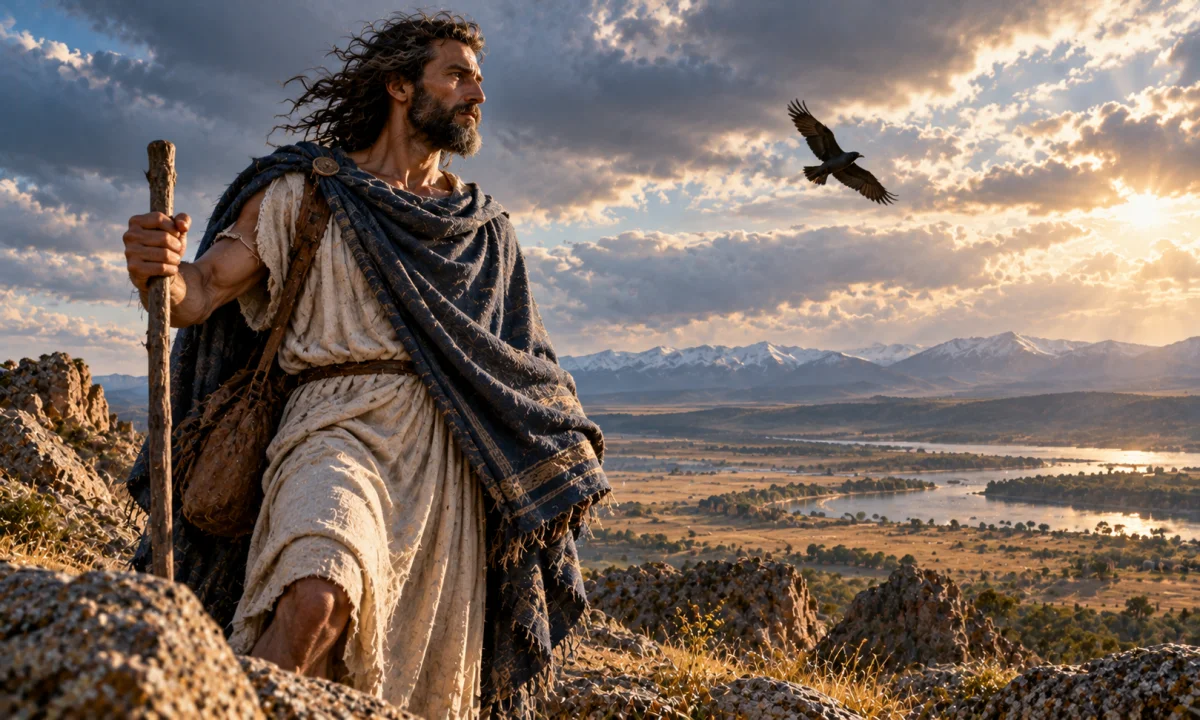
Aristeas of Proconnesus was an archaic Greek poet, seer and traveller associated with Apollo and with the distant peoples of the northern world. He is best known as the supposed author of the Arimaspea, a lost epic describing the Arimaspians, the one-eyed people said to live beyond the Issedones, and their conflicts with griffins guarding deposits of gold. Aristeas is also remembered for a remarkable legend in which he repeatedly disappeared, reappeared years later, and continued to live after what seemed to be his death.
Identity and cultural setting
Aristeas was traditionally connected with Proconnesus, an island in the Propontis, the body of water now known as the Sea of Marmara. Proconnesus lay within the Greek colonial and trading world of the northeastern Aegean, close to the coast of Asia Minor and to routes leading toward the Black Sea. Its position helped make it a plausible setting for a poet whose subject was the remote peoples and marvels of the far north.
He probably belonged to the archaic period, although his exact date is uncertain. Ancient writers generally treated him as an early poet, and some traditions placed him near the time of Croesus and the Lydian kingly age. Such chronological claims are difficult to verify. The surviving evidence does not provide a secure biography, and much of what is known about Aristeas comes through later authors who were interested in wonders, religious experience and distant geography.
The principal source for his legend is Herodotus, who discusses Aristeas in the fourth book of his Histories. Herodotus presents the story while describing peoples beyond the Black Sea and the traditions associated with the far northern regions. Other ancient writers mention the poet or quote brief passages from his lost work, but no complete manuscript of the Arimaspea survives.
The name Aristeas
The name Aristeas is Greek and is related to words expressing excellence or superiority. It should not automatically be translated as a divine title, however. In the surviving tradition, Aristeas is treated as a human poet or inspired religious figure rather than as a god in his own right.
Ancient sources and modern reference works sometimes differ in details of his parentage, chronology and religious status. He is occasionally described as the son of a man named Caystrobius, but this genealogy is not supported by a full, consistent biography. The most important stable feature of the tradition is his association with Proconnesus, Apollo, prophetic knowledge and a journey to the far north.
The extraordinary biography told by Herodotus
Herodotus reports that Aristeas entered a fuller’s workshop in Proconnesus and died there, or appeared to die. The fuller went to inform Aristeas’s family, but when relatives arrived, the body had vanished. The story became even more remarkable when travellers arrived from the city of Cyzicus and claimed to have seen Aristeas there. They said that they had spoken with him, even though the people of Proconnesus believed that he was dead.
According to the account, the people of Proconnesus investigated the matter and found no body. After an interval of seven years, Aristeas returned to Proconnesus and composed the Arimaspea. He then disappeared again. The details resemble a death followed by a miraculous return, but the tradition does not present the event as an ordinary resurrection. Aristeas’s body seems able to vanish and reappear, while his identity remains continuous across different places and periods.
Much later, according to Herodotus, Aristeas appeared in Metapontum in southern Italy. He instructed the inhabitants to establish an altar to Apollo and to erect a statue bearing his name. He reportedly told them that Apollo had come to their land and that Aristeas himself had been present with the god. The Metapontines consulted the oracle at Delphi, which confirmed the instructions. Herodotus says that the altar and statue still existed in his own time, or were remembered as existing then.
The story is not presented as a simple historical report. Herodotus often records local traditions while leaving their supernatural meaning open. His narrative preserves what people claimed about Aristeas, Apollo and the distant north, but it does not establish that every event literally occurred. The account is therefore valuable both as evidence for Greek religious storytelling and as a record of ancient ideas about exceptional poets and holy men.
Aristeas and Apollo
Aristeas’s closest divine association is with Apollo. Apollo was connected with prophecy, inspired song, healing, purification and forms of knowledge that crossed the boundary between human and divine. A poet who travelled beyond the known world and returned with information about distant peoples could naturally be represented as an individual under Apollo’s protection or influence.
Herodotus’s account gives Aristeas an unusual position. He is not simply a priest who serves Apollo, nor is he described as a god. Instead, he appears to act as a human intermediary who has privileged access to the god and to places ordinary people cannot reach. His instruction to the Metapontines to honour Apollo reinforces this role: Aristeas’s own cult is presented as dependent on, and closely connected with, Apollo’s presence.
The relationship may also reflect the importance of poetic authority in archaic Greece. Epic poets claimed access to knowledge about heroic times, divine actions and remote lands. Aristeas extends that model beyond the past into geography and ethnography. His poem supposedly reported what lay at the edges of the inhabited world, but its authority was religious as well as literary.
The Arimaspea
The Arimaspea was probably a poem in epic hexameter, the metre associated with Homeric poetry. Its title means something like “the things concerning the Arimaspians.” The work is lost, and its original length is uncertain, although ancient references suggest that it may have consisted of several books.
Only fragments and quotations survive. Later writers preserve lines or brief statements attributed to Aristeas, while Herodotus gives the most substantial outline of its subject matter. The poem apparently described a chain of peoples and regions lying beyond the Greek world. In the far north lived the Arimaspians, who were said to have one eye, and beyond them lived or hunted the griffins that guarded gold.
Herodotus places the Arimaspians beyond the Issedones. Beyond the Arimaspians, in turn, he describes the Hyperboreans in a more remote and idealized region. This arrangement should not be treated as a reliable map of Central Asia or northern Eurasia. It is a Greek geographical imagination that combines travellers’ reports, trade rumours, poetic invention and religious ideas about the edges of the world.
The poem may have drawn on stories circulating through the Black Sea and Central Asian trade networks. Greek communities around the Black Sea encountered peoples, animals and landscapes that were unfamiliar to them, and information could travel through merchants, colonists and nomadic intermediaries. This does not prove that Aristeas personally visited every place named in the poem. Nor does it establish a direct historical identity for the Arimaspians. The work represents a mixture of observation and mythic elaboration.
The Arimaspians and the griffins
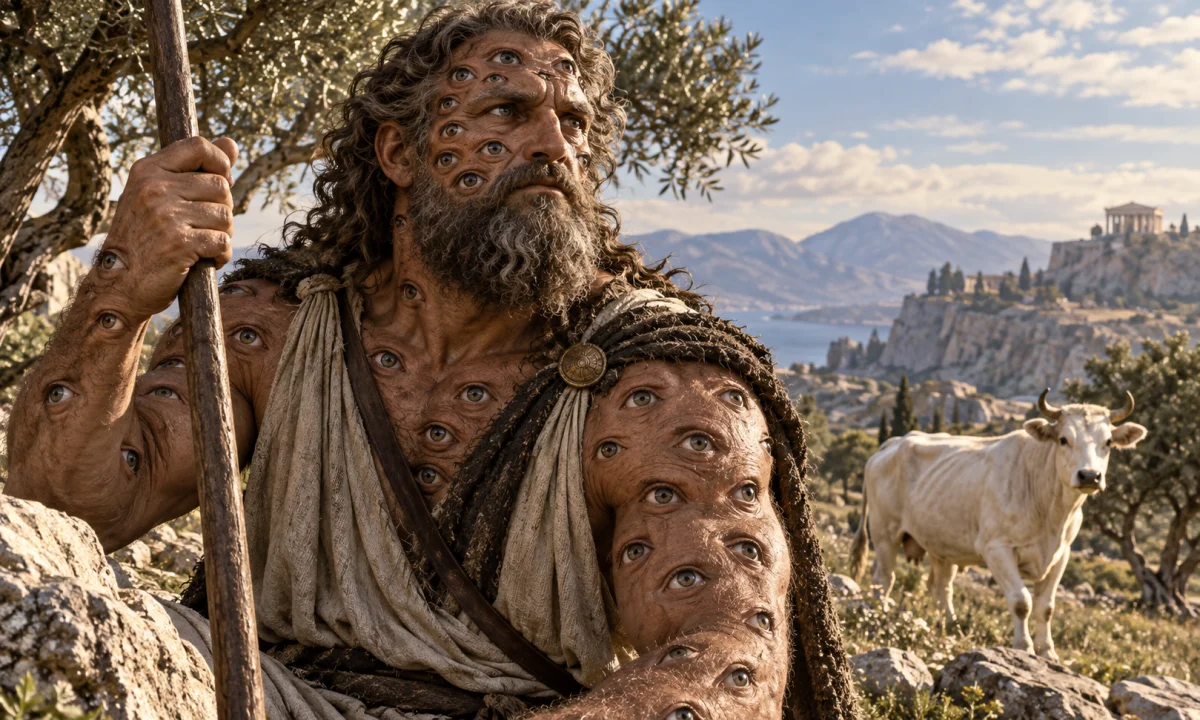
The Arimaspians are usually described in Greek sources as a one-eyed people engaged in conflict with griffins. Their name has often been interpreted as containing an Iranian element meaning “one-eyed,” but the exact linguistic history remains debated. The interpretation is plausible in broad outline, yet the evidence is not sufficient to reconstruct the Arimaspians as a securely identified historical nation.
The griffins of the story are powerful creatures with the body or general form of a lion and the head and wings of an eagle. In the Arimaspea, they were guardians of gold. The Arimaspians attempted to seize this treasure, producing a perpetual struggle between human treasure-seekers and monstrous protectors.
Aristeas’s griffins belong to a wider Eurasian and Near Eastern tradition of creatures that guard precious materials or sacred places. Artistic representations of griffin-like beings existed in several ancient cultures, including regions east of the Greek world. Similar imagery does not demonstrate that every version came from a single source, but it shows that the griffin was part of a broad visual and mythological vocabulary long before modern fantasy adopted it.
Greek authors used the tale to describe a world beyond familiar political and geographical boundaries. Gold, monsters and one-eyed peoples marked the far edge of ordinary experience. The story could therefore be read as geography, marvel literature, or an allegory of the dangers of greed. The surviving evidence does not tell us whether Aristeas himself intended a symbolic interpretation. It is safer to say that later audiences could understand the poem in several ways.
Disappearance, soul travel and inspired figures
Aristeas’s repeated disappearances have often led scholars to compare him with religious specialists whose souls were believed to travel while their bodies remained in a trance or deathlike state. He has sometimes been called a Greek “shaman,” especially because his story combines ecstatic movement, secret knowledge, distant travel and unusual bodily states.
That label must be used cautiously. “Shamanism” is a comparative category developed by modern scholars, not a term used by Aristeas or Herodotus to classify the poet. Applying it can highlight similarities with religious traditions involving visionary journeys, but it can also impose a single model on diverse cultures. The ancient evidence does not prove that Aristeas belonged to a formally defined religious institution or that his experiences followed a recognizable ritual system.
His legend does share features with other Greek stories about extraordinary holy men. Figures such as Epimenides of Crete were said to undergo prolonged sleep or to possess unusual access to hidden knowledge. Pythagorean traditions also developed ideas about exceptional souls, reincarnation and the ability of a remarkable person to appear in more than one place. These comparisons show a recurring Greek interest in people who stood between ordinary human life and the divine realm, but they do not mean that Aristeas and these figures were the same person or belonged to one unified tradition.
Religious significance in the Greek world
Aristeas illustrates how poetry, prophecy and local cult could overlap in ancient Greek religion. A poet might be remembered not merely for composing verses but also for founding rites, receiving divine instructions or revealing knowledge from distant places. His reported appearance in Metapontum gave the local community a sacred history linking its cult of Apollo to a famous inspired figure.
The Metapontine tradition also shows how Greek communities could incorporate wandering or foreign religious personalities into local identity. Even if the original story came from elsewhere, a city could claim that the figure had appeared there and had authorized a particular altar or statue. Such traditions helped connect local worship with the wider Greek religious world.
Aristeas’s status remained unusual because he could be honoured without becoming a major god. The surviving tradition does not describe a large pan-Hellenic cult devoted to him, and evidence for widespread worship is limited. His importance lies chiefly in the combination of poetry, sacred authority and marvels. He is a remembered seer-poet whose story explains how knowledge from the boundaries of the world entered Greek culture.
Historical evidence and interpretation
There is no secure independent evidence that confirms the full biography of Aristeas. The existence of the Arimaspea is supported by ancient quotations and references, but its date, composition and original content remain uncertain. The poem may have incorporated information acquired from travellers, yet the fantastical elements make it impossible to use as a straightforward geographical record.
Some readers have treated Aristeas as an early explorer, while others have emphasized his role as a religious poet or legendary wonder-worker. Neither extreme is fully justified by the evidence. A historical poet named Aristeas may have stood behind the tradition, but the surviving narrative has been shaped by later storytelling and by the interests of authors such as Herodotus.
The tale also reflects ancient Greek debates about the reliability of reports from distant places. Herodotus frequently weighs competing accounts, records what informants say and acknowledges uncertainty. Aristeas’s poem appears within that broader effort to understand the world beyond the Greek city-states. Its monsters and miraculous journeys do not simply oppose geography; they show how geographical knowledge and myth could coexist.
Aristeas and Aristaeus
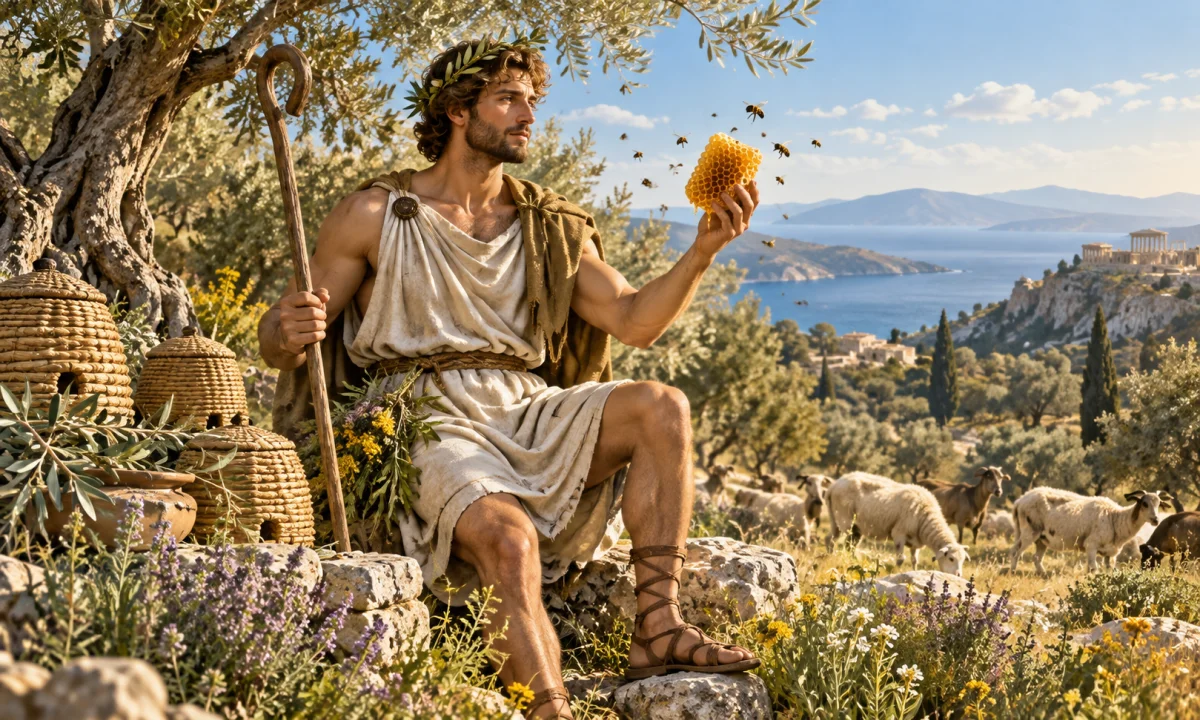
Aristeas should be distinguished from Aristaeus, a different figure in Greek mythology. Aristaeus is a pastoral and agricultural divinity, commonly described as the son of Apollo and the nymph Cyrene. His myths concern beekeeping, shepherding, hunting and the cultivation of useful arts. The two names look and sound similar in English, and spelling varies when Greek names are transliterated, but the figures are not the same.
Aristeas of Proconnesus is associated with the Arimaspea, Apollo, supernatural journeys and the northern edge of the world. Aristaeus belongs to a different mythic complex involving Cyrene, Apollo, Orpheus and the origin or preservation of bees. Confusing them merges a legendary poet with a rural deity and produces an inaccurate account of both.
Later reception
Aristeas has had less direct influence on modern popular culture than the griffins and Arimaspians connected with his poem. The Arimaspea is nevertheless important in classical studies because it preserves one of the earliest Greek literary attempts to describe peoples and marvels beyond the familiar world. Its fragments and the accounts of Herodotus continue to inform discussions of archaic epic, ancient ethnography and religious experience.
The griffins’ role as guardians of gold has also helped keep Aristeas’s tradition visible in the history of fantasy imagery. Modern depictions often separate the creatures from their original geographical and religious context, treating them as generic treasure guardians. In the ancient story, however, they formed part of a larger chain of remote peoples, sacred distance and uncertain knowledge. Their significance is therefore broader than the isolated monster commonly seen in modern fantasy.
Aristeas remains a distinctive figure because his identity joins several ancient Greek concerns: the authority of epic poetry, the power of Apollo, the credibility of travellers’ reports, and the possibility that an inspired human being could pass beyond ordinary limits of place and life. His story is not a conventional heroic myth with a clear genealogy and a fixed sequence of adventures. It is instead a layered tradition in which a historical or semi-historical poet became the centre of tales about disappearance, revelation and the unknown world beyond the Greek horizon.