WORLD
WORLD
Orishas

Orishas (Yoruba: òrìṣà; also written orisa, òrìṣá or orisha) are sacred powers and divine beings in the religious traditions of the Yoruba-speaking peoples of West Africa. Yoruba communities are concentrated especially in southwestern Nigeria and parts of Benin and Togo, although Yoruba religious traditions have also spread widely through the African diaspora. Orishas are associated with particular forces of nature, human activities, places, moral qualities and ancestral histories. They are not simply “gods” in a single, uniform pantheon: their identities, rituals and relative importance vary between towns, lineages and religious traditions.
In Yoruba religious thought, the supreme source of existence is commonly called Olódùmarè or Ọlọ́run, although the use and meaning of these names can vary. Orishas act as powerful intermediaries and expressions of divine order, connecting human beings with the highest creator and with the living world. Worship involves prayer, sacrifice, music, possession, divination, festivals and the careful maintenance of relationships between people, communities, ancestors and sacred powers.
Origins and cultural setting
Yoruba religion developed over many centuries in a region containing numerous kingdoms, city-states and local communities. There was no single ancient institution that defined every belief or ritual. Ile-Ife, often regarded in Yoruba tradition as a place of primordial importance, has a particularly prominent religious and political status, but local traditions in Oyo, Ijebu, Ekiti, Ondo, Osun, Ketu and other areas preserve their own histories and ritual emphases.
Much knowledge about the orishas was transmitted orally. Important forms include oríkì, praise poetry that recalls a being’s names, deeds, powers and relationships; ritual songs; myths recited by priests and devotees; proverbs; festival traditions; and the verses associated with Ifá divination. Ifá is a large body of divinatory knowledge interpreted by trained specialists known as babaláwo. Its verses preserve accounts of divine beings, ancestors, moral problems, historical events and ritual instructions, although they do not function as a single standardized scripture in the manner of a fixed canonical book.
Written descriptions began to appear more extensively through the work of travelers, missionaries, colonial officials and later scholars. These records are useful but must be read carefully. Outsiders often translated Yoruba religious ideas through Christian or European categories, treated local traditions as if they were one system, or recorded names in inconsistent spellings. Modern scholarship and Yoruba religious practitioners therefore draw on written evidence alongside oral history, language, archaeology, ritual practice and community knowledge.
What the word “orisha” means
The Yoruba word òrìṣà is often translated as “deity,” but no single English equivalent captures all of its meanings. An orisha can be understood as a sacred power, divine personality, cosmic force, culture hero, ancestral figure or guardian associated with a particular community. These aspects may overlap. Some orishas are closely linked with natural phenomena such as rivers, thunder, iron or winds; others are associated with divination, healing, kingship, fertility or the shaping of human bodies and destinies.
Yoruba traditions also distinguish between the supreme source of creation and the many powers through which existence is ordered. Accounts differ on the exact relationship between Olódùmarè, Ọlọ́run and the orishas. In some explanations, the orishas are created or commissioned by the supreme being. In others, they are primordial powers within the structure of the cosmos, or revered beings whose stories explain the formation of the world and human society.
Not every sacred being recognized in Yoruba religion is necessarily classified in exactly the same way. Local traditions may emphasize particular divinities, ancestral rulers or spirits that have little importance elsewhere. The number of orishas is therefore not fixed. The often-repeated claim that there are precisely a particular number of orishas usually reflects a specific teaching, lineage or later popular formulation rather than a universal Yoruba doctrine.
Commonly known orishas
The following figures are among the best-known orishas, but their attributes and stories vary across Yoruba regions and diasporic religions.
Obàtálá
Obàtálá, also called Orìṣàńlá in some traditions, is associated with wisdom, moral authority, coolness, clarity and the shaping of human bodies. Yoruba accounts often describe him as a senior orisha involved in creation. Some stories say that he was entrusted with forming human beings from clay, while Olódùmarè gave them life. His occasional failures, including drunkenness in certain narratives, can explain why human beings are imperfect.
Obatala is often connected with white cloth, white foods and a disciplined, calm character. These associations should not be reduced to a simple colour symbolism: whiteness can signify coolness, purity, seniority, peace and spiritual composure. In some traditions, Obatala is particularly associated with people who have physical differences or disabilities, though the details and interpretation of this relationship differ among communities.
Èṣù and Èlégbára
Èṣù is a powerful orisha of roads, communication, exchange, chance, interpretation and consequence. He is also connected with thresholds and with the capacity of messages, sacrifices and intentions to reach their destination. Èṣù can create confusion, but he is not simply a devil or embodiment of evil. His stories often reveal how people misunderstand one another, neglect obligations or assume that the world is more predictable than it is.
In Yoruba tradition, Èṣù is distinct from the Christian concept of Satan. Missionary translations sometimes wrongly identified him with the Devil because of his association with mischief, sexuality, crossroads and disruptive events. Èṣù is not an absolute opponent of a supreme God. He is a necessary and morally complex power whose actions expose hidden weaknesses and enforce the consequences of human choices.
The name Èlégbára or Èlégba is used in several Yoruba and neighbouring traditions, and the precise relationship between Elegbara and Eshu can vary. In Cuban Lucumí, Eleguá is a related diasporic form, but it should not be treated as merely a spelling of every Yoruba expression for Eshu. Ritual systems in the Americas developed distinctive identities, initiations and interpretations.
Ògún
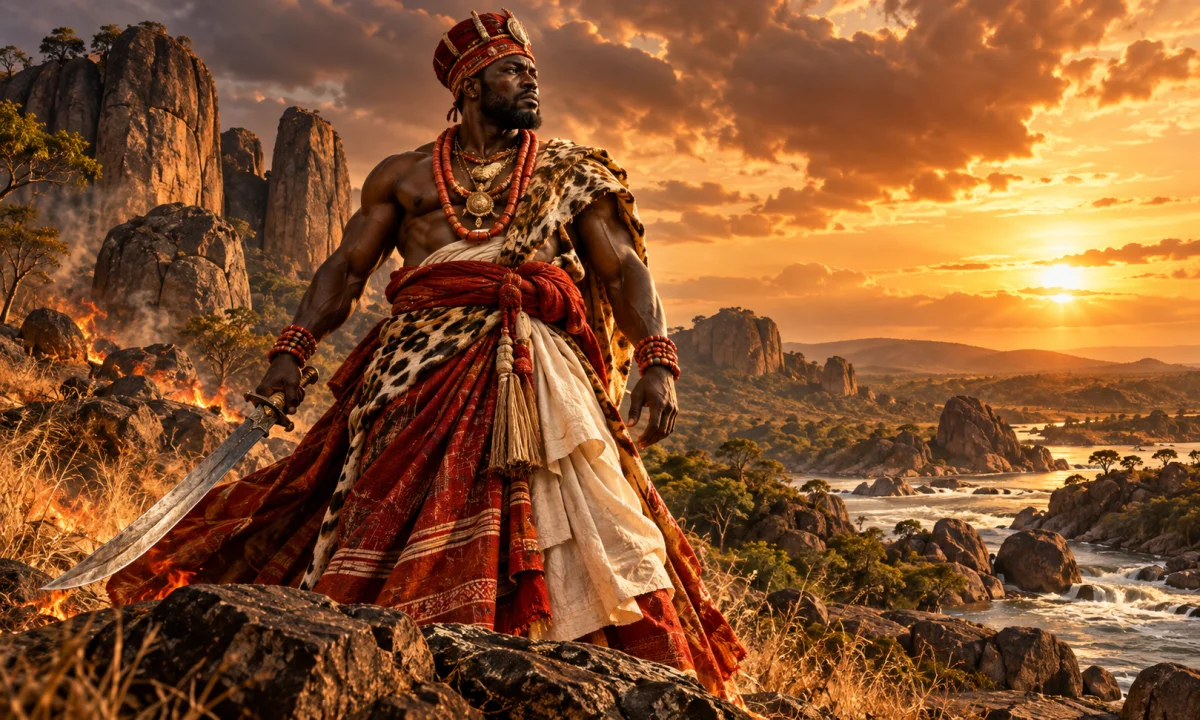
Ògún is the orisha associated with iron, metalworking, hunting, warfare, labour, technology and the clearing of paths. Because iron tools make roads, farms, buildings and political power possible, Ogun is linked both with creative work and with violence. Blacksmiths, hunters, soldiers, mechanics, drivers and others whose activities depend on metal may honour him.
Stories of Ogun frequently portray him as powerful, solitary or quick to anger. He can make civilization possible by cutting through the wilderness, yet his force must be controlled through discipline and obligation. His worship is especially significant in regions where ironworking and hunting were historically important. In diaspora traditions, Ogun often retains associations with iron, labour, transportation and protection, while acquiring local forms and ritual meanings.
Ṣàngó
Ṣàngó is associated with thunder, lightning, authority, justice, vitality and the historical memory of the Oyo kingdom. Yoruba tradition commonly presents him as a former king of Oyo who became an orisha after his death or transformation. Whether particular narratives describe a historical ruler, a divine figure, or a blending of both is interpreted differently. The traditions themselves preserve several versions rather than one definitive biography.
Shango is often shown carrying a double-headed axe called an oshe Shango, a symbol associated with his power and royal authority. His devotees may use drums, dance and distinctive forms of praise to invoke him. He is feared as a bringer of thunderbolts but also respected as a defender of truth and rightful power. His wives or companions are often named as Oya, Oba and Oshun, although the details and emphasis of these relationships vary in different narratives.
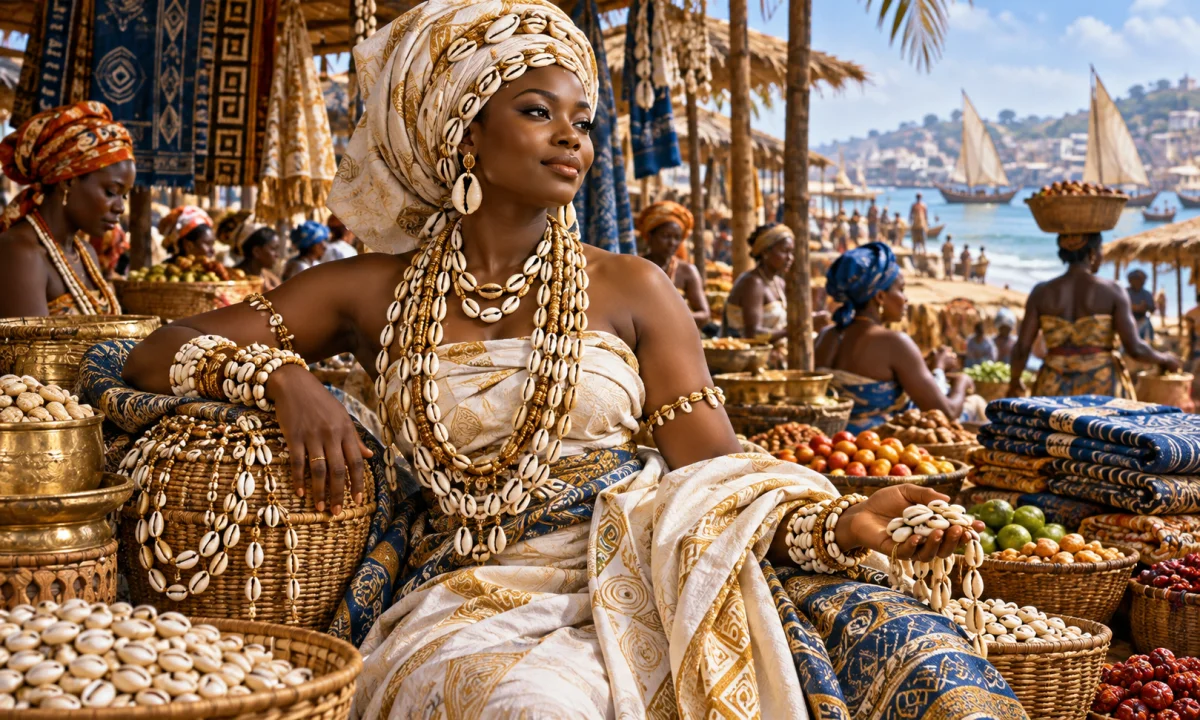
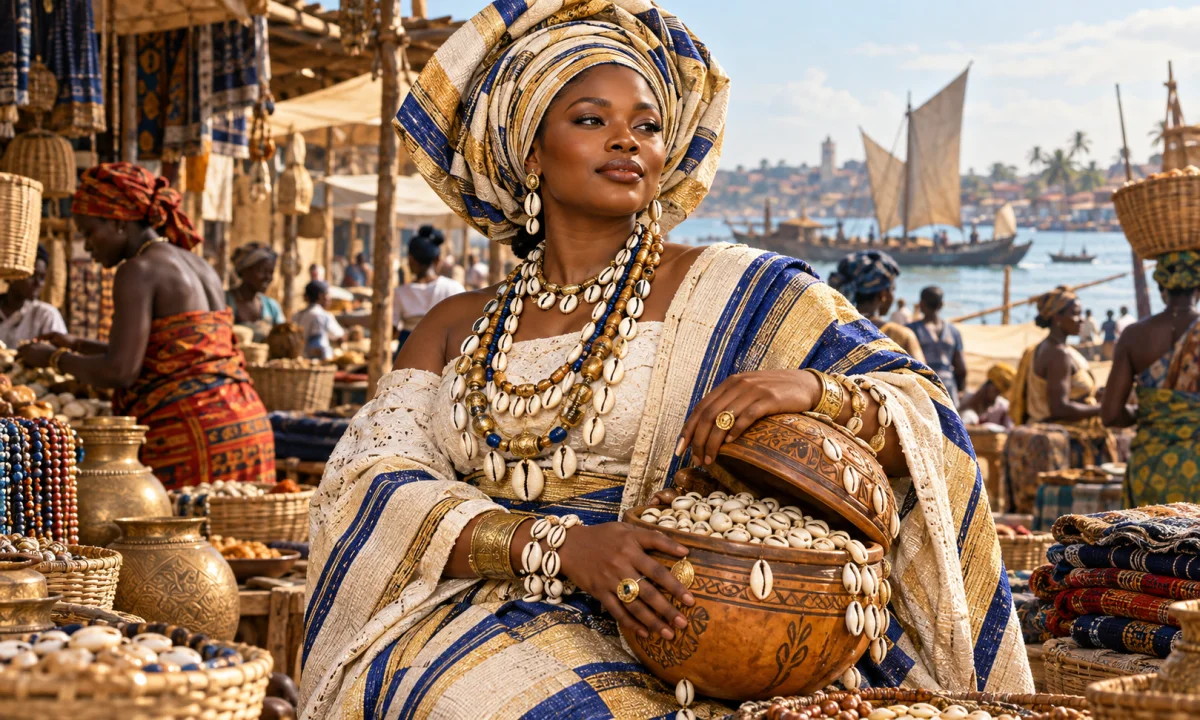
Ọ̀ṣun
Ọ̀ṣun is the orisha of the Osun River and is associated with fresh water, fertility, beauty, love, diplomacy, prosperity and healing. She is not merely a goddess of romantic attraction. Her stories also present her as intelligent, politically capable and essential to the survival of the world. In one widely known pattern of myth, male orishas attempt an important task without her and fail; the story demonstrates that feminine power and cooperation cannot be excluded from cosmic or social work.
The Osun River at Osogbo is a major centre of her worship, and the annual Osun-Osogbo Festival has become one of the most visible public celebrations associated with Yoruba religious heritage. Devotion to Oshun may include offerings of honey, water, food, music and praise, but ritual details differ by community. Images of Oshun as only a glamorous or seductive figure are incomplete and often reflect commercial or outsider interpretations.
Yemoja and Olókun
Yemọja is a maternal water orisha whose identity differs significantly between Yoruba regions and diaspora traditions. In some Yoruba accounts, she is connected with a river and with motherhood, protection and fertility. In the Atlantic diaspora, especially in Brazil and Cuba, Yemaya or related forms became strongly associated with the sea. This maritime identity reflects the development of diaspora traditions rather than a uniform description of Yemoja in every Yoruba community.
Olókun is associated with the deep sea, wealth, mystery and the hidden powers of water. Olokun may be represented as male, female or as a being whose gender is not fixed in the same way across traditions. This variation is important: depictions of Olokun in one ritual system should not automatically be used to define every Yoruba understanding of the figure.
Ọ̀rúnmìlà and Ọ̀sanyìn
Ọ̀rúnmìlà is the orisha most closely associated with Ifá divination, wisdom, memory and the understanding of destiny. Ifá specialists consult a highly structured system of signs and verses to diagnose problems and recommend appropriate action. Orunmila is often described as a witness to creation or to the shaping of individual destinies, although the wording and theological significance of this idea vary.
Ọ̀sanyìn is associated with medicinal plants, forests and herbal knowledge. Stories about Osanyin often emphasize the specialized power of knowing the properties of leaves and the need to respect knowledge that cannot be acquired casually. His traditions are connected with healing, ritual technology and the relationship between human communities and the forest.
Destiny, character and religious practice
Orisha traditions are not concerned only with asking supernatural beings for favors. A central Yoruba concept is ìwà, often translated as character or moral being. Good character includes honesty, patience, responsibility, respect and the ability to maintain proper relationships. Religious practice seeks to align a person’s conduct with destiny, community obligations and the powers that sustain life.
The concept of àṣẹ is also important. Ase may be described as the vital authority or power that enables speech, ritual, action and creation to take effect. Kings, priests, elders, ancestors, orishas and sacred words can possess or transmit ase in different contexts. It is not simply “magic” in the narrow sense. Its operation depends on knowledge, authority, ritual correctness, relationships and moral conditions.
Offerings, known in various contexts as ẹbọ, may involve food, drink, animals, cloth, money, plants or other materials. Their form is determined by divination, local custom and the needs of a particular ritual. Sacrifice is not an interchangeable transaction in which any object can be given to any orisha. Different powers have distinct preferences and prohibitions, and ritual specialists interpret what is appropriate.
Possession or spirit embodiment may occur during ceremonies involving drums, songs, dance and prayer. In such settings, a devotee may be understood as temporarily carrying the presence of an orisha. This is a religious experience within a communal ritual framework, not simply theatrical impersonation. The meanings of possession, initiation and priestly authority differ between Yoruba communities and diaspora religions.
Relationships, stories and regional variation
Myths of the orishas often explain natural features, social institutions, ritual rules and human weaknesses. They may present the beings as relatives, rivals, spouses, allies or companions, but these relationships are not arranged into one universally accepted family tree. A story linking Shango with Oya, Oshun or Oba may be central in one tradition and less prominent in another.
Oya, for example, is associated with powerful winds, storms, transformation, the marketplace and the threshold between life and death. In some traditions she is linked to the Niger River and to the ancestors known as the Egungun. She is frequently described as a wife or companion of Shango, but her importance does not depend solely on that relationship. Oya’s associations with change, courage and transitions are expressed differently in Yoruba and diasporic settings.
Names can also conceal differences. The Yoruba orisha known as Oshun is related to, but not identical in every detail with, Cuban Ochún or Brazilian Oxum. Likewise, Yemoja, Yemaya and Iemanjá share historical connections but developed within distinct religious environments. Transliteration from Yoruba creates additional variation because tones and underdots are often omitted in English-language writing. Spellings such as Shango and Sango, Ogun and Ògún, or Obatala and Ọ̀bàtálá may refer to related traditions while still carrying different local pronunciations and associations.
Yoruba religion and the African diaspora
Yoruba religious ideas travelled across the Atlantic through the forced displacement of enslaved Africans, especially during the era of the transatlantic slave trade. In the Americas, devotees preserved and reshaped Yoruba-derived traditions under conditions of persecution, cultural mixture and changing social institutions. Lucumí or Santería in Cuba, Candomblé traditions in Brazil, and related religious communities elsewhere retain important Yoruba elements, but they are not simply unchanged versions of religion in contemporary Yorubaland.
These traditions may use different names, ritual languages, initiation systems, sacred objects and relationships between orishas. They also interact with Catholic saints, Indigenous traditions, Central African religions and local histories. Such relationships are sometimes called syncretism, though the term can hide the creative choices and religious agency of practitioners. The identification of a Catholic saint with an orisha is a historical development in particular communities, not proof that the two figures are originally the same being.
Modern representations
Orishas appear in novels, films, music, visual art, games and popular discussions of African mythology. These representations have helped bring Yoruba religious concepts to wider audiences, but they often simplify a diverse religious world into a fixed list of characters with standardized costumes and powers. Modern fantasy may also turn Eshu into a generic trickster, Ogun into a warrior archetype or Oshun into a symbol of beauty alone.
Responsible representations distinguish creative adaptation from religious tradition. For Yoruba devotees and diaspora practitioners, the orishas are not merely mythological characters from an ancient story cycle. They remain part of living systems of worship, ethical practice, family memory, festivals, divination and community identity. Their meanings continue to be interpreted through local languages, ritual obligations and relationships with the sacred world.