WORLD
WORLD
Ogun
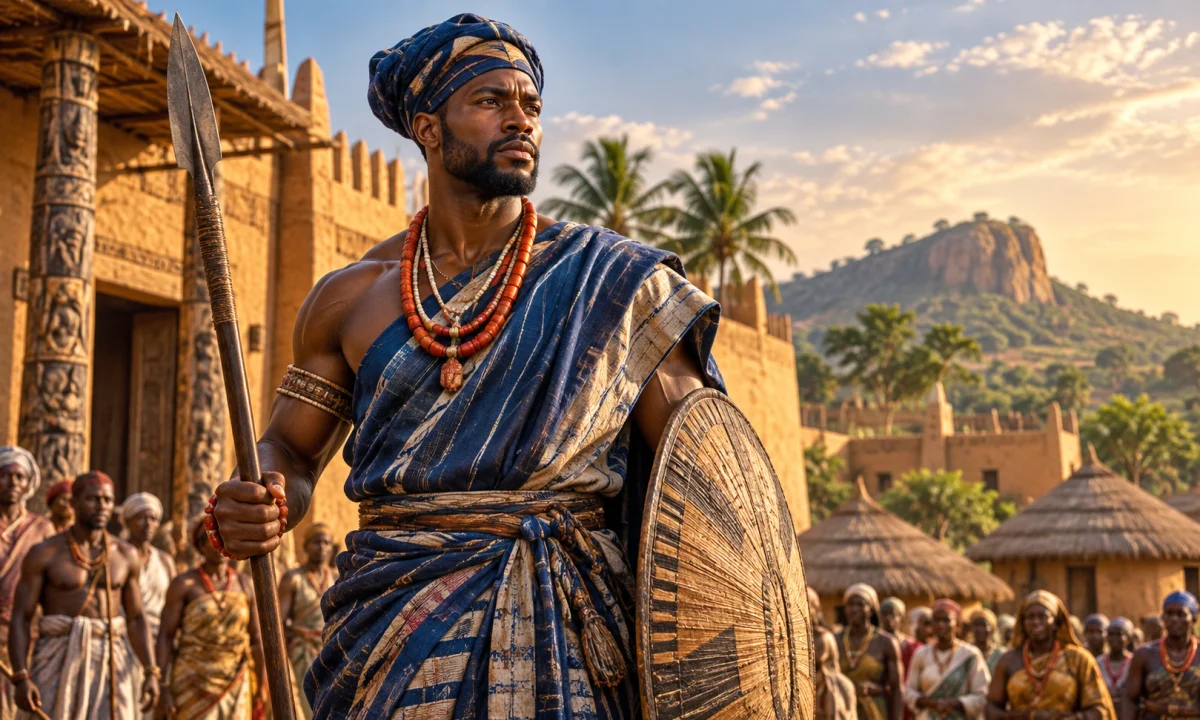
Ogun (also written Ògún or Ogún) is a major òrìṣà of Yoruba religious tradition. He is especially associated with iron, metalworking, hunting, warfare, clearing paths, labour, technology and the difficult work required to make human life possible. His worship developed among Yoruba-speaking peoples of present-day southwestern Nigeria and neighbouring parts of Benin and Togo, and it later travelled widely through the African diaspora.
Ogun is not simply a Yoruba equivalent of a European war god. Warfare is one part of his identity, but so are farming, blacksmithing, carpentry, road construction, driving, engineering and other activities involving tools, machinery or dangerous force. He can represent both the benefits of technology and the risks that accompany it. In many communities, oaths are sworn in his name because iron is understood as a force that exposes falsehood and punishes broken promises.
Yoruba religious setting
Yoruba religion does not depend on one universally fixed scripture or a single canonical account of every deity. Religious knowledge has been preserved through oral narratives, praise poetry, ritual songs, divination verses, initiatory teaching, festivals and the practices of particular towns and lineages. As a result, accounts of Ogun can differ considerably while still belonging to the same broad tradition.
Yoruba-speaking societies have historically included farmers, hunters, traders, rulers, artisans and specialists in many forms of craft. Ironworking was particularly important because iron tools could transform agriculture, hunting, transport and warfare. The blacksmith therefore occupied a technically skilled and symbolically powerful position. Ogun became closely connected with the people who extracted, shaped and used iron, as well as with those whose work depended on iron tools.
Historical evidence does not establish a single original form of Ogun worship or identify one precise date when his cult began. Archaeological evidence shows the importance of ironworking in West Africa over many centuries, but material evidence alone cannot prove exactly how particular religious beliefs developed. Much of what is known about Ogun comes from living religious traditions and from recorded oral material collected at different times and interpreted through different cultural assumptions.
Name and classification
The name is commonly written Ogun in English, while Yoruba orthography marks it as Ògún. The accent and underdot are significant in Yoruba writing, because tone and vowel quality can distinguish words. English-language publications often omit these marks, so both forms appear widely.
Ogun is generally described as an òrìṣà, a sacred power or divine being involved in the relationship between human communities and the wider spiritual order. Yoruba ideas about òrìṣà do not map neatly onto the English word “god.” Depending on context, an òrìṣà may be discussed as a deity, a divine force, an ancestral or primordial being, or a sacred presence linked to a particular aspect of existence.
Some Yoruba accounts place Ogun among the primordial beings who participated in the ordering of the world. Other traditions emphasize his role as an ancient hunter, warrior, path-maker or culture hero. These descriptions are not always mutually exclusive, but they should not be reduced to one standardized biography. Ogun's character is expressed through many local traditions, praise names and ritual contexts rather than through a single official life story.
Iron, tools and the opening of paths
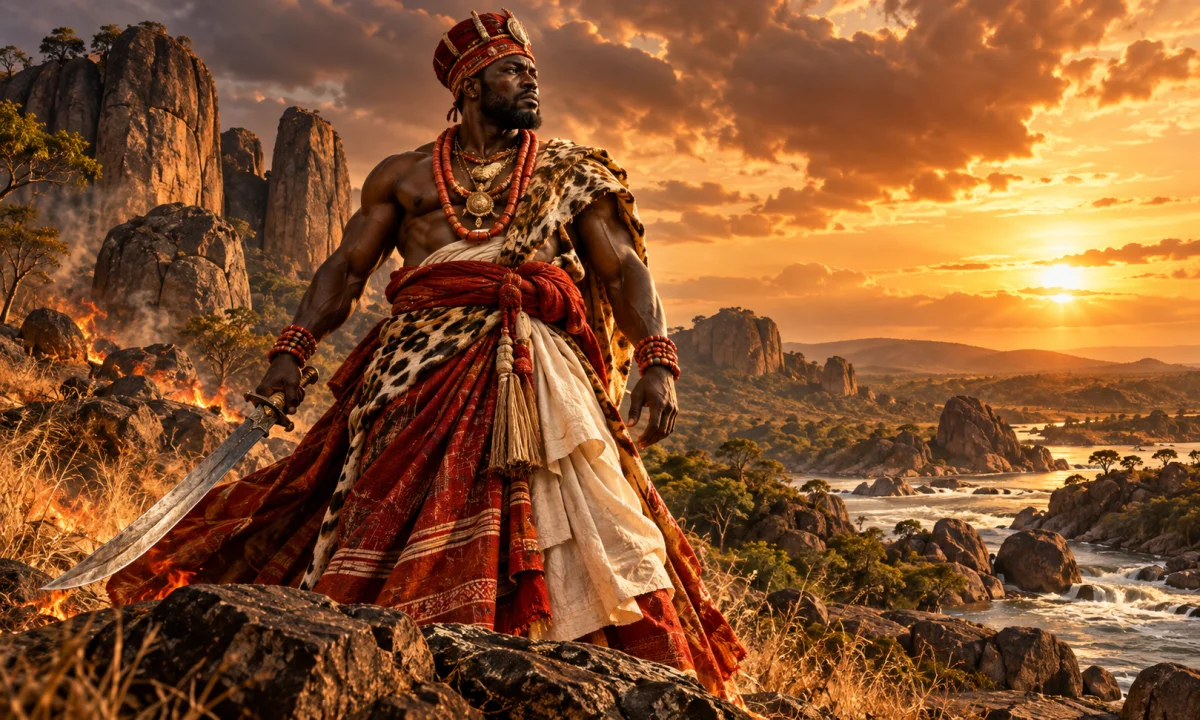
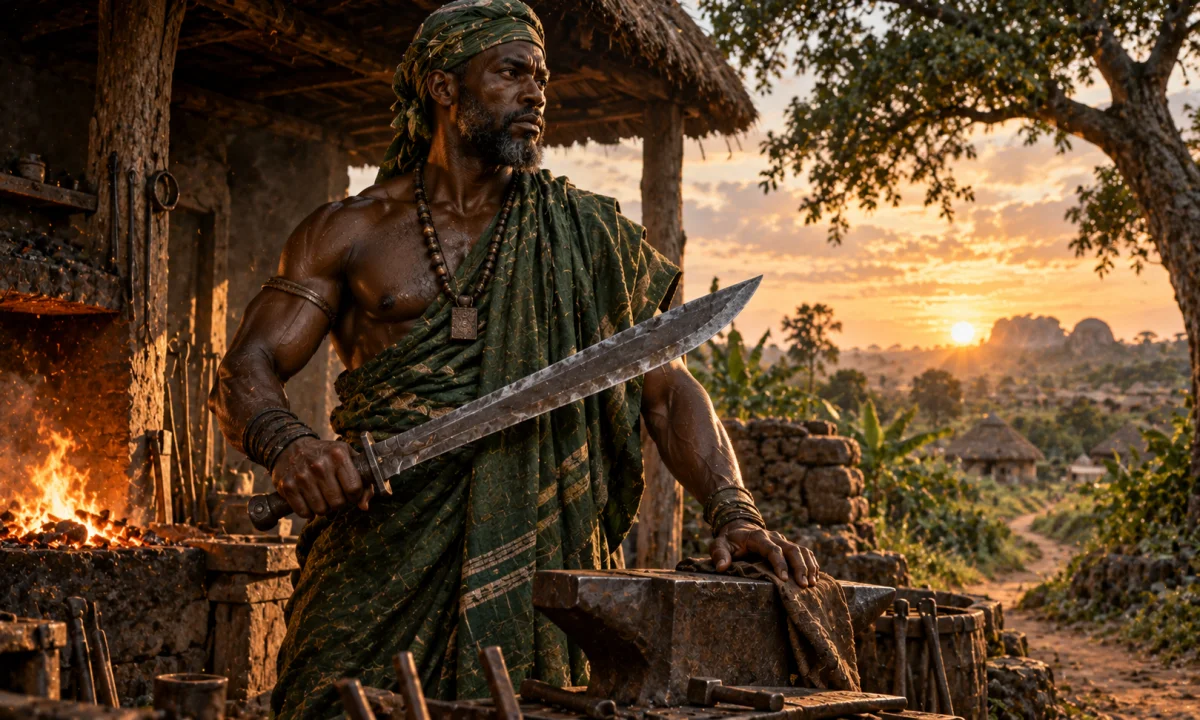
Ogun's most distinctive material sign is iron. Knives, cutlasses, hoes, axes, anvils, chains, nails, firearms and other iron objects may be connected with him, although the exact objects used in worship vary by community. The essential idea is not merely the metal itself but the transformation of raw material into a tool or weapon through skilled labour.
One important group of stories describes Ogun as a path-opener. In narratives about the first settlement of the world, divine beings encounter dense forest, difficult terrain or an obstacle that prevents movement. Ogun uses iron to cut a passage. The image has several meanings: he makes travel possible, creates access to inhabited land, and provides the tools through which other forms of civilization can develop.
In some versions, other deities attempt to clear the way before Ogun but fail, while Ogun succeeds because he possesses the appropriate tools or the strength to use them. In other versions, his work is part of a larger collective undertaking. The details vary, and no single version should be treated as the definitive Yoruba account. Across the variations, Ogun is associated with the dangerous first labour that makes later settlement and social order possible.
This role also connects him with roads and boundaries. Travellers, hunters and people entering unfamiliar territory may seek his protection. Roads are not only physical routes in Yoruba religious thought; they may also signify transitions, access to opportunity and movement between different states of life. Ogun's force can clear such passages, but it can also make them hazardous.
Warrior, hunter and worker
Ogun is a powerful warrior, but his warfare is often presented as practical, direct and physically demanding rather than as an abstract concern with military glory. He fights with iron weapons and represents the courage required to defend a community or overcome a threatening obstacle. His association with weapons also links him with soldiers and others whose work places them in danger.
Hunting is another significant aspect of his identity. The hunter moves through forest, handles weapons, reads tracks and survives beyond the settled centre of a town. Ogun's relationship with hunters reflects this combination of skill, danger, independence and intimate knowledge of the landscape. In some traditions he is himself portrayed as a great hunter, or as a being who taught or enabled humans to use the tools needed for hunting.
At the same time, Ogun is a patron of ordinary and specialized labour. Blacksmiths are especially associated with him, but the connection may extend to farmers, mechanics, drivers, engineers, metalworkers, soldiers, surgeons and others whose work involves instruments, machines or controlled force. Modern occupations cannot automatically be assumed to have an identical ritual status in every Yoruba community, yet the broader principle remains influential: work that depends on iron, technology or dangerous tools may be placed under Ogun's protection.
His symbolism therefore includes both creativity and destruction. A cutlass can clear land, harvest crops or injure a person. A vehicle can connect communities or cause a fatal accident. A weapon can defend the vulnerable or serve violence. Ogun embodies the power of the tool and the moral responsibility of the person who uses it.
Oaths, truth and danger
Iron's association with Ogun gives him an important role in oath-taking. In some Yoruba contexts, a person swears an oath by touching or holding an iron object, or by invoking Ogun's name in the presence of iron. The oath is understood as dangerous to break because Ogun's power can punish false testimony or betrayal.
This connection helps explain why Ogun is not always approached as a gentle protector. He can be honoured for safety, success and technical skill, yet he can also be feared. Accidents involving vehicles, blades, firearms or machinery may be interpreted within a religious framework that recognizes the perilous power of iron. Ritual obligations and taboos associated with Ogun differ among communities, and general descriptions should not be mistaken for a universal rulebook.
Palm wine is frequently associated with Ogun in Yoruba traditions, especially in narratives and ritual settings connected with hunters and warriors. Dogs may also appear as symbols or offerings because of their relationship to hunting. These associations are widespread but not identical everywhere. Ritual colour schemes, foods, sacrifices and festival practices can differ by town, temple, lineage and diaspora tradition.
Stories and relationships
One well-known cycle of stories presents Ogun as a powerful but difficult figure. In a common version, he helps the other divine beings or human settlers by clearing a path through the forest. After completing the task, he becomes alienated, angry or withdrawn. Some versions say that he retreats into the wilderness; others emphasize his frustration when people fail to honour him properly.
Another widely circulated story describes Ogun returning from warfare or hunting in a state of intoxication. He does not recognize his companions and attacks them, only realizing later that he has killed people who should have been protected. Horrified by what he has done, he departs or hides from society. The community then attempts to bring him back through appeals, offerings or ritual acts. The details and interpretation vary, but the narrative presents a striking tension in his character: the same force that protects and opens the way can become uncontrollable when separated from discipline and recognition.
Some accounts connect Ogun with a group of primordial deities who descend from heaven or enter the world to establish human order. Other stories place him in relationships with figures such as Odùduwà, Obàtálá or Ṣàngó, but these relationships are not described uniformly across Yoruba traditions. Genealogies among òrìṣà may express theological relationships, political associations, ritual cooperation or local storytelling rather than a single family tree accepted everywhere.
Ogun is sometimes described as a brother or companion of other warrior or royal figures, and in some traditions he is connected with Ṣàngó. Such connections should be treated cautiously. Yoruba oral traditions often preserve multiple versions of the same episode, and a relationship appearing in one regional account may be absent or differently understood in another. Ṣàngó, in particular, should not be treated as merely another name for Ogun: Ṣàngó has a distinct identity associated especially with thunder, lightning, kingship and royal power.
Worship and ritual presence
Ogun may be honoured at shrines containing iron objects, tools, weapons or other materials that represent his power. A shrine may be located in a household, workshop, compound, grove or community ritual space. The arrangement and contents are not identical from place to place. Ritual specialists, blacksmiths, hunters, families and occupational groups may all maintain particular relationships with him.
Festivals dedicated to Ogun can include drumming, praise poetry, processions, dancing, offerings and public performances of historical or mythic themes. In some areas, devotees demonstrate endurance or handle objects connected with iron, while in others the emphasis is on communal celebration, prayer and the renewal of social bonds. Claims that all Ogun festivals follow one pattern are misleading.
Yoruba praise poetry gives Ogun many descriptive names. These names may emphasize his iron, his speed, his ferocity, his ability to cut through obstacles, his relationship with the forest or his power to punish wrongdoing. Praise language is not simply decorative. It recalls the being's attributes, invokes protection and situates the worshipper within a living religious relationship.
Ogun's worship can also be connected with political authority and public justice. Because iron is used in weapons and in oaths, rulers, soldiers and judges may invoke his power, although the specific institutions and practices have changed over time. In contemporary Yoruba communities, religious devotion exists alongside Christianity, Islam and other forms of belief. Individuals and families may combine or distinguish these commitments in different ways.
Ogun in the African diaspora
People of Yoruba origin carried knowledge of Ogun to the Americas through the transatlantic slave trade and later migrations. His identity was preserved and transformed within new religious systems, including Candomblé in Brazil and Santería, more accurately called Regla de Ocha, in Cuba. In these traditions he may be called Ogum or Ogún, and his ritual presentation reflects both Yoruba inheritance and local historical development.
In Brazilian Candomblé, Ogum is strongly associated with iron, tools, roads, work and warfare, though practices differ among terreiros and ritual lineages. In Cuban Regla de Ocha, Ogún likewise has important connections with iron, weapons, labour, forests and protection. These are not frozen copies of a single West African practice. They are living traditions shaped by enslavement, cultural exchange, religious initiation and regional history.
Ogou in Haitian Vodou is related historically to Yoruba and other West African religious inheritances, but Ogou is a Vodou family of lwa with its own ritual forms, songs, histories and manifestations. It should not automatically be treated as identical to the Yoruba òrìṣà Ogun. Similar names and shared associations with war, iron or authority reflect connections across the African Atlantic, but they do not erase the differences between religious systems.
Distinguishing Ogun from similar figures
Ogun is sometimes compared with Ares, Mars, Hephaestus or other figures from Greek and Roman mythology because of his relationship with war, weapons or metalworking. These comparisons can be useful as rough points of orientation, but none is an exact equivalent. Ogun combines roles that European mythologies often distribute among several different beings: warrior, blacksmith, hunter, road-maker, labourer, technological force and guardian of oaths.
He should also be distinguished from Ṣàngó, whose central associations include thunder, lightning, kingship and the historical memory of the Oyo ruler traditionally called Shango. Ogun is not simply a thunder deity under another name. Nor is he identical with Èṣù, who has important connections with communication, crossroads, exchange and the dynamic mediation of divine and human affairs. Ogun may be encountered on roads and in situations of danger, but his symbolism is specifically grounded in iron, tools, labour and force.
Modern representations
Ogun continues to appear in Yoruba religious life, African diaspora traditions, literature, visual art, music and discussions of African technology and identity. Writers and artists may use him as a symbol of industrial power, resistance, migration, labour or the moral consequences of technological change. These interpretations can illuminate aspects of his traditional symbolism, but they are modern creative or intellectual readings rather than replacements for ritual traditions.
Contemporary references sometimes reduce Ogun to a “god of war” or present him as a generic African warrior. Such portrayals overlook his relationships with blacksmiths, farmers, hunters, drivers, artisans, oath-taking and the opening of roads. A fuller understanding recognizes a more complex figure: Ogun is the sacred power of iron and transformative work, capable of making civilization possible while always carrying the danger of violence, accident and uncontrolled force.