WORLD
WORLD
Age
Agé is a name associated in some accounts with a Yoruba divinity or spirit of hunting, the forest and wild animals. The figure is not as consistently documented or widely worshipped as major Yoruba òrìṣà such as Ògún, Ọ̀ṣun, Ṣàngó or Ọ̀ṣun. Spellings and descriptions vary, and some references treat Agé as an independent hunting deity while others appear to use the name loosely for a forest power or a figure connected with hunters. The unmarked spelling Age can also conceal important differences in Yoruba pronunciation and meaning.
Yoruba religious and cultural setting
Yorùbá religious traditions developed among communities in what is now southwestern Nigeria and neighbouring parts of Benin and Togo. They include devotion to a supreme creator, often called Olódùmarè or Ọlọ́run, together with reverence for many òrìṣà. These divine powers are associated with natural forces, moral responsibilities, occupations, communities and particular places. Their identities are preserved through ritual, praise poetry, oral histories, divination and local religious practice rather than through one universally fixed sacred book.
Yoruba traditions are also strongly regional. A spirit who receives formal attention in one town may be less prominent elsewhere, and the same òrìṣà may acquire different stories, titles and ritual relationships in different communities. Accounts of Agé should therefore be approached as part of a varied religious landscape rather than as a single, standardized biography.
The forest has particular importance in Yoruba thought. It is a source of food, timber, medicines and other resources, but it is also a dangerous and spiritually charged environment. Hunters enter spaces beyond the cultivated settlement, where they encounter animals, unfamiliar forces and beings associated with the wilderness. Knowledge of paths, plants, tracks and animal behaviour could be practical knowledge, yet it could also be understood as a form of spiritual competence.
Name and identity
The form Agé is commonly used in English-language descriptions of a Yoruba hunting or forest deity, although the spelling Age is also widespread when tone marks are omitted. Yoruba is a tonal language, so removing marks can make distinct words appear identical in writing. The exact interpretation of the name is consequently uncertain when it is presented without Yoruba orthography or information about the community from which the account comes.
Agé should not automatically be identified with every Yoruba word or name written as “Aje,” “Aja” or “Age.” These forms may refer to different concepts. Àjẹ́, for example, is associated in Yoruba religious thought with a powerful spiritual force often connected with elder women, female ritual authority and what English sources sometimes call witchcraft. Àjà is also treated in some traditions as a forest-related òrìṣà, particularly one connected with medicinal knowledge and wild places. Neither figure should be merged with Agé merely because English spellings are similar.
There is no broad agreement that Agé has one fixed classification. Some writers call Agé an òrìṣà, while others describe the figure more cautiously as a forest spirit, hunting divinity or local religious power. The variation may reflect differences in oral tradition, regional practice and the way older European and modern popular sources categorized Yoruba beings.
Agé and the forest
Where Agé is recognized as a distinct figure, the central association is with the forest as a place of hunting and encounter. Agé may be understood as a guardian or master of the animals pursued by hunters, as a guide through difficult terrain, or as a power who grants success to those who approach the forest with the proper knowledge and respect.
This role is not simply equivalent to being a “god of animals” in the abstract. Hunting involves obligations. A successful hunter must know when to pursue game, how to read signs, how to use weapons, how to treat the dead animal and how to avoid offending the spiritual powers of the forest. In this setting, Agé represents the dependence of human survival on forces that humans cannot fully control.
Stories and descriptions connected with hunting deities often emphasize alertness, endurance, silence, tracking and the ability to move between human settlement and wilderness. These qualities can be read both literally and symbolically. The hunter is a provider for the community, but is also a person who crosses boundaries and takes risks. A forest divinity therefore may embody both the benefits of nature and the danger of taking those benefits without restraint.
Attributes and powers
Agé is most often associated with the following areas:
- Hunting: the pursuit of game and the skills required to track, approach and kill animals.
- Forests and wild places: regions beyond the settled town, including places containing medicinal plants, animals and unseen powers.
- Animal knowledge: familiarity with the habits, movements and signs of creatures living in the bush.
- Protection and guidance: assistance for hunters who observe ritual and practical rules.
- Provision: the supply of meat and other resources to human communities.
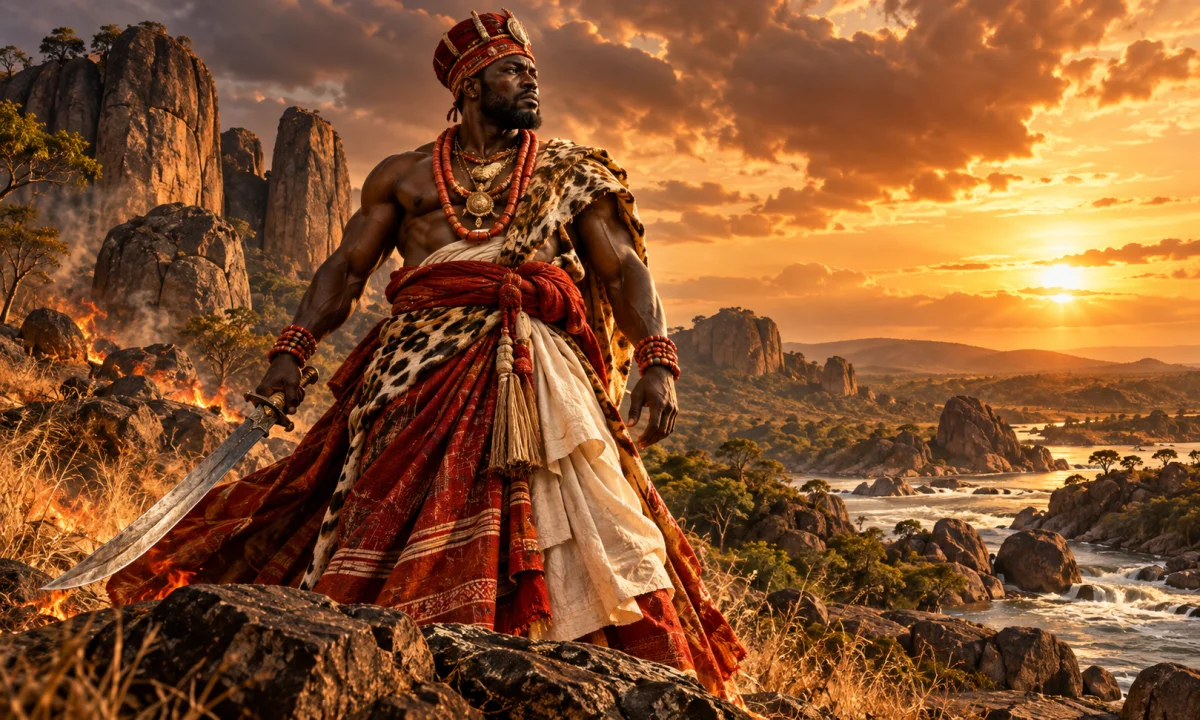
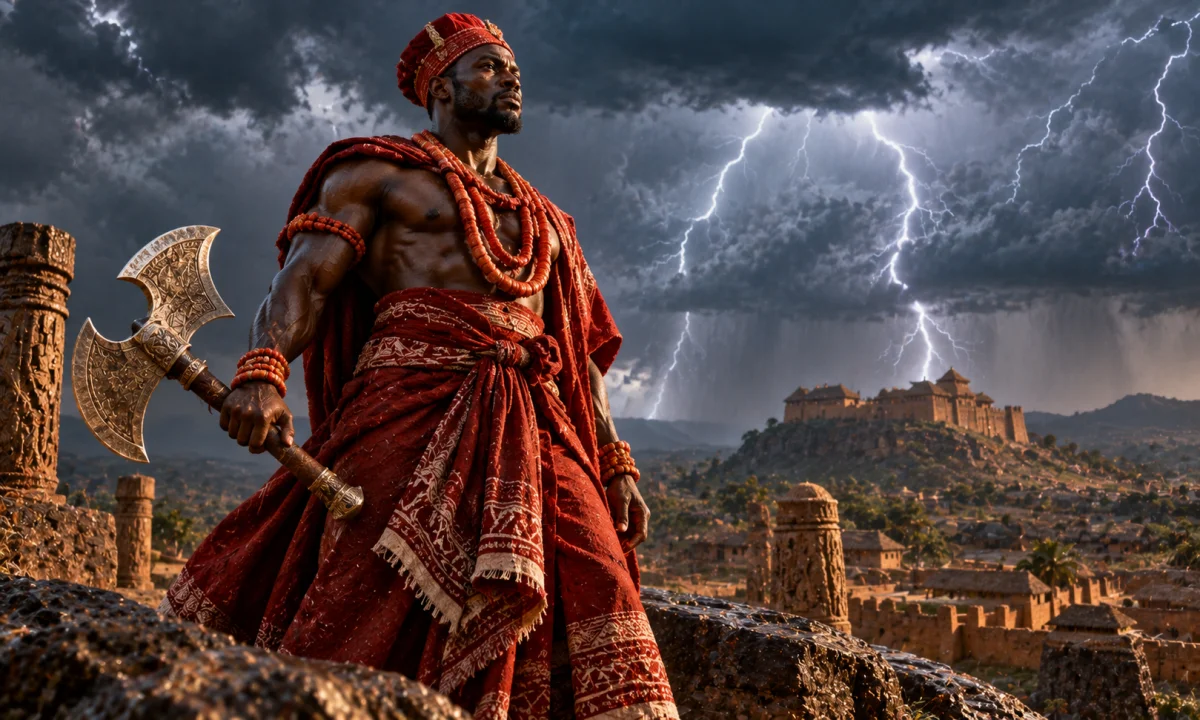
Specific visual attributes are not securely standardized. Modern illustrations may show Agé as a hunter carrying a bow, arrows, a knife or other woodland equipment, but such imagery should not automatically be treated as evidence for a universal traditional iconography. Yoruba òrìṣà are frequently represented through ritual objects, colours, emblems, praise names and offerings rather than through a single fixed physical portrait.
Descriptions of hunting deities can also use the language of speed, keen sight and mastery of hidden paths. These are reasonable symbolic associations, but they should be distinguished from documented claims that Agé possesses a particular supernatural ability. There is no single agreed catalogue of powers for Agé across Yoruba-speaking communities.
Relationship with Ògún and other figures
The figure most likely to be confused or closely associated with Agé is Ògún. Ògún is a major Yoruba òrìṣà of iron, metalworking, hunting, warfare, roads and difficult labour. Because hunters use iron tools and weapons, Ògún has an important place in many hunting traditions. Hunters may honour Ògún for the manufacture and power of their weapons, while a forest or hunting spirit such as Agé may represent knowledge of the wilderness and the animals within it.
Some secondary accounts present Agé and Ògún as companions, associates or members of the same mythic group. Other accounts give Ògún the entire role of the divine hunter and do not treat Agé as a separate prominent deity. These differences should not be resolved by inventing a single family tree. In Yoruba religion, relationships between òrìṣà may be expressed through local ritual alliances, praise poetry and particular narratives rather than through one consistent genealogy.
Agé may also be confused with Àjà, a forest-related power associated in some traditions with medicinal plants, healing and instruction in the secrets of the bush. The two names are not interchangeable. Àjà is often described as teaching herbal knowledge or leading a person into the forest, whereas Agé, in accounts that distinguish the figure, is more specifically connected with hunting and the hunter’s relationship to game. The boundaries are not identical in every source.
Hunters, ritual knowledge and social importance
Traditional hunters occupied an important position in many West African communities. They supplied meat, defended settlements, travelled through difficult country and possessed knowledge of plants, animals and terrain. Their expertise could also give them a role as scouts, healers or interpreters of signs. Hunting was therefore not merely an individual sport. It was tied to community welfare and to a network of obligations between people, animals and spiritual powers.
Within such a setting, devotion to a forest or hunting divinity could involve prayers before an expedition, ritual precautions, offerings or the observance of restrictions. The details would depend on local practice. It would be misleading to describe one universal ceremony for Agé, since the available evidence does not establish a single standard cult shared by all Yoruba communities.
Hunting traditions also raise questions about restraint. The forest provides food, but taking animals may require permission, skill and correct conduct. A hunter who behaves arrogantly, kills wastefully or ignores ritual prohibitions may be exposed to danger or failure. The underlying theme is a relationship of negotiation: humans depend on the forest, but the forest is not treated as an unlimited possession.
Stories and variants
Agé does not have a single cycle of widely recognized myths comparable in international circulation to the stories of Ògún, Ṣàngó or Ọ̀ṣun. Short reference works sometimes provide a brief identity—such as “deity of hunting” or “god of the forest”—without preserving a substantial narrative tradition. Other accounts place Agé within stories about the origins of hunting, the organization of the world or the activities of early culture heroes.
Because Yoruba mythology is transmitted through oral performance, a lack of one famous written story does not mean that the figure has no religious significance. It does mean that claims about Agé’s family, birthplace, adventures or defeat by another deity require careful qualification. A narrative recorded in one community may not be a pan-Yoruba tradition.
The name may also have been simplified or altered as Yoruba religious traditions were described in colonial-era writings, comparative mythology, museum catalogues and later encyclopedias. In such contexts, a local spirit could be presented as a “god” in a manner that flattened distinctions between òrìṣà, ancestor, place spirit and ritual power. Modern lists of Yoruba deities sometimes repeat these classifications without making their regional limits clear.
Interpretation and significance
Agé can be interpreted as a figure expressing the relationship between human society and the uncultivated world. The forest is both generous and dangerous: it supplies food and medicine, yet it also contains risks that cannot be overcome by force alone. A hunter must combine physical courage with observation, patience and respect for unseen powers.
The figure also highlights the specialized nature of religious knowledge. A farmer, blacksmith, diviner and hunter each encounters the world through different responsibilities and skills. Agé, where recognized, gives spiritual form to the hunter’s knowledge of animals and woodland paths. This does not make the figure merely a personification of a profession. It places that profession within a moral and sacred order.
Another important theme is the boundary between settlement and wilderness. Yoruba towns are not necessarily imagined as places wholly separate from spiritual nature. Rivers, groves, hills, farms and forests may all possess religious significance. Agé belongs to this wider understanding of a living landscape in which human beings, animals, ancestors and divine powers interact.
Distinguishing Agé from similar names
- Agé: in accounts that recognize the figure separately, a hunting or forest divinity associated with animals, tracking and the hunter’s relationship with the wilderness.
- Ògún: a major òrìṣà associated with iron, tools, weapons, roads, warfare, labour and also hunting. His connection with hunters is much more broadly documented.
- Àjà: a forest-related figure associated in some Yoruba traditions with wild places, medicinal plants and instruction in herbal knowledge.
- Àjẹ́: a distinct spiritual concept associated with female power, elder women and forms of mystical influence; it is not simply another spelling of Agé.
- Ọ̀ṣọ́ọ̀sì: a prominent hunting òrìṣà in several Yoruba-derived traditions, especially well known in Brazil and other parts of the African diaspora. He should not be assumed to be the same figure as Agé.
Ọ̀ṣọ́ọ̀sì deserves particular caution because diaspora religions sometimes preserve, develop or combine Yoruba traditions in ways that differ from those of Yoruba-speaking regions in West Africa. A hunting deity who is central in one diaspora tradition cannot automatically be used to fill gaps in the evidence about Agé.
Later representations
Agé has not acquired a large, stable presence in global popular culture. The name appears more often in lists of African or Yoruba deities, comparative mythology references and discussions of hunting spirits than in major films, novels or games. Such lists may provide a useful starting point, but they often omit tone marks, regional context and the uncertainty surrounding the figure’s independent identity.
Contemporary artists, writers and religious practitioners may present Agé as a guardian of wildlife, a symbol of ecological responsibility or an ancestral protector of hunters. These interpretations can be meaningful modern engagements, but they should be distinguished from claims about established traditional doctrine. The most careful description remains that Agé is a variably documented Yoruba hunting or forest power whose identity and prominence differ according to source and community.