 WORLD
WORLD
Iroquois mythology
Articles about Iroquois mythology within North America.
Last articles

Adekagagwaa
Adekagagwaa is a figure identified in some accounts of Iroquois mythology with summer and the warm, life-supporting part of the yearly cycle. He is commonly presented as the opponent or counterpart of Okwirase, a figure …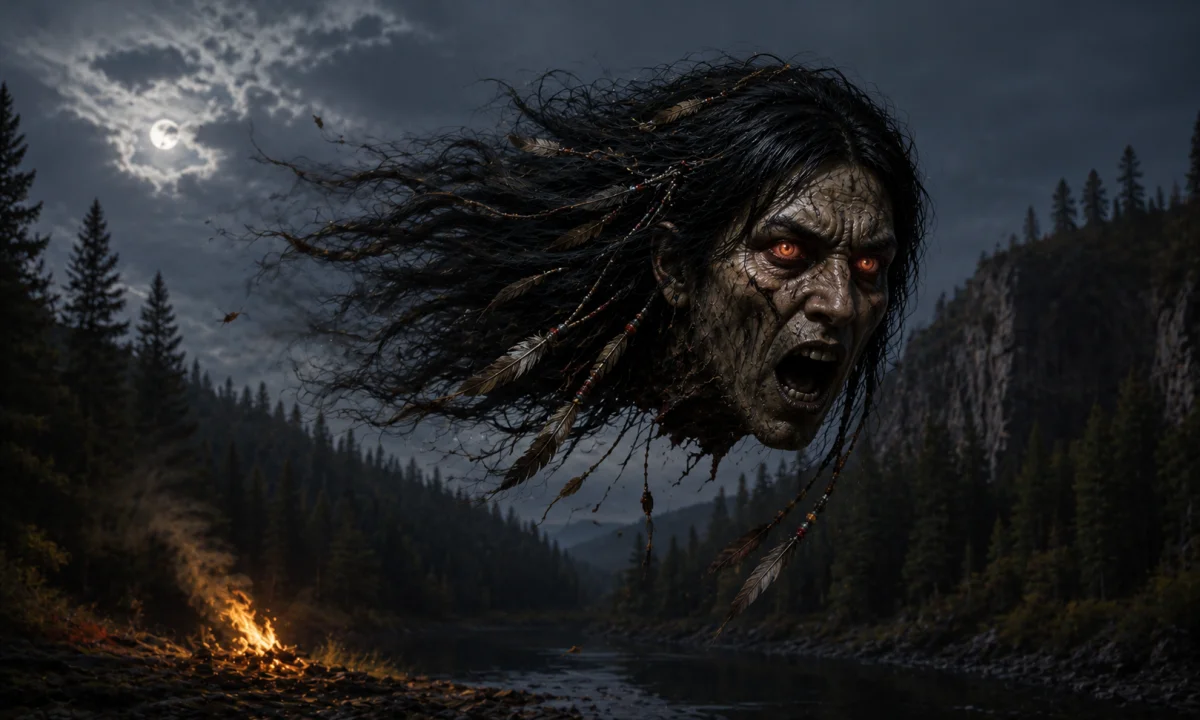
Flying Head
Flying Head is a frightening being associated chiefly with Seneca and other Haudenosaunee, or Iroquois, storytelling. In English-language retellings, it is usually described as a huge disembodied head that moves through …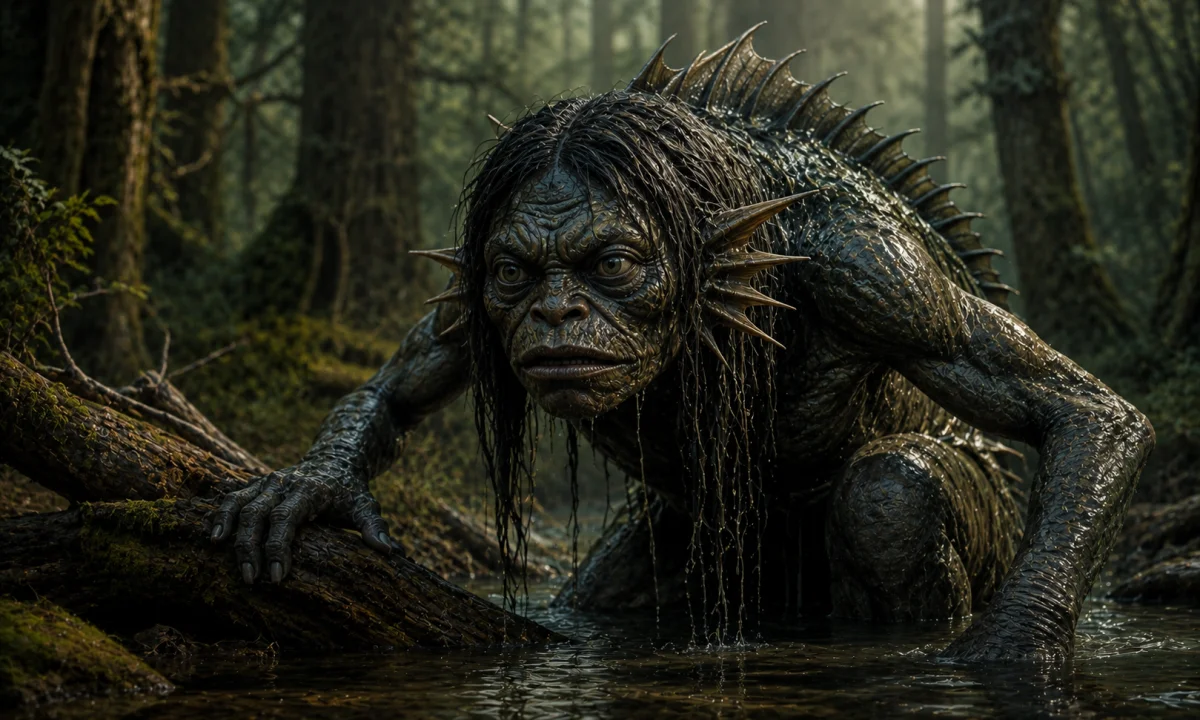
Ga Gaah
Ga Gaah is a name associated in some modern reference lists with Iroquois or Haudenosaunee ideas of thunder and storm power. The identification is not securely established across the traditions of the Haudenosaunee natio…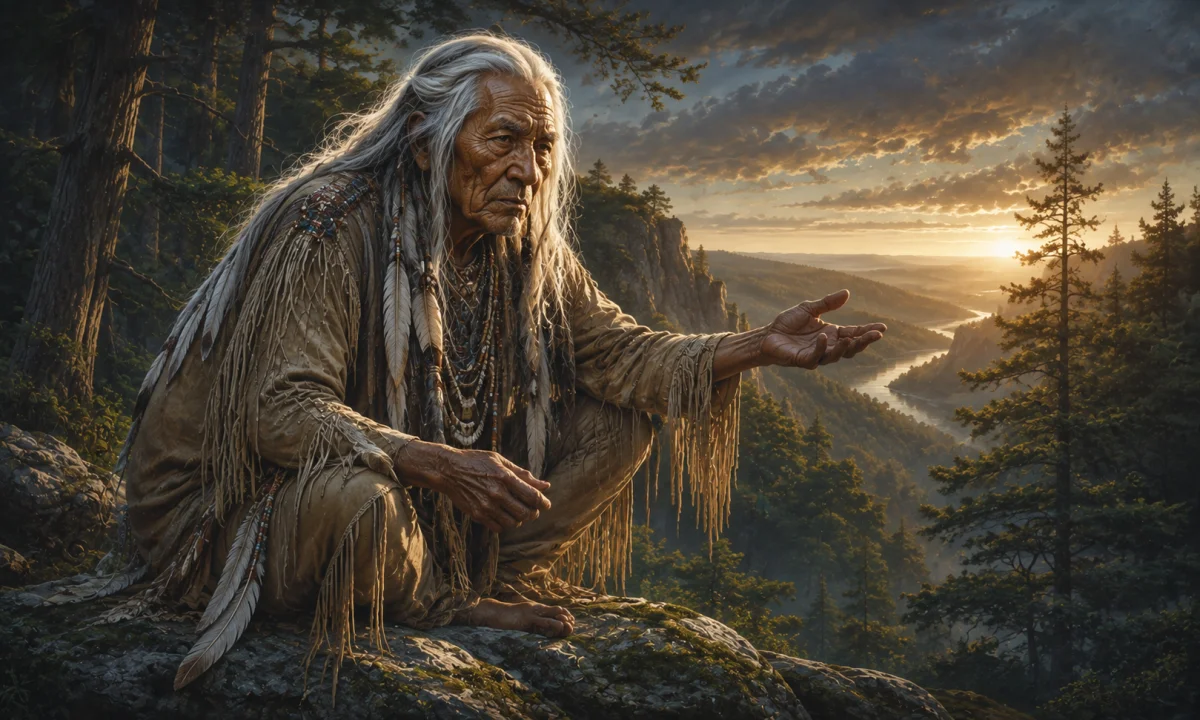
Dajoji
Dajoji is a name associated in some modern reference works with an Iroquois or Haudenosaunee thunder deity. The identification is uncertain, however. Unlike better-documented figures such as Heno, the Thunderer of Seneca…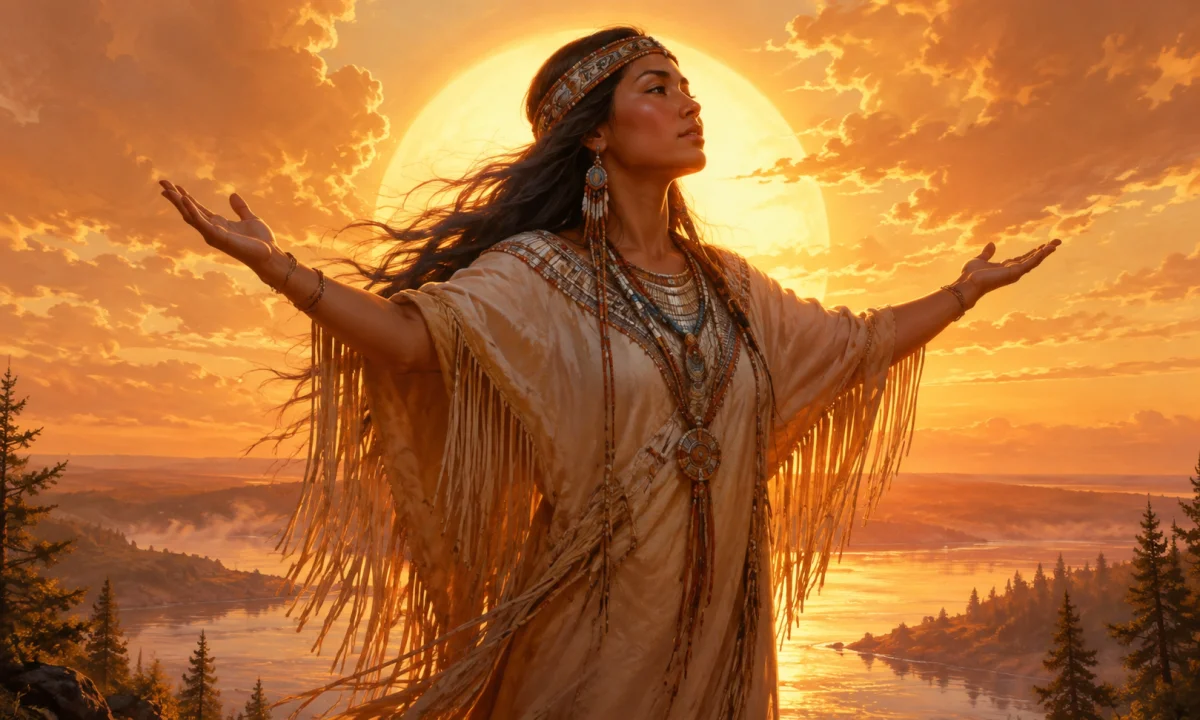
Dawn
Dawn is not securely documented as a single, pan-Iroquois goddess or named supernatural being. In discussions of Iroquois mythology, the word usually refers to the daily return of light, to the eastern horizon, or to a s…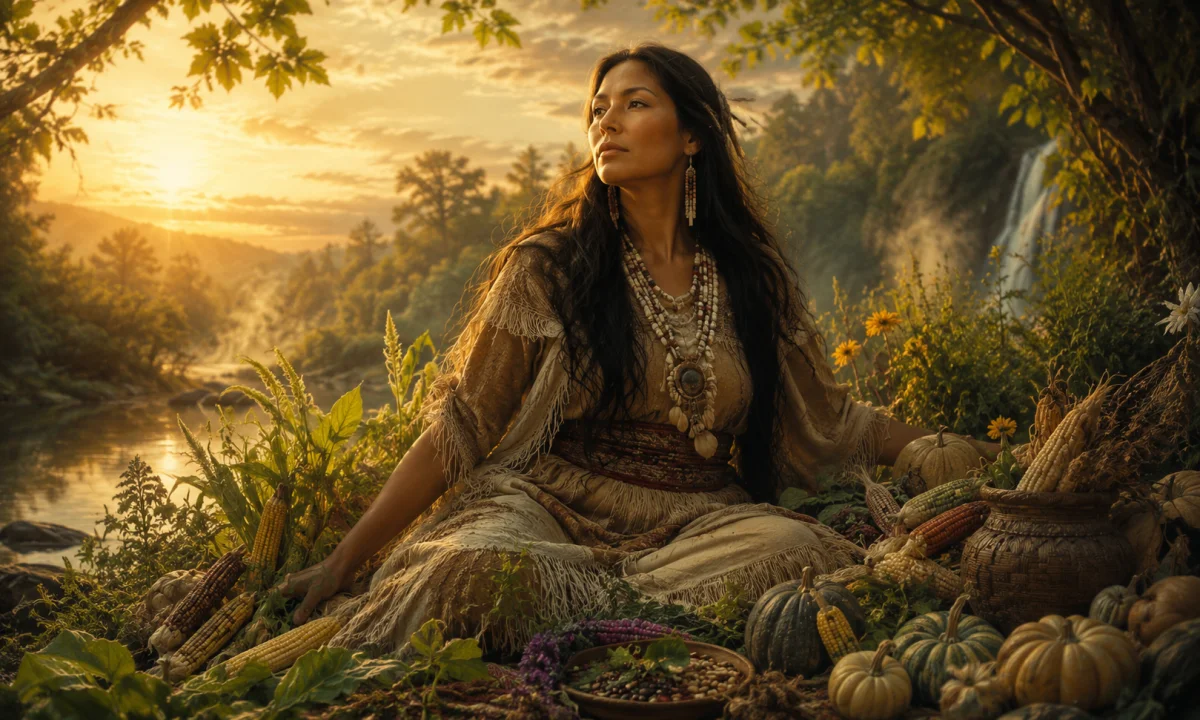
Eithinoha
Eithinoha is a figure associated with Iroquois, or Haudenosaunee, mythology. In English-language mythological references, she is usually described as an earth mother whose death during childbirth makes possible the order…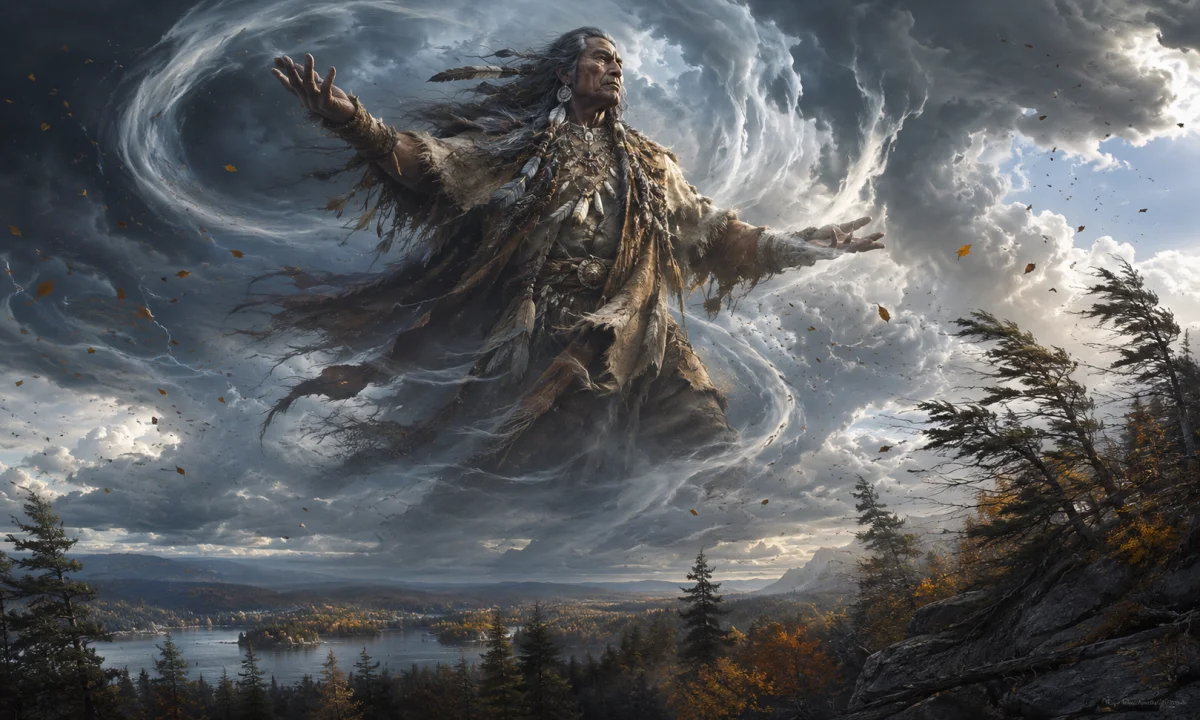
Gaoh
Gaoh, also written Gǎ-oh, Ga-oh or Gaho in English-language sources, is a giant spirit associated with the winds in traditions commonly described as Iroquois mythology. He is most often presented as the master or keeper …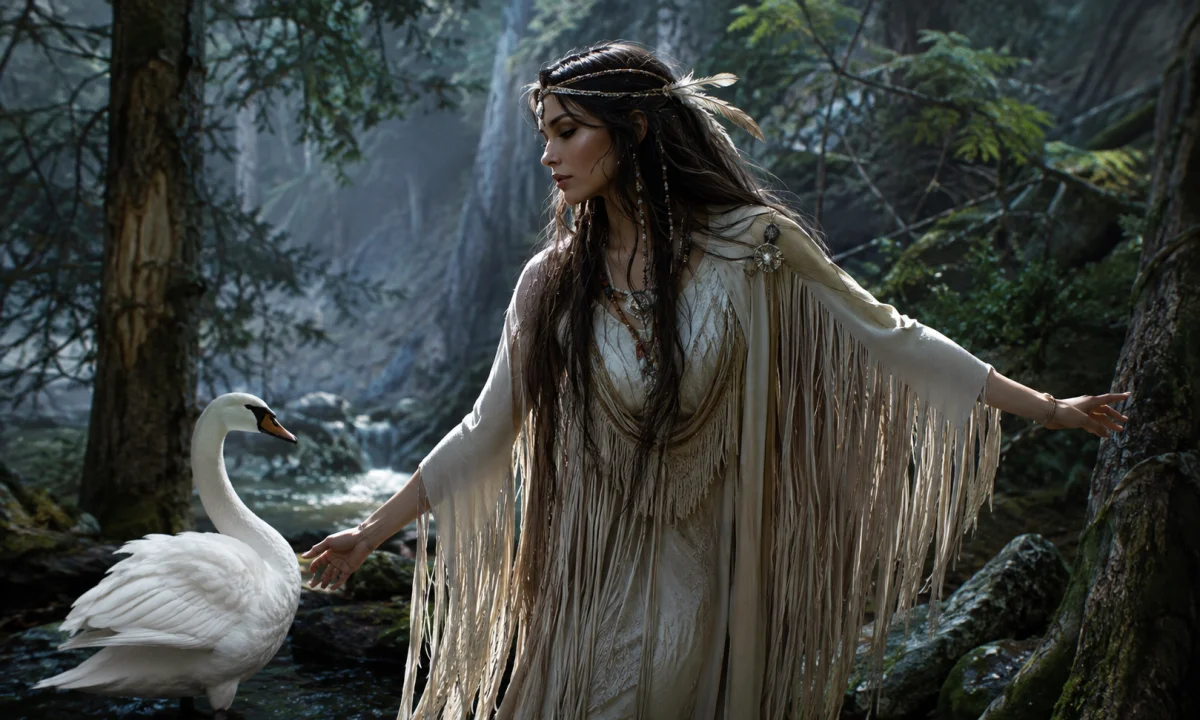
Gendenwitha
Gendenwitha is a figure associated in some Haudenosaunee, or Iroquois, traditions with the dawn and the Morning Star. Her name appears in several spellings, including Gendewitha and Gendenwitha, and accounts of her ident…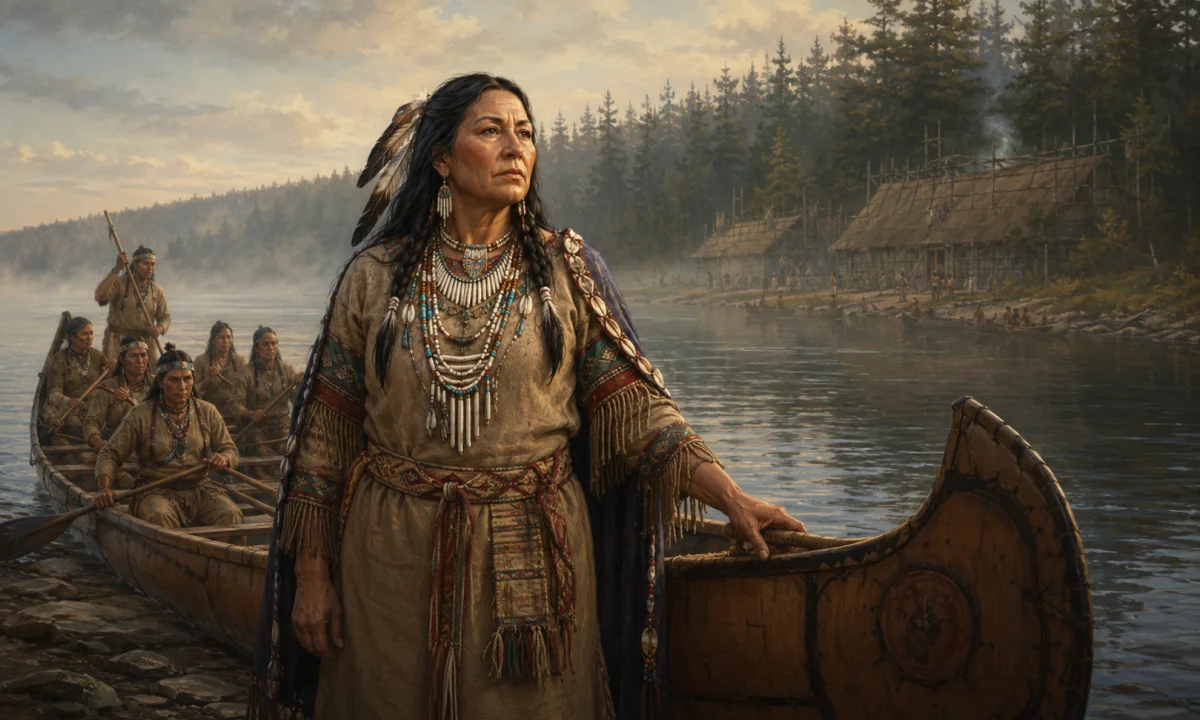
Godasiyo
Godasiyo is a woman associated in some recorded Iroquois, or Haudenosaunee, traditions with the beginnings or separation of communities. She is usually described as a leader rather than as a universally recognized goddes…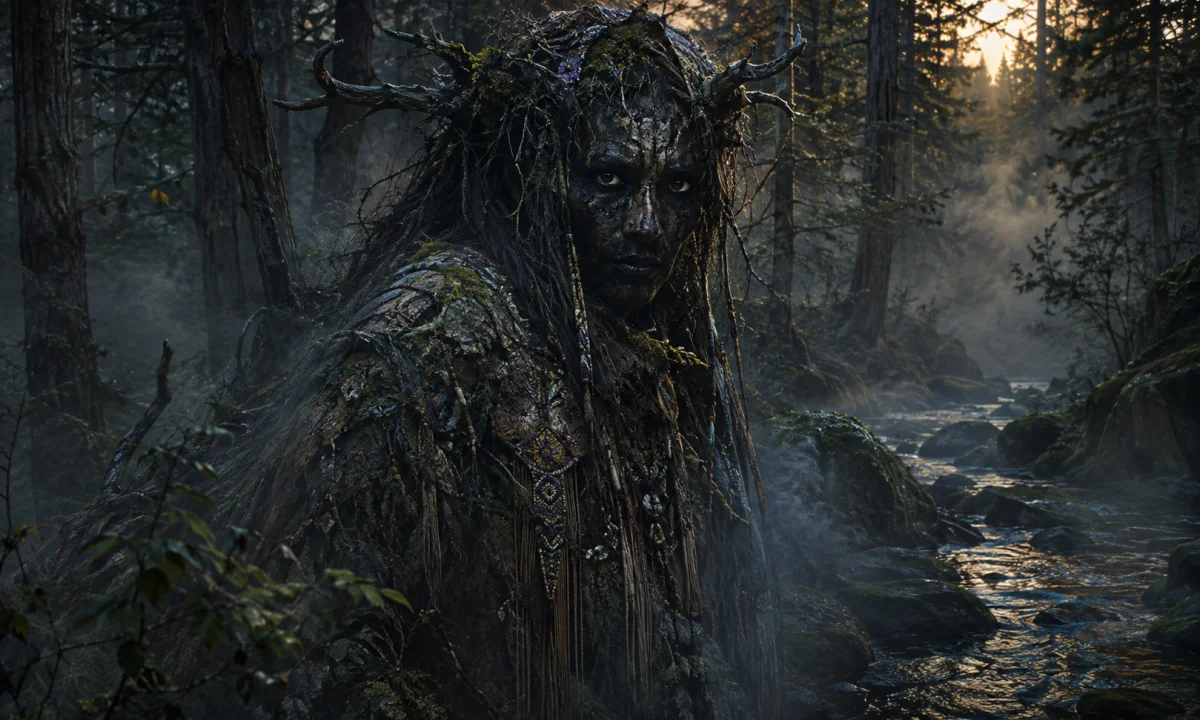
Gunnodoyak
Gunnodoyak is a name recorded in connection with Iroquois mythology, but it is not among the best-known figures in the Haudenosaunee religious or oral traditions. Because surviving references are limited and spellings ca…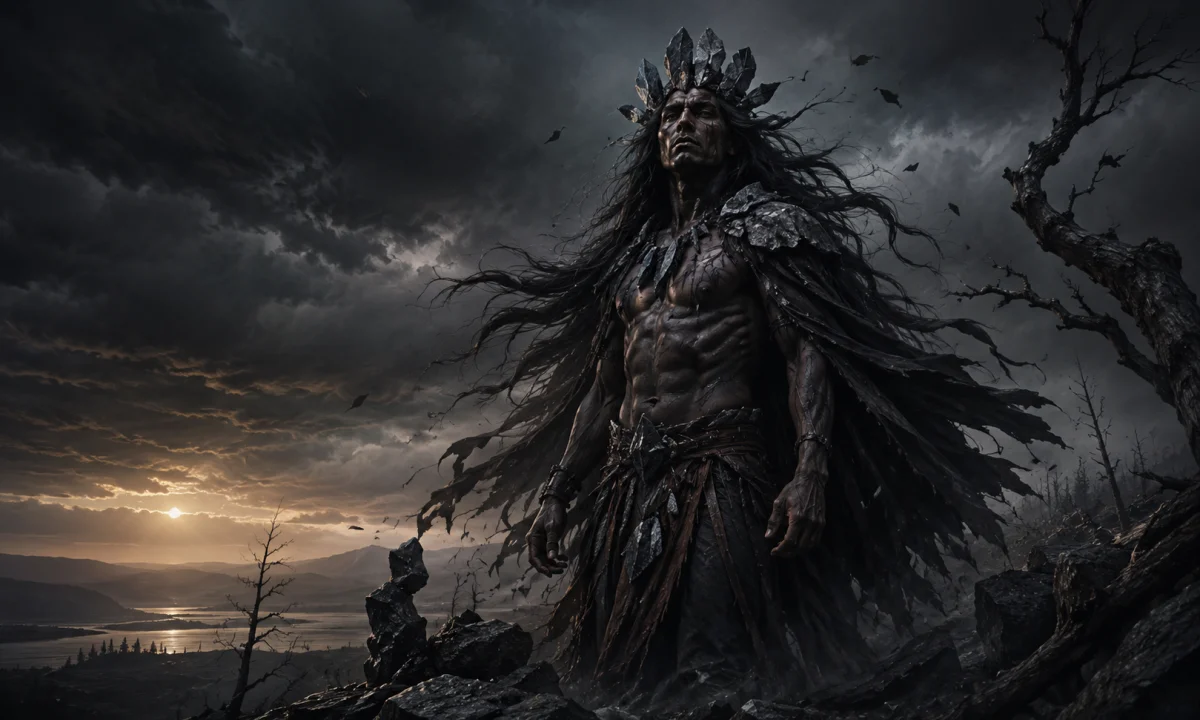
Hahgwehdaetgah
Hahgwehdaetgah is a name associated with Iroquois mythology, though the figure is not as widely documented in published English-language summaries as major Haudenosaunee beings such as Sky Woman, the Good Minded spirit, …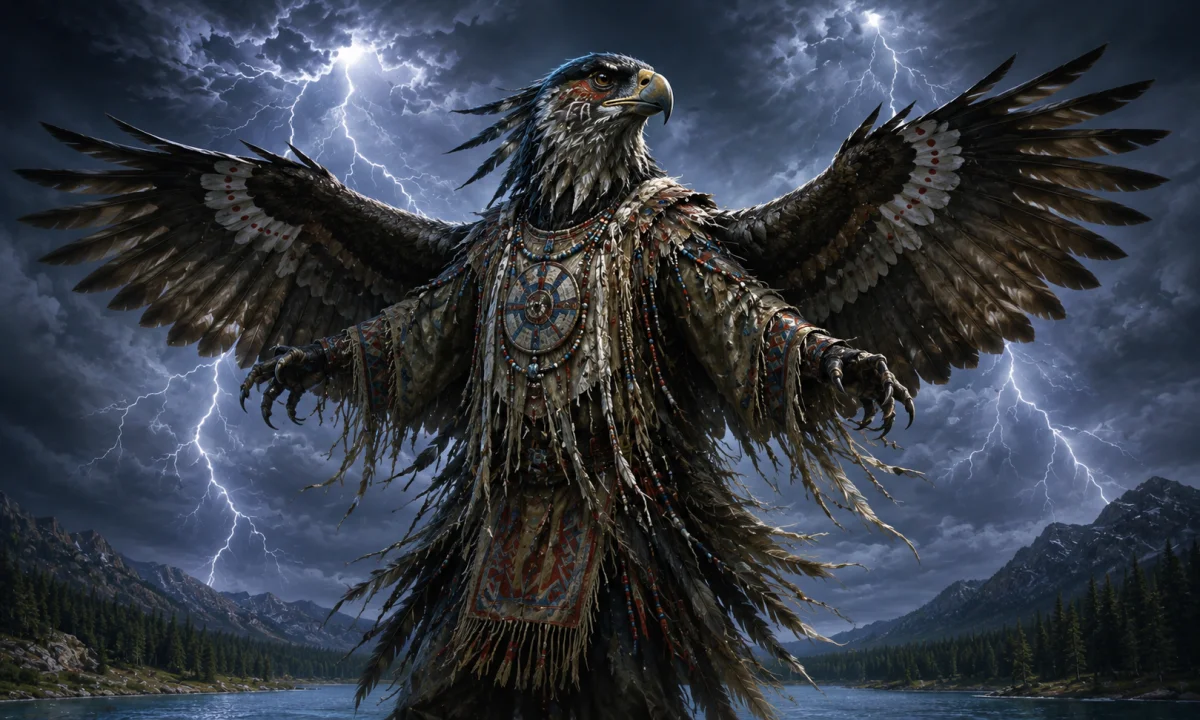
Hahgwehdiyu
Hahgwehdiyu is a figure from Haudenosaunee tradition, especially associated with the Iroquois-speaking peoples of what is now northeastern North America. He is commonly described as the Sky Woman’s grandson or as the ben…Iroquois mythology: myths, traditions and legends
Iroquois mythology refers to the sacred narratives, creation traditions, spiritual beings and ancestral teachings of the Indigenous peoples more accurately known collectively as the Haudenosaunee, meaning the People of the Longhouse. The Haudenosaunee Confederacy historically brought together the Mohawk, Oneida, Onondaga, Cayuga and Seneca nations, with the Tuscarora joining later. Their traditional homelands lie in what is now the northeastern United States and southeastern Canada. Although these nations share important cultural and religious traditions, they are not identical communities, and stories, names, ceremonies and interpretations vary between nations, languages, families and knowledge keepers.
The word mythology is useful in an academic sense for discussing culturally significant narratives concerning creation, spiritual powers, humanity and the ordering of the world. It does not mean that these traditions are regarded simply as fictional stories. Haudenosaunee creation narratives and ceremonial teachings remain connected with living cultural and religious life. Some knowledge is public and widely shared, while other teachings belong within specific ceremonial or community contexts and should not be treated as material for unrestricted reconstruction.
Iroquois and Haudenosaunee terminology
Iroquois is a long-established English and French-derived label that can refer either to the Haudenosaunee peoples or more broadly to the Iroquoian language family. The term Haudenosaunee is widely preferred when referring specifically to the Confederacy and its member nations.
The Iroquoian language family also includes peoples who were historically outside the Haudenosaunee Confederacy, such as the Huron-Wendat and Cherokee. Their traditions may contain linguistic or cultural relationships, but they should not automatically be classified as Haudenosaunee mythology.
The Six Nations themselves have distinct languages and local traditions. A creation story recorded among the Seneca may differ in names, sequence or emphasis from a Mohawk or Onondaga version. English-language collections have sometimes combined these differences into one supposedly universal Iroquois narrative, obscuring the diversity of the original traditions.
Oral tradition and the problems of written sources
Haudenosaunee sacred narratives were transmitted orally for generations through storytelling, ceremony and community teaching. Oral transmission does not imply that stories were unstable or casually improvised. Knowledge could be preserved by recognised speakers who understood when, where and to whom particular narratives were appropriately told.
Many written versions were recorded after sustained European colonisation and Christian missionary activity. Missionaries, ethnographers and other outside collectors sometimes translated concepts through Christian categories or misunderstood culturally specific ideas. Indigenous authors and knowledge keepers also recorded traditions, often providing perspectives unavailable in external accounts.
Some narratives survive in multiple versions because oral traditions naturally reflect local history and community authority. Variation should not be treated as corruption of an imagined original text. A sacred narrative can remain recognisably related across communities while differing in names, episodes and interpretation.
Sky World and the beginning of the earth
A central Haudenosaunee creation tradition begins in a world above the present earth, often called the Sky World in English translations. Human-like beings already live there, and a great tree holds particular importance. Through circumstances that differ among versions, a woman falls through an opening created near or beneath the tree.
Below her lies a world covered by water. Birds see the falling woman and help support her, while aquatic animals attempt to obtain earth from beneath the water. Several creatures fail before a small animal succeeds in bringing soil upward. Different versions identify the successful diver differently, though the muskrat is prominent in many tellings.
The earth is placed upon the back of a great turtle. From this small amount of soil the land grows, providing a home for the woman and later humanity. The widespread expression Turtle Island for North America is connected with Indigenous creation traditions of this kind, although individual nations have their own understandings of the term.
The story is not simply an ancient attempt to explain geology. It establishes relationships among humans, animals, land and the powers of the upper world. Small animals can accomplish what stronger beings cannot, and the creation of human life depends upon cooperation between different forms of existence.
Sky Woman and the continuity of life
The woman who descends from the Sky World is often called Sky Woman or Woman Who Fell from the Sky in English. Her specific name varies according to language and version. She is an ancestral figure whose arrival begins the transformation of the water-covered world into an inhabitable landscape.
Sky Woman should not be reduced to a simple equivalent of an Earth Mother goddess from another culture. Her identity belongs to Haudenosaunee narrative and genealogy. In some versions she arrives already pregnant, while in others the sequence of generations is described differently.
Her relationship with plants and cultivated life is especially important in some tellings. The soil and seeds associated with the upper world help establish the conditions necessary for later human communities.
Modern summaries sometimes portray her fall as punishment or expulsion similar to the biblical story of Eve. The narratives have different structures and meanings, and Christian categories should not be projected onto Sky Woman without evidence from the specific Haudenosaunee tradition being discussed.
The twins and the shaping of the world
Many Haudenosaunee creation narratives describe twin brothers or opposing male figures whose activities shape the developing world. Their names differ substantially across languages and historical transcriptions, and English sources have frequently called them the Good Mind and Bad Mind or similar terms.
These translations can be misleading when they impose a strict Christian division between absolute good and absolute evil. The brothers more accurately represent contrasting approaches to creation and transformation. One is associated with making conditions favourable to human life, while the other creates obstacles, dangers or altered forms.
They may shape animals, landscapes and natural conditions in competition with one another. Their conflict helps explain why the world contains both nourishment and danger, harmony and difficulty.
Some versions culminate in a confrontation in which one brother defeats the other. The defeated figure may continue to possess a place within the cosmic order rather than disappearing as an exact equivalent of the Christian devil.
Animals as participants in creation
Animals occupy active roles throughout Haudenosaunee sacred narratives. They are helpers, teachers, competitors and beings with their own forms of agency. The creation of the earth itself depends upon animals assisting Sky Woman and bringing soil from beneath the water.
This relationship differs from narratives in which animals exist only as resources created for human use. Humans enter a world already shaped through cooperation with other living beings and therefore carry responsibilities toward them.
Animal figures in later stories can act with wisdom, humour, danger or supernatural power. Their behaviour should not automatically be interpreted as symbolic in the modern literary sense. A story may express moral or ecological teaching while still treating its animal participants as meaningful beings within the traditional worldview.
The Three Sisters
Corn, beans and squash are commonly known among the Haudenosaunee as the Three Sisters. They are central to agriculture, food security, ceremony and cultural identity. When cultivated together, corn provides support for climbing beans, beans contribute to soil fertility and squash spreads over the ground, helping retain moisture and limit weeds.
The significance of the Three Sisters extends beyond agricultural technique. They are understood through relationships of mutual support and gratitude. Stories concerning cultivated plants connect nourishment with the responsibilities humans have toward the living world.
Corn in particular possesses major ceremonial importance. Planting, ripening and harvest are integrated into cycles of thanksgiving and community life rather than being treated merely as economic activities.
Specific stories explaining the origins or relationships of the Three Sisters vary among communities. A single popular retelling should not be treated as the definitive Haudenosaunee account.
The spiritual world and powerful beings
Haudenosaunee traditions recognise a world inhabited by many forms of spiritual power. English categories such as god, spirit, monster and ghost do not always correspond precisely to Indigenous classifications.
Some beings are connected with particular places or natural forces. Others appear in stories as dangerous presences, helpers or agents whose actions require humans to behave appropriately. The supernatural world is not divided into a simple hierarchy of benevolent gods opposed to evil demons.
Dreams have historically held religious and social importance in several Haudenosaunee traditions. They could reveal desires, warnings or conditions requiring attention. European observers often interpreted these practices through their own categories, sometimes describing them as superstition without understanding their cultural framework.
Spiritual power is also encountered through ceremony, thanksgiving and reciprocal relationships rather than only through extraordinary supernatural encounters.
Thunder beings and weather
Thunder is personified or associated with powerful beings in a number of Haudenosaunee traditions. Thunder beings can be understood as protectors whose activity affects dangerous creatures and the forces associated with storms and water.
Details differ considerably among nations and recorded narratives. English retellings sometimes turn these beings into a single thunder god comparable to Zeus or Thor, but such comparisons impose a foreign divine category.
Weather has practical importance for agricultural communities dependent upon seasonal rainfall, planting and harvest. Sacred narratives concerning thunder therefore connect cosmic power with the conditions necessary for human survival.
Serpents and beings associated with water
Haudenosaunee narratives include dangerous beings associated with deep water, remote places and other environmental boundaries. Great serpentine or horned beings appear in several northeastern Indigenous traditions, though their names, forms and meanings vary.
It is misleading to classify all such beings simply as dragons. European collectors often used familiar monster terminology for Indigenous beings that occupied very different cultural roles.
Stories of dangerous water beings may express the power of rivers and lakes, but they should not be reduced to warnings about drowning or natural hazards alone. Within traditional narratives, they belong to a spiritually meaningful landscape inhabited by powers whose relationships with humans require caution and respect.
Transformation and extraordinary beings
Transformation appears frequently in Haudenosaunee storytelling. Humans, animals and spiritual beings may cross boundaries that modern Western categories treat as fixed. Such transformations can result from power, conflict, wrongdoing or encounters with the nonhuman world.
Some narratives include cannibalistic or distorted beings representing dangerous conditions and violations of proper social relationships. English-language collections have sometimes grouped several different entities under labels such as witch, monster or giant.
These translations should be approached carefully. Beings that resemble monsters in one story may belong to specific categories whose meanings cannot be recovered simply from appearance.
Ceremonies and thanksgiving
Haudenosaunee religion is expressed through ceremonial cycles as well as narratives. Seasonal observances recognise the gifts of the natural world and maintain relationships among community, environment and spiritual powers.
Ceremonies may be associated with maple sap, planting, strawberries, green corn, harvest and the midwinter period, although names and practices vary among nations and communities. These observances involve thanksgiving rather than worship in the narrow sense of attempting to satisfy unpredictable gods.
The Thanksgiving Address, widely known in English as the Words Before All Else, expresses gratitude toward the people, earth, waters, plants, animals, winds, celestial bodies and spiritual powers. Versions and language differ, but its structure reflects the importance of recognising the relationships that sustain life.
Ceremonial knowledge should not be treated as open mythology detached from living communities. Some practices are public, while details of others belong within Longhouse religious contexts and are appropriately discussed by authorised participants.
Medicine societies and restricted traditions
Haudenosaunee ceremonial life includes medicine societies associated with healing and spiritual responsibility. Among the best known to outsiders is the tradition often called the False Face Society, connected with carved wooden masks and healing ceremonies.
The masks are not simply decorative representations of demons or forest monsters. They are sacred objects whose meaning belongs within an active ceremonial tradition. Many Haudenosaunee people object to the commercial sale, casual display or imitation of such masks.
Older ethnographic publications sometimes described restricted rituals in considerable detail. The existence of published information does not mean that every ceremonial practice should be reproduced outside its cultural setting.
Respectful treatment distinguishes information suitable for general cultural understanding from knowledge that communities regard as ceremonial, private or requiring direct instruction.
The Great Law of Peace
The formation of the Haudenosaunee Confederacy is preserved through sacred and political traditions concerning the Great Law of Peace. These narratives describe a period of destructive conflict followed by the establishment of peace and a political union among formerly hostile nations.
A central figure commonly known in English as the Peacemaker carries the message of unity, while Hiawatha is an important collaborator in many versions. The Onondaga leader Tadodaho is transformed from an opponent of the new order into an essential participant.
The Great Law belongs simultaneously to political history, oral tradition and sacred teaching. Attempts to separate a purely historical core from all symbolic elements can overlook how Haudenosaunee communities themselves transmit political memory.
Dates proposed for the Confederacy’s foundation vary widely among scholars and Haudenosaunee traditions. The historical existence and endurance of the Confederacy are clear, but assigning one universally accepted foundation date remains difficult.
Hiawatha and common confusion
Hiawatha is an important figure in traditions concerning the establishment of the Haudenosaunee Confederacy. He should not be confused with the fictionalised character made internationally famous by Henry Wadsworth Longfellow’s nineteenth-century poem The Song of Hiawatha.
Longfellow borrowed the name Hiawatha but placed his hero within a story drawing largely upon Ojibwe and other Great Lakes traditions rather than authentic Haudenosaunee accounts of the historical-sacred Hiawatha.
This confusion became widespread in popular culture and demonstrates how Indigenous names were often detached from their original nations in European and American literature.
Wampum and cultural memory
Wampum consists of carefully made shell beads used in diplomacy, ceremony, condolence and the preservation of agreements. Wampum belts can embody political relationships and assist authorised speakers in recalling the meanings of treaties or laws.
They should not be described simply as Native American money. Although shell beads entered colonial systems of exchange and sometimes functioned as currency, their Haudenosaunee political and ceremonial significance is much broader.
Wampum is closely associated with the transmission of the Great Law and diplomatic history. Its meaning depends upon the pattern, circumstances of creation and oral interpretation associated with a particular belt.
Death, condolence and restoring balance
Death is understood not only as an individual loss but as an event affecting family and community relationships. Haudenosaunee condolence traditions developed formal ways of addressing grief, restoring clear thought and renewing social bonds.
The Condolence Ceremony has particular importance within the Confederacy and its political traditions. It can accompany the replacement of leaders and reaffirm relationships among the nations.
Accounts of the afterlife and the journey of the dead vary among communities and historical sources. Christian influence also affected later expressions of beliefs about death. One collected version should therefore not be presented as a universal Haudenosaunee doctrine.
Handsome Lake and religious renewal
At the end of the eighteenth century, the Seneca religious leader Handsome Lake experienced visions that became the foundation of a major revitalisation movement. His teachings emerged during a period of devastating land loss, disease, social disruption and colonial pressure.
The resulting tradition, commonly associated with the Code of Handsome Lake, combines older Haudenosaunee ceremonial principles with new moral teachings and concepts shaped partly through contact with Christianity.
It should not be treated as an untouched survival of ancient mythology or dismissed as Christianity under another name. It represents a distinct Indigenous religious response to historical crisis and remains significant in Longhouse communities.
Christianity, missions and cultural change
Christian missionaries worked among Haudenosaunee communities from the colonial period onward. Catholic and Protestant missions translated religious texts, established churches and attempted in various periods to replace traditional ceremonies.
Conversion did not occur uniformly. Some Haudenosaunee people became committed Christians, others maintained Longhouse religious traditions, and communities developed varied relationships between Christian and Indigenous beliefs.
Colonial governments and assimilation policies placed additional pressure on languages and ceremonial life. Boarding and residential school systems attempted to suppress Indigenous cultural transmission, causing lasting harm.
The survival of creation narratives, ceremonial knowledge and Indigenous languages therefore reflects active cultural continuity and revitalisation rather than the passive preservation of a vanished mythology.
Storytelling, seasons and cultural responsibility
Traditional storytelling can follow seasonal and social rules. Certain narratives are appropriately told during particular parts of the year, and stories may carry obligations concerning who has the authority to tell them.
Western collections often remove a narrative from this context and present it as an independent folktale. Doing so can obscure its relationship with ceremony, language, humour, family history or seasonal activity.
Translations also alter meaning. Names that describe a figure’s role or relationship may become fixed as personal names in English. Concepts may be rendered as god, spirit or magic even when none of those words provides a precise equivalent.
Modern representation and common misconceptions
Popular retellings frequently reduce Haudenosaunee creation traditions to a short story about Sky Woman, a turtle and two morally opposed twins. These elements are important, but simplified versions can erase differences among nations and remove the stories from living religious and cultural contexts.
Another common error treats every supernatural being as a god or monster. Haudenosaunee traditions use culturally specific categories and relationships that do not fit neatly into European pantheons or fantasy classifications.
The term Iroquois itself can also conceal the identities of the individual nations. Mohawk, Oneida, Onondaga, Cayuga, Seneca and Tuscarora communities maintain their own languages, histories and interpretations within the shared structure of the Haudenosaunee Confederacy.
Haudenosaunee sacred narratives remain deeply connected with gratitude, reciprocity, political peace, agriculture, family and responsibility toward the natural world. Their continuing importance comes not only from ancient stories about creation and spiritual beings but from the living communities that preserve, interpret and renew those traditions.