WORLD
WORLD
Ga Gaah

Ga Gaah is a name associated in some modern reference lists with Iroquois or Haudenosaunee ideas of thunder and storm power. The identification is not securely established across the traditions of the Haudenosaunee nations, however. Unlike better-attested figures such as Heno, the thunder being known especially from Seneca tradition, Ga Gaah has little consistently documented mythology under that exact spelling. The name may reflect a variant transcription, a localized tradition, a descriptive title, or a later attempt to systematize names from several Indigenous languages.
Cultural setting
The Haudenosaunee, often called the Iroquois Confederacy in historical English-language writing, comprise the Mohawk, Oneida, Onondaga, Cayuga, Seneca and Tuscarora nations. Their religious traditions are not a single uniform mythology. Stories, names and ceremonial practices differ between nations, communities and language traditions, and their transmission has included oral teaching, ritual performance and accounts recorded by outsiders.
Thunder is an important force in many northeastern North American Indigenous traditions. Storms could be understood as signs of powerful spiritual beings whose actions protected the world, opposed dangerous forces or renewed the land. In Haudenosaunee traditions, thunder beings are particularly associated with rain, lightning and the defeat of beings connected with destructive water or serpentine powers.
These traditions should not be treated as a fixed pantheon in the classical Greek or Roman sense. A name recorded in one community does not automatically represent a universal deity for every Haudenosaunee nation. English spellings can also conceal distinctions between languages. Sounds that are separate in a Haudenosaunee language may be represented inconsistently by English-speaking recorders, while a single English spelling may be used for more than one original word.
The name Ga Gaah
The form Ga Gaah is difficult to interpret with confidence. It appears in some secondary accounts as the name of an Iroquois thunder god or thunder being, but it is not as widely or consistently attested as Heno. There is no generally accepted spelling, pronunciation or body of traditional narratives that can be securely attached to the name in all Haudenosaunee contexts.
Several explanations are possible. Ga Gaah may preserve a name from a particular local tradition whose documentation is limited. It may be an alternative transcription of a name that appears differently in another source. It may also be a title or descriptive expression rather than the personal name of a distinct supernatural being. Because the available evidence is limited, it is safer to describe Ga Gaah as a possibly localized or variant thunder figure than to present a detailed biography as established Iroquois tradition.
The repeated use of the word “god” in older English reference works can also be misleading. Indigenous religious concepts do not always divide spiritual beings into categories that correspond neatly to the European word “god.” A thunder being might be a powerful spirit, a personified natural force, a guardian or an active participant in the sacred ordering of the world. The classification depends on the source and on the cultural context in which the name is used.
Possible connection with thunder traditions
Where Ga Gaah is identified as a thunder figure, the association fits a wider Haudenosaunee pattern in which thunder beings regulate or defend the natural world. Thunder and lightning are not merely atmospheric events in such stories. They may express a struggle between forces that sustain life and forces that threaten people, crops or the balance of creation.
Thunder beings are commonly linked with:
- Rain and fertility: storms bring water necessary for plants, animals and human communities.
- Lightning: flashes of lightning may be understood as weapons or signs of supernatural activity.
- Protection: thunder powers can oppose monsters, harmful spirits and dangerous beings associated with water or drought.
- Seasonal change: storms mark transitions in the yearly cycle and the return of life-giving weather.
- Sacred authority: the power to command the sky reflects a broader concern with maintaining order between the human, natural and spiritual worlds.
These themes belong to the broader thunder-complex of Haudenosaunee and neighbouring Indigenous traditions. They should not automatically be treated as individual attributes of Ga Gaah. In the absence of a clearly documented narrative, they indicate the cultural setting in which the name has been interpreted rather than a complete list of verified powers.
Relationship to Heno
The figure most securely associated with Haudenosaunee thunder traditions is Heno, whose name is often translated as “Thunderer” or “Thunder.” Heno appears especially in Seneca materials, although thunder traditions and related names occur among other Haudenosaunee peoples as well. He is portrayed in different accounts as a powerful supernatural being who sends rain and lightning and protects the world from dangerous forces.
Some modern lists place Ga Gaah beside Heno as a separate thunder god. That arrangement should be treated cautiously. It is not clear whether the two names represent separate beings, different regional traditions, different stages of recording, or a confusion introduced by later compilers. There is no reliable basis for assigning Ga Gaah a fixed position as Heno’s spouse, child, assistant or rival.
Nor should Ga Gaah be described simply as “another name for Heno” without qualification. The evidence does not establish that equivalence either. The responsible distinction is that Heno has a substantial and recognizable place in documented Seneca and wider Haudenosaunee thunder traditions, while Ga Gaah is a much less certain name whose connection with thunder may derive from limited or secondary evidence.
Thunder beings and sacred balance
In Haudenosaunee thought, powerful beings connected with weather are part of a larger sacred order. Traditional narratives often describe the formation of the world, the establishment of relationships among beings and the continuing need to preserve balance. Storms can therefore have moral and cosmological significance without being reduced to simple metaphors.
Thunder may be welcomed because it brings rain, yet storms can also be dangerous. This dual character is important. A thunder being is not necessarily a gentle personification of rainfall; it may possess formidable force and act against threats to the community. Sacred power can protect and endanger depending on how it is approached and how its actions affect the world.
Many northeastern Indigenous traditions also connect thunder with conflict against great serpents or other beings dwelling in water. Such stories vary substantially, and a narrative involving Heno or another thunder being should not be reassigned to Ga Gaah merely because both names have been classified as thunder figures. Similar motifs across neighbouring traditions may reflect shared regional concerns, cultural exchange or independent ways of explaining storms; they do not by themselves prove that the figures are identical.
Appearance and symbols
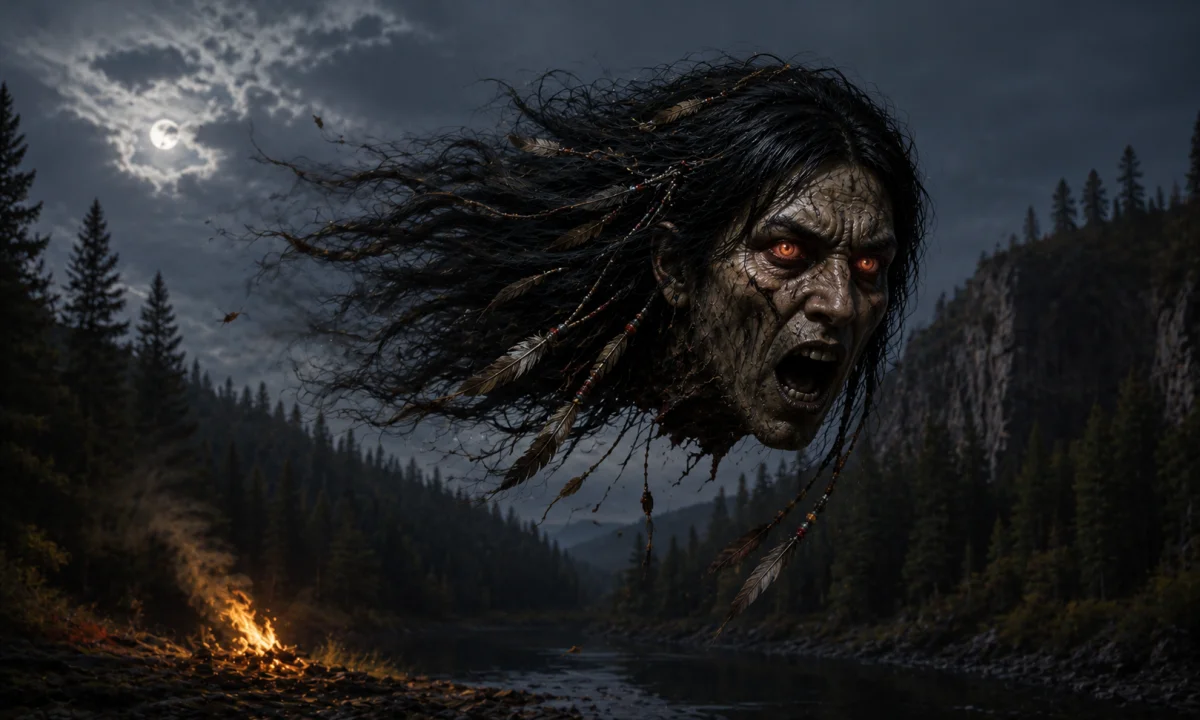
No securely established traditional description of Ga Gaah’s appearance can be given. Some generalized illustrations and online summaries portray Iroquois thunder beings with lightning, storm clouds, weapons or birdlike features, but these images should not be presented as authenticated representations of Ga Gaah.
Bird imagery does occur in Indigenous accounts of sky and storm powers, particularly in traditions where powerful birds are connected with thunder or lightning. Yet an association between birds and thunder elsewhere in North American mythology is not sufficient evidence that Ga Gaah had wings, feathers or the form of a giant bird. The same caution applies to claims that Ga Gaah carried a bow, threw lightning bolts, lived in a particular mountain or commanded a named group of spirits.
For the same reason, there is no sound basis for assigning the figure a standard colour, animal companion, sacred weapon or emblem. Such details may come from modern artwork, comparative mythology or the attributes of Heno and other thunder beings rather than from a tradition specifically naming Ga Gaah.
Sources and the problem of documentation
Knowledge of Haudenosaunee religion has survived through living community traditions as well as through historical records made by missionaries, government officials, folklorists and anthropologists. These records are valuable but uneven. Outsiders often translated Indigenous concepts into Christian or classical categories, recorded names according to their own spelling systems and selected stories according to the interests of their time.
Written documentation can therefore preserve a name while obscuring its meaning. A short entry in a dictionary of mythology may give the impression that a figure had a complete set of myths, even when the original record contains only a name and a brief gloss. Later websites may then repeat the entry, add familiar storm-god attributes and present the result as an ancient, universally recognized deity.
Ga Gaah illustrates why the history of recording matters. The name should not be treated as proof of a standardized pan-Iroquois pantheon. A careful account distinguishes between a name appearing in secondary material and a richly documented tradition maintained by a specific Haudenosaunee community. Where the original language, nation, storyteller and context are unknown, uncertainty is part of the historical evidence.
Distinguishing Ga Gaah from similar figures
- Heno: the best-documented Haudenosaunee thunder figure, especially in Seneca tradition. Heno should not be merged with Ga Gaah merely because both are classified as thunder beings.
- Thunderbirds: powerful storm-associated beings found in numerous Indigenous traditions of North America. A thunderbird from another cultural tradition is not automatically an Iroquois form of Ga Gaah.
- Dagwanoenyent: a Seneca-associated whirlwind or tornado being in some accounts. This figure belongs to storm-related tradition but is not simply another name for a thunder god.
- Glooscap and other culture heroes: figures from Wabanaki and other northeastern traditions may battle monsters or command natural forces, but they come from different cultural and narrative settings.
Similarity of function does not establish identity. “Thunder god,” “storm spirit” and “sky being” are broad descriptions used by English-language writers; they are not necessarily the original categories used by the communities whose traditions are being described.
Modern representation
Ga Gaah has little recognized presence in mainstream popular culture. The name is more often encountered in mythology databases, lists of Indigenous deities and general-interest summaries than in Haudenosaunee-authored cultural education or widely known fiction. Such lists frequently remove a figure from its language, nation and ceremonial setting, then place it beside gods from unrelated traditions.
Modern writers and artists who use Ga Gaah should therefore identify the uncertainty surrounding the name and avoid presenting invented details as traditional belief. A respectful adaptation can draw on the broad themes of thunder, rain, protection and ecological balance, but it should make clear when those themes are creative interpretations rather than documented attributes. It is also important not to use the name as a generic label for all Haudenosaunee storm traditions.
Ga Gaah is best understood as a poorly documented name associated in some sources with Iroquois thunder belief. Its possible connection with the wider sacred importance of storms is meaningful, but the surviving evidence does not justify a detailed, uniform mythology or a definite identification with Heno.