WORLD
WORLD
Hahgwehdaetgah
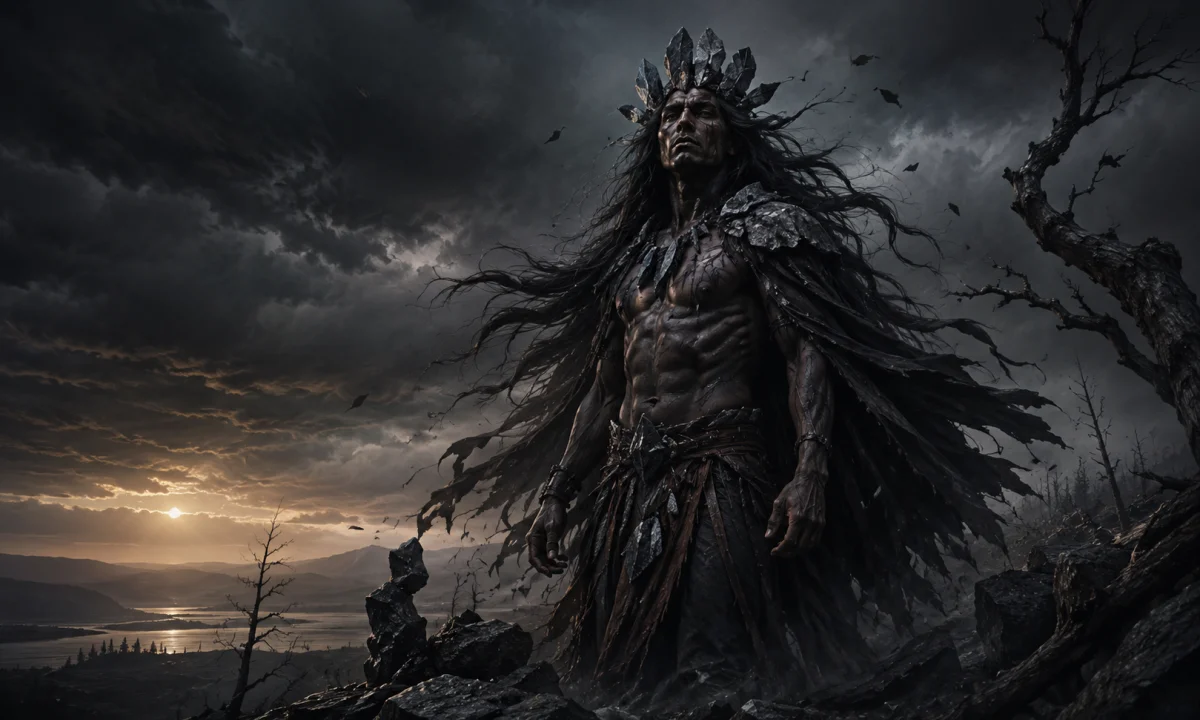
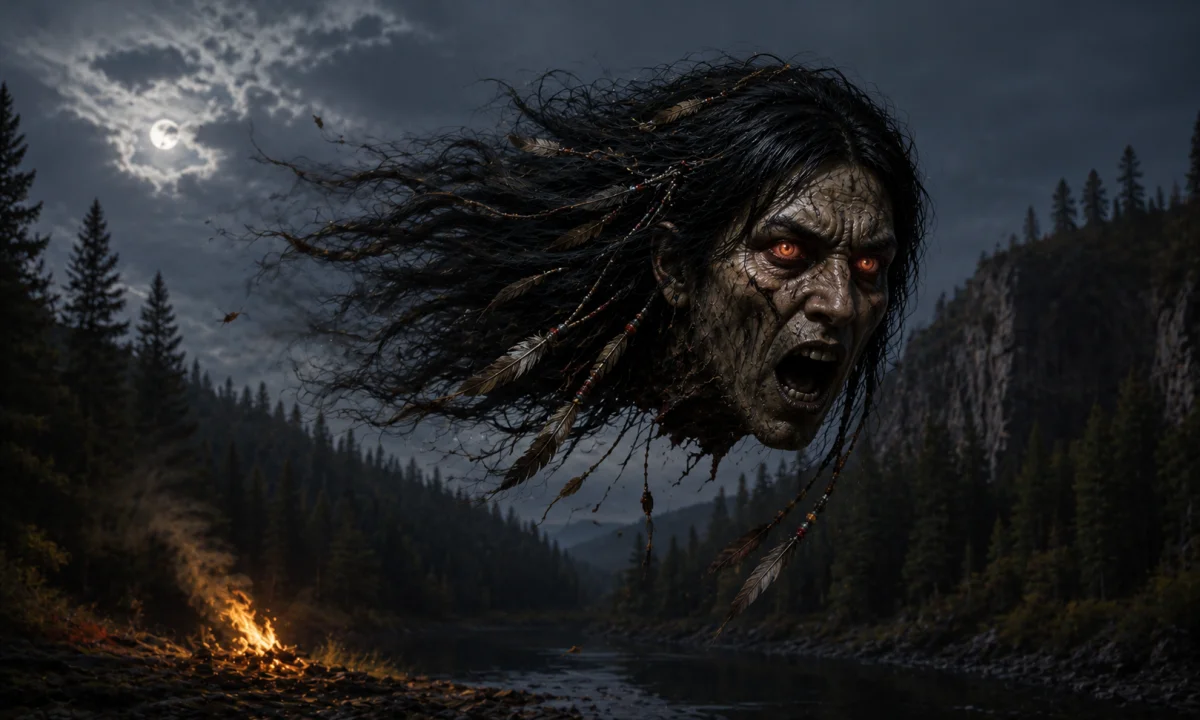
Hahgwehdaetgah is a name associated with Iroquois mythology, though the figure is not as widely documented in published English-language summaries as major Haudenosaunee beings such as Sky Woman, the Good Minded spirit, or the thunderers. Because surviving information is limited and spellings can vary, Hahgwehdaetgah should be treated cautiously: different transcriptions may refer to the same figure, a local variant, or a name preserved in a specific community tradition.
Cultural and mythological setting
The Iroquois, more accurately called the Haudenosaunee, are a confederacy of Indigenous nations in northeastern North America. Their mythological and ceremonial traditions are diverse, and stories differ among communities, families, and regions. What is often called “Iroquois mythology” is not a single fixed body of tales but a set of related traditions passed down orally over generations.
Within this setting, names for spiritual beings may be recorded inconsistently by early collectors, translators, missionaries, and later writers. Pronunciation, spelling, and even classification can change from one source to another. For that reason, Hahgwehdaetgah may appear in a transcription that does not fully capture the original language form. In Haudenosaunee contexts, that uncertainty matters: a name is not merely a label but part of a living cultural and linguistic tradition.
Name and identification
The identity of Hahgwehdaetgah is not firmly standardized in widely available references. Available mention of the name suggests a mythic or spiritual being belonging to the broader sphere of Haudenosaunee tradition, but published descriptions are sparse. That means several points remain uncertain:
- whether Hahgwehdaetgah is a personal spirit, an underworld being, a supernatural helper, or another class of figure;
- whether the name represents a single figure shared across communities or a local variant preserved in one tradition;
- what the most accurate spelling should be in English letters;
- how older collectors may have altered the form through transcription.
Because of this uncertainty, it is better to avoid forcing Hahgwehdaetgah into a category borrowed from unrelated mythologies. The name belongs within Haudenosaunee cultural history, but its exact role should be described as uncertain unless supported by a specific community source.
Oral tradition and the problem of surviving records
Haudenosaunee oral traditions have often been filtered through written records produced by outsiders. Some stories were recorded in the nineteenth and early twentieth centuries by ethnographers or missionaries, while others continued in community-based teaching and ceremonial practice. In many cases, a name entered print without enough context to identify the being clearly. That is one reason some figures remain obscure in modern reference works.
Hahgwehdaetgah appears to belong to this difficult category of names known more through limited documentation than through broad popular retelling. That does not mean the figure was unimportant in the tradition from which the name comes. Rather, it indicates that the surviving English-language record is incomplete. In Indigenous traditions, absence from widely circulated books is not the same as absence from living belief.
Possible classification and functions
Without secure, community-confirmed description, Hahgwehdaetgah cannot be confidently assigned a single role. In Haudenosaunee stories, spiritual beings may serve many functions: they may act as guardians, rivals, trickster-like figures, household or place spirits, dangerous powers, or beings connected to specific seasonal and cosmological forces. Hahgwehdaetgah may belong to one of these larger patterns, but the exact function is not well established in accessible sources.
When a figure is poorly documented, careful interpretation must distinguish between what is known and what is merely possible. The following possibilities are compatible with Haudenosaunee mythic patterns, but they should not be treated as confirmed facts about Hahgwehdaetgah:
- a local spirit tied to a place, event, or family teaching;
- an entity encountered in cautionary or moral stories;
- a supernatural being associated with the other-than-human world;
- a name preserved in ritual or narrative context that was not fully explained in print.
Appearance and attributes
No reliable, widely agreed description of Hahgwehdaetgah’s appearance is readily established in general reference literature. In many Indigenous traditions, however, spirits are not always described in a single fixed visual form. A being may appear differently depending on the story, the teller, the ceremonial setting, or the lesson being emphasized.
Because there is no secure public consensus, it would be misleading to assign Hahgwehdaetgah a definite body shape, costume, color, or emblem. The figure should therefore be understood as poorly described in surviving sources, with any specific visual portrayal requiring caution and a clear note that it is speculative unless grounded in a community account.
Role in Haudenosaunee worldviews
Haudenosaunee cosmology emphasizes relationships among human beings, animals, plants, spirits, and the land. Stories often teach responsibilities rather than simply narrating adventures. In that context, a figure like Hahgwehdaetgah, even if obscure in modern print, would likely have carried meaning within a larger moral or spiritual framework.
Traditional Haudenosaunee narratives frequently explore themes such as balance, reciprocity, danger, respect, restraint, and the consequences of ignoring proper relations with the world. If Hahgwehdaetgah belongs to such storytelling, then the figure’s significance may lie less in dramatic action than in what the name represents within a lesson or ceremonial memory. However, without stronger documentation, that remains a careful inference rather than a confirmed description.
Variants, spelling, and transliteration issues
Many Indigenous names were written down by non-native speakers who did not use a standardized orthography. As a result, the same name can appear in multiple spellings. Hahgwehdaetgah may therefore be one rendering among several, and the differences may reflect pronunciation, dialect, or the recorder’s attempt to represent unfamiliar sounds in English letters.
This matters for interpretation. A slight change in spelling can sometimes point to a very different word, or even to a different figure entirely. Because of that, it is important not to merge Hahgwehdaetgah with similarly spelled names unless there is clear evidence that they are the same being. Caution is especially important in Iroquois studies, where a single letter or syllable can alter meaning significantly.
Distinguishing Hahgwehdaetgah from better-known Haudenosaunee beings
Hahgwehdaetgah should not be conflated with the best-known figures in Haudenosaunee tradition. Some of these are widely discussed in modern literature and popular retellings, but they are distinct from any obscure or uncertain name unless a source explicitly connects them.
- Sky Woman is central to some Haudenosaunee creation narratives and is not the same as an obscure spirit name.
- Tadodaho is a major figure in the founding traditions of the Haudenosaunee Confederacy and has a specific historical-mythic role.
- the thunderers are powerful beings associated with storms in many Haudenosaunee stories, but Hahgwehdaetgah cannot be assumed to belong to that class.
- the Great Serpent or horned beings in some traditions should not be automatically linked to Hahgwehdaetgah without direct evidence.
Distinction is especially important because popular summaries sometimes flatten distinct beings into generic “native gods” or “spirits.” Haudenosaunee traditions are more precise and more culturally specific than that. Hahgwehdaetgah may have a meaning that is local, ceremonial, or narrative in ways that do not fit broad outsider categories.
Historical evidence and scholarly caution
The public record for Hahgwehdaetgah appears limited. That may be due to several factors: the selectivity of early collectors, the loss of material through colonial disruption, the restriction of certain teachings to community settings, or simply the fact that not every being in oral tradition becomes well known outside its own cultural context.
Scholars studying Indigenous mythologies often emphasize that a thin documentary record does not justify overconfident interpretation. It is possible to say that Hahgwehdaetgah is a name associated with Iroquois or Haudenosaunee tradition, but it is not responsible to invent a full biography. The careful position is to acknowledge the name, note the uncertainty, and avoid unsupported elaboration.
This is especially important because older writing about Indigenous religions sometimes treated fragmentary names as if they belonged to a single universal pantheon. Haudenosaunee traditions do not fit that model neatly. They are relational, narrative, and community-based, and their beings are often tied to place, language, and use within the tradition.
Interpretation and cultural significance
Even when a figure is obscure in surviving records, the preservation of a name can itself be significant. It shows that a tradition carried memory beyond the small number of stories that reached print. In Indigenous cultural history, names can preserve teachings, kinship relations, warnings, ceremonial knowledge, or local identity.
If Hahgwehdaetgah is retained in a tradition with limited public documentation, the name may signify one or more of the following:
- a specific spiritual presence known to a community;
- a narrative figure whose meaning depends on the story in which it appears;
- a remnant of older linguistic and ceremonial usage;
- an example of how oral traditions survive unevenly in written records.
Such a figure may not be famous, but obscurity in print is not a measure of cultural importance. In many living traditions, the most locally meaningful beings are precisely those least exposed to general publication.
Relationship to modern popular culture
Hahgwehdaetgah does not appear to have a substantial presence in mainstream modern popular culture. Unlike some mythological figures whose names have been widely reused in novels, games, or films, this one is not broadly recognized outside specialized or community contexts. That absence should not be mistaken for insignificance; rather, it reflects the uneven way Indigenous traditions enter popular media.
When modern adaptations do use Haudenosaunee names or imagery, they can sometimes simplify or distort their original meaning. Because Hahgwehdaetgah is not widely documented in popular adaptations, there is little risk of confusion from a major media version, but there is still a need to distinguish traditional context from any later fictional use if such use is encountered.
Why careful naming matters
Writing about Hahgwehdaetgah requires restraint because Indigenous mythic names are often treated too casually in general reference material. A name should not be converted into a generic fantasy creature, nor should it be assumed to match European categories such as “demon,” “god,” or “monster.” Haudenosaunee traditions have their own conceptual structures, and those structures do not always translate neatly.
Careful naming also respects the possibility that a figure may be known more fully within a community than in public publications. In that sense, uncertainty is not a weakness of the tradition; it is a reminder that oral histories are not exhausted by printed summaries. Hahgwehdaetgah remains best understood as a name from Iroquois or Haudenosaunee tradition whose exact identity, form, and role are not securely established in commonly available English sources.
Related cultural themes
Although specific details about Hahgwehdaetgah are uncertain, several broader Haudenosaunee themes help frame the figure’s possible significance:
- reciprocity between people and the living world;
- balance between helpful and dangerous powers;
- oral transmission of knowledge through family and community;
- respect for place and for beings connected to it;
- careful storytelling, in which names may carry layered meaning.
These themes are central to many Haudenosaunee narratives and provide the best context for approaching an obscure figure without inventing details. If further community-based information is available, it may clarify whether Hahgwehdaetgah belongs to the realm of guardian spirits, cautionary beings, local narrative entities, or another category altogether.