WORLD
WORLD
Dajoji
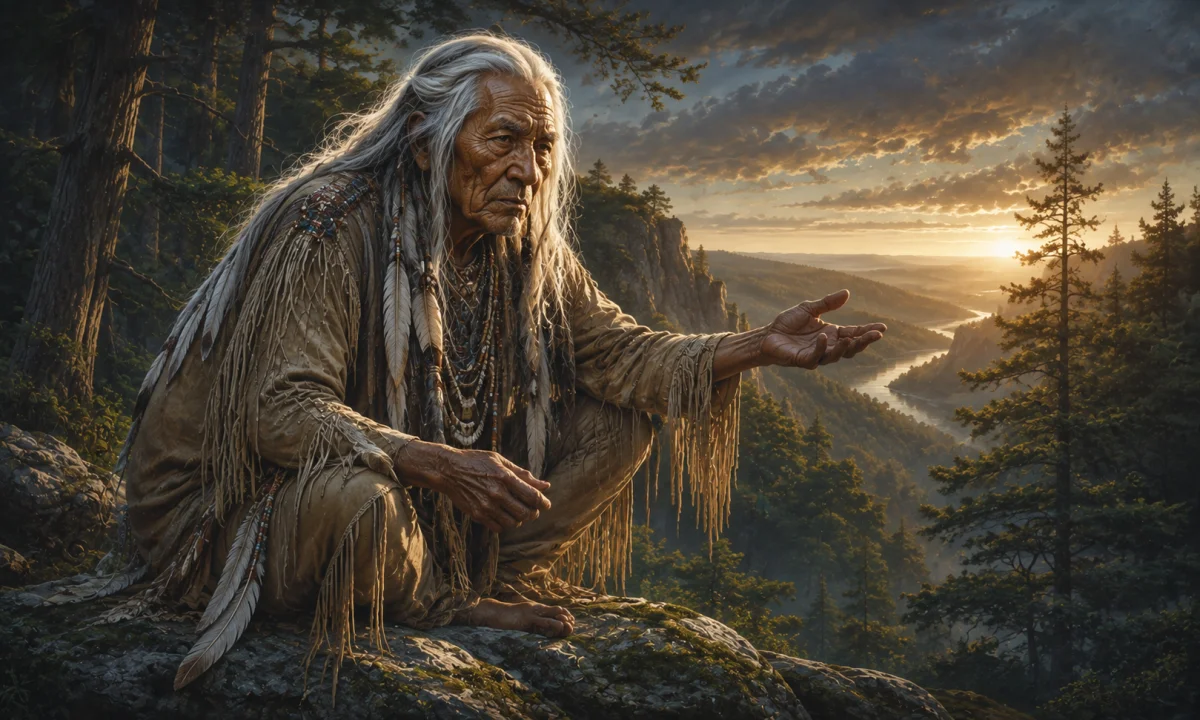
Dajoji is a name associated in some modern reference works with an Iroquois or Haudenosaunee thunder deity. The identification is uncertain, however. Unlike better-documented figures such as Heno, the Thunderer of Seneca tradition, Dajoji does not have a widely preserved body of stories, a securely established spelling, or a clearly defined place in the religious traditions of all the Iroquois nations. Information attached to the name should therefore be treated cautiously rather than as a uniform teaching shared throughout the Haudenosaunee world.
Cultural setting
“Iroquois” is a broad historical term often used for the peoples of the Iroquois Confederacy, who commonly refer to themselves as the Haudenosaunee, “People of the Longhouse.” The Confederacy traditionally includes the Mohawk, Oneida, Onondaga, Cayuga, Seneca and Tuscarora nations. Each nation has its own language, history and ceremonial traditions, and religious concepts are not always identical from one community to another.
Haudenosaunee traditional knowledge was transmitted primarily through spoken narratives, ceremonies, teachings and relationships with the natural world. Written records were produced later by missionaries, travellers, government officials, folklorists and anthropologists. These records often represent only one community, one speaker or one period, and their spellings may reflect the recorder’s own language rather than the original pronunciation.
This background is especially important when considering Dajoji. A name appearing in a nineteenth- or twentieth-century compilation cannot automatically be treated as evidence of a pan-Iroquois deity. Some names in older mythology books were copied from earlier lists, detached from their original language or assigned to a broad ethnic category that concealed important local differences.
Name and identity
The spelling Dajoji is not sufficiently stable to establish a definite linguistic meaning. There is no generally accepted etymology that can safely be given in English, and the name may represent a transcription of a word from an Iroquoian language. Different systems for recording sounds can produce substantially different spellings, particularly when a source was written by someone unfamiliar with the language being recorded.
In the material where Dajoji is identified at all, the name is usually connected with thunder, storms or a thunder-being. That association is the basis for classifying Dajoji as an Iroquois thunder deity or spirit. It is not clear, however, whether the name originally designated a single personal deity, a local name for a thunder-being, a title, or a figure reconstructed by a later writer from incomplete information.
Dajoji should consequently not be presented as though a detailed mythology survives under that name. No universally recognized account establishes the figure’s genealogy, dwelling place, appearance or individual adventures. Claims that assign Dajoji a complete set of powers or relationships often go beyond what can be supported by the limited record.
Thunder and sacred power
Thunder has important religious and symbolic associations in many Indigenous traditions of northeastern North America. Storms can bring life-giving rain, but thunder, lightning and violent weather can also destroy crops, damage settlements and threaten people and animals. A thunder-being may therefore be understood both as a protector and as a force requiring respect.
Within Haudenosaunee traditions, supernatural power is not necessarily organized in the same way as the gods of classical mythology. English words such as “god,” “spirit” and “deity” can simplify concepts that are more relational and context-dependent in the original languages. A being associated with thunder may be a powerful person, guardian, spirit or member of a larger community of supernatural beings, rather than an abstract ruler of nature.
If Dajoji is indeed a local or variant name for a thunder-being, the name would belong within this broader religious understanding. Thunder would not merely be a meteorological event. It could signal the activity of a powerful being and form part of a moral or ceremonial relationship between humans, animals, the land and the spiritual world.
Attributes and representation
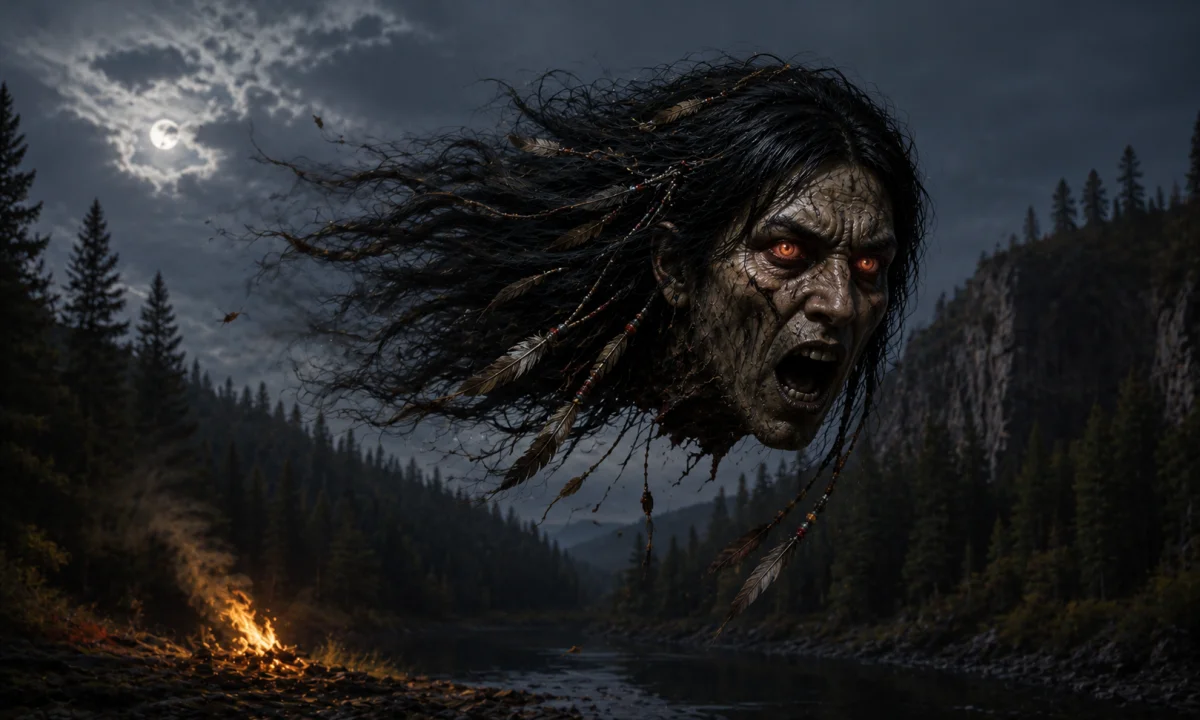
There is no reliable traditional description that fixes Dajoji’s physical appearance. Illustrations showing a generic Native American thunder god, a human figure carrying lightning, or a winged storm creature should not be treated as evidence for how Dajoji was traditionally represented. Such images are usually modern inventions or borrow visual conventions from other mythological systems.
Similarly, the name cannot safely be assigned a particular weapon, animal companion, dwelling place or family relationship. Thunder deities in different traditions are sometimes shown with bows, arrows, clubs, birds or lightning weapons, but the presence of those motifs elsewhere does not prove that they belonged to Dajoji.
The most cautious description is that Dajoji is a poorly documented name associated with the power of thunder and storms. Beyond that basic classification, details should be labelled as uncertain unless they can be connected to a specific community and a recorded traditional account.
Dajoji and the Haudenosaunee thunder tradition
The best-known thunder figure in Haudenosaunee mythology is generally Heno, often rendered in English as the Thunderer. Heno is especially prominent in Seneca traditions and is associated with thunder, lightning, rain and the defence of human communities against dangerous beings. Accounts of Heno differ in detail, but he is a much more securely attested figure than Dajoji.
Some generalized lists of Native American mythology have treated Dajoji and Heno as interchangeable, while others list them separately. There is not enough evidence to make either identification universally valid. Dajoji may be a variant or mistaken transcription connected with a local thunder tradition, but it may also be a name preserved through a secondary source without a clear equivalent in the better-documented narratives.
The distinction matters because the Haudenosaunee nations are not a single undifferentiated culture. A Seneca account of Heno should not automatically be rewritten as a story about Dajoji, and a name found in a general mythology handbook should not be used to alter the identity of a figure known from an Indigenous narrative tradition.
Stories and narrative evidence
No widely recognized cycle of myths about Dajoji survives in English under that name. There is no securely established sequence describing the being’s birth, marriage, conflict with another deity or role in the creation of the world. This absence does not prove that no story ever used the name. It indicates that the available record is too limited to support a detailed narrative biography.
Thunder-being stories recorded among Haudenosaunee communities often deal with protection, danger and the balance between destructive and beneficial powers. In some traditions, thunderers oppose serpentine or water-associated beings regarded as threats to people. In others, thunder is connected with rain, seasonal change, healing or the defence of the community. These themes provide useful cultural context, but they should not be presented as episodes from a Dajoji story unless the name is actually present in the relevant tradition.
Oral traditions also change through retelling. A storyteller may emphasize a being’s moral importance, a community’s relationship with a landscape, or the meaning of a ceremonial practice. A written version captures one performance and one interpretation rather than a single fixed text. This is one reason why attempting to assemble a complete mythology for Dajoji from isolated dictionary entries can create a misleading impression of certainty.
Religious and cultural significance
The importance of a thunder-being in Haudenosaunee thought cannot be reduced to the idea of a “weather god.” Thunder and rain are connected with agriculture, the health of the land and the continuation of life. At the same time, storms remind people that human beings do not control the forces on which they depend.
In many Indigenous religious traditions, respectful conduct toward powerful beings is part of a larger ethic of reciprocity. Humans receive food, rain, animals and other necessities from the living world, while ceremonies, words and proper behaviour acknowledge those relationships. It would be too broad to assign one identical theology to every Haudenosaunee nation, but the general context helps explain why a thunder figure could have both protective and frightening qualities.
The term “mythology” can also be misleading if it suggests fictional stories belonging only to the distant past. Haudenosaunee narratives may carry teachings about conduct, community responsibilities, the natural world and the structure of existence. Some are connected with ceremonial knowledge and are not simply public entertainment. A brief name in an outside compilation cannot reveal the full cultural meaning that a particular community may attach to a thunder-being.
Sources, spellings and uncertainty
Information about Dajoji appears to be much thinner than information about several other Haudenosaunee supernatural figures. The name is encountered primarily through generalized catalogues and summaries rather than through a large, consistently documented set of narratives. Such compilations may omit the nation, language, storyteller and date associated with the name, making it difficult to determine whether the entry reflects an Indigenous usage or a later editorial classification.
For that reason, the following distinctions are important:
- Traditional association: Dajoji is linked in some references with thunder or storms.
- Uncertain identity: It is not established whether Dajoji was a distinct deity, a local name, a variant spelling or a secondary-source error.
- Limited narrative record: A complete mythology, genealogy or physical description cannot be confidently reconstructed.
- Regional variation: Haudenosaunee nations possess distinct traditions, so an identification made for one community should not automatically be extended to all six nations.
- Linguistic caution: The meaning of the name and its original pronunciation remain uncertain without a reliable language-specific explanation.
Distinguishing Dajoji from other thunder figures
Dajoji should not be confused with Heno, the better-documented Seneca Thunderer, even though both names may be connected with thunder. Nor should Dajoji be identified with thunder beings from unrelated North American traditions, such as the Thunderbird figures of several Algonquian- and Siouan-speaking peoples. The Thunderbird is a major and widely distributed motif, but its forms, stories and ceremonial meanings differ among nations and should not be imported into an Iroquois context without evidence.
Dajoji is also not the same as the major culture heroes, creators or antagonistic figures of Haudenosaunee cosmology. In particular, the name should not be assigned stories belonging to Sky Woman, the Creator, the Good Twin or the Evil Twin simply because these figures appear in the same broad mythology category. Similarity of classification in a reference book does not establish a relationship in traditional belief.
Modern reception
Dajoji has had little substantial presence in mainstream novels, films, games or other popular media. When the name does appear online, it is often presented in short lists of mythological beings, where uncertainty and differences between nations are removed for the sake of brevity. These summaries may give Dajoji a fixed appearance, a dramatic personality or a set of powers that cannot be traced to a documented Haudenosaunee tradition.
Modern artwork and educational writing can still use the name responsibly by identifying the limits of the evidence. A respectful presentation should avoid inventing costumes, sacred symbols, personal relationships or stories, and should distinguish a possible thunder association from information known about Heno or from Thunderbird traditions outside the Iroquois cultural sphere.
Dajoji is therefore best understood as a cautiously identified Iroquois thunder figure, not as a fully documented deity with a single universally accepted mythology. The uncertainty surrounding the name is part of the historical record: it reflects the fragmentary nature of many colonial-era descriptions and the danger of treating diverse Haudenosaunee traditions as one interchangeable system.