WORLD
WORLD
Gunnodoyak
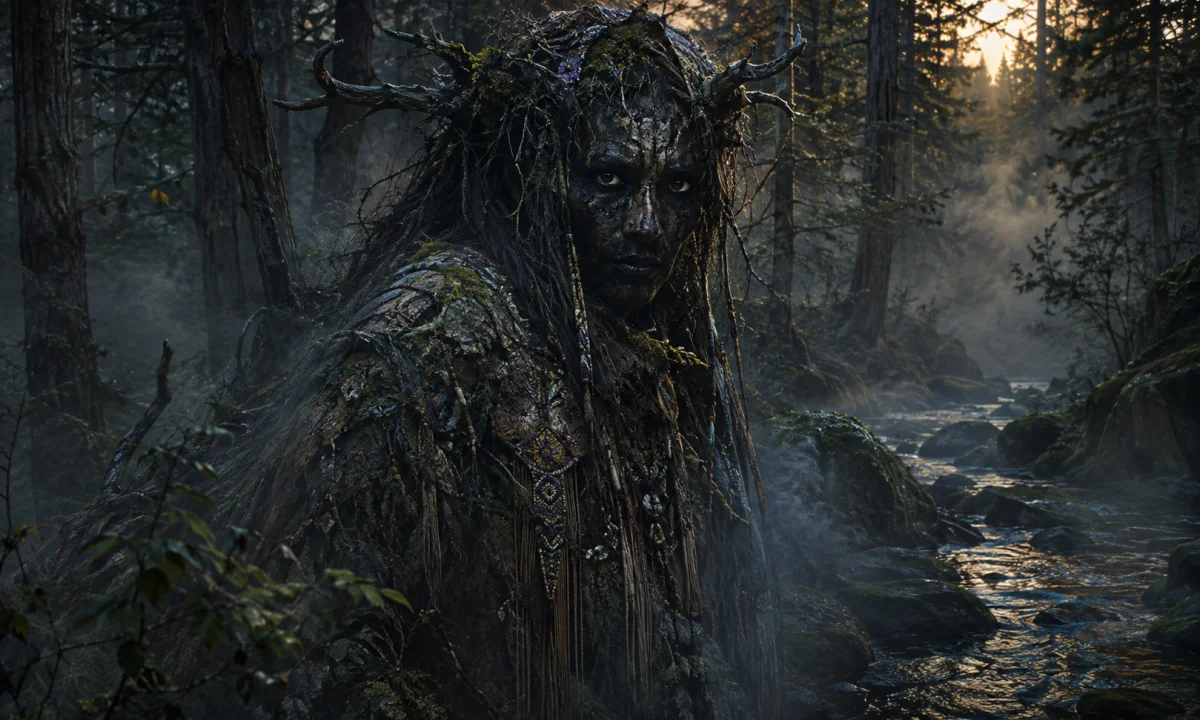
Gunnodoyak is a name recorded in connection with Iroquois mythology, but it is not among the best-known figures in the Haudenosaunee religious or oral traditions. Because surviving references are limited and spellings can vary, the identity of Gunnodoyak is uncertain in the available published record. Care is needed not to treat the name as if it referred to a widely standardized deity, spirit, or hero unless a specific source makes that clear.
Traditional setting
The Iroquois, or more properly the Haudenosaunee, are a confederacy of Indigenous nations with rich and diverse oral traditions. Their stories include culture heroes, spirit beings, clan-based traditions, ceremonial beings, and moral narratives that explain the ordering of the world. These traditions were transmitted orally long before they were written down, and many names appear only in later recordings by ethnographers, missionaries, translators, or collectors of folklore.
In that context, a figure such as Gunnodoyak may preserve a local, regional, or clan-specific tradition, or it may reflect a spelling recorded by one collector from spoken forms that do not map neatly onto standardized modern orthographies. For this reason, the surviving written record should be treated as incomplete. Where the identity is unclear, it is better to say so than to force Gunnodoyak into a category that the sources do not firmly support.
Name and identity
The name Gunnodoyak is not widely standardized in modern references, and there may be variation in spelling, pronunciation, and interpretation. That kind of variation is common in transcribed Indigenous names, especially when the original pronunciation was rendered by non-native listeners using English spelling conventions. Without a secure linguistic analysis or a clear traditional context, the meaning of the name remains uncertain.
Because of that uncertainty, Gunnodoyak should not automatically be described as a god, a monster, an ancestral hero, or a ceremonial being. Different sources on Indigenous mythologies sometimes use broad or inconsistent labels, but those labels can obscure the actual traditional role of a figure. If Gunnodoyak appears in a specific narrative, that narrative may provide more clues than the name alone. In the absence of such context, the safest description is simply that Gunnodoyak is a named figure associated with Iroquois mythic tradition, with details insufficiently preserved in commonly accessible sources.
Surviving traditions and the problem of the sources
Haudenosaunee stories were often recorded by outsiders who did not always understand the cultural setting, ceremonial restrictions, or language nuances involved. Some names were written phonetically; others were translated loosely; still others were altered to fit published spelling systems. As a result, a name can survive in print while the surrounding story has been lost, shortened, or distorted.
That appears to be the case with Gunnodoyak, whose documentation is sparse. When a figure is attested only briefly, it is impossible to reconstruct a full mythology responsibly. A careful treatment must avoid assigning attributes such as shape-shifting, weather control, underworld residence, or heroic combat unless those traits are actually supported by a dependable traditional account. In the case of Gunnodoyak, such details are not securely established in the accessible record.
Limited documentation also makes it difficult to know whether Gunnodoyak was understood as:
- a spirit being
- a local mythic personage
- a name attached to one episode in a larger cycle
- or a transcription variant of another, better-documented figure
Scholars of Indigenous oral traditions often emphasize that the absence of evidence is not the same as evidence of absence. A name can be culturally meaningful even when modern readers can no longer recover all of its associations. Gunnodoyak should therefore be approached as a potentially important but poorly documented tradition rather than a fully described character.
Iroquois mythological context
Haudenosaunee cosmology and storytelling include many interconnected themes: the Sky World, the creation of the earth, the significance of animals, the balance between useful and dangerous forces, and the moral importance of reciprocity and community responsibility. Stories often serve not only to entertain but also to explain ceremonies, seasonal change, hunting practices, social relationships, and the proper conduct expected within the community.
Within that broader world, a name like Gunnodoyak could belong to a wide range of narrative types. It might be tied to an etiological story explaining a natural feature, a warning tale about social behavior, or a remembered being whose role was local rather than pan-tribal. The Haudenosaunee tradition is not a single fixed book of myths; it is a living set of related traditions maintained across nations and communities. That diversity makes oversimplification especially risky.
It is also important to distinguish between traditional Haudenosaunee stories and later “mythological” summaries written for general audiences. Those summaries sometimes compress complex figures into a few familiar categories, but Indigenous narratives often resist such neat classification. For Gunnodoyak, the available record does not justify a more specific label than “a figure named in Iroquois tradition.”
Appearance and powers
No reliable, widely agreed description of Gunnodoyak’s appearance is securely established in the commonly available material. There is no solid basis for describing the being as human, animal, monstrous, divine, or hybrid without depending on a particular source that may not be representative of the original tradition.
The same caution applies to powers or functions. In Iroquois mythology, many beings are associated with specific roles such as teaching, challenging humans, protecting parts of the world, or embodying particular natural forces. Yet Gunnodoyak’s role is not sufficiently preserved for confident reconstruction. Any claim that Gunnodoyak controls thunder, brings disease, guards a threshold, or acts as a trickster would be speculative unless backed by a direct traditional account.
When a figure is so poorly documented, the most responsible interpretation is to leave room for uncertainty. Gunnodoyak may have had a distinct role in the storytelling tradition from which the name came, but modern readers should avoid filling in the gaps with stereotypes drawn from other Native American mythic beings.
Stories and narrative associations
There is no widely known cycle of stories about Gunnodoyak that can be reconstructed with confidence from the accessible record. If the name appears in a tale, hymn, or oral account, that source is crucial for determining the figure’s identity. Without it, narrative reconstruction becomes guesswork.
This uncertainty matters because Indigenous stories are often highly specific in their social and ceremonial context. A single narrative can carry meanings related to seasonality, kinship, the responsibilities of human beings toward the natural world, or the history of a particular community. Removing a figure from that setting can make the story seem more universal than it is. For Gunnodoyak, the lack of a fuller context means that any detailed storyline would be conjectural.
If later writers have mentioned Gunnodoyak only briefly, it is possible that they were summarizing a larger narrative that they did not fully preserve. In such cases, modern readers should distinguish between a documented name and a reconstructed story. The name exists in the record; the story may not survive intact.
Interpretation and cultural significance
Even when a figure is obscure, the survival of a name can still matter. A recorded name may point to local knowledge that was transmitted orally and only partially entered print culture. Gunnodoyak may therefore represent a fragment of a broader tradition that has not yet been fully documented or widely discussed.
From a scholarly perspective, figures like Gunnodoyak highlight several important issues in the study of Indigenous religions and folklore:
- Language loss and transcription problems, which can obscure original meanings.
- Selective recording, since collectors often saved only what interested them.
- Cultural context, which may be missing when names are detached from ceremonial or narrative settings.
- Variation among communities, since the Haudenosaunee nations and clans preserve related but not identical traditions.
Seen in that light, Gunnodoyak is significant not because many details are known, but because the uncertainty itself reflects the limits of the written archive. Respectful treatment means acknowledging those limits rather than pretending they do not exist.
Distinction from similar names and figures
Because many Indigenous names have been transcribed inconsistently, Gunnodoyak should not be casually identified with other figures whose names sound similar. Similarity in spelling does not prove identity. A common error in popular writing is to merge separate beings simply because their names look alike in English transcription.
That caution is especially important in Haudenosaunee traditions, where different communities may preserve distinct versions of a name or tale. A figure recorded in one source may have been misunderstood, mistranscribed, or localized. Gunnodoyak may therefore be distinct from any similarly spelled spirit, monster, or ancestral being in related traditions.
Without a reliable chain of evidence, it is better to keep Gunnodoyak separate from other mythic names rather than create an artificial connection. This is not merely a matter of caution; it is a matter of respecting the integrity of Indigenous oral tradition.
Modern reception
Gunnodoyak does not appear to have a substantial presence in modern popular culture. Unlike more widely known Indigenous mythic figures, the name has not entered mainstream literature, film, games, or commercial storytelling in any prominent way. That relative obscurity is consistent with the limited documentation in the traditional record.
Where modern mentions do occur, they should be examined carefully to determine whether they preserve an actual traditional reference or merely repeat a name without context. In folklore study, a name can circulate in modern lists, encyclopedias, or online compilations long after its story has been lost or shortened. Such repetition can create the impression of certainty where none exists.
If Gunnodoyak is included in modern mythological discussions, it is usually as part of a broader attempt to catalogue Indigenous beings. Those catalogues can be useful as starting points, but they are not substitutes for community-based knowledge or direct traditional testimony. When dealing with a figure so sparsely attested, modern retellings should be treated as secondary material, not as authoritative tradition.
Reading Gunnodoyak responsibly
The best way to understand Gunnodoyak is to accept the limits of the evidence. The name belongs to the sphere of Iroquois mythology, but the surviving record does not securely preserve the figure’s role, appearance, or story in a way that allows confident elaboration. That uncertainty is itself historically important.
For readers and researchers, a responsible approach includes the following principles:
- do not assume a precise identity when the sources are unclear
- do not merge Gunnodoyak with unrelated beings from other Native traditions
- do not invent attributes to make the figure seem more complete
- distinguish between oral tradition, later transcription, and modern speculation
In the study of mythology, some names remain vivid because their stories survive in rich detail. Others, like Gunnodoyak, survive more faintly, as traces of a larger and partially hidden tradition. That faintness does not make the name meaningless. It marks a point where the written record reaches its limit and where traditional knowledge, if still preserved in a community, may hold answers not visible in published sources.