WORLD
WORLD
Japanese mythology
Articles about Japanese mythology within Asia.
Last articles
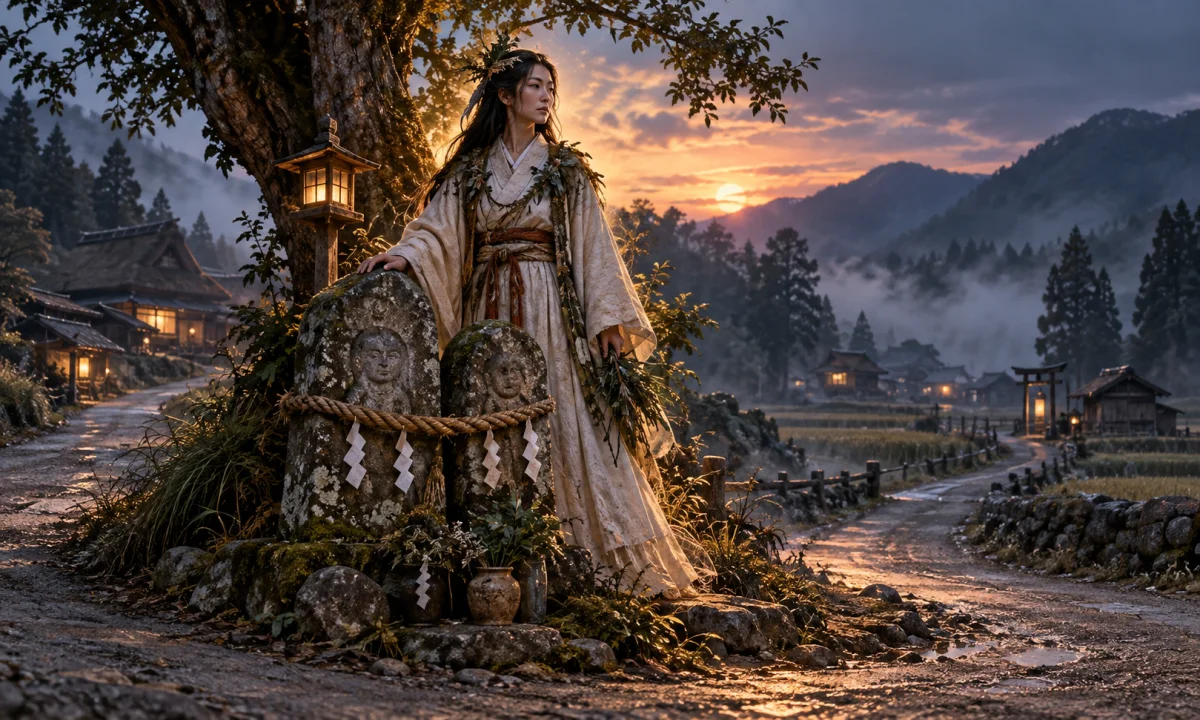
Chimata-no-kami
Chimata-no-kami is a Japanese kami associated with crossroads, branching roads and the boundaries between places. The name is usually understood as “the deity of the forked road” or “the deity at the crossroads.” In myth…
Chup Kamui
Chup Kamui is a name associated with the celestial world in Ainu religious tradition, especially with the moon or a moon-related kamuy. The Ainu are an Indigenous people of northern Japan and the southern Kuril region, w…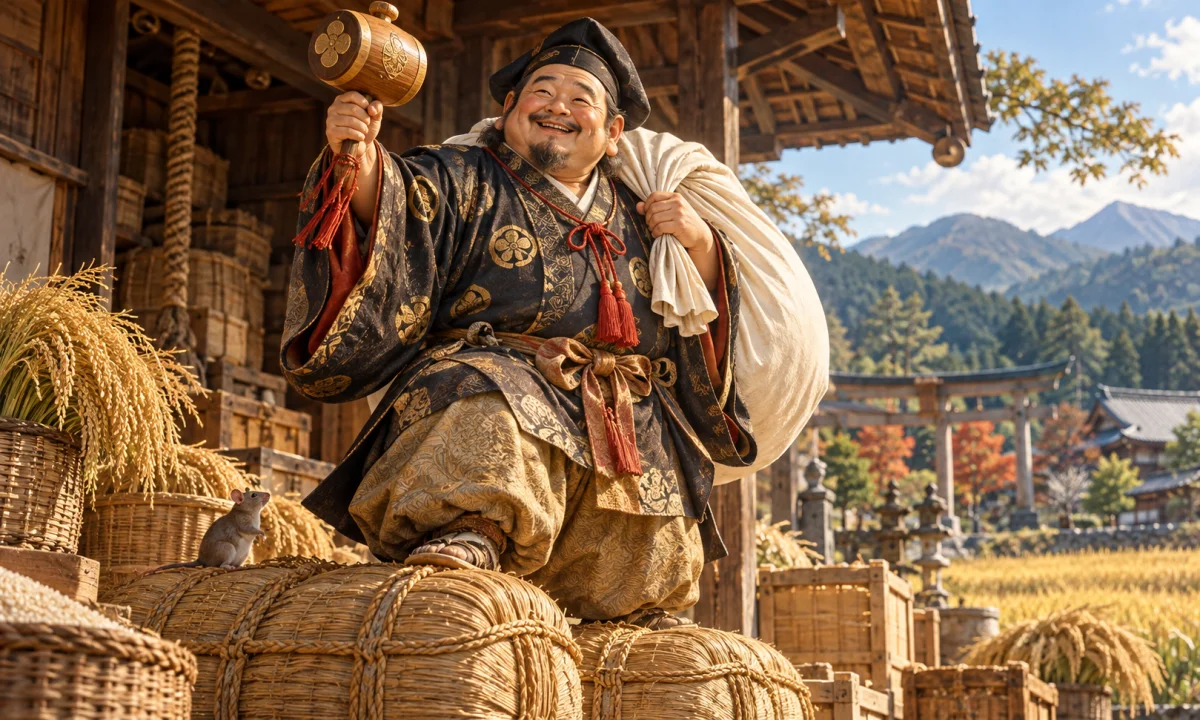
Daikoku
Daikoku, more fully Daikokuten (大黒天), is a Japanese Buddhist deity associated with prosperity, food, agriculture, household abundance and good fortune. He is commonly shown as a broad-faced figure standing on rice bales,…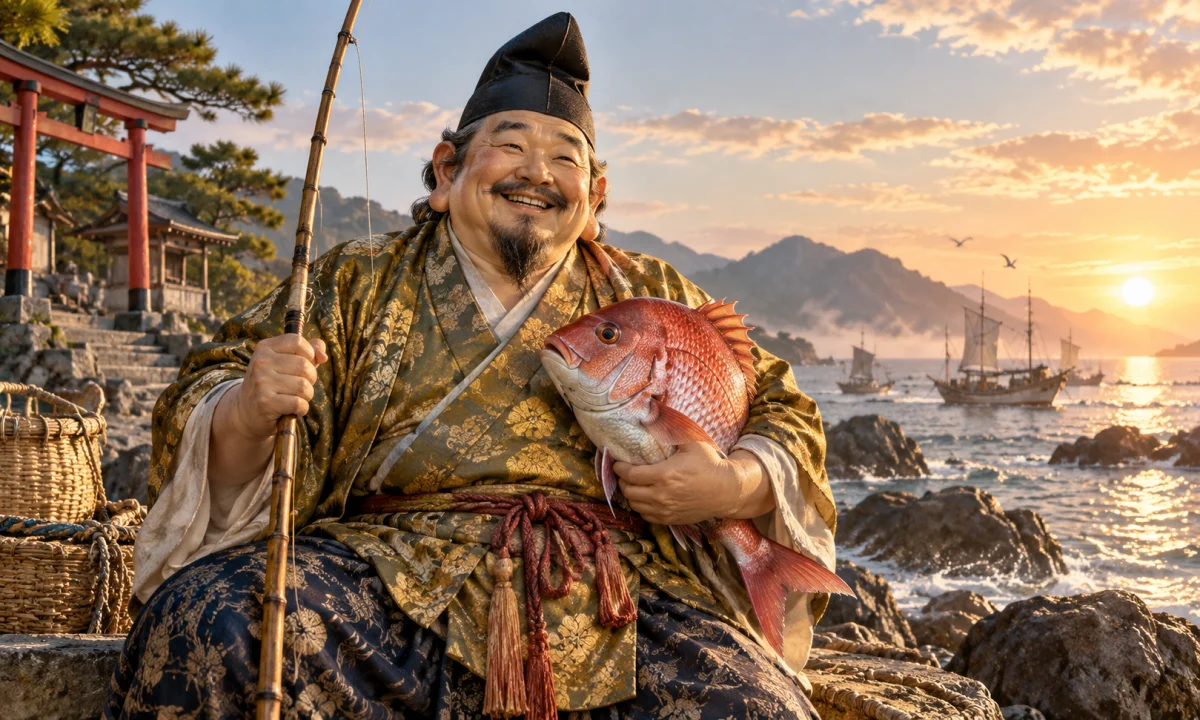
Ebisu
Ebisu is a Japanese kami associated with the sea, fishing, trade, prosperity and good fortune. He is best known as one of the Seven Lucky Gods (Shichifukujin), usually shown smiling, carrying a fishing rod and holding a …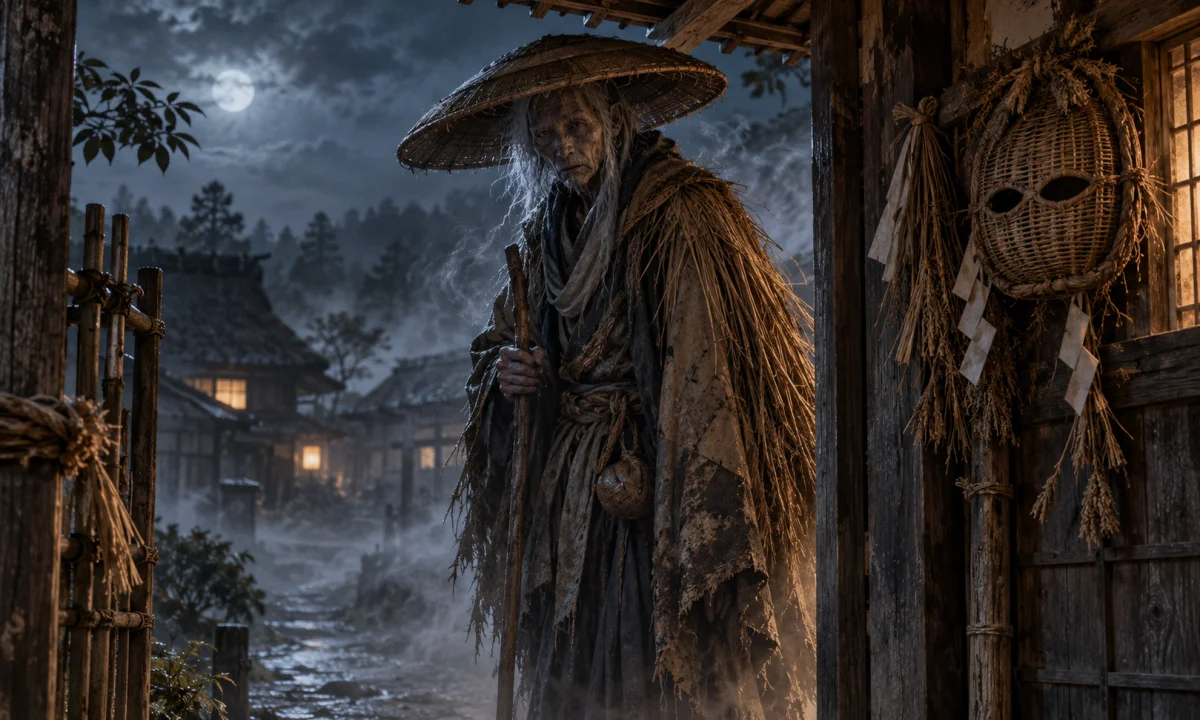
Ekibiogami
Ekibiogami is a Japanese term for a deity or spirit associated with epidemic disease. It is commonly written 疫病神 and may be romanised as ekibyōgami, ekibyougami or, in some English-language contexts, ekibiogami. The name…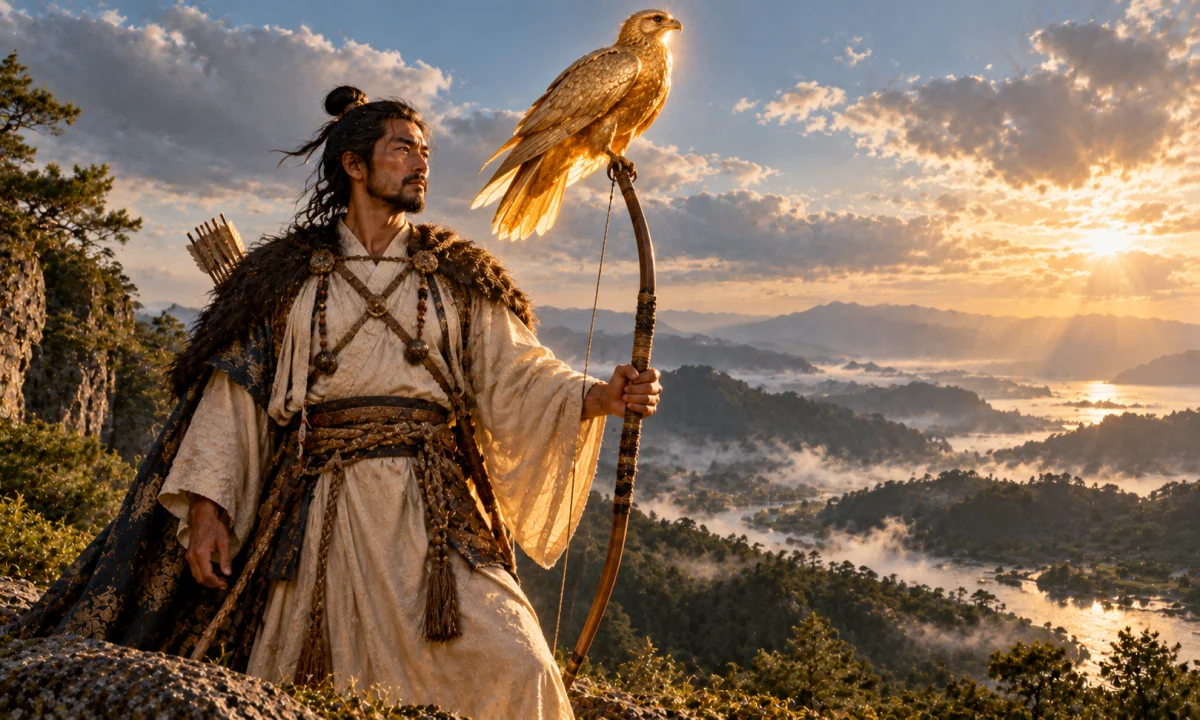
Jimmu-tenno
Jimmu-tennō, also written Emperor Jimmu or Jinmu-tennō, is presented in Japanese tradition as the first emperor of Japan and the founder of the imperial line. He is a legendary ruler rather than a figure whose historical…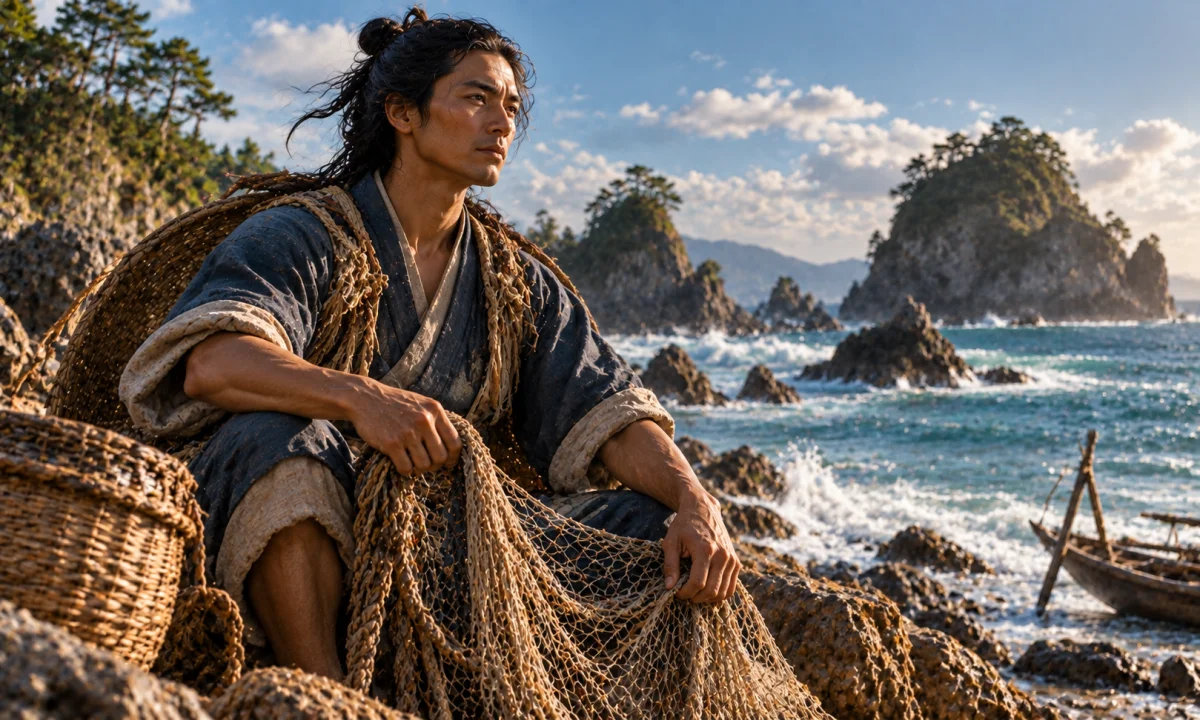
Hoderi
Hoderi is a figure in early Japanese mythology, best known from the Kojiki and Nihon Shoki as the elder brother of Hoori. He is associated with the sea, fishing, and the inherited “luck” of the ocean. In the central stor…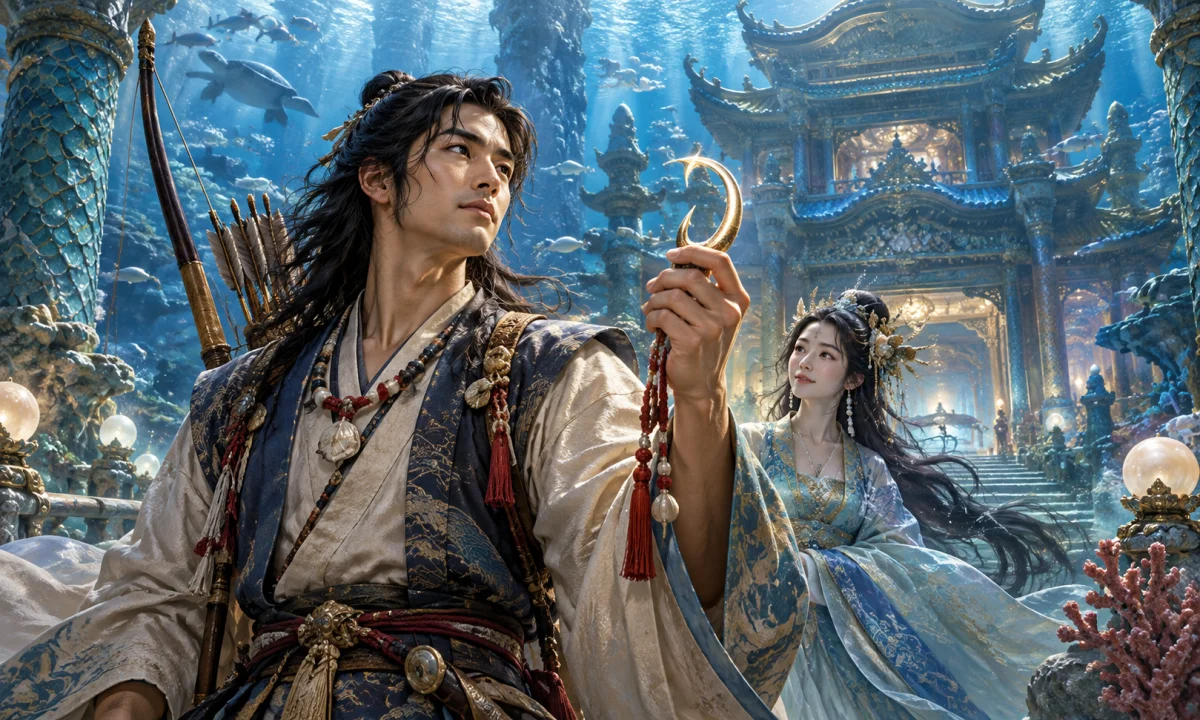
Hoori
Hoori is a figure in Japanese mythology who belongs to the divine genealogy leading to the imperial ancestors. He is best known as the mountain hunter who loses his brother’s fishing hook, enters the underwater palace of…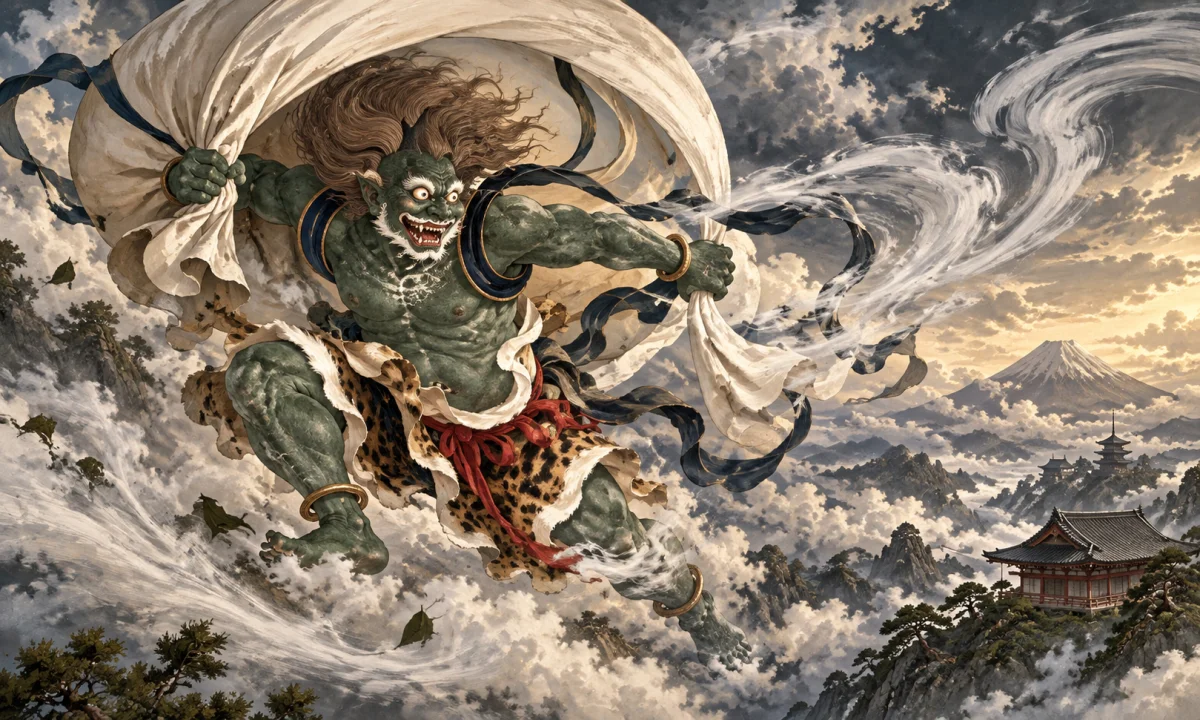
Fujin
Fujin (風神, commonly romanised as Fūjin) is the Japanese deity or divine figure associated with wind. In traditional art he is usually shown as a wild, muscular, often demon-like being carrying a large bag from which the …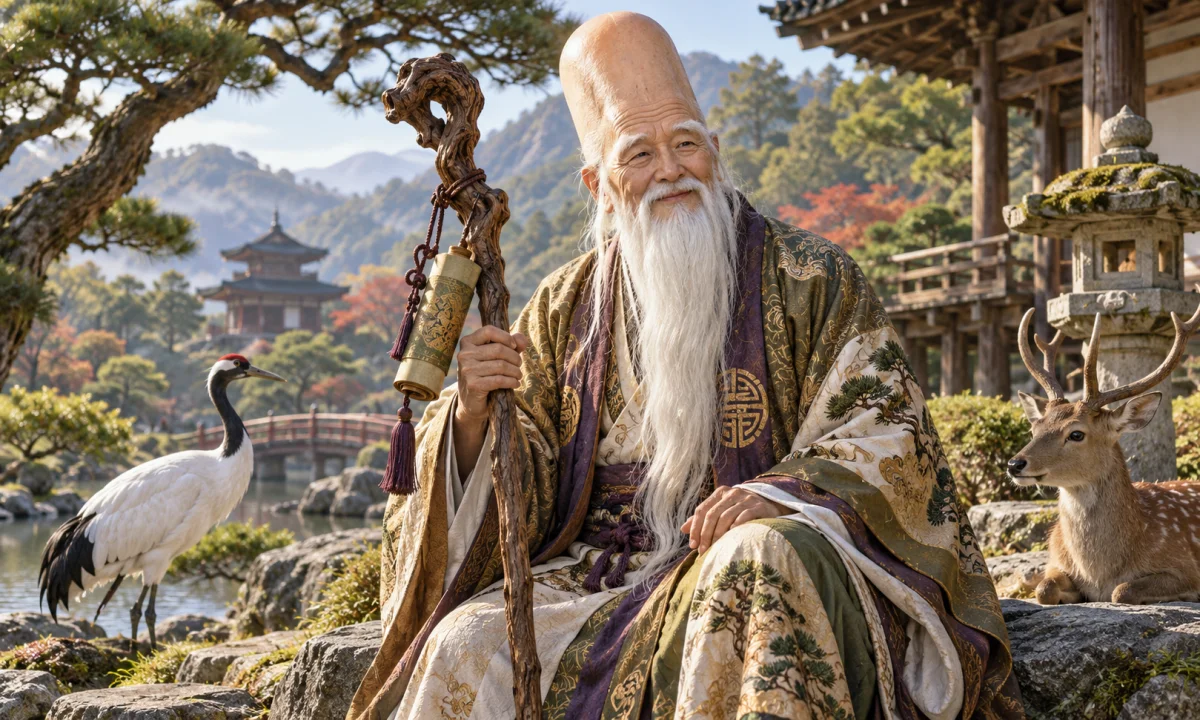
Fukurokuju
Fukurokuju is a Japanese deity of good fortune associated especially with longevity, wisdom and prosperity. He is best known as one of the Seven Lucky Gods (Shichifukujin), a popular group of benevolent figures honoured …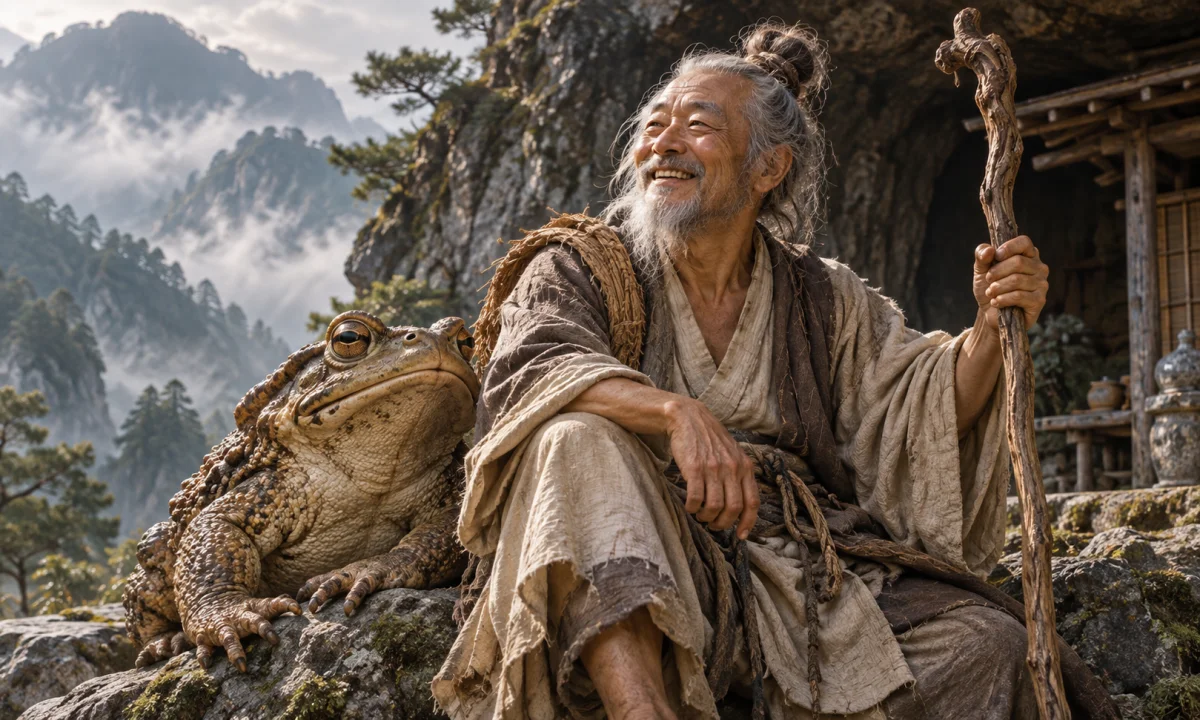
Gama-sennin
Gama-sennin (Japanese: 蝦蟇仙人, “Toad Immortal” or “Toad Hermit”) is a legendary Daoist-style sage associated with toads, supernatural longevity and arcane powers. Although the figure belongs to Japanese mythology and Japan…