 WORLD
WORLD
Hopi mythology
Articles about Hopi mythology within North America.
Last articles
Ahe’a
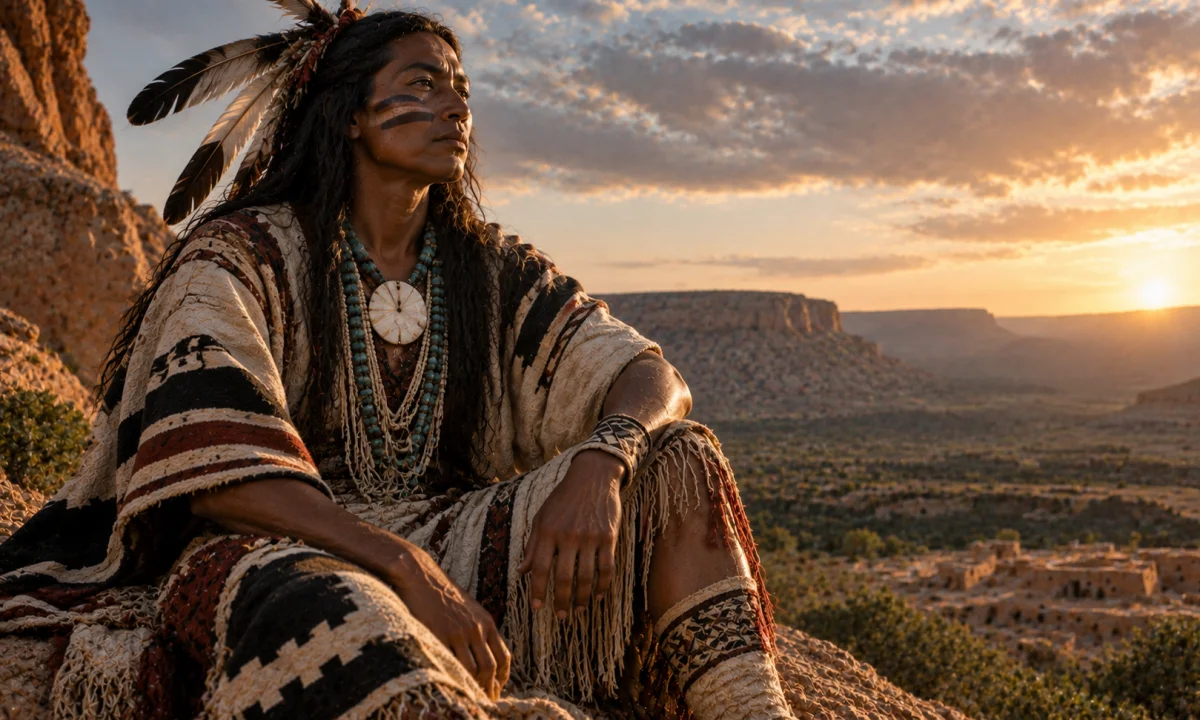
Ahe’a is a name associated in some modern references with Hopi religious tradition, but its identity is not securely established across the surviving documentation of Hopi culture. The spelling appears in several forms, …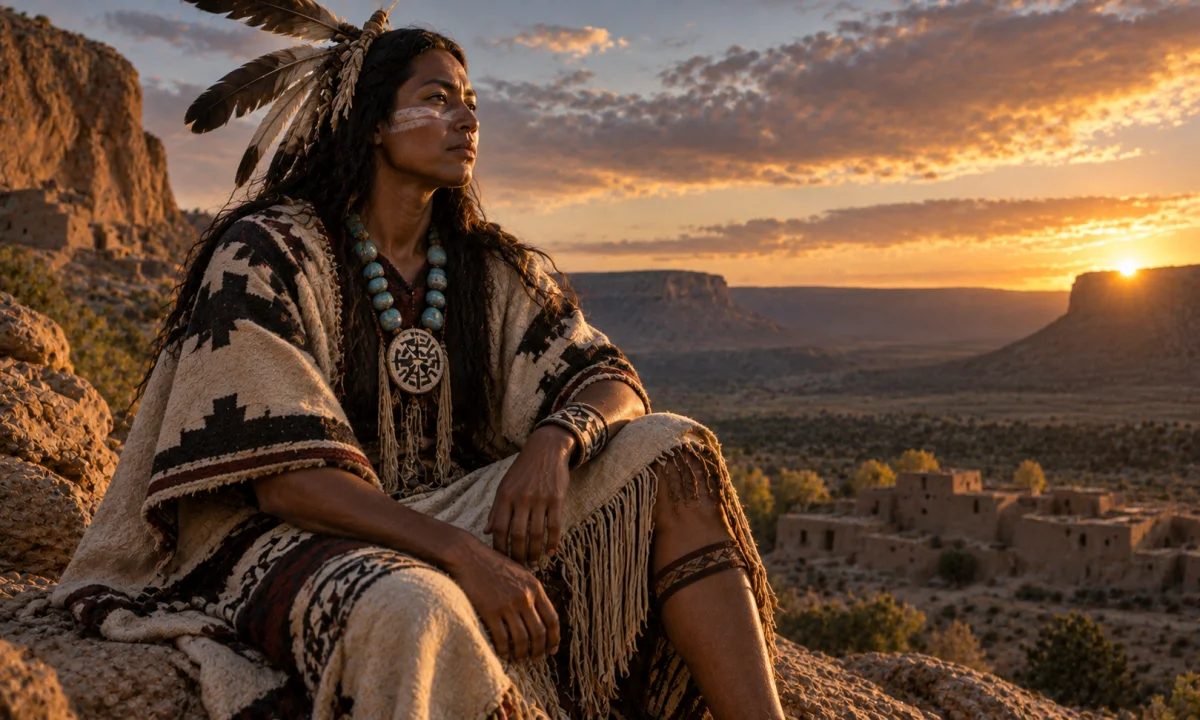
Aholi
Aholi is a katsina figure in Hopi religious tradition, associated especially with the ceremonial life of the Hopi villages in northeastern Arizona. Like other katsinam, Aholi is not simply a character in a fixed storyboo…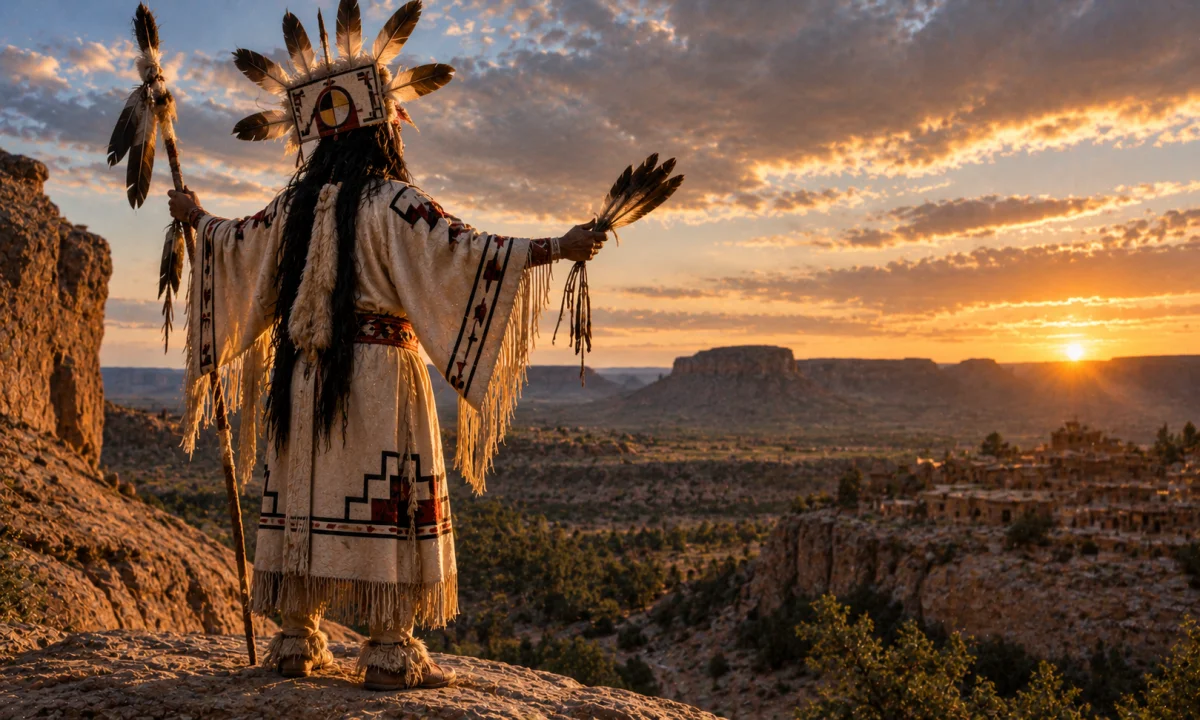
Angak Chin Mana
Angak Chin Mana is a female katsina figure in Hopi religious tradition, usually identified in English as the Long-Hair Maiden or Long-Haired Woman. The name appears in several spellings, including Angak'china, Angak Chin…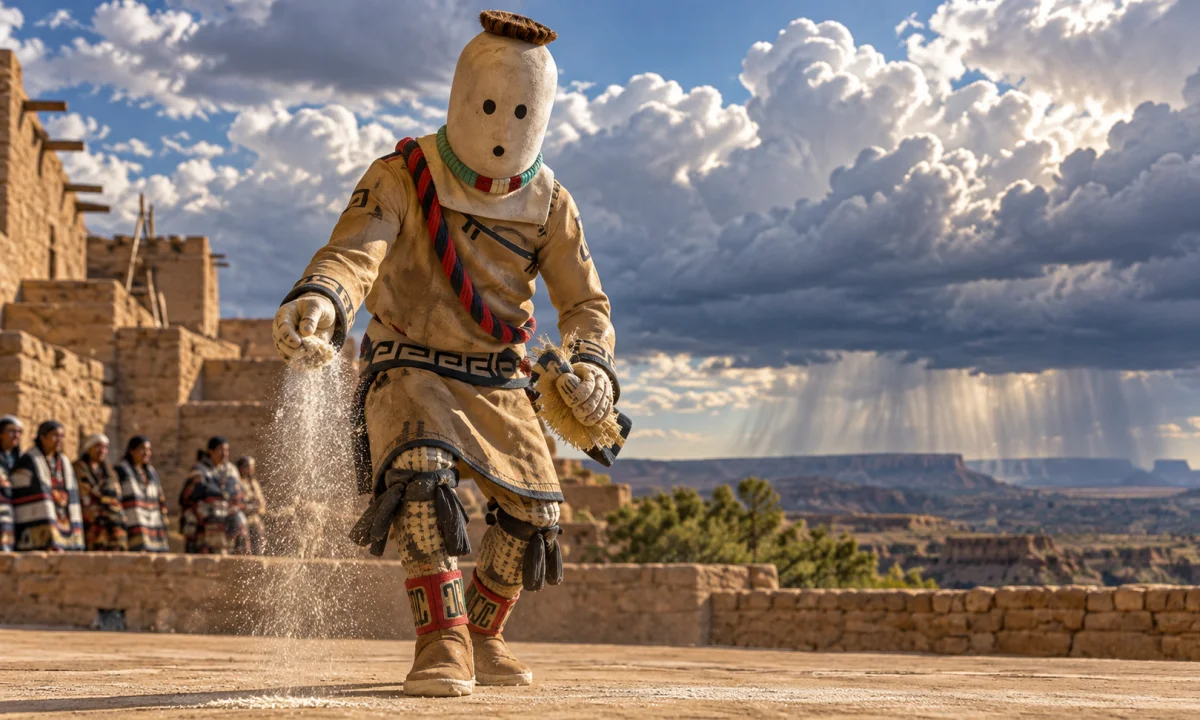
Eototo
Eototo is a prominent katsina in Hopi religious tradition, often described in English-language accounts as a chief or father of the katsinam. The Hopi word katsina refers both to spiritual beings and, in particular conte…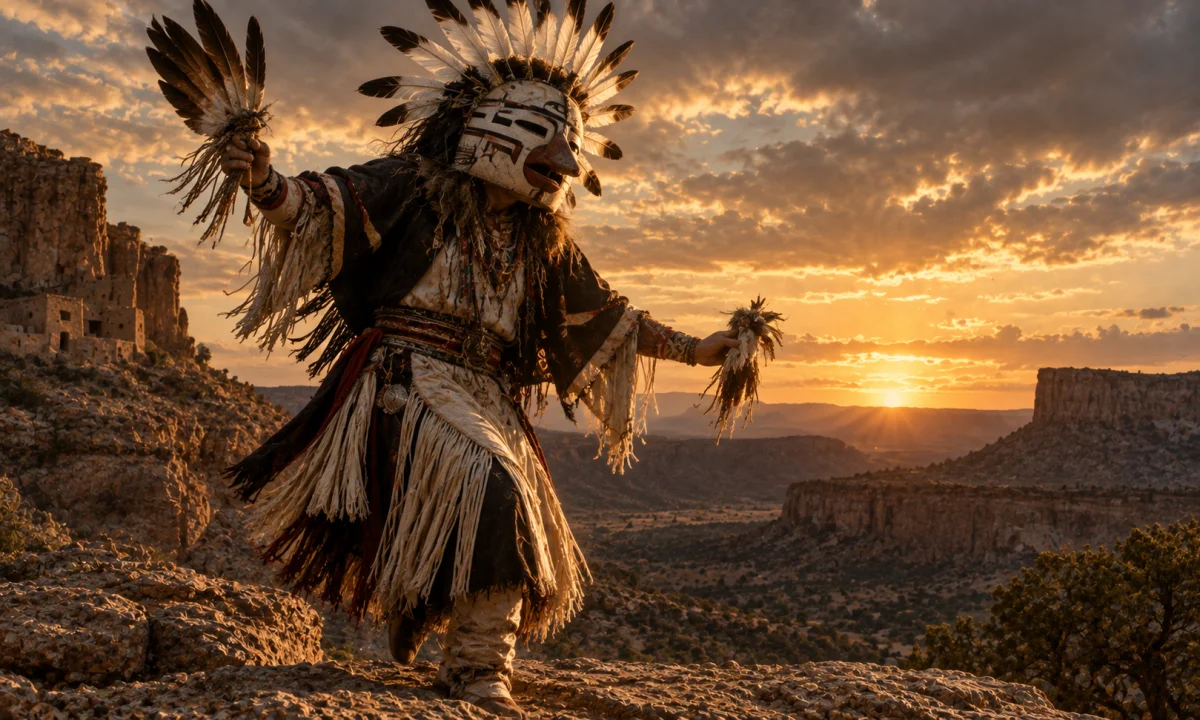
Hototo
Hototo is a name associated with a katsina—often written “kachina” in English—within Hopi religious and ceremonial traditions of northern Arizona. Hototo is not one of the universally standardized figures of Hopi mytholo…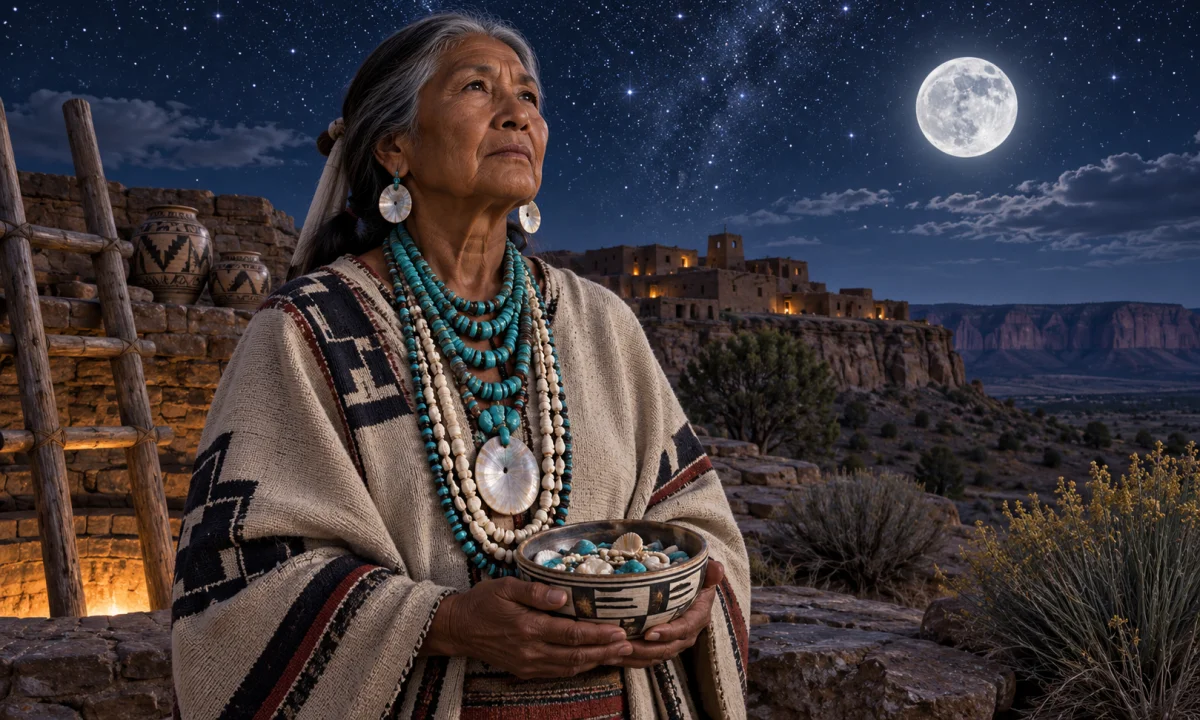
Huruing Wuhti
Huruing Wuhti is a female spiritual being associated with Hopi mythology, although descriptions of her identity and role vary considerably between published accounts. Her name is also written in forms such as Huruing Wuh…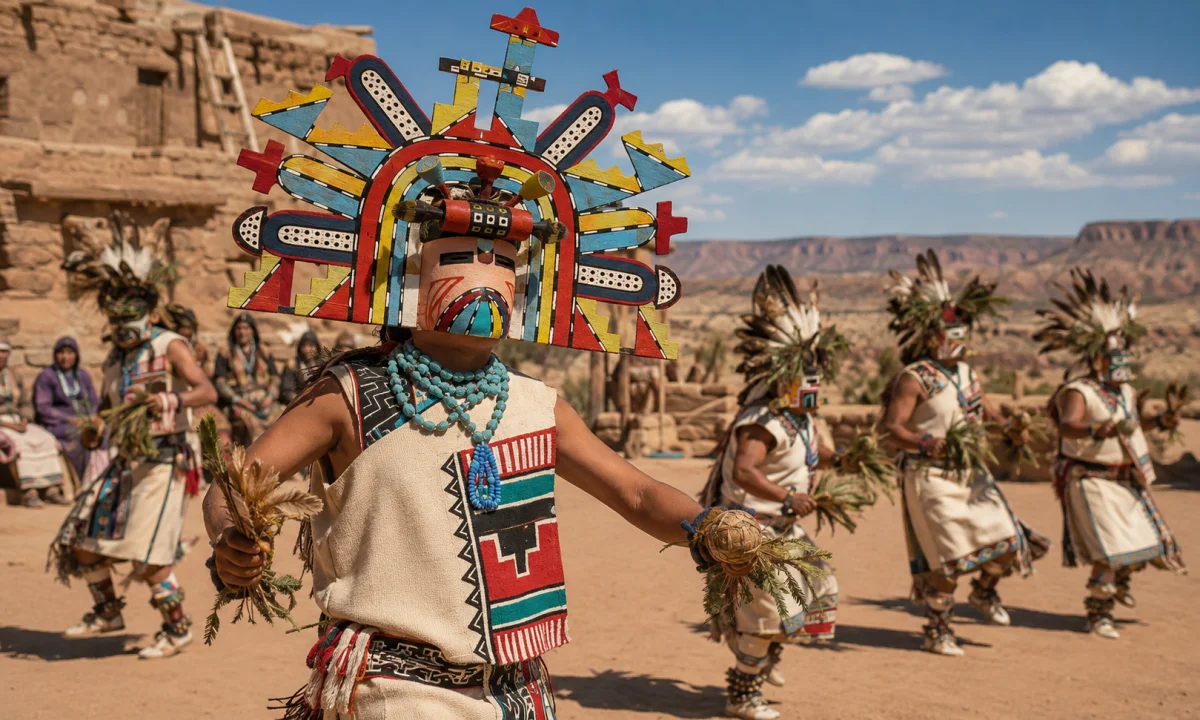
Kachinas
Kachinas, more accurately written katsinam in many Hopi contexts, are sacred spirit beings, ceremonial identities, and masked dancers in the religious traditions of the Hopi people of northeastern Arizona. The English wo…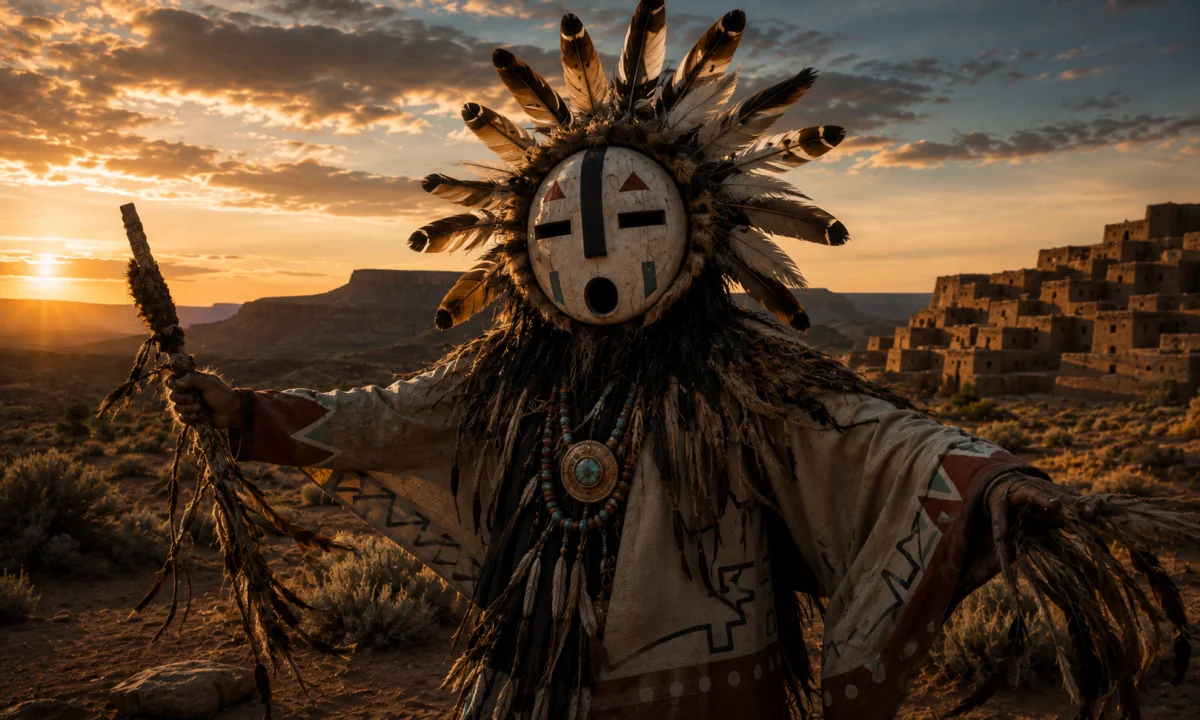
Kokyangwuti
Kokyangwuti, commonly known in English as Spider Grandmother or Spider Woman, is an important female figure in Hopi sacred narrative. She is associated with creation, emergence, wisdom, protection and the guidance of hum…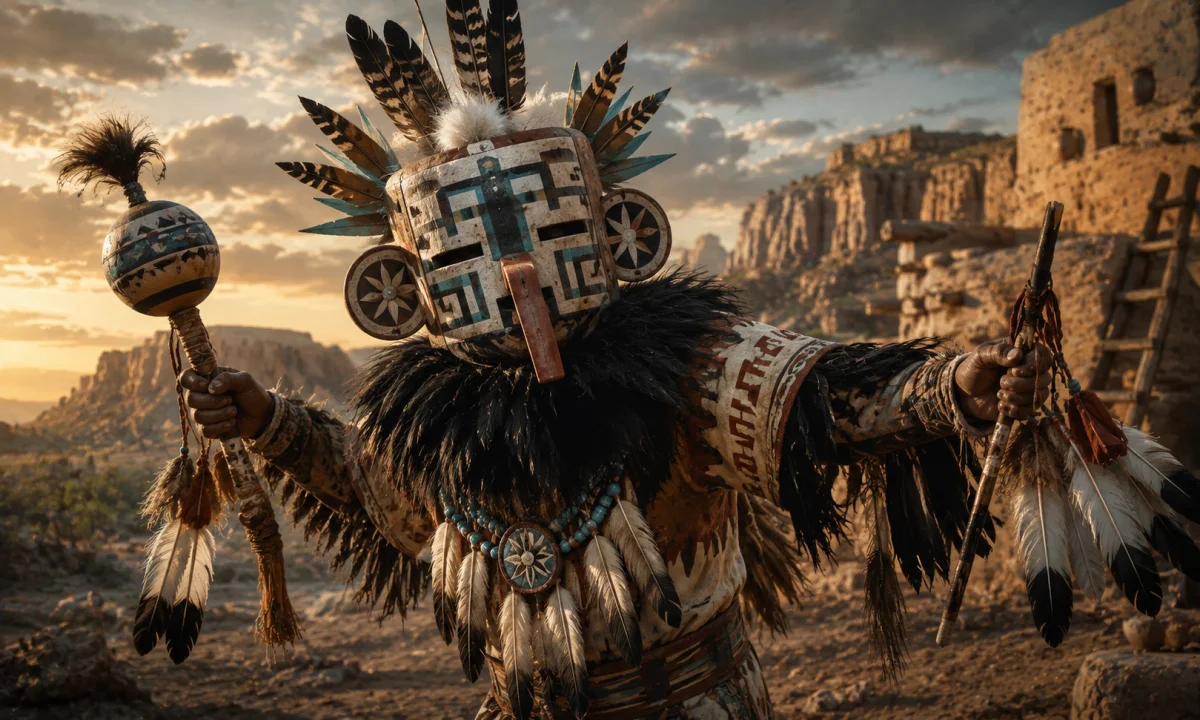
Karwan
Karwan is a name associated in some English-language accounts with Hopi mythology, where it is sometimes described as a warlike spirit or a figure connected with warfare. The identification is not secure, however. Karwan…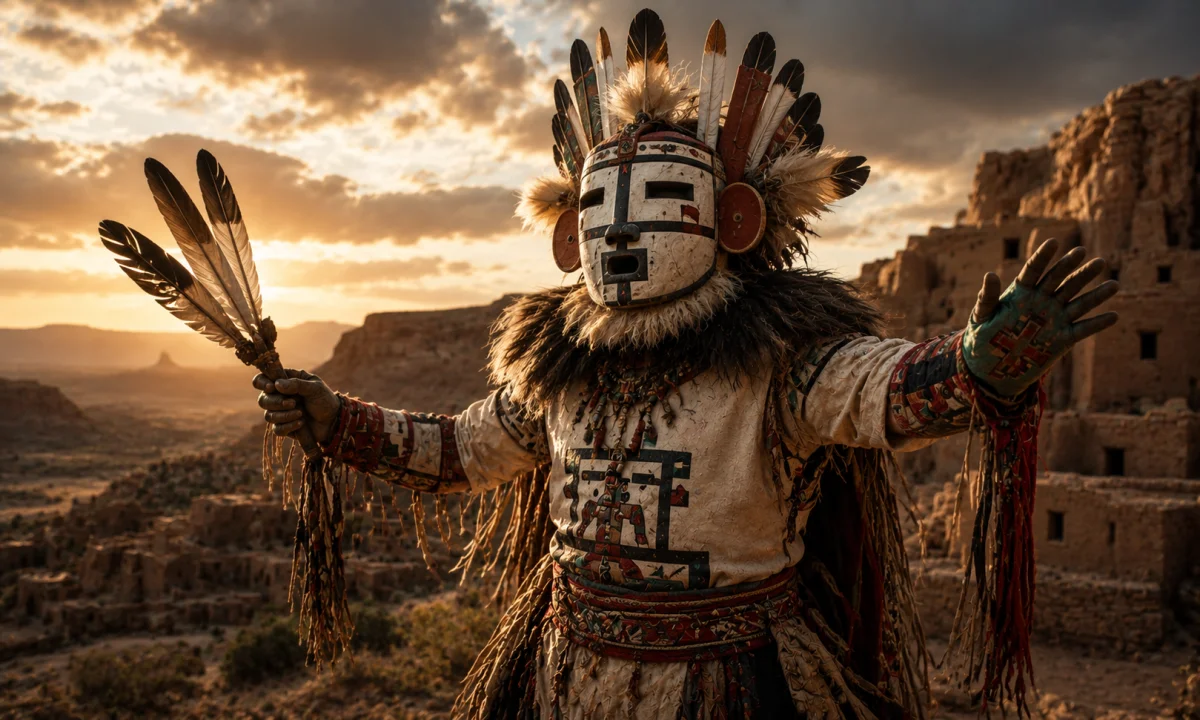
Koshare
Koshare is a sacred clown figure associated with Hopi ceremonial life in northern Arizona. The name is often applied to a clown character or to ritual performers who appear in certain Hopi dances and public ceremonies. K…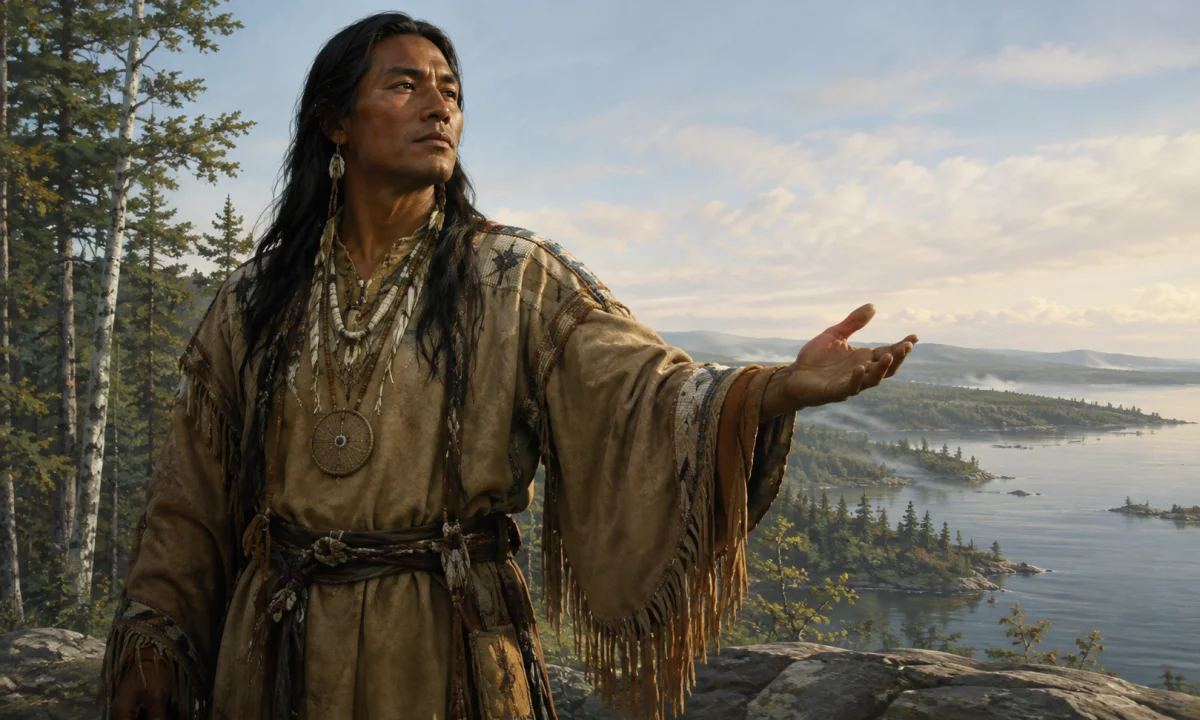
Kloskurbeh
Kloskurbeh is generally identified with Kuloskap, Gluskabe, Glooscap, or related spellings of a major culture hero in Wabanaki Indigenous traditions of northeastern North America. The name is not normally associated with…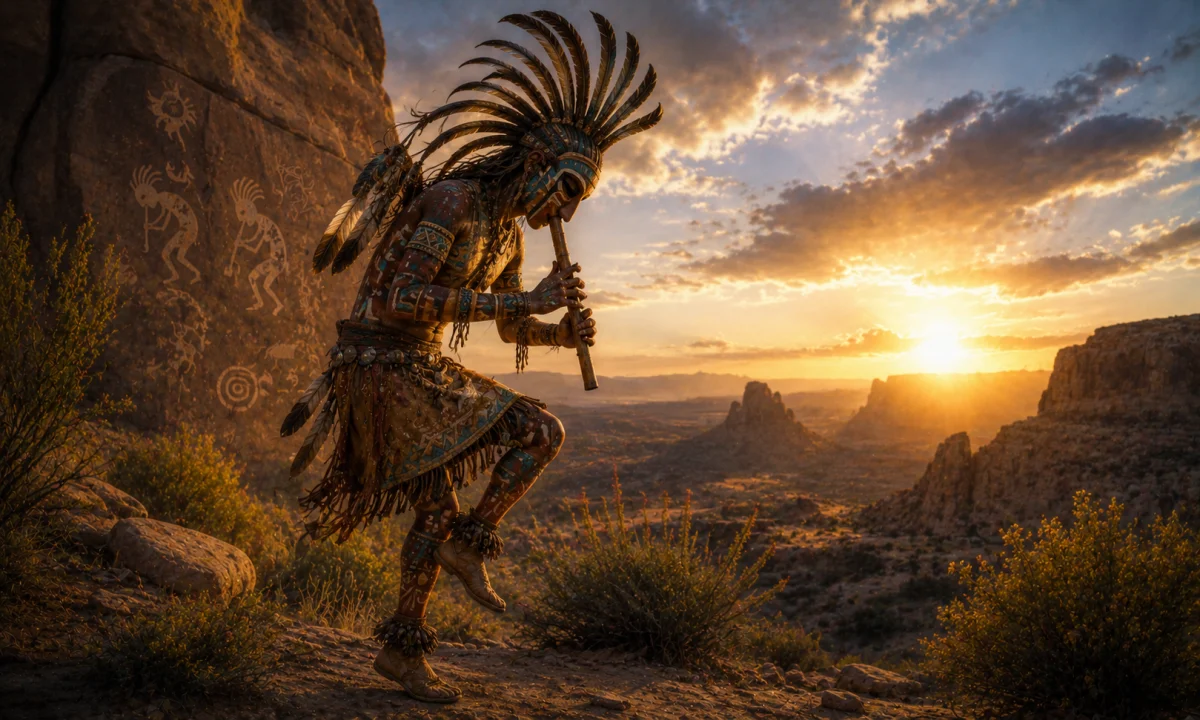
Kokopelli
Kokopelli is the name commonly given to a humpbacked flute player associated with the ancient and modern Indigenous cultures of the American Southwest. He is especially linked in popular accounts with the Hopi, although …Hopi mythology: myths, traditions and legends
Hopi mythology encompasses the sacred narratives, emergence traditions, ancestral histories, spiritual beings and ceremonial concepts of the Hopi people, whose communities are centred on the mesas of northeastern Arizona in the southwestern United States. Hopi belongs to the Uto-Aztecan language family, and Hopi religious traditions developed within a distinctive Pueblo cultural setting shaped by dry farming, clan relationships, ceremonial societies and an enduring connection with particular landscapes. The term mythology should be used carefully because Hopi ceremonial religion is a living tradition rather than a vanished body of fictional stories. In academic usage, myth can refer to a culturally significant sacred narrative without implying falsehood. Many Hopi teachings are also not intended for unrestricted public circulation: knowledge may belong to particular clans, ceremonial societies, families or stages of initiation, and published accounts represent only part of a much larger religious world.
There is no single universally authoritative Hopi creation narrative or fixed pantheon. Stories differ among villages, clans and narrators, and some material recorded by outsiders was translated into English under circumstances that obscured local distinctions. Publicly available traditions often describe humanity passing through earlier worlds before emerging into the present one, while beings such as Tawa, Spider Woman, Maasaw and the katsinam occupy important but not necessarily identical roles across accounts. Hopi sacred tradition is therefore best understood through relationships among people, land, rain, corn, ancestors and ceremonial responsibility rather than as a catalogue of gods and monsters.
The Hopi cultural setting
Hopi communities are historically associated with villages on and around First, Second and Third Mesa in northeastern Arizona. Their ancestors participated in the wider Pueblo cultural world of the American Southwest, where farming communities developed complex ceremonial, architectural and social traditions over many centuries.
Modern archaeological terms such as Ancestral Pueblo or Ancestral Puebloan describe ancient populations of the region, but archaeological cultures cannot simply be equated with one modern Indigenous nation. Hopi oral traditions preserve relationships with ancestral places extending across a broad landscape, while archaeology provides material evidence for settlement, migration, agriculture and ceremonial architecture.
Hopi identity is also organised through clans whose histories, migrations and ritual responsibilities can differ. This helps explain why no single published myth should be treated as the complete Hopi account of origins.
Oral tradition and restricted knowledge
Hopi sacred knowledge was transmitted primarily through oral instruction, ceremonial performance, songs and clan histories rather than through a single written scripture.
Some stories may be told only during particular seasons. Other knowledge is associated with initiated members of ceremonial societies and is not traditionally available to everyone.
This creates an important limitation for outside descriptions of Hopi mythology. Ethnographers, missionaries and collectors recorded substantial material from the late nineteenth and twentieth centuries, but what they published depended on individual informants, translation choices and what those individuals considered appropriate to share.
Public accounts should therefore not be treated as evidence that no additional or differing traditions exist.
The succession of worlds
One of the most widely known features of Hopi cosmology is the idea that humanity has inhabited a sequence of worlds. Publicly recorded versions commonly describe previous worlds that were destroyed or abandoned after people departed from proper ways of living.
Human beings eventually emerge into the present world, where they receive responsibilities concerning how they should live and maintain relationships with the sacred order.
Popular accounts frequently number the present era as the Fourth World, although details of earlier worlds and the events ending them vary among sources.
The sequence should not be treated as a rigid chronology comparable to modern geological history. It communicates religious ideas concerning moral responsibility, transformation and the consequences of imbalance.
Emergence into the present world
Hopi origin traditions often describe humanity as emerging upward from an earlier world rather than being created once in its present environment.
The passage between worlds may be associated with an opening in the earth and with the guidance of powerful spiritual beings. Accounts differ regarding who assists humanity and precisely how the emergence takes place.
In Pueblo religious terminology, the word sipapu is widely used for an opening symbolically associated with emergence, especially in ceremonial architecture. Hopi terminology and interpretations should not be assumed identical to those of every other Pueblo people.
Emergence establishes the present world as a place of responsibility rather than an effortless paradise. Human survival depends upon correct relationships with land, community and spiritual powers.
Tawa and the sun
Tawa is an important solar being in Hopi religious tradition and is frequently described in English as the Sun Spirit or Sun deity.
Publicly recorded accounts connect Tawa with cosmic order and, in some versions, with the formation or direction of worlds and living beings.
The sun has obvious significance in an agricultural society dependent upon seasonal cycles, but Tawa should not be reduced to a generic sun god comparable to solar deities from unrelated traditions.
Descriptions of Tawa's relationship with other beings vary, and elaborate family trees assembled from different published narratives may create a uniform system that does not exist in Hopi practice.
Sotuknang and the ordering of worlds
Sotuknang appears prominently in some published Hopi creation traditions as a powerful being acting in relation to Tawa and participating in the organisation of successive worlds.
Accounts may credit Sotuknang with helping establish cosmic order or guiding transitions between worlds. However, the prominence of this figure varies substantially between published sources.
Some modern presentations rely heavily on twentieth-century retellings and then treat their structure as a universal Hopi theology. That approach should be avoided. Sotuknang belongs to genuine recorded tradition, but the details of his role should remain tied to the particular versions in which they occur.
Spider Woman
Spider Woman is an important female sacred figure in publicly recorded Hopi traditions. She may appear as a helper, protector, teacher or participant in the origins and migrations of humanity.
Different Southwestern Indigenous nations also preserve important traditions involving spider-associated female beings. These similarities should not lead to the assumption that every Spider Woman tradition belongs to one universal Native American goddess.
Within Hopi narratives, her role depends upon the particular story. Modern popular spirituality sometimes removes Spider Woman from these cultural contexts and turns her into a generic symbol of creativity or the web of life. Such interpretations should be distinguished from Hopi religious tradition.
Maasaw and the present world
Maasaw, whose name appears in several English spellings, occupies an especially important place in Hopi traditions concerning the present world, land and human responsibility.
Public accounts often portray Maasaw as a powerful being encountered after emergence or during migration. He may be connected with the land, death, fire and the conditions under which people are permitted to live in the present world.
Rather than offering humanity effortless abundance, Maasaw is associated with a difficult way of life requiring labour, humility and proper conduct.
He is sometimes labelled a god of death, but this description is too narrow. His significance extends into stewardship, territory and the moral conditions of life.
Migration traditions
Migration occupies a central position in many Hopi clan histories. Traditions describe ancestors travelling through extensive regions before reaching the mesas where Hopi villages became established.
These narratives are sacred histories as well as accounts of identity. Particular clans may preserve relationships with specific routes, places, events and ritual responsibilities.
Archaeological evidence documents major population movements throughout the ancient Southwest, but an archaeological migration cannot automatically be identified with a particular oral narrative without supporting evidence.
Oral tradition and archaeology provide different forms of knowledge that can sometimes illuminate one another without being treated as interchangeable.
Corn and the conditions of life
Corn is fundamental to Hopi subsistence, ceremonial life and cultural identity. Growing maize in an arid environment requires specialised knowledge of soil, moisture, seed varieties and seasonal conditions.
Hopi traditions connect corn with human life, responsibility and the obligations accepted by communities living in the present world. Corn is not simply an agricultural commodity but part of a network linking people to land and sacred order.
Different colours and varieties of corn may possess ceremonial as well as practical significance.
Modern summaries sometimes reduce Hopi religion to a fertility cult because of the importance of corn and rain. This overlooks the broader ethical, social and ancestral dimensions of agricultural practice.
Rain and ceremonial responsibility
Rain is an essential concern in the dry environment of the Hopi mesas. Ceremonies associated with clouds, moisture and agricultural renewal therefore occupy a major place in Hopi religious life.
Religious action is not simply an attempt to control weather mechanically. Prayer, offerings, songs and ceremonial performance express reciprocal relationships among humans and the powers responsible for sustaining life.
Rain also connects distant landscapes: clouds form over mountains, water enters the soil and crops support communities. Sacred geography consequently extends far beyond the immediate village.
Katsinam
The katsinam, singular katsina, form one of the most important categories of spiritual beings in Hopi ceremonial religion. The English spelling kachina became widespread through older anthropological writing, but katsina more closely reflects Hopi usage.
Katsinam are associated with rain, clouds, ancestors, animals, plants, places and numerous other aspects of the sacred world. They should not simply be described as gods.
During particular ceremonial periods, initiated men embody katsinam through masked performance. Within the religious context, these dancers are not merely actors wearing costumes to represent imaginary characters. Ceremonial identity, community participation and spiritual presence are closely interconnected.
The number and identities of katsinam are extensive, and knowledge about them differs according to community and ritual status.
Katsina dolls
Carved figures commonly called katsina dolls or kachina dolls are among the best-known forms of Hopi art outside the community. Traditionally, such carvings can be given to children as a means of learning to recognise katsinam and their characteristics.
They are not idols in the sense of objects worshipped as gods. Their educational and ceremonial context is distinct from the masked performances through which katsinam appear publicly.
The commercial collection of katsina carvings has also encouraged outsiders to treat the tradition as a fixed catalogue of colourful supernatural characters. In reality, the religious significance of katsinam is embedded in ceremonies, songs, kinship and seasonal cycles.
Ceremonial cycles
Hopi ceremonial life follows seasonal cycles involving numerous societies, dances and ritual obligations. The precise calendar and details vary among villages.
Publicly known ceremonies include periods associated with the arrival, presence and departure of katsinam, as well as rites connected with agricultural renewal and community wellbeing.
Some ceremonies are open to visitors in limited circumstances, while others are restricted. Public visibility should not be confused with permission to reproduce sacred details or imagery outside their cultural setting.
Powamuya
Powamuya, commonly known in English as the Bean Dance ceremony, occurs during the Hopi ceremonial cycle and is associated with purification, growth, initiation and the presence of katsinam.
The growth of plants during the winter ceremonial period carries an obvious connection with renewal and the future agricultural season.
However, Powamuya should not be described merely as a spring fertility festival. Its significance includes social instruction, initiation and community relationships that cannot be reduced to agricultural symbolism alone.
Niman and the departure of the katsinam
The Niman ceremony is associated with the conclusion of the principal katsina season and the departure of the katsinam from the villages.
It occurs within the agricultural cycle and is linked with prayers for rain and successful crops. Katsina carvings may also be distributed to children in connection with ceremonial education.
The departure of the katsinam does not mean that the spiritual world simply becomes absent. Rather, ceremonial presence follows an ordered seasonal rhythm.
The Snake ceremony
The Hopi Snake ceremony became internationally famous through photographs, travel writing and ethnographic descriptions from the late nineteenth and early twentieth centuries.
It belongs to a larger ceremonial complex associated with prayer, rain and community wellbeing. Live snakes have historically played a ritual role, but sensational descriptions often presented the ceremony primarily as a dangerous spectacle.
That emphasis distorted its religious context. Snakes should not automatically be interpreted as objects of worship, and the ceremony cannot be understood simply through the dramatic handling of animals visible to outsiders.
Clowns and ceremonial correction
Hopi ceremonies may include sacred clown traditions in which performers use humour, exaggeration and socially inappropriate behaviour to teach or criticise.
Comic performances can expose greed, selfishness, imitation, arrogance or violations of proper behaviour.
These figures are not simply entertainers inserted into solemn ceremonies. Humour can itself serve religious and social purposes by showing communities the consequences of imbalance.
The specific identities and roles of ceremonial clowns differ and should not be collapsed into one universal trickster figure.
Coyote traditions
Coyote appears widely in the oral traditions of Indigenous peoples throughout western North America, including Hopi storytelling.
Coyote can be clever, foolish, disruptive, sexually excessive or responsible for unintended consequences. Stories frequently use his behaviour to explore human weaknesses and explain conditions of the world.
Because Coyote traditions are widespread, modern collections sometimes combine episodes from different nations under a single Native American trickster mythology. Hopi Coyote stories should instead be understood within their own storytelling context.
Animals and relationships with the non-human world
Animals appear throughout Hopi oral traditions as beings capable of communication, instruction and participation in sacred events. Birds, snakes, insects and mammals may play important roles in origin and ceremonial narratives.
This does not mean that every species corresponds to a fixed deity or personal spirit guide. Relationships with animals depend upon particular stories, clans and ceremonies.
Modern pan-Indigenous concepts such as universal spirit animals can obscure these culturally specific relationships.
Kivas and ceremonial space
Kivas are important ceremonial structures within Pueblo cultures, including Hopi communities. They provide spaces for religious societies, preparation, instruction and ritual performance.
Architectural forms and ceremonial functions vary through time and among communities. Archaeologists also use the term kiva for certain structures at ancestral Pueblo sites, but the specific religious activities performed in ancient examples cannot always be reconstructed.
Connections with emergence symbolism are particularly significant in Pueblo religious interpretation, although details should be tied to specific traditions rather than generalised across all Pueblo peoples.
Sacred landscape
Hopi sacred geography extends across mountains, springs, trails, ancestral settlements and other places throughout the Southwest. Places associated with clan migrations or ceremonial beings retain meaning through oral history.
The San Francisco Peaks near present-day Flagstaff are especially important within Hopi religious geography and are associated with the katsinam.
Sacred landscapes cannot be understood solely through modern political boundaries. Religious relationships with mountains and waters may extend far beyond reservation lands and remain important in contemporary disputes involving development and environmental management.
Spanish colonisation and missionisation
Spanish colonial expansion reached the Pueblo world in the sixteenth century, bringing Catholic missions, political domination and attempts to suppress Indigenous ceremonies.
Hopi communities resisted aspects of Spanish rule and participated in the wider Pueblo Revolt of 1680. Spanish control over the Hopi mesas was never restored in the same permanent form established elsewhere in the region.
Christian contact nevertheless influenced Hopi history, and later American expansion brought additional missionary activity and governmental pressure.
Traditional religion survived through adaptation, community resistance and the continued performance of ceremonies.
Outside recording and the problem of authority
Anthropologists and writers have published numerous versions of Hopi sacred traditions. These records can be historically valuable, but they differ greatly in reliability and cultural authority.
A particularly influential twentieth-century work, often treated by outsiders as a definitive account of Hopi cosmology, presents a highly organised sequence of worlds and prophecies derived through collaboration with selected Hopi individuals. Its status as a universal representation of Hopi religion has been questioned, and it should not replace the diversity of community traditions.
The absence of a single authorised public scripture means that careful interpretation requires attention to who recorded a narrative, when it was recorded and whether the material was intended for unrestricted circulation.
Prophecy and modern distortion
Hopi traditions concerning proper conduct, future consequences and changes in the world have attracted enormous interest from New Age writers and popular prophecy literature.
Outsider publications frequently combine genuine Hopi themes with claims about global apocalypse, extraterrestrials, lost continents or specific predictions about modern technology. Such claims should not automatically be attributed to Hopi religious authorities.
The so-called Hopi prophecy tradition has been repeatedly removed from its historical and ceremonial contexts and transformed into universal predictions designed for non-Hopi audiences.
Authentic teachings concerning responsibility and imbalance should therefore be distinguished from modern sensational reinterpretations.
Petroglyphs and contested interpretations
Rock art is widespread across the ancestral landscapes of the American Southwest, and some sites retain cultural significance for Hopi communities.
Specific petroglyphs may be connected with clan histories, migration traditions or ceremonial symbolism, but archaeological images do not explain themselves. Their meanings require cultural and historical context.
Popular books sometimes identify particular rock carvings as maps of extraterrestrial visitors or precise predictions of future catastrophes. Such interpretations are modern speculation rather than established Hopi tradition.
Living religion and cultural boundaries
Hopi ceremonial traditions continue within living communities, and many aspects of them remain deliberately protected from public disclosure. Photography, recording or reproduction of ceremonies and sacred imagery may be restricted according to village and community rules.
This protection is especially important because Hopi religion has repeatedly been commercialised by outsiders. Katsina imagery, prophecies and ceremonial symbols have been detached from their cultural settings and marketed as generic Southwestern spirituality.
Respecting the distinction between publicly shared tradition and restricted knowledge is therefore not merely a matter of incomplete historical evidence. It is part of the continuing religious autonomy of Hopi communities, whose sacred narratives remain connected with active ceremonial responsibilities, clan histories and particular places rather than existing solely as material for external mythological collections.