WORLD
WORLD
Kloskurbeh
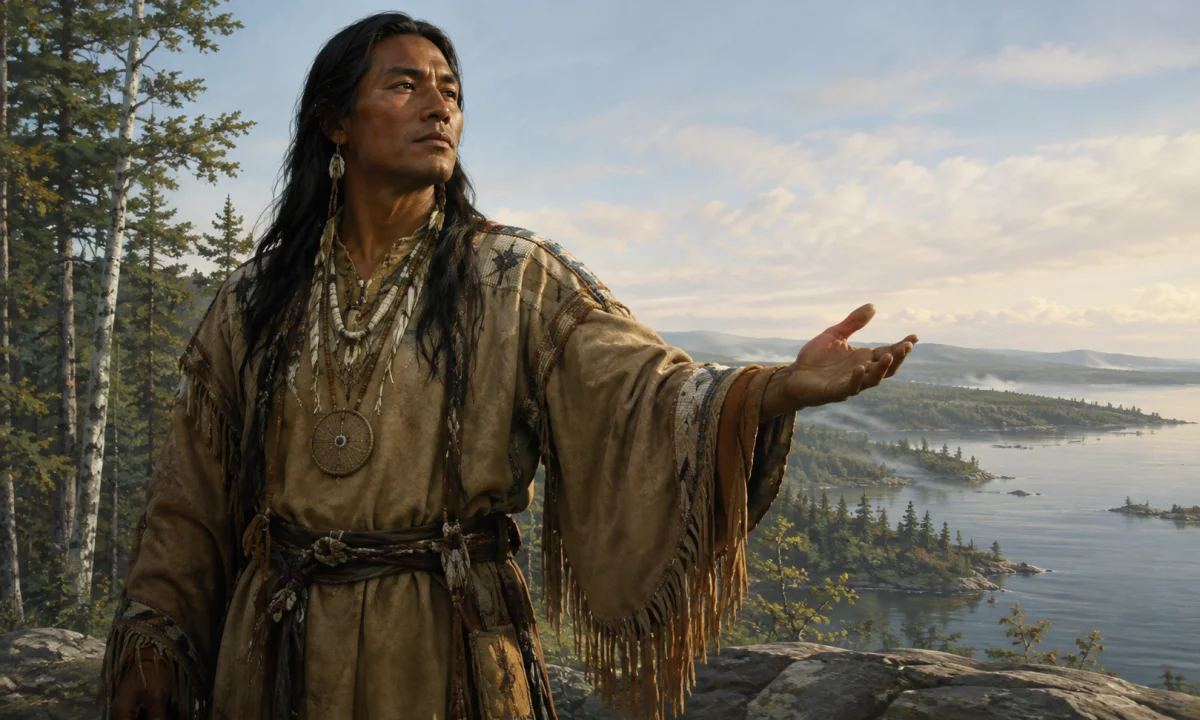
Kloskurbeh is generally identified with Kuloskap, Gluskabe, Glooscap, or related spellings of a major culture hero in Wabanaki Indigenous traditions of northeastern North America. The name is not normally associated with Hopi mythology. Hopi traditions belong to the Southwest, whereas Kloskurbeh belongs to the cultural world of peoples historically connected with the northeastern Woodlands and the Gulf of Maine, including Mi'kmaq, Wolastoqiyik, Passamaquoddy, Penobscot, and other Wabanaki communities. Because the name has been recorded in different languages and spellings, its precise form and its relationship to particular tribal traditions should be treated carefully.
Origins and cultural setting
Kloskurbeh is a culture hero and transformer rather than a figure who fits neatly into the category of a god in the classical European sense. Wabanaki oral traditions describe him as a powerful being who helps establish the conditions of human life, shapes the landscape, teaches practical knowledge, and confronts dangerous or disorderly beings. In some accounts he has creator-like importance, but this does not necessarily make him the supreme creator. Many Wabanaki traditions recognize a higher creative power or originating principle, while Kloskurbeh acts within the already emerging world.
The Wabanaki peoples have distinct languages, histories, and religious traditions, although their cultures have also been connected through geography and long-standing relationships. Stories about Kloskurbeh therefore do not form one uniform body of mythology. A Mi'kmaq account, a Penobscot account, and an Abenaki account may use different names, emphasize different relationships, or assign different events to the hero. English-language writers have often grouped these narratives together, sometimes obscuring the distinctions between nations.
Like much Indigenous traditional knowledge, these stories were transmitted primarily through oral teaching, performance, family tradition, and community memory. European and colonial-era writers later recorded versions in English or in imperfectly understood forms of Indigenous languages. Such records are valuable, but they are not identical to the living traditions from which they were taken. The wording, sequence, and interpretation of a story may reflect the recorder's choices as much as the storyteller's own tradition.
The name and its spelling
The form Kloskurbeh is one of several spellings used in English-language references. Other forms include Kuloskap, Klooskap, Gluskabe, Gluskap, Glooscap, and Kluskap. These variations arise from differences among Indigenous languages, systems of writing, pronunciation, and historical attempts by outsiders to represent unfamiliar sounds.
It is unsafe to assume that every spelling has exactly the same meaning or that every community regards all forms as interchangeable. The figure is especially well known as Glooscap in many Mi'kmaq contexts and as Gluskabe or related forms in Abenaki and other Wabanaki contexts. “Kloskurbeh” is best presented as a variant associated with this wider Wabanaki culture-hero complex, not as a standard Hopi name.
The meaning of the name is also discussed in different ways. Popular retellings sometimes offer a confident translation, but Indigenous-language names can be difficult to translate outside their grammatical and cultural context. Proposed explanations should therefore be regarded as interpretations rather than universally established definitions.
Identity and classification
Kloskurbeh is often described as a transformer. In Indigenous North American religious traditions, transformer figures frequently act during a primordial period when the world is still being organized. They may alter animals, rivers, mountains, weather, and the habits of human beings. Their actions can be generous, humorous, violent, or morally complicated. They are not always perfectly benevolent, and they do not always behave according to later ideas of religious sanctity.
In stories associated with Kloskurbeh, the world is often presented as a place that must be made livable through knowledge, cooperation, and restraint. The hero can possess extraordinary strength, but strength alone does not solve every problem. He may need advice from older relatives, assistance from animal beings, or correction after acting with excessive confidence. This gives the narratives a social and ethical dimension as well as a supernatural one.
Calling Kloskurbeh a “god” can therefore be misleading. The term is sometimes used in general reference works because it is familiar to English-speaking audiences, but it may flatten important distinctions within Wabanaki religious thought. “Culture hero,” “transformer,” or “ancestral supernatural being” is usually more precise, although no single English label captures every local understanding.
Appearance and supernatural abilities
Descriptions of Kloskurbeh vary. He may appear as a human-like traveller, a giant, or a being whose size changes according to the demands of a story. His body and actions can have effects on the physical world, and some narratives connect his movements with the formation of natural features. Such transformations are not merely demonstrations of magic. They explain why the landscape has its present character and how people came to live within it.
His characteristic abilities include:
- changing the size, shape, or behaviour of beings and natural features;
- communicating with animals and other non-human powers;
- overcoming monsters, giants, or beings that threaten human communities;
- teaching skills connected with hunting, travel, social conduct, and survival;
- using intelligence, disguise, humour, or negotiation in addition to physical power;
- restoring balance when a dangerous force has become too powerful.
These abilities should not be treated as a fixed list of powers. Traditional stories are not character sheets, and the figure's abilities differ between narratives. A particular community may emphasize his generosity, his role as a teacher, his relationship with animals, or his flaws and adventures rather than presenting a complete supernatural profile.
Family and associated figures
Several relatives and companions appear in stories connected with Kloskurbeh, although their names and roles differ across Wabanaki traditions. In Mi'kmaq narratives, Nukumi is often described as his grandmother or elder female relative. She represents experience, practical wisdom, and the continuity of social knowledge. Her presence is important because Kloskurbeh's power does not make him independent of community or family. He may be a remarkable being, but he still benefits from counsel and instruction.
Martén, whose name is associated with the marten, is frequently presented in Mi'kmaq retellings as a nephew or younger companion. He can be a helper, messenger, or participant in episodes that explore courage and responsibility. Animal identity in these stories is not simply decorative. A marten is a social and ecological presence, and the character's role reflects the close relationship between human communities, animals, and the wider environment.
Some Wabanaki cycles also include a brother or counterpart named Malsum, often portrayed as destructive or antagonistic. The relationship is not identical in every tradition, and it should not automatically be imported into every account of Kloskurbeh. Where it does appear, the opposition can express a tension between forces that build and forces that damage, but it is not always a simple Christian-style division between absolute good and absolute evil.
Stories and recurring themes
Ordering the world
One recurring function of Kloskurbeh is to make the world more suitable for human and animal life. He may encounter a landscape dominated by enormous beings or uncontrolled natural forces and alter it through strength, cleverness, or negotiation. Stories of this kind explain the origin of geographic features while presenting the world as a place shaped by relationships among humans, animals, and powerful non-human beings.
In some versions, giant animals such as beavers or other water beings create hazards by obstructing rivers or disturbing the balance of the land. Kloskurbeh's response may involve removing the obstruction, changing the animal, or teaching people how to live with the altered landscape. Details vary considerably, and no single episode should be treated as the definitive version for all Wabanaki peoples.
Teaching and survival
Kloskurbeh is also associated with the transmission of useful knowledge. Stories attributed to him can concern hunting, fishing, travel, the use of tools, relations between families, and appropriate conduct toward animals. The hero's teaching role does not mean that Wabanaki knowledge began with one supernatural individual in a simplistic historical sense. Rather, the narratives place practical and ethical instruction within a memorable sacred story cycle.
Respect is a central concern. Animals are not merely resources waiting to be taken, and power is not permission to act without limits. A hunter, traveller, or leader must recognize obligations to other beings and to the community. The stories can thus preserve ecological and social principles while also entertaining listeners.
Humour, danger, and correction
Many transformer narratives combine serious religious meaning with humour. Kloskurbeh may be clever, boastful, impatient, or vulnerable to deception. His mistakes make him more than an abstract force of order. They allow listeners to consider the consequences of arrogance and the need to accept advice.
Encounters with monsters and dangerous beings likewise have more than one meaning. They may explain the disappearance or transformation of a feared creature, but they can also dramatize the risks faced by a small community living in a demanding environment. Victory is not always achieved through violence. Cleverness, endurance, cooperation, and knowledge of the land are often equally important.
Religious and cultural significance
Kloskurbeh's importance lies less in a standardized biography than in the network of relationships represented by his stories. He links human beings with animals, waterways, weather, family elders, and the moral responsibilities of community life. The landscape is not an empty setting. It is inhabited by histories and powers, and its features may be understood through events involving ancestral or transformative beings.
The stories also challenge a rigid division between “nature” and “culture.” Animals may speak, teach, deceive, or negotiate. Human beings are not placed wholly outside the natural world, and supernatural events are not necessarily separated from ordinary activities such as travelling, preparing food, or observing animal behaviour. This does not mean that all Wabanaki communities express the same philosophy in the same terms; it means that the narratives commonly connect spiritual significance with everyday relationships.
For Indigenous communities, such traditions should not be reduced to timeless folklore or treated merely as imaginative explanations for geography. They can carry teachings about identity, place, kinship, conduct, and history. Their meaning is also shaped by the continuing presence of Wabanaki peoples, rather than belonging only to the past.
Distinction from Hopi mythology
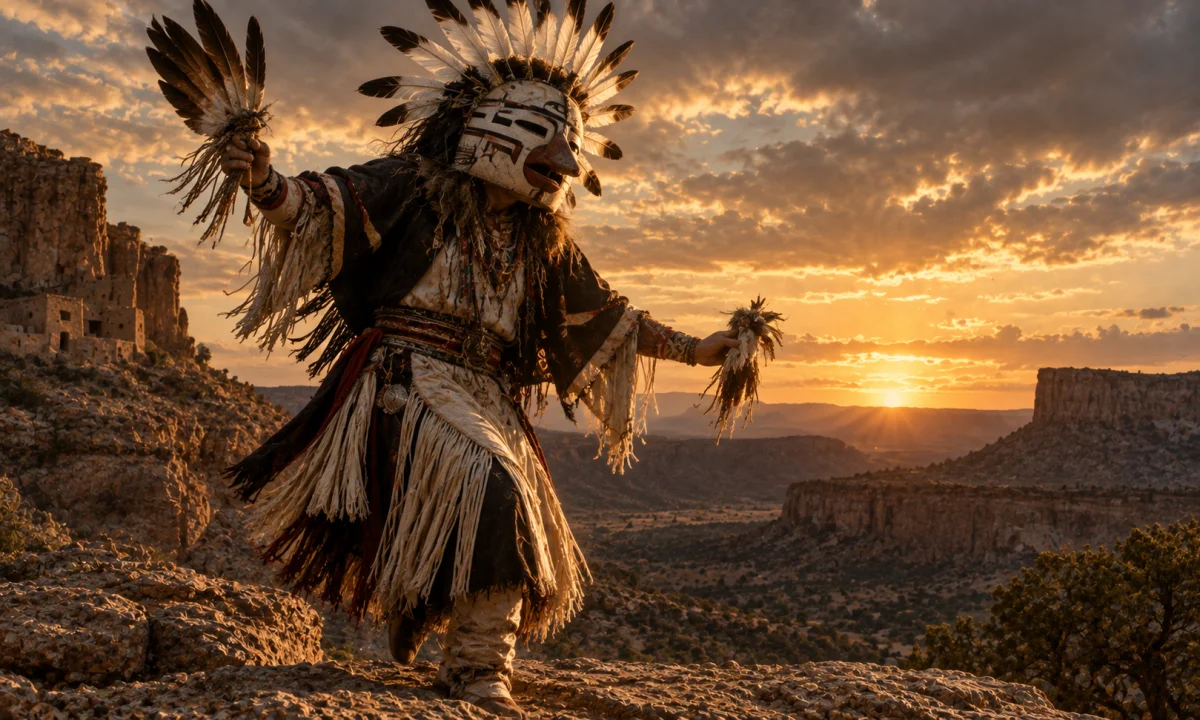
Kloskurbeh should not be confused with figures from Hopi religious traditions. Hopi cosmology includes beings such as Taiowa, Sotuknang, and Spider Woman, as well as other sacred powers and cultural figures whose roles belong to Hopi traditions of the American Southwest. These figures have different names, histories, ceremonial contexts, and relationships to the Hopi world.
The classification “Hopi mythology” may result from an inaccurate database entry, a secondary retelling, or confusion between unrelated Indigenous names. Similar-looking spellings are not evidence of a shared origin. Kloskurbeh's closest traditional associations are with Wabanaki peoples of the Northeast, not with the Hopi. A responsible description should preserve that distinction rather than repeat an incorrect category.
Later retellings and popular usage
Kloskurbeh and the related Glooscap tradition have appeared in children's books, general mythology collections, educational materials, tourism narratives, and other modern retellings. These versions often simplify several nations' traditions into one adventure cycle, give the hero a single fixed personality, or present him as a generic “Native American god.” Such treatments can make the stories more accessible, but they may also remove local context and turn sacred narratives into fantasy entertainment.
Modern adaptations are best understood as interpretations, not replacements for Wabanaki traditions. The spelling used, the community named, and the way a story is presented all matter. When a retelling does not identify its specific cultural context, it may be impossible to tell whether it reflects Mi'kmaq, Abenaki, Penobscot, Passamaquoddy, or a writer's own synthesis. The enduring significance of Kloskurbeh rests in the living and diverse traditions of the Wabanaki peoples, not in a single standardized fictional version.