WORLD
WORLD
Kami
Kami is the Japanese term commonly translated as “god,” “deity,” or “divine spirit.” In Shinto, kami may be associated with natural phenomena, particular places, ancestral figures, legendary heroes, imperial ancestors, or forces believed to possess exceptional sacred power. The word does not identify one individual being or a single species of supernatural creature. It is a broad and flexible category whose meaning depends on context, historical period, and religious tradition.
Meaning and cultural setting
The Japanese word kami can be singular or plural in English translation. Japanese does not generally mark nouns for number in the same way as English, so kami may refer to one sacred presence or to many. The expression yaoyorozu no kami, often translated as “the eight million kami,” uses a traditional number associated with abundance and multitude. It does not necessarily mean that Shinto contained exactly eight million separate deities.
Kami are central to Shinto, the indigenous religious tradition of Japan. Shinto has no single founder, universally binding scripture, or fixed creed comparable to the formal systems of some other religions. Its practices developed through local customs, shrine rituals, seasonal festivals, reverence for ancestors, and traditions concerning purity, pollution, and the relationship between human communities and the natural world.
Before the modern period, the category now called Shinto was not always clearly separated from Buddhism, court ritual, Confucian ethics, or local traditions. Buddhist temples and Shinto shrines often existed beside one another, and the same sacred figure could be understood through both Buddhist and kami-based interpretations. The modern idea of Shinto as a distinct national religion was shaped especially by nineteenth-century reforms, although many older practices and beliefs continued.
Origins and surviving sources
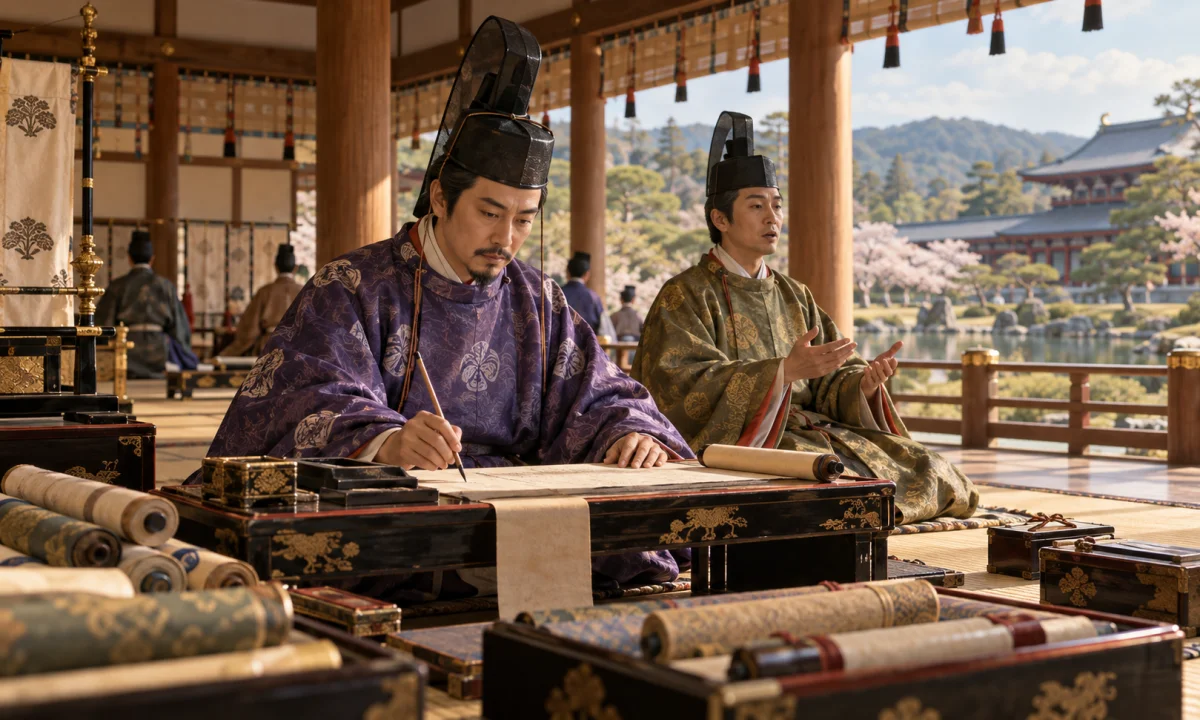
Kami traditions were preserved for centuries through oral transmission, ritual performance, local legends, shrine records, and place-based customs. The earliest surviving Japanese works that present extended accounts of kami include the Kojiki, completed in 712, and the Nihon Shoki, completed in 720. These works were compiled under the early Japanese court and combine genealogies, origin narratives, political history, and stories about divine ancestors.
The Kojiki and Nihon Shoki are important sources, but neither should be treated as a complete or universally authoritative catalogue of all kami. They reflect court perspectives and preserve variant versions of some traditions. Local shrines often maintain legends that do not appear in these texts. Other early works, including the Man'yōshū, ritual prayers known as norito, and shrine regulations associated with the Engishiki, provide additional evidence for early ideas about sacred beings and ritual practice.
These sources also use several older terms for supernatural or sacred beings, and the boundaries between categories are not always identical to modern explanations. Translating every appearance of kami as “god” can therefore be misleading. In some contexts, the term indicates a powerful spiritual presence rather than a deity with a clearly defined personality, mythology, or human-like form.
What can become a kami?
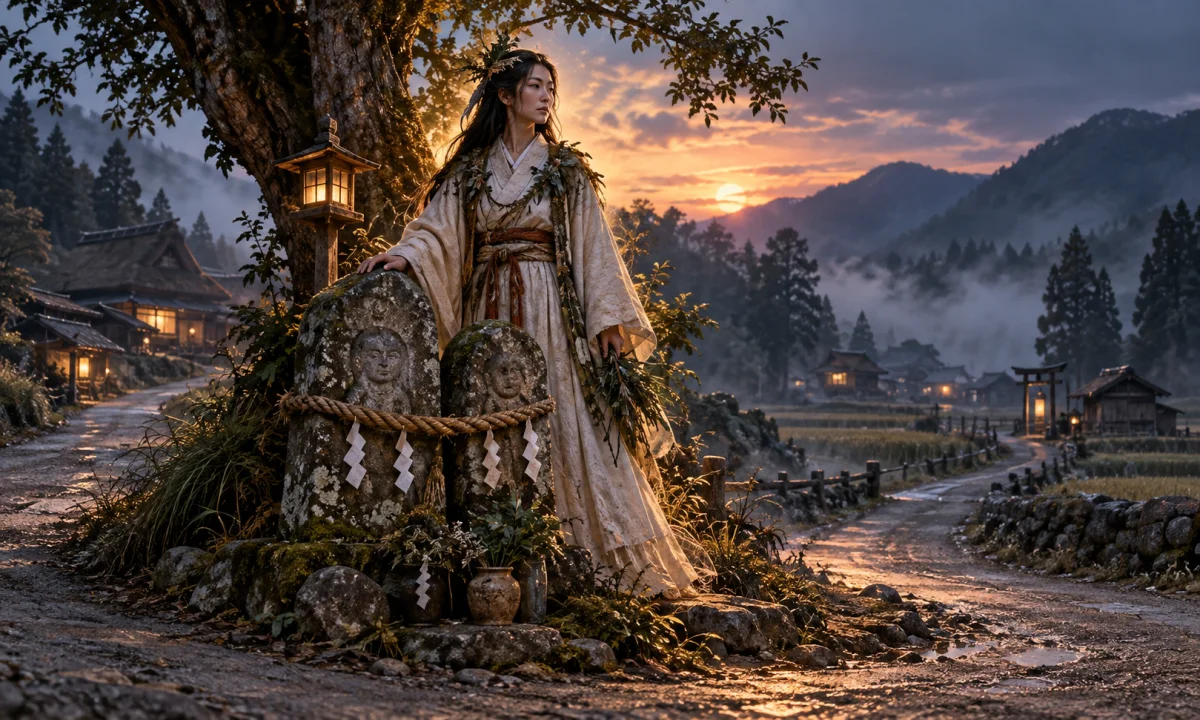
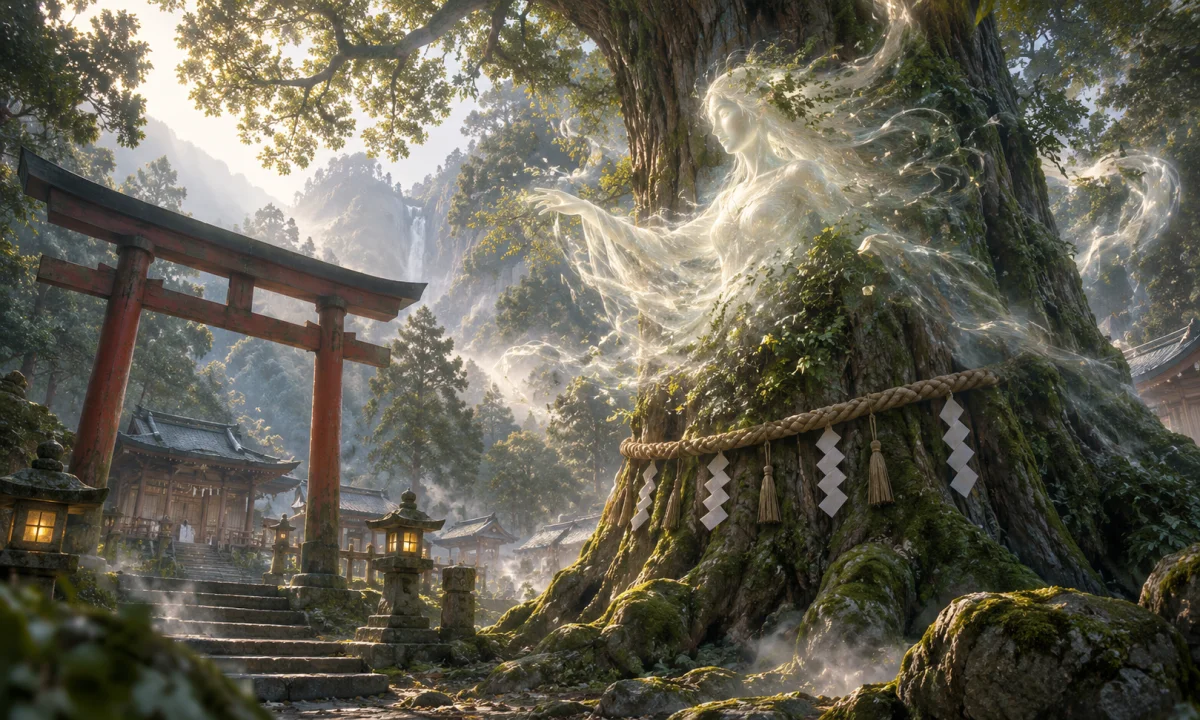
Kami may be connected with mountains, rivers, waterfalls, forests, rocks, wind, storms, the sea, rice, fertility, and other features of the environment. A mountain may be revered as a kami, or as the dwelling place of a kami, without the tradition requiring a single universal explanation. Sacred trees and rocks may be marked by a shimenawa, a sacred rope often decorated with folded paper strips called shide.
Some kami are associated with ancestors or revered historical people. A notable person may be enshrined after death, particularly if memory of that person becomes linked with protection, learning, political authority, or the appeasement of a potentially dangerous spirit. The scholar and court official Sugawara no Michizane, for example, was worshipped as Tenjin after his death. Tenjin became especially associated with scholarship and examinations, while the older historical circumstances also involved concern about his angry spirit.
Other kami are connected with occupations, villages, households, harvests, or particular forms of good fortune. A shrine’s kami may be a nationally known deity, a local divine presence, an ancestral figure, or a combination of traditions that developed over time. The identity of a shrine’s enshrined kami is therefore best understood from its own history rather than inferred from a general list of Shinto deities.
Exceptional people may also be called kami in certain contexts, especially after death or in language expressing extraordinary reverence. This does not mean that every respected person is automatically considered a deity. The status of an individual, spirit, or natural presence depends on tradition, ritual recognition, and the community’s relationship with it.
Appearance and nature
Kami do not have one standard appearance. Some are described in human form, while others are represented through animals, natural features, sacred objects, or symbols. A kami may appear as a beautiful person, an imposing ruler, a monstrous being, an old man or woman, an animal, or an indistinct spiritual force. Artistic images are often shaped by particular local traditions and by influence from Buddhist iconography.
Many shrines do not display an image of the kami at all. The innermost sacred object, called a shintai, may be a mirror, sword, jewel, stone, natural object, or another consecrated item. The shintai is not simply a portrait of the kami. It serves as a sacred focus or vessel through which the kami is understood to be present at the shrine.
Kami are not uniformly benevolent. They may protect communities, grant prosperity, ensure good harvests, or support safe travel, but they can also bring disease, storms, crop failure, accidents, or other misfortune. In traditional contexts, the appropriate response to danger may involve ritual purification, offerings, prayer, appeasement, or the establishment of a shrine.
This mixture of generosity and danger is one reason that translating kami simply as “spirit” can also be incomplete. The term may refer to a presence worthy of reverence, fear, gratitude, or ritual care. A kami is not necessarily morally perfect, omniscient, or all-powerful in the manner often associated with a singular creator god.
Important kami in mythology and worship
Izanagi and Izanami
Izanagi and Izanami are creator figures in the narratives of the Kojiki and Nihon Shoki. They are associated with the formation of the Japanese islands and the birth of numerous kami. Their story includes Izanami’s death after giving birth to the kami of fire, Izanagi’s attempt to retrieve her from the land of the dead, and the pollution he experiences after returning from that realm.
Izanagi then performs purification. From this ritual arise several important kami, including Amaterasu from his left eye, Tsukuyomi from his right eye, and Susanoo from his nose in the Kojiki version. Details differ between the early chronicles, and the narratives should not be treated as one completely uniform account.
Amaterasu
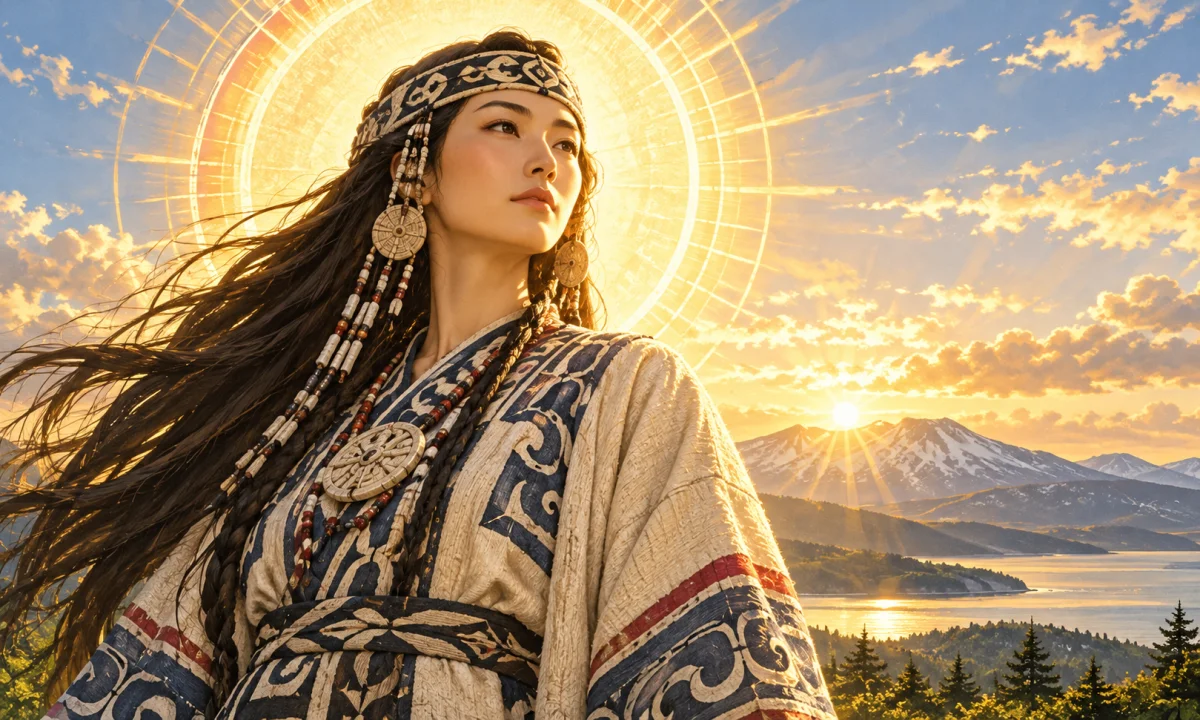
Amaterasu Ōmikami is the kami of the sun and one of the most prominent figures in imperial mythology. She is presented as an ancestor of the imperial line in the court traditions recorded in the early chronicles. Her central shrine is Ise Jingū, where she is worshipped as the principal deity of the Inner Shrine.
The best-known story involving Amaterasu concerns her withdrawal into the Heavenly Rock-Cave after conflict with her younger brother Susanoo. Her absence causes the world to fall into darkness. The other kami devise a plan involving ritual performance, laughter, a mirror, and a jewel to draw her out. This story helps explain the importance of ritual, performance, sacred regalia, and the restoration of cosmic order.
Susanoo
Susanoo is associated with the sea, storms, violence, wandering, and acts of disorder, although his character varies considerably between sources. In the famous serpent-slaying episode, he kills the eight-headed serpent Yamata no Orochi and discovers the sword later associated with the imperial regalia. In other episodes, his disruptive behavior contributes to Amaterasu’s retreat.
Susanoo should not be reduced to a simple “evil god.” His myths include destructive and heroic aspects, and later traditions connect him with protection against disease and other dangers. The meanings attached to him differ among texts, shrines, and historical periods.
Inari
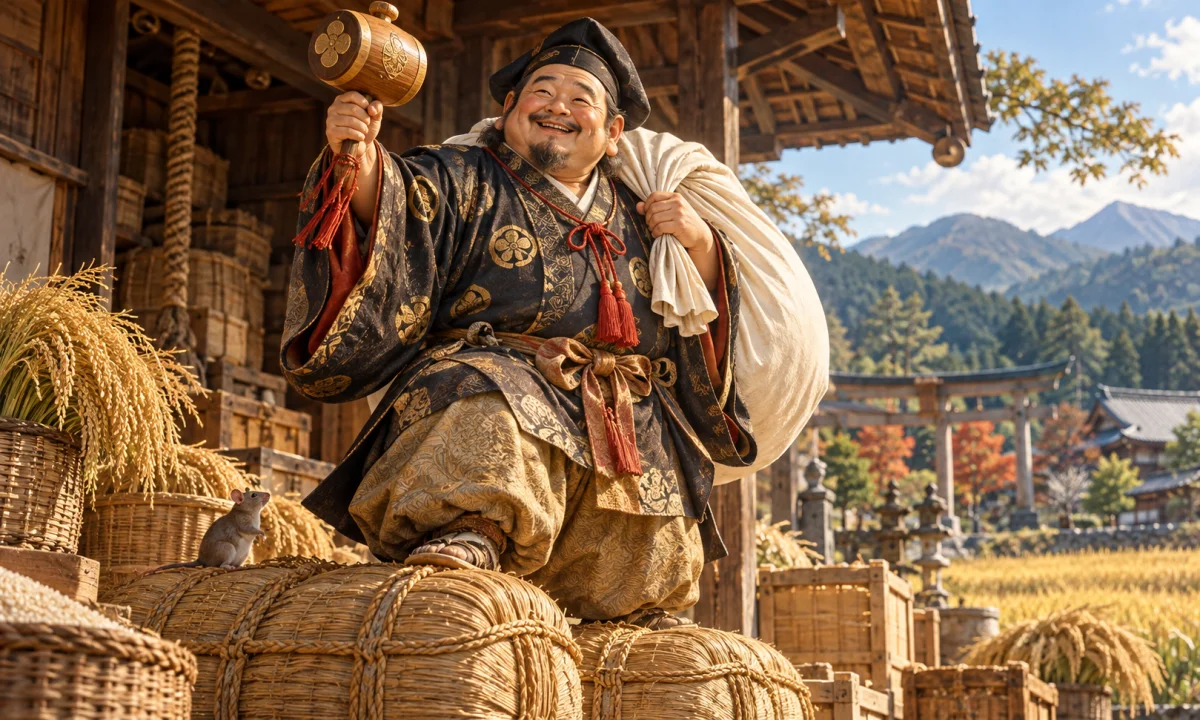
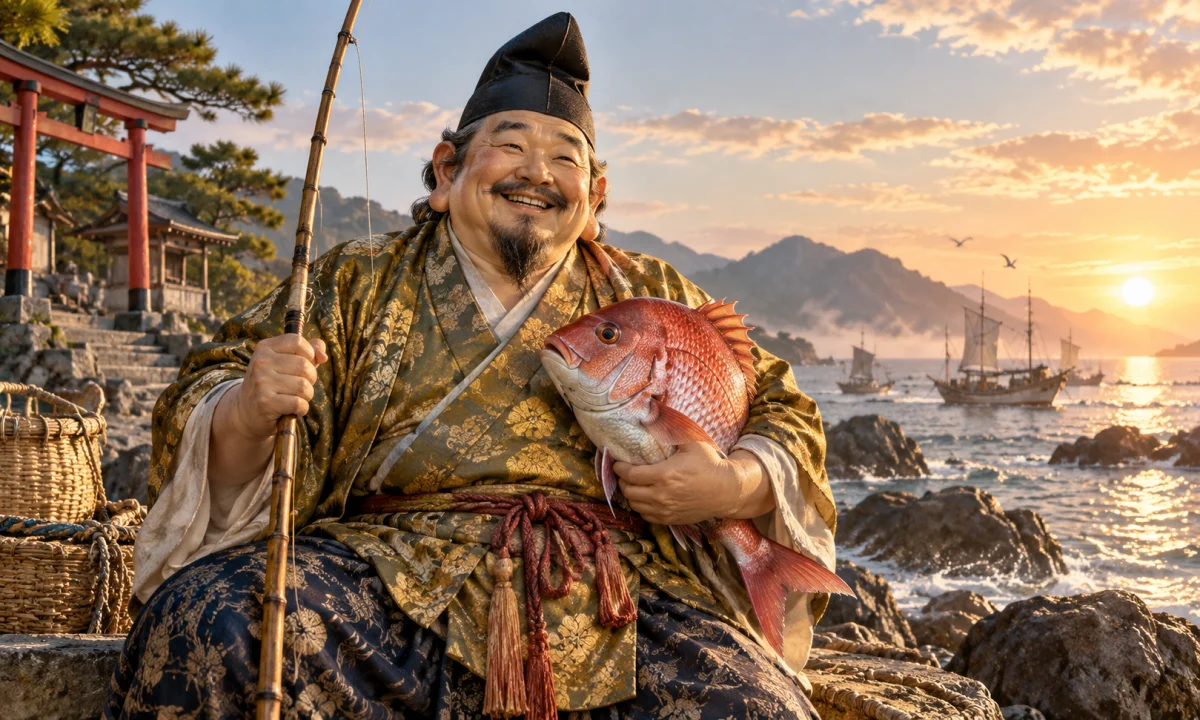
Inari is one of the most widely worshipped kami in Japan and is associated particularly with rice, agriculture, commerce, prosperity, and food. Inari is not necessarily a single figure with one fixed gender or appearance. Some traditions represent Inari as an old man, a woman, or a group of sacred beings. Foxes, called kitsune, are traditionally regarded as messengers or attendants of Inari, not automatically as Inari itself.
Inari worship developed in diverse local settings, and the connection with business and industry became especially prominent as Japanese society changed. Red torii gates and offerings of fried tofu are commonly associated with Inari shrines, but local practices vary.
Hachiman and Tenjin
Hachiman began as a deity connected with the southwestern Japanese tradition of Usa and later became associated with the imperial house, warfare, agriculture, and the protection of the nation. Hachiman worship became deeply connected with Buddhism, and Hachiman was often understood in medieval Japan as a Buddhist protector as well as a kami.
Tenjin is the deified form of Sugawara no Michizane, whose spirit was believed to have become dangerous after his unjust exile and death. His worship developed as a means of appeasement and protection, and he later became strongly associated with learning. This combination of historical memory, spirit belief, ritual pacification, and changing social needs illustrates how new kami traditions could develop.
Ritual, purity, and shrine practice
Shinto shrine worship often involves approaching a sacred space through a torii, washing the hands and mouth at a purification basin, offering coins or food, bowing, clapping, and praying. The exact sequence varies by shrine and occasion. Formal ceremonies may include music, dance, offerings, recitation of norito, and the presentation of sacred food or drink.
Purification is an important theme in kami-related practice. Ritual impurity, called kegare, is not simply identical to moral wickedness. It may be associated with death, disease, blood, disaster, or other conditions that disturb ritual and social order. Purification rites such as harae and misogi seek to remove or dispel such pollution. Their meaning differs according to ritual context and historical interpretation.
Festivals called matsuri provide a central setting for relationships between kami and communities. A festival may involve carrying a portable shrine, welcoming a kami, presenting offerings, performing music or dance, and asking for protection or prosperity. Matsuri are not merely entertainments; they can renew ties among the shrine, its supporters, the local environment, and the kami understood to belong to that place.
Relationships with Buddhism and other traditions
For much of Japanese history, kami worship and Buddhism were closely intertwined. A major medieval idea known as honji suijaku interpreted some kami as local manifestations of Buddhist figures. Under this theory, a Buddhist deity or enlightened being could appear in Japan as a kami in order to guide people. The same sacred figure could consequently receive both Buddhist and kami-based interpretations.
Some kami were also identified with Buddhist protectors, while Buddhist temples administered shrines or maintained shrine-temple complexes. These relationships were not identical everywhere, and local traditions could preserve different explanations. The separation of shrines and temples was enforced by the government during the Meiji period, but the older history remains visible in architecture, ritual, iconography, and surviving customs.
Distinctions from similar beings
Kami should not be equated automatically with yōkai. Yōkai is a broad modern scholarly and popular term for strange, uncanny, or supernatural beings and phenomena, including monsters, spirits, animals with magical abilities, and troublesome apparitions. Some beings have been understood differently in different periods, and the boundary between a kami and a yōkai is not always fixed. Nevertheless, a kami is generally a being or presence receiving religious reverence, while a yōkai is more often discussed as a folkloric or uncanny entity.
Kami are also not identical to yūrei, the ghosts of the dead. Some angry or unsettled spirits may later receive worship and become integrated into kami traditions, as in the case of Tenjin, but not every ghost is a kami. Nor is every sacred animal itself a kami. Foxes connected with Inari, for example, are usually described as messengers or attendants, even though fox traditions have their own complex folklore.
Interpretation and continuing significance
Scholars have interpreted kami in several ways: as divine beings, sacred powers, ancestral presences, personifications of natural forces, or relationships between communities and places. No single definition covers every historical use. Earlier Japanese traditions did not always separate “nature,” “society,” “the dead,” and “the divine” according to categories familiar from modern Western religious studies.
In contemporary Japan, people may visit shrines for festivals, weddings, examinations, business success, safe travel, or personal prayers without adopting a single systematic theology. Shrine practice can be religious, cultural, familial, local, or several of these at once. Some people understand kami literally as divine beings; others approach shrine rituals as inherited customs while leaving the metaphysical question open.
Modern books, films, games, and anime sometimes use the word kami to mean a powerful god, a supernatural entity, or an elevated title. Such uses may draw on Shinto imagery but often simplify the older and more varied concept. Traditional kami are best understood through the shrine, story, ritual, and community in which they are situated, rather than as a single standardized class of Japanese fantasy beings.