WORLD
WORLD
Itzpapalotl
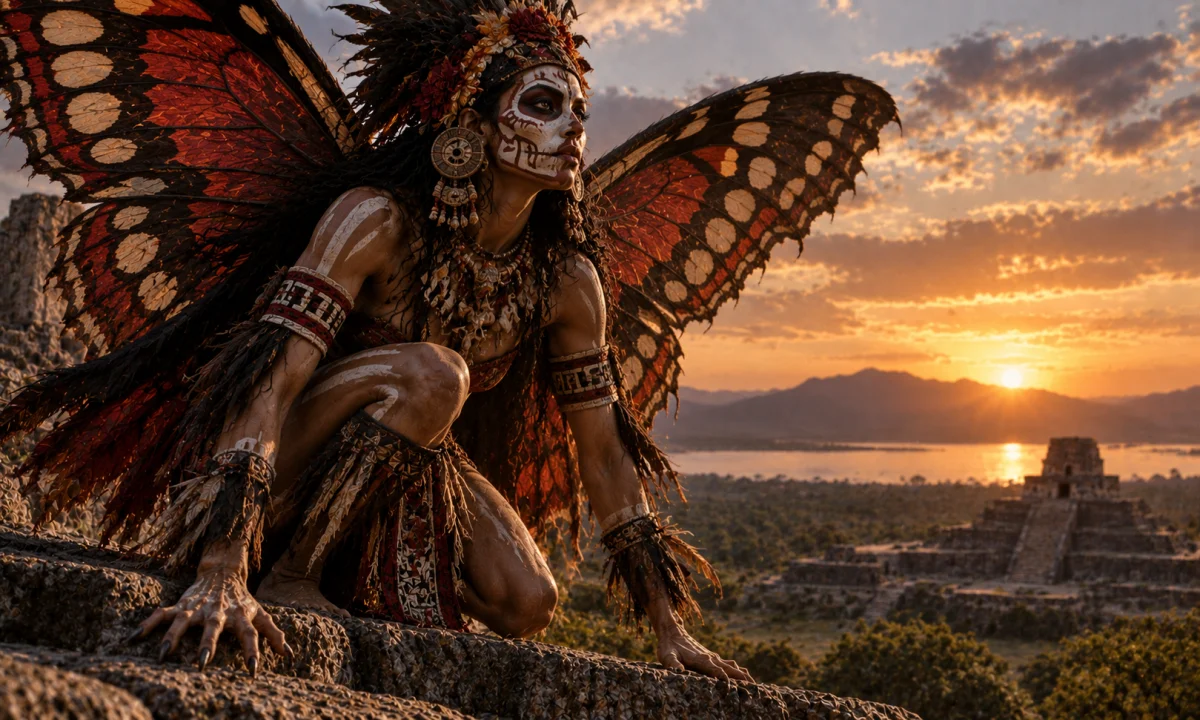
Itzpapalotl is a powerful female deity in the religious traditions of Nahua-speaking peoples, especially the Mexica, often known in English as the Aztecs. Her Nahuatl name is commonly translated as “Obsidian Butterfly.” She is associated with obsidian, fire, the earth, warfare, sacrifice, death, and the dangerous power of transformation. Her imagery combines the delicate form of a butterfly with blades, claws, bones, and other signs of violence and mortality.
Name and identity
Itzpapalotl comes from the Nahuatl words itztli, “obsidian,” and papalotl, “butterfly.” The name is sometimes rendered as “Obsidian Butterfly,” although translations of Nahuatl religious names are not always exact equivalents of the original meanings. Obsidian was a dark volcanic glass widely used in Mesoamerica for knives, spear points, mirrors, and ritual instruments. It could be polished to a brilliant black surface or worked into an exceptionally sharp edge.
The butterfly element does not make Itzpapalotl a gentle nature spirit in the modern sense. In Nahua thought, butterflies could be connected with fire, the sun, souls, transformation, and the movement between different states of existence. Her name therefore joins two contrasting images: the fragile, changing butterfly and the hard, cutting substance of obsidian.
Itzpapalotl does not have one completely fixed identity across all surviving sources. She appears as a goddess, a frightening celestial being, a warrior-like female power, and a figure connected with primordial places such as Tamoanchan. Some sources emphasize her relationship with fire and sacrifice, while others present her through imagery of death, childbirth, or the starry night. These aspects are related, but they should not be treated as evidence of a single standardized mythology shared in exactly the same form everywhere.
Cultural and religious setting
The Mexica religious world included many gods and supernatural beings whose powers overlapped. A deity could have several forms, names, ceremonies, and regional associations. Religious identity was often expressed through visual signs, ritual titles, calendar relationships, and stories that could vary between communities.
Most surviving information about Itzpapalotl comes from manuscripts and accounts produced during the colonial period. These include painted ritual manuscripts, alphabetic texts written in Nahuatl or Spanish, and descriptions based on the testimony of Indigenous informants. Such sources preserve important pre-Hispanic traditions, but they are not neutral records. They were created after the Spanish invasion, sometimes by Christian missionaries or colonial writers, and their descriptions may reflect translation, selection, or misunderstanding.
The Mexica also shared religious concepts with other Nahua and wider Mesoamerican traditions. A figure appearing in a Mexica manuscript should not automatically be assumed to have had precisely the same role among every Nahua-speaking group. Itzpapalotl is therefore best understood as a major figure in related Nahua traditions rather than as a goddess with one universally agreed biography.
Appearance and symbolism
Itzpapalotl is frequently shown as a terrifying composite figure. Her body may be skeletal or partly skeletal, and her face can have the features of a skull or a deathly mask. She is often depicted with claws, especially jaguar-like claws, and with wings marked by sharp obsidian blades. The wings may resemble those of a butterfly, a bat, or another powerful nocturnal creature rather than a naturalistic butterfly.
The obsidian blades along her wings are among her most recognizable visual signs. They suggest the ritual knife, the danger of warfare, and the cutting edge of sacrifice. They can also be understood as signs of the earth’s hidden forces: obsidian was born from volcanic landscapes and was extracted from the ground before becoming a tool or weapon.
Her skeletal appearance links her with death and with the transformation of the body. In Mesoamerican religious art, bones do not always mean evil or moral corruption. They may signify the realm of the dead, the remains from which new life can emerge, or the unavoidable power of the earth. Itzpapalotl’s combination of bones, wings, and blades presents death as active and potent rather than passive.
Fire is another important association. Some descriptions connect her with sacred or destructive fire, and her imagery has been interpreted alongside the burning of sacrificial offerings and the fires of cosmic change. The exact strength of this association depends on the source. It is safer to describe fire as a recurring aspect of her religious character than to call her exclusively a fire goddess.
A goddess of danger and transformation
Itzpapalotl belongs to the group of divine and supernatural figures who represent forces that are both necessary and threatening. She is not easily classified as simply benevolent or hostile. Obsidian can protect a warrior and cut an enemy; fire can sustain a household and destroy a settlement; the earth can provide food and receive the dead. Her imagery gathers these opposing possibilities into one figure.
The butterfly aspect reinforces this ambiguity. Butterflies emerge through a striking process of transformation, and their movement can be associated with the soul or with the passage from one condition to another. In a religious system deeply concerned with cycles of creation, death, warfare, sacrifice, and renewal, a butterfly could signify more than beauty. It could also suggest an unstable boundary between the living, the dead, the divine, and the ancestral.
Her association with women who died in childbirth is often mentioned in modern descriptions. In Mexica belief, women who died giving birth were treated as people who had died in a form of battle, and they could receive an honored posthumous status associated with the sun. Itzpapalotl is sometimes described as a patron or representative of such women. However, the evidence does not support reducing all traditions about her to childbirth, and she should not simply be equated with every female spirit connected with death in childbirth.
Itzpapalotl and the Tzitzimime
Itzpapalotl is commonly described as one of the tzitzimime, a class of powerful and potentially dangerous supernatural beings. In Mexica cosmology, the tzitzimime were associated with the stars and with the possibility that celestial beings could descend upon the earth. Their threat became especially vivid during an eclipse or during ceremonies concerned with the ending and renewal of cosmic cycles.
Colonial descriptions sometimes translate or characterize the tzitzimime with words such as “demons,” but this can be misleading. The Nahuatl category does not correspond neatly to the Christian idea of a devil. Tzitzimime were feared because of their cosmic power and their possible hostility toward human beings, not because they belonged to a simple moral opposition between one evil force and one good force.
As a tzitzimitl, Itzpapalotl expresses the frightening side of the sky and the night. Her wings can be read as celestial as well as animal, and her bladed form suggests that the heavens themselves could become dangerous. This does not mean that she was merely a monster. Powerful divine figures in Mesoamerican religion could be revered precisely because they controlled forces that humans could neither ignore nor fully master.
Tamoanchan and primordial places
Itzpapalotl is also connected in some sources with Tamoanchan, a primordial paradise or sacred place associated with divine creation, fertility, birth, and the origins of important beings. Tamoanchan is not described consistently in every source. It can appear as a heavenly or otherworldly region, a place of abundance, or a setting where gods and primordial events were located.
Her presence in connection with Tamoanchan creates an important contrast. The same figure who bears bones and obsidian blades can also belong to a realm associated with origin and generative power. This contrast reflects a broader Mesoamerican pattern in which birth, fertility, death, and the earth are not isolated categories. The earth receives the dead, produces crops, and serves as the source of new life.
Some interpretations describe Itzpapalotl as a primordial mother or as an ancestral female power. Such readings draw on her associations with the earth, creation, and certain genealogical traditions. They should be treated as interpretations rather than as a universally agreed definition. The surviving sources do not provide a single uninterrupted account of her life, family, and actions.
Connections with Mixcoatl and other figures
Several traditions associate Itzpapalotl with Mixcoatl, a major hunting and warrior deity whose name is often translated as “Cloud Serpent.” In some accounts or genealogical traditions, she is presented as Mixcoatl’s mother or as a figure involved in his origin. The relationship is not equally clear in every source, and accounts of Mixcoatl’s parentage vary.
Mixcoatl was especially important in traditions concerning hunting, warfare, migration, and the ancestors of central Mexican peoples. An association between him and Itzpapalotl therefore strengthens her links with hunting, martial power, wilderness, and ancestral identity. It does not mean that she was simply a female version of Mixcoatl or that every story about him also belongs to her.
Itzpapalotl is sometimes compared with other female deities such as Coatlicue, Cihuacoatl, Tlazolteotl, or Toci because these figures can all be connected with earth, birth, death, fertility, sexuality, or dangerous female power. They are not interchangeable. Coatlicue has her own complex identity as an earth and mother goddess; Cihuacoatl is associated with womanhood, childbirth, and political or ancestral symbolism; Tlazolteotl has distinctive relationships with sexuality, pollution, confession, and purification; and Toci is a separate maternal and healing figure.
Shared imagery does not prove that these goddesses were merely different names for one being. Nahua religion often represented related powers through overlapping symbols, while preserving distinct names and ritual identities.
Calendar and ritual associations
Itzpapalotl appears in connection with the ritual calendar and with the complex system of day signs and trecenas used in central Mexican religious practice. The exact calendar role assigned to her can differ according to the manuscript or interpretation being consulted. Painted codices may present a deity as the ruler of a particular period, as a patron of a day sign, or as part of a larger group of supernatural powers.
Calendar associations were not merely ways of organizing dates. They helped determine the character of a day, its omens, and the kinds of ritual attention that might be appropriate. A deity linked with an auspicious or dangerous period could influence decisions about warfare, travel, ceremonies, naming, or other major activities.
Because the surviving calendar manuscripts were produced in different contexts, it is important not to assign Itzpapalotl one definitive calendar office without identifying the particular tradition involved. Claims that she was always and everywhere the patron of one exact day or period are more confident than the evidence allows.
Sources and interpretation
Itzpapalotl is known primarily through iconography and brief references rather than through one complete narrative cycle. Images in painted manuscripts are especially important because they show the features by which viewers recognized her: wings, blades, claws, skeletal elements, and other signs of supernatural danger.
Written descriptions can help explain those images, but they must be read carefully. Spanish authors sometimes grouped Indigenous beings under familiar Christian categories, while alphabetic Nahuatl texts may preserve local traditions in forms shaped by colonial writing practices. A picture may also communicate several meanings at once, making it difficult to convert into a single sentence such as “Itzpapalotl was the goddess of one particular thing.”
Scholars therefore often discuss her through a network of themes: obsidian, butterflies, jaguar power, fire, sacrifice, death, the earth, celestial danger, childbirth, ancestry, and transformation. These themes are supported to different degrees in different sources. Her importance lies partly in the way she brings them together without resolving their tensions.
Distinguishing traditional Itzpapalotl from modern portrayals
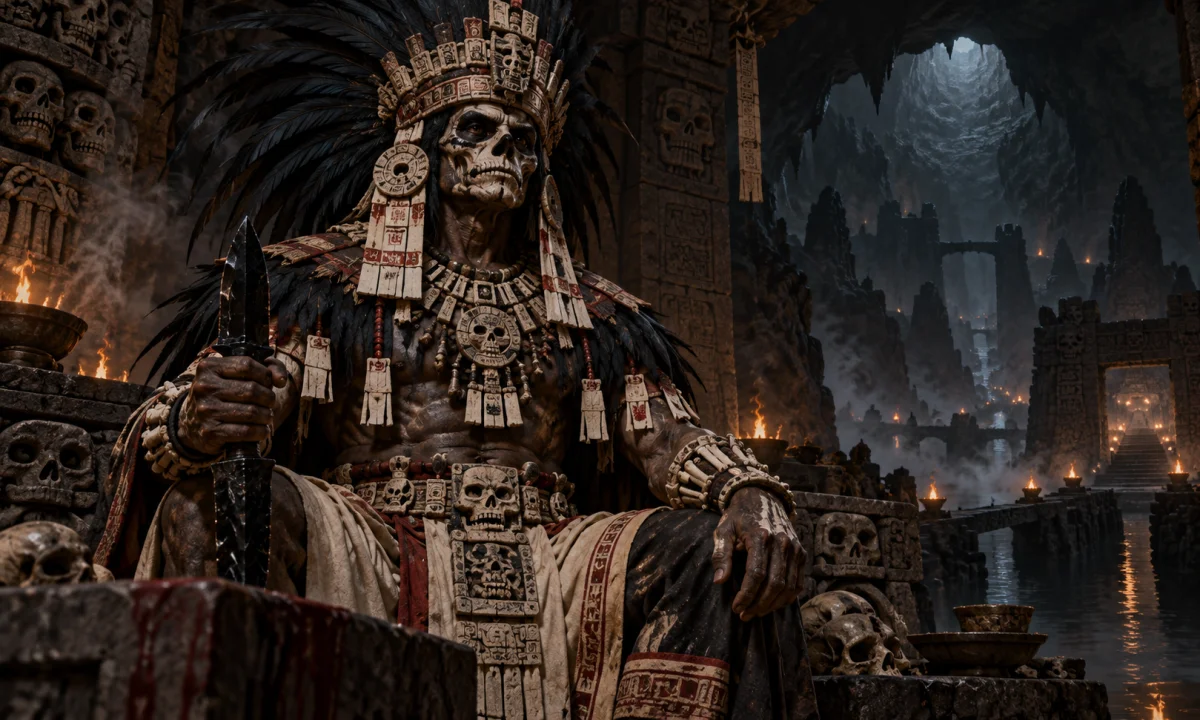
Modern illustrations frequently emphasize Itzpapalotl as a skeletal butterfly woman with dramatic black wings and large obsidian blades. This visual language is grounded in genuine Mesoamerican imagery, but contemporary artists may add details inspired by fantasy art, gothic aesthetics, modern ideas about female empowerment, or generalized “Aztec” design. Such additions should not automatically be presented as ancient attributes.
She is also sometimes described online as a straightforward goddess of darkness, a demon, or a universal mother goddess. Each label captures only part of the evidence and can distort her place in Nahua religion. “Demon” imports a Christian moral category, while “universal mother” overlooks her dangerous, martial, celestial, and sacrificial aspects.
In contemporary Mexican and international culture, Itzpapalotl may appear in paintings, tattoos, novels, games, music, and other creative works. These adaptations can give her new meanings, including associations with resilience, ancestral memory, bodily transformation, and resistance. They belong to modern reception rather than to the surviving pre-Hispanic tradition itself.
Itzpapalotl is best understood as a multifaceted Nahua power whose obsidian wings express both beauty and danger. Her imagery joins the butterfly’s transformation with the knife’s violence, the earth’s fertility with the grave’s silence, and celestial grandeur with the threat of cosmic disorder. The surviving evidence does not reduce her to one function, and her force as a religious figure lies precisely in this movement between life and death, creation and destruction, the human world and the perilous powers beyond it.