WORLD
WORLD
Itztli
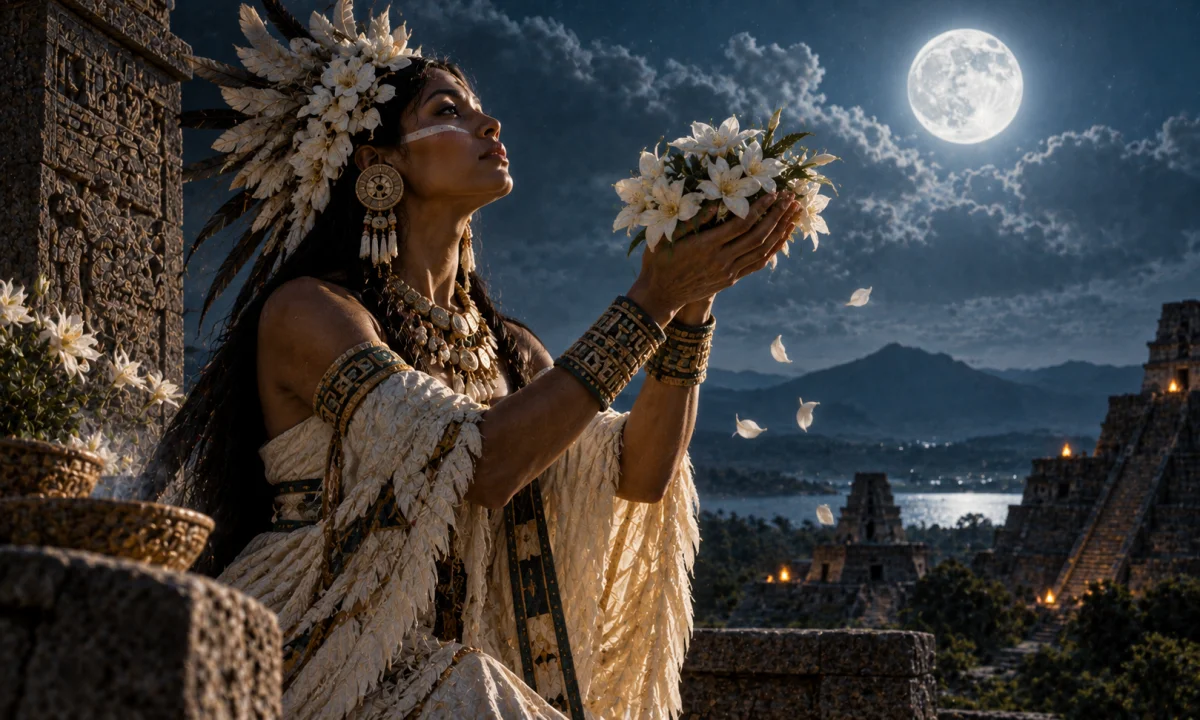
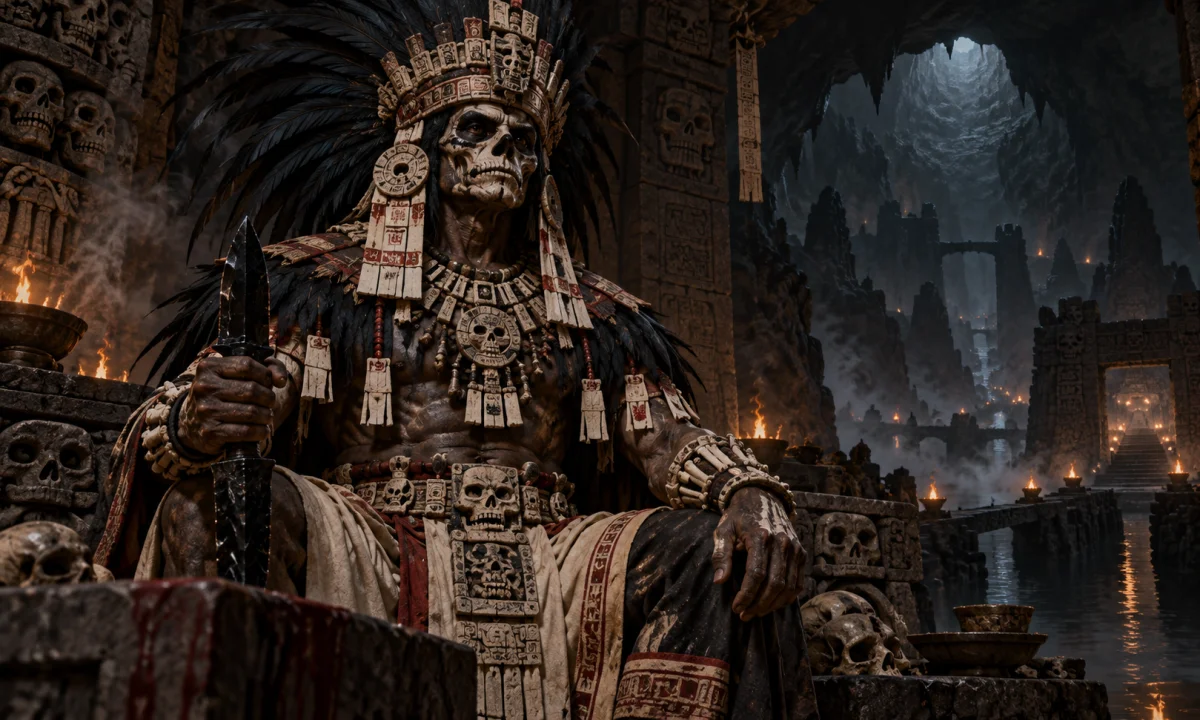
Itztli is a figure associated with obsidian, cutting blades and sacrificial violence in Aztec, or Mexica, religious tradition. The Nahuatl word itztli primarily means “obsidian,” a volcanic glass widely used in Mesoamerica for knives, arrowheads, mirrors and other sharp tools. Some modern accounts describe Itztli as an Aztec god of obsidian or as an aspect of Tezcatlipoca, but the surviving evidence does not present a single, universally agreed profile of Itztli as an independent deity. The name can refer to the material itself, a blade, or a divine quality connected with obsidian and ritual cutting.
Name and identity
In Nahuatl, itztli refers to obsidian, especially the dark volcanic glass from which exceptionally sharp edges could be made. Obsidian was an important natural resource in central Mexico. It was worked into household tools, weapons, ritual knives and mirrors. Since the material could cut flesh and was associated with blood sacrifice, its name also carried religious and symbolic meanings.
The identity of Itztli is therefore difficult to define in the same way as that of better-documented deities such as Huitzilopochtli, Tlaloc or Quetzalcoatl. In some later summaries of Aztec mythology, Itztli is treated as a god of obsidian and sacrifice. In other interpretations, the name is understood as an epithet, manifestation or personification of a blade rather than the name of a separate god with an extensive mythology.
A further complication is that colonial writers and modern authors did not always distinguish consistently between the names of materials, ritual objects, divine titles and individual deities. The form Itztli should consequently not be treated as proof of a single, clearly bounded cult. Its meaning is best approached through the religious importance of obsidian and the ritual knife.
Obsidian in Mesoamerican culture
Obsidian was formed when volcanic lava cooled rapidly. It could be fractured to produce edges sharper than those of many metal tools. In central Mexico, different volcanic regions supplied obsidian of varying colours and qualities. Archaeological evidence shows that it was traded over long distances and used by many Mesoamerican societies, not only the Mexica.
For the Aztecs, obsidian had both practical and sacred importance. Its sharpness made it useful for cutting hair, preparing food, crafting weapons and performing bloodletting. Priests and worshippers used blades in acts of autosacrifice, piercing parts of the body to offer blood to the gods. Specialist sacrificial knives were also used in ceremonies involving the killing of human captives and other victims.
Obsidian mirrors had a different but related significance. A polished black mirror could reflect light while also appearing dark and mysterious. In religious imagery, dark mirrors were associated with sight, hidden knowledge, divination, rulership and supernatural power. These associations are especially important for Tezcatlipoca, whose name is often translated as “Smoking Mirror.” An obsidian mirror was not merely a polished tool; it could represent a medium through which divine power, fate or concealed events became visible.
Itztli and the sacrificial knife
The ritual knife was one of the most striking objects in Aztec religious art. It was often made from flint or obsidian and could be given a face, limbs, ornaments or other signs of animation. Such representations show that the blade was not always imagined as an inanimate instrument. It could be treated as a sacred participant in sacrifice, an embodiment of the force that opened the body and released blood.
Nahuatl terminology for stone blades is not always represented consistently in English translations. Tecpatl, usually translated as “flint” or “flint knife,” appears frequently in Aztec calendrical and religious contexts. In practice, ritual blades could be made from different stone materials, including obsidian. A reference to a flint knife in a colonial text should not automatically be treated as a reference to Itztli, and an image of a knife does not by itself prove that the deity Itztli is intended.
The symbolic meaning of such a blade extended beyond physical violence. Sacrifice was understood as a reciprocal act through which humans nourished the gods and maintained the movement of the cosmos. Blood was a precious offering, and the knife was the instrument that made this exchange possible. A divine personification of obsidian could therefore represent danger, nourishment, obligation, death and the continuing renewal of the world at the same time.
Connection with Tezcatlipoca
Itztli is often described as an aspect or manifestation of Tezcatlipoca. This association is understandable because both obsidian mirrors and dark, sharp objects belong to Tezcatlipoca’s symbolic sphere. Tezcatlipoca was a powerful and complex deity connected with night, rulership, conflict, fate, sorcery, temptation and the unpredictable reversal of fortune. His name refers to the smoking mirror, commonly understood as a black obsidian mirror.
Tezcatlipoca was not simply a “god of evil” or a personification of darkness. He could grant power and kingship, expose wrongdoing, punish arrogance and alter a person’s fortune without warning. His religious character was ambivalent: protective and destructive, authoritative and deceptive, life-giving and deadly. The sharpness and reflective darkness of obsidian fit this complicated symbolism.
Calling Itztli an aspect of Tezcatlipoca can therefore indicate that obsidian was understood as one expression of Tezcatlipoca’s power. It does not necessarily mean that the Mexica everywhere worshipped a separate deity called Itztli in a fixed and uniform form. Some modern references turn a symbolic association into a distinct divine biography, but the surviving evidence is more limited and varied.
Appearance and iconography
No single appearance of Itztli can be described with the confidence possible for some major Aztec gods. When the name is associated with the sacred knife, the relevant imagery may consist of an anthropomorphic blade or a stone knife bearing facial features. Such objects appear in manuscripts and ritual art as beings with eyes, mouths or other signs of personhood.
Obsidian itself could be represented as black, dark grey or reflective. Its colour should not be treated as a simple equivalent of moral darkness. In Aztec thought, blackness could signify night, hidden power, smoke, fertile soil, blood, mystery or the dangerous unknown. The reflective surface of polished obsidian also linked it to vision and revelation.
Images of knives may show a curved or triangular blade, often with a face near the cutting edge or at the base. Yet similar imagery can refer to several related ideas: the sacrificial knife, the flint sign of the calendar, a weapon, a divine attribute or a particular deity. Identification depends on the surrounding signs, the manuscript tradition and the interpretation of the image.
Calendar and ritual associations
Stone knives were important within the Aztec calendar system as well as in temple ritual. The day sign Tecpatl, “Flint,” belonged to the twenty-day cycle used in central Mexican calendrical practice. It was associated with a sharp stone blade and could carry implications of conflict, sacrifice and ritual power. This calendar sign should not be confused with Itztli, although both belong to the same wider symbolic field of cutting stone and sacred violence.
Aztec ritual calendars gave particular days, periods and festivals religious meanings. A sign could be connected with a god, an omen, a social activity or a set of ritual practices without being identical to a deity. The presence of a knife sign in a manuscript therefore does not establish a cult of Itztli by itself.
Bloodletting was also a central practice in elite and priestly devotion. Worshippers pierced the ears, tongue, legs or other parts of the body with sharp instruments and offered the blood to divine powers. The act expressed humility and obligation, but it was also linked to the nourishment of the cosmos. In that setting, the obsidian blade represented the boundary between the human body and the sacred order to which the offering was given.
Surviving evidence and interpretation
Knowledge of Aztec religion comes from several kinds of evidence: archaeological remains, pre-Hispanic imagery, colonial-period manuscripts written in Nahuatl or Spanish, and accounts produced by Spanish missionaries and other observers. These sources preserve valuable information, but they do not provide a single complete account of Mexica religion.
The Florentine Codex, compiled in the sixteenth century under the direction of Bernardino de Sahagún, records extensive Nahuatl-language information about gods, ceremonies, objects and beliefs. Other colonial works, including calendrical and mythographic manuscripts, preserve different traditions and visual systems. Their descriptions sometimes vary in terminology and emphasis. European authors also interpreted Indigenous religion through Christian categories, which can affect how divine figures and rituals were recorded.
Archaeology confirms the importance of obsidian and ritual blades, but an archaeological object rarely identifies itself by a divine name. A knife found in a ceremonial context may have been used for sacrifice, bloodletting, symbolic display or several purposes over time. Likewise, an image of a blade may express a concept without representing a deity named Itztli.
For these reasons, responsible interpretations distinguish between three related but different claims: that obsidian was religiously significant; that knives could be personified or represented as sacred beings; and that Itztli was a distinct god with an independent mythology. The first two claims are well supported by the broader evidence. The third is more dependent on how particular sources and modern scholars interpret the name.
Related figures and names
Itztli is easily confused with several other Nahuatl names beginning with itz-. The element appears in words connected with obsidian, and similar-looking names do not necessarily identify the same figure.
- Tezcatlipoca is the Smoking Mirror, a major deity associated with night, rulership, conflict, sorcery and fate. His connection with obsidian mirrors explains why Itztli is sometimes treated as one of his manifestations or attributes.
- Itzpapalotl, usually translated as “Obsidian Butterfly,” is a distinct female deity associated in different traditions with hunting, fire, sacrifice and the fearsome powers of the earth. She should not be identified with Itztli merely because both names contain a reference to obsidian.
- Itztlacoliuhqui, often translated as “Curved Obsidian Point” or “Obsidian Blade,” is a separate and complex figure linked in different sources with frost, cold, punishment, blindness, justice and a bent stone blade. The exact interpretation of this deity varies, but the name is not simply another form of Itztli.
- Tecpatl means flint or flint knife and is also the name of a calendar sign. It refers to a related material and symbol, not automatically to Itztli.
These distinctions matter because modern lists of “Aztec gods” sometimes combine divine names, titles, calendar signs and symbolic objects into a single catalogue. Similar translations can create the impression that several figures are interchangeable when the original traditions were more specific or varied.
Cultural significance
Itztli is most meaningful when understood as part of a wider Mexica conception of sacred materials. Stone, water, fire, feathers, bones and precious greenstone could all possess religious significance because objects were embedded in relationships between humans, gods, ancestors and the landscape. Obsidian was especially powerful because it was both useful and dangerous: it served ordinary needs but could also open the body in acts of devotion or execution.
The blade’s symbolism joined opposites. It destroyed, yet sacrifice was intended to sustain life. It caused pain, yet bloodletting was a means of communication with the gods. It was dark and reflective, concealing what lay behind its surface while also revealing an image. It belonged to warfare, priestly discipline, household craft and royal ceremony. These overlapping meanings resist a narrow definition such as “god of knives.”
Obsidian also illustrates how Aztec religious thought connected natural substances with social institutions. Access to valuable obsidian sources, the production of blades, the conduct of temple ceremonies and the public display of sacrifice all formed part of a larger political and economic order. A divine association with obsidian consequently touched not only mythology but also trade, craftsmanship, warfare, priesthood and imperial ritual.
Itztli in modern culture
Itztli appears occasionally in modern books, websites, games and other works inspired by Aztec mythology. These adaptations may present the figure as a fully developed god of obsidian, death or sacrifice, sometimes giving Itztli a personal appearance, family relationships or powers not established in surviving sources.
Such portrayals can draw creatively on genuine associations between obsidian, Tezcatlipoca and ritual knives, but they should be distinguished from historical Mexica tradition. There is no universally accepted ancient biography of Itztli comparable to the major mythic narratives associated with figures such as Quetzalcoatl or Huitzilopochtli. The most historically cautious description is that Itztli is a name and concept connected with obsidian and its sacred uses, sometimes interpreted as a personified power or aspect of Tezcatlipoca.