WORLD
WORLD
Toci
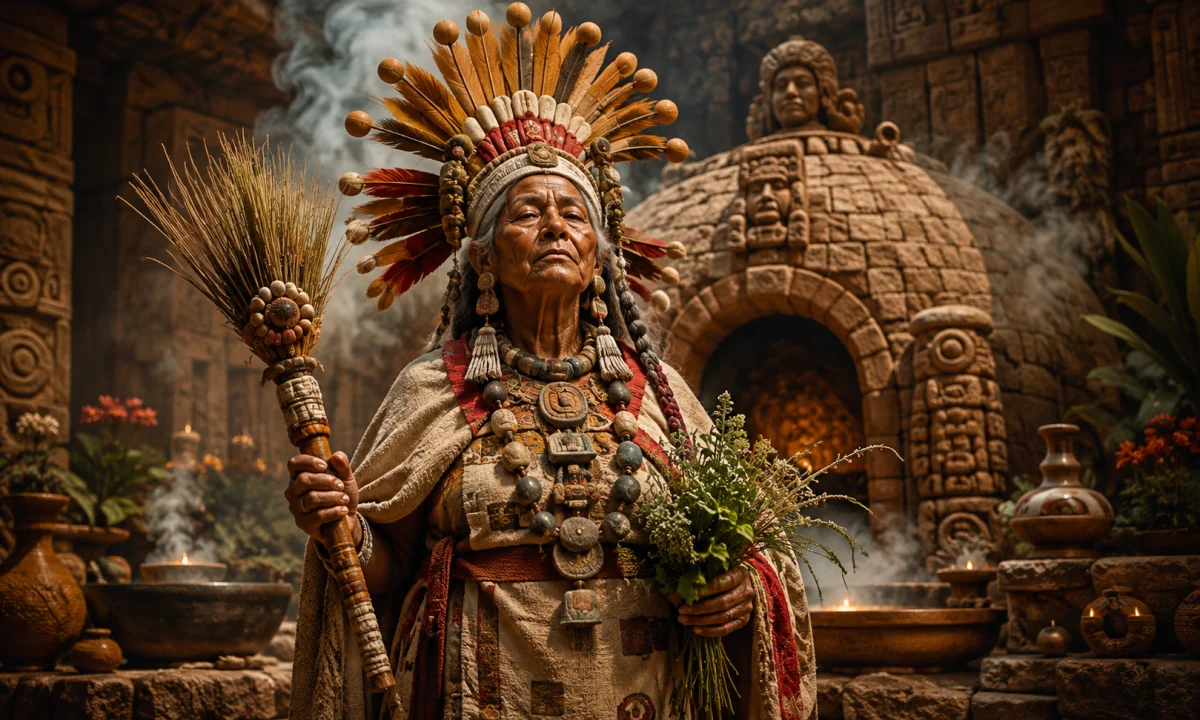
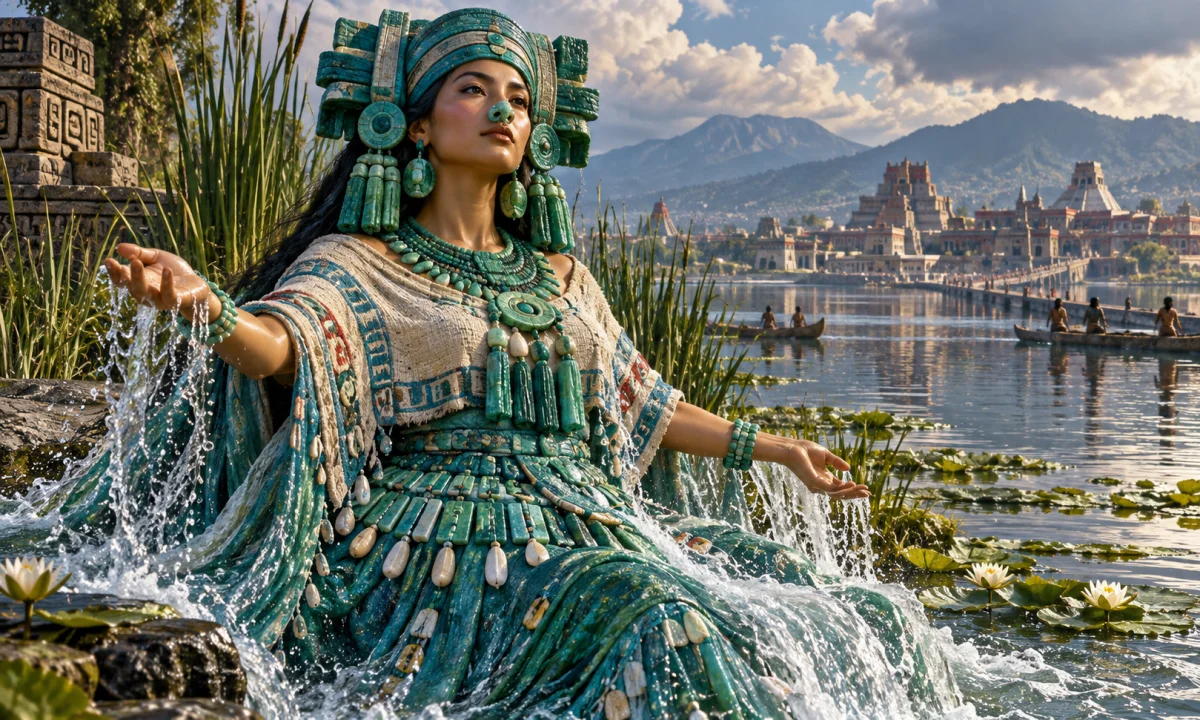
Toci is a female deity of Nahua religious tradition, usually associated with the earth, childbirth, healing, midwifery and the temazcal, or Mesoamerican sweat bath. Her name is commonly translated as “Our Grandmother.” In sources describing Mexica, or Aztec, religion, she also appears under titles such as Teteo Innan, “Mother of the Gods,” and Temazcalteci, “Grandmother of the Sweat Bath.” These names do not always function as the name of one sharply defined goddess. They can represent overlapping titles, aspects or identifications within a religious system that allowed deities to share roles and be connected through ritual.
Origins and cultural setting
Toci belongs to the wider religious world of the Nahua peoples of central Mexico. The Mexica, often called the Aztecs, worshipped numerous gods and goddesses whose powers were connected with natural forces, social occupations, calendrical ceremonies and the maintenance of cosmic order. A deity could be understood simultaneously as a divine person, a sacred force and a presence embodied in ritual.
The principal surviving descriptions of Toci were recorded after the Spanish invasion, especially in works based on conversations with Nahua specialists. The most important evidence includes the Florentine Codex, compiled under the direction of Bernardino de Sahagún, and several pictorial manuscripts that preserve representations of the Mexica ritual calendar. These sources are indispensable but require care. They were produced in a colonial setting, often through translation into European languages and Christian intellectual categories. Their accounts may also combine information from different communities and periods.
Some colonial sources connect Toci with the Otomi, a neighbouring people whose communities occupied parts of central Mexico. This has led many interpretations to describe her as an Otomi goddess adopted or incorporated by the Mexica. The historical process behind that claim is not fully clear, however. Religious figures frequently crossed political and linguistic boundaries, and “origin” in this context may refer to a local cult, a ritual association or a later explanation rather than to a single documented act of adoption. Toci is therefore best understood as a deity whose worship and identity developed within a network of central Mexican traditions.
Name and titles
The Nahuatl name Toci is generally translated as “Our Grandmother.” The possessive element “our” is significant: it presents the figure as an intimate and authoritative elder, not merely as an abstract force of nature. Grandmother imagery could suggest ancestry, nourishment, bodily knowledge and the transmission of practical skills, while also acknowledging age, decay and death.
Several titles associated with Toci help define her religious character:
- Toci, “Our Grandmother,” emphasizes an ancestral and maternal relationship between the goddess and the community.
- Teteo Innan, usually translated as “Mother of the Gods,” presents her as an ancient maternal power among the divine beings.
- Temazcalteci, “Grandmother of the Sweat Bath,” connects her with the temazcal, a heated structure used for bathing, purification, treatment and childbirth.
- Tlalli Iyollo, often translated as “Heart of the Earth,” associates her with the living interior of the earth and its generative powers.
The exact relationship among these names is debated. They may be titles of Toci, names of related manifestations or designations that were treated as equivalent in particular ritual settings. It is misleading to assume that every source presents a single, consistent theological system in which all of these names have identical meanings.
Roles and religious significance
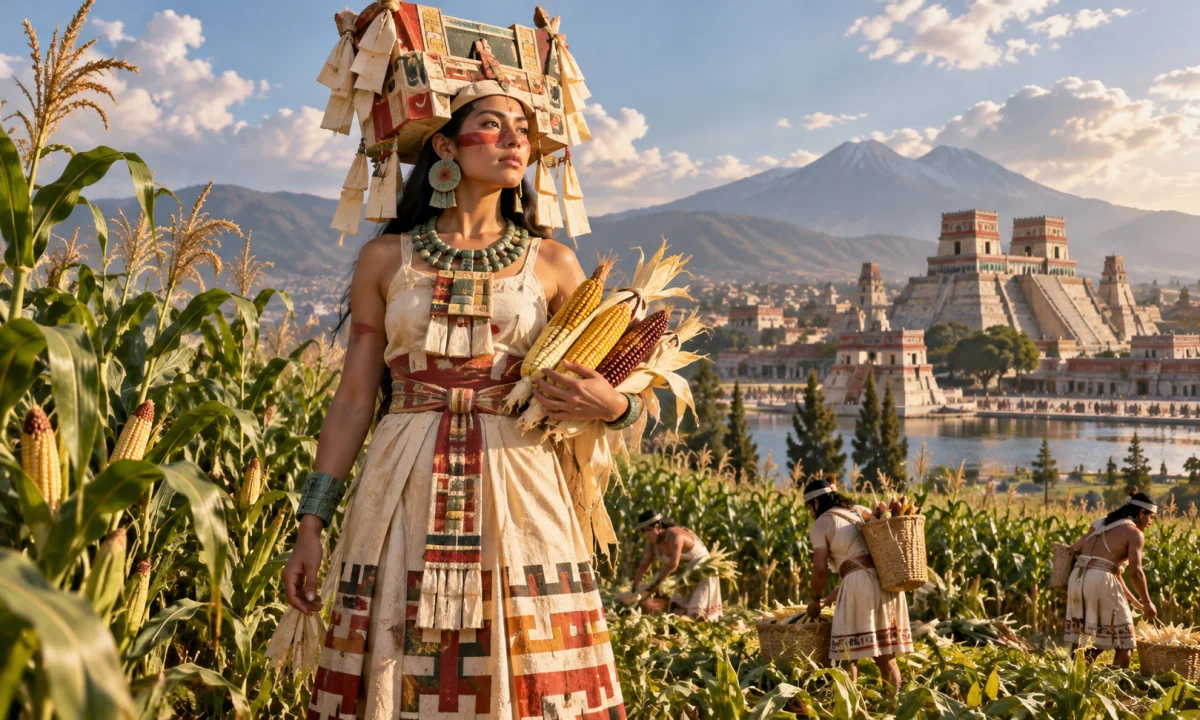
Toci’s most distinctive sphere is the connection between the earth and female bodily experience. She was associated with fertility, childbirth, healing and midwifery, but her character was not limited to benevolent motherhood. Like the earth itself, she could nourish, receive the dead, produce crops and become dangerous when treated without respect.
Midwives and physicians had special reasons to honour her. Childbirth was physically perilous, and Nahua ritual specialists understood it through religious language as well as practical knowledge. A woman giving birth was sometimes described through the imagery of a warrior entering combat. The midwife’s work involved bathing, massage, prayers, diagnosis and ritual action. Toci’s association with these activities reflects the importance of women’s medical and reproductive expertise in Nahua society.
The temazcal was central to this symbolism. Heated stones, steam, water and medicinal plants made the sweat bath a place of cleansing and treatment. It could also be used after childbirth, during illness and in rites involving transition or purification. By calling Toci the “Grandmother of the Sweat Bath,” worshippers connected the building and its procedures with an elder female power who understood the body and restored its strength.
Her earth symbolism likewise had several dimensions. The earth was the source of food and vegetation, but it was also the place where the dead were buried and where life eventually returned. Toci could therefore embody the cycle of generation, maturity, decline and renewal. The title “Heart of the Earth” suggests more than a surface landscape: it evokes an inward, vital centre from which growth and transformation emerge.
Appearance and iconography
Representations of Toci often give her the appearance of an elderly woman. This age is not simply a sign of weakness. It conveys seniority, experience and the authority of a grandmother, while also making visible the goddess’s connection with the earth’s ancient and consuming aspect.
Her imagery can include signs connected with sweeping, cotton, healing or the temazcal, although the details vary between manuscripts and interpretations. Some portrayals are difficult to identify with certainty because colonial artists and interpreters rearranged or explained indigenous signs according to different conventions. An image labelled with a title associated with Toci may not provide a complete portrait of a single deity in the modern sense.
References to the goddess should also be distinguished from the human ritual impersonator who represented her during ceremonies. In Nahua festivals, a person could be dressed and treated as a deity for a period of time. The presence of such an impersonator does not mean that the deity was believed to be merely human. It was a ritual embodiment in which divine identity was temporarily made present through clothing, performance and ceremony.
Ochpaniztli and the ritual year
Toci is especially associated with Ochpaniztli, the eleventh twenty-day festival period in the Mexica ritual calendar. The name is commonly translated as “Sweeping of the Roads” or “Sweeping,” and sweeping had both practical and ceremonial meanings. It could signify the clearing of disorder, the preparation of sacred space and the beginning of a renewed cycle.
Descriptions of Ochpaniztli include ceremonies in which a woman impersonating Toci was honoured before being sacrificed. Her body was then flayed, and a priest wore her skin and regalia in a subsequent stage of the rites. The sources describe this material in different ways and do not offer a single uncontested interpretation of every act. Scholars commonly understand the ceremony as expressing transformation, renewal and the transfer of divine presence, but interpretations differ over how strongly it should be connected with agricultural cycles, warfare, childbirth or the renewal of political and cosmic order.
The ritual is disturbing from a modern perspective, but it should be examined within the religious logic of Mexica sacrifice rather than reduced to a sensational detail. In this setting, the victim was not simply an unrelated offering. The person representing Toci was incorporated into a carefully structured sequence of identification, honour, death and transformation. The skin worn by a priest has often been interpreted as a sign that the goddess’s power had passed into a new body. At the same time, the surviving descriptions were recorded by colonial observers, and the precise experience and understanding of the participants cannot be recovered completely.
Ochpaniztli also involved purification and the restoration of order. The festival’s name, the presence of sweeping and the prominence of an elderly female deity make it particularly appropriate for Toci’s associations with cleansing, bodily renewal and the earth’s capacity to receive and regenerate life. It would be too narrow, however, to call the festival simply a harvest celebration or to treat every part of it as a straightforward agricultural allegory.
Relationships and overlapping identities
Toci is often discussed alongside Cihuacoatl, a major female deity whose name means “Woman Serpent.” Both figures are associated in various sources with childbirth, earth powers, female ritual specialists and frightening aspects of motherhood. They can also be connected with the title of mother or ancestral woman. These similarities have encouraged scholars and popular writers to equate them.
They should not automatically be treated as identical. Cihuacoatl has her own myths, political associations and iconographic traditions, particularly those linked with the Mexica capital and the sacred history of central Mexico. Toci has a more pronounced connection with the temazcal, the title “Our Grandmother” and the ceremonies of Ochpaniztli. In some colonial accounts, deities and titles that appear separate elsewhere are brought together, so an exact boundary cannot always be established. The safest description is that Toci and Cihuacoatl are closely related in some religious contexts but are not interchangeable names in every source.
Toci may also be compared with Coatlicue, the “Serpent-Skirted One,” because Coatlicue is another powerful earth-associated mother figure. Coatlicue is especially known from Mexica traditions concerning the birth of Huitzilopochtli and from monumental sculpture, whereas Toci’s strongest associations concern the sweat bath, midwives and Ochpaniztli. Their shared maternal and earth symbolism reflects a broader pattern in Nahua religion, not proof that they were simply the same goddess.
How Toci was understood
Toci’s importance lies partly in the way she joins areas that modern categories often separate. She is at once an earth power, an elderly grandmother, a patron of medical practice, a figure of childbirth and a presence in rituals involving death and renewal. Her symbolism suggests that birth and burial, healing and danger, and cleanliness and blood belonged to one interconnected religious field.
Her age is particularly meaningful. In many modern representations, a fertility goddess is imagined as youthful and attractive. Toci instead makes fertility inseparable from maturity and accumulated knowledge. The grandmother is the person who has survived bodily danger, knows the procedures of birth and healing, and carries the authority of earlier generations. Yet she is also close to the earth’s darker side: the place of decomposition, sacrifice and return.
The title “Mother of the Gods” should likewise not be read as evidence of a single universal creator in the later monotheistic sense. Nahua divine titles were often relational and situational. A deity might be called mother because she generated, sustained or protected other divine powers, or because a ritual community addressed her through a maternal relationship. The title indicates high antiquity and generative authority, but its exact theological force varies with the source.
Sources and historical caution
Knowledge of Toci comes mainly from records created in the sixteenth century and from the pictorial and ritual traditions that those records preserve. The Florentine Codex is especially valuable for descriptions of deities, festivals, occupations and medical practices. Other manuscripts offer images and calendrical information, but their captions, artistic conventions and colonial histories differ.
These materials do not provide a single indigenous biography of Toci. There is no surviving ancient text that narrates her life in the manner of a continuous mythological story. As a result, claims that she had one fixed husband, one universally agreed parentage or one exclusive set of powers should be treated cautiously. Much of what is known comes from combining titles, festival accounts, iconography and comparisons with related traditions.
Modern descriptions sometimes call Toci simply an “Aztec earth goddess.” That label is not entirely wrong, but it can conceal the breadth of her identity. She was not only a personification of soil or agriculture. Her religious profile is equally grounded in the temazcal, female healing knowledge, midwifery, ritual purification and the difficult processes through which life is renewed.
Toci in modern representation
Toci does not have as prominent or standardized a presence in global popular culture as figures such as Quetzalcoatl, Huitzilopochtli or Coatlicue. When she appears in modern mythology books, games or online lists, she is often reduced to a generic fertility or earth goddess. Such portrayals may preserve one part of her traditional profile while omitting the temazcal, the authority of elderly women, the work of midwives and the complex ceremonies of Ochpaniztli.
A historically responsible representation keeps her distinct from Cihuacoatl and Coatlicue, acknowledges variation among colonial sources and avoids presenting modern artistic reconstructions as ancient descriptions. Toci is best approached as a layered Nahua religious figure whose names and functions reveal the close relationship between earth, body, healing, age, death and renewal.