WORLD
WORLD
Hamori
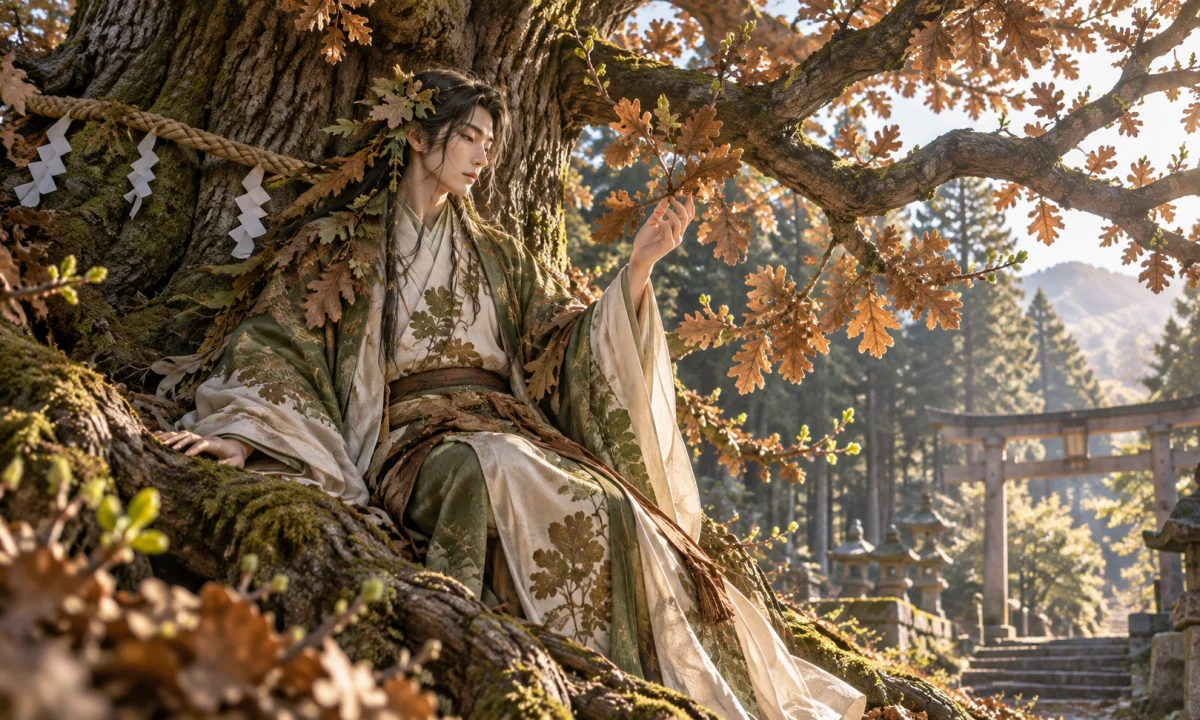
Hamori is not a securely identifiable figure in the best-known surviving sources of Japanese mythology. The name appears occasionally in modern lists, online encyclopaedias and informal discussions of Japanese legendary beings, but it is not a standard name for a major kami, yōkai, hero or demon in the Kojiki, the Nihon Shoki or the commonly discussed regional traditions of Japan. Because the evidence is uncertain, Hamori should not be presented as though it had a fixed appearance, genealogy, sacred role or cycle of traditional stories.
The problem of the name
The spelling Hamori creates an immediate difficulty. Japanese names can be written in several systems, and a name transferred into the Latin alphabet may change through inconsistent romanisation, translation or transcription. Yet no single, widely accepted Japanese mythological figure corresponds clearly to the English spelling “Hamori”. Without Japanese characters, a source, a locality or a description, the name cannot be securely assigned to one traditional being.
In modern Japanese, hamori written as ハモリ commonly refers to vocal harmony: a supporting vocal part sung alongside a melody. That ordinary meaning has no necessary connection with mythology. A similar-looking word may therefore have been mistaken for a supernatural name, especially when a list of Japanese terms has been translated without context.
The name may also result from a transcription error or a confusion with another Japanese mythological name. Several figures have names that can appear similar when written in English, but resemblance alone does not establish identity. The most important possible confusion is with Hoori, a genuine figure in early Japanese mythology. Hoori is not Hamori, and the two names should not be merged.
What the early mythological sources contain
The principal written sources for early Japanese mythology are the Kojiki, completed in 712, and the Nihon Shoki, completed in 720. These works preserve accounts of the creation of the world, the genealogy of the imperial line, major kami, conflicts among divine beings and encounters between the human and supernatural worlds. Their names and episodes form the foundation of much modern discussion of Japanese mythology.
Neither work provides a clearly established character called Hamori in the standard English forms used by scholars and translators. The same caution applies to the surviving portions of regional Fudoki, records that preserve local place traditions, sacred associations and origin stories. These texts do not support a confident description of Hamori as a nationally recognised kami or legendary creature.
This absence does not prove that no local tradition ever used a similar name. Japanese religious life has always included local shrine traditions, oral narratives, household beliefs and names preserved in forms that did not enter the major court chronicles. Many local beings were known only within a particular region. However, a claim about such a tradition requires evidence such as a documented Japanese spelling, a recorded story, a shrine tradition or a reliable ethnographic account. Without that information, detailed descriptions of Hamori remain unverified.
Possible confusion with Hoori
Hoori, also known as Hoori no Mikoto and sometimes associated with the name Hohodemi, is a genuine figure in the mythology recorded in the Kojiki and Nihon Shoki. He is one of the sons of the fire deity Kagutsuchi in the genealogical traditions that follow the birth of the heavenly and earthly deities. His elder brother is Hoderi, a figure associated with the sea and with hunting and fishing in different parts of the narrative.
The central story of Hoori concerns a lost fishhook. Hoderi lends his hook to Hoori, who loses it while fishing. Although Hoori attempts to replace it, Hoderi insists that the original must be found. Hoori eventually travels to the palace of the sea deity, often called Watatsumi or the Dragon King in later interpretations. There he meets and marries the sea deity’s daughter, 豊玉姫, commonly known as Toyotama-hime.
With assistance from the sea deity, Hoori recovers the lost hook and returns to the land. He uses the hook’s prescribed condition against Hoderi, and the conflict between the brothers ends with Hoderi submitting to Hoori. The story combines themes of lost property, ritual obligation, marriage between different realms and the transfer of authority.
Hoori and Toyotama-hime have a son, Ugaya-fukiaezu, whose own son is Jimmu, the first emperor in the traditional imperial genealogy. Through this relationship, the Hoori narrative connects the sea-world episode with the ancestral history of the Japanese imperial line. None of these episodes belongs to a figure named Hamori, even though an inaccurate transcription could potentially turn Hoori into a different-looking name.
Possible confusion with other words and figures
Several other terms may contribute to uncertainty surrounding Hamori:
- Hoderi is Hoori’s elder brother in the early mythological narratives. The two names are linked within the same story, but they identify separate figures.
- Himorogi refers to a sacred enclosure or temporary site where a kami may be invited or worshipped, often associated with a sacred tree, stones or other natural features. It is a religious term, not the name of Hamori.
- Mori appears in many Japanese words and names and can be associated with a forest or a guardian depending on the characters used. A name ending in “-mori” therefore cannot be interpreted accurately without its Japanese writing.
- Hamori may be a modern romanisation of a local personal name, place-name or fictional character rather than a traditional mythological being.
Japanese mythological names are especially vulnerable to this kind of confusion because the same pronunciation may be represented by different kanji, while different names may look similar after being converted into Latin letters. A responsible identification must therefore consider both sound and written form.
Classification and attributes
There is no established traditional classification for Hamori as a kami, yōkai, oni, dragon, spirit or ancestral figure. These categories are themselves broad and historically overlapping. A kami may be a deity, an ancestor, a powerful natural presence or a sacred force associated with a place. A yōkai is a modern scholarly and popular umbrella term for many unusual beings and phenomena, although earlier Japanese sources used a wider range of categories and descriptions.
Because Hamori lacks a secure identification, traditional attributes cannot be assigned with confidence. There is no well-attested appearance, animal form, weapon, dwelling place, family relationship, sacred object or supernatural power that can be attributed to Hamori across Japanese sources. Claims that Hamori is a guardian, monster, forest spirit, sea deity or household protector should be treated as unverified unless they are tied to a specific documented tradition.
The same caution applies to symbolic interpretations. It would be speculative to say that Hamori represents protection, fertility, death, storms, the sea or the forest merely because such themes are common in Japanese religious and folkloric traditions. Similar symbolism appears around many different kami and yōkai, but shared themes do not establish a connection between those figures and an uncertain name.
Why uncertain names spread
Japanese mythology is often presented in simplified lists that place ancient kami, regional legends, Buddhist figures, yōkai, modern urban legends and fictional creations side by side. Such lists can be useful introductions, but they may omit Japanese spellings and distinctions between primary texts, later folklore and modern invention. Once an unclear name is repeated, a short description can acquire the appearance of an established tradition.
Translation also plays a role. A local name may be converted into English through several stages, producing variant spellings. A name taken from a game, novel or illustrated bestiary may then be repeated as though it came from folklore. In other cases, a modern writer may construct a character from elements of genuine Japanese tradition without claiming that the character is historical or religious. Later readers can mistake that adaptation for an ancient belief.
These problems are not unique to Japan, but they are particularly noticeable in discussions of yōkai because Japanese folklore contains many local names, variant spellings and overlapping classifications. A creature recorded in one village should not automatically be treated as a universal figure, and a name appearing on a modern website should not automatically be treated as evidence of antiquity.
Cultural and religious context
Japanese mythology developed through interaction among local kami worship, court traditions, shrine ritual, Buddhism, continental ideas and regional storytelling. The written chronicles preserve only part of this history. They were compiled for particular political and religious purposes, and they do not provide a complete catalogue of every belief held throughout the Japanese archipelago.
At the same time, the existence of many local traditions does not permit every unexplained name to be accepted as authentic folklore. Japanese religious history requires attention to place, language and transmission. A name connected with a shrine may have a different status from a character in a folktale, and a being described in a medieval Buddhist text may not belong to the same tradition as a kami recorded in an early court chronicle.
For Hamori, the available information is insufficient to establish such a context. The safest description is therefore negative but precise: Hamori is an uncertain or possibly erroneous name, not a clearly documented figure of mainstream Japanese mythology. Further identification would require the original Japanese spelling and the source in which the name occurs.
Hamori in modern culture
Modern fantasy, games, animation and online folklore databases frequently create new names or adapt fragments of older traditions. A character called Hamori could therefore exist in a contemporary fictional work without having an ancient Japanese counterpart. If a modern work uses the name, its depiction belongs to that work’s fictional setting unless the creators explicitly connect it to a documented legend.
Modern popular culture may also use familiar Japanese motifs—shrines, masks, forests, dragons, foxes, ancestral spirits or guardian beings—to give an invented character a traditional atmosphere. Those motifs can be culturally meaningful, but they do not by themselves prove that the named character is part of Japanese mythology.
Until a specific source is identified, Hamori should remain separate from Hoori, Hoderi, Himorogi and other similarly spelled terms. Treating the name as uncertain preserves the distinctions between ancient religious tradition, regional folklore, modern reference lists and fiction.