WORLD

Ayar Auca
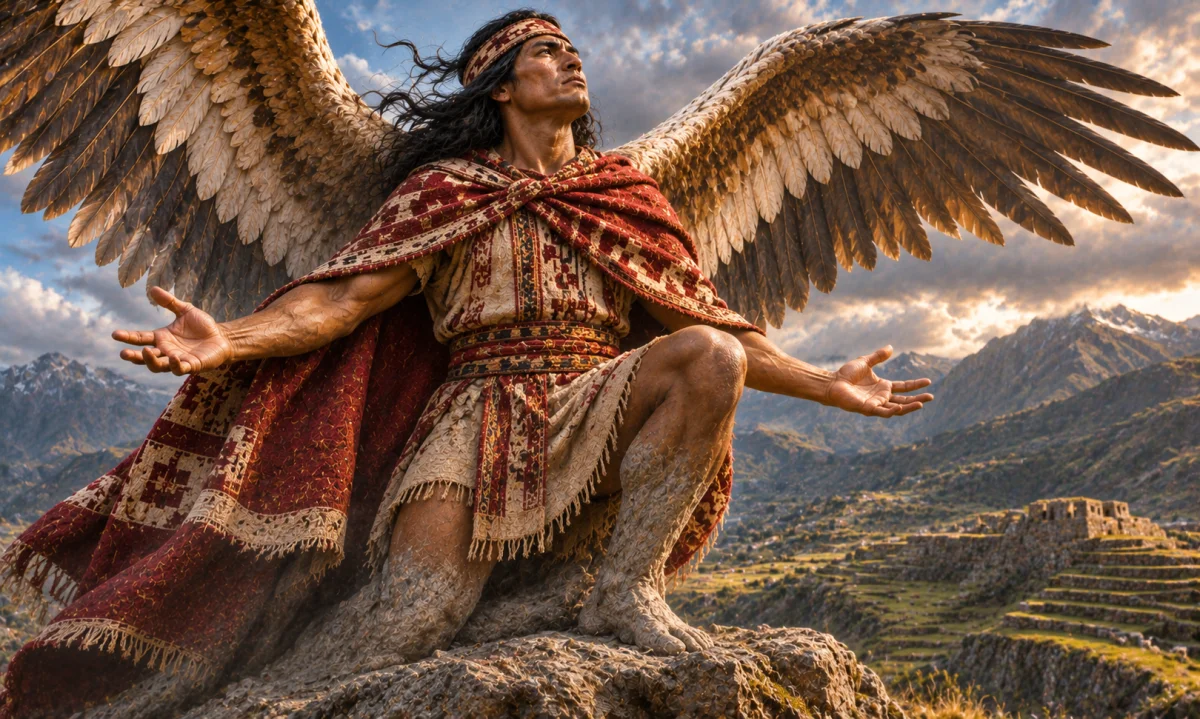
Ayar Auca is one of the ancestral figures in the Inca origin traditions of the Cusco region. He is usually described as one of four Ayar brothers who emerged from a sacred place called Pacaritambo and travelled toward the valley where the Inca capital would be established. In the best-known versions, Ayar Auca is associated with the occupation or marking of the future site of Cusco, and, like other figures in the story, he ultimately becomes connected with sacred stone and ancestral worship.
Origins in Inca tradition
The story of the Ayar brothers belongs to a group of Inca narratives explaining the origins of the ruling people of Cusco. These traditions were not preserved in a single pre-Columbian book. They were transmitted orally and later recorded in Spanish by colonial-era writers who questioned Inca nobles, priests, and local informants. As a result, the details vary considerably between accounts.
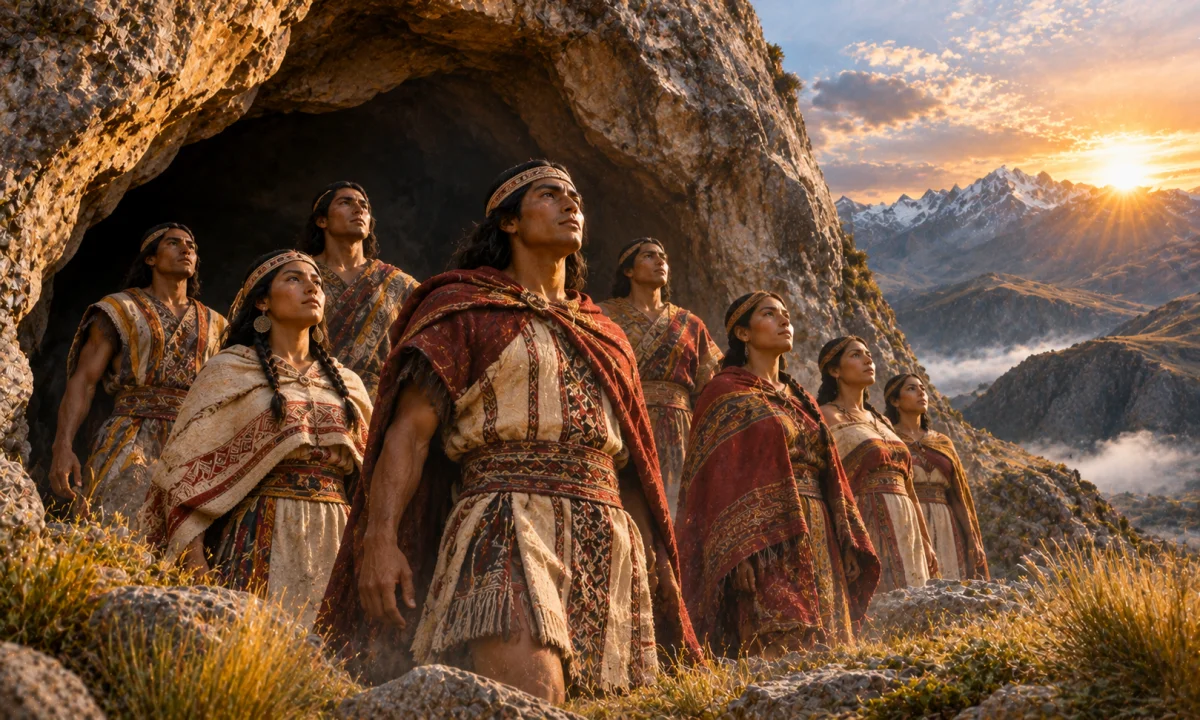
The central setting is usually Pacaritambo, a place south of Cusco whose name is often interpreted as “lodging of emergence” or “dwelling of origin.” Within Pacaritambo was a sacred cave or opening known in several accounts as Tambo Toco. From this place emerged four brothers and four sisters, who became the ancestors of the Inca ruling lineage or the founders of the Cusco community.
The four brothers are generally named:
- Ayar Manco, later identified with Manco Cápac, the principal founder of the Inca dynasty;
- Ayar Auca, the figure associated with warfare, movement, and the occupation of the future settlement;
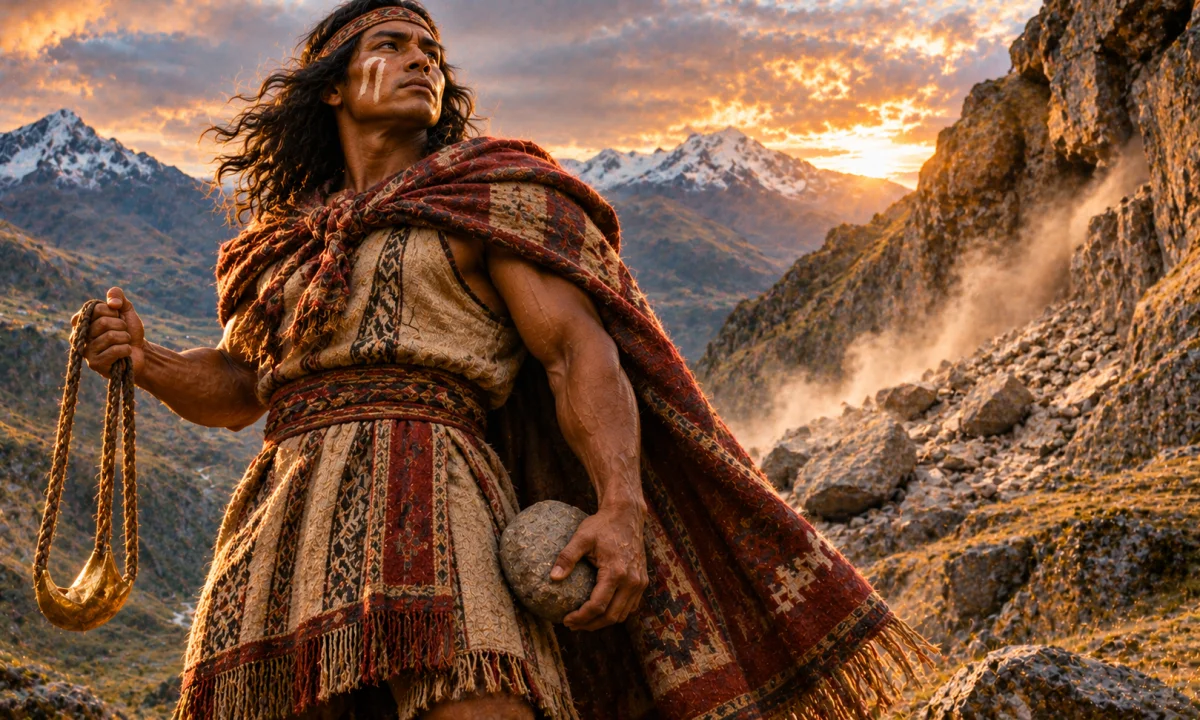
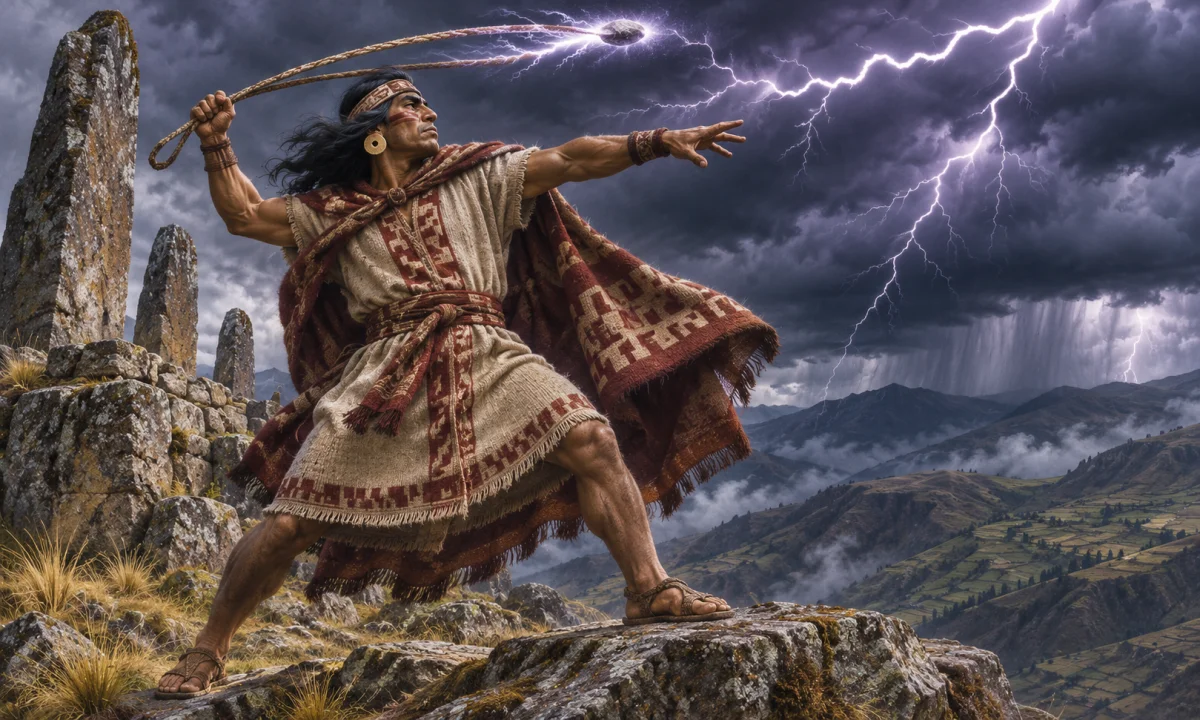
- Ayar Cachi, a powerful and dangerous figure whose sling could produce extraordinary effects; and
- Ayar Uchu, who becomes closely connected with a sacred mountain and transformation into stone.
Their female companions also have varying names, including Mama Ocllo, Mama Huaco, Mama Raua, and Mama Ipacura. These women are not presented identically in every narrative. In some accounts they are the brothers’ sisters; in others, they are also wives or founding mothers. The relationships reflect the importance of ancestral marriage and kinship in explanations of Inca social and political order.
The name Ayar Auca
The meaning of Ayar is uncertain. It may belong to an old Quechua naming tradition, and proposed translations have included references to particular plants or foods, but no single explanation is accepted for all versions of the myth. The second element, Auca, is often connected with the Quechua word awqa, which can refer to an enemy, opponent, rebel, or warrior. Colonial spellings are inconsistent, however, and the exact significance of the name should not be treated as certain.
The name has therefore sometimes been translated as “Ayar the Warrior” or “Ayar the Enemy.” These renderings are useful as approximate interpretations, not as definitive translations. They also reflect the difficulties of interpreting Quechua names recorded through Spanish spelling and colonial explanations.
Ayar Auca should not be treated as a universal Inca god with a fixed personality and an independent cult known throughout the Andes. He is more accurately described as an ancestral founding figure within a cycle of origin narratives. His significance comes from his place in the founding generation and from his relationship to the land around Cusco.
The journey toward Cusco
After leaving Pacaritambo, the Ayar brothers and their companions travel through the highlands. Their journey is not simply a migration from one settlement to another. It is a sacred movement through a landscape filled with places, rocks, mountains, springs, and caves that can become associated with ancestral presence.
The group encounters difficulties as the brothers compete for authority and respond to one another’s unusual abilities. The most threatening of them is often Ayar Cachi. He is said to possess remarkable strength and to use his sling to break hills or create deep valleys. The other brothers fear that his powers will make it impossible for them to control the group. In several versions, they deceive Ayar Cachi into returning to the cave from which they emerged and then seal him inside.
This episode has different forms in different chronicles. It may represent the exclusion of a dangerous rival, the separation of an older ancestral power from the new ruling order, or a mythic explanation for a place regarded as sacred. It also shows that the foundation of Inca authority is portrayed as a process of conflict and selection rather than a peaceful family journey.
The travellers then reach the region of Huanacauri, a mountain or sacred height near Cusco. Huanacauri is especially important in Inca tradition. It was connected with initiation, ancestry, and the origin of the Inca people. In some accounts, Ayar Uchu becomes attached to the mountain as a stone or sacred object, while in others the transformation occurs through a related episode involving the founding ancestors. The precise sequence is not consistent across the surviving narratives.
Ayar Auca and the founding of the city
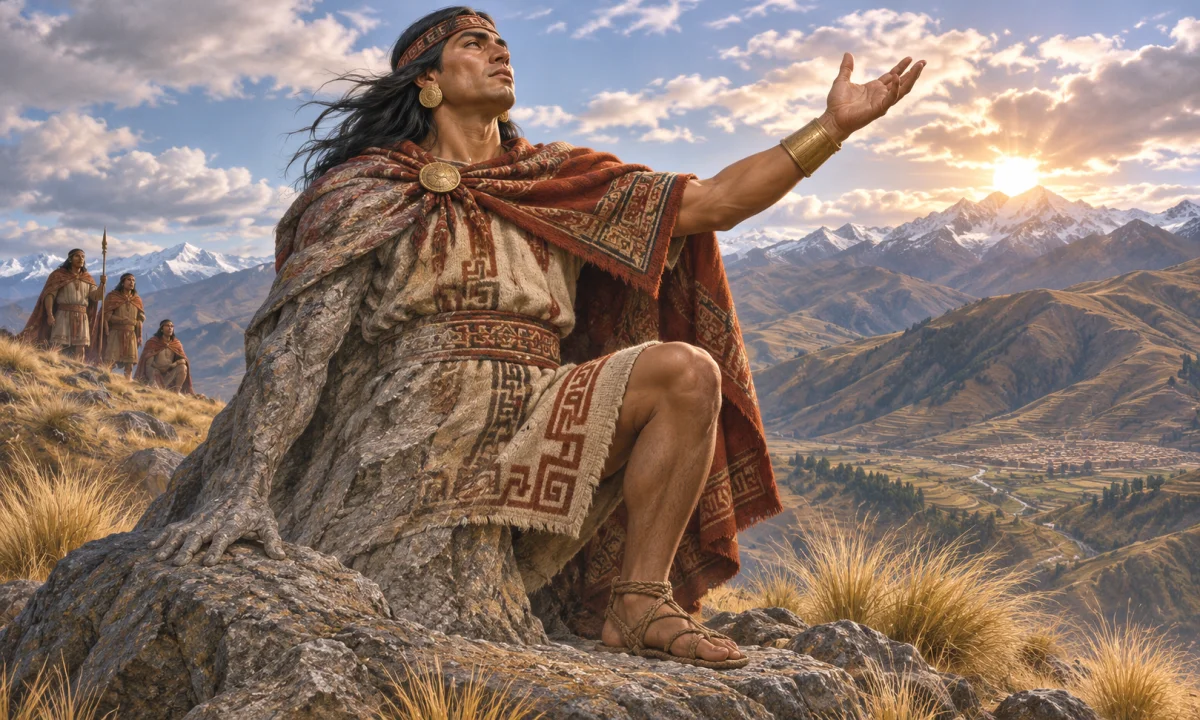
Ayar Auca’s most important role is his association with the place that becomes Cusco. In widely repeated versions, he goes ahead of the others to find or occupy suitable ground. Some retellings give him wings and describe him flying toward the future settlement. Other accounts do not emphasize wings and present him instead as a brother sent ahead to mark or claim the site.
At the chosen location, Ayar Auca is transformed into stone. This event is not merely a death in the ordinary sense. In Andean religious traditions, a person of ancestral importance could continue to exist through a sacred stone, mountain, spring, or other feature of the landscape. Such an object could be regarded as a huaca, a place or being possessing sacred power. The stone linked to Ayar Auca thus marks the presence of an ancestor in the territory that the Inca would organize as Cusco.
Some accounts say that Ayar Auca was instructed to settle at the site and that he became a stone pillar or marker. Others connect his transformation more generally with the founding of Cusco without identifying a surviving object with certainty. Because colonial chroniclers recorded different versions, it is not possible to establish one universally accepted physical location or form for the stone.
The story sometimes explains the name Cusco through the act of occupying or marking the land. This interpretation should also be treated cautiously. Colonial writers often supplied etymologies or explanations that may reflect their own attempts to interpret Quechua traditions. The myth nevertheless makes an important religious point: the city is not founded on empty ground. Its location is validated by an ancestral act and by the transformation of a founding person into the sacred landscape.
Relationships with the other Ayar figures
Ayar Manco
Ayar Manco is normally the leading brother in the journey. He is later identified with Manco Cápac, the first ruler of the Inca dynasty in the best-known Cusco origin traditions. Once the other brothers have disappeared, been excluded, or become sacred beings, Ayar Manco assumes the role of dynastic founder.
The relationship between Ayar Auca and Ayar Manco is not always presented as hostile. Ayar Auca’s movement toward the future city can prepare the place for Manco’s rule. In this sense, the brothers perform complementary functions: one establishes or marks the territory, while the other organizes the political community and begins the royal lineage.
Ayar Cachi
Ayar Cachi is distinguished by his destructive power. His episodes explain why one member of the original group does not continue to Cusco and may preserve the memory of an ancestral force that had to be controlled. He is not another name for Ayar Auca. Both are brothers in the same cycle, but their roles are sharply different: Ayar Cachi is associated with overwhelming force, whereas Ayar Auca is associated with advance, occupation, and sacred marking.
Ayar Uchu
Ayar Uchu is often connected with Huanacauri and with the transformation of a living ancestor into stone. In some narratives, he remains at the mountain and communicates instructions to Ayar Manco. His story resembles Ayar Auca’s in its use of petrification, but the two figures should not be merged. Ayar Uchu’s principal setting is Huanacauri, while Ayar Auca is more directly associated with the future site of Cusco.
Stone, ancestors, and sacred geography
Ayar Auca’s transformation is best understood in the context of Andean ideas about sacred places rather than through a simple distinction between life and death. In many Andean traditions, ancestors could remain active in the world through huacas. A sacred stone might represent a person, contain ancestral power, protect a community, or authorize claims to land.
For the Inca state, origin stories helped connect political rule with particular locations. Cusco was both a city and a sacred centre, organized through temples, royal estates, roads, and ritual relationships with the surrounding landscape. A founding ancestor transformed into stone made the territory part of the dynasty’s sacred history.
The Ayar narratives also suggest that identity was created through movement and transformation. The ancestors emerge from a place of origin, travel through the mountains, encounter rival powers, and become attached to specific locations. Their journey gives the Inca people a history written across the landscape. Mountains and stones are not passive scenery in this account; they are participants in the formation of society.
Surviving accounts and variations
Important colonial accounts of the Ayar stories were written by authors such as Juan de Betanzos, Pedro Sarmiento de Gamboa, and Garcilaso de la Vega. These writers worked at different times, relied on different informants, and interpreted Inca traditions through the categories of European history and Christianity. Their accounts are valuable, but they should not be read as direct transcripts of an unchanged ancient text.
Variation appears in the names of the companions, the order of events, the identities of the figures who turn to stone, and the precise role of Ayar Auca. Some versions emphasize his wings; others omit them. Some describe him as claiming the site of Cusco, while others give greater attention to Ayar Manco’s foundation of the city. The location and identity of the stone associated with him are likewise not uniform.
These differences do not necessarily indicate that one version is true and all others are false. In an oral tradition, different communities, families, and ritual specialists could preserve related accounts with distinct local emphases. The surviving chronicles provide evidence for a broad narrative complex, not a single canonical mythology.
Interpretation and cultural significance
Ayar Auca can be interpreted as a figure who connects ancestry, territory, and political foundation. His movement ahead of the group gives him a pioneering role, while his transformation into stone makes the act of founding permanent. The future city gains an ancestral presence before it becomes the seat of imperial government.
His possible association with the ideas of warrior, opponent, or enemy adds another dimension. The founding of a state is represented as an achievement requiring courage and the control of competing powers. Yet the name alone cannot establish that Ayar Auca was a war god or a specialized military deity. The surviving traditions do not provide enough evidence for such a classification.
The narrative also illustrates how Inca origin traditions combined human and non-human forms of existence. The ancestors are born from a sacred opening, travel as people, and then become stones or mountain beings. Such transformations are central to the religious imagination of the Andes, where the boundary between ancestor, landscape, and sacred object could be understood as continuous rather than absolute.
Distinguishing Ayar Auca from similar names
Ayar Auca is sometimes confused with Manco Cápac, Ayar Uchu, or other figures connected with the foundation of Cusco. He is not simply an alternative name for Manco Cápac, although both belong to the same founding cycle and some retellings may compress their roles. Nor is he identical with Ayar Uchu, whose principal association is with Huanacauri.
The word auca also appears in discussions of enemies, rebels, warriors, and non-Inca peoples in colonial descriptions of the Andes. Those uses should not automatically be treated as references to the ancestral figure. Similar spellings can conceal different Quechua words, names, and contexts, especially because the original traditions were recorded using Spanish orthography.
Later reception
Ayar Auca has remained less widely known outside discussions of Inca mythology than Manco Cápac or Mama Ocllo. He appears mainly in retellings of the Ayar origin cycle, accounts of Cusco’s sacred geography, educational material, and modern interpretations of Andean mythology. These presentations often simplify the variations by giving him wings or describing him as a stone guardian of Cusco.
Such details may reflect one version of the tradition, a modern synthesis, or an attempt to make the story more accessible. They should not be assumed to represent a single belief shared throughout the Inca world. The enduring importance of Ayar Auca lies less in a fixed catalogue of supernatural powers than in his role as an ancestral figure whose transformation helped make the foundation of Cusco a sacred event.