WORLD

Axo-mama
Axo-mama, also written Axomama or Axo Mama, is commonly described in modern accounts of Inca mythology as a female divinity or personification associated with the potato. The name is generally connected with Quechua terms for the potato and mama, meaning “mother,” although the spelling, translation and status of the figure vary considerably between sources. Axo-mama is therefore best treated as a relatively obscure Andean agricultural figure rather than as one of the securely documented major gods of the Inca state.
Origins and cultural setting
The potato was one of the foundational crops of the central Andes. Thousands of varieties were cultivated in highland environments, where potatoes could be preserved through processes such as freezing and drying. They provided an important source of food for communities living at elevations where maize was more difficult to grow. Agricultural fertility, seasonal weather and the well-being of cultivated plants were consequently central concerns in Andean religious life.
Inca religion did not operate with a single, uniform pantheon in the manner often implied by modern mythology handbooks. The Inca state incorporated local sacred places, ancestral beings, mountain powers and agricultural cults into a broad religious system centred on Cusco. Some deities had importance across the empire, while others were connected principally with particular communities, landscapes or crops.
Within this setting, a figure associated with the potato would have belonged to a world in which plants were not merely passive resources. Crops could possess sacred vitality, receive offerings and be understood through kinship language. The word mama appears in the names of several Andean female powers and can convey motherhood, generative abundance or a revered source of nourishment. An agricultural “mother” was therefore a meaningful religious concept even when the surviving evidence does not establish a single, standardized doctrine about her.
The name and its uncertain identity
The form Axo-mama is not consistently standardized. Other forms include Axomama, Axo Mama, Aqso-mama and spellings that use acs(o) or akshu. These differences reflect the difficulty of representing Quechua words through Spanish orthography and later English transcription. Quechua itself has several regional varieties, and words for the potato differ across dialects.
The first element is usually interpreted as a Quechua word for potato or a potato-like tuber, while mama means “mother.” The resulting sense is commonly rendered as “Potato Mother” or “Mother of Potatoes.” That translation is plausible, but the precise linguistic history of the form should not be presented as completely certain. A name repeated in modern reference works does not automatically prove that it was a universally recognized title throughout the Inca Empire.
A further difficulty is classification. Axo-mama is often called a goddess, but that English term can suggest a clearly defined individual deity with a fixed mythology. The available material supports a more cautious description: she is a reported or reconstructed personification of the potato and its nourishing power, situated within Andean agricultural religion. Some accounts may preserve a local or later tradition, while others may systematize scattered ideas about sacred crops into a family of named deities.
Relationship to Pachamama and other crop figures
Modern descriptions frequently identify Axo-mama as a daughter of Pachamama, the great earth or fertility mother of Andean religious tradition. This relationship is symbolically coherent: the earth produces the potato, and the potato in turn sustains human communities. However, the genealogical relationship should be treated with caution. It is not as securely documented in early evidence as the general association between Pachamama and the fertility of land, animals and crops.
Some modern lists also place Axo-mama alongside other female crop figures, especially Mama Sara, associated with maize, and Coca Mama, associated with the coca plant. These comparisons reflect a useful pattern in Andean religious thought: important cultivated plants could be represented as mothers, ancestors or sacred beings. They do not necessarily demonstrate that all of these figures formed a single, empire-wide divine family with an agreed genealogy.
Mama Sara has a stronger and more frequently discussed place in accounts of Inca and wider Andean religion. Maize was vital for food, chicha beer, state feasting and ritual exchange. The potato was equally important to highland subsistence, but it was not always treated in surviving colonial descriptions through an equally elaborate named cult. The relative prominence of maize in written sources may partly reflect the priorities of Spanish observers, who often paid particular attention to crops, offerings and ceremonies that were familiar or politically significant to them.
Attributes and symbolism
Axo-mama’s principal attribute is the potato itself, especially the underground tuber that grows hidden within the earth. This makes her a figure of nourishment, regeneration and concealed abundance. A potato can appear to die when its leaves wither, yet new plants emerge from its eyes or seed tubers. Its cycle naturally lends itself to ideas of renewal and continuity.
The potato also symbolizes adaptation to difficult conditions. Andean farmers developed sophisticated methods for cultivating crops across sharply different ecological zones, from high valleys to cold plateaus. Through drying and preservation, potatoes could be transformed into chuño, a durable food capable of being stored for long periods. A divine personification of the potato therefore represents more than fertility in the abstract. It can also express endurance, communal security and the practical intelligence of agricultural life.
Unlike some better-known deities, Axo-mama has no securely established canonical appearance. There is no widely accepted ancient description that gives her a particular face, costume, weapon or animal companion. Illustrations that portray her as a woman emerging from a potato field, wearing Andean dress or holding tubers are modern artistic interpretations unless they are specifically tied to a documented local tradition.
Her feminine characterization follows the widespread use of maternal imagery for the earth and for nourishing crops. It should not be assumed, however, that every Andean community imagined the potato as a woman in the same way. Sacred plants could be understood through many overlapping categories, including living beings, gifts of the earth, ancestors and manifestations of divine power.
Ritual and agricultural significance
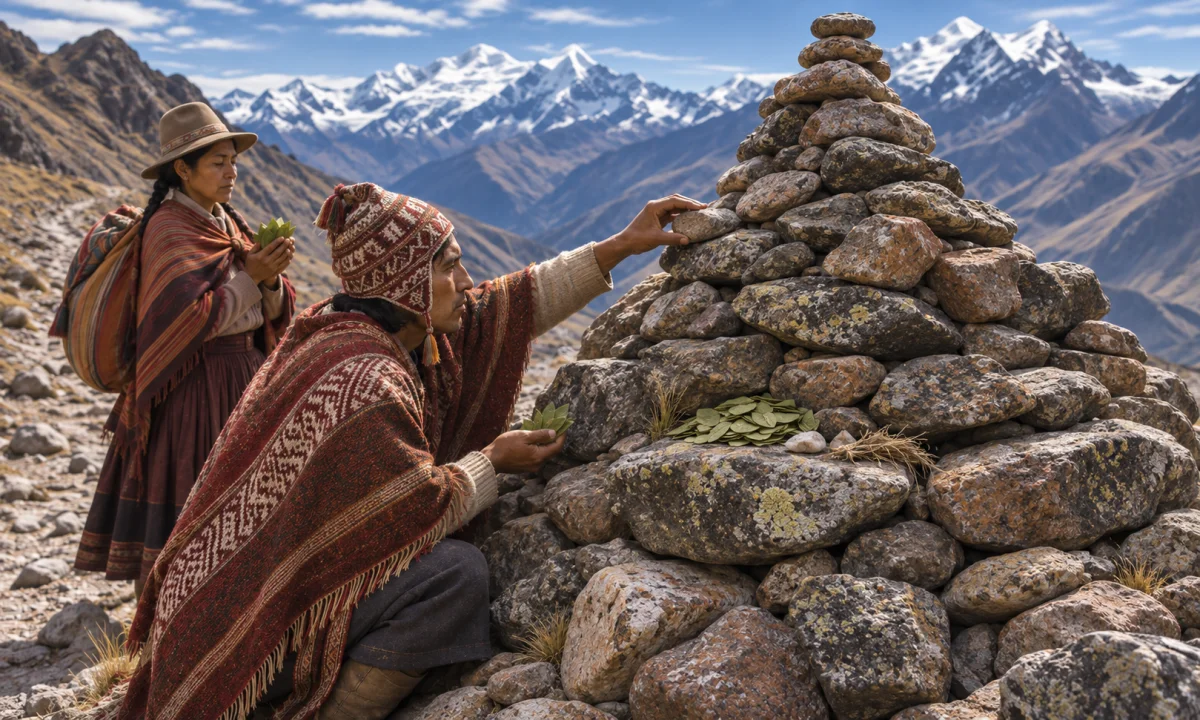
There is no securely documented set of rituals that can be attributed specifically and universally to Axo-mama. Andean agricultural ceremonies commonly involved offerings to the earth, local sacred places, mountains, ancestors and powers connected with water and fertility. These practices could include food, drink, coca leaves, chicha, textiles or other valued goods, but the form and meaning of offerings varied by region and historical period.
If a potato mother was invoked in a particular community, her significance would most likely have been connected with planting, harvesting, protection from frost, rain and drought, and the preservation of food. Such concerns were not separate from social life. The success of a harvest affected household survival, reciprocal labour, obligations to kin and the ability of communities to support religious and political institutions.
Andean farmers also cultivated many kinds of potatoes rather than relying on one standardized crop. The presence of numerous varieties allowed communities to respond to different soils, elevations and climatic conditions. A figure such as Axo-mama can consequently be interpreted as representing the fertility and diversity of the potato tradition as a whole, rather than a single botanical species or a narrowly defined sacred object.
Sources and historical evidence
Knowledge of Inca religion comes through a combination of archaeology, material culture, Quechua-language traditions, later Indigenous testimony and writings produced during and after the Spanish conquest. No complete religious scripture written by the Inca survives. Colonial chroniclers recorded information about Inca gods and ceremonies, but they wrote from particular political, Christian and ethnographic perspectives. They sometimes misunderstood Indigenous categories or reorganized them according to European ideas of gods, idols and priesthoods.
This background is especially important for an obscure figure. A name appearing in a modern catalogue of “Inca gods” may be based on a local tradition, a colonial report, a later folklore collection or an interpretation by a modern author. These are not equivalent forms of evidence. Nor does the absence of Axo-mama from a major colonial account prove that no one revered a potato-related female power. It does mean that claims about a universally recognized Inca goddess, an official temple or a detailed mythological cycle require supporting evidence that is not generally available.
The distinction between Inca and broader Andean tradition also matters. The Inca Empire ruled a large and culturally diverse territory, and the potato was cultivated across the Andes long before the rise of the Inca state. A potato-related sacred figure may belong to local or regional religious practice rather than to an institution created by the imperial government. Describing Axo-mama simply as an “Inca goddess” can therefore conceal the deeper antiquity and diversity of Andean crop traditions.
Stories and genealogy
No single, widely attested myth about Axo-mama survives in the way that stories about some classical or Norse figures do. Accounts that mention her usually focus on her identity as the potato’s mother or divine representative rather than on a sequence of adventures. There is no firmly established narrative describing her birth, marriage, conflict with another god or role in the creation of the world.
The most common modern genealogy links Axo-mama with Pachamama and places her among other personified crops. This arrangement gives a clear symbolic structure to Andean agriculture: the earth mother generates particular plant mothers, and each crop supports human life in its own ecological and cultural sphere. It should be understood as an interpretive pattern unless a specific community’s oral tradition or historical record provides more detailed evidence.
Care is also needed with stories that attribute every agricultural innovation to a named deity. Andean myths about the origins of crops vary widely, and some involve culture heroes, animals, ancestors or sacred places rather than a specialized crop goddess. A general association between potatoes and sacred fertility does not by itself establish a particular myth of divine gift or invention.
Distinguishing Axo-mama from related figures
- Pachamama is a broad earth, fertility and household-divinity figure whose traditions extend across the Andes. Axo-mama, when recognized, is more specifically associated with the potato.
- Mama Sara is linked primarily with maize or corn. Because both figures are described as female crop powers, they are sometimes presented as sisters, but that relationship is not consistently established in historical sources.
- Coca Mama is associated with the coca plant in some accounts. Coca has its own ritual, medicinal and social history and should not be treated as another name for the potato figure.
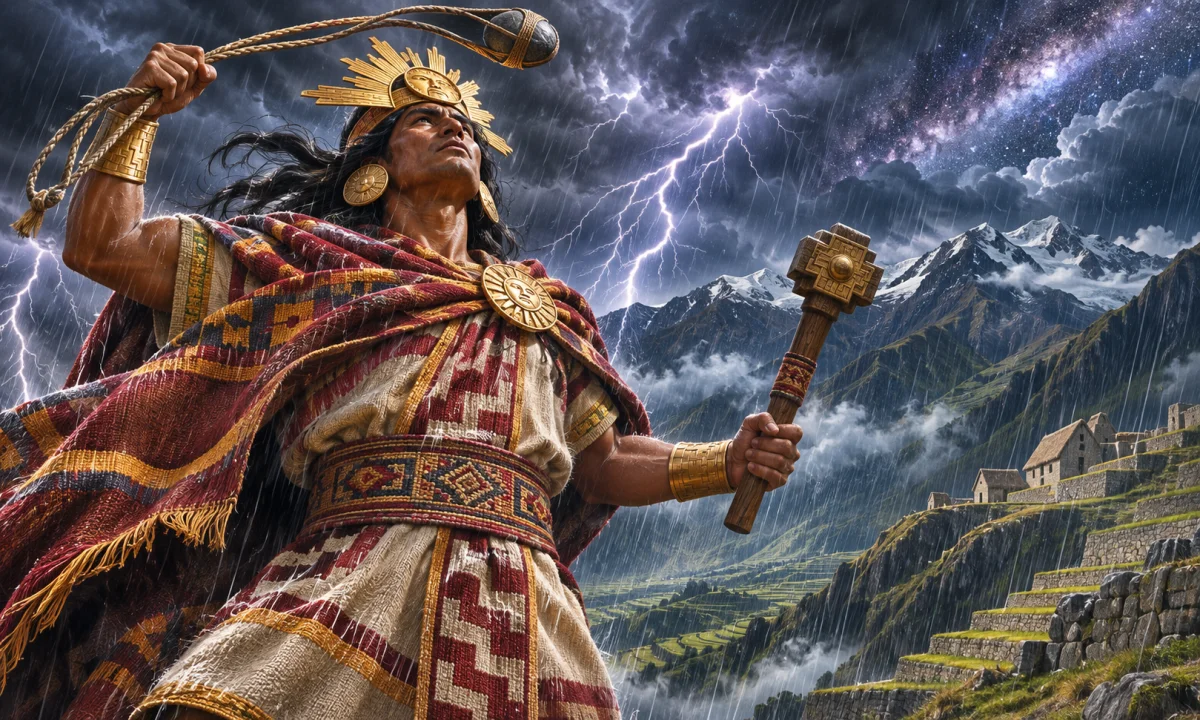
- Viracocha, Inti and Illapa belong to different spheres of Inca religious tradition, involving creator power, the sun and thunder or weather respectively. Axo-mama is not an alternative name for any of them.
- Ekeko, a prosperity figure especially associated with Aymara traditions and later Andean popular religion, is sometimes confused with crop deities because of his connection with abundance. He is not Axo-mama and does not represent the potato specifically.
Interpretation and cultural significance
Axo-mama is most meaningful when understood through the relationship between agriculture, landscape and community in the Andes. The potato was not simply an economically useful plant. It was part of a system of reciprocal relations in which people depended on the earth, weather, animals, ancestors and sacred places. Naming a crop as a mother expresses gratitude and dependence while also recognizing the labour required to cultivate and preserve it.
The figure can also highlight an imbalance in older popular accounts of mythology. Written summaries often give extensive attention to rulers, solar worship and dramatic male gods, while the everyday religious importance of seed, soil, food preparation and women’s agricultural labour receives less attention. A potato mother, even when poorly documented as an individual deity, points toward those essential dimensions of Andean life.
At the same time, presenting Axo-mama as a fully documented goddess with a fixed mythology would overstate the evidence. The name is useful for discussing the sacred and maternal symbolism of the potato, but its historical status remains uncertain and may differ between regions and sources. The most responsible description is therefore neither to dismiss the figure nor to treat later summaries as unquestionable records of an empire-wide cult.
Later reception
Axo-mama appears mainly in modern books, websites and compilations that organize Andean religious beings into named mythological categories. In these contexts, the figure is often given a simplified family relationship with Pachamama and other crop mothers. Such presentations can make the subject accessible, but they may also smooth over differences between Inca state religion, local Quechua traditions, Aymara traditions and later Andean Christianity.
There is no major, widely recognized modern popular-culture character named Axo-mama comparable to figures such as the Inca sun god Inti or Pachamama. When she appears in contemporary illustrations or educational material, the image generally emphasizes a maternal woman, potato plants and highland landscapes. These representations are modern visualizations of an uncertain tradition rather than evidence for a standardized ancient appearance.