WORLD

Ayar Manco
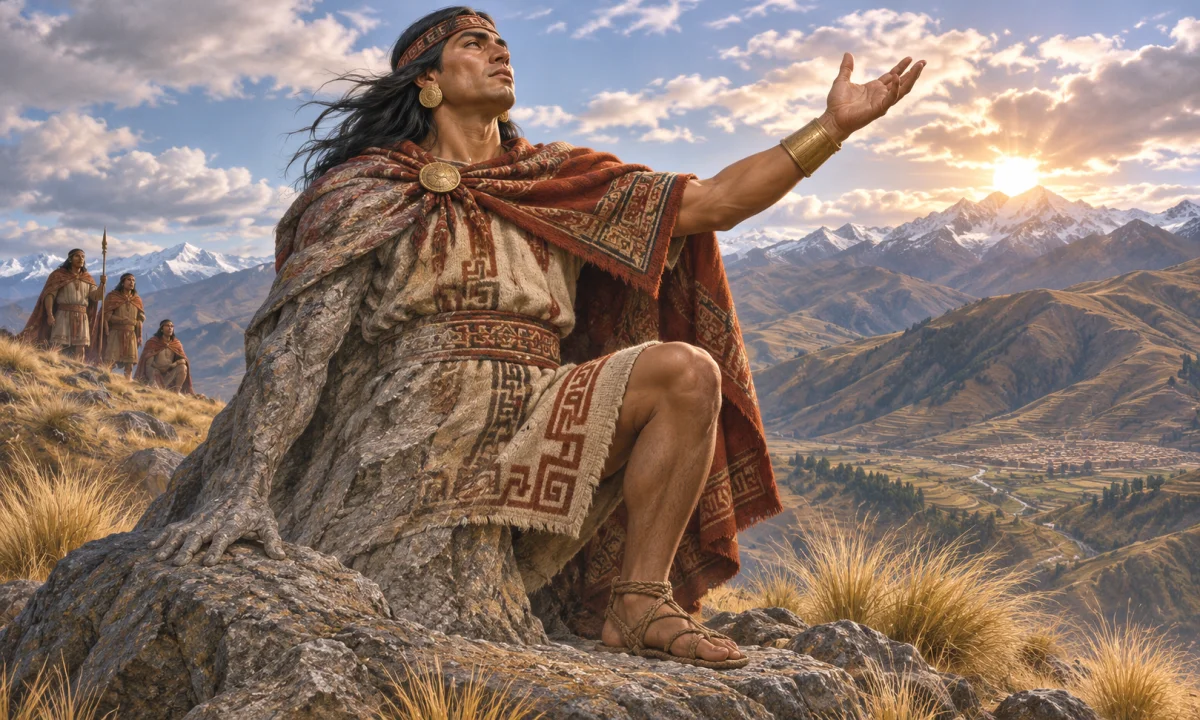
Ayar Manco is a founding figure in Inca origin traditions, especially the narrative in which four Ayar brothers and their female companions emerge from a sacred place and travel toward the valley of Cusco. In many versions, Ayar Manco eventually becomes Manco Cápac, the first ruler of the Incas and the founder of Cusco. The relationship between these names is not identical in every source, however. Some colonial accounts treat Ayar Manco and Manco Cápac as the same figure, while other traditions preserve distinct versions of the Inca origin story.
Cultural setting
The Inca Empire, or Tawantinsuyu, developed in the Andes before the Spanish conquest of the sixteenth century. Its political centre was Cusco, in the highlands of present-day Peru. Inca traditions about the beginnings of Cusco were not simply stories about a distant past. They explained the sacred authority of the ruling dynasty, the special status of Cusco, and the relationships among communities incorporated into the empire.
These traditions were transmitted primarily through oral performance, ritual, ancestral memory and political institutions. The Incas did not leave behind a surviving alphabetic account of their mythology. The stories known today were recorded by Spanish writers after the conquest, often from Indigenous informants or from members of the Inca elite. The accounts differ in details, names and emphasis because they reflect different local traditions, political perspectives and methods of interpretation.
For this reason, Ayar Manco should not be treated as a figure with one universally fixed biography. He belongs to a group of related origin traditions rather than to a single canonical myth preserved in one authoritative text.
Name and identity
The name appears in several colonial spellings, including Ayar Manco, Ayar Mango and forms connected with Manco Cápac or Manco Capac. Modern spellings vary because Spanish chroniclers represented Quechua names according to the spelling practices of their own period. The exact meaning of Ayar in this context is uncertain, and proposed explanations should not be presented as established fact.
Ayar Manco is usually identified as one of four brothers whose names begin with Ayar. The group commonly consists of:
- Ayar Manco, who becomes the principal founder and ancestor of the Inca rulers.
- Ayar Auca, a brother associated in some versions with the occupation or claiming of territory.
- Ayar Cachi, a powerful figure whose strength becomes threatening to the group.
- Ayar Uchu, who is transformed into or associated with a sacred stone in several accounts.
Their female companions are also named differently from one account to another. Names include Mama Ocllo, Mama Huaco, Mama Raua and Mama Ipacura, although the relationships among these women and the brothers vary. Mama Ocllo is often presented as Ayar Manco’s companion and later as the mother or ancestral partner of the Inca royal line. Mama Huaco may appear as a sister, wife, warrior, priestly figure or important founding ancestor, depending on the tradition.
In the four-sibling narrative, Ayar Manco is therefore more than an individual traveller. He is a culture hero and dynastic ancestor, a figure through whom the Incas explained the arrival of their ruling lineage at Cusco. He is not normally classified as a god in the same sense as major Andean deities such as Inti, the Sun, or Viracocha. Nevertheless, ancestral founders could possess sacred power and receive ritual respect.
The emergence from Pacaritambo
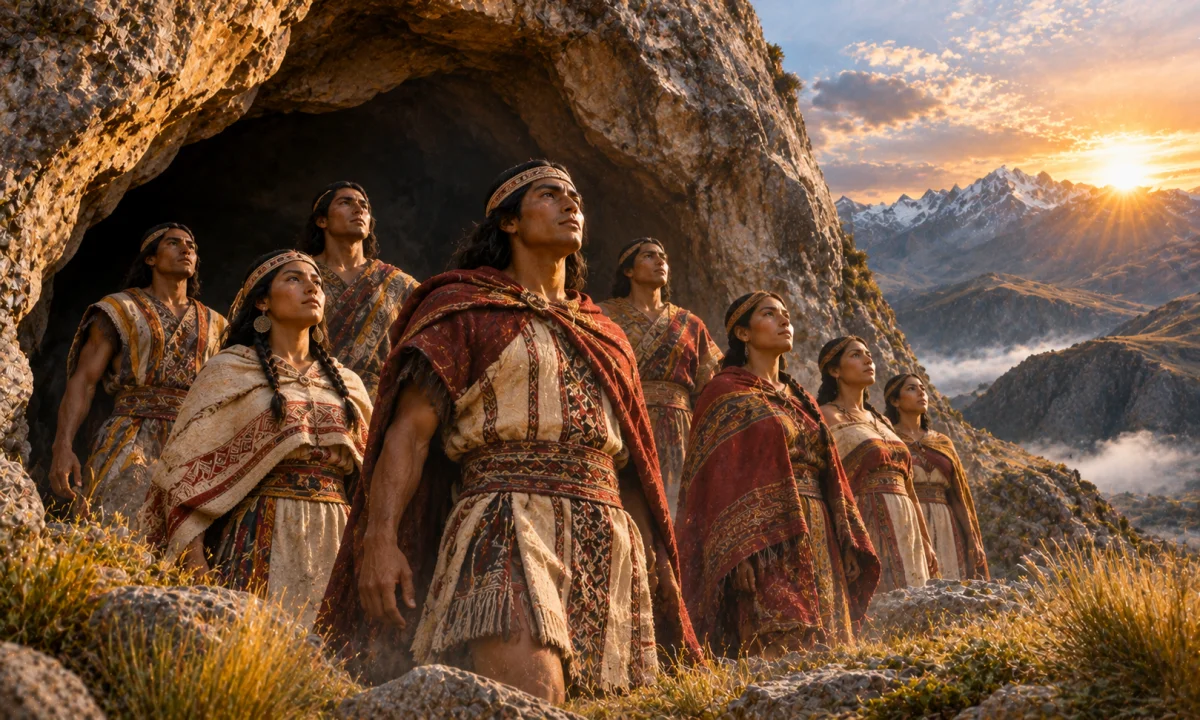
One of the best-known traditions places the beginning of the Ayar group at Pacaritambo, a sacred region south of Cusco. The name is often associated with a place of origin or emergence. In the accounts recorded by colonial chroniclers, the group comes from a cave, opening or set of windows called Tambotoco. The exact location and meaning of these names have been debated, and the details are not identical in every narrative.
The emergence from a cave is significant in Andean religious thought. Places of origin could be understood as pacarinas, sacred ancestral sites from which a community, lineage or people emerged. Such places were not merely geographical points. They could serve as living connections between human communities, ancestors, landscape and divine power.
The Ayar brothers and their companions are said to leave this origin place and begin a journey in search of a suitable centre. Their movement toward Cusco resembles other Andean foundation traditions in which a people is guided across the landscape by sacred ancestors. The journey links political settlement with divine or ancestral direction rather than presenting the founding of the Inca state as an ordinary migration.
The journey of the four Ayar brothers
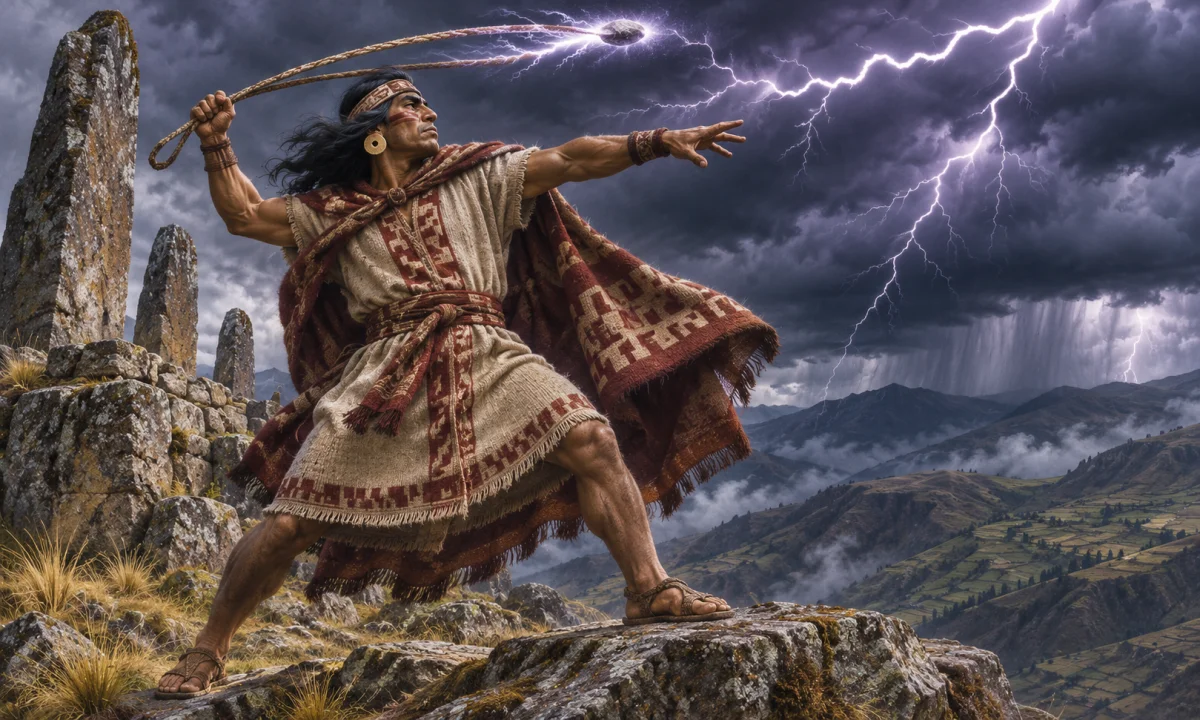
The journey contains a series of separations and transformations. One important episode concerns Ayar Cachi, whose extraordinary strength allows him to hurl stones and reshape the landscape. His power frightens or angers the other members of the group. In a commonly recorded version, they trick him into returning to the cave at Pacaritambo and seal him inside. From within the cave, he is said to cause earthquakes or other disturbances.
The story does not simply portray Cachi as a villain. His dangerous strength may represent the uncontrollable power of a sacred ancestor or the difficulties involved in bringing different ancestral groups under one political order. The episode also explains why a powerful figure disappears while remaining connected to the landscape.
Ayar Uchu is associated with Huanacauri, a mountain or sacred place near Cusco. In several versions, he becomes stone there. This transformation is an example of petrification, a recurring feature in Andean sacred narratives. Becoming stone does not necessarily mean death in a purely human sense. A stone could remain a huaca, a sacred presence tied to a place and capable of receiving ritual attention.
Ayar Auca is also connected with the founding of Cusco. In one influential account, he travels ahead of Ayar Manco and becomes fixed in the land, sometimes through a transformation into stone. The story links his name with the occupation or marking of the future settlement. The exact meaning of the episode differs among sources, but it helps explain how the sacred landscape of Cusco was established by the ancestors.
Ayar Manco is the brother who continues to the final foundation. He and his companions reach the Cusco valley, where the new centre of Inca power is established. Some versions describe a golden staff or rod used to identify the proper place for settlement: the staff sinks into the earth at the chosen location. This motif is more strongly associated with the Manco Cápac and Mama Ocllo origin story, but elements of it can overlap with the Ayar narrative in later retellings.
From Ayar Manco to Manco Cápac
The identification of Ayar Manco with Manco Cápac is one of the most important interpretive issues surrounding the character. In accounts based on the four Ayar siblings, the surviving founder is often named Ayar Manco. In other accounts, the first Inca ruler is called Manco Cápac and appears in a simpler story involving his companion Mama Ocllo. Later readers and chroniclers frequently treated these as different presentations of the same ancestral ruler.
The name Manco Cápac is itself found in variant spellings, including Manco Capac and Manqu Qhapaq in attempts at modern Quechua representation. The element Qhapaq is commonly associated with power, wealth or lordship, but the precise interpretation of the whole name in ancient usage is not completely certain. It may function as a personal name, a title or a name that acquired royal significance through later tradition.
The two principal origin narratives can be distinguished as follows:
- In the Ayar siblings tradition, four brothers and their companions emerge from Pacaritambo, undergo separations and transformations, and Ayar Manco becomes the founder who reaches Cusco.
- In the Lake Titicaca tradition, Manco Cápac and Mama Ocllo emerge from Lake Titicaca, often under the direction of the Sun, and travel northward to establish Cusco.
These are not necessarily mutually exclusive stories. A ruling dynasty could preserve more than one account of its origin, particularly when different regions and ancestral groups were incorporated into the Inca state. The two traditions may also reflect attempts to connect the imperial dynasty with different sacred landscapes: Pacaritambo and the Cusco region in one account, and Lake Titicaca, an important centre of Andean sacred geography, in another.
Relationships and founding roles
Ayar Manco’s most important relationship is with the other members of the founding group. The brothers are not simply a family in a modern sense; they represent ancestral lines, communities or powers that must be separated, transformed or integrated before the Inca centre can be established.
His relationship with Mama Ocllo is especially important in later presentations. She is often described as his sister and wife, reflecting traditions of royal sibling marriage among the Inca ruling class. In royal ideology, such a marriage could express the preservation of dynastic status and the special origin of the ruling couple. However, the roles of Mama Ocllo and other female founders vary substantially between accounts.
In some versions, Mama Huaco is a formidable founding woman associated with warfare, fertility or the establishment of the Inca people. She should not automatically be treated as another name for Mama Ocllo. Although later summaries sometimes combine the women or simplify their relationships, the colonial narratives do not present a single consistent genealogy.
Ayar Manco’s role is therefore both political and sacred. He establishes a centre, but he also creates a relationship between the Inca rulers and the ancestral landscape. The foundation of Cusco becomes a sacred event that legitimizes rule over the surrounding valleys and, eventually, the larger imperial territory.
Cusco and the sacred landscape
In these traditions, Cusco is more than a capital selected for practical reasons. It is the place where ancestral power becomes organized into a political and ritual centre. The founding stories explain why the city belongs to the descendants of the Ayar group and why the ruling dynasty possesses a privileged relationship with the region.
The transformations of the Ayar brothers also populate the landscape with sacred presences. Mountains, caves, rocks and springs could function as huacas, places or objects of exceptional spiritual importance. The story of a founder becoming stone provided a narrative explanation for the sacred status of a particular location, while the journey itself connected distant places through ancestral movement.
Such stories should not be read only as symbolic fiction in the modern literary sense. In the religious world of the Andes, landscape and ancestry were closely connected. A mountain or stone could be a powerful participant in community life, and a founding ancestor could remain present through ritual memory and place-based observance.
Sources and historical uncertainty
Knowledge of Ayar Manco comes from early colonial writings rather than from an Inca manuscript preserved from before the conquest. Spanish chroniclers recorded accounts at different times and in different settings. Some had access to Indigenous nobles or interpreters; others organized oral material according to European ideas about kingship, genealogy and history.
The result is a group of related but sometimes contradictory narratives. Names may be altered by transcription, the order of events may change, and one figure may appear as a person in one version but as a sacred ancestor or place in another. The chroniclers also had political reasons for emphasizing certain stories, especially when describing the legitimacy of the Inca dynasty or the history of Cusco.
It is therefore safest to say that Ayar Manco is traditionally associated with the first Inca foundation and is often identified with Manco Cápac, rather than claiming that every Inca community told exactly the same story. The traditions preserve important ideas about ancestry, sacred geography and rulership, but they do not provide a single straightforward biography that can be verified in the manner of modern history.
Distinction from similar figures
Ayar Manco should not be confused with Ayar Cachi, whose exceptional strength leads to his confinement or disappearance in many versions. Nor should he be merged with Ayar Uchu or Ayar Auca, both of whom have distinct roles in the journey and are associated with transformations into sacred landscape.
He is also distinct from Viracocha, the major Andean creator or civilizing figure whose traditions extend beyond the Inca dynasty. Viracocha may guide, create or transform beings in some narratives, but he is not simply another name for Ayar Manco.
Finally, Ayar Manco is not automatically identical with every figure called Manco in Andean or modern retellings. The strongest connection is with Manco Cápac, the dynastic founder, and even that identification reflects the blending of different Inca origin traditions.
Later reception
Modern accounts often simplify the complex oral traditions by presenting Ayar Manco as “the first Inca” without discussing the distinction between the Ayar and Lake Titicaca narratives. This makes the story easier to tell, but it can obscure the variations preserved in colonial records and the sacred roles of the other founders.
Contemporary educational writing, heritage interpretation and popular fiction may also portray the Ayar brothers as a conventional family of heroic adventurers. Traditional Andean meaning is broader than that depiction. The story concerns the emergence of a people, the sacralization of territory and the transformation of ancestral powers into the foundations of Cusco and Inca rule.