WORLD
WORLD
Seidai Myojin
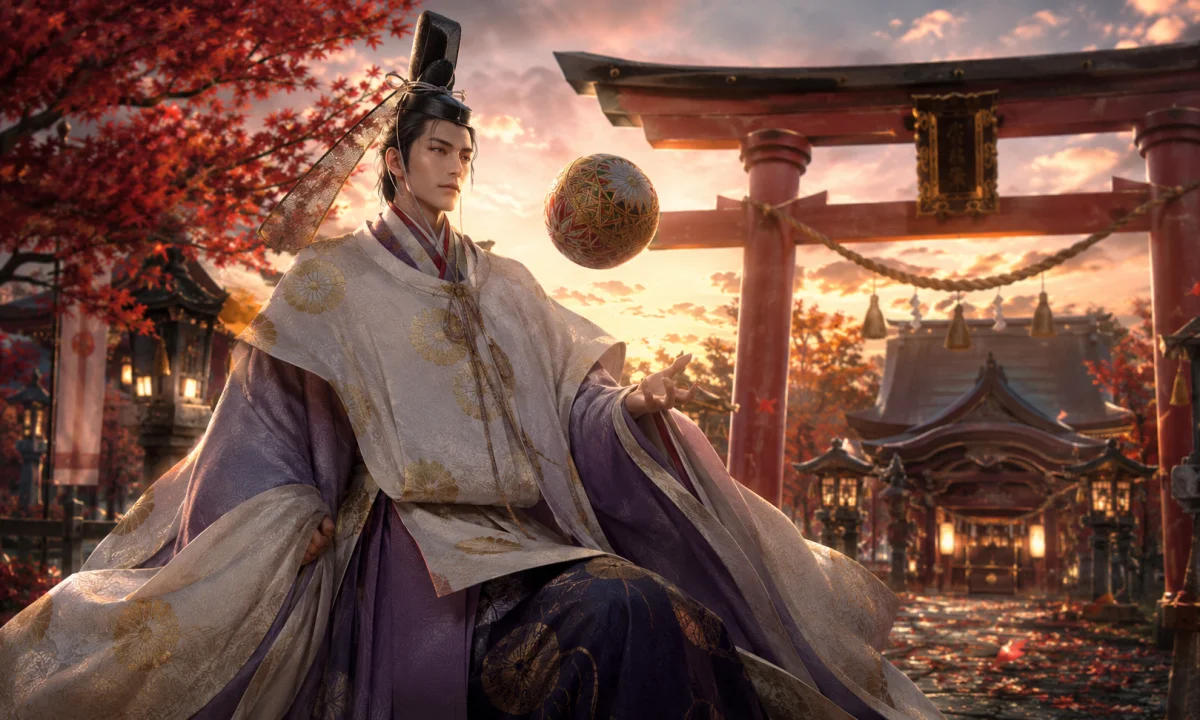
Seidai Myojin is an obscure and uncertain name associated with Japanese religious tradition. Unlike Amaterasu, Susanoo, Inari, or other widely documented kami, Seidai Myojin does not appear as a clearly identifiable figure in the major mythological narratives of ancient Japan. The name is best treated cautiously: it may refer to a local shrine deity, a regional title, or a variant romanisation of another name rather than to a single universally recognised god.
The meaning of the name
The element myōjin (明神), usually written in English as “Myojin” or “Myōjin,” means approximately “brilliant deity,” “manifest deity,” or “illustrious kami.” It was a religious honorific used for many gods and shrine deities, especially in medieval and early modern Japan. It does not by itself identify one particular divine being.
Before the separation of Shinto and Buddhism in the nineteenth century, Japanese religious institutions commonly described kami through Buddhist concepts. A deity might be honoured as a myōjin, a gongen (“manifest manifestation”), or by another title that reflected the close relationship between shrine worship and Buddhist practice. Consequently, names ending in myōjin occur in many local traditions and cannot automatically be interpreted as names from Japan’s ancient creation myths.
The first element, “Seidai,” is also uncertain in English romanisation. Japanese names can be represented with several possible spellings when the original kanji are not supplied. Different characters may produce similar readings, and a name copied from a secondary source may preserve a pronunciation without preserving its original written form. Without a shrine record, inscription, local legend, or Japanese-language source giving the kanji, the exact meaning of “Seidai” cannot be established securely.
Origins and religious setting
Japanese kami were not limited to the gods presented in texts such as the Kojiki and Nihon Shoki. Those eighth-century works preserve important court-sponsored accounts of divine genealogy, imperial origins, and ritual order, but they do not constitute a complete catalogue of every being worshipped in Japan. Thousands of local deities were connected with mountains, rivers, springs, rocks, fields, settlements, occupations, ancestral lineages, and protective boundaries.
A name such as Seidai Myojin could therefore belong to the broad world of local kami worship rather than to a pan-Japanese mythological cycle. Local deities were often known through a shrine tradition, a festival, a sacred object, a foundation story, or an oral account maintained by a particular community. Some acquired written records only in the medieval or early modern periods; others remained known mainly through ritual practice and place-based memory.
The title myōjin became especially prominent during the period when Shinto and Buddhism were institutionally intertwined. A shrine might be attached to a Buddhist temple, and a kami might be interpreted as the local manifestation of a Buddha or bodhisattva. In that environment, a divine name did not always describe a separate mythological personality. It could instead express the sacred status of a place or the religious identity of a shrine.
After the Meiji government’s policies of shinbutsu bunri, or the separation of kami worship from Buddhism, many shrines were reorganised and some older titles were replaced or standardised. Older names nevertheless survived in local usage, temple records, festival names, family traditions, and historical descriptions. This history makes it particularly important not to assume that a title found in one context represents a deity recognised throughout Japan.
Identity and classification
There is no secure basis for classifying Seidai Myojin as a major god, yokai, demon, ancestor, or legendary hero. The word myōjin points most naturally toward a kami or a deity honoured at a shrine, but it does not reveal the deity’s function. A myōjin could be associated with protection, agricultural fertility, healing, travel, warfare, a mountain, a local clan, or another concern important to the community.
Nor does the name, by itself, establish whether Seidai Myojin was understood as male, female, genderless, or as an expression of another better-known deity. Japanese shrine traditions sometimes identify the same sacred presence through different names, titles, honji-butsu interpretations, or local manifestations. In other cases, similar names belong to entirely unrelated places.
The most responsible description is therefore that Seidai Myojin is an uncertain or locally attested religious name, not a figure with a fixed national mythology. Claims that assign a definite appearance, weapon, genealogy, animal form, or supernatural power require evidence from a particular tradition. Such details should not be supplied simply because they are common features of other Japanese gods.
Attributes and symbolism
No consistent traditional description of Seidai Myojin’s appearance or attributes is securely established in widely known Japanese mythological sources. There is no generally accepted canonical account presenting the deity’s birth, family, dwelling place, sacred animal, or major deeds.
If the name belongs to a local shrine tradition, its symbolism would most likely be found in the shrine’s own objects and practices. These might include a sacred tree, mountain, stone, mirror, sword, rice offering, spring, or ritual emblem. Such objects are not interchangeable signs of Seidai Myojin in general; they would have meaning only within the specific community that preserved the tradition.
Similarly, a festival associated with a deity would be more informative than a generic list of powers. Processions, offerings, dances, purification rites, and seasonal observances can show what a community asks of its kami and how the kami is understood. A deity honoured during planting or harvest may be linked with agricultural wellbeing, while one connected with a dangerous mountain pass may be invoked for protection. These associations arise from local religious practice rather than from the word myōjin itself.
Stories and variants
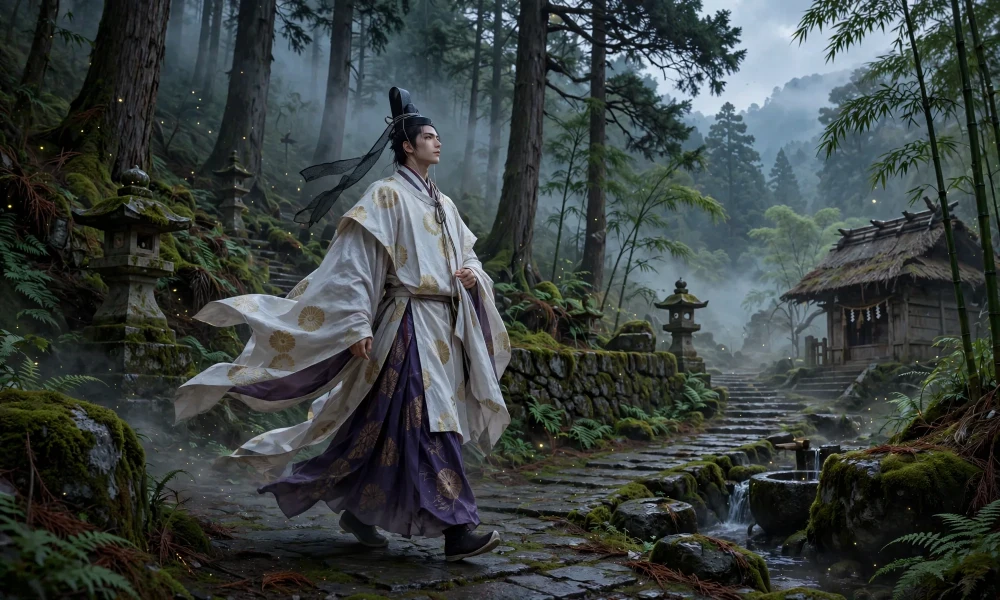
No single cycle of stories about Seidai Myojin is widely preserved in the classical mythological corpus. The Kojiki, Nihon Shoki, and related court traditions do not provide a standard narrative under this name. This absence does not prove that no local stories existed; it indicates only that the name is not securely represented in the best-known national texts.
Local shrine traditions can preserve foundation legends explaining why a deity arrived at a particular site, how a sacred object was discovered, or why a festival must be performed in a certain way. Such accounts may be historically valuable even when they are not ancient in their present written form. A legend recorded in an early modern document may combine older oral material with Buddhist interpretation, local history, and later attempts to connect a shrine with prestigious figures from national tradition.
Variants are especially likely when the original Japanese characters are unknown. “Seidai Myojin” may reflect a shortened reading, a transcription error, a local pronunciation, or an English-language rendering that does not preserve the distinction between similar Japanese syllables. It may also be confused with names containing daimyōjin (大明神), a related honorific meaning “great illustrious deity.” A reliable identification requires the original spelling and the place or source in which the name occurs.
Distinguishing Seidai Myojin from similar names
Seidai Myojin should not automatically be equated with any famous Japanese kami merely because both are honoured at shrines. It is not a demonstrated alternative name for Amaterasu, Hachiman, Inari, Tenjin, Susanoo, or Benzaiten. Each of those traditions has its own textual history, ritual networks, iconography, and regional variations.
It should also not be confused with a gongen. The terms myōjin and gongen belong to the same broad historical environment of combined kami–Buddhist worship, but they are not identical titles. Nor should every being called a myōjin be treated as a yokai. A yokai may be a strange creature, haunting presence, or transformed being, whereas a myōjin is normally a designation of sacred or divine status.
English-language lists of “Japanese gods” sometimes present local titles as if they were members of one fixed pantheon. This can obscure the character of Japanese religion, in which overlapping traditions and local sacred geographies are especially important. A shrine deity may be deeply significant to one village without having a role in national mythology.
Cultural significance
The uncertainty surrounding Seidai Myojin illustrates a wider feature of Japanese religious history: not every kami belongs to a uniform mythology. Japanese sacred traditions developed through the interaction of court ritual, local custom, Buddhist institutions, pilgrimage, clan memory, agricultural practice, and reverence for particular landscapes.
Names and titles were often layered rather than replaced. A deity could possess an older local name, a Buddhist interpretation, a formal shrine title, and a popular nickname. Different communities could also understand the same name differently. For that reason, identifying a kami is often less a matter of assigning it a place in a fixed family tree than of tracing its relationship with a shrine, a landscape, and a community.
Seidai Myojin should therefore be approached as a name requiring context. The most useful questions are: where was the deity worshipped, how was the name written, what ritual or legend accompanied it, and which historical period produced the surviving record? Until those questions are answered, detailed claims about the deity’s powers or mythology remain speculative.
Modern reception
Seidai Myojin is not a widely established figure in major modern Japanese franchises or in the internationally familiar body of Japanese popular culture. If the name appears in a game, novel, online catalogue, or fantasy setting, that use should be distinguished from documented religious tradition. A creative work may borrow the sound of a shrine title or reinterpret an obscure local name, but its portrayal does not establish a traditional mythology.
Modern digital lists can also perpetuate uncertain spellings by copying one another without identifying the original Japanese source. Repetition may make a name appear more widely attested than it actually is. In the case of Seidai Myojin, the absence of a secure, commonly agreed identity is itself important information. The name may preserve a genuine local religious reference, but its meaning cannot be responsibly reconstructed without the relevant kanji and regional context.