WORLD

Coqui Huani
Coqui Huani is a name associated with Zapotec mythology, although its identity is uncertain and its traditional documentation is limited. Unlike better-attested Zapotec figures such as Cocijo, the rain-and-lightning deity, or Coqui Bezelao, the lord associated with death, Coqui Huani does not have a clearly established profile in the surviving colonial descriptions of Zapotec religion. Modern summaries may present the name as belonging to a god or supernatural lord, but they often disagree about the figure’s role, attributes and meaning.
Zapotec religious setting
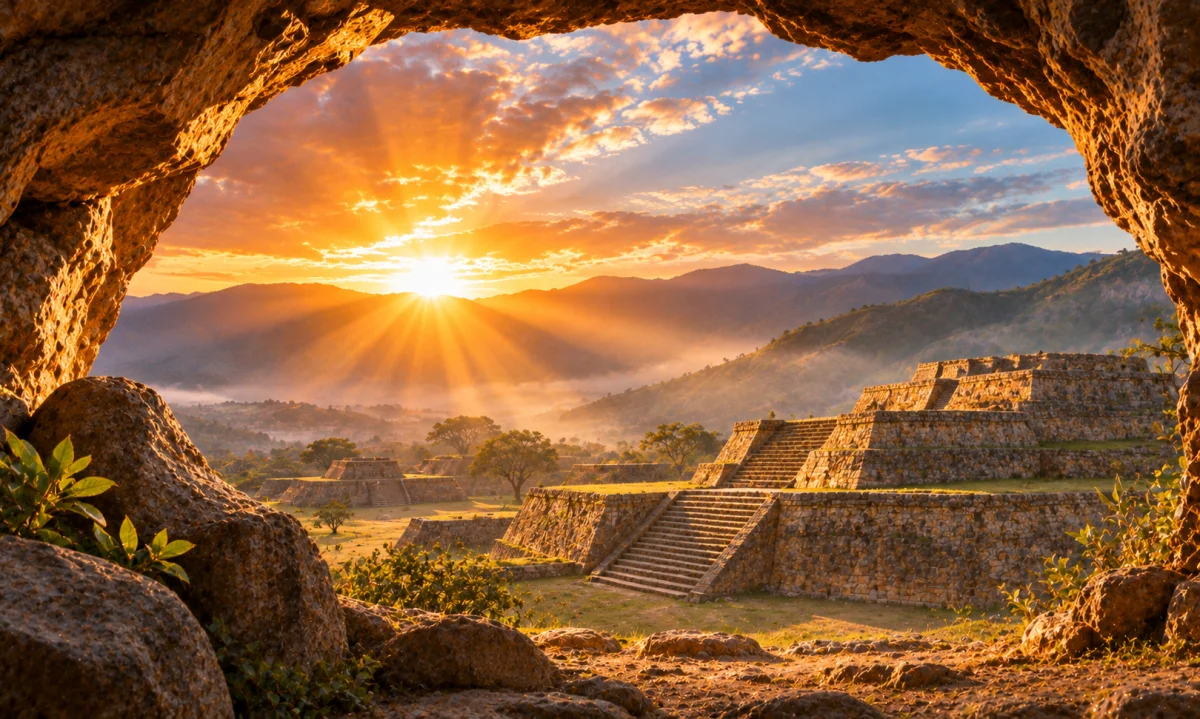
The Zapotec peoples have lived for centuries in the region now known as Oaxaca, in southern Mexico. Zapotec communities developed important centres at places such as San José Mogote, Monte Albán, Mitla and Zaachila. Their languages belong to the Oto-Manguean language family, and there has never been a single, uniform “Zapotec mythology” shared identically by every community. Religious practices varied across time and locality, just as Zapotec languages and political traditions did.
Zapotec religious life connected divine powers with rain, lightning, maize, fertility, mountains, caves, ancestors, death and rulership. Sacred places were not separate from the human world: springs, hills, caves and cultivated fields could all be places where powerful beings or ancestors were encountered. Rulers also had religious responsibilities, and ancient monuments, tombs and offerings show the importance of maintaining relationships between communities, the dead and supernatural forces.
Much of the evidence for pre-Hispanic Zapotec religion comes from archaeology. Temple remains, carved monuments, funerary objects, urns and painted imagery reveal important patterns, but they do not always preserve the names or stories of the beings represented. Written information comes mainly from accounts produced after the Spanish conquest, including missionary descriptions, vocabularies and local colonial records. These sources are valuable but incomplete. They were written through European categories and often recorded beliefs selectively or interpreted them in Christian terms.
The name Coqui Huani
The first element of the name presents an important difficulty. In some Zapotec contexts, words transcribed as coqui, coci or similar forms have been associated with a lord, ruler or noble person. In other Zapotec languages and modern regional usage, similar-looking words can have different meanings. Spelling also changed considerably when Spanish writers attempted to represent Zapotec sounds with the Latin alphabet.
For that reason, Coqui Huani should not automatically be treated as a transparent phrase with one agreed translation. The meaning of “Huani” is not securely established across Zapotec languages, and a spelling found in a modern list may reflect a later transcription, a local form or an error. The name may once have referred to a particular divine lord, but the surviving evidence does not allow a confident reconstruction of its original pronunciation or etymology.
There is also no universally accepted classification of Coqui Huani. Some modern references describe the figure as a Zapotec god, while others provide little more than a name. A few popular compilations assign the figure a specific function, such as rulership, warfare, nature or the underworld, but these assignments are not consistently supported by early Zapotec records. They should therefore be treated as uncertain rather than as established facts.
Identity and possible classification
Coqui Huani is best described cautiously as a poorly documented Zapotec supernatural figure or divine title. The name may preserve a local tradition that was not recorded in detail by colonial writers. It may also represent a variant spelling of a better-known name, although no such identification can be made securely without a specific manuscript, language context or community tradition.
Several explanations are possible:
- The name may belong to a local Zapotec tradition that survived orally but was rarely written down.
- It may be a variant transcription produced by Spanish-speaking or later English-speaking writers.
- It may have been confused with another Zapotec name beginning with a title such as Coqui.
- It may have been expanded or reinterpreted by modern writers who attempted to organize incomplete lists of Zapotec deities.
None of these possibilities should be presented as proven. In particular, the existence of the name does not by itself demonstrate that Coqui Huani was one of the principal gods worshipped throughout the Zapotec world.
Attributes and powers
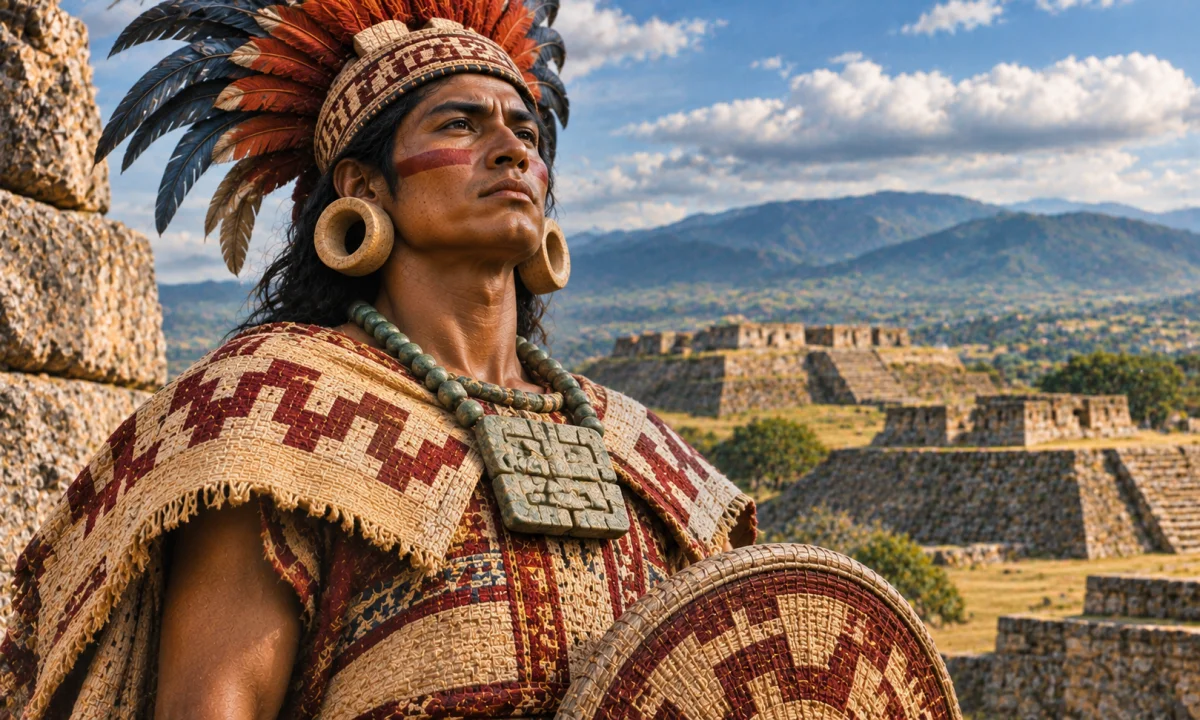
No securely established traditional description gives Coqui Huani a universally accepted appearance, emblem or sphere of power. Claims that the figure was specifically a sun god, war god, wind god, creator, hunter or ruler of the dead vary between modern accounts and cannot be treated as a single traditional portrait.
This absence of detail is significant. Ancient Mesoamerican deities were often represented through distinctive signs, costumes, animal associations or repeated ritual symbols. However, identifying such imagery requires more than finding a name in a modern list. A carved or painted figure can be interpreted only by comparing its archaeological setting, accompanying signs, historical context and related examples. There is no widely accepted body of Zapotec imagery that can be securely labelled as Coqui Huani.
It is possible that the name referred less to an individual god than to a title or aspect of a larger supernatural power. Zapotec religious language could distinguish between divine beings, ancestral forces, rulers and sacred manifestations without fitting neatly into the modern category of a “god.” A name containing a term for lordship might therefore indicate status rather than a specific function.
Stories and relationships
No widely preserved creation story, heroic episode or genealogy securely centres on Coqui Huani. There is no reliable traditional narrative establishing the figure as the spouse, parent, enemy or companion of another named Zapotec deity. Stories found in general mythology databases should be approached carefully when they provide elaborate relationships without identifying a Zapotec-language community or an early record behind them.
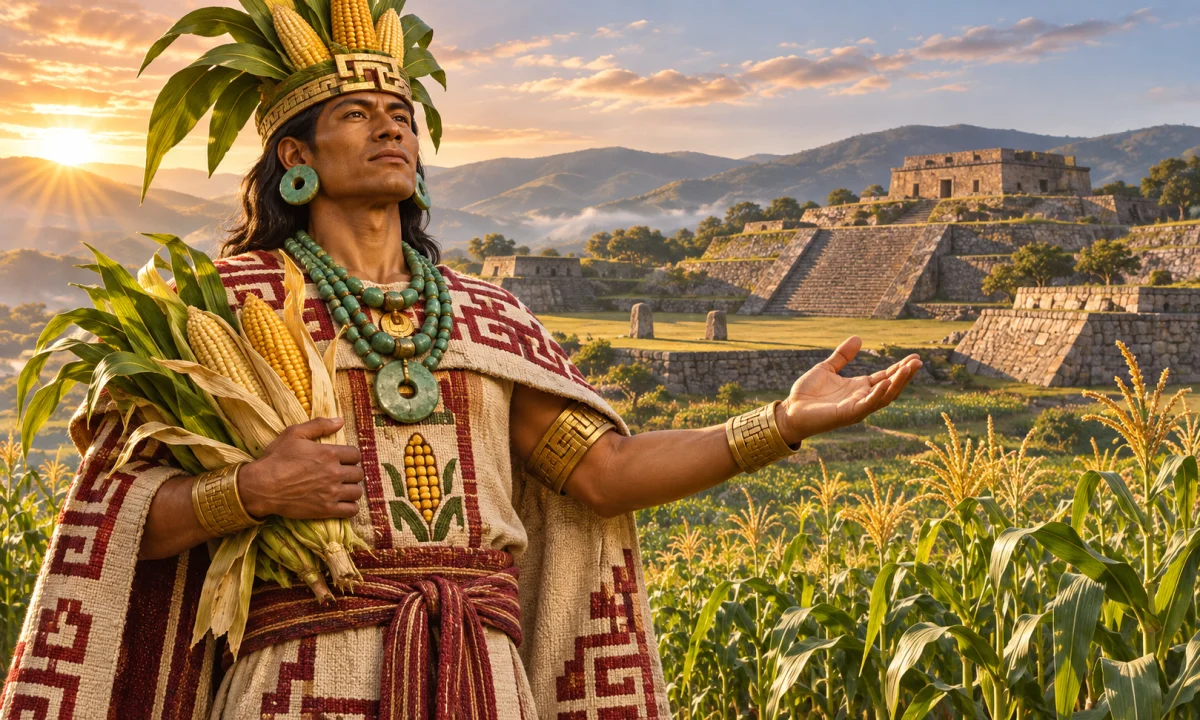
This lack of narrative evidence contrasts with the more recognisable roles assigned to certain other Zapotec religious figures. Cocijo is associated in historical and archaeological interpretation with rain, storms and lightning. Pitao Cozobi is commonly connected with maize and agricultural abundance. Coqui Bezelao is associated in colonial accounts and later discussion with death and the realm of the dead, while Xonaxi Quecuya is often linked with death, the earth or earthquakes, though interpretations of these figures also require attention to regional and historical variation.
These better-documented names should not be combined with Coqui Huani simply because they occur in the same modern lists. A resemblance in spelling, a shared title or a broad connection with supernatural rulership is not enough to establish that two names refer to the same being.
Sources and historical uncertainty
The study of Zapotec religion is complicated by the loss and transformation of Indigenous records. Spanish campaigns, missionary activity, political changes and the destruction or removal of sacred objects all affected what survived. Colonial writers sometimes recorded Indigenous names, but they did not record every local deity or ritual specialist. They also tended to group diverse beings under familiar Christian categories such as gods, demons, angels or idols.
Later scholarship must therefore combine several kinds of evidence: archaeological remains, colonial-language documents, Zapotec vocabularies, local histories, oral traditions and the study of modern Zapotec languages. These sources do not always agree. A word may have changed meaning over time, and a religious figure known in one valley may be absent from records produced in another.
Modern Zapotec communities are not simply survivals of an ancient religion. They have experienced centuries of Indigenous continuity, Catholic influence, political change and cultural renewal. Traditional stories and ritual practices may preserve old themes while also using newer language and symbolism. A modern community’s understanding of a sacred being deserves attention in its own right and should not be treated as a defective version of an ancient system.
Distinction from similar names
Coqui Huani should not be confused with Coqui Bezelao. Both names may appear in lists of Zapotec supernatural figures, and both can be presented with the title-like element “Coqui,” but they are not interchangeable. Coqui Bezelao has a much more recognizable association with death and the underworld in colonial and later accounts. There is no sufficient evidence that Coqui Huani is simply another name for him.
The name should also be kept distinct from Cocijo, sometimes written with different spellings in older sources. Cocijo is one of the most important Zapotec religious figures known from archaeological and historical evidence and is strongly associated with rain, lightning and storm power. Similar-looking spellings can lead to confusion, especially when names are copied from one language or publication into another, but Coqui Huani should not be identified with Cocijo without direct evidence.
Likewise, the presence of “coqui” in a name does not prove a relationship with every other figure whose name begins with that element. It may function as a title, a personal name, or part of a transcription whose original meaning is now uncertain.
Cultural significance
The importance of Coqui Huani lies partly in what the name reveals about the limits of surviving knowledge. Discussions of Mesoamerican mythology often rely on compact lists of gods, but those lists can give a misleading impression of certainty. A name may survive while its stories, pronunciation and ritual context disappear. Treating uncertainty openly is especially important for Zapotec traditions, which were historically diverse and were documented unevenly.
Coqui Huani may preserve a fragment of a local Zapotec religious vocabulary, a title associated with authority, or a name altered by later transmission. Until a specific Indigenous-language source or community tradition clarifies the term, its role should remain open rather than being assigned a definitive domain. The most responsible description is not a detailed invented biography but an acknowledgement that the name belongs to the uncertain and less well-documented margins of recorded Zapotec mythology.
Modern reception
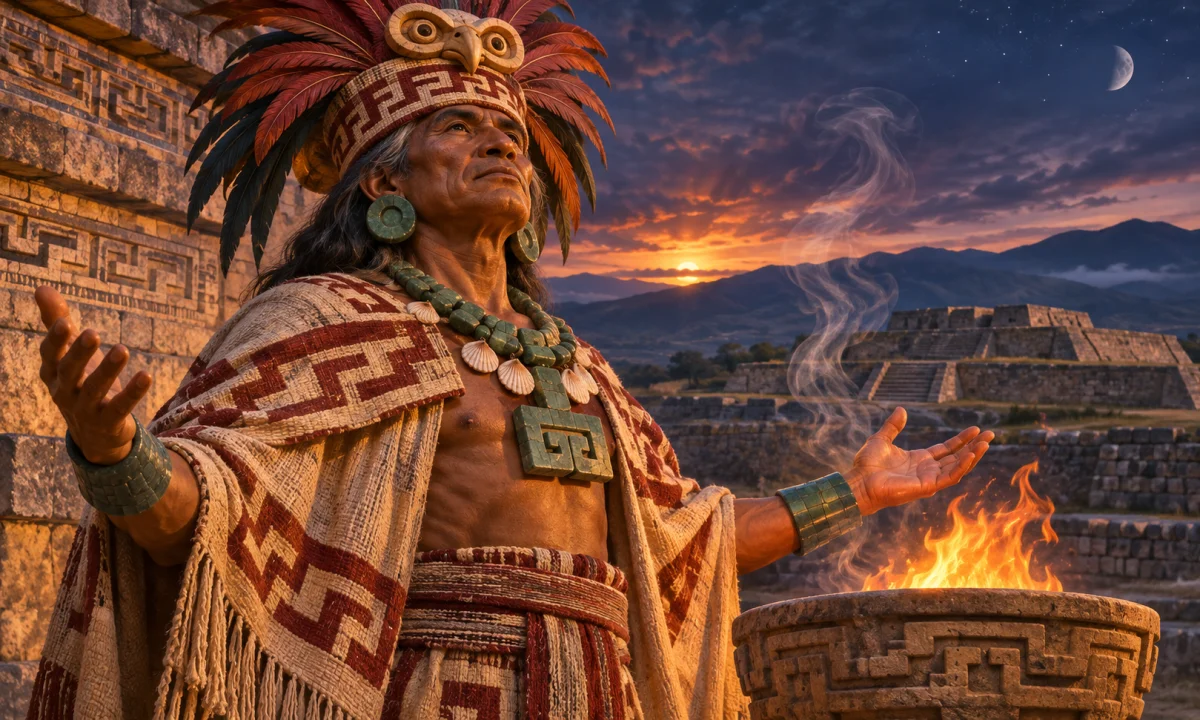
Coqui Huani occasionally appears in online mythology lists, encyclopedic compilations and modern retellings of Mesoamerican religion. These sources may give the figure a fixed appearance or a dramatic role in a pantheon, but such treatments often repeat one another without establishing an independent traditional basis. Modern fantasy, games and popular storytelling may also adapt the name freely. Any such portrayal belongs to contemporary interpretation rather than securely documented ancient Zapotec religion.
When the name is used today, it is therefore important to distinguish three different things: a possible historical or local Zapotec tradition; the uncertain record created by colonial and later writers; and modern popular representations. Keeping those categories separate avoids turning a fragmentary name into a fully documented deity with attributes that the evidence does not support.