WORLD

Coqui Xee
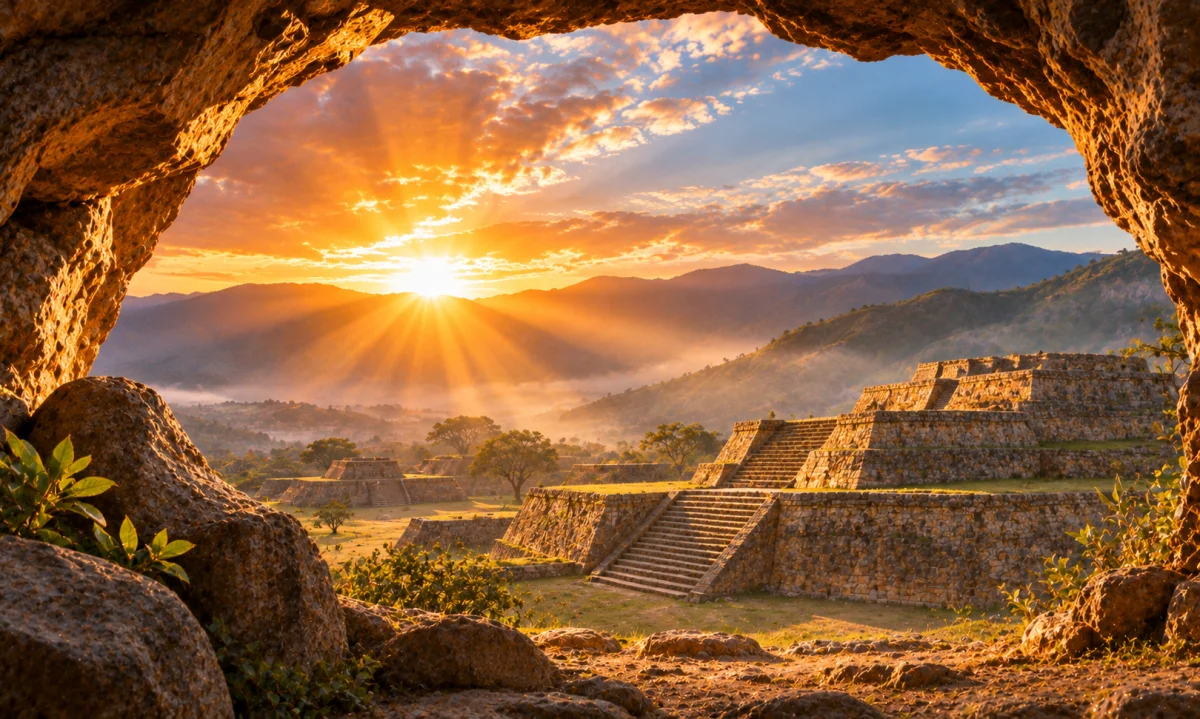
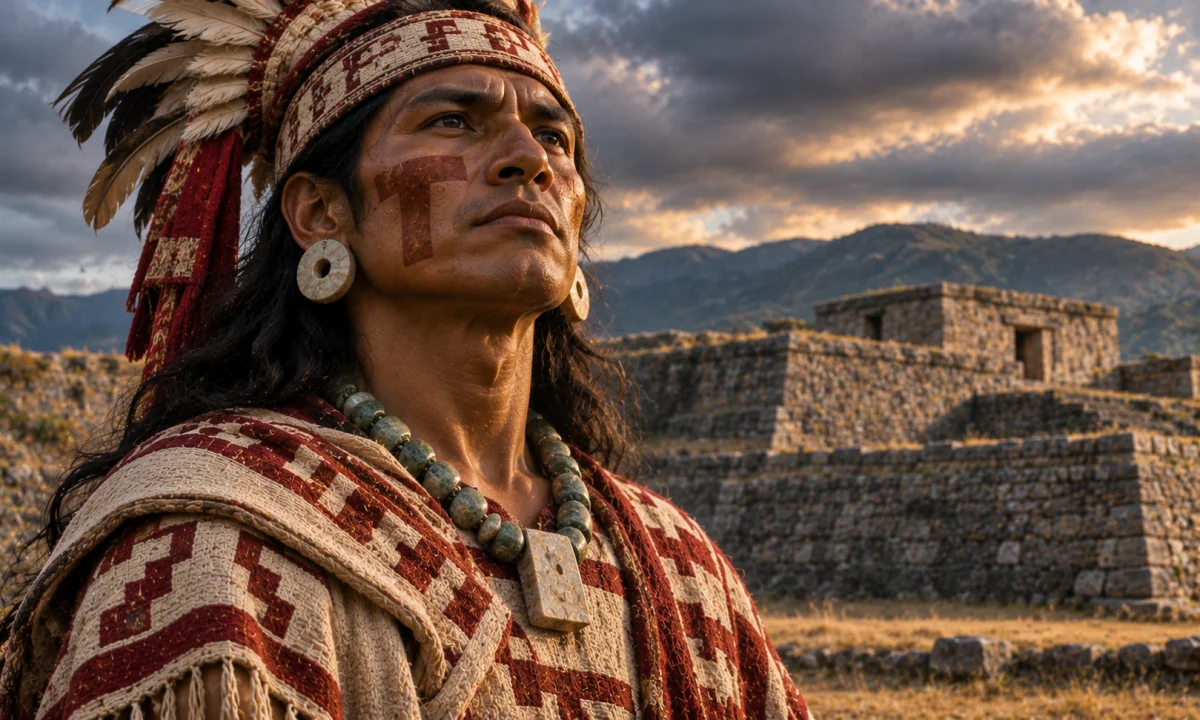
Coqui Xee is a name associated with Zapotec ideas of creation and primordial divinity. In many modern summaries of Zapotec mythology, Coqui Xee is presented as an ancient creator or “first lord,” a being connected with the beginning of the world and the ordering of existence. The evidence is not as extensive or consistent as it is for better-documented Zapotec figures such as Cocijo, the rain and lightning deity. The identity, meaning and traditional stories of Coqui Xee therefore require some caution.
Zapotec religious setting
The Zapotecs are an Indigenous people of southern Mexico, especially associated with the valleys, mountains and coastal regions of present-day Oaxaca. Zapotec civilization developed over a long period, with major centres including San José Mogote, Monte Albán and later regional states. Zapotec communities still live in Oaxaca and elsewhere, and many Zapotec languages remain in use.
“Zapotec mythology” does not describe a single, uniform system. Zapotec peoples have spoken numerous related but distinct languages, and their religious practices have changed across centuries and regions. Beliefs known from the central valleys cannot automatically be assigned to communities in the Isthmus of Tehuantepec, the Sierra or the southern coast. Names of supernatural beings may also be written differently in colonial records, modern linguistic spellings and popular reference works.
Before Spanish colonisation, Zapotec religious life included reverence for powerful forces associated with rain, lightning, fertility, maize, ancestors, caves, mountains and the dead. Rulers and communities carried out ceremonies intended to maintain proper relations with these powers. The visible world was not sharply separated from a supernatural realm: places, natural events and ancestral beings could all possess sacred importance.
Name and identity
The form Coqui Xee is commonly interpreted in modern descriptions as referring to a primordial lord, first being or deity of beginnings. The Zapotec element coqui is often translated as “lord,” “ruler” or “noble,” while the interpretation of xee can vary according to language, spelling and context. These translations should not be treated as a universally agreed literal meaning. Zapotec languages are diverse, and a word recorded in one variety may not have precisely the same form or sense in another.
Coqui Xee is sometimes called a creator god. In that classification, the name refers to a being associated with the first ordering of the cosmos rather than with one limited natural phenomenon. Descriptions may portray Coqui Xee as the oldest or first divine power, the source of the world, or a force present before the appearance of other gods and living beings.
There is no securely established, single canonical biography for Coqui Xee comparable to the detailed narrative cycles preserved for some better-known mythological figures in other Mesoamerican traditions. Accounts found in modern books, websites and encyclopedic lists may differ considerably. Some present Coqui Xee as a distinct creator deity; others provide only a name and a general association with creation. It is therefore safer to describe the figure as a reported Zapotec creator or primordial deity than to assign a fixed mythology to every Zapotec community.
Sources and historical evidence
Knowledge of pre-Hispanic Zapotec religion comes from several kinds of evidence: archaeology, inscriptions, images, colonial descriptions, Indigenous-language materials and later ethnographic studies. Each type has limitations.
Archaeological sites show that Zapotec people represented powerful beings and used temples, tombs, offerings and ritual objects. Monte Albán inscriptions and funerary remains reveal much about rulership, ancestry and religious practice. They do not, however, provide a complete dictionary of Zapotec gods. A figure in a sculpture cannot automatically be identified with a deity whose name appears in a much later written source.
Colonial documents are also difficult to interpret. Spanish missionaries and officials often recorded Indigenous names through Spanish spelling conventions and sometimes understood unfamiliar beings through European categories such as “god,” “devil,” “saint” or “idol.” Important information was preserved in these records, but the descriptions may be incomplete, selective or shaped by the concerns of conversion and administration.
For Coqui Xee specifically, the available public descriptions are often brief and not accompanied by a widely accepted ancient narrative or securely identified archaeological image. The name is consequently more firmly established in modern presentations of Zapotec mythology than in a large surviving corpus of pre-Hispanic texts. This does not prove that the concept is modern or inauthentic; it means that the surviving evidence does not allow a detailed reconstruction with confidence.
Attributes and cosmic role
When Coqui Xee is treated as a creator figure, the central attribute is primordial authority. The being stands at the beginning of cosmic order and may be understood as preceding the differentiated powers of rain, maize, death and celestial movement. This makes Coqui Xee less like a spirit responsible for one particular landscape or natural event and more like a source of existence itself.
Modern accounts may associate Coqui Xee with:
- the beginning or creation of the world;
- the appearance of the first divine powers;
- the establishment of order in the cosmos;
- the origin of humanity or living things; and
- the sacred authority underlying later religious beings and institutions.
These associations are broad rather than details from one universally preserved story. They reflect the way the name is classified in summaries of Zapotec religion. Claims about a specific appearance, weapon, animal companion, temple, spouse or set of ritual objects should be treated cautiously unless supported by a particular regional tradition.
Coqui Xee is not generally known as a deity with a standardized iconography. Unlike Cocijo, whose imagery is often discussed in connection with fanged or mask-like features, lightning and rain symbolism, Coqui Xee does not have a universally recognized visual form. A creator being may be represented symbolically through precedence, rulership or the ordered cosmos rather than through a distinctive human or animal body.
Creation and the ordering of the world
The word “creator” can be misleading if it suggests a single, fully developed creation story shared by all Zapotec communities. Mesoamerican religious systems often described creation as a continuing process involving the transformation of landscapes, the emergence of people, the power of ancestors and the renewal of crops. Creation was not necessarily a one-time event in the abstract sense familiar from some later theological traditions.
Within that wider context, Coqui Xee can be understood as a name for the beginning of sacred order. The figure’s importance lies less in a preserved sequence of dramatic actions than in the idea that the world has an originating power or first principle. Such a being could provide a conceptual place for the emergence of other divine forces without replacing those forces in ritual practice.
This distinction matters because a creator deity is not always the most frequently worshipped deity. Rain, lightning and maize directly affected agriculture, while ancestors and local sacred places were central to community life. A primordial lord might occupy the highest position in a mythological classification while remaining less prominent in surviving descriptions of everyday ceremonies.
Relationship to other Zapotec powers
Coqui Xee should not be confused with Cocijo, one of the best-known Zapotec religious figures. Cocijo is commonly associated with rain, lightning, storms, agricultural fertility and the water essential to maize cultivation. His importance is strongly reflected in archaeological imagery and in discussions of Zapotec ritual life. Coqui Xee, by contrast, is usually described as a primordial or creator power, not as the regular personification of lightning and rain.
Coqui Xee is also distinct from Coqui Bezelao, a figure often associated in modern accounts with death, the underworld or the realm of the dead. The names can look similar because both include the element coqui, which is frequently understood as a title connected with lordship. Similar wording does not establish that the beings are aspects of one deity or members of one clearly documented divine family.
Xonaxi Queculla is another name encountered in discussions of Zapotec religion, generally in connection with death, the dead or an underworld-related tradition. Interpretations and spellings vary, and the relationship between figures in different accounts is not always clear. Coqui Xee should not be merged with Xonaxi Queculla simply because both occur in lists of Zapotec supernatural beings.
Nor should Coqui Xee be automatically equated with gods from other Mesoamerican traditions. The Aztec creator figures Ometecuhtli and Omecihuatl, the Maya creator beings in the Popol Vuh, and Mixtec sacred ancestors belong to different cultural and textual traditions. Mesoamerican peoples shared certain broad concerns—creation, maize, rain, mountains and ancestors—but resemblance does not demonstrate identity.
Symbolism and cultural significance
The idea represented by Coqui Xee fits an important pattern in Zapotec religious thought: the world is structured through relationships among divine powers, people, ancestors and the landscape. A primordial lord can symbolize the fact that these relationships are not accidental. They descend from an older sacred order that gives meaning to ritual, authority and the cycles of life.
The title-like character of coqui is also significant. If translated as “lord” or “ruler,” it places the being within a vocabulary of authority rather than describing only a natural object. In Zapotec societies, political rulership, ancestry and ritual responsibility were closely connected. Tombs, offerings and public ceremonial spaces show that the relationship between the living, the dead and legitimate authority was a major concern. A primordial “lord” may therefore be understood not only as a maker of physical things but also as a source of rightful order.
It is important, however, not to impose a complete philosophical system on a name for which detailed traditional explanations are unavailable. The most responsible interpretation combines what is repeated across modern descriptions with what is known about Zapotec religious context, while marking the boundary between evidence and reconstruction.
Variants in spelling and interpretation
Zapotec names often appear in more than one spelling because colonial writers used Spanish orthography, modern researchers have represented sounds in different ways, and Zapotec languages differ from one another. A name may also be shortened, translated or altered when it passes from an Indigenous-language context into English-language mythology lists.
For that reason, searches for Coqui Xee may produce descriptions that are not identical. One source may call the being a creator god, another a first lord, and another may list the name without an accompanying story. These variations do not necessarily refer to separate beings, but neither should every occurrence be assumed to describe exactly the same regional tradition. The absence of a consistent account is itself important evidence about the limits of what can be stated.
Modern representation
Coqui Xee appears mainly in modern discussions of Indigenous mythology, comparative religion and Mesoamerican deities. In these contexts, the figure is often placed in a list alongside better-documented Zapotec gods and given a concise role as creator or first deity. Such presentations can make the tradition easier to approach, but they may also give the impression that a complete ancient myth survives when the evidence is actually fragmentary.
Coqui Xee has not achieved the same level of recognition in global popular culture as figures such as Quetzalcoatl, Tezcatlipoca or the Maya rain god Chaac. When the name is used in fantasy, games or contemporary myth-inspired fiction, those portrayals should be regarded as creative adaptations unless they explicitly draw on a documented Zapotec community tradition. A fictional depiction may borrow the idea of a primordial creator while adding powers, relationships, symbols or stories that are not securely attested in historical Zapotec sources.