WORLD

Cozichacozee
Cozichacozee is a name associated with Zapotec mythology and is usually described in modern reference works as a deity connected with lightning, storms, or rain. The figure is poorly documented, however, and the surviving evidence does not support a detailed mythology comparable to that of better-attested Zapotec gods. The spelling may represent a variant, a transcription, or a modern cataloguing of a name found in older descriptions. It should therefore be treated cautiously rather than presented as a fully established and independently documented deity.
Zapotec religious context
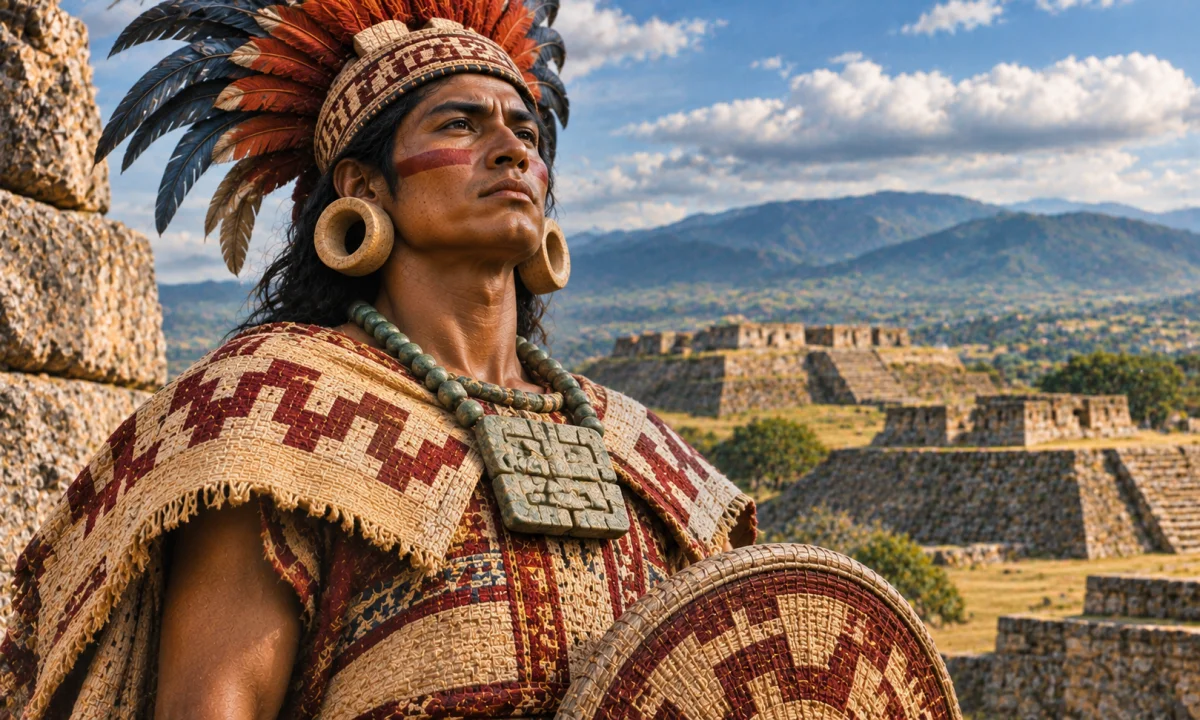
The Zapotecs are an Indigenous people of southern Mexico, especially the present-day state of Oaxaca. Zapotec communities have lived in the region for many centuries, and their history includes the major urban centre of Monte Albán, founded during the Formative period and flourishing between approximately 500 BCE and 800 CE. Zapotec religious life developed over a long period and was not identical in every community or historical era.
The term “Zapotec mythology” covers several kinds of evidence. Archaeological remains include carved monuments, tombs, painted ceramics, temple architecture and representations of supernatural beings. Colonial-period Spanish accounts preserve some Indigenous names and descriptions, although they were written through European religious and linguistic assumptions. Later ethnographic work records ceremonies, oral traditions and local beliefs among Zapotec-speaking communities. These sources do not always agree, and many Indigenous names were written using inconsistent Spanish orthographies.
Weather was of fundamental importance in the Oaxaca valleys and surrounding highlands. Rain determined the success of maize cultivation, while lightning, thunder, drought and destructive storms had direct effects on human communities. It is therefore unsurprising that Zapotec religious traditions gave considerable importance to supernatural powers associated with clouds, water, fertility, thunder and lightning. Such importance is well supported for Cocijo, one of the best-known Zapotec storm deities. The relationship between Cocijo and the name Cozichacozee, however, is not securely established.
The name and its uncertain identity
Cozichacozee is not a name with a large, clearly defined body of early Zapotec literature. It appears chiefly in modern lists and summaries of Mesoamerican or Zapotec gods, where it is generally assigned a connection with lightning or storm activity. Those summaries often provide little information about the original spelling, the community in which the name was recorded, or the historical source behind the identification.
Zapotec languages have been written in different ways over time. Early colonial writers attempted to represent Zapotec sounds with Spanish spelling conventions, while modern scholars and communities may use more systematic orthographies. A single Indigenous name can consequently appear in several forms. In addition, a word that appears to be a personal name may instead be a title, an epithet, a place-name, or a phrase describing a divine power.
The name is sometimes treated as a distinct lightning god, but it is also liable to be confused with names associated with Cocijo. That confusion is understandable because Cocijo is a documented Zapotec deity of rain and lightning, and because the records of Zapotec religion often preserve names in variant forms. Yet similarity or shared subject matter is not enough to prove that Cozichacozee and Cocijo were the same being. A careful account should identify Cozichacozee as a poorly documented or uncertainly classified figure, not confidently merge the name with a better-attested deity.
Attributes traditionally assigned to Cozichacozee
Where Cozichacozee is mentioned, the figure is normally connected with lightning. Some modern descriptions extend this role to thunder, rain and storms. These associations fit the wider religious environment of Mesoamerica, where lightning was frequently understood as a sign of divine power and as an agent capable of opening the earth, releasing rain, or striking people and places.
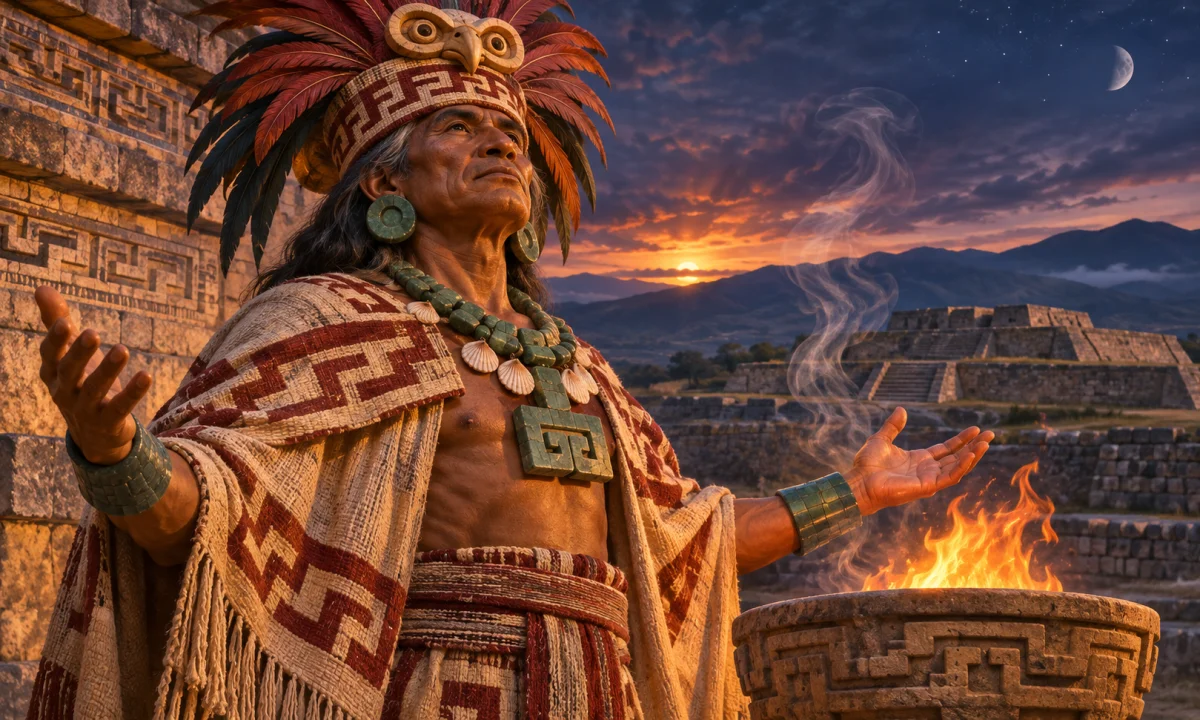
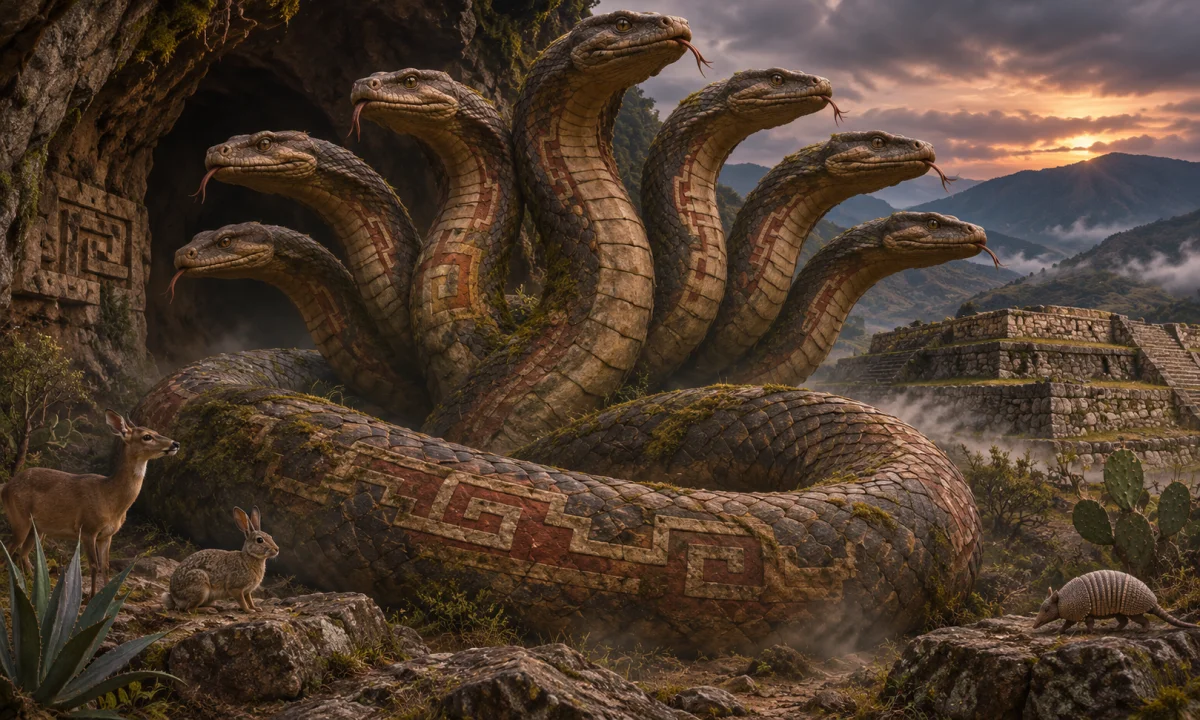
There is no securely documented canonical description of Cozichacozee’s appearance. Modern illustrations may depict the figure as a human-like storm god holding flashes of lightning or surrounded by clouds, but such imagery should not automatically be regarded as ancient Zapotec iconography. It is often a modern artistic interpretation based on general Mesoamerican conventions or on the better-known visual traditions associated with Cocijo and other rain deities.
Likewise, no reliable early source establishes a fixed family, consort, group of companions, sacred animal or specific set of ritual objects for Cozichacozee. Assigning such features to the figure would go beyond the available evidence. The safest interpretation is that the name, when used in a Zapotec religious context, points toward the sacred power of lightning and atmospheric change, while the precise status of that power remains uncertain.
Lightning, rain and agricultural religion
The possible significance of Cozichacozee becomes clearer when placed within Zapotec agricultural religion. Maize and other crops depended on seasonal rainfall, and the arrival of storms could be experienced as both blessing and threat. Rain nourished fields, but excessive water could destroy them; lightning could announce a storm, strike a person, ignite a tree, or mark a dangerous sacred location.
Across Mesoamerica, weather phenomena were not merely physical events in the modern scientific sense. They could be interpreted as manifestations of divine agency, communication or conflict. This does not mean that all Mesoamerican peoples shared one storm religion. Rather, similar ecological pressures produced some comparable religious concerns in different cultures. Zapotec traditions developed their own names, images and ceremonies, even when outsiders later compared them with traditions from central Mexico or the Maya area.
In this setting, a lightning-associated being could have represented more than a weapon-wielding god. Lightning might signify the power that brings rain, fertilises the earth, reveals hidden forces or establishes a connection between the sky and the ground. These broader symbolic possibilities are consistent with Mesoamerican religious patterns, but they are interpretations of the cultural setting rather than securely recorded myths about Cozichacozee himself.
Relationship to Cocijo
Cocijo is the principal point of comparison. Cocijo, whose name is also written in several forms, is widely recognised in archaeological and historical discussions as a Zapotec rain and storm deity. Representations associated with Cocijo commonly show a supernatural face with features interpreted as fangs, a forked or bifurcated tongue, large eyes, and other distinctive elements. The figure appears in Zapotec art, including urns and other archaeological materials, although interpretation of individual images can be complex.
Because Cocijo’s powers include rain, thunder and lightning, some modern sources use Cozichacozee as though it were simply another spelling of the same god. Others list the names separately, presenting Cozichacozee as a specific lightning deity. At present, the available general evidence does not justify a definitive choice between these possibilities. The names may reflect a genuine distinction, a local variation, an epithet, a transmission error, or different stages in the recording of Zapotec religious terminology.
It is therefore useful to keep the distinction explicit: Cocijo is a substantially better-attested Zapotec storm deity, while Cozichacozee is a much less certain name whose usual modern description centres on lightning. Similarity in function does not prove identity, and the two should not be merged without a specific linguistic or historical argument.
Sources and limits of the evidence
Much of what is known about ancient Zapotec religion comes from material culture rather than written mythology. Archaeological objects can demonstrate that particular supernatural forms or symbols were important, but they do not always preserve their names or tell complete stories. A carved or painted figure may have represented a god, an ancestor, a ritual specialist, a mythic being or a symbolic combination of several powers.
Colonial records provide names and descriptions, but they must also be read critically. Spanish observers sometimes translated Indigenous gods into familiar Christian categories such as “god,” “devil,” or “idol.” They could misunderstand local distinctions, record names inconsistently, or focus on practices that appeared unusual to European readers. Indigenous religious life also continued through oral traditions and changing community practices, which means that a colonial description cannot automatically be treated as a complete record of pre-Hispanic religion.
For Cozichacozee specifically, the central problem is the lack of a widely cited, detailed source that establishes the figure’s name, attributes and narrative independently. Short modern entries often repeat the same basic identification—usually lightning—without preserving enough information to determine whether they derive from a colonial record, an archaeological interpretation, a local tradition, or an earlier modern encyclopedia. Repetition across websites or popular books does not by itself make an attribution historically secure.
Possible symbolic meaning
If the name does preserve a distinct Zapotec lightning power, its significance may have involved the dangerous and productive aspects of the storm. Lightning could be destructive, but it also announced rain, and rain sustained maize, beans, squash and other crops. A lightning deity could therefore stand at the boundary between danger and fertility, destruction and renewal.
Lightning also has a special status because it visibly links the sky with a particular point on the earth. In many traditional societies, places struck by lightning become ritually significant, and people associated with lightning may acquire unusual religious roles. Such patterns are known in several Mesoamerican communities, but there is not enough evidence to assign them specifically to Cozichacozee. They are best used to explain why a lightning figure would be religiously meaningful, not as proof of unrecorded Zapotec customs.
The uncertain evidence also illustrates an important feature of studying Indigenous religions: divine identities are not always organised as fixed entries in a single pantheon. A name may be local, a title may be shared, and a natural force may be represented through several related forms. Modern categories such as “god of lightning” can be useful shorthand, but they may simplify a more flexible relationship between place, weather, ancestors, ritual authority and sacred power.
Modern representations
Cozichacozee has limited presence in widely known popular culture. The name is more often encountered in online mythology lists, modern encyclopedic compilations, fantasy artwork and discussions of Mesoamerican deities than in major novels, films or games. These treatments commonly present the figure as a clearly defined lightning god with a standard appearance and established mythology.
Such portrayals should be distinguished from historical evidence. An artist may create a storm deity inspired by the name, but the resulting image is a modern interpretation rather than proof of an ancient visual tradition. Claims that give Cozichacozee a detailed genealogy, a particular weapon, a fixed spouse, or a series of named myths require evidence that is not generally available in the surviving documentation.
The most responsible description of Cozichacozee is consequently a limited one: the name is associated with Zapotec mythology, especially in modern accounts that identify it with lightning or storms, but its original status and relationship to Cocijo remain uncertain. The uncertainty is not a minor detail; it is central to understanding what can and cannot be said about the figure.