WORLD

Ndubdo
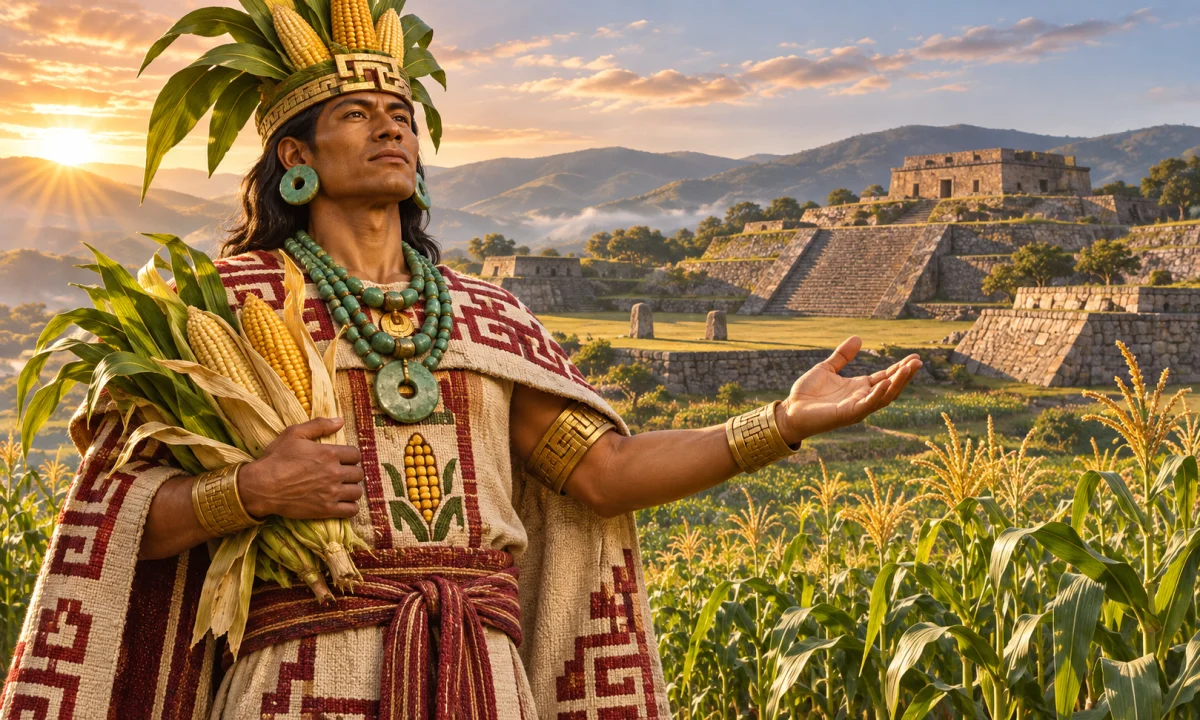
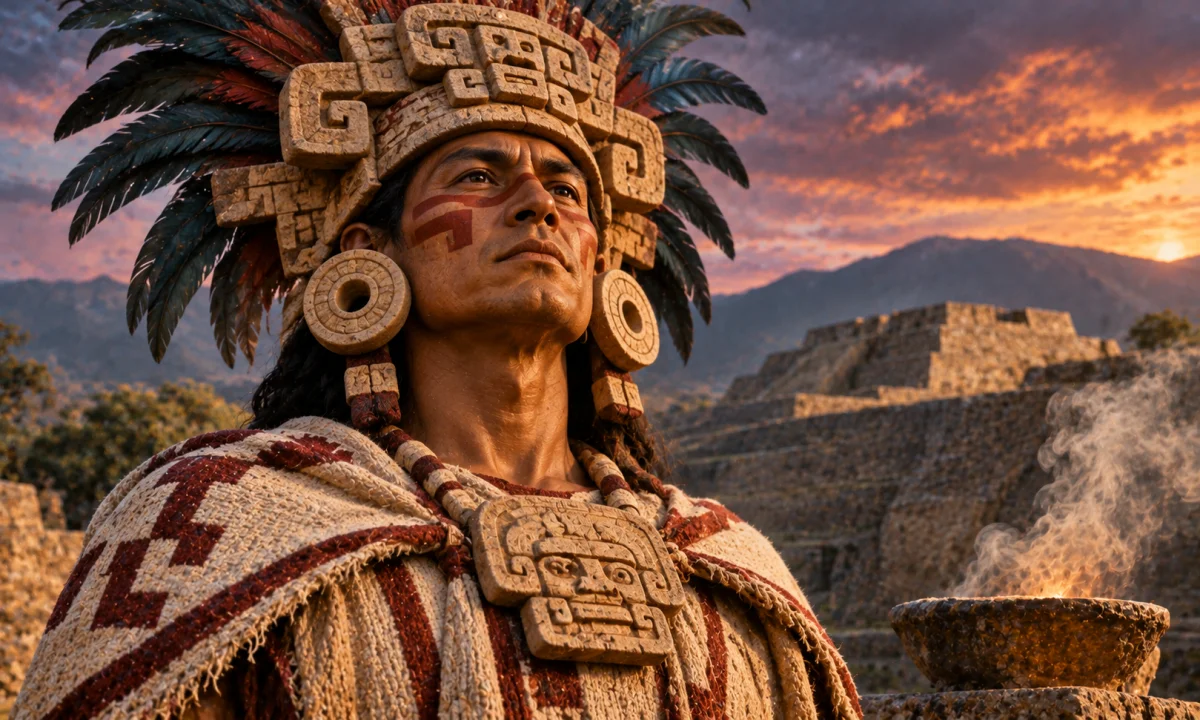
Ndubdo is a name associated in some modern compilations with Zapotec mythology, but its identity is uncertain. Unlike well-attested Zapotec deities such as Cocijo, Pitao Cozobi and Pitao Pezelao, Ndubdo does not have a clearly established profile in the best-known colonial descriptions or in the widely documented religious traditions of Zapotec communities. The name may represent a regional figure, a spelling variation, a transcription error, or a modern attempt to reconstruct a poorly documented deity.
The Zapotec religious world
The Zapotec peoples are Indigenous communities of southern Mexico, especially in the present-day state of Oaxaca. “Zapotec” refers to a family of related peoples and languages rather than to a single, uniform culture. Zapotec communities have lived in the Valley of Oaxaca, the Isthmus of Tehuantepec, the Sierra Norte, the Sierra Sur and other regions, each with its own linguistic and cultural history.
For this reason, there was never one completely fixed Zapotec pantheon. Religious names, pronunciations, myths and ritual practices differed from one locality to another. The beliefs of the ancient city of Monte Albán cannot automatically be treated as identical to those of later communities, and colonial descriptions often combined local traditions with Spanish Christian assumptions.
Zapotec religious thought commonly connected divine powers with rain, lightning, maize, fertility, mountains, caves, ancestors, death and the movement of the sun. Natural forces were not necessarily separated from social or ancestral powers in the manner of a modern classification system. A single sacred being could have several titles or aspects, while a name recorded by a Spanish observer might represent a title rather than a personal name.
What is known about the name Ndubdo?
The name Ndubdo is not securely documented as a universally recognized Zapotec god. It appears mainly in modern lists of Mesoamerican or Zapotec mythological figures, where it is sometimes assigned a supernatural role without a detailed traditional narrative. Those lists do not always provide a traceable Indigenous-language form, a locality, a colonial record or a clear explanation of how the identification was made.
The spelling itself deserves caution. Zapotec languages use sounds and grammatical structures that were recorded inconsistently by Spanish-speaking writers. A single name could therefore appear in several forms, especially when it was written by outsiders who did not speak the local language. Conversely, similar-looking names may belong to entirely different words or traditions. Without a reliable linguistic analysis, it is not safe to treat Ndubdo as a transparent Zapotec word or to assign it a precise translation.
There is also no secure evidence that Ndubdo was part of a pan-Zapotec pantheon shared by all Zapotec peoples. If the name preserves a genuine traditional figure, it may have belonged to a particular region or oral tradition. It may also have been separated from its original context by later cataloguers. The available information does not establish a single, authoritative account of the figure’s origin, appearance, family relationships or ritual role.
Proposed classification
Some modern references describe Ndubdo as a deity connected with earthquakes or other forces of the earth. This identification is not sufficiently documented to be presented as certain. It may reflect an association with the broader Zapotec concern with mountains, caves, subterranean powers and seismic activity, but a general religious theme is not proof that Ndubdo himself had a specific earthquake cult.
Other descriptions may treat the name as belonging to a spirit or elemental being rather than to a major god. That distinction is important. Zapotec religious systems included many kinds of sacred presences, including creator powers, rain and lightning beings, place spirits, ancestors and forces associated with particular hills, springs or caves. A Spanish colonial writer might call all of these “gods,” while an Indigenous community might understand them through more specific local categories.
At present, the safest classification is therefore an uncertain or poorly documented figure attributed to Zapotec mythology. Statements about a fixed domain, standard iconography or widespread worship should be treated as provisional unless they can be connected to a specific Zapotec community and a clearly identified source tradition.
Possible connection with earth and earthquakes
The proposed earthquake association is understandable within the wider religious setting of Oaxaca. The region is geologically active, and earthquakes have long been powerful events in the lives of its inhabitants. Mountains, cliffs, caves and deep places also hold major significance in Mesoamerican religions. They can be understood as entrances to sacred realms, places where clouds and rain originate, or locations associated with ancestors and the origins of communities.
Yet the existence of this symbolism does not by itself establish a particular deity named Ndubdo. In recorded Zapotec traditions, earth-related powers are often expressed through several beings and sacred places rather than through one uniform “god of the earth.” The ancient Zapotec landscape was organized around hills, settlements, temples, tombs and agricultural land, and sacred power could be attached to a place as much as to a personified figure.
Modern summaries sometimes turn a complex network of local beliefs into a list of specialized gods: one god for earthquakes, another for wind, another for death and another for maize. Such lists can be convenient, but they may impose a rigid structure that was not present in traditional practice. If Ndubdo was genuinely associated with seismic or terrestrial forces, the surviving evidence does not show whether that association was central, local, symbolic or the result of later interpretation.
Comparison with better-documented Zapotec powers
Cocijo
Cocijo, also written in several variant forms, is one of the best-known Zapotec supernatural figures. He is associated especially with rain, lightning, storms and agricultural fertility. Archaeological representations from ancient Oaxaca show a distinctive supernatural being with features often interpreted as relating to rain, lightning or a serpent-like mouth. Colonial and later traditions also connect Cocijo with the water essential to maize cultivation.
Cocijo should not automatically be identified with Ndubdo. Both may be placed in broad discussions of natural forces, but Cocijo has a much stronger archaeological and historical record. There is no secure evidence that Ndubdo is another name for Cocijo or one of his standard forms.
Pitao Cozobi
Pitao Cozobi is commonly associated with maize and the fertility of cultivated land. The title Pitao appears in colonial descriptions of Zapotec religious beings and is often translated in a general sense as “god,” although the exact meaning and use of such titles require care. Cozobi’s importance reflects the central place of maize in Zapotec life, ritual and subsistence.
Ndubdo is not securely connected with maize or agricultural abundance. A modern source that assigns both figures to a generalized category of nature gods should not be taken as evidence that they were related in traditional belief.
Pitao Pezelao
Pitao Pezelao, also written with variant spellings, is associated in colonial and later accounts with death and the underworld. His name is often linked with the Zapotec realm of the dead, although descriptions of that realm were influenced by the terminology and expectations of European Christian observers.
Ndubdo should not be confused with Pezelao. Neither the names nor the documented traditions establish that Ndubdo was a death god, an underworld ruler or an attendant of Pezelao.
Pitao Xoo
Pitao Xoo is another figure sometimes connected in modern writing with earthquakes or destructive natural forces. The spelling and interpretation of the name vary, and the surviving evidence does not always provide a consistent portrait. Because both Pitao Xoo and Ndubdo have been associated with the earth in secondary summaries, confusion between them is possible.
There is no sound basis for treating Ndubdo as merely an alternate spelling of Pitao Xoo. They should remain separate unless a particular source demonstrates that the names belong to the same local tradition or linguistic form.
Sources and limits of reconstruction
Knowledge of ancient and colonial Zapotec religion comes from several different kinds of evidence. Archaeological remains include temples, carved monuments, painted imagery, offerings and tombs. Colonial-era vocabularies and religious accounts preserve some Indigenous names and explanations, although they were written after the Spanish conquest and often interpreted through Christian categories. Later ethnographic work records local ceremonies, oral narratives and beliefs that survived, changed or blended with Christianity.
These sources do not provide a complete Zapotec mythology. Many oral traditions were never written down, and colonial campaigns against Indigenous religion disrupted religious institutions and public ceremonies. At the same time, communities preserved elements of older cosmologies through agricultural rituals, stories about mountains and caves, ceremonies for rain, and relationships with ancestors and local sacred places.
A name that appears in a modern reference list but not in readily identifiable historical or ethnographic contexts should therefore be handled carefully. It may preserve a genuine but local tradition, yet it may also result from a mistaken transcription or an unsupported repetition in later popular literature. The absence of a name from major accounts does not prove that it was never used, but it does mean that claims about its role cannot be stated with confidence.
Symbolism and cultural significance
If Ndubdo represents an earth-related power, the most responsible interpretation is not that the figure belonged to a standardized category of “earthquake god,” but that the name may reflect the sacred significance of the land itself. For Zapotec communities, land was not simply a physical resource. Hills, fields, springs, caves and settlements could participate in relationships involving ancestors, rain, fertility, obligation and communal identity.
Earthquakes, storms and droughts could be understood within a moral and ritual order. Human beings depended on proper relations with the powers that sustained agriculture and protected the community. Ceremonies were not merely requests for favorable weather; they could express reciprocity, respect for place and continuity with ancestors.
That broader context is more secure than any detailed portrait of Ndubdo. There is no reliable traditional description establishing the figure’s gender, body, clothing, weapon, dwelling place or family. Images of other Zapotec supernatural beings should not be labelled as Ndubdo simply because they show a nonhuman figure or a force of nature.
Modern treatment of Ndubdo
Ndubdo has little established presence in major modern popular-culture traditions compared with figures such as Quetzalcoatl, the Aztec rain god Tlaloc or the Maya death god often called Ah Puch. The name is more likely to appear in generalized mythology databases, fantasy-oriented lists or brief online summaries than in widely known novels, films or games.
When modern writers use Ndubdo as an earthquake deity or elemental being, they are usually creating a simplified interpretation rather than reproducing a well-documented traditional narrative. Such adaptations can draw attention to Zapotec mythology, but they should not be presented as evidence for ancient belief. A respectful treatment should identify the uncertainty surrounding the name and avoid assigning it a complete mythology that the surviving record does not support.
Ndubdo is therefore best approached as a poorly documented name associated with Zapotec mythology, possibly linked in later compilations with earth or earthquakes, but without a securely established identity, cult or body of traditional stories. The diversity of Zapotec languages and communities makes a local origin possible, while the lack of clear supporting documentation prevents firmer conclusions.