WORLD

Kedo
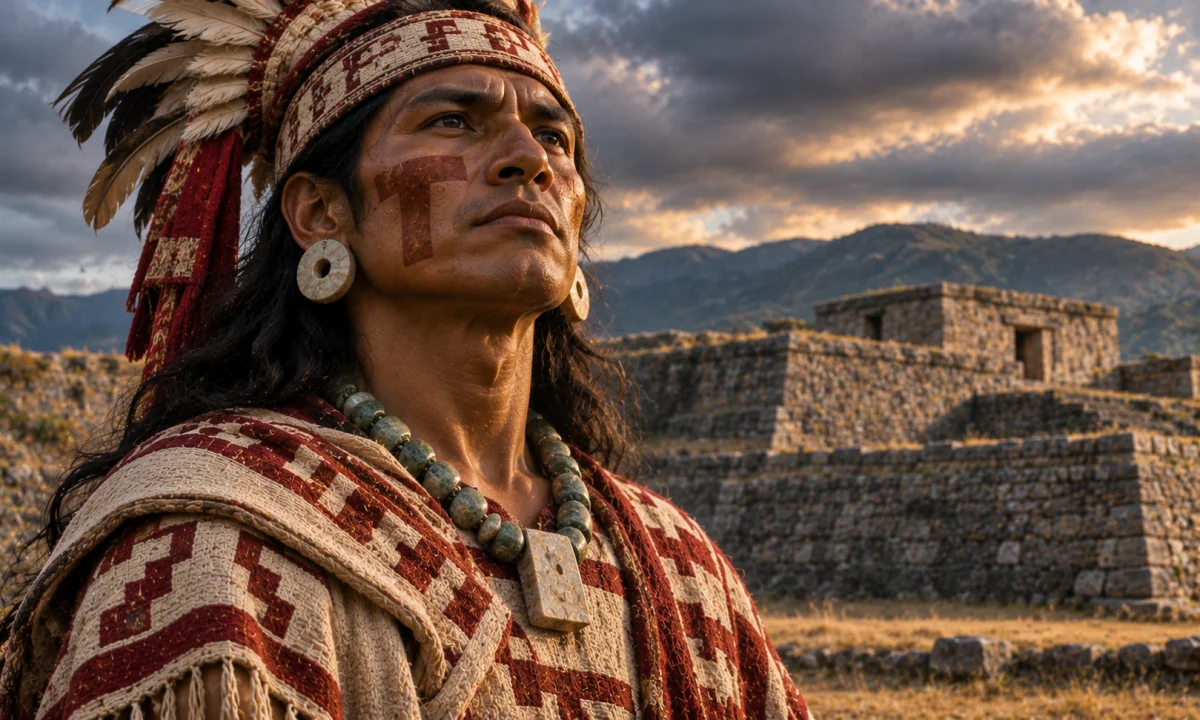
Kedo is a name sometimes associated with Zapotec mythology, particularly with earthquakes and the powers of the earth. Its identity, however, is uncertain. Unlike better-documented Zapotec deities such as Cocijo, the god of rain and lightning, Kedo does not have a widely established profile in the principal colonial descriptions of Zapotec religion. Much of the information repeated about Kedo comes from modern summaries, encyclopedic lists, or unsourced retellings rather than from a clearly preserved pre-Hispanic narrative.
The Zapotec cultural setting
The Zapotecs are one of the major Indigenous peoples of Mesoamerica. Their historic homeland lies mainly in the present-day Mexican state of Oaxaca, especially in the Central Valleys, the Sierra Norte, and the Isthmus of Tehuantepec. Zapotec-speaking communities remain active in these regions, and “Zapotec” refers not to a single uniform culture but to a group of related communities with distinct languages, histories, and local traditions.
Zapotec civilization developed complex settlements long before the Spanish conquest. Monte Albán, founded around the sixth century BCE, became one of the most important political and ceremonial centres of ancient Oaxaca. Other important centres included Mitla, Yagul, Zaachila, and several regional communities that continued to flourish after Monte Albán declined.
Zapotec religious life connected natural forces, political authority, agriculture, ancestors, and the sacred landscape. Rain, lightning, maize, caves, springs, mountains, death, and fertility could all possess religious significance. Deities were not necessarily understood as isolated individuals in the same way as characters in a modern pantheon. Their names and attributes could change between regions and periods, and a divine force might be represented through several titles, images, or local manifestations.
The name Kedo and the problem of identification
The name Kedo is difficult to establish securely as the name of a single ancient Zapotec deity. Spanish colonial missionaries recorded Zapotec words using the spelling conventions of their own period, while modern writers may standardise, simplify, or alter those spellings. In addition, Zapotec languages are diverse, and a name found in one community cannot automatically be treated as a pan-Zapotec religious term.
Some modern accounts describe Kedo as a deity or spirit associated with earthquakes. In these accounts, Kedo represents the force that shakes the ground or embodies the instability of the earth. This association may reflect genuine regional tradition, a later interpretation of Zapotec religious ideas, or a modern attempt to assign a distinct god to a natural phenomenon. At present, it should not be presented as an undisputed feature of ancient Zapotec religion.
There is no universally accepted description of Kedo’s appearance, genealogy, temples, sacred calendar, or mythology. Accounts that portray Kedo as a fully defined “earthquake god” with a fixed personality often provide no indication of the community, language, historical period, or original text on which the description is based. The absence of such information makes it difficult to separate an old local tradition from a modern catalogue entry.
Surviving evidence for Zapotec religion
Knowledge of ancient Zapotec religion comes from several different kinds of evidence, none of which provides a complete account. Archaeological evidence includes temples, carved monuments, tombs, incense burners, offerings, human and animal imagery, and representations of supernatural beings. These remains reveal religious practices and symbols, but they do not always preserve the names or stories connected with them.
Colonial-period records are also important. Spanish missionaries and officials attempted to describe Zapotec languages, rituals, calendars, and beliefs. The linguistic works associated with Juan de Córdova are especially valuable because they preserve many Zapotec words and expressions from the sixteenth century. The writings of Francisco de Burgoa also contain information about Oaxaca’s history, places, and Indigenous religious practices. Such documents must be read carefully: they were written after conquest, through Christian categories, and often with the intention of suppressing or condemning Indigenous religion.
Indigenous traditions did not disappear with the arrival of Spanish colonial rule. Communities adapted older practices to new political and religious conditions, and local knowledge has continued through oral tradition, ritual, storytelling, and relationships with sacred places. Modern ethnographic work therefore provides important evidence, but a tradition documented in a contemporary Zapotec community should not automatically be labelled a belief shared by every Zapotec group in the pre-Hispanic past.
Kedo is not among the Zapotec religious figures whose identity is consistently established across archaeology, colonial vocabulary, and historical descriptions. This does not prove that no community ever used the name. It means that the available evidence does not support a single confident account of Kedo’s origin and character.
Kedo as an earth or earthquake power
When Kedo is identified with earthquakes, the association fits the wider importance of the earth in Mesoamerican religious thought. The ground was not merely an inert surface. It supported maize, contained water, opened into caves, received the dead, and formed part of a living sacred landscape. Mountains and hills could be treated as powerful beings or as places where divine forces were concentrated.
Earthquakes would have been especially meaningful in Oaxaca, a region shaped by active geological faults and frequent seismic activity. A supernatural explanation for shaking ground could connect physical danger with broader ideas about the earth’s life, anger, movement, or renewal. Yet this general cultural context should not be mistaken for direct proof of a particular earthquake deity named Kedo.
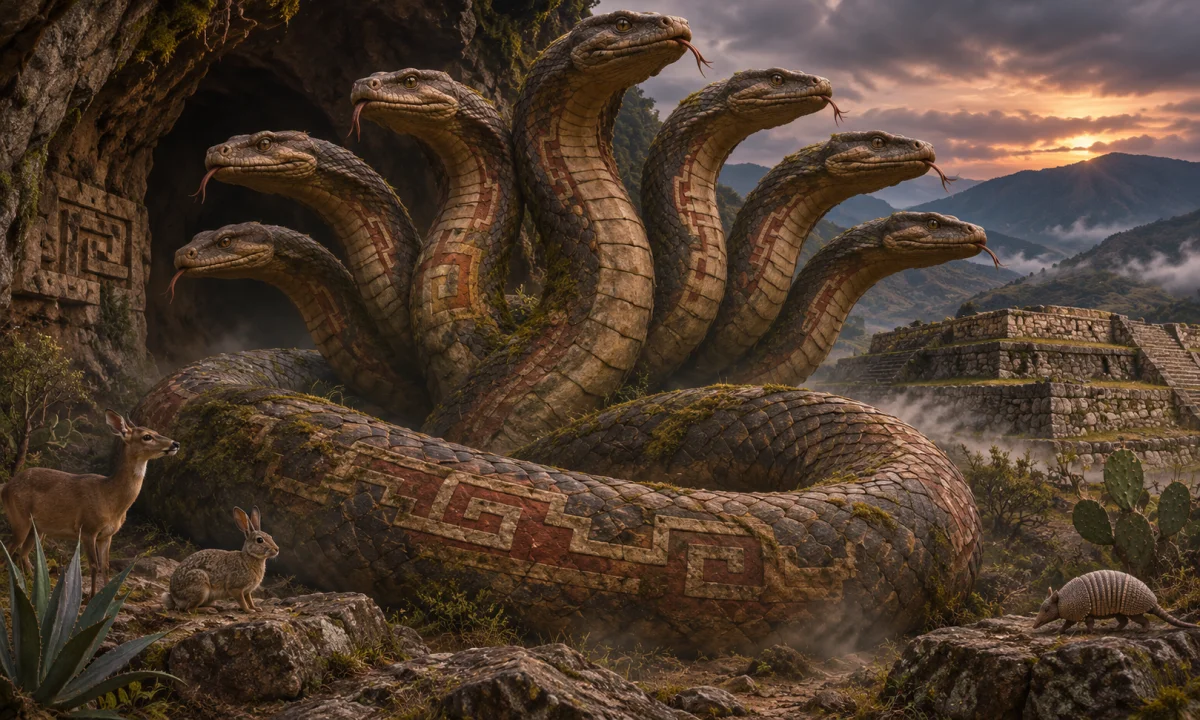
Modern descriptions sometimes say that Kedo causes earthquakes by moving beneath the earth. That image resembles a widespread type of myth in which earthquakes occur when a giant, animal, serpent, or deity shifts its body. No single version of such a story can safely be treated as a canonical Zapotec myth unless its community and source are known. The motif may be a recent elaboration based on general Mesoamerican themes rather than a preserved ancient narrative about Kedo.
If Kedo did belong to a local tradition concerning the earth, the figure may have represented more than destruction. Earthquakes can be associated with danger and death, but forces of the earth may also relate to fertility, burial, caves, mountains, and the return of life through agriculture. A narrowly defined role as a “god of earthquakes” may therefore conceal a broader and more local understanding of the earth’s sacred power.
Related Zapotec deities and possible confusion
Kedo should not be casually merged with Cocijo, the best-known Zapotec rain and storm deity. Cocijo is associated with rain, lightning, thunder, agricultural fertility, and the life-giving forces on which maize cultivation depends. Archaeological images connected with Cocijo often show a distinctive supernatural face with fanged features and a prominent element around the mouth. Because storms, lightning, rain, and earthquakes are all dramatic natural forces, modern popular accounts sometimes group them together, but they are not automatically the same figure.
Kedo should also be distinguished from Zapotec deities connected with death and the underworld, including figures commonly rendered in Spanish or scholarly writing as Coqui Bezelao and Xonaxi Quecuya. The spellings, identities, and relationships of these beings vary in historical accounts, and their names should not be treated as interchangeable. Their association with tombs, death, or the afterlife does not establish a connection with Kedo.
Another important figure is Pitao Cozobi, a deity associated in many accounts with maize and agricultural abundance. The religious importance of the earth, crops, rain, and the dead meant that these spheres overlapped in ritual life. Overlap, however, is not the same as identity. A local earth power could be related symbolically to maize or rain without being Cocijo or Pitao Cozobi.
Names in discussions of Zapotec mythology can also be confused because colonial writers sometimes used broad labels for multiple local beings, while later authors translated or reorganised those labels into a neat pantheon. A list of gods arranged by modern categories may give the impression of a fixed system that did not exist in that form for all Zapotec communities.
Symbolism and cultural interpretation
The most responsible interpretation of Kedo begins with uncertainty rather than with a fixed biography. If the name preserves a local or regional earth tradition, its significance would likely lie in the relationship between people and the land. Zapotec communities have historically depended on seasonal rain, maize agriculture, springs, forests, hills, and communal territories. Natural events were therefore not abstract subjects but matters affecting food, safety, ritual obligations, and social continuity.
An earthquake-related figure could express the vulnerability of human settlements and the agency of the landscape. It might also serve as a reminder that the earth is active and must be approached with respect. In many Indigenous religious systems, the sacred is encountered through places and processes rather than only through anthropomorphic gods. A cave, mountain, spring, or field may be spiritually significant even when no single mythological character governs it.
Modern readers should avoid assuming that a Zapotec supernatural being must possess a human-like personality, a clearly defined family tree, or a role equivalent to a god in Greek mythology. Zapotec religious concepts developed through local languages and ceremonial traditions with their own categories. The word “deity” can be useful as a broad translation, but it may flatten distinctions between gods, ancestral forces, place beings, ritual powers, and sacred manifestations.
Oral tradition and regional variation
Written records preserve only part of Zapotec religious knowledge. Many traditions were transmitted orally, and colonial suppression affected which beliefs were recorded. A name absent from a colonial text may have belonged to a local practice that was never documented, or it may have changed pronunciation and spelling over time. Conversely, a name appearing in a modern compilation may have been detached from its original community and given a wider importance than it actually possessed.
For this reason, claims about Kedo should identify the relevant community and historical setting whenever possible. “Zapotec mythology” is a useful broad label for reference purposes, but it should not imply that every Zapotec-speaking people recognised Kedo in the same way. A Central Valley tradition, an Isthmus tradition, and a contemporary community in the Sierra may preserve different names and explanations for natural forces.
The limited evidence also makes it inappropriate to invent a standard Kedo festival, sacred animal, consort, weapon, or temple. No widely accepted body of traditional stories establishes these features. Descriptions that include them without documenting their origin are likely combining Kedo with another figure or expanding a brief modern identification into a complete fictional mythology.
Kedo in modern reference material
Kedo appears to have greater visibility in modern mythology lists than in widely discussed primary evidence for ancient Zapotec religion. Internet pages, popular mythology databases, and short encyclopedic entries often present the name with a simple definition such as “Zapotec god of earthquakes.” These descriptions can help explain how the figure is currently represented, but they should not be treated as proof of a uniform ancient cult.
There is no major, broadly established modern popular-culture portrayal of Kedo comparable to the use of better-known Mesoamerican figures in films, games, novels, or comic books. When Kedo appears in contemporary creative works, the character may be based on a brief modern description rather than on a substantial corpus of Zapotec stories. Such adaptations belong to modern fiction and should be clearly separated from Indigenous tradition.
Kedo is therefore best described as a poorly documented and possibly regional Zapotec earth or earthquake figure. The earthquake association is repeated in modern accounts, but the name’s original language, historical distribution, appearance, stories, and precise religious status remain uncertain. Treating that uncertainty as part of the subject’s history is more accurate than presenting a detailed mythology that the surviving evidence does not support.