WORLD

Nohuichaana
Nohuichaana is a name associated with Zapotec religious tradition, especially in modern descriptions of a female water or fertility deity. She is commonly presented as a spirit or goddess connected with rivers, freshwater, fish, childbirth, and the generative power of nature. However, the evidence for her identity is limited, and many details repeated in modern summaries cannot be securely traced to a single precolonial Zapotec narrative.
Zapotec cultural setting
The Zapotecs are an Indigenous people of southern Mexico, particularly associated with the valleys, mountains, and coastal regions of the present-day state of Oaxaca. Zapotec communities developed complex societies long before the arrival of the Spanish. Monte Albán, founded during the first millennium BCE, became one of the most important political and ceremonial centres of ancient Oaxaca.
“Zapotec mythology” does not describe one uniform system shared identically by every community. Zapotec peoples speak several related but distinct languages, and their traditions vary between the Central Valleys, the Isthmus of Tehuantepec, the Sierra, and other regions. Religious concepts also changed over time, particularly after Spanish colonisation and the introduction of Christianity.
Ancient Zapotec religion placed strong importance on rain, lightning, agricultural fertility, ancestors, caves, mountains, springs, and other places understood as sources of life or spiritual power. Water was not merely a physical resource. It was connected with crops, human reproduction, animals, seasonal cycles, and the continuing relationship between communities and the landscape.
The name Nohuichaana
The spelling Nohuichaana is not completely standard. Nohuichana is also found, and other spellings may appear when Zapotec names are written through Spanish orthographic conventions. This variation is unsurprising because Zapotec languages have different sound systems and because many Indigenous names were recorded by colonial writers who did not speak the local language fluently.
The meaning of the name is also uncertain. A reliable translation should not be assumed from the spelling alone. Modern sources sometimes provide confident definitions, but the available evidence does not establish one universally accepted etymology. The name may have been recorded in a particular regional language or in a historical form that cannot be interpreted securely using modern Zapotec vocabulary.
For the same reason, Nohuichaana should not automatically be treated as a figure with a fixed role throughout all Zapotec communities. The name is best understood as belonging to a body of regional and historically mediated traditions rather than to a single, fully documented pan-Zapotec mythology.
Identity and classification
Modern reference works commonly classify Nohuichaana as a water goddess, with fertility as a related aspect. She is often described as having authority over rivers, springs, fish, or freshwater creatures. Some accounts also connect her with childbirth and the ability of nature to produce and sustain life.
These descriptions reflect an understandable symbolic association: water nourishes fields, supports animals, and makes human settlement possible. In an agricultural society, the powers that govern rain and flowing water could also be related conceptually to fertility, pregnancy, and birth. Such connections occur in many religious traditions, but the general logic of the association does not by itself prove that every detail attributed to Nohuichaana belonged to an ancient Zapotec belief.
It is therefore safer to describe her as a water-associated Zapotec female divinity or spiritual figure, while noting that the terms “goddess,” “spirit,” and “deity” are modern attempts to classify a religious concept recorded through incomplete sources. Indigenous religious categories did not necessarily correspond exactly to European ideas of a god or goddess.
Water, fertility and living landscapes
The central theme associated with Nohuichaana is the life-giving character of water. Rivers and springs could be understood as places where different realms met: the human world, the underworld, the domain of ancestors, and the hidden powers of the earth. A spring was not simply a source of drinking water; it could also be a location with its own presence, danger, or sacred significance.
In this context, Nohuichaana’s connection with water can be interpreted in several related ways:
- Freshwater and rivers: She is frequently described as belonging to rivers, streams, springs, or other sources of fresh water.
- Fish and aquatic life: Some modern accounts call her the mother or guardian of fish and other creatures living in the water. This detail is widespread in summaries of her character, although its early documentation is not clear.
- Fertility: Her association with water has led to descriptions of her as a goddess of fertility, agricultural abundance, or natural generation.
- Childbirth: Some sources connect her with human reproduction and childbirth. The extent to which this was a distinct traditional role, rather than a later interpretation of her fertility symbolism, remains uncertain.
- Protection of natural resources: In modern retellings, she may be presented as a guardian of rivers and aquatic life. This ecological emphasis is meaningful today, but it should not automatically be projected backward as a precisely documented ancient doctrine.
These themes should not be separated from the wider Zapotec understanding of place. Water, mountains, caves, cultivated land, and ancestral presence were often interdependent rather than belonging to unrelated religious categories. A water figure could therefore have agricultural, bodily, social, and spiritual significance at the same time.
Appearance and iconography
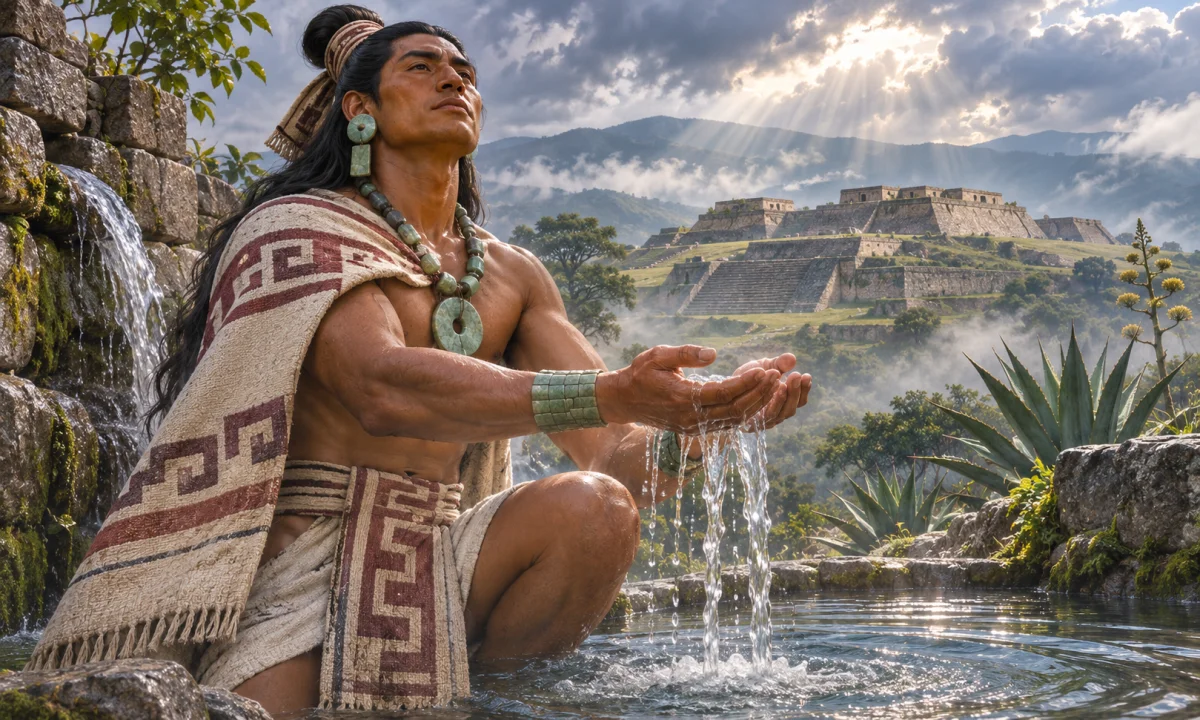
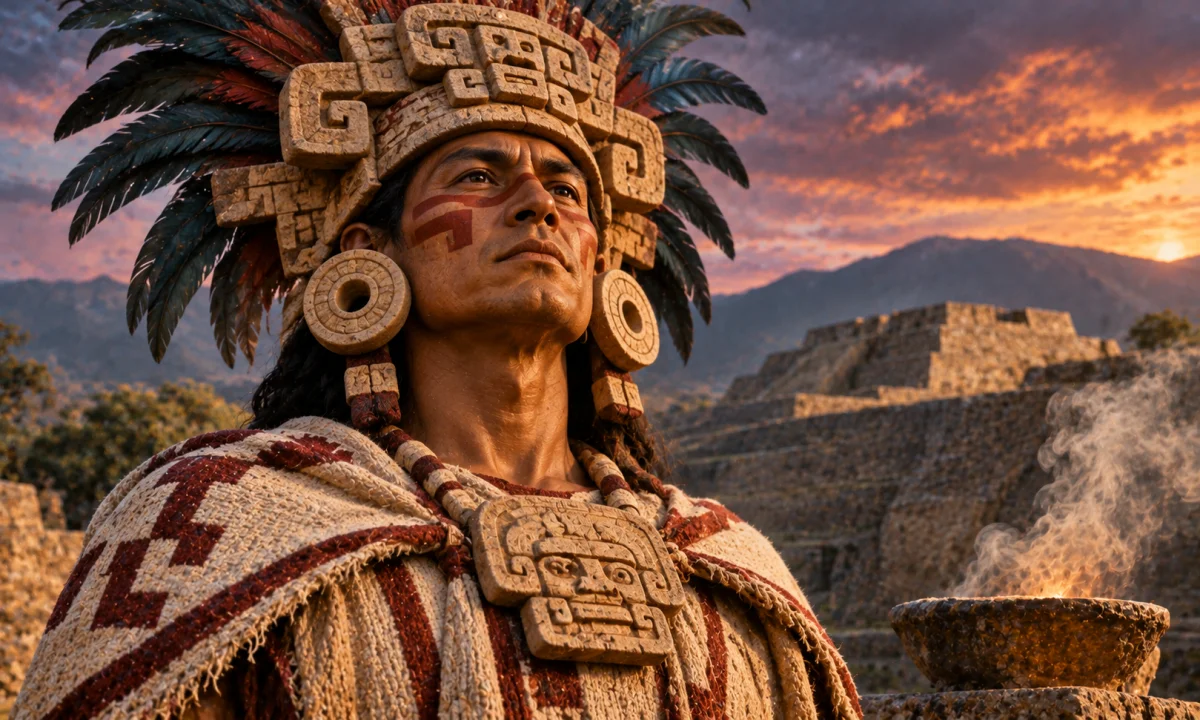
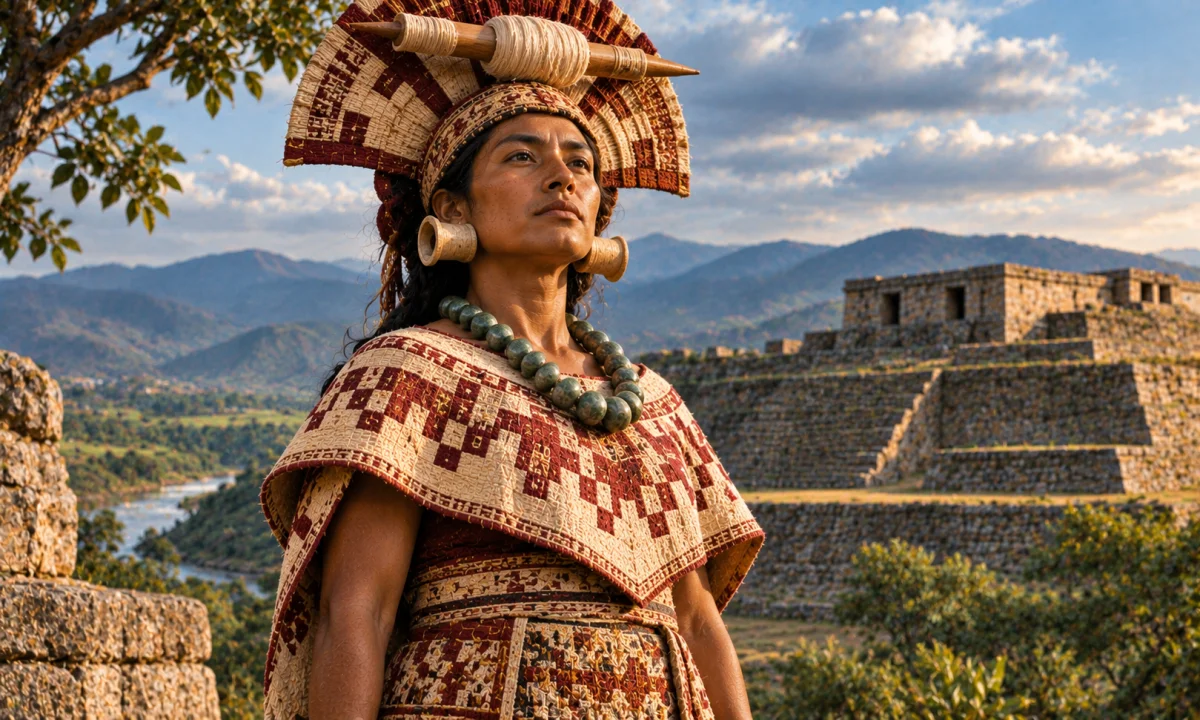
No securely established ancient image of Nohuichaana is known to provide a standard appearance. Modern illustrations often portray her as a woman near a river, sometimes with flowing hair, aquatic animals, reeds, shells, or blue and green clothing. Such imagery communicates her connection with water, but it should be treated as modern artistic interpretation rather than as a documented Zapotec iconographic canon.
There is no firm basis for claiming that she always had a fish tail, horns, wings, a serpent body, or another distinctive supernatural form. These features are sometimes added in contemporary fantasy art or in generalized depictions of water spirits. They should not be confused with evidence from ancient Zapotec sculpture, painting, or ritual objects.
More broadly, identifying a particular ancient object as an image of Nohuichaana would require strong contextual evidence. Zapotec art includes many human, animal, ancestral, and supernatural forms, but an image cannot be assigned to a named deity solely because it depicts water, a woman, or an aquatic creature.
Stories and relationships
A fully developed cycle of myths about Nohuichaana has not survived in a form comparable to the extensive narrative traditions associated with some better-documented Mesoamerican deities. There is no securely established canonical account describing her birth, marriage, conflicts, death, or position in a complete divine genealogy.
Stories found in popular summaries sometimes describe her as the creator or mother of fish, the protector of rivers, or a beneficent being who gives fertility to the land. These motifs are compatible with her commonly assigned role, but their age and regional origin are not always clear. Some may derive from later folklore, explanatory retellings, or modern efforts to reconstruct a coherent mythology from brief references.
It is also unwise to place Nohuichaana automatically within the better-known genealogies of Zapotec figures. Zapotec religious traditions include powerful beings associated with rain, lightning, maize, death, ancestors, and the earth, but surviving records do not provide a universally accepted relationship between Nohuichaana and all of these figures.
Sources and historical limitations
Knowledge of precolonial Zapotec religion comes from several kinds of evidence, including archaeology, inscriptions, painted manuscripts, colonial descriptions, Indigenous-language vocabularies, and later community traditions. Each type of evidence has limitations.
Archaeological remains can demonstrate that particular animals, natural forces, ancestors, or supernatural beings were important, but they do not always preserve the names of the figures represented. Colonial documents may record Indigenous names and beliefs, yet they were written in a period of religious change and often interpreted through Christian categories. Missionaries could describe a local power as a “god,” “devil,” “idol,” or “spirit” without preserving the distinctions made by the community itself.
Names could also be translated, altered, abbreviated, or assigned to a different figure by later writers. A name found in one regional record should not automatically be treated as evidence for all Zapotec-speaking peoples. In the case of Nohuichaana, the lack of a large body of early, independently corroborated narratives makes cautious wording especially important.
The absence of extensive documentation does not mean that the tradition is insignificant. It means that modern descriptions must distinguish between what is directly attested, what is a reasonable interpretation, and what belongs primarily to later presentation.
Nohuichaana and related Mesoamerican water traditions
Nohuichaana is sometimes compared with water or fertility goddesses from other Mesoamerican cultures, especially the Aztec Chalchiuhtlicue or the Maya figures associated with rain, water, and fertility. Such comparisons can illuminate broad regional themes, since many Mesoamerican societies valued rain, springs, agricultural abundance, and aquatic life.
They do not, however, prove that the figures were the same. Zapotec religion developed its own languages, regional institutions, symbols, and histories. Nohuichaana should not be described as a Zapotec version of Chalchiuhtlicue, nor should characteristics belonging to Aztec, Maya, Mixtec, or other traditions be transferred to her without evidence.
Confusion can also arise with Cocijo, the major Zapotec rain and storm deity often compared with the Aztec Tlaloc. Cocijo’s association with rain, lightning, and agricultural water is much more securely represented in discussions of ancient Zapotec religion. Nohuichaana, when identified as a distinct figure, belongs to a different and less fully documented category of water-related tradition. The two should not be merged simply because both involve water or fertility.
Cultural significance
Nohuichaana is significant because the traditions connected with her express the importance of water as a source of life, food, reproduction, and community continuity. Whether understood as a goddess, a local spirit, or a name preserved through imperfect records, she reflects a worldview in which natural places could possess agency and moral importance.
Her uncertain documentation also reveals something about the study of Indigenous religions. Written records do not preserve every belief equally. Colonial priorities, language loss, religious suppression, regional diversity, and the destruction or reinterpretation of Indigenous materials all affect what can be known today. A short reference to a deity may preserve a genuine tradition while leaving its stories, rituals, and original meaning unclear.
For that reason, responsible accounts of Nohuichaana should avoid presenting a single elaborate biography as historical fact. The strongest recurring association is with water and life-giving fertility. Claims about her exact appearance, genealogy, rituals, or specific myths require qualification unless supported by clear regional evidence.
Modern representations
Nohuichaana has a limited presence in widely known popular culture compared with more frequently adapted Mesoamerican figures. She appears mainly in online mythology lists, educational summaries, modern illustrations, and occasional fantasy treatments of Indigenous deities. These representations often give her a polished visual identity and a complete set of powers that are not securely documented in traditional sources.
Modern artists and writers may legitimately reinterpret Nohuichaana, particularly in works concerned with water conservation, Indigenous heritage, or ecological spirituality. Such creations should be identified as contemporary adaptations. They should not be presented as evidence that ancient Zapotec communities universally imagined her as a mermaid, river queen, creator of all aquatic life, or member of a fixed pantheon.