WORLD

Coqui Nexo
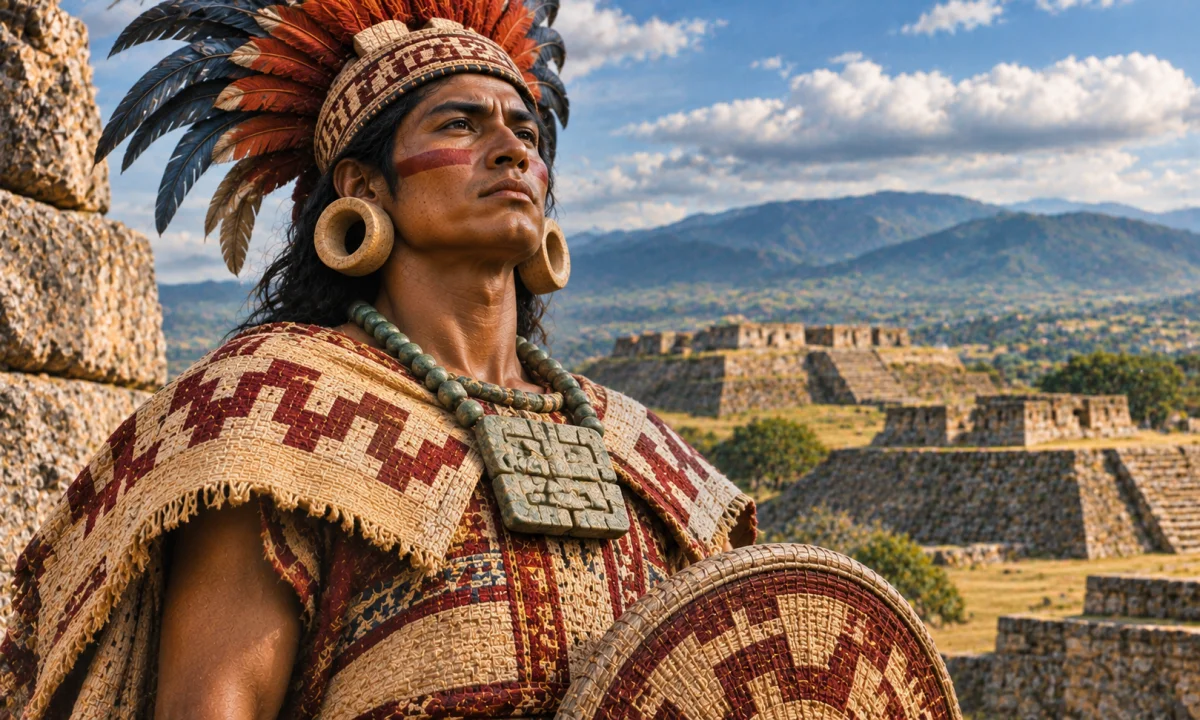
Coqui Nexo is not a securely documented figure of Zapotec mythology. The name does not correspond to a widely recognized Zapotec deity, hero, spirit, animal being, or ritual character in the established descriptions of Zapotec religious traditions. Its classification as a figure of “Zapotec mythology” should therefore be treated as uncertain rather than historical fact.
The uncertainty is important because Zapotec religious traditions are not a single, uniform mythology. Zapotec-speaking peoples have lived for centuries in different regions of Oaxaca, including the Central Valleys, the Sierra Norte, the Isthmus of Tehuantepec, and coastal areas. Communities have distinct languages, histories, ceremonies, local saints, sacred places, and oral traditions. A being known in one community cannot automatically be presented as a pan-Zapotec figure.
The name and its problems
The word coquí is best known as the common name for a small frog native to Puerto Rico, especially Eleutherodactylus coqui. The name is generally associated with the frog’s two-part call, often rendered in Spanish as “co-quí.” It is not a standard Zapotec term for a mythological being. Zapotec languages have their own words for frogs and other amphibians, and those words vary considerably between languages and communities.
Nexo is a Spanish word meaning “link,” “connection,” or “nexus.” It is not known as a traditional Zapotec divine name or a commonly recorded Zapotec religious title. The combination “Coqui Nexo” consequently appears linguistically unusual for an ancient Zapotec figure. It may be a recent invented name, a mistranscription, a fictional label, or a modern attempt to create a mythological character by combining a frog-related word with a Spanish concept.
Without a documented source, it is not possible to determine whether the expression was intended to name a deity, a guardian spirit, a symbolic animal, or a character created for modern entertainment. Similar names can circulate through websites, social media, games, illustrated bestiaries, and fantasy writing without representing a traditional belief. A modern appearance of the name should not be treated as evidence of precolonial worship.
Zapotec religious and cultural setting
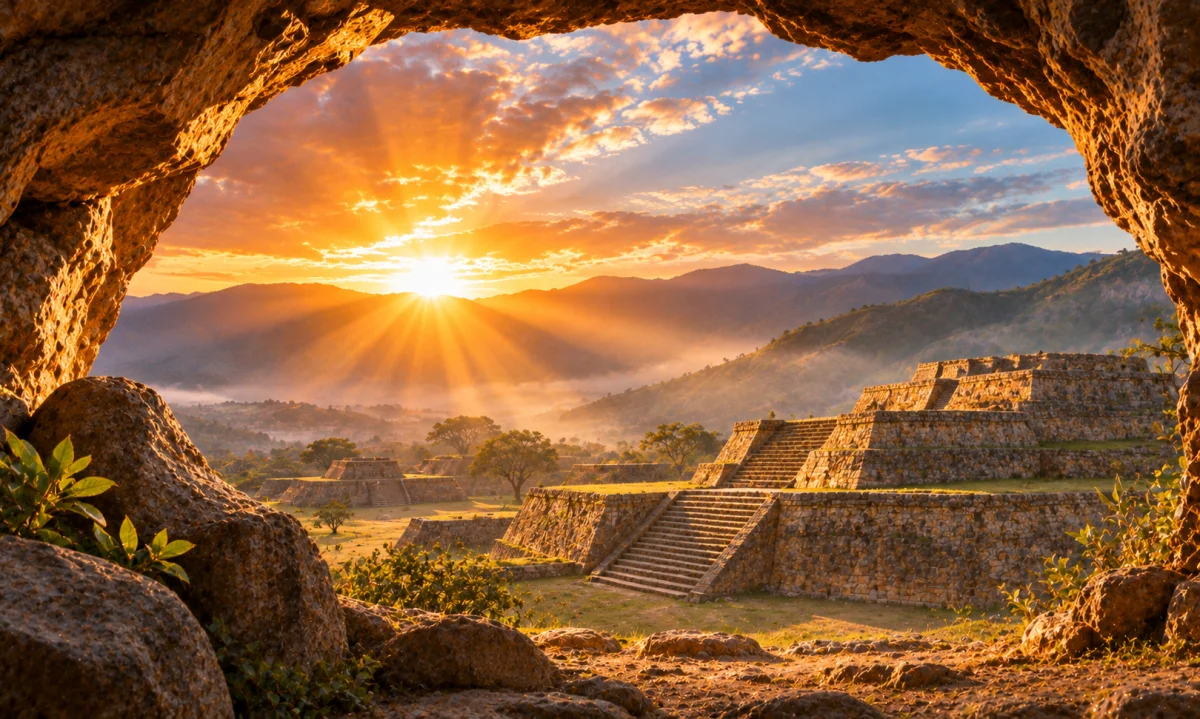
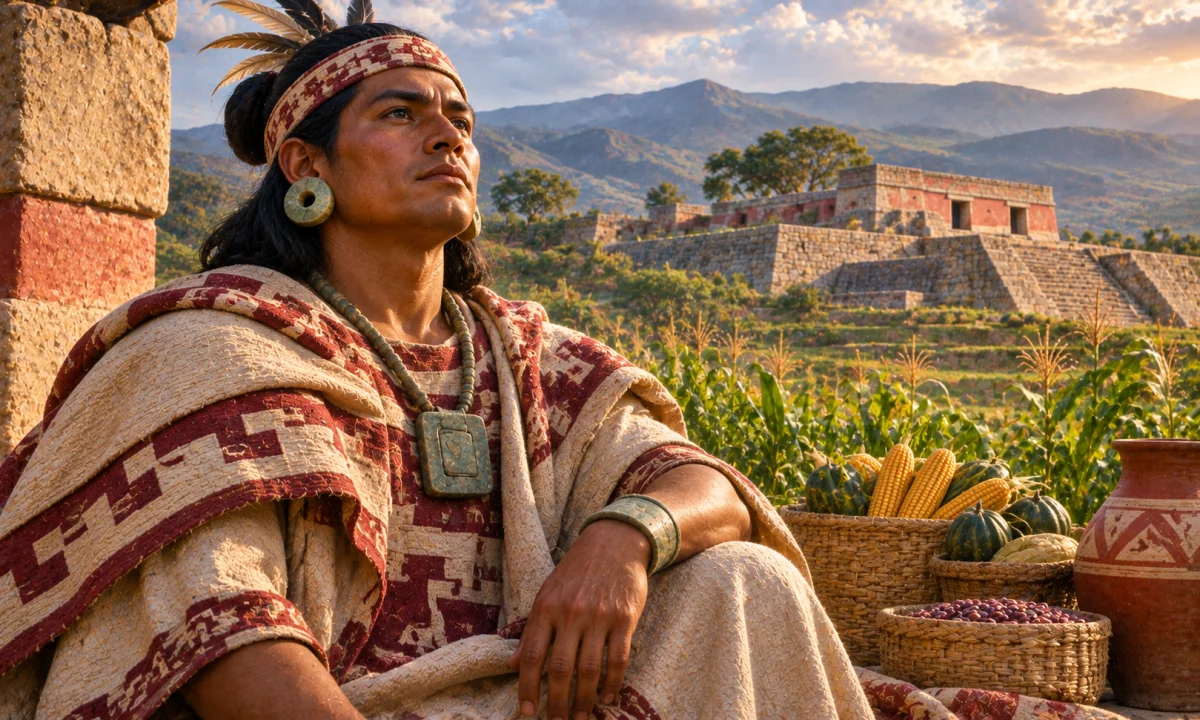
Ancient Zapotec civilization developed in the Valley of Oaxaca and surrounding regions. Monte Albán became a major political and ceremonial center during the first millennium BCE and continued to be important for many centuries. Archaeological remains show complex religious practices involving ancestors, rulers, rain, fertility, calendrical ceremonies, caves, mountains, and forces associated with agricultural life.
Later Zapotec communities preserved and transformed older practices under colonial rule. Spanish missionaries recorded some Indigenous beliefs, but their descriptions were selective and often interpreted through Christian categories. Colonial documents may describe local beings as “devils,” “idols,” “saints,” or supernatural animals even when those terms did not accurately reflect Indigenous concepts. Archaeology, language, ethnography, community histories, and living ceremonial practices therefore need to be considered together.
There is no single canonical Zapotec scripture comparable to a unified sacred book. Information about Zapotec religious life comes from several kinds of evidence: archaeological objects and buildings, colonial accounts, surviving place names, ritual practices, oral narratives, Indigenous-language terms, and the testimony of contemporary communities. These sources do not always agree, and many local traditions were never recorded in detail.
Zapotec religious thought often connects human communities with landscapes. Mountains, springs, caves, fields, clouds, rain, lightning, and the ancestors may all have religious significance. The precise meaning of a natural feature or animal depends on the community and ceremony in which it appears. It is therefore possible to discuss broad patterns, such as the importance of rain and agricultural fertility, without assigning every water-related animal to a named universal deity.
Frogs, rain, and agricultural symbolism
Frogs are culturally significant in many agricultural societies because their calls and appearance are associated with seasonal rain. This association is especially understandable in Oaxaca, where farming communities have long depended on the timing and abundance of rainfall. A frog may function as a sign of coming water, fertility, renewal, or the return of life to dry land.
That general symbolism does not establish the existence of Coqui Nexo. Zapotec communities may use frogs in stories, songs, verbal expressions, household beliefs, or local ritual contexts without recognizing a named frog deity. Animal symbolism can also be situational: a frog may represent rain in one story, foolishness or transformation in another, and simply an ordinary creature in a third.
Precolonial Mesoamerican art frequently depicts animals connected with water and fertility, including frogs, toads, serpents, fish, birds, and aquatic insects. Such images are not automatically Zapotec, and an archaeological representation of a frog does not by itself identify a particular god. Objects from Oaxaca can also reflect trade, migration, shared Mesoamerican conventions, or the artistic choices of individual communities.
Some ancient Zapotec religious imagery is associated with rain and lightning. Scholars have discussed storm and rain beings in relation to broader Mesoamerican patterns, but the names, identities, and meanings of these figures are not always directly recoverable. A frog-shaped object, a rain symbol, and a named supernatural personage should be kept distinct unless the evidence connects them.
Identity and classification
There is no reliable basis for classifying Coqui Nexo as a Zapotec god, goddess, creator, underworld being, culture hero, or protective spirit. Nor is there sufficient evidence to describe a traditional appearance, genealogy, dwelling place, sacred calendar, offerings, or ritual function.
Descriptions sometimes attached to obscure mythological names may be assembled from general motifs. A frog figure might be said to control rain, connect the human and spirit worlds, guard springs, or transform between animal and human forms. Each of these motifs can occur in Indigenous traditions around the world, including Mesoamerica, but the presence of a plausible motif does not authenticate a particular name.
The word “nexo” may encourage an interpretation of the figure as a mediator or connector. Such an interpretation would be a modern reading of the Spanish name, not a demonstrated Zapotec doctrine. It might be appropriate in a fictional setting, but it should not be presented as an inherited religious belief without community testimony or a traceable traditional record.
Stories and relationships
No well-attested traditional narrative identifies Coqui Nexo in a family relationship with a Zapotec creator, rain being, ancestor, ruler, or animal spirit. There is likewise no established cycle of stories describing the figure’s birth, exploits, death, marriage, conflict, or transformation.
This absence does not prove that no local story has ever used a similar name. Zapotec oral traditions are diverse, and many narratives remain within particular communities or are preserved in Indigenous languages. A local account could exist without appearing in widely circulated reference materials. The responsible conclusion is narrower: the name is not presently recognizable as a securely documented figure of Zapotec mythology on the basis of commonly available historical and ethnographic knowledge.
Frog narratives from Mesoamerica should also not be merged indiscriminately. A story from a Maya, Mixtec, Nahua, Mazatec, Mixe, or other tradition may involve a frog and rain, but that does not make its character Zapotec or provide evidence for Coqui Nexo. Shared ecological concerns can produce similar stories without implying a common named being.
Distinction from other frog-related figures
Coqui Nexo should first be distinguished from the Puerto Rican coquí frog. The coquí is a real Caribbean amphibian and an important cultural symbol of Puerto Rico, but it is not a Zapotec mythological figure. Its name belongs to a different linguistic and geographical context from the Zapotec languages of Oaxaca.
The name should also not be confused with any Mesoamerican rain deity merely because frogs are associated with rainfall. Aztec or Nahua traditions include important rain and water beings, while Maya traditions include their own storm, rain, and aquatic figures. Mixtec and other Oaxacan traditions likewise possess distinct sacred histories. Similar themes do not establish identity or shared origin.
Nor should Coqui Nexo be automatically equated with a “frog god” depicted in an archaeological catalogue. Archaeological interpretation depends on context, iconography, associated inscriptions, placement, materials, and comparison with other objects. A frog image may represent an animal, a symbolic attribute, a local spirit, a ritual offering, or an artistic motif rather than a named god.
Possible modern origin
The form of the name strongly suggests that at least some uses of “Coqui Nexo” may be modern. It has the structure of a fantasy character name or a descriptive title invented in Spanish or English, rather than a clearly preserved Zapotec expression. Contemporary creators often combine an animal associated with a region, a Spanish word, and a general mythological theme to produce an original character.
Such a character can be used creatively as a guardian of waterways, a symbol of cultural connection, or a personification of ecological balance. Those uses belong to modern fiction, educational invention, role-playing, visual art, or popular culture unless they are supported by evidence from a specific Zapotec community. A fictional adaptation may draw inspiration from real regional themes, but inspiration is not the same as traditional continuity.
Modern representations should also avoid treating Zapotec culture as a single storehouse of interchangeable Mesoamerican motifs. Responsible adaptation identifies the particular community, language, landscape, and contemporary cultural context that informs the work. It also avoids presenting an invented being as an ancient deity simply because the label sounds Indigenous or mythological.
Cultural significance of the uncertainty
The uncertain status of Coqui Nexo illustrates a wider problem in the study of Indigenous mythology. Names can be detached from their original language, copied without context, or assigned to a culture by later writers. Once repeated, an unsupported claim may appear authoritative even when no historical or community-based evidence accompanies it.
For Zapotec traditions, careful wording is especially important. Living Zapotec peoples are not merely descendants of an ancient civilization; they include contemporary communities with their own languages, religious practices, political identities, and interpretations of the past. Traditional knowledge is not always public, and the absence of a published account should not be used to dismiss local testimony. At the same time, a name with no identifiable provenance should not be elevated into a pan-Zapotec tradition.
At present, Coqui Nexo is best described as an unverified or possibly modern name associated with Zapotec mythology, not as an established figure within it. Any fuller account would require a traceable source, a specific Zapotec community or language context, and evidence showing how the name and its attributes are used. Without that information, claims about its powers, appearance, sacred role, or traditional stories remain speculative.