WORLD

Ayar Uchu
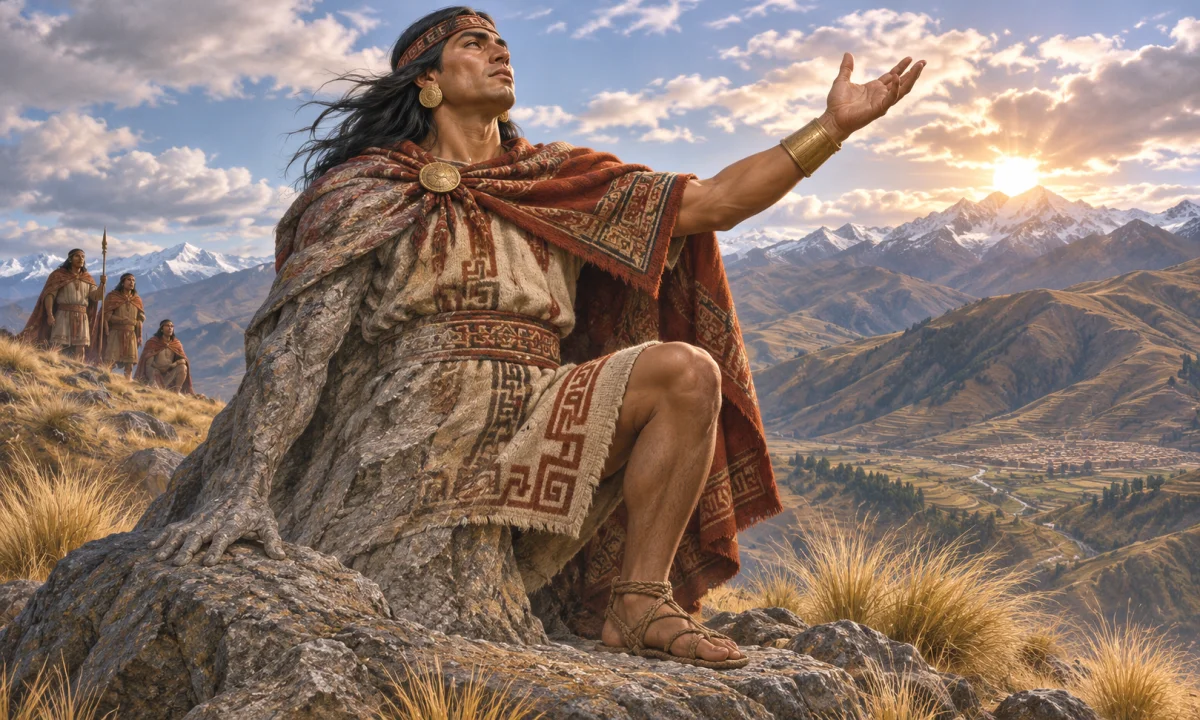
Ayar Uchu is a culture hero and ancestral figure in traditions associated with the Inca origins of Cusco. He is usually described as one of four brothers who emerged from the sacred place of Pacaritambo before the founding of the Inca state. In the best-known versions of the story, Ayar Uchu becomes associated with the mountain and shrine of Huanacauri, where he is transformed into stone and continues to exist as a sacred presence.
Origins in Inca tradition
The story of Ayar Uchu belongs to a group of origin traditions that explain how the ancestors of the Inca ruling dynasty reached the Cusco region. These traditions were recorded in Spanish during and after the sixteenth-century conquest, when Indigenous informants, interpreters and members of the Inca elite recounted the past to colonial writers. The surviving accounts do not form a single, completely consistent narrative. Names, relationships, locations and individual actions vary between chroniclers.
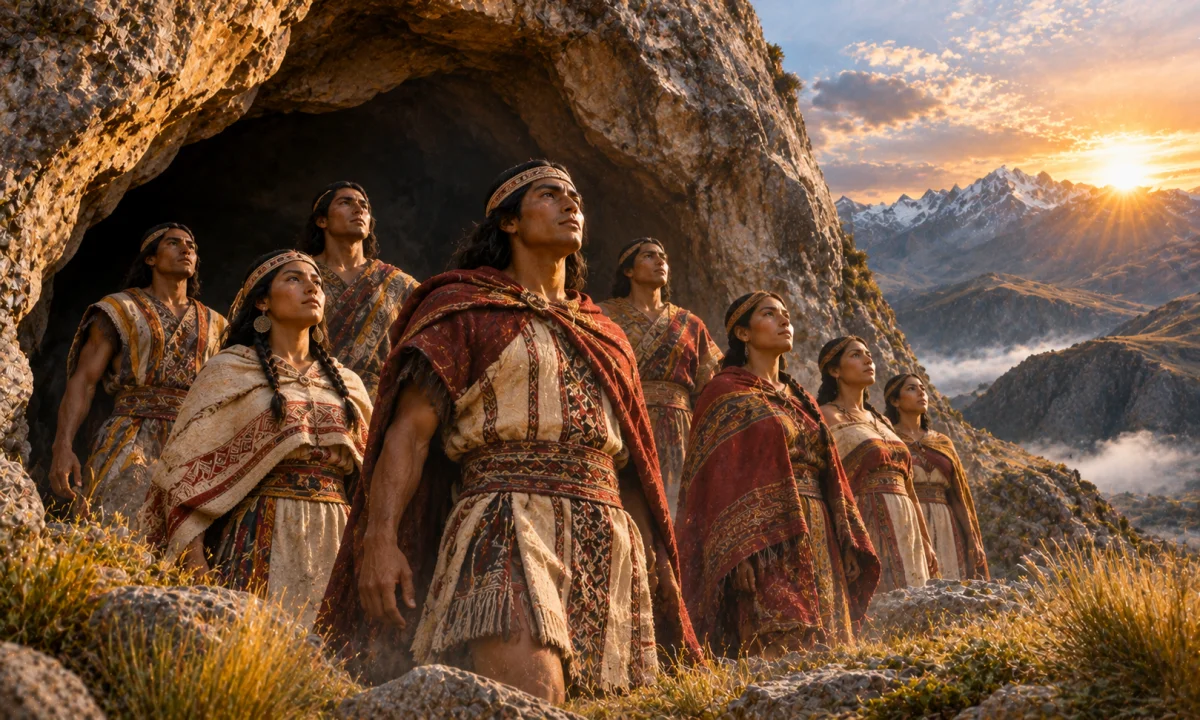
Even so, several features recur. A group of ancestral siblings emerges from Pacaritambo, a place often identified with a settlement or sacred landscape south of Cusco. Pacaritambo is associated with a cave or set of openings called Tambo Toco. The name is commonly understood as referring to a place of windows, chambers or openings, although the precise meaning and interpretation of the place are not entirely certain.
The principal male figures are generally named Ayar Manco, Ayar Auca, Ayar Cachi and Ayar Uchu. They are accompanied by female relatives whose names also vary among accounts. Commonly recorded names include Mama Ocllo, Mama Huaco, Mama Raua and Mama Ipacura. In some versions, the women are described as sisters; in others, their roles are closer to wives, companions or founding mothers. These variations reflect both differences in Inca traditions and the way colonial authors organized material that had previously been transmitted orally.
The siblings travel through the landscape in search of a suitable place to establish themselves. Their journey is not simply an adventure narrative. It expresses a migration from an ancestral place into the territory that will become the political and religious centre of the Inca world. Mountains, springs, caves and stones encountered along the way are treated as living sacred beings or as places where ancestral power becomes visible.
The meaning of Ayar Uchu's name
The name Ayar Uchu is usually preserved in a Quechua form, but its exact meaning and original linguistic context are uncertain. In many varieties of Quechua, uchu refers to chilli or pepper. That association has sometimes encouraged symbolic interpretations of the name, but the surviving colonial spellings do not allow a secure explanation of what the name meant in the original tradition.
The word Ayar is also difficult to interpret with confidence. Some scholars have connected the names of the four brothers with plants, agricultural products or other features of the Andean environment, while others treat them primarily as personal or ancestral names. It is safer to regard such etymologies as proposals rather than established facts.
Colonial writers sometimes translated or explained Indigenous names according to their own assumptions. Their spellings were also inconsistent because Quechua sounds were being represented through Spanish orthography. As a result, a name may appear in different forms in discussions of the Inca origin narratives. The figure known as Ayar Uchu should not therefore be treated as a character with one universally fixed biography.
Ayar Uchu and Huanacauri
The most important episode associated with Ayar Uchu is his transformation at Huanacauri, a mountain or sacred site near Cusco. In several accounts, the travelling siblings reach or approach Huanacauri, and Ayar Uchu is changed into stone. This transformation marks the end of his movement as a human-like ancestor and the beginning of his existence as a huaca.
A huaca was a sacred being, object or place in the religious systems of the Andes. Huacas could include mountains, springs, caves, stones, mummies of ancestors and locations connected with important events. The category does not correspond exactly to the modern idea of an idol or temple deity. A huaca was a source or concentration of sacred power, and communities maintained relationships with it through offerings, ritual attention and inherited responsibilities.
By becoming stone at Huanacauri, Ayar Uchu is not necessarily understood as simply dying. His transformation allows him to remain present within the landscape. The stone is connected to ancestral authority and to the legitimacy of the group that will establish itself at Cusco. In this sense, Ayar Uchu is both a founding ancestor and a sacred place.
Some accounts describe the transformed Ayar Uchu as giving instructions to the surviving brothers. He may tell Ayar Manco to continue the journey, settle in the proper location and establish a ritual order. The details differ, but the general pattern is significant: the ancestor who becomes a huaca transfers authority to the founder who remains active in the human world.
The four Ayar brothers
Ayar Uchu is part of a group, and his role becomes clearer when compared with the other brothers. Ayar Manco, later known as Manco Capac, is generally presented as the principal founder of the Inca dynasty and the first ruler of Cusco. Ayar Auca is associated in some accounts with the occupation or claiming of the site where Cusco will be established. Ayar Cachi is often described as exceptionally powerful, dangerous or disruptive.
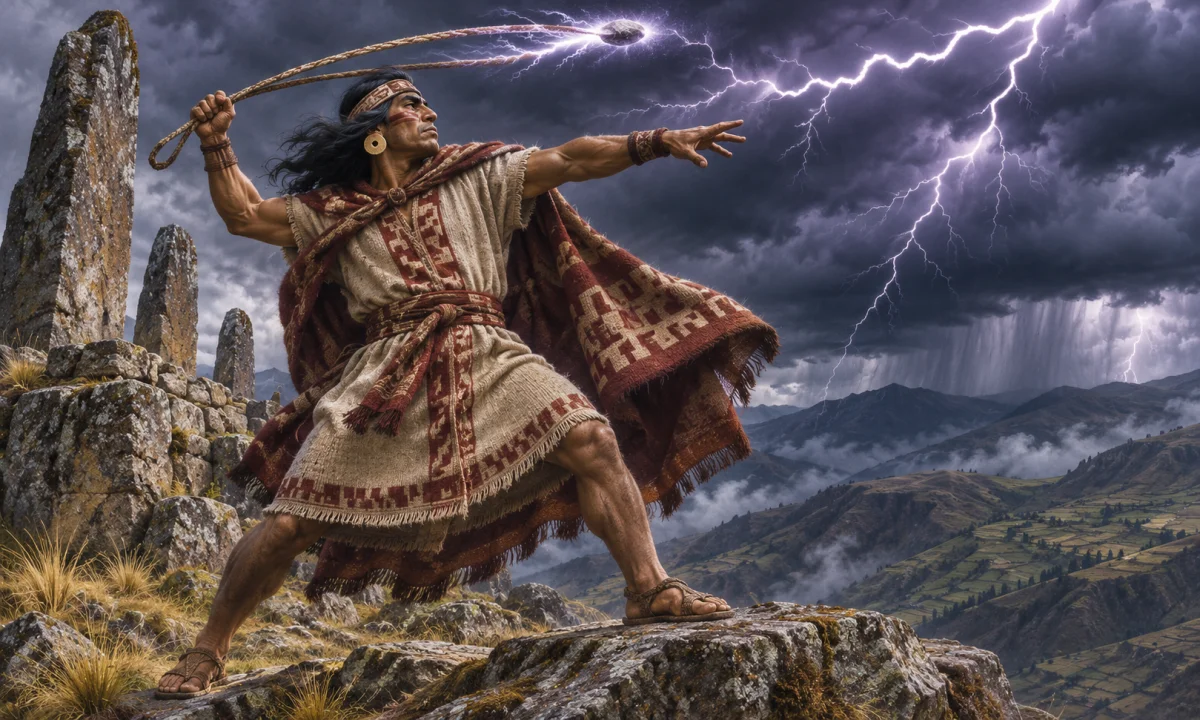
In one widely repeated version, Ayar Cachi possesses extraordinary strength and can cause destruction by throwing stones or using a sling. His brothers become afraid that his power will prevent them from completing their journey. They trick him into entering a cave, then seal him inside. This episode is not present in exactly the same form in every account, and its details should not automatically be combined with the story of Ayar Uchu's transformation.
The narratives can be read as a sequence of transformations. Ayar Cachi is removed from the travelling group, Ayar Uchu becomes a stone huaca, Ayar Auca takes on a territorial or foundation-related role, and Ayar Manco becomes the dynastic founder. The story thus distributes different forms of power among the brothers: destructive force, sacred permanence, territorial occupation and political rulership.
These roles are not always sharply separated. Some colonial accounts give different actions to different brothers, and the names can be difficult to reconcile across versions. A detail attributed to Ayar Auca in one narrative may resemble a detail attributed to Ayar Uchu in another. Such variation is a feature of the surviving record rather than evidence that every version describes the same character in the same way.
Relationship with Manco Capac and the founding of Cusco
Ayar Uchu is commonly presented as a brother or close male companion of Ayar Manco, but the relationship between the two is more than a family connection. The story establishes a transfer of sacred and political legitimacy. Ayar Manco is able to become the founder of the Inca line partly because the other ancestral figures leave their power in particular places or accept a different destiny.
In narratives that connect Ayar Uchu with Huanacauri, the mountain becomes an important point in the early history of the Inca people. It is not merely a landmark on the route to Cusco. It is a place where an ancestor is encountered, transformed and consulted. Huanacauri therefore links the physical geography of the Cusco region with the sacred ancestry of the ruling dynasty.
The women who travel with the brothers are also important to the foundation story. They are not simply background characters, although their names and roles vary. Founding mothers, sisters and wives help establish descent, marriage relationships and the continuity of the community. Later Inca political ideology placed great importance on the relationship between royal ancestry, kinship and sacred geography.
The narratives do not describe a single moment of creation from nothing. Instead, they portray a people moving through an already inhabited and spiritually charged world. The ancestors recognize, negotiate with and transform places that possess their own sacred significance. The eventual foundation of Cusco is therefore both a migration story and a claim about belonging, authority and ritual precedence.
Appearance and powers
Traditional accounts do not provide a stable physical description of Ayar Uchu. He is generally introduced as an ancestral brother rather than as a god with a standardized body, costume or set of visual attributes. His most important characteristic is the ability to undergo a supernatural transformation and become part of the sacred landscape.
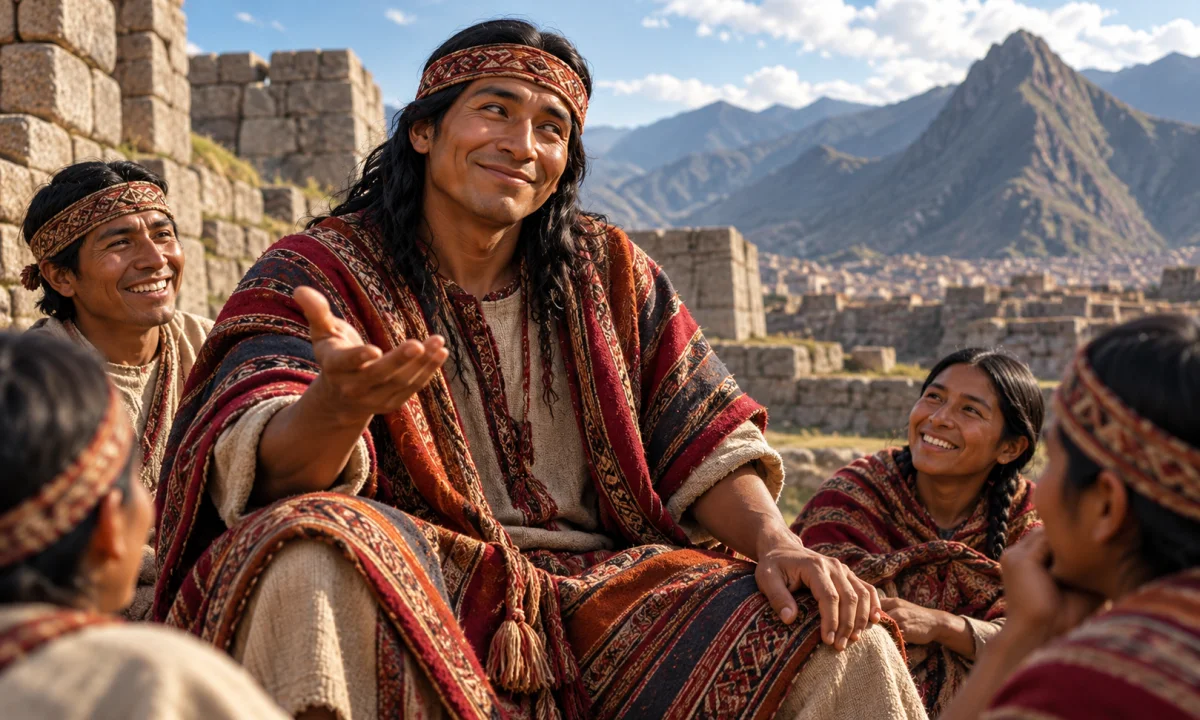
Some artistic or popular representations give him the clothing of an Inca nobleman, a warrior's equipment or a distinctive association with chilli because of the possible meaning of uchu. These are interpretive choices, not securely documented features of the old narrative. The surviving accounts do not establish a universally recognized portrait of Ayar Uchu.
His power is best understood through his role as an ancestor and huaca. He has authority because he belongs to the founding generation and because his transformed presence is connected with Huanacauri. The story does not require him to perform a long series of independent miracles. His central act is the conversion of human ancestral identity into enduring sacred geography.
Religious and cultural significance
The story of Ayar Uchu illustrates an important feature of Andean religious thought: sacred power can be located in landscapes and material forms without being separated from human ancestry. A mountain or stone may be a powerful being in its own right while also preserving the presence of an ancestor. This relationship differs from a strict division between “nature” and “religion.”
Transformation into stone appears in several Andean traditions, but it should not be reduced to a simple symbol with one fixed meaning. In the context of Ayar Uchu, it can represent permanence, succession and the anchoring of a migrating community in a new territory. The ancestor does not continue the journey in ordinary human form, yet he remains active through the place where he is established.
The narrative also reflects the importance of paqarina, an ancestral place of emergence or origin. Different groups in the Andes preserved traditions connecting their communities to particular caves, springs, mountains or other locations. Such places helped define collective identity and could support claims to territory, ritual rights and political status. Pacaritambo functions within this broader pattern of sacred emergence.
Colonial records often present the story as a prehistory leading directly to the Inca monarchy. That framing can make the narrative seem like a royal genealogy alone. It is more useful to recognize several overlapping dimensions: the tale explains the origin of a ruling lineage, preserves relationships with sacred places, and describes how a community's ancestors became permanently present in the world around Cusco.
Sources and uncertainty
No text written by Ayar Uchu himself, or by an Inca author in the pre-conquest period, survives. Knowledge of the story comes primarily from Spanish colonial accounts based on oral traditions, Indigenous testimony and information obtained from members of the Inca nobility. Writers such as Juan de Betanzos, Pedro Sarmiento de Gamboa, Juan Polo de Ondegardo and Garcilaso de la Vega recorded related but differing versions of Inca origins.
These accounts were produced for different purposes and under different circumstances. Some writers emphasized official dynastic history, some sought information about Indigenous religion, and others presented the past through European historical or Christian frameworks. The narratives may also preserve traditions from different communities or political groups. Consequently, it is not possible to reconstruct one uncontested original version of the Ayar story.
Questions remain about the relationship between the Ayar siblings, the exact location and form of Pacaritambo, the role of Huanacauri and the sequence of the brothers' transformations. The names of the female figures are especially variable. Statements about Ayar Uchu should therefore distinguish between recurring elements, such as his connection with Huanacauri, and details found only in particular accounts.
Distinguishing Ayar Uchu from similar figures
Ayar Uchu should not be confused with Ayar Manco, who is usually identified with Manco Capac, the dynastic founder. Nor should he be merged with Ayar Auca, whose role is often connected with the claiming or settlement of Cusco. Ayar Cachi is a separate brother whose extraordinary strength and confinement form another major episode in the origin cycle.
He should also be distinguished from Viracocha, the major creator or culture deity in several Andean traditions. Some colonial narratives place Viracocha within a broader account of creation and the ordering of the world, but Ayar Uchu is generally an ancestral founder figure rather than the supreme creator of humanity. The two may appear within the same accounts of Inca religious history without being equivalent.
Finally, Ayar Uchu is not simply another name for Manco Capac, Huanacauri or a generic Inca ancestor. Manco Capac is the human or dynastic founder in the usual arrangement of the story; Huanacauri is the sacred mountain or site; Ayar Uchu is the brother who becomes associated with that place through transformation. Keeping these identities separate preserves the structure of the tradition and avoids treating every element of the origin story as interchangeable.