WORLD

Asia
Explore myths, traditions and legendary beings grouped under Asia.
Last articles
Jo
Jo is not a securely identifiable god, spirit, monster or hero in the surviving corpus of Japanese mythology under that spelling alone. The name appears to be an abbreviated or incomplete romanization, a transliteration …
Jurojin
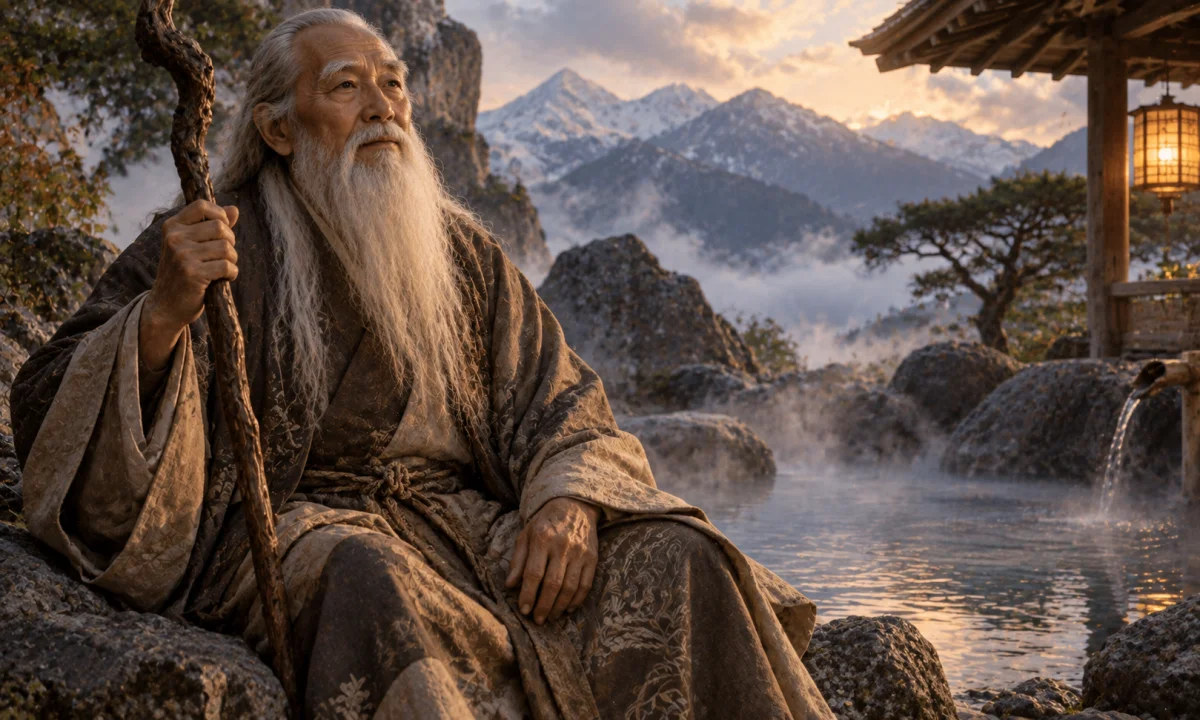
Jurojin is a Japanese god of longevity and one of the Shichifukujin, the Seven Lucky Gods. Usually portrayed as an elderly man with a long white beard, a staff, and a scroll, he represents a long life guided by wisdom, h…
Sanbo-kojin
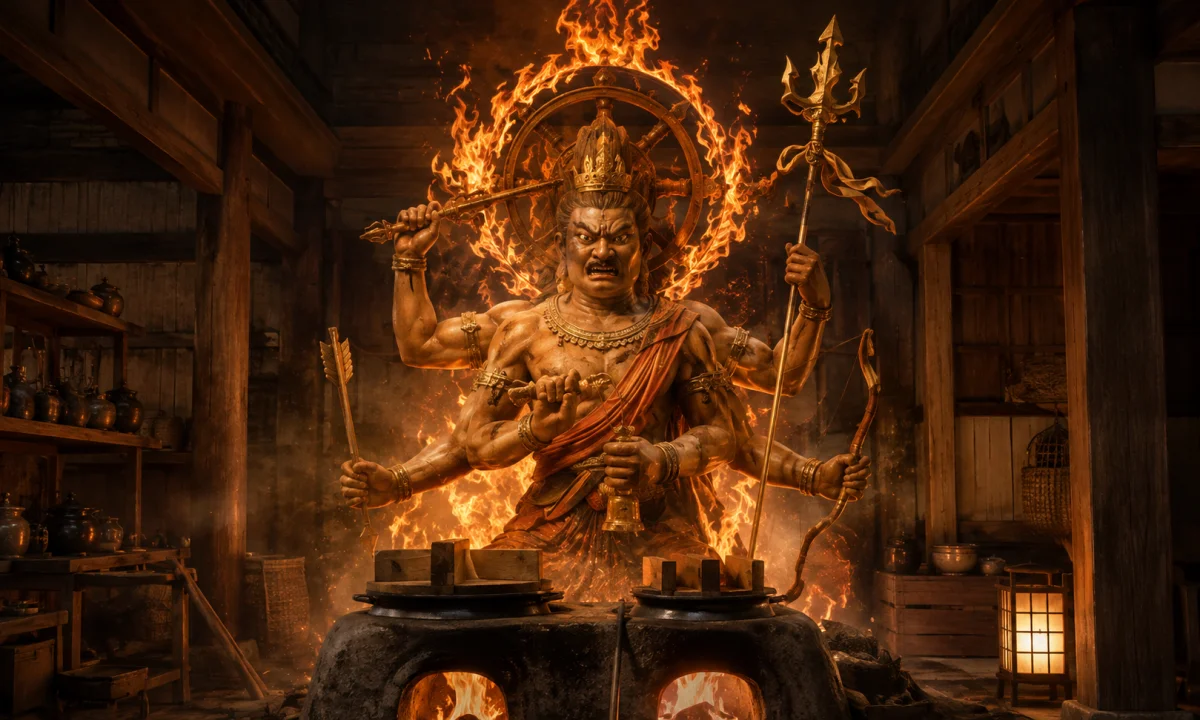
Sanbō Kōjin (also written Sanbo Kojin or Sambō Kōjin) is a Japanese deity associated with fire, the hearth, the kitchen and the protection of the household. The name is usually translated as “the Rough Deity of the Three…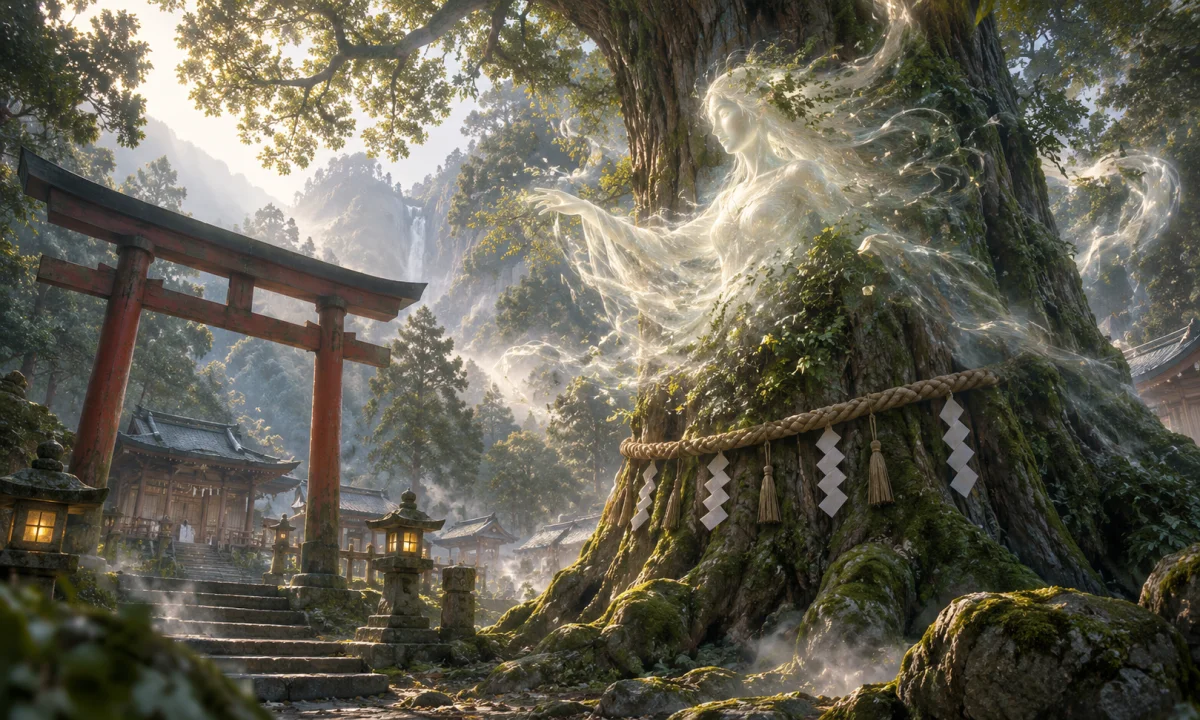
Kami
Kami is the Japanese term commonly translated as “god,” “deity,” or “divine spirit.” In Shinto, kami may be associated with natural phenomena, particular places, ancestral figures, legendary heroes, imperial ancestors, o…
Kami-kaze
Kami-kaze, more commonly written kamikaze in English, means “divine wind” or “wind of the kami.” In Japanese religious and historical tradition, it is not normally the name of a single god, monster or supernatural creatu…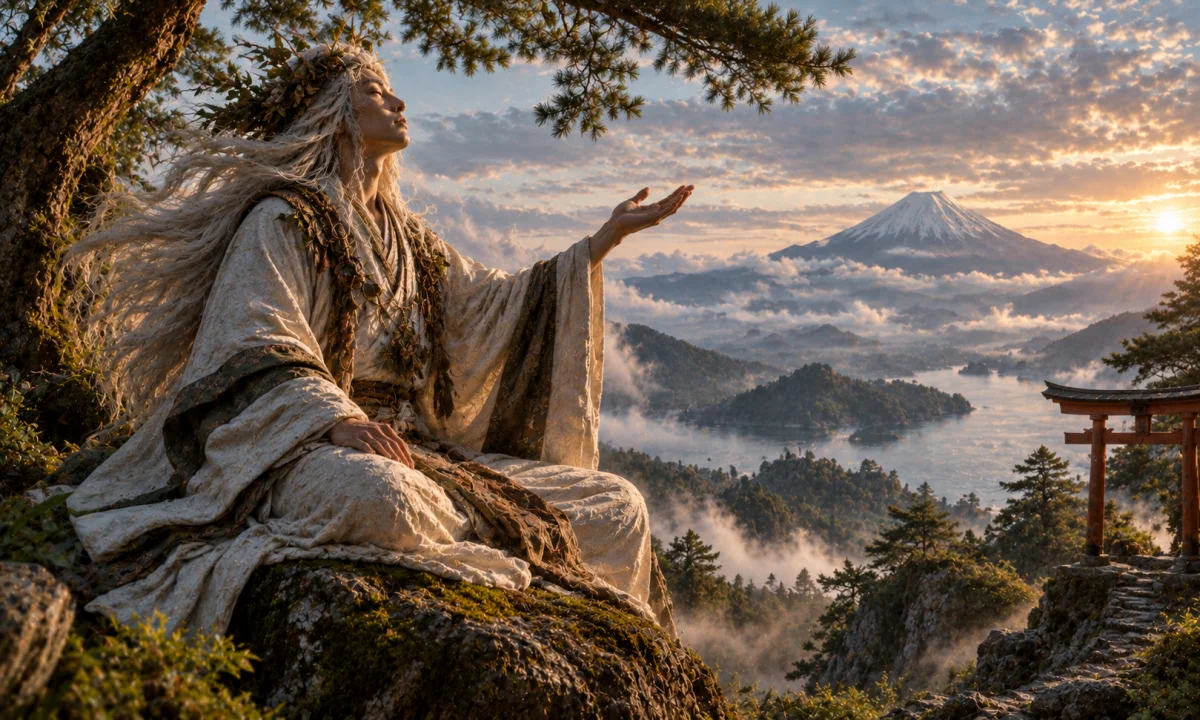
Kamui
Kamui is a Japanese rendering of the Ainu word more commonly written kamuy. It does not usually name a single god or monster. Rather, it refers to the powerful spiritual beings of Ainu religious tradition, including deit…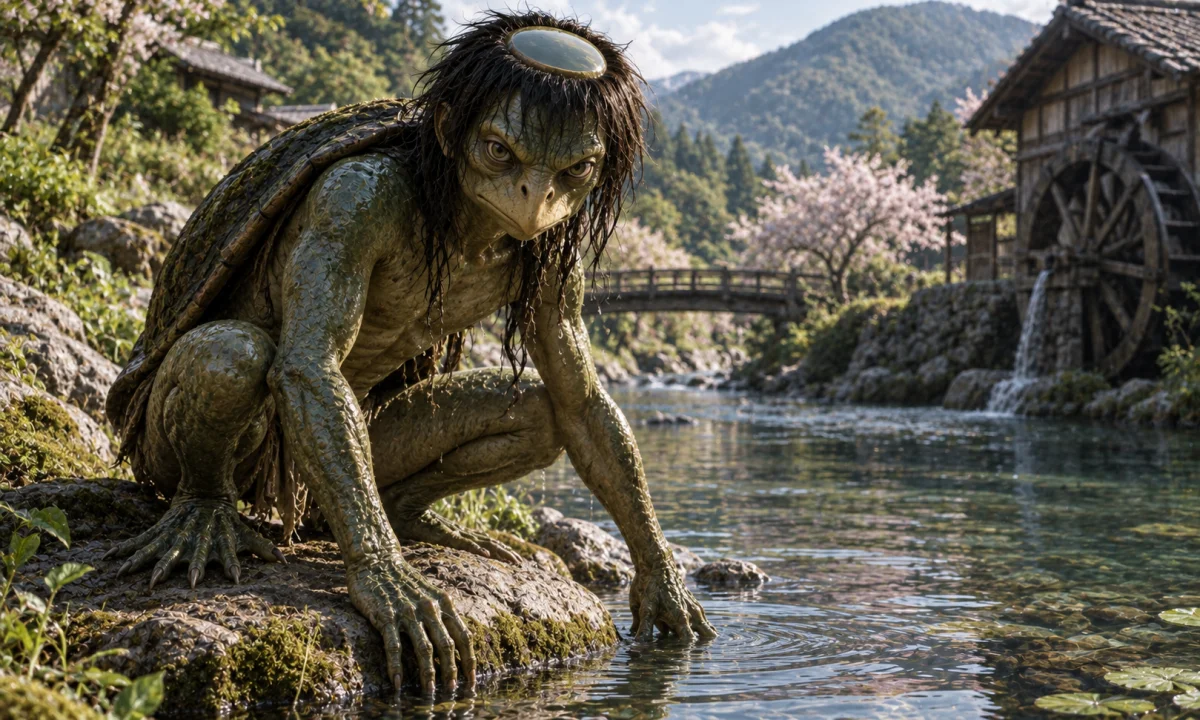
Kappa
The kappa is a water-dwelling being of Japanese folklore, traditionally associated with rivers, ponds, irrigation channels and other bodies of fresh water. Its name is commonly written 河童, literally “river child,” althou…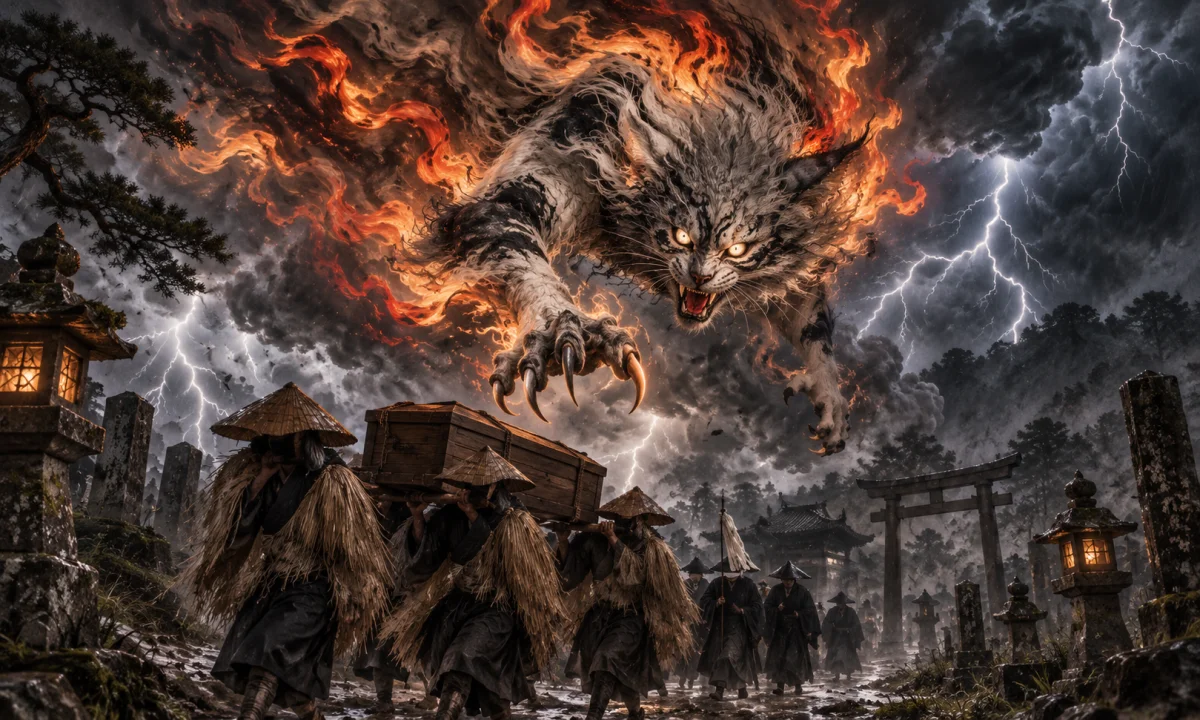
Kasha
Kasha (火車, commonly read kasha) is a frightening being associated with Japanese Buddhist folklore and tales of the dead. Its name means “fire cart” or “fiery vehicle.” In traditional stories, a kasha descends during a fu…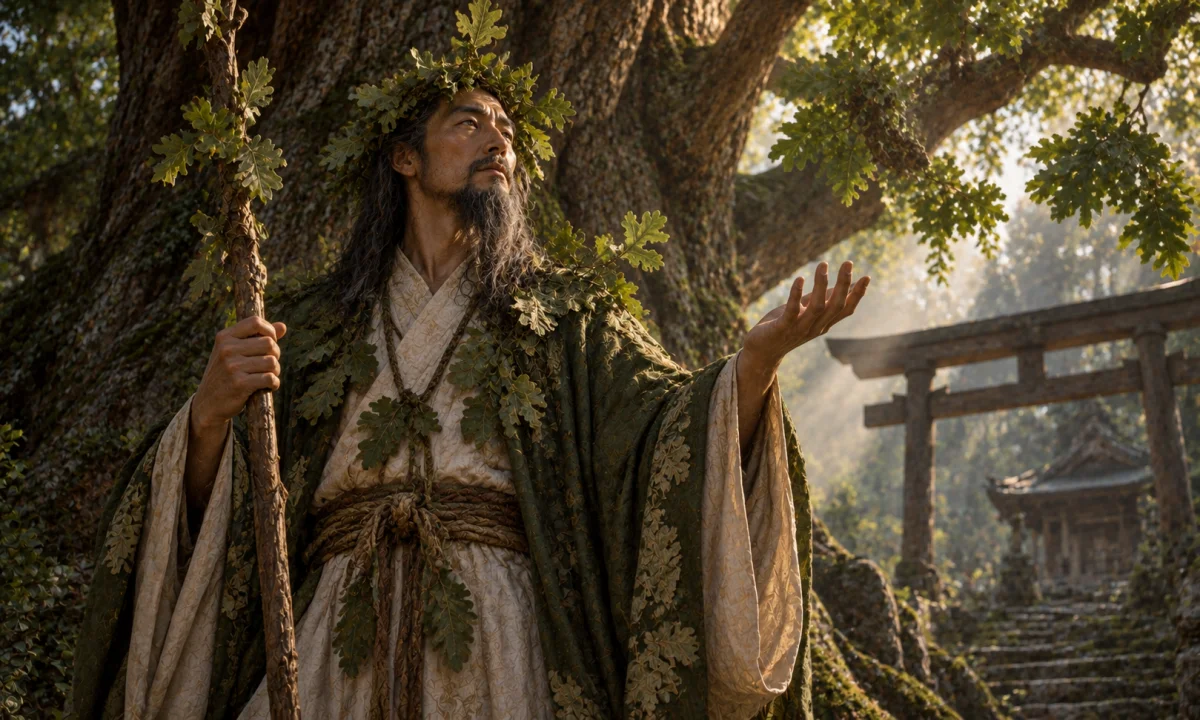
Kashiwa-no-kami
Kashiwa-no-kami is best understood as a Japanese tree kami associated with the kashiwa, usually identified with the daimyo oak (Quercus dentata) or, in some contexts, with oak trees more generally. The name can be transl…
Kawaya-no-kami
Kawaya-no-kami (厠神), also written in English as Kawaya no Kami or “the deity of the privy,” is a Japanese household and folk-religious kami associated with the toilet, latrine, and other places used for bodily eliminatio…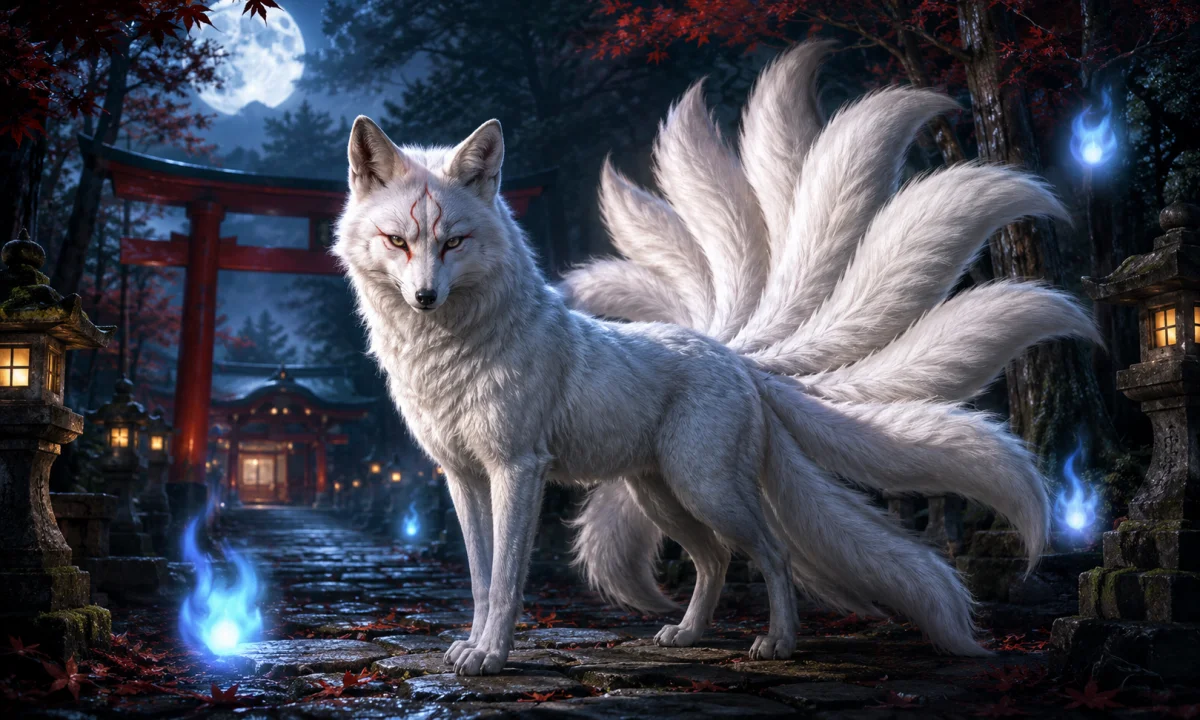
Kitsune
Kitsune are foxes in Japanese mythology, folklore and religious tradition. The word kitsune normally means “fox” in Japanese, but in stories it often refers to a fox with exceptional intelligence, supernatural powers and…