WORLD
WORLD
Kamui
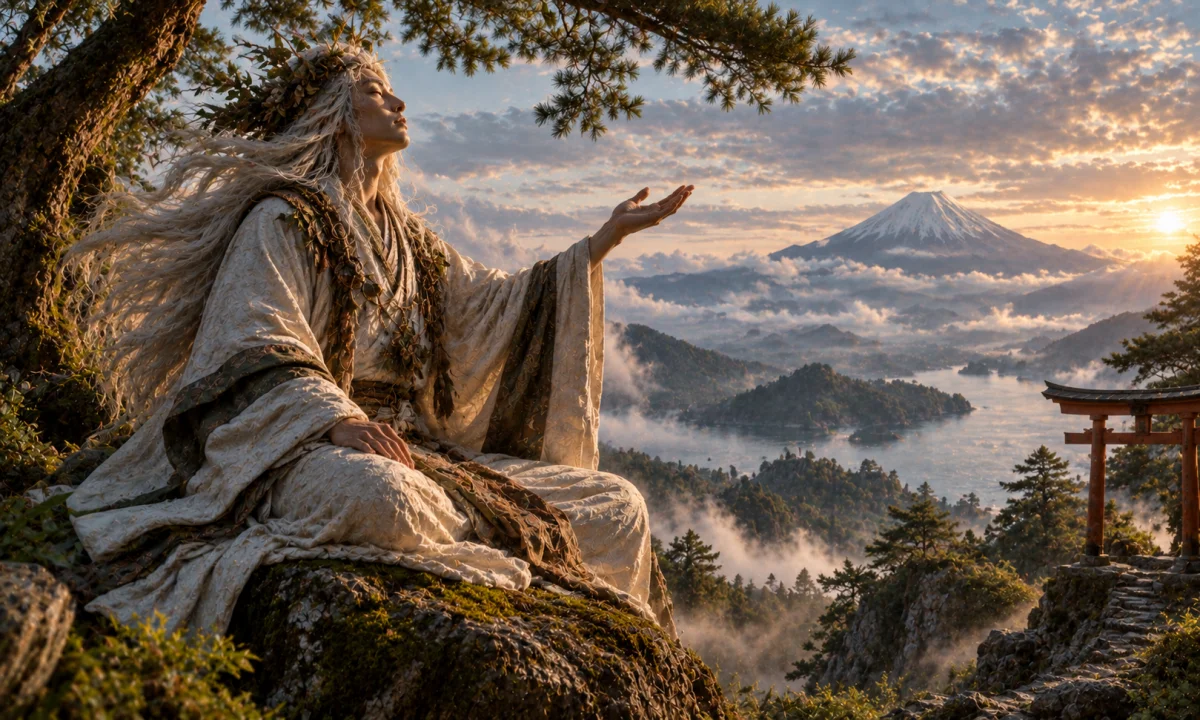
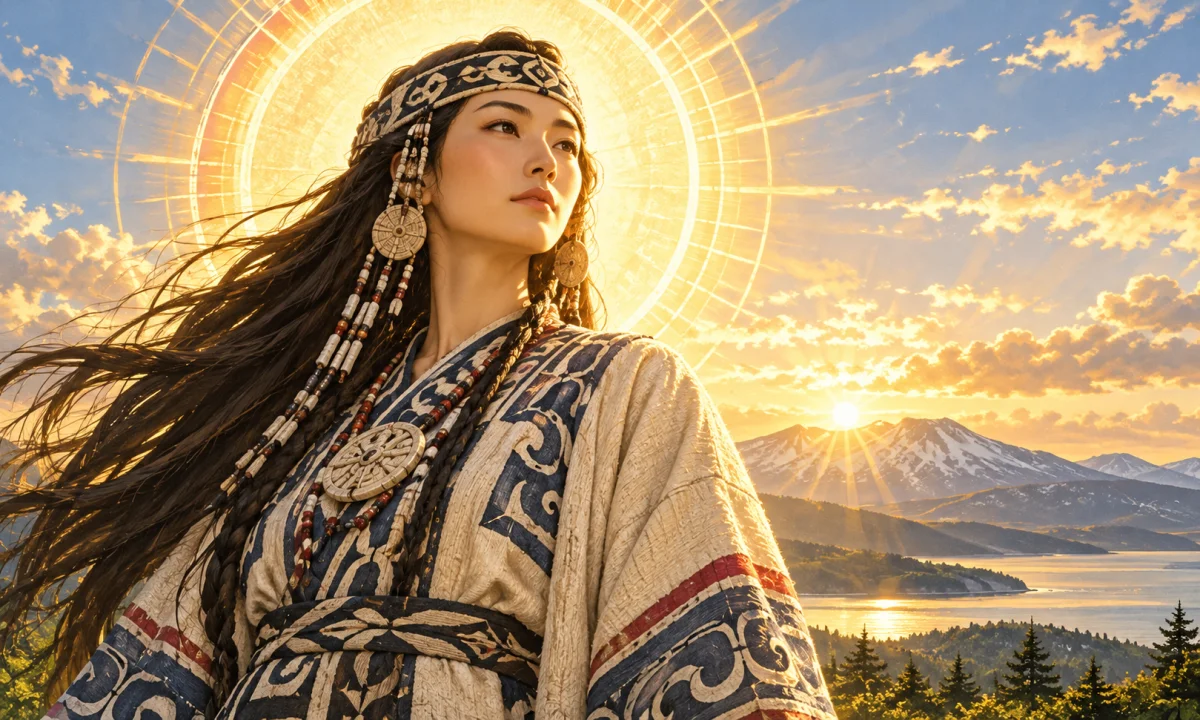
Kamui is a Japanese rendering of the Ainu word more commonly written kamuy. It does not usually name a single god or monster. Rather, it refers to the powerful spiritual beings of Ainu religious tradition, including deities, animal spirits, forces of nature and guardians associated with particular places or activities. A kamuy may appear in the human world in an animal or natural form, while also possessing a spiritual identity beyond that visible appearance.
The Ainu are an Indigenous people of northern Japan and nearby regions, including Hokkaido, Sakhalin and the Kuril Islands. Their religious traditions developed in close relationship with forests, rivers, coasts, mountains and seasonal hunting. Because Ainu beliefs were transmitted mainly through oral performance and differed between communities, there is no single, universally fixed pantheon of kamuy. Names, stories and classifications can vary according to region, dialect and the tradition in which they were recorded.
The meaning of kamuy
In Ainu, kamuy is the form most often used by scholars and in contemporary Ainu cultural contexts. Kamui is a common Japanese spelling and is also familiar internationally. English-language descriptions often translate kamuy as “gods,” “spirits” or “divine beings,” but each translation captures only part of the concept.
Kamuy are not necessarily remote, all-powerful creators in the sense found in some major world religions. They are beings with spiritual power who interact with human communities. Some protect people, provide food or teach useful skills. Others may bring illness, storms, accidents or death if offended, neglected or approached without proper respect. A being can therefore be benevolent in one setting and dangerous in another.
The distinction between a kamuy and its visible form is important. A bear, owl, killer whale or fire is not always regarded as merely identical with the spiritual being behind it. The physical form can be understood as a temporary appearance or disguise adopted when the kamuy enters the human world. Stories frequently describe kamuy as visiting humans, receiving hospitality and eventually returning to their own realm.
Ainu religious and cultural setting
Ainu religious life traditionally centred on relationships between human beings, kamuy and the landscape. Hunting, fishing, gathering, household work and travel all involved obligations of respect. People addressed kamuy through prayers, ritual offerings and formal speech. Carved wooden prayer sticks called inau were especially important offerings, although their precise forms and uses varied.
The human community was not viewed as separate from nature in a simple modern sense. Animals and natural phenomena had their own agency and spiritual significance. The success of a hunt depended not only on skill but also on maintaining a proper relationship with the relevant kamuy. Food was shared with the spiritual world through ritual, and tools, clothing and sacred objects could participate in these relationships.
Many accounts describe the realm of the kamuy as resembling a human settlement. In that realm, beings who appear to humans as animals may live as people, wear clothing and hold conversations. When a kamuy comes to the human world, it may take the form of an animal so that humans can obtain meat, fur or other useful materials. The return of the spirit after a ritual death allows the relationship to continue without reducing the animal entirely to a natural resource.
Sources and regional variation
Knowledge of kamuy traditions survives through oral narratives, ritual practices, prayers, songs and heroic epics known as yukar, along with other forms of Ainu storytelling. These traditions were recorded by Ainu storytellers and by Japanese and foreign researchers, especially from the nineteenth century onward. Written records are valuable, but they do not provide a single authoritative system of Ainu mythology. Many were produced during periods of intense political pressure, land dispossession and assimilation.
The Ainu language has several regional varieties, and the same being may have different names or attributes in different communities. Spellings also vary because Ainu was historically written using different systems, including Japanese kana and Latin-based transcription. As a result, a name encountered in one source should not automatically be treated as the universal name of a deity throughout Ainu tradition.
Some modern explanations organise kamuy into categories resembling a hierarchy of gods, spirits and creatures. Such classifications can be useful for comparison, but they may impose an overly rigid structure on traditions that were locally grounded and transmitted through performance. A kamuy’s importance often depended on the activity and place involved rather than on membership in a fixed pantheon.
Important kamuy and spiritual beings
Kamuy Fuchi, the hearth deity
Kamuy Fuchi, also written with forms such as Ape-huci-kamuy, is associated with the hearth and sacred fire. The hearth was the centre of the traditional Ainu household: it provided warmth, cooked food and formed a boundary between the human home and the wider spiritual world. Kamuy Fuchi was therefore not simply a personification of fire but a guardian of domestic life and a mediator between humans and other kamuy.
Prayers and offerings could be directed through the hearth. In some traditions, the hearth deity witnessed household conduct and helped carry messages to the spiritual realm. Because fire was essential yet potentially destructive, the relationship with this kamuy combined gratitude, reverence and caution.
Kim-un-kamuy, the bear spirit
Kim-un-kamuy is commonly associated with the bear and may be translated as “the kamuy of the mountains” or “the one who dwells in the mountains.” The bear was among the most important beings in many Ainu communities, providing meat, fur, fat and other materials. It was also treated as a powerful visitor from the kamuy world.
In the ceremony often known in Japanese as iyomante, a bear spirit was ceremonially sent back to the kamuy realm. The details of the rite varied, and the ceremony has been represented differently by outside observers. Broadly, it expressed the return of the bear’s spiritual essence after its physical body had provided nourishment and materials to the community. The rite was not simply a celebration of killing; it was a formal exchange intended to maintain relations between humans and the bear kamuy.
Not every Ainu community practised the same bear ceremony in the same way, and modern discussion must also recognise that authorities at various times restricted or condemned it. Present-day Ainu people and cultural organisations may preserve, reinterpret or debate aspects of the tradition.
Owl and village-protecting kamuy
Owls, particularly large owls, could be regarded as significant protective beings. Names such as Kotan-kor-kamuy, meaning approximately “the kamuy who possesses or guards the village,” are associated in some traditions with an owl deity or village guardian. The owl’s call might be interpreted as a warning, a sign of protection or a message concerning the community’s well-being.
The exact identity of the owl kamuy is not uniform across all Ainu sources. Terms such as cikap-kamuy, “bird kamuy,” can also be used more generally. It is therefore misleading to present every reference to an owl spirit as evidence for one universally defined owl god.
Rep-un-kamuy and the sea
Rep-un-kamuy, whose name is often interpreted as “the kamuy of the open sea,” is connected with the ocean and with powerful marine beings. Killer whales, in particular, held great importance in some coastal traditions. They could be viewed as rulers or guardians of the sea, capable of guiding fish, protecting voyagers or influencing the success of fishing.
As with mountain and forest kamuy, sea beings reflect the practical dependence of communities on their environment. The sea was a source of food and travel but also a place of danger. Respectful conduct, correct ritual behaviour and attention to omens were part of living within that precarious relationship.
Stories, gifts and the return of the spirit
A recurring pattern in Ainu narratives is the visit of a kamuy to the human world. The visitor may arrive in animal form, become involved in a hunt or household event, and later return to its own community. Such stories explain why animals possess valuable qualities and why humans owe them respectful treatment.
Some narratives describe animals as deliberately offering themselves to humans so that their flesh, fur or other substances can be used. The human responsibility is then to handle the remains properly, perform the appropriate rites and send the spirit home with words and gifts. If people behave arrogantly or waste what they have received, the relationship may be damaged and future provision may fail.
These stories should not be reduced to a simple doctrine of “nature worship.” They express ethics, economy, emotion and social obligations at the same time. They also recognise that humans are dependent on beings they cannot fully control. Respect toward kamuy is therefore practical as well as religious.
Heroes and beings associated with the kamuy
Ainu oral epics include culture heroes and powerful beings whose status does not always fit neatly into the category of kamuy. Okikurmi, for example, appears in traditions as a heroic or semi-divine figure who travels among humans, combats dangers and teaches important skills. Different regions and narratives give him different names, relationships and characteristics.
Okikurmi should not automatically be treated as another name for Kamui or as a universal chief god. He belongs to the wider world of Ainu sacred narrative, but the boundaries between hero, culture-bringer, ancestor and kamuy can vary according to the story. Some traditions also contain beings associated with particular rivers, mountains, plants, winds, diseases or crafts, without placing them in a single standard family tree.
Kamuy and the Japanese kami
Because kamui is often written with the same Japanese characters used for kami, the two concepts are sometimes treated as identical. This is too simple. Japanese kami belongs to the religious and linguistic history of Shinto and related Japanese traditions, while kamuy belongs to Ainu language and religion. Both words can be translated as “deity” or “spirit,” but translation does not prove that they describe the same religious system.
There have been discussions about possible historical or linguistic relationships between the terms, but the precise origin and development of each word should not be stated as settled fact without qualification. In cultural terms, Ainu kamuy traditions have their own history, ritual forms and narrative structures. They should be understood on their own terms rather than as a northern Japanese version of Shinto.
Colonial history and contemporary significance
Ainu religious practices were affected by the incorporation of Ainu territories into the expanding Japanese state, especially after the nineteenth-century colonisation of Hokkaido. Land loss, restrictions on language and customs, missionising, forced assimilation and the collection of traditions by outsiders all shaped what was recorded and what could continue publicly. Some practices were discouraged or prohibited, while others survived within families and local communities.
In contemporary Japan, Ainu people and organisations are working to revitalise language, performance, ceremonial knowledge and cultural education. Kamuy remains an important concept in these efforts, but contemporary presentations may adapt older forms for museums, schools, festivals and public ceremonies. Revitalisation is not simply the unchanged survival of a complete ancient religion; it can involve recovery, interpretation, community authority and creative renewal.
Outside Ainu cultural contexts, Kamui has appeared in fantasy fiction, games, manga, anime and other popular media. In such works the word may be used as the name of a single supernatural character, a weapon, a power or a generic term for a god. These adaptations can draw attention to Ainu vocabulary, but they often simplify kamuy into a conventional deity or treat it as a wholly fictional fantasy concept. Such uses should be distinguished from the diverse religious traditions in which kamuy are numerous, relational and closely connected with human communities and the living landscape.