WORLD

Ditaolane
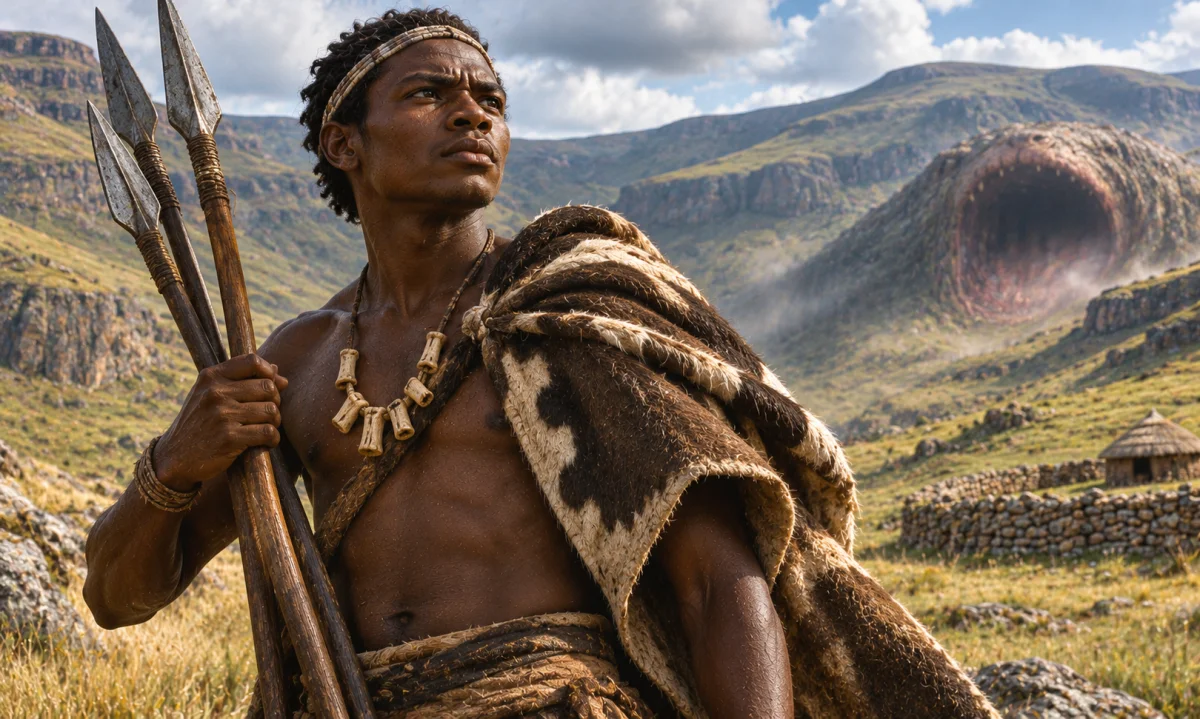
Ditaolane is a legendary hero in Sesotho-speaking oral tradition, especially associated with the Basotho communities of Lesotho and neighbouring parts of southern Africa. He is best known as the child who confronts a devouring monster and restores a population that has been swallowed. The story belongs to a broad African tradition of monster-slaying heroes, but Ditaolane’s tale has its own distinctive setting, narrative structure and cultural associations.
Origins in Sesotho oral tradition
Ditaolane is not the subject of a single canonical scripture or one universally fixed myth. His story was preserved through oral performance and later recorded in different forms by collectors, writers and scholars. As with many oral traditions, details can change between tellers, communities and written versions. The hero’s name, the monster’s name, the circumstances of his birth and the precise ending may therefore appear with minor variations.
The tradition is usually connected with the Basotho, a southern African people whose principal language is Sesotho. Sesotho-speaking communities have historically lived in the mountainous region now associated particularly with Lesotho, as well as in parts of South Africa. Folktales such as the story of Ditaolane were not merely entertainment. They could preserve ideas about courage, danger, leadership, social survival and the restoration of a community after catastrophe.
Like many traditional narratives, the Ditaolane story should not be treated as a straightforward historical account. There is no reliable historical evidence that a person called Ditaolane lived as described. He is better understood as a culture hero or legendary figure whose story expresses communal values through supernatural events.
The name and identity of Ditaolane
The spelling Ditaolane is the form most often used in English-language discussions of the hero, although spelling and pronunciation can vary when Sesotho names are transcribed into other languages. The meaning of the name is not always explained consistently in published retellings, and an uncertain or simplified translation should not be treated as definitive.
Ditaolane is generally presented as a human hero with an extraordinary destiny rather than as a god. His unusual abilities arise from the circumstances of his birth and from the demands placed upon him by a crisis threatening the whole community. In this respect, he resembles other legendary saviours whose identity is revealed through a task that ordinary people cannot accomplish.
He is sometimes described as a child who grows or matures with remarkable speed. This feature helps explain how he can act as the community’s champion even though he has only recently entered the world. The rapid growth is a sign of his exceptional status, not a detail intended to establish a realistic biography.
The monster and the community’s crisis
The central danger in the best-known versions of the legend is a monstrous being that consumes human beings and, in some accounts, animals as well. The monster is often called Kammapa, though the spelling and presentation of this name are not entirely uniform. It is portrayed as a ravenous, destructive creature whose appetite threatens to empty the land of life.
Kammapa’s role is not always described in exactly the same way. In some retellings, the creature is a giant or cannibalistic monster; in others, it has more overtly supernatural characteristics. The important narrative function remains constant: it represents a force of devouring violence that ordinary members of the community cannot overcome.
As the monster advances, people attempt to escape or hide. The crisis is collective rather than personal. Families, neighbours and sometimes an entire settlement face destruction. The story consequently frames Ditaolane’s later action as the rescue of a people, not merely the revenge of one individual against an enemy.
The extraordinary birth
The circumstances surrounding Ditaolane’s birth vary substantially among versions. A woman is usually left at the centre of the endangered community or becomes pregnant under unusual circumstances. In some accounts, she gives birth when the monster has already destroyed or swallowed many others. Other versions emphasise the isolation of the mother and the miraculous nature of the child’s arrival.
Some retellings include unusual food, an object or a supernatural event connected with the pregnancy. These details should be treated cautiously, because they are not present in every account and may reflect the choices of a particular storyteller or recorder. The stable point is that Ditaolane is born at the moment when the community appears unable to defend itself.
His birth therefore has a symbolic function. The hero emerges from the very society that the monster threatens to erase. Instead of arriving as an outside warrior or a distant divine being, he is produced from within the endangered community. The story presents renewal as arising from the people’s own continuity, even when that continuity seems almost broken.
Ditaolane’s confrontation with Kammapa
After his birth, Ditaolane is often said to grow with supernatural speed. He acquires the strength and understanding needed to challenge the monster. The exact weapon differs between versions, but he commonly uses a spear or another traditional weapon associated with a warrior.
The confrontation is usually direct. Ditaolane does not defeat the monster through a prolonged campaign or a complicated alliance. Instead, he takes advantage of the creature’s vulnerability and kills it, often by striking it in a vital place. The simplicity of the encounter gives the story the shape of a heroic folktale: the community is threatened, an extraordinary champion appears, and the source of destruction is overcome.
In some versions, Ditaolane enters the monster’s body or cuts open its belly after killing it. People who were swallowed are then released. They may emerge alive, although the condition in which they return can vary in different tellings. This episode is one of the most memorable features of the legend and explains why Ditaolane is not merely a monster slayer. He is also a restorer.
The monster’s death reverses the destruction that seemed final. The swallowed people return from darkness, and a community thought to have vanished is made whole again. The story thus combines two kinds of victory: the defeat of a threatening being and the recovery of those whom the being has consumed.
Major themes and symbolism
Survival after catastrophe
Ditaolane’s legend centres on the survival of a community facing overwhelming danger. The monster’s appetite can be read as an image of war, famine, social collapse or the frightening forces of the wilderness. It would be misleading to assign one fixed historical event to the tale, but its emotional structure reflects experiences familiar to communities living with insecurity and sudden loss.
The hero’s task is not to gain wealth or personal glory. His achievement is measured by the number of lives restored. This makes the story fundamentally communal. Ditaolane becomes important because his strength is placed at the service of others.
The vulnerable child as saviour
A striking element of the narrative is the contrast between Ditaolane’s apparent vulnerability and his eventual power. He begins as a newborn at a time when adults, warriors and established social structures have failed. His rapid growth transforms weakness into capability.
This pattern is common in heroic folklore around the world, but it has a particular force in Ditaolane’s story. The child is not simply protected by the community; he becomes the one who protects it. His arrival suggests that hope can appear in an unexpected form when familiar forms of authority have been defeated.
Destruction and restoration
The image of people being swallowed and later released gives the tale a powerful cycle of loss and renewal. The monster’s body becomes the place where the community’s missing members are held, and the hero’s action opens that enclosure. The act of cutting open the monster is therefore more than a violent triumph. It is an act of recovery.
Interpretations should remain open, since oral narratives do not necessarily encode one formal doctrine. Still, the story clearly values the restoration of social life. Ditaolane does not leave the defeated monster as the final image. The return of the swallowed people is essential to the meaning of his victory.
Ditaolane as a culture hero
In comparative folklore, Ditaolane can be described as a culture hero because he performs an extraordinary deed that benefits an entire people. The term does not mean that every Sesotho tradition uses it as a formal religious classification. It is a scholarly and descriptive category for figures who establish, recover or protect something important for human society.
Ditaolane’s culture-hero status rests on several features:
- He appears during a crisis that threatens the survival of the community.
- His birth and rapid growth mark him as exceptional.
- He confronts a supernatural enemy that ordinary people cannot defeat.
- He acts for the benefit of many rather than for private advantage.
- He restores people who have been lost, returning social life to the community.
These features do not make Ditaolane a creator god or a divine ruler. He belongs more naturally to heroic folklore than to a system of worship centred on a deity. There is no broadly established evidence that Basotho communities traditionally worshipped him as a god in the manner of a formal cult figure.
Variants and limits of the evidence
Because Ditaolane’s story comes primarily from oral tradition, it is difficult to identify a single original version. Written records preserve particular performances rather than the complete history of the legend. A collector may have translated, shortened or rearranged a tale, while a storyteller may adapt it for a specific audience.
Differences can concern the following elements:
- The name and nature of the devouring monster.
- The identity and circumstances of Ditaolane’s mother.
- The events that lead to his birth.
- The speed and manner of his growth.
- The weapon used against the monster.
- The number and condition of the people released from the monster.
- The fate of the community after the rescue.
These variations do not necessarily indicate that one version is authentic and all others are false. Variation is a normal feature of oral narrative. At the same time, similar-sounding names or motifs should not automatically be treated as evidence that separate stories belong to one tradition. Claims about Ditaolane should remain tied to Sesotho and Basotho contexts unless a specific tradition demonstrates a different connection.
Distinguishing Ditaolane from similar figures
Ditaolane can be confused with other African heroes who kill monsters, rescue swallowed people or emerge from extraordinary births. Such similarities usually reflect widespread storytelling patterns rather than proof that the figures are identical. A hero who defeats a giant in another southern African tradition should not be labelled Ditaolane merely because the broad plot resembles his legend.
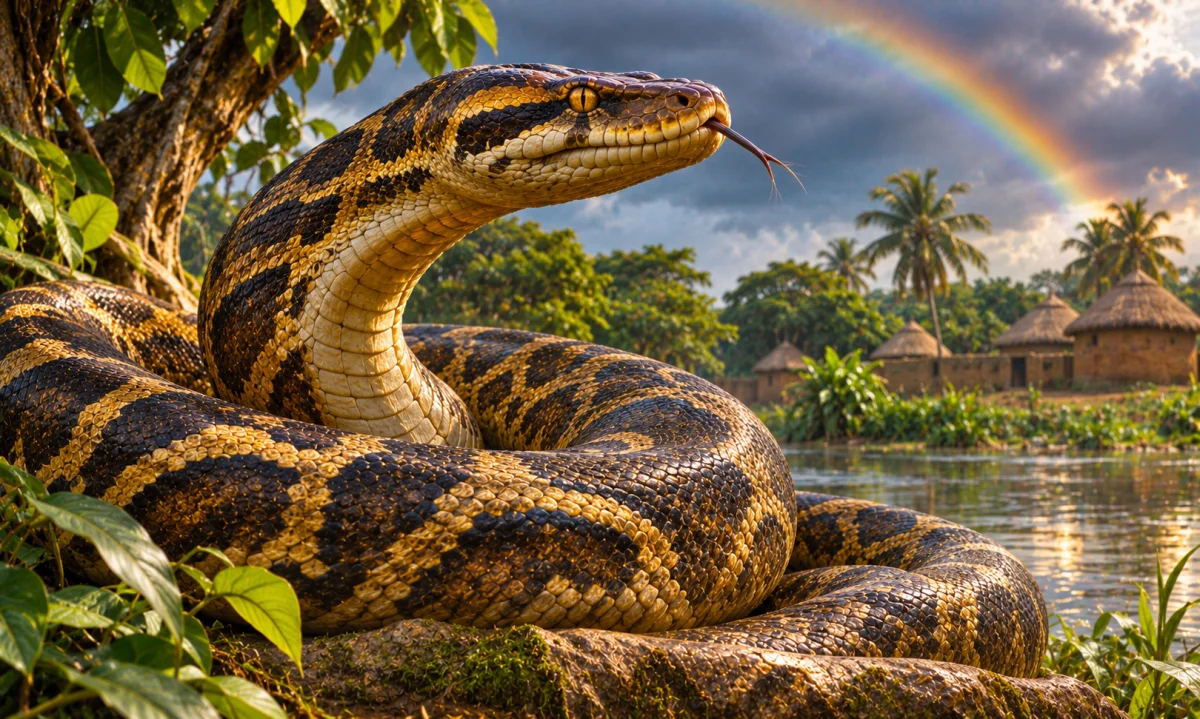
He should also be distinguished from Kholumolumo, a well-known dragon- or serpent-like figure in Basotho and related southern African traditions. Kholumolumo is associated with a dangerous monstrous being, while Ditaolane is generally the human hero who confronts a devouring monster. The two may appear in discussions of Basotho mythology, but they are not interchangeable names for one character.
Nor should Kammapa, where that name is used for Ditaolane’s adversary, be confused with the hero himself. The names belong to different roles in the narrative: Kammapa is the destructive devourer, while Ditaolane is the child who defeats it and restores the victims.
Cultural significance
The legend’s importance lies less in a detailed description of supernatural powers than in its account of responsibility. Ditaolane receives extraordinary strength, but the story gives that strength a social purpose. His success is meaningful because it protects human life and repairs a damaged community.
The tale also presents leadership as something demonstrated through action. Ditaolane does not become a hero simply because of his miraculous birth. He must confront the danger that has defeated everyone else. His identity is confirmed by what he does for the community.
For audiences familiar with Sesotho oral storytelling, the narrative could also provide a framework for thinking about fear and recovery. A monster that swallows an entire population represents the apparent impossibility of survival. The hero’s victory insists that destruction need not be the end of the story, even when the lost seem to have disappeared completely.
Later literary and popular reception
Ditaolane has chiefly reached wider audiences through written retellings, collections of African folktales and discussions of southern African mythology. These versions can make the story more accessible, but they may also standardise details that were more flexible in oral performance.
There is no single globally dominant modern popular-culture portrayal of Ditaolane comparable to famous figures from Greek, Norse or Egyptian mythology. Contemporary references should therefore be separated from the older tradition. A novel, game, film or online summary may reinterpret his birth, powers or relationship with the monster, but such additions belong to modern adaptation rather than to the established oral core.
In traditional terms, Ditaolane remains the extraordinary Sesotho hero whose appearance at a moment of communal disaster leads to the defeat of the devouring monster and the recovery of those who were lost.