WORLD

Chedi-bumba

Chedi-bumba is a name associated in some modern accounts with African mythology, but its identity is uncertain. It is not a consistently documented deity or legendary being with a clearly established tradition, language, community of worship, or body of traditional stories. In many cases, the name appears to be connected with Bumba, also called Mbombo, a creator figure known from traditions associated with the Kuba or Bushongo peoples of Central Africa. That connection should be treated cautiously, because “Chedi-bumba” is not simply a universally recognised alternative spelling of Bumba.
The uncertainty surrounding the name is important. African religious traditions were historically recorded under many different spellings, and oral narratives could vary between communities, performers, translators, and researchers. At the same time, modern lists of mythological beings sometimes combine names from different traditions or present poorly documented names as if they belonged to a single, standard mythology. Chedi-bumba belongs to this difficult area between traditional material, uncertain transcription, and later compilation.
Origins and cultural setting
Africa contains thousands of cultural and religious traditions, and “African mythology” is too broad a label to identify the origin of a particular figure by itself. A deity from the Kuba tradition, for example, should not automatically be described as a god of all Bantu-speaking peoples, all Central Africans, or Africa as a whole. Languages, political histories, religious systems, and oral traditions differ greatly across the continent.
The name Chedi-bumba is most often encountered in general discussions of African creation myths rather than in a well-defined religious tradition with a securely documented vocabulary. There is no widely agreed account identifying the community that used the name, the language from which it comes, or the period in which it was recorded. Nor is there a stable set of myths that can confidently be attributed to Chedi-bumba as an independent figure.
Several explanations are possible. The name may represent an unusual transcription of a local name. It may be a compound or expanded form of Bumba. It may have arisen from a misunderstanding in a secondary source. Alternatively, it may be a modern name created by combining material from more than one account. Without a specific traditional, linguistic, or historical context, none of these possibilities can be confirmed.
The possible connection with Bumba and Mbombo
The strongest apparent association is with Bumba, also known in some accounts as Mbombo. Bumba is linked particularly with the Bushongo or Kuba cultural sphere of the Congo region. In recorded creation narratives, the primordial being exists before the ordered world and brings forth the major elements of creation. One widespread version describes Bumba as suffering from a violent illness and vomiting the sun, moon, stars, and various living beings. The world is then populated and organised through the actions of these first beings.
Versions of the story differ in their details and in the names assigned to the creator and the beings produced. Oral traditions are not fixed scriptures, and a creation narrative may be told differently according to locality, performer, audience, or historical period. Some accounts treat Bumba as male, while others use descriptions that do not fit neatly into modern assumptions about divine gender. The order of creation and the identity of the first animals also vary.
Because Bumba’s name is sometimes written with different initial consonants or translated in different ways, a poorly transmitted form could potentially produce an unfamiliar spelling such as Chedi-bumba. However, that possibility does not prove that Chedi-bumba is an accepted name for Bumba. A careful account should therefore distinguish between the well-known Bumba or Mbombo traditions and the much less certain name Chedi-bumba.
Name, identity and classification
There is no secure etymology for “Chedi-bumba” that can be presented as established fact. The second element resembles the name Bumba, but resemblance alone is not enough to establish a linguistic relationship. The first element, “Chedi,” is equally difficult to interpret without knowing the source language and the original spelling.
The figure is sometimes classified as a creator god, primordial being, or supreme deity. These categories may be convenient for comparison, but they can also distort local religious concepts. A being responsible for the beginning of the world is not necessarily worshipped in the same way as a later cult deity, and the term “god” may not correspond exactly to the categories used within the culture concerned.
It is therefore safer to describe Chedi-bumba as a poorly attested or uncertainly identified name associated with African creation mythology. Claims that present a detailed biography, precise physical appearance, fixed family relationships, or a long list of powers for Chedi-bumba should be treated with particular caution unless they can be tied to a clearly identified traditional source.
Attributes and creative powers
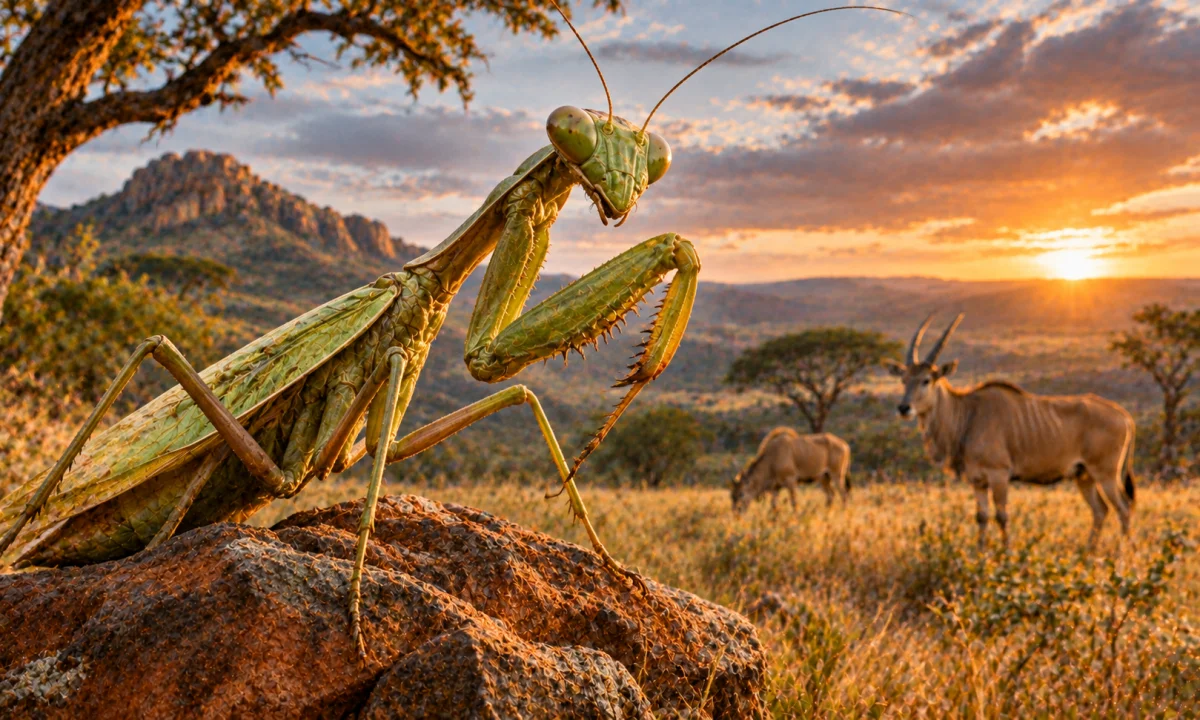
No consistent traditional description establishes what Chedi-bumba looked like. There is no securely documented account that gives the figure a standard animal form, human form, monstrous body, distinctive clothing, weapon, or sacred emblem. Images found in modern encyclopedias, fantasy art, or online mythology collections should not be assumed to preserve an African traditional representation.
Likewise, the powers attributed to Chedi-bumba vary according to the source in which the name appears. The most common association is with creation: the formation of the sky, heavenly bodies, animals, plants, and human life. These themes probably reflect the influence of stories about Bumba or Mbombo. They cannot, however, be used to establish a separate and complete mythology for Chedi-bumba.
Creation stories involving Bumba are symbolically striking because the ordered universe emerges from a primordial, bodily act. The sun, moon, stars, and living creatures are not necessarily created through a craftsman-like process in which a divine figure shapes each object individually. Instead, the narrative presents creation as a movement from illness, darkness, or undifferentiated existence into a populated and structured world. Such imagery can express the transformation of chaos into life without functioning as a systematic theological explanation.
Creation narratives and their interpretation
In accounts of the Bumba tradition, the first act of creation is followed by the activities of beings associated with different parts of the natural world. Animals and people become part of an ordered environment, and the creation story may explain why particular creatures behave as they do or why the world contains distinctive features. The narrative is therefore not only about a remote beginning. It can also provide a framework for understanding relationships between humans, animals, the heavens, and the powers that sustain life.
It would be misleading to transfer every element of these Bumba narratives to Chedi-bumba. The name does not have a securely recorded cycle of stories in which particular companions, children, opponents, or descendants can be identified. Nor is there dependable evidence for assigning it a specific role in ritual, kingship, healing, initiation, or funerary practice.
The distinction matters because oral traditions are often reduced in popular writing to a list of attributes. A creator figure may be described as omnipotent, all-seeing, morally perfect, or permanently active simply because those qualities are familiar from other religious systems. Such descriptions should not be added to Chedi-bumba without evidence. The limited material associated with the name does not justify a complete theological profile.
Cultural significance of the uncertainty
The uncertain status of Chedi-bumba illustrates a wider problem in the study of African mythology. Much traditional knowledge was preserved through oral performance rather than through a single canonical book. Early collectors often recorded stories using their own spelling systems and categories. Names could be adapted to European languages, simplified for readers, or attached to broad labels such as “Bantu,” even when the original tradition belonged to a particular community.
Colonial-era descriptions also tended to organise diverse religious ideas according to categories such as “supreme god,” “nature spirit,” “devil,” or “mythological hero.” These labels may obscure distinctions that were meaningful within the culture itself. A figure can be prominent in a creation narrative without being the object of everyday worship, and a remote creator can coexist with ancestors, local spirits, royal institutions, and ritual specialists.
For this reason, uncertainty is not a minor technical issue. It helps prevent a vague name from being presented as evidence for a falsely unified African religion. It also acknowledges that the surviving record may be incomplete, mediated by outsiders, or based on later summaries rather than direct testimony from the communities whose traditions are being discussed.
Distinction from related figures
Chedi-bumba should not automatically be treated as identical to Bumba or Mbombo. Bumba and Mbombo are names associated with Central African creation narratives, especially those connected with the Kuba or Bushongo sphere. Chedi-bumba is a less securely identified name. Some modern accounts may have expanded or altered Bumba’s name, while others may have repeated an error or merged information from separate sources.
It should also not be confused with creator beings from other African traditions. The Akan Nyame, the Dogon Amma, the Yoruba Olódùmarè, and the Fon Mawu-Lisa belong to different religious and cultural contexts. They may all be described broadly as creator deities, but this shared English category does not make them versions of one another or members of a single African pantheon.
Nor should Chedi-bumba be confused with every figure whose name contains “Bumba.” Similar-looking names can arise in unrelated languages, and a shared spelling element does not demonstrate common origin. The Congolese creator name Bumba is the most relevant comparison, but even that comparison remains a hypothesis when discussing Chedi-bumba specifically.
Modern reception
Chedi-bumba has little established presence in widely recognised modern literature, film, games, or other major popular-culture franchises. Where the name appears today, it is more likely to be found in online mythology catalogues, comparative lists, fantasy material, or short summaries of African deities. These settings often provide no information about the original language or community and may repeat one another without independent verification.
Modern retellings sometimes give uncertain figures elaborate designs, personalities, supernatural abilities, or links to other gods. Such creative treatments can be legitimate works of fiction, but they should be identified as adaptations rather than evidence of traditional belief. In the case of Chedi-bumba, separating modern invention from historical tradition is especially important because the traditional identity of the name is not securely established.
The most responsible interpretation is therefore limited but useful: Chedi-bumba is a disputed or poorly documented name associated in some secondary material with African creation mythology, probably through a possible connection with Bumba or Mbombo. The well-attested discussion belongs to the traditions surrounding Bumba, while the independent identity, origin, appearance, powers, and stories of Chedi-bumba remain uncertain.