WORLD
WORLD
Umashiashikabihikoji
Umashiashikabihikoji is an early Japanese deity named in the Kojiki and the Nihon Shoki, the two foundational mythological chronicles of Japan. He belongs to the creation narratives of Shinto tradition and appears among the earliest divine beings brought forth at the beginning of the cosmos. Unlike many later, more widely worshipped kami, Umashiashikabihikoji is an obscure figure known mainly through these classical texts, where his role is brief but significant in the sequence of primordial deities.
The name is usually written in English as Umashiashikabihikoji, though romanization and segmentation can vary. The meaning of the name is not entirely certain, and scholars have offered different readings of its components. Because the early mythological sources do not give a narrative explanation of the name, interpretation depends on philology and later commentary. In general, the figure is understood not as a hero or ruler, but as one of the first divine generations to emerge after heaven and earth began to separate.
Origins in the creation myths
Umashiashikabihikoji appears in the opening cosmological sections of Japanese myth, where the world is described as having begun in a condition of indistinct chaos or floating matter. As order emerged, a series of kami came into being. In the Kojiki, Umashiashikabihikoji is listed among these earliest deities after the most remote, more abstract divine beings. In the Nihon Shoki, comparable figures appear in a similar primordial sequence, though the wording and arrangement of the generations differ between the texts.
These creation accounts are not straightforward historical records. They are mythic and literary compositions compiled in the early 8th century, drawing on older oral traditions, court ideology, and attempts to organize diverse regional beliefs. Umashiashikabihikoji therefore belongs to the world of ancient mythological genealogy rather than to the kind of worshipped deity associated with a later shrine cult. His importance lies in his place in the cosmological order of the texts.
Textual setting and historical context
The Kojiki and Nihon Shoki were created in the context of the early Japanese state, when court scholars sought to present a coherent account of imperial origins and the divine structure of the world. These works preserve names of kami that may reflect older ritual language, regional traditions, and speculative theological arrangement. Some names are difficult to interpret because the texts were written in classical Chinese characters used phonographically for Japanese sounds, which can obscure the original meaning.
Umashiashikabihikoji is one of several early deities whose names seem less like the names of individual personalities and more like evocative mythic expressions. In this respect, he stands near other primordial beings whose presence marks stages in cosmic emergence. The chronicles do not provide a detailed biography, a shrine origin story, or a major cycle of adventures for him. His significance comes from being part of the earliest divine ordering of the universe.
Name and interpretation
The name Umashiashikabihikoji is often analyzed into several elements, but the interpretation is not fully settled. Different scholars have proposed different meanings for parts of the name, and the compound may preserve archaic language whose sense was already obscure by the time the chronicles were compiled. Because of this, caution is needed when translating it too confidently.
Some readings treat the name as conveying an idea of beauty, freshness, vitality, or something newly sprouting. The middle element is often associated with reeds or reed-like growth in some interpretations, which can suggest emergence, life, or the first stirrings of order from an undifferentiated world. However, these explanations remain scholarly reconstructions rather than explicit statements from the ancient texts themselves. It is safest to say that the name probably has cosmological and symbolic resonance, but its precise etymology is uncertain.
The final element, -hikoji, is also important for interpretation. In early mythic names, elements such as hiko and ji can carry gendered or generational associations, but their function in primordial divine names does not always match later personal naming conventions. For this reason, Umashiashikabihikoji should not automatically be imagined as a human-like male character in the modern sense. The name is better understood as part of the formal language of creation myth.
Role in the primordial genealogy
In the surviving mythological tradition, Umashiashikabihikoji is not a major actor in the dramatic events of later Japanese myth. He does not contend with monsters, descend to earth, or establish a line of rulers. Instead, he belongs to the earliest stage of divine generation, when kami appear one after another as the cosmos takes shape.
That role is still meaningful. In Japanese creation mythology, the order in which deities arise matters because it reflects the transition from ineffable beginnings to an organized world. Each named deity is a sign that the cosmos is becoming differentiated. Umashiashikabihikoji is part of this formative process, standing among the first identified divine beings to emerge in the literary record.
Some interpretations treat these early kami as abstract or personified principles rather than beings with independent myths. Others suggest that they preserve traces of older cultic entities later integrated into an official genealogy. The texts themselves do not resolve this question. What is clear is that Umashiashikabihikoji occupies a liminal position between mythic theology and literary symbolism.

Appearance and attributes
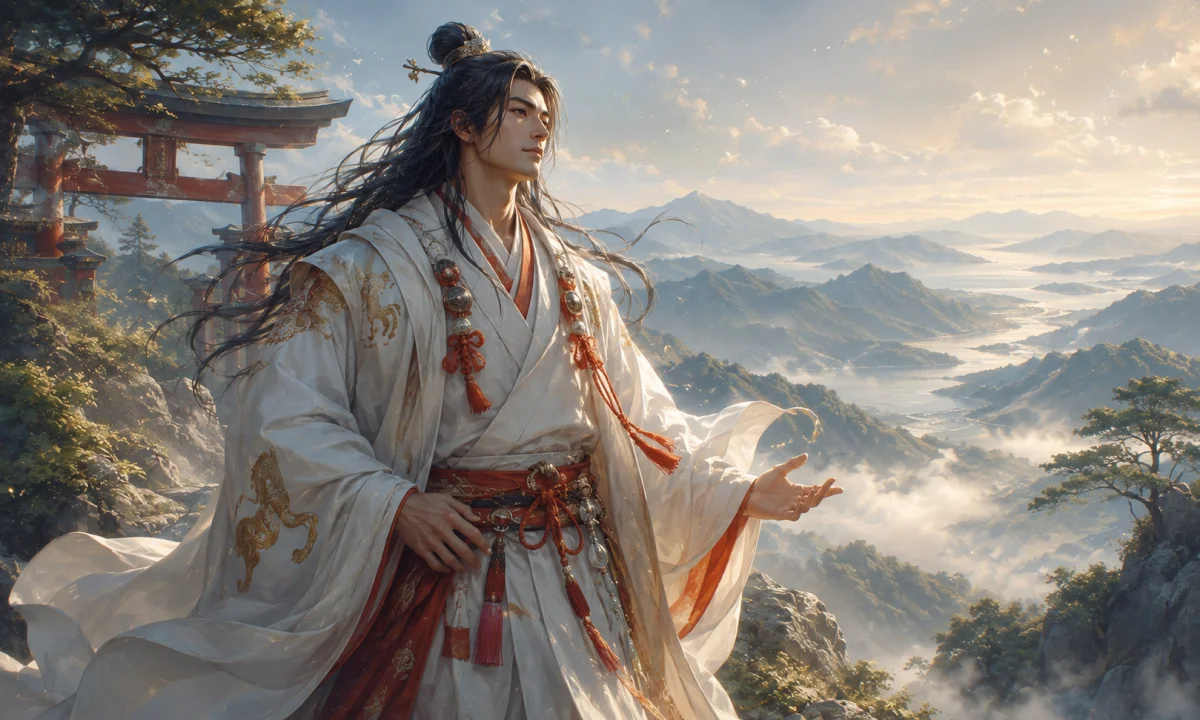
The traditional sources do not describe Umashiashikabihikoji’s physical appearance. There is no surviving image tradition in the classical texts comparable to that of better-known kami, and no consistent iconography attached to him in shrine practice. Because he is an early primordial deity, he is usually treated as an invisible or conceptual presence rather than as a figure with a fixed visual form.
Likewise, the texts do not assign him specific powers in the way later mythic characters may be associated with storms, seas, fertility, or protection. His “attribute” is chiefly his placement in the genealogy of creation. If later interpreters connect him with sprouting vegetation or youthful vitality, that is an inference from the name, not a direct traditional description.
This lack of narrative detail is characteristic of several early kami. They function less like fully dramatized characters and more like markers of the unfolding cosmos. Umashiashikabihikoji is therefore best approached as a primordial presence rather than a personality known through story cycles.
Relationship to other early kami
Umashiashikabihikoji appears among a cluster of very early deities in the creation sequence. In the Kojiki, he is associated with other first-generation beings whose names are similarly archaic and whose precise meanings are often debated. The chronicles list these deities in succession, sometimes as single kami and sometimes as paired or grouped entities, creating a layered picture of emergence.
These relationships are genealogical rather than personal in the modern sense. The deities are linked by the logic of divine generation, not by family life or narrative interaction. The text does not give Umashiashikabihikoji an elaborate network of descendants, attendants, or rivals. His significance lies in the shared cosmic context of the earliest kami, not in individual deeds.
Because the early sequences differ between the Kojiki and the Nihon Shoki, it is important not to overstate any single version as the definitive myth. The two texts preserve related but not identical traditions. When discussing Umashiashikabihikoji, the safest approach is to recognize that he belongs to an early mythological layer whose details vary according to the source.
Possible symbolic meanings
Although the texts are sparse, Umashiashikabihikoji has attracted attention because names in early Japanese myth often seem to encode symbolic images of growth, movement, or natural vitality. If the name is associated with reeds or sprouting life, it may evoke the first visible signs of order after primordial indistinctness. Reeds grow in wetlands and marshes, places between land and water, which can make them a fitting metaphor for emergence from chaos.
This kind of interpretation is plausible but should be treated carefully. It reflects the work of historians of religion and philologists rather than a clearly stated ancient doctrine. Early Japanese mythology often uses poetic, compressed language, and some names remain difficult to gloss with confidence. Nonetheless, the possibility of a vegetation or renewal association makes Umashiashikabihikoji an instructive example of how myth can embed symbolic ideas in divine names.
In a broader Shinto context, early creation deities may be understood as expressions of the sacred quality of existence itself. They mark not only the beginning of the world but also the idea that the world arises through ordering acts of divinity. Umashiashikabihikoji’s obscure but luminous name fits that pattern well, even if its exact meaning cannot be fixed beyond dispute.
Distinction from similar figures
Umashiashikabihikoji should not be confused with later, more famous kami whose names also contain elements such as hiko or whose stories involve creation and imperial descent. The Japanese mythological corpus includes many divine names that can appear similar in English transliteration, especially when long compounds are involved. Care is needed to avoid conflating distinct figures simply because their names sound alike.
He is also not the same as the creator deities who play central roles in the formation of the islands, such as Izanagi and Izanami. Those deities belong to a later and much more developed narrative layer, with detailed stories of birth, death, exile, and the generation of the land. Umashiashikabihikoji, by contrast, is part of the earlier cosmological sequence and is not given that kind of mythic storyline.
Nor should he be confused with deities whose worship became prominent in historic shrine systems. Although many Japanese kami have shrine associations and local cults, Umashiashikabihikoji is mainly a textual deity. If he had wider ritual significance in some now-lost local tradition, the surviving classical sources do not make that clear.
Religious and cultural significance
Even though he is obscure, Umashiashikabihikoji matters because the early creation deities helped later generations understand the structure of the divine world. In Shinto, mythic genealogy often serves as a way of expressing the sacred continuity between cosmic origins, the land of Japan, and the imperial line. The earliest kami establish the sacred depth of the world before the more familiar deities and human rulers appear.
In this setting, Umashiashikabihikoji contributes to a vision of the universe in which life and order emerge gradually from an undefined beginning. His name and position suggest the beauty and vitality of that emergence, even if the tradition does not elaborate on his deeds. The figure also illustrates how Japanese myth can preserve a balance between abstraction and personification: a deity may be named and numbered among the gods without becoming a character in a story cycle.
From a historical perspective, such figures reveal the literary craftsmanship of the early chronicles. The compilers did not simply record beliefs; they arranged them into a formal genealogy with cosmological and political implications. Umashiashikabihikoji is part of that arrangement, reflecting the early court’s effort to articulate a sacred past.
Modern scholarship and interpretation
Modern scholars generally approach Umashiashikabihikoji as one of the obscure primordial kami whose names require philological analysis. Some read these early deities as remnants of ancient ritual invocations, while others see them as editorial constructs designed to give the creation myths a sense of order and depth. It is possible that both processes were involved. The surviving evidence does not allow a single definitive explanation.
In academic writing, Umashiashikabihikoji is often discussed alongside other first-generation deities because his importance lies in the pattern of early Japanese cosmogony. Researchers may focus on the historical editing of the Kojiki and Nihon Shoki, the transmission of old names, or the symbolic function of primordial generations. These discussions are specialized and can differ in emphasis, but they share the recognition that the figure is highly archaic and text-dependent.
For readers encountering Japanese mythology through modern retellings, it is useful to remember that not every kami became a popular character in later religion or entertainment. Some, like Umashiashikabihikoji, remain known primarily to students of myth, religion, and classical literature. Their obscurity is itself part of the tradition, reflecting the enormous range of beings preserved in Japan’s early sacred texts.
Modern popular culture
Umashiashikabihikoji does not have a strong presence in mainstream modern popular culture. Unlike more famous Japanese gods and heroes, he rarely appears in films, games, anime, or novels. When he does appear in modern fiction or reference works, it is usually in contexts that draw on the full catalog of ancient kami rather than on a widely recognized story.
Because of that limited presence, modern treatment of the figure is best understood as part of broader interest in Japanese mythological encyclopedias and source-driven retellings. Any contemporary use tends to rely on his status as an early and mysterious deity rather than on a rich body of narrative material. There is little stable popular characterization to describe beyond what the classical sources already provide.
Why the figure remains significant
Umashiashikabihikoji is significant not because of a dramatic myth, but because of what his brief appearance reveals about Japanese sacred history. He belongs to the first phase of divine manifestation in the classical cosmologies, where names, order, and symbolic resonance matter more than narrative action. His obscurity is characteristic of the oldest layer of the tradition.
In that sense, Umashiashikabihikoji represents one of the many early kami through whom the Japanese mythic imagination tried to articulate the beginning of the world. He remains a figure of the earliest divine generation: difficult to translate with certainty, lightly sketched in the sources, and important precisely because the tradition placed him at the dawn of cosmic time.