WORLD
WORLD
Thixo
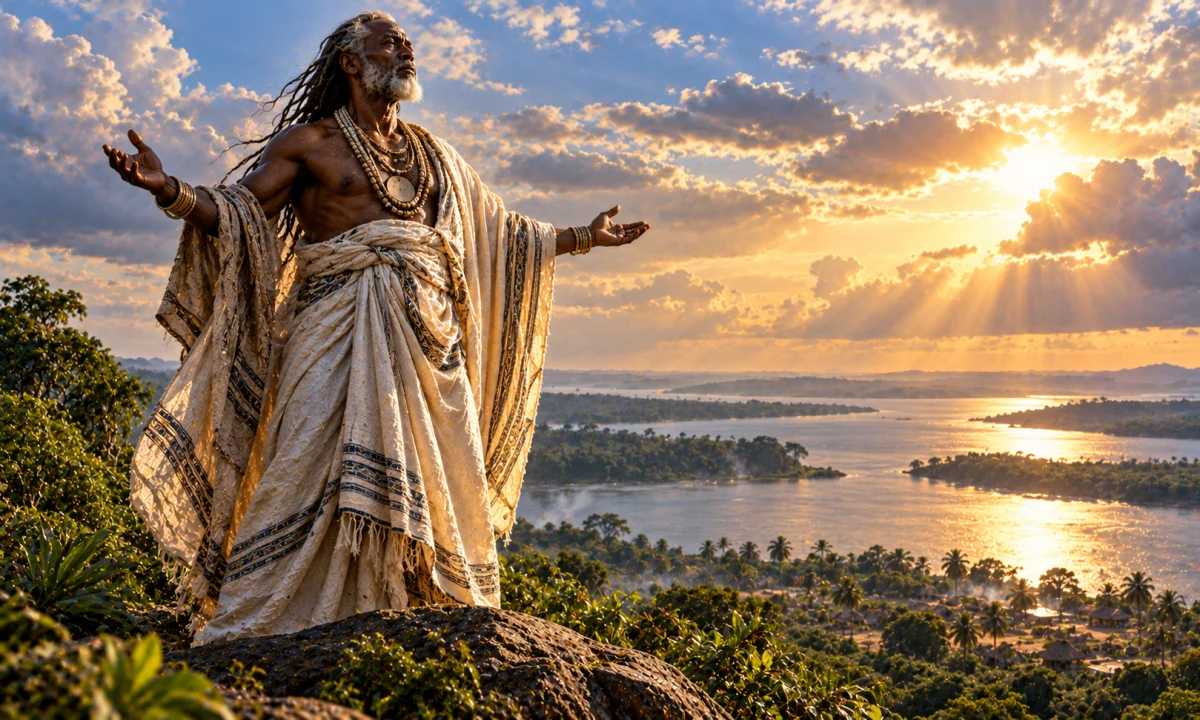
Thixo, also written Tixo or uThixo, is a name associated with God in Xhosa-speaking religious traditions of southern Africa. The term does not describe a single, uniformly documented mythological character in the way that a named hero or spirit might. Its meaning has changed according to context: in some accounts, Thixo is presented as a supreme creator and heavenly power within Xhosa traditional religion; in others, especially Christian and missionary sources, uThixo is the Xhosa name for the Christian God. The relationship between Thixo and other high-deity names, particularly Qamata and uMvelinqangi, varies between communities and sources.
For that reason, Thixo is best understood as a religious name whose interpretation developed through oral tradition, indigenous religious concepts, and centuries of contact with Christianity. Claims that present Thixo as a completely fixed and universally recognized deity should be treated cautiously. Xhosa religious traditions were transmitted primarily through oral teaching, ritual practice, praise poetry, family memory, and traditional authorities rather than through a single canonical scripture.
Cultural setting
The Xhosa are a southern African cultural and linguistic group whose communities have historically lived mainly in the eastern and south-eastern parts of present-day South Africa. IsiXhosa belongs to the Bantu language family and is spoken by several closely related communities, including the amaXhosa and other groups with distinct histories and identities. Religious ideas associated with Thixo therefore belong to a wider cultural environment rather than to one isolated mythology.
Traditional Xhosa religion recognizes a sacred order that includes a supreme or elevated divine power, ancestral spirits, nature-related forces, ritual specialists, and human communities. The ancestors, often called izinyanya or described through related terms depending on context, remain especially important. They are not simply dead relatives in a secular sense. Ancestors may be regarded as continuing members of the family who protect, advise, discipline, or communicate with the living. Ritual attention to them forms part of the relationship between human society, the spiritual world, and the highest divine power.
Within this religious structure, a high god may be understood as the source of life, creation, order, rain, fertility, and moral authority. Yet the highest deity is not always approached in the same direct and personal way as ancestors are. Ancestors are often the more immediate spiritual presence in family and community life, while the supreme power is associated with the broad foundations of existence.
The name Thixo
The spelling uThixo reflects isiXhosa grammar, in which the initial u- is a noun-class prefix commonly used with personal beings and certain other nouns. Thixo or Tixo may appear in older transcriptions, especially in texts written by European missionaries and colonial observers. Spelling was not standardized in the same way across historical records, and the form used by a source may reflect the orthographic conventions of its period.
The origin of the word is not entirely settled. Some historical discussions connect Thixo or Tixo with Khoekhoe religious vocabulary, particularly names recorded by Europeans for a high deity among Khoekhoe-speaking peoples. Other interpretations emphasize developments within Xhosa and related Bantu-language contexts, as well as the influence of missionary translation. These explanations should not be treated as interchangeable facts. The precise history of the word remains a matter of linguistic and historical interpretation.
European missionaries used uThixo as a translation for “God” when producing Christian texts in isiXhosa. This gave the term a prominent place in Xhosa Bible translations, hymns, prayers, schools, and church life. As a result, modern readers may encounter Thixo primarily as the Christian God rather than as a term belonging to pre-Christian or independently documented Xhosa religious traditions. The Christian use is genuine and important, but it should not automatically be projected backward as a complete description of earlier Xhosa theology.
Thixo and the supreme deity
Descriptions of Thixo as the supreme being commonly associate the name with creation, the origin of life, the regulation of the natural order, and ultimate authority over human destiny. In these accounts, Thixo is higher than ordinary spirits and is not merely a localized nature spirit. The deity may be conceived as powerful, remote, and not normally represented in a detailed human form.
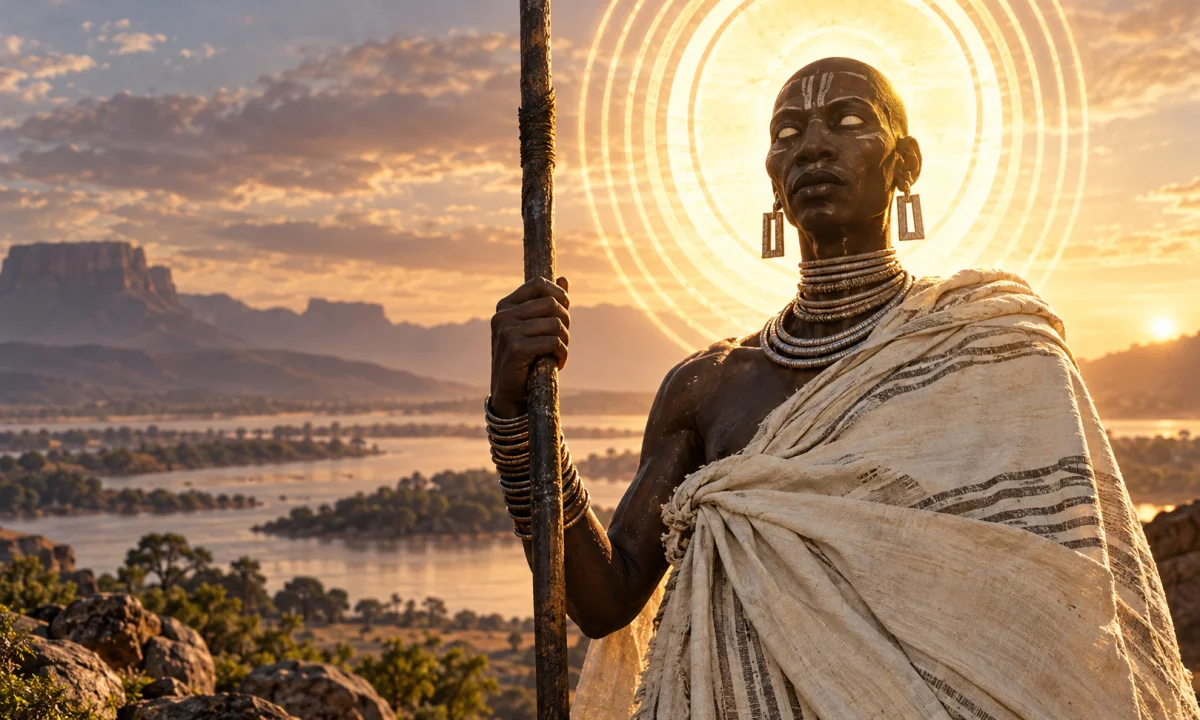
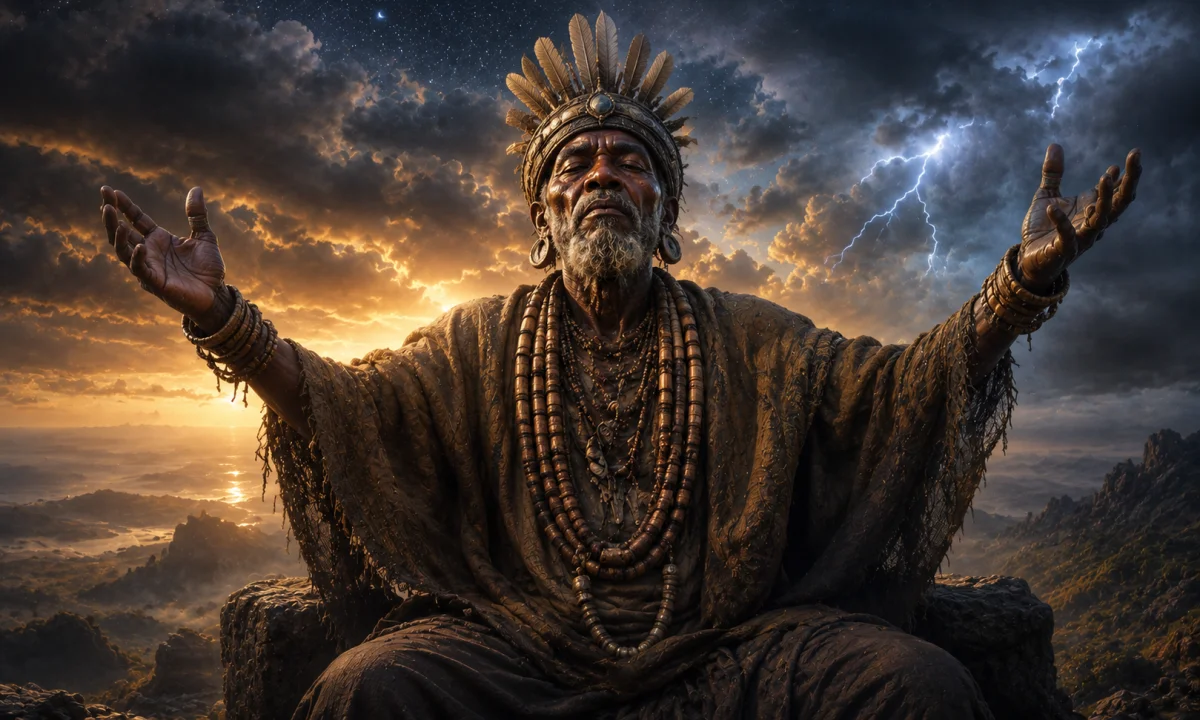
There is no universally accepted ancient image, statue, or physical appearance for Thixo. The absence of a standard image is consistent with many African religious traditions in which the highest deity is known through names, praise, actions, ritual language, and relationships rather than through a fixed iconographic form. Descriptions of a “sky god” or a deity connected with the heavens may be interpretive summaries rather than evidence of a single, standardized Xhosa doctrine.
Some accounts connect the supreme power with rain and fertility. In southern African societies, rain has profound agricultural, ecological, and political significance, and rainmaking traditions may involve rulers, ritual experts, ancestors, and divine powers. It would be misleading, however, to reduce Thixo to a simple “rain god.” Rain is one aspect of a broader sacred order involving life, prosperity, health, social harmony, and the relationship between the living and the dead.
Thixo may also be described as a moral authority. Illness, misfortune, social conflict, or repeated bad fortune could be interpreted through several possible causes, including neglected ancestral obligations, breaches of custom, witchcraft accusations, ritual problems, or divine displeasure. There was not necessarily one explanation applied to every event. Religious interpretation depended on circumstances and on the guidance of elders or diviners.
Thixo, Qamata and uMvelinqangi
The most important difficulty in discussing Thixo concerns the relationship between this name and other names for a high deity. Qamata, sometimes written Qamatha, is identified in various accounts as a creator or supreme being among Xhosa-speaking people. Other traditions use uMvelinqangi, a name often interpreted as referring to the one who existed first, the first cause, or an ancient heavenly power. Some sources treat these names as distinct beings; others place them in overlapping positions; still others use Thixo as the principal name for the highest God.
These differences may result from regional variation, differences between communities, changes over time, translation choices, and the tendency of outside observers to organize fluid oral traditions into rigid systems. A missionary, an ethnographer, a traditional authority, and a modern religious speaker might use the same name in somewhat different ways.
It is therefore unsafe to state without qualification that Thixo and Qamata are always identical or always separate. In one account, Qamata may be the traditional creator while uThixo is the name adopted or emphasized in Christian contexts. In another, Thixo may function as a name for the supreme deity and Qamata may be treated as an alternative or related designation. The names should be compared carefully rather than combined into a single invented genealogy.
Traditional religious relationships
Traditional Xhosa religion does not generally present the high deity as an isolated figure with a long cycle of dramatic myths. The most detailed religious relationships often concern ancestors, families, chiefs, diviners, healers, and the forces affecting everyday life. This does not make the supreme deity unimportant. Instead, divine power is often understood through the social and spiritual networks that connect the living to their predecessors and to the wider world.
Ancestors may be approached through offerings, communication, ritual observance, and attention to dreams or signs. Their role is intermediate and relational: they belong to the family and community, unlike the distant creator or highest divine power. The distinction between the supreme deity and ancestors is important. Ancestors are not simply interchangeable with God, and they should not be described as minor “gods” without qualification. Their authority comes from their place within an ongoing kinship relationship.
Diviners and healers have historically helped communities interpret illness, misfortune, spiritual disturbance, and ancestral concerns. Their work does not necessarily mean that every religious event was attributed directly to Thixo. Religious life involved practical knowledge, social ethics, ritual expertise, and a layered understanding of causation.
Stories and limited mythic detail
Popular summaries sometimes attribute a large body of creation stories and adventures to Thixo. The surviving evidence does not support a single canonical cycle of narratives shared by all Xhosa communities. Oral traditions can preserve accounts of the creation of people, the separation of realms, the origin of death, the arrival of social customs, and the action of high spiritual beings, but versions differ and are not always recorded under the name Thixo.
Some stories associated with a Xhosa supreme being describe the deity as the source of human life or as a power involved in the ordering of the world. Other stories place creative or protective actions in the hands of Qamata, uMvelinqangi, ancestors, or culture heroes. Because these narratives were performed and transmitted orally, variation is not evidence that one version is necessarily false. It is a normal feature of living tradition.
Written records from the nineteenth century onward are valuable but require care. Missionaries often recorded oral material while seeking equivalents for Christian doctrines. Colonial officials and early ethnographers could misunderstand indigenous categories or treat regional practices as if they represented an entire people. Modern researchers and cultural historians therefore compare vocabulary, oral testimony, ritual practice, historical context, and the purposes for which a record was produced.
Christian use of uThixo
Christianity became influential among Xhosa-speaking communities through missionary activity, education, colonial institutions, African-initiated churches, and later forms of urban and rural religious life. In Christian isiXhosa, uThixo is the normal word for God. Christian prayers and hymns use the name for the creator, the God of the Bible, and the deity of Christian worship.
This use did not simply replace an unrelated indigenous word with a new label. Translation often works through existing concepts, and Christian teachers had to communicate ideas about creation, divinity, prayer, sin, salvation, and spiritual authority using isiXhosa vocabulary. The result was both continuity and change. Some speakers understood uThixo as an indigenous name that could be applied to the Christian God; others distinguished Christian theology from older religious understandings; many communities combined elements of Christian practice with continuing respect for ancestors and local traditions.
The existence of Christian usage also affects modern references to Thixo. A contemporary Xhosa speaker using uThixo may be expressing specifically Christian belief, traditional or ancestral concepts, or a religious understanding shaped by both. The surrounding context is necessary before assigning a precise meaning.
Symbolism and religious significance
Thixo is most often significant as a name for ultimate divine power rather than as a figure defined by a particular body, weapon, animal, or costume. The name can evoke creation, life, the sky, rain, moral order, and the limits of human power. It may also express the idea that the world is not spiritually empty and that human beings exist within relationships extending beyond the visible community.
The concept of a distant high deity alongside active ancestors appears in several African religious systems, although the details differ greatly from one culture to another. Similarities should not be used to prove that all African peoples worshipped the same god. Names such as Modimo among many Sotho-Tswana speakers, Nyame among Akan-speaking peoples, and Olodumare in Yoruba religion belong to different languages, histories, and religious traditions. They are comparisons, not alternative names for Thixo.
Distinguishing Thixo from similar names
- Thixo and Qamata: These names overlap in some accounts of Xhosa supreme divinity, but sources also distinguish them. Their relationship varies according to region, period, and religious context.
- Thixo and uMvelinqangi: uMvelinqangi is another name associated in some traditions with a first or supreme heavenly power. It should not automatically be treated as a fixed synonym for Thixo.
- Thixo and ancestors: Ancestors are revered members of the family and community who may mediate spiritual concerns. They are not simply identical with the highest deity.
- Thixo and Modimo: Modimo is a major high-deity term in Sotho-Tswana traditions. Linguistic and cultural comparison is possible, but the two names do not designate one shared mythological character.
- Thixo and a generic African creator god: “African mythology” covers many distinct peoples and traditions. Thixo belongs specifically to discussions of Xhosa language and religious history, especially where the name is used in isiXhosa contexts.
Modern interpretation
Today, uThixo appears most visibly in Xhosa Christian worship, religious education, hymns, literature, public speech, and translations of the Bible. The name also remains relevant to cultural discussions about indigenous religion, colonial language change, ancestral practice, and the relationship between Christianity and older Xhosa worldviews.
Modern writers sometimes present Thixo as a neatly defined “Xhosa god” with a fixed family tree, standardized appearance, and a set of adventures comparable to those of gods in classical mythology. Such presentations can make the subject easier to recognize, but they may conceal the uncertainty and diversity of the historical evidence. Thixo is better approached as a name whose meanings have been shaped by oral tradition, cultural exchange, translation, and continuing religious life.
The most responsible description is therefore a qualified one: Thixo or uThixo is a Xhosa name for God, used in Christian contexts and associated in some accounts with a traditional supreme creator or heavenly power. Its precise relationship to Qamata and uMvelinqangi is not consistent across all sources. Understanding that variation is essential to preserving the distinction between living religious practice, historical interpretation, and simplified modern mythology.