WORLD
WORLD
Qamatha

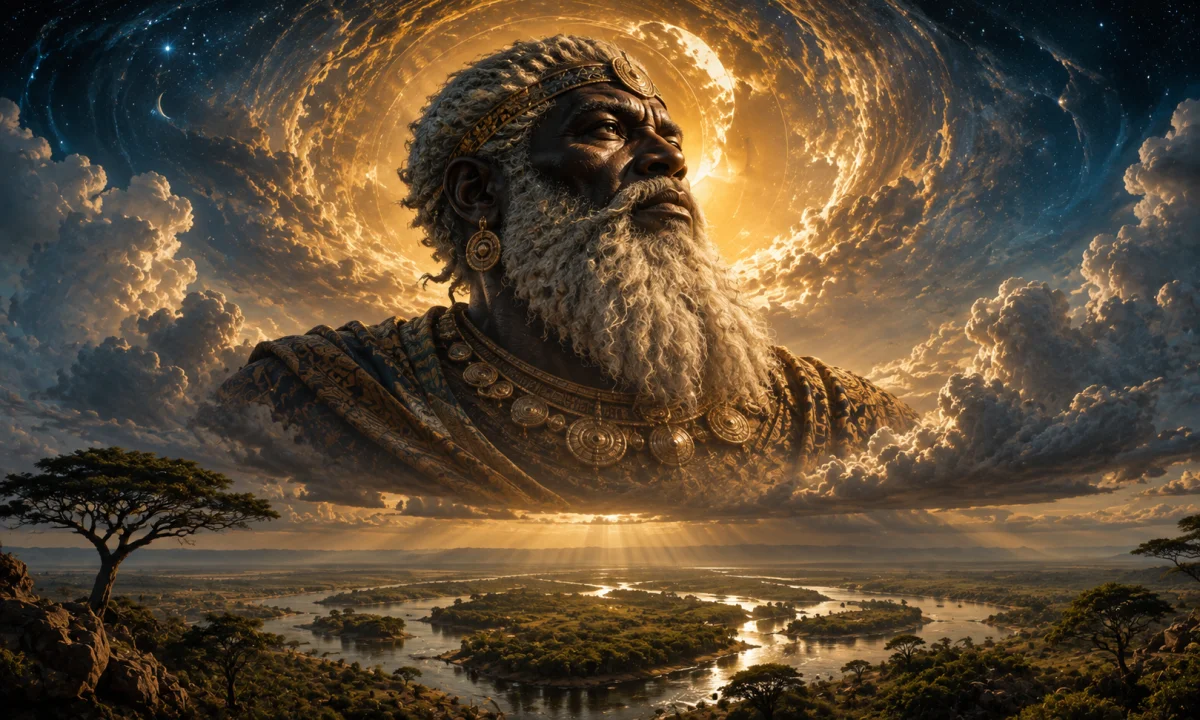
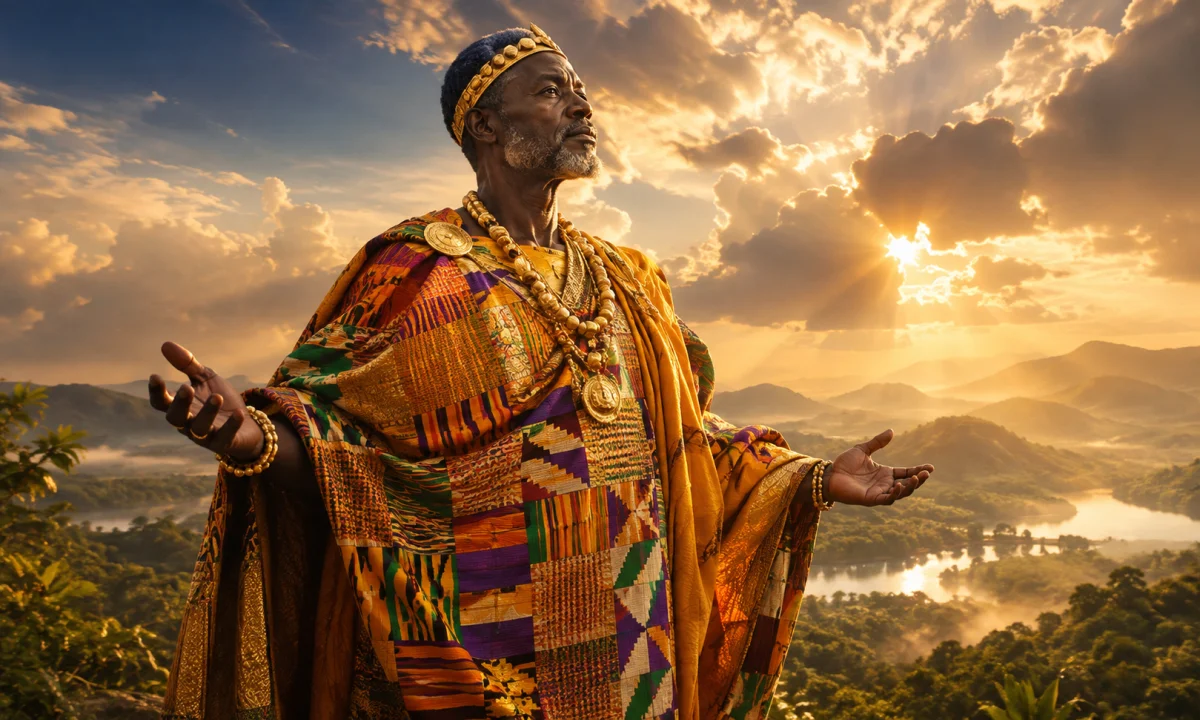
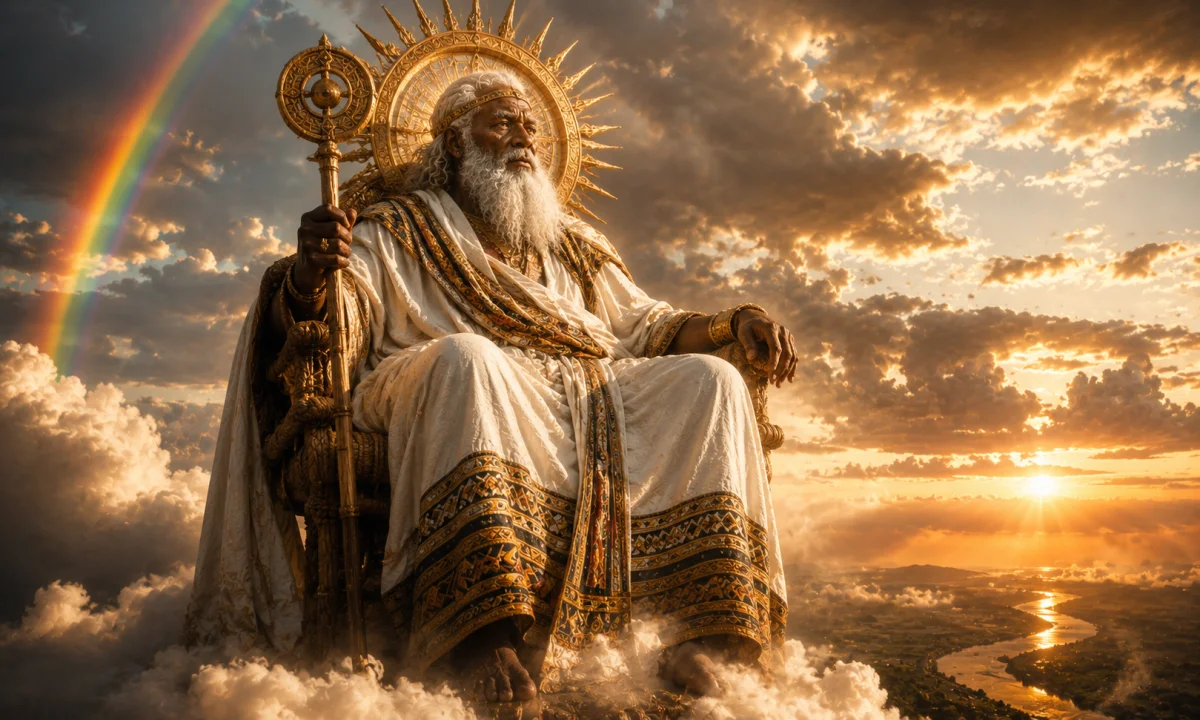
Qamatha is a name associated with the supreme creator in some accounts of Xhosa religious tradition in southern Africa. The figure is more commonly written Qamata, while Qamatha may reflect an alternative spelling or a representation of pronunciation. Because Xhosa religious knowledge was transmitted largely through oral tradition and later recorded by outsiders in different ways, the name and the details attached to it are not completely uniform.
Origins and cultural setting
Qamatha belongs to the religious and mythological traditions of the amaXhosa, a Nguni-speaking people whose historical homeland lies mainly in the Eastern Cape of South Africa. Xhosa traditional religion has never depended on a single canonical scripture containing one fixed account of creation, divine genealogy or sacred history. Knowledge has instead been conveyed through oral teaching, ritual practice, praise poetry, family memory and the work of religious specialists.
For that reason, descriptions of Qamatha should not be treated as though they came from one universally accepted mythological text. Accounts recorded in English or other European languages may simplify concepts expressed in isiXhosa, combine different local interpretations, or use familiar terms such as “god,” “creator” or “supreme being” for ideas that do not correspond exactly to those categories.
In the broadest interpretation, Qamatha represents a high creator power responsible for the existence and ordering of the world. The name is sometimes discussed alongside other names for a supreme or originating power in southern African traditions. That comparison can be useful, but it does not mean that all such figures are identical. Religious ideas varied between peoples, regions and historical periods.
The name Qamatha and the form Qamata
The spelling Qamata is widely encountered in discussions of Xhosa mythology, whereas Qamatha appears in some English-language references and popular retellings. The difference may arise from attempts to represent isiXhosa sounds using writing conventions that are not fully consistent. In some contexts, the two forms are treated as names for the same figure.
It is nevertheless important not to assume that every use of the name has precisely the same meaning. A short written reference may provide little information about the community, informant or local tradition behind it. Some modern summaries present Qamata as a clearly defined “Xhosa god” with a detailed biography, but the surviving evidence does not support treating every such detail as part of a single, standardized tradition.
The spelling should also not be used as the sole basis for separating Qamatha from Qamata. Unless a particular source or community explicitly distinguishes them, they are generally best discussed as variant forms of the same name rather than automatically as two separate beings.
Qamatha as creator and supreme power
In accounts that identify Qamatha as a creator, the figure stands at the beginning of cosmic existence. Qamatha may be described as the power through which the earth, sky, living creatures and human beings came into being. These descriptions emphasize creative authority rather than a human-like personality with a long sequence of adventures.
As with many African traditions concerning a high creator, Qamatha is often portrayed as remote from ordinary human affairs compared with ancestral spirits and other spiritual forces. This distinction should not be made too rigidly, since religious practice differs across communities, but it helps explain why a creator figure may occupy a central place in theology without being the main focus of every household ritual.
In traditional Xhosa religious life, relationships with the ancestors have been especially important. Ancestors are remembered members of the community who may act as intermediaries, guardians or agents of moral and social continuity. Their role does not necessarily displace the creator. Instead, the spiritual world may be understood as layered, with a supreme source of existence and other spiritual beings involved more directly in the lives of families and communities.
Descriptions of Qamatha as “omnipotent” or “all-seeing” should be treated cautiously when they come from modern explanatory writing. Such language may be intended to translate the idea of a supreme divine power into terms familiar to readers of monotheistic religions. It does not by itself prove that Xhosa tradition developed a systematic theology identical to Christianity, Judaism or Islam.
Attributes and symbolism
Qamatha’s principal attribute is creative and ordering power. The figure is associated with the origin of life and with the structure that makes the world habitable. This places Qamatha in a different category from a culture hero whose actions establish particular customs, or from a nature spirit connected to one river, mountain or animal.
Some retellings connect Qamata with the heavens, weather or other great forces of nature. Such associations may reflect the tendency of mythographers to connect a supreme creator with the sky and cosmic order, but they are not equally attested in all descriptions. A particular attribute should therefore be identified as a local interpretation or later summary unless its traditional setting is clear.
Qamatha’s symbolism can be understood through several related ideas:
- Origin: the source from which the world and living beings derive.
- Order: the power associated with the distinction between a structured world and disorder or destruction.
- Continuity: the divine foundation beneath the ongoing life of families, communities and the natural environment.
- Transcendence: a status above ordinary spirits and human beings, even when the figure is not the direct subject of daily ritual.
These are interpretive categories rather than a fixed list of symbols with universal meanings. Xhosa religious thought, like other living traditions, cannot be reduced to a set of mythological labels detached from language, ritual and community practice.
Stories and variants
There is no single, universally recognized cycle of Qamatha stories comparable to the Homeric poems or to a scriptural biography. Written summaries sometimes describe Qamatha as creating the world and humanity, but they rarely preserve a complete narrative sequence with agreed names, relatives and episodes.
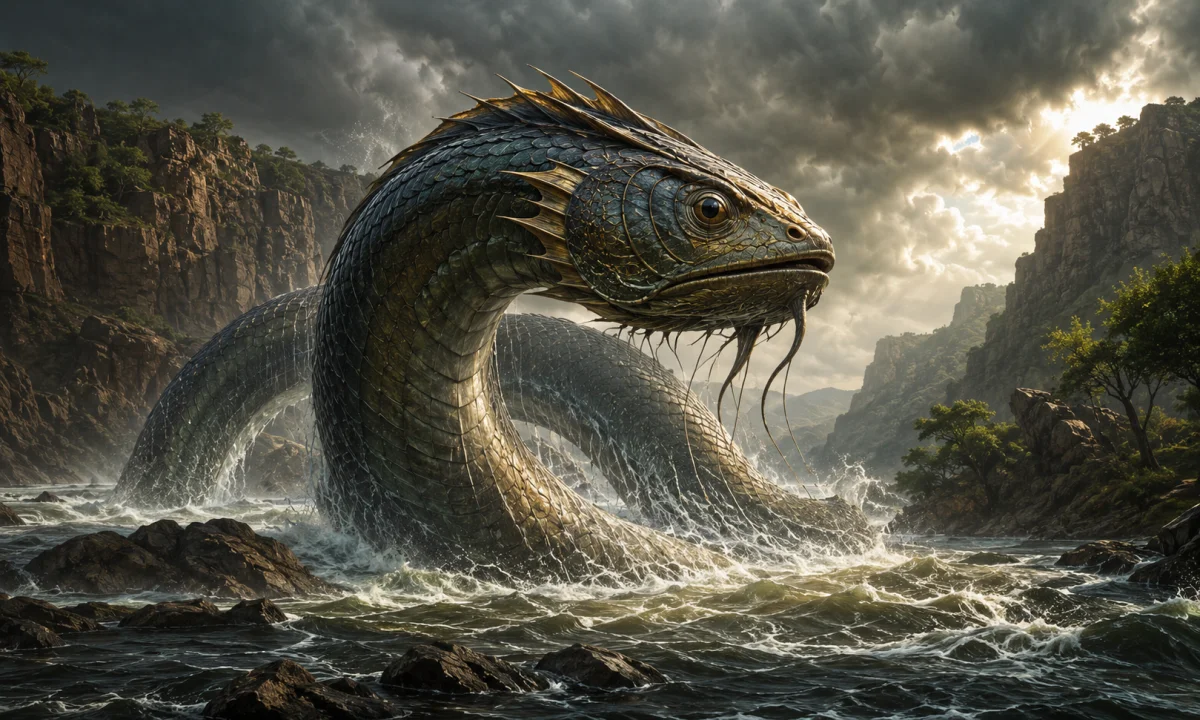
One group of modern retellings places a destructive serpent or sea being in opposition to Qamata. This figure is sometimes named Inkanyamba, although that name has its own associations in southern African folklore and should not automatically be treated as part of every Qamata tradition. Inkanyamba is widely known in popular accounts as a powerful serpent or dragon connected with storms, waters and dangerous natural forces, particularly in traditions associated with other Nguni-speaking communities. The alleged conflict between Qamata and Inkanyamba may therefore represent a later combination of motifs rather than a universally established Xhosa myth.
Similar caution applies to claims that Qamatha had a fixed spouse, parents or set of divine children. Such genealogies appear in some secondary accounts, but they are not consistently documented across descriptions of Xhosa tradition. A detailed family tree should not be presented as a settled feature of Qamatha’s identity without a clear traditional context.
Variation is not evidence that the tradition is incomplete or invalid. Oral traditions naturally change through performance, regional transmission and interaction with neighboring peoples. The difficulty arises when one version is extracted from that living context and presented as the definitive mythology of an entire people.
Religious meaning and the ancestors
Understanding Qamatha requires attention to the wider structure of Xhosa traditional religion. The creator is only one part of a spiritual world that includes ancestors, forces associated with places and natural phenomena, and forms of spiritual power recognized through ritual specialists. The ancestors are particularly important because they connect the living community with its history and obligations.
Respect for ancestors is expressed through remembrance, family rituals, offerings and observance of social responsibilities. These practices are not simply “worship of the dead” in the narrow sense. They involve relationships, kinship and the continuing moral presence of those who came before. In this setting, Qamatha may be understood as the ultimate source of life while ancestors remain the more immediate spiritual presences within family and community affairs.
Older descriptions sometimes interpret a high creator as a distant deity who has withdrawn from the world. That interpretation can be misleading if it suggests that the creator has no religious importance. A supreme being need not be the recipient of the same kind of ritual attention as an ancestor or local spirit. Different forms of divine relationship can coexist: one may express cosmic dependence, while another concerns protection, healing, family identity or obligations between the living and the dead.
Christian missionary activity, colonial administration and the publication of ethnographic accounts also affected the way Xhosa beliefs were described. Writers frequently translated local religious terms through Christian categories, sometimes identifying the highest spiritual power with the Christian God or using Christian language to explain indigenous practices. Later Xhosa Christians could themselves use older names in new theological contexts. These historical layers make it difficult to draw a sharp line between precolonial concepts and all later uses of the name.
Qamatha and similar names or figures
Qamatha should not be merged automatically with every African creator figure. Several names are often grouped together in general introductions to African mythology, even though they arise from different peoples and religious histories.
- uNkulunkulu is a major supreme or originating figure in Zulu religious thought. Comparisons with Qamata may be meaningful at the level of broad function, but the traditions are not interchangeable.
- Mvelinqangi, also associated with Zulu ideas of an ancient or first-being, belongs to a different linguistic and cultural context, even where modern writers compare the name with creator concepts elsewhere.
- Modimo is a term used in Sotho-Tswana religious and linguistic contexts. It should not be treated as another spelling of Qamatha.
- Thixo is commonly used in modern isiXhosa for the Christian God and has also appeared in historical discussions of Xhosa religion. Its use may reflect Christian translation, indigenous reinterpretation or both, so it should not automatically be equated with every traditional account of Qamata.
- Inkanyamba is generally described as a powerful serpent or dragon-like being linked with storms and water in southern African folklore. It is not simply another name for Qamatha.
These distinctions matter because the word “African mythology” covers thousands of communities and many different religious systems. A shared regional environment can produce similar themes—creation, sky powers, serpents, ancestors and dangerous waters—without proving that the figures themselves are the same.
Historical evidence and modern understanding
The evidence for Qamatha comes primarily through oral tradition, linguistic material and written descriptions produced in colonial and postcolonial contexts. There is no universally accepted ancient Xhosa scripture that sets out a complete account of the deity. Written records must therefore be read with attention to who recorded them, when they were recorded and whether they describe a local tradition or a generalized interpretation.
Modern scholarship generally treats African religious traditions as dynamic systems rather than as collections of static myths. A name can acquire new meanings when used in Christian theology, schoolbooks, novels, tourism, popular mythology and online reference material. The continued use of Qamata or Qamatha may represent cultural memory, religious reinterpretation, literary reconstruction or a combination of these.
For respectful interpretation, it is better to preserve uncertainty than to add invented detail. Qamatha can be described with confidence as a name associated with a supreme creator figure in Xhosa-related accounts, especially under the form Qamata. More elaborate claims about divine relatives, battles, physical appearance or a fixed set of powers require qualification because they are not consistently supported across the tradition.
Qamatha in popular culture
Qamatha has a relatively limited presence in international popular culture compared with better-known figures such as Anansi, Shango or the Egyptian and Greek gods. The name may appear in websites, fantasy writing, comparative mythology lists and modern retellings that present African deities as characters in a global pantheon.
Such adaptations can introduce the figure to new audiences, but they often turn a creator associated with religious tradition into a character with a standardized appearance, dramatic rivalries and a detailed supernatural biography. Those inventions belong to modern fiction or popular interpretation, not automatically to Xhosa tradition. Where Qamatha is used in a contemporary novel, game or other creative work, its portrayal should be identified as an adaptation rather than evidence for ancient belief.