WORLD
WORLD
Ometochtli

Ometochtli, meaning “Two Rabbit” in Nahuatl, is a deity associated with pulque, the fermented drink made from the sap of the maguey or agave plant. He belongs to the religious traditions of central Mexico, especially those recorded for the Mexica, often called the Aztecs. Ometochtli is also connected with the Centzon Totochtin, the “Four Hundred Rabbits,” a collective of pulque deities whose many names expressed the drink’s different effects, places of worship, or ritual associations.
Origins and cultural setting
Ometochtli belongs to a religious world in which plants, food, intoxicating drinks, mountains, rain, fertility, and human communities were closely connected. Pulque was produced from the sweet sap of mature maguey plants. After fermentation, it became a cloudy alcoholic drink that played roles in ceremonies, feasts, offerings, healing practices, and elite or warrior culture.
The maguey was valuable for much more than its sap. Its leaves could provide fibres, needles, fuel, roofing material, and other practical resources. Because the plant sustained human life in several ways, its cultivation and use carried religious meaning. Pulque was not viewed simply as an everyday intoxicant. It could be a sacred substance, particularly when consumed during ceremonies or offered to gods.
In Mexica tradition, the gods connected with pulque were part of a wider network of agricultural and fertility powers. Their worship overlapped with reverence for maguey, rain, earth, abundance, childbirth, and the renewal of life. Ometochtli should therefore not be reduced to a simple “god of alcohol.” His significance arose from a particular drink, its plant origin, its ritual uses, and the social rules surrounding intoxication.
The meaning of the name
Ometochtli is generally translated as “Two Rabbit”: ome means “two,” and tochtli means “rabbit.” Nahuatl divine names often combine a number with a calendrical sign, and such names could carry religious, calendrical, and symbolic meanings at the same time.
Rabbit imagery was strongly associated with pulque and drunkenness. A traditional explanation found in colonial-era accounts says that a person’s behaviour while intoxicated could resemble the unpredictable actions of a rabbit. The many “rabbits” of pulque represented the different ways intoxication might affect people: some became cheerful, others aggressive, boastful, melancholy, or disorderly. This idea helped explain why the effects of pulque were attributed to a large group rather than to one uniform deity.
The number two may be a calendrical designation rather than a literal description of two rabbits. In the 260-day ritual calendar, numbers from one to thirteen were combined with day signs, including Rabbit. “Two Rabbit” could therefore function as a sacred name tied to the calendar. It is important not to assume that every use of the name refers to exactly the same religious concept. The surviving records do not always distinguish clearly between a deity’s personal name, a calendrical name, and a title used within a larger group of gods.
Ometochtli and the Four Hundred Rabbits
The Centzon Totochtin are usually described as four hundred rabbit gods or spirits of pulque. The number four hundred often conveys a very large or countless multitude in Mesoamerican religious language. It does not necessarily mean that worshippers imagined a carefully enumerated population of exactly four hundred individual rabbits.
Ometochtli is one of the best-known names connected with this group. Other names recorded in colonial sources include Tepoztecatl, Pahtecatl or Patecatl, Yauhqueme, Tomiyauh, Papaztac, Tlaltecayohua, Colhuatzincatl, and Izquitecatl. Spellings vary because the names were recorded in alphabetic writing by Spanish-speaking or Spanish-trained authors, often using conventions that did not perfectly represent Nahuatl pronunciation.
These figures may have represented distinct local traditions, aspects of pulque, or named members of a broader divine family. The surviving evidence does not establish a single fixed hierarchy accepted everywhere. Some accounts give particular gods special importance, while others present a long list of related pulque beings. Ometochtli was therefore not necessarily the sole or universal ruler of all pulque deities.
The association between Ometochtli and the collective rabbits also explains why descriptions of him can seem less individualised than descriptions of major gods such as Huitzilopochtli, Tlaloc, or Quetzalcoatl. He appears within a religious category whose members were closely related and whose identities could overlap.
Relationship with Mayahuel and Patecatl
Pulque traditions frequently connect the drink with Mayahuel, a goddess associated with the maguey plant, and Patecatl, a deity linked with pulque, fermentation, and the knowledge of preparing medicines or intoxicating substances. In some accounts, Mayahuel and Patecatl are treated as the parents or ancestors of the Centzon Totochtin.
These genealogical relationships should be treated with care. The sources do not present one consistent theology in which every pulque deity has a universally agreed family position. Mayahuel is often described as the divine personification or patron of maguey, while Patecatl is associated with the discovery or preparation of pulque. Ometochtli belongs to the same religious sphere, but surviving accounts do not always define him in precisely the same way.
Some modern retellings describe Ometochtli simply as a son of Mayahuel and Patecatl. That formulation reflects one way of organising the traditions, but it should not be treated as an uncontested fact across all Nahua communities or historical sources. The relationships among the pulque gods were flexible and could reflect local ritual traditions.
Attributes and appearance
Ometochtli’s principal attribute is his connection with pulque and with the rabbit symbolism attached to intoxication. His name itself is more securely attested than a single standard physical appearance. Unlike some better-documented Mesoamerican gods, he does not possess one universally recognisable form preserved across all surviving images.
In artistic representations of pulque deities, rabbit features, maguey imagery, drinking vessels, and other signs of intoxication may appear. However, not every image of a rabbit or a drinking scene can be identified as Ometochtli. Codices and other records often use shared visual conventions, and the same deity may be represented differently in different manuscripts.
Descriptions connected with the pulque gods sometimes include facial paint, headdresses, ornaments, or vessels associated with ritual drinking. Such details may belong to a particular deity, a local tradition, or a wider visual category. It is safer to describe Ometochtli as a rabbit-associated pulque deity than to assign him a fixed costume or a single canonical portrait.
The rabbit also has wider meanings in central Mexican thought. Rabbits were familiar animals that reproduced quickly and lived among cultivated landscapes. Their abundance made them suitable symbols of fertility and multiplication, while their lively and erratic movements helped connect them with drunken behaviour. Ometochtli’s rabbit identity thus combined natural observation, humour, fertility symbolism, and religious ideas about altered states.
Pulque, intoxication, and ritual rules
Mexica society did not treat intoxication as entirely good or entirely evil. Pulque could be used in religious ceremonies, given to particular groups, and consumed by people for whom ritual or medical circumstances justified it. At the same time, uncontrolled drunkenness was associated with social disorder and moral danger.
Colonial descriptions report penalties or public condemnation for certain forms of drunkenness, especially among people expected to maintain discipline. The rules were not necessarily identical for every age, social position, or ritual situation. Older people, the sick, and participants in specific ceremonies could be treated differently from young people who became publicly intoxicated without an accepted reason.
This tension is important for understanding Ometochtli. A pulque deity did not merely endorse constant drinking. The gods of pulque represented the drink’s power, pleasure, danger, and unpredictability. Ritual consumption could place people in contact with the sacred, but excessive or socially inappropriate drinking could invite shame, punishment, or misfortune.
The “many rabbits” idea provided a religious explanation for the varied effects of intoxication. Each person seemed to receive a different rabbit, so to speak, because each person behaved differently while drunk. Ometochtli, as “Two Rabbit,” belongs to this symbolic system in which numbers and rabbits turn human experiences of intoxication into divine identities.
Stories and traditions
Ometochtli is not preserved through one long, consistently told myth comparable to the major creation narratives involving Quetzalcoatl, Tezcatlipoca, or the Five Suns. His importance appears more often in lists of pulque gods, ritual descriptions, calendar associations, and accounts of the origins or preparation of pulque.
Some stories about maguey and pulque focus on Mayahuel. In these traditions, the maguey is connected with a divine woman whose body or transformed remains provide the plant’s nourishing substance. Other accounts emphasise Patecatl’s role in discovering ingredients, fermentation, or medicinal knowledge. The Centzon Totochtin then embody the intoxicating effects of the completed drink.
These traditions are not always presented in identical form. Colonial writers collected them from different informants and communities, sometimes arranging oral material according to European ideas about gods, genealogy, and mythology. As a result, a modern reconstruction must distinguish between a broadly repeated association and a detail found in only one version.
Ometochtli may also be connected with calendrical omens. The Rabbit sign had associations with pulque, fertility, and abundance, but years or days bearing that sign could also be viewed as dangerous because excessive growth or excess drinking might bring instability. The precise interpretation depended on the calendar system and the context in which the name was used.
Sources and historical evidence
Knowledge of Ometochtli comes mainly from records produced after the Spanish conquest, including illustrated manuscripts, alphabetic descriptions in Nahuatl and Spanish, and compilations of Indigenous religious information. These records preserve valuable details, but they do not provide a neutral transcript of pre-conquest religion.
Franciscan and other colonial investigators often questioned Indigenous specialists about gods, ceremonies, moral behaviour, and calendars. Their reports were shaped by Christian concerns about idolatry and intoxication, as well as by translation difficulties. Indigenous collaborators also worked within the new colonial environment, which could influence what was recorded and how it was explained.
Images in manuscripts must likewise be interpreted cautiously. A drawing may combine local artistic conventions with the purposes of the manuscript’s compiler. A figure labelled with one name in a colonial document may have had a different name, role, or visual form in another region. For this reason, statements about Ometochtli should distinguish between what is directly recorded, what is inferred from related evidence, and what belongs to later interpretation.
Distinction from similar figures
Ometochtli should not be confused with every Mesoamerican deity represented by a rabbit. Rabbit symbolism was not exclusive to one god, and a rabbit image can refer to a calendrical sign, a pulque association, a local tradition, or a narrative episode rather than to Ometochtli himself.
He is also distinct from Mayahuel. Mayahuel is primarily associated with the maguey plant and the nourishing sap from which pulque is made. Ometochtli is associated with the drink and its rabbit symbolism. Their traditions overlap, but they are not interchangeable names for the same being.
Ometochtli is likewise distinct from Patecatl, who is connected with pulque preparation, fermentation, medicine, and the knowledge required to transform ingredients into the intoxicating drink. Patecatl may appear as an ancestor or related deity in accounts of the Centzon Totochtin, but he is not simply another name for Ometochtli.
Tepoztecatl is another major pulque deity who is sometimes treated in modern writing as the leader of the Four Hundred Rabbits. Such summaries can be useful, but they may impose a neat hierarchy on traditions that were more varied. Tepoztecatl and Ometochtli belong to the same broad religious sphere while remaining distinct named figures.
Cultural significance
Ometochtli illustrates how Nahua religion could give divine form to an everyday substance without separating nature, society, and ritual into different categories. The maguey plant supported communities materially; pulque affected the body and mind; drinking was regulated by social expectations; and the drink participated in ceremonies. These dimensions were expressed through related divine beings rather than through a single abstract idea of “alcohol.”
The figure also shows the importance of multiplicity in Mesoamerican religious thought. The Four Hundred Rabbits conveyed the many possible effects of intoxication and the widespread power of pulque. A named deity such as Ometochtli could possess an individual identity while remaining part of a larger collective. This combination of individuality and plurality is central to understanding the pulque gods.
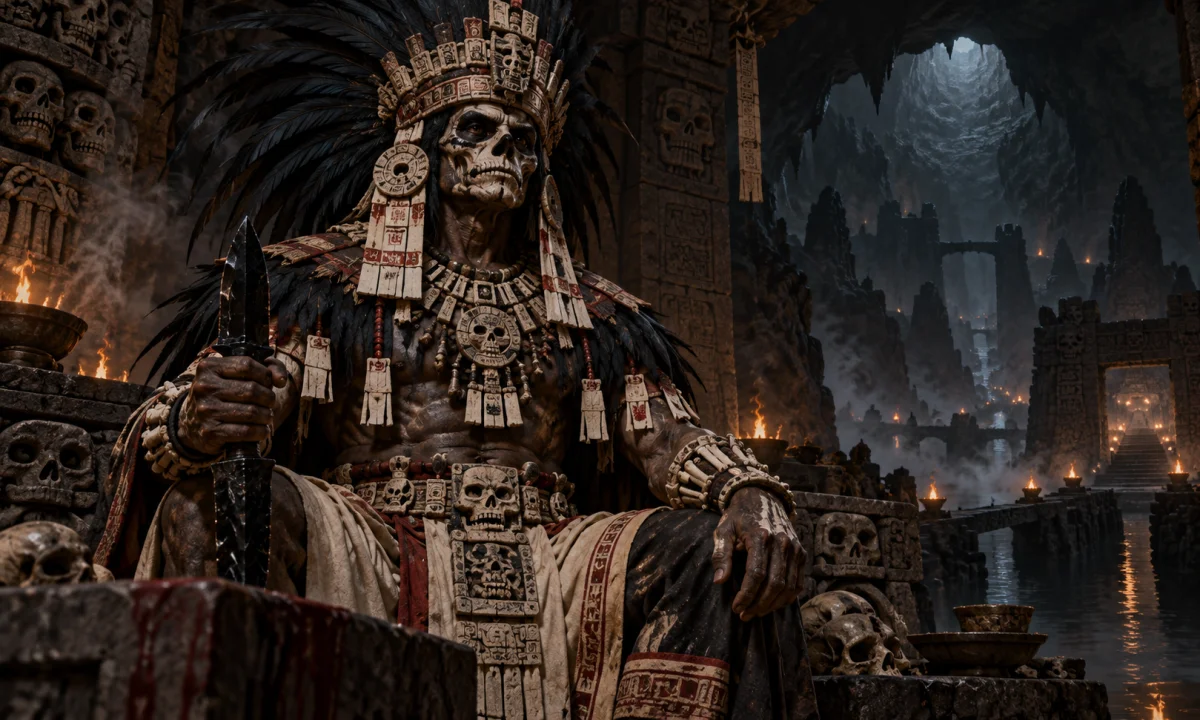
Ometochtli has received limited attention in modern popular culture compared with more frequently adapted figures such as Quetzalcoatl, Huitzilopochtli, or Tlaloc. When he does appear in games, fantasy fiction, or general mythology lists, he is often simplified into a generic “Aztec god of alcohol” or given a standard rabbit-headed appearance. Such portrayals may be imaginative adaptations, but they should not be mistaken for a single traditional portrait or a complete account of Nahua religious beliefs.