WORLD
WORLD
Tepoztecatl
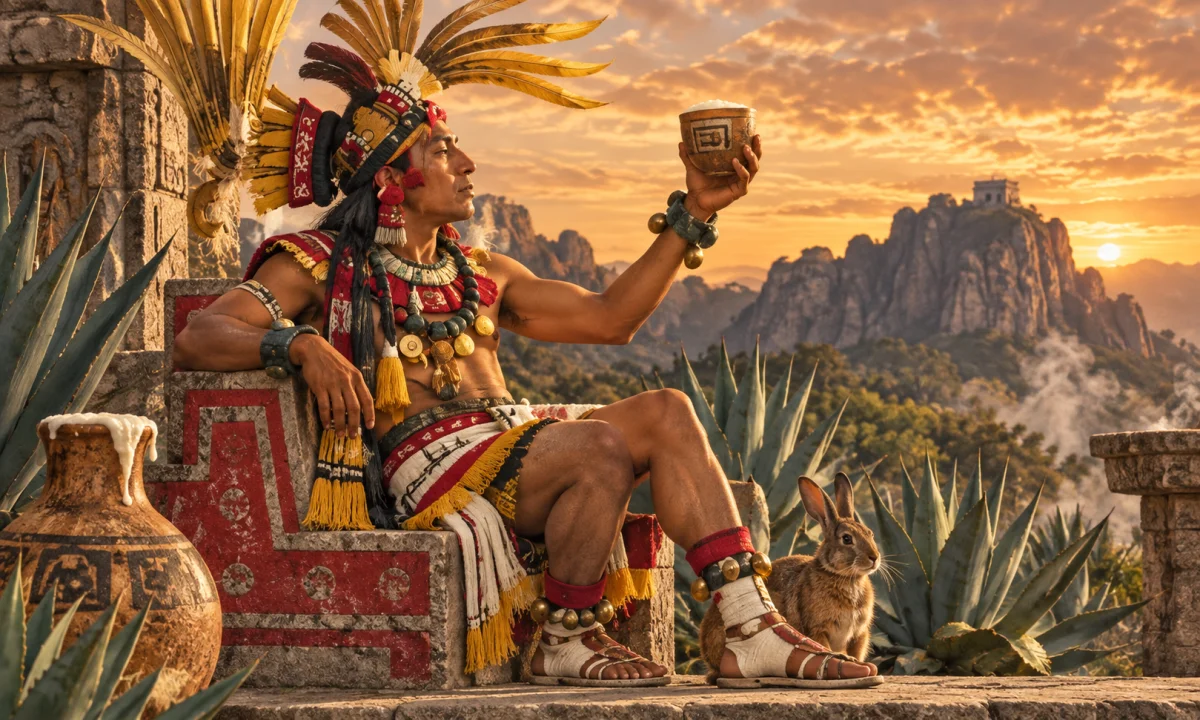
Tepoztecatl was a Nahua deity associated with pulque, the fermented drink made from the sap of the maguey plant. He was especially connected with Tepoztlan, a sacred centre in the modern Mexican state of Morelos, where a temple dedicated to him stood on the mountain now known as the Tepozteco. In Aztec-period religion, Tepoztecatl belonged to the wider group of pulque gods, but his worship also had a strong local and regional character.
Origins and cultural setting
Tepoztecatl is often described as an Aztec god because Tepoztlan was incorporated into the political sphere of the Mexica, or Aztec, empire. That description is useful but incomplete. The deity was worshipped in a region inhabited by Nahua-speaking communities south of the Valley of Mexico, and his importance cannot be reduced to the state religion of Tenochtitlan.
Tepoztlan was a settlement surrounded by dramatic mountains and cliffs. Its most prominent sacred landscape was the mountain shrine later called the Tepozteco. Archaeological remains at the summit include a temple platform associated with the late pre-Hispanic period. Colonial accounts indicate that the shrine was an important pilgrimage destination before the Spanish conquest, although the surviving evidence does not preserve a complete account of the rituals performed there.
The region was also suitable for the cultivation of maguey, the plant from which pulque was produced. Maguey was economically and ritually significant throughout central Mexico. Its sap could be collected, fermented and consumed as a nourishing drink, but pulque was also associated with deities, fertility, celebration and altered states of consciousness. Tepoztecatl's identity developed within this religious environment.
The name Tepoztecatl
The usual scholarly spelling is Tepoztēcatl, with a long vowel marked in some systems of Nahuatl transcription. Tepoztecatl is the common unmarked spelling in English. The name is related to Tepoztlan and can be understood broadly as referring to a person or deity connected with that place.
The deeper etymology of Tepoztlan is less certain. Nahuatl place names can contain several layers of meaning, and interpretations involving metal, axes or other objects have been proposed for elements of the name. These explanations should not be treated as a secure definition of the god's character. The connection between Tepoztecatl and Tepoztlan is clear; the precise original meaning of the place name is not.
The ending -tecatl commonly indicates someone associated with a place or group. For that reason, Tepoztecatl may originally have meant something like “the one from Tepoztlan” or “the deity of Tepoztlan.” In later usage, the name could also function as a title or local designation rather than as a personal name in the modern sense.
Tepoztecatl and the pulque gods
Central Mexican religion included a collective group known in Nahuatl as the Centzon Totochtin, usually translated as the “Four Hundred Rabbits.” They were pulque deities, and their large number represented the many forms and effects of drunkenness. The number four hundred was often a conventional expression for an innumerable multitude rather than a literal count.
Tepoztecatl is named among these rabbit gods in colonial descriptions of Nahua religion. Other members of the group include Ometochtli, “Two Rabbit,” and figures such as Tezcatzoncatl, Pahtecatl or Pantecatl, and Papaztac. The names and spellings vary between sources because Spanish writers recorded Nahuatl terms according to different conventions, and because local religious traditions did not always organize the gods in exactly the same way.
Association with the Centzon Totochtin did not mean that each deity had an identical personality. Pulque gods could have particular localities, names, ritual associations and visual attributes. Tepoztecatl was distinguished by his connection with Tepoztlan and its mountain sanctuary. He was therefore both a member of a broad divine group and a specific local patron.
Roles and symbolism
Tepoztecatl's most secure role is as a deity of pulque and the maguey-based religious world. Pulque was not simply an intoxicating beverage. It could be connected with nourishment, fertility, life-giving moisture and the reproductive powers of the earth. Maguey itself was valued for food, fibre, medicine, roofing material and other practical uses. Its sap therefore carried associations of abundance as well as intoxication.
Religious attitudes toward pulque were complex. Public moral teachings often warned against uncontrolled drunkenness, while ritual practice recognized circumstances in which pulque could be consumed by priests, rulers, warriors, elders or participants in particular ceremonies. The rules were not identical in every period or community. The existence of strict warnings does not mean that pulque was regarded as evil; rather, its sacred power was understood as something requiring regulation.
The rabbit imagery attached to the Centzon Totochtin reflects the unpredictable effects of intoxication. In Nahua thought, a person under the influence of pulque might behave in a manner associated with one rabbit deity rather than another. One form of drunkenness could produce laughter, another aggression, another grief or strange speech. Tepoztecatl belonged to this wider symbolic system, although surviving sources do not provide a detailed psychological profile for him.
His mountain shrine added another dimension to his symbolism. Mountains were important sacred features in Mesoamerica. They could be viewed as sources of water, clouds, fertility and divine presence. A god worshipped on a prominent mountain could therefore be connected not only with a particular community but also with the landscape that sustained it. It is reasonable to interpret Tepoztecatl's local importance through this relationship between deity, mountain, settlement and cultivated land. However, specific claims that he was exclusively a rain god or a mountain god go beyond what the surviving evidence establishes.
Sources and surviving traditions
Knowledge of Tepoztecatl comes primarily from colonial-period records written after the Spanish conquest. The most important information about Nahua religion was recorded by friars and Indigenous informants in the sixteenth century. Works associated with Bernardino de Sahagún include lists and descriptions of pulque deities, while other colonial histories and local records preserve additional references to Tepoztlan and its shrine.
These sources are valuable but must be read carefully. They were produced in a period of major religious and political upheaval, often through translation between Nahuatl and Spanish. Christian writers sometimes reorganized Indigenous beliefs according to European categories, and they did not always distinguish clearly between local variations. At the same time, the records contain information supplied by Nahua speakers and preserve names, rituals and concepts that would otherwise have been lost.
No single pre-Hispanic text presents a complete biography of Tepoztecatl. There is no securely established canonical story describing his birth, family, appearance and deeds from beginning to end. Some accounts name him in connection with pulque, while local traditions emphasize Tepoztlan and the mountain sanctuary. This uneven evidence is important: it shows that Tepoztecatl was a recognized religious figure without proving that every later story about him belonged to the Aztec-period tradition.
Stories and local legends
Modern accounts of the Tepozteco often include dramatic narratives about a miraculous child, a heroic founder, a serpent or other supernatural opponents. Versions of these stories circulate in local oral tradition, popular books and cultural presentations. They vary considerably in their characters and details, and some combine Indigenous motifs with ideas shaped by colonial Christianity, later folklore and national romanticism.
Such legends are part of the cultural history of Tepoztlan, but they should not automatically be presented as ancient myths of Tepoztecatl. A local story may preserve old themes while also changing over generations. Oral traditions are not lesser forms of history, but their date and relationship to pre-Hispanic religion require careful distinction. The surviving evidence does not justify treating every narrative associated with the Tepozteco as a direct account of the Aztec deity.
There is also no secure basis for identifying Tepoztecatl with every supernatural figure said to inhabit the mountain. A sacred landscape can contain several layers of tradition, including pre-Hispanic gods, Indigenous place spirits, Christian saints, legendary ancestors and modern folkloric characters. These layers may influence one another without representing the same being.
Ritual and religious significance
The worship of Tepoztecatl would have been connected to the religious importance of Tepoztlan. A shrine on the summit of a mountain created a visible relationship between the town below and the sacred landscape above. Pilgrimage to such a location could express allegiance to a local deity, requests for prosperity or fertility, and participation in the wider ritual world of central Mexico.
The exact ceremonies performed at the shrine are not fully known. It is unsafe to reconstruct elaborate rites from the deity's association with pulque alone. Offerings, songs, food, incense and drink were all common elements of Mesoamerican religious practice, but the surviving sources do not provide a complete ceremonial schedule for Tepoztecatl.
His religious importance can nevertheless be understood through several connected ideas: the productivity of maguey, the sacred and dangerous power of fermented drink, the fertility of the land, the authority of a local mountain sanctuary and the participation of Tepoztlan in broader Nahua culture. These associations show why a deity could be both local in name and part of a much larger religious system.
Distinction from related figures
Ometochtli and the Centzon Totochtin
Ometochtli, or “Two Rabbit,” is one of the best-known pulque deities and is sometimes treated in popular writing as if he were the sole god of pulque. That is misleading. Ometochtli was one prominent member of the rabbit-deity group, while Tepoztecatl was another. The two should not be merged merely because both are associated with pulque.
Quetzalcoatl
Tepoztecatl is also sometimes confused with Quetzalcoatl, especially because later legends connect Tepoztlan with powerful culture heroes and because both figures could be linked in different contexts with wind, fertility or sacred knowledge. They are not the same deity. Quetzalcoatl was a major Mesoamerican god with several important aspects, including the Feathered Serpent and, in some traditions, Ehecatl, the wind god. Tepoztecatl's clearest traditional identity is as a local deity associated with Tepoztlan and the pulque gods.
The Tepozteco mountain and town
“Tepozteco” may refer to the mountain, the archaeological sanctuary, a person from Tepoztlan or a legendary figure in modern storytelling. “Tepoztecatl” is the name most often used for the deity in discussions of Nahua religion. Because these forms are related, descriptions of the mountain or its contemporary legends can be mistakenly presented as direct descriptions of the ancient god.
Colonial change and modern cultural meaning
After the Spanish conquest, Indigenous temples and public ceremonies were attacked or dismantled as part of campaigns against non-Christian religion. The summit shrine at Tepoztlan was affected by this process. Christian institutions and practices became established in the region, but local identity continued to preserve memories of the sacred mountain and its pre-Hispanic traditions.
In the modern town of Tepoztlan, the Tepozteco is an important emblem of local heritage. The mountain, archaeological site and associated legends attract visitors and appear in cultural festivals, tourism and regional identity. Contemporary references may use Tepoztecatl as a symbol of Indigenous continuity, ecological connection or the distinctive character of Tepoztlan. These meanings are modern interpretations, even when they draw on genuinely ancient religious associations.
Tepoztecatl is not a major figure in globally popular Mesoamerican fiction in the way that Quetzalcoatl or Tezcatlipoca is. When he appears in modern novels, games, online mythology collections or fantasy settings, those portrayals usually expand a comparatively limited historical record. They may be imaginative and culturally meaningful, but they should be distinguished from the evidence for Tepoztecatl as a Nahua deity of pulque, Tepoztlan and the sacred mountain landscape of Morelos.