 WORLD
WORLD
Aztec mythology
Articles about Aztec mythology within Mesoamerica.
Last articles
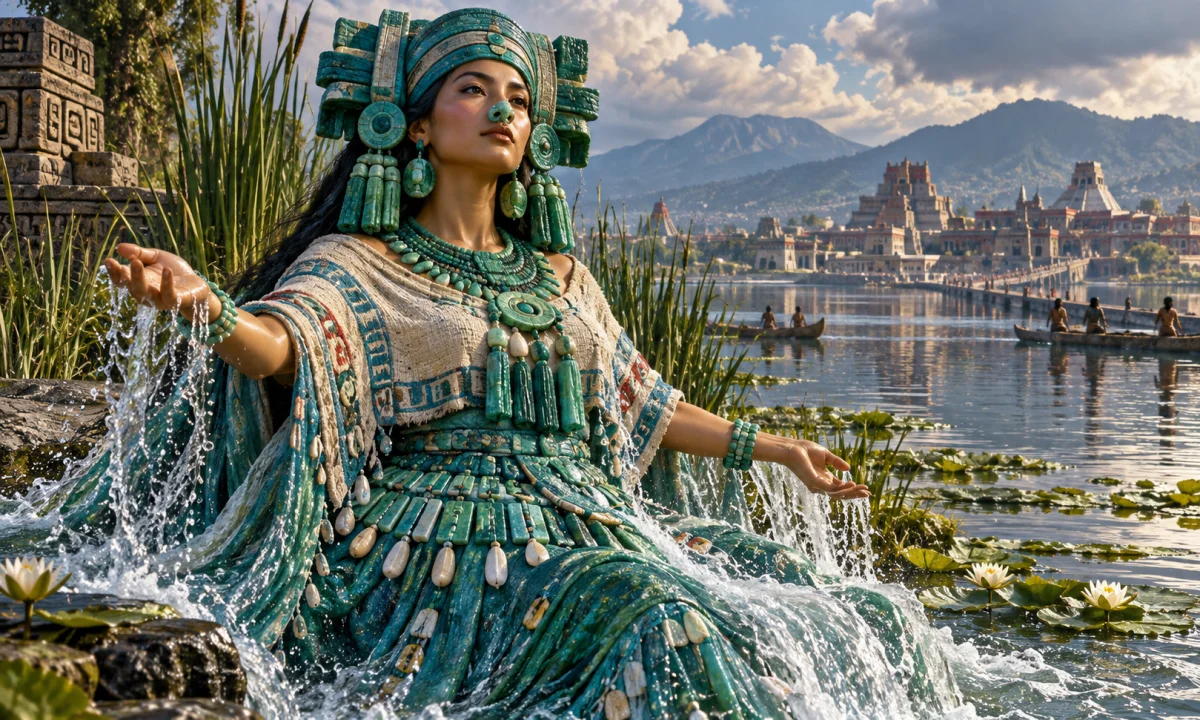
Chalchiuhtlicue
Chalchiuhtlicue is a major water deity in Nahua, especially Mexica (Aztec), religious tradition. Her name is commonly translated as “She of the Jade Skirt” or “She Who Wears a Jade Skirt.” She was associated with lakes, …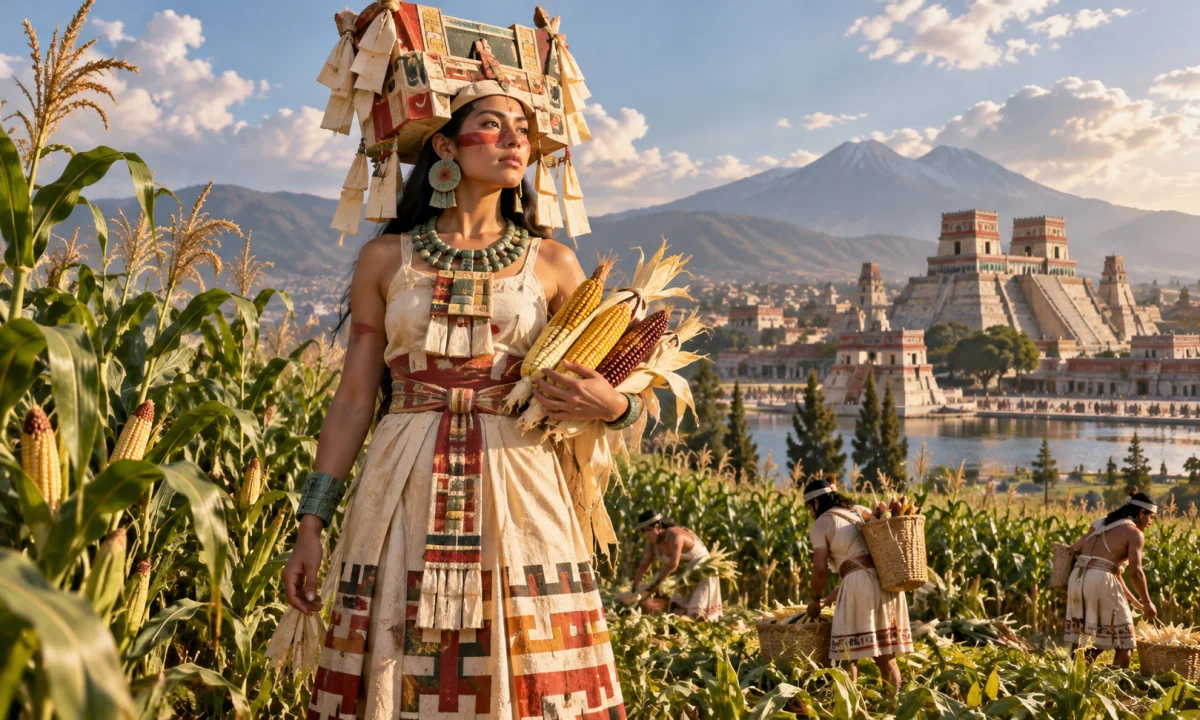
Chalchiuhcihuatl
Chalchiuhcihuatl is a Nahuatl name associated with a female water deity in the religious traditions of central Mexico. The name is usually translated as “Jade Woman” or “Precious-Greenstone Woman.” In many modern referen…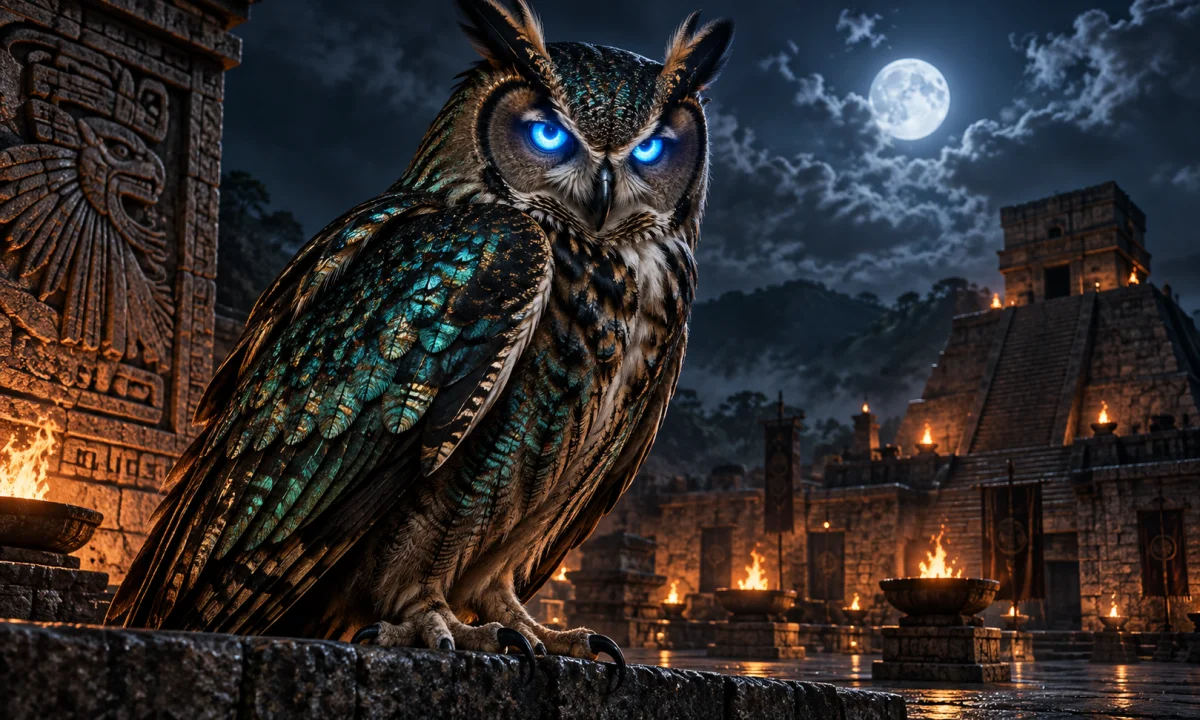
Chalchiuhtecólotl
Chalchiuhtecólotl is an obscure figure associated with Nahua, especially Mexica or “Aztec,” religious traditions. The name is commonly translated as “Precious Owl” or “Jade Owl,” from Nahuatl elements connected with a pr…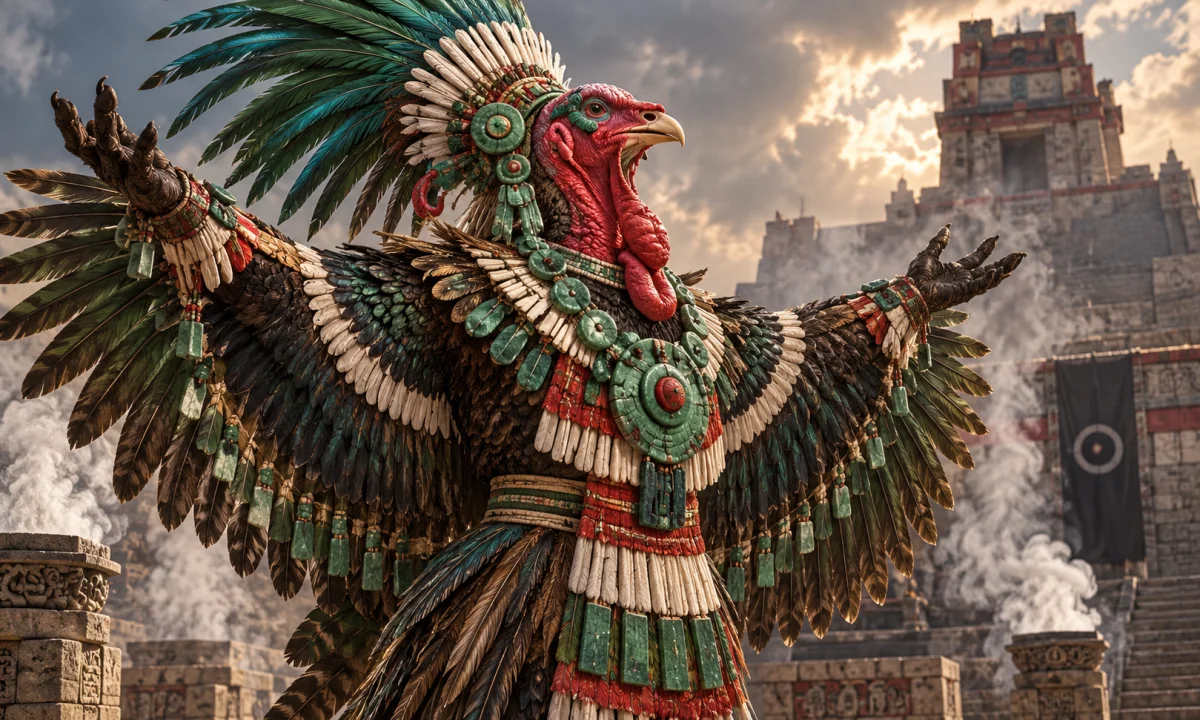
Chalchiuhtotolin
Chalchiuhtotolin is a deity or divine manifestation in Nahua religious tradition, especially the religious world commonly called Aztec. His name is usually translated as “Jade Turkey” or “Precious Turkey.” He is most clo…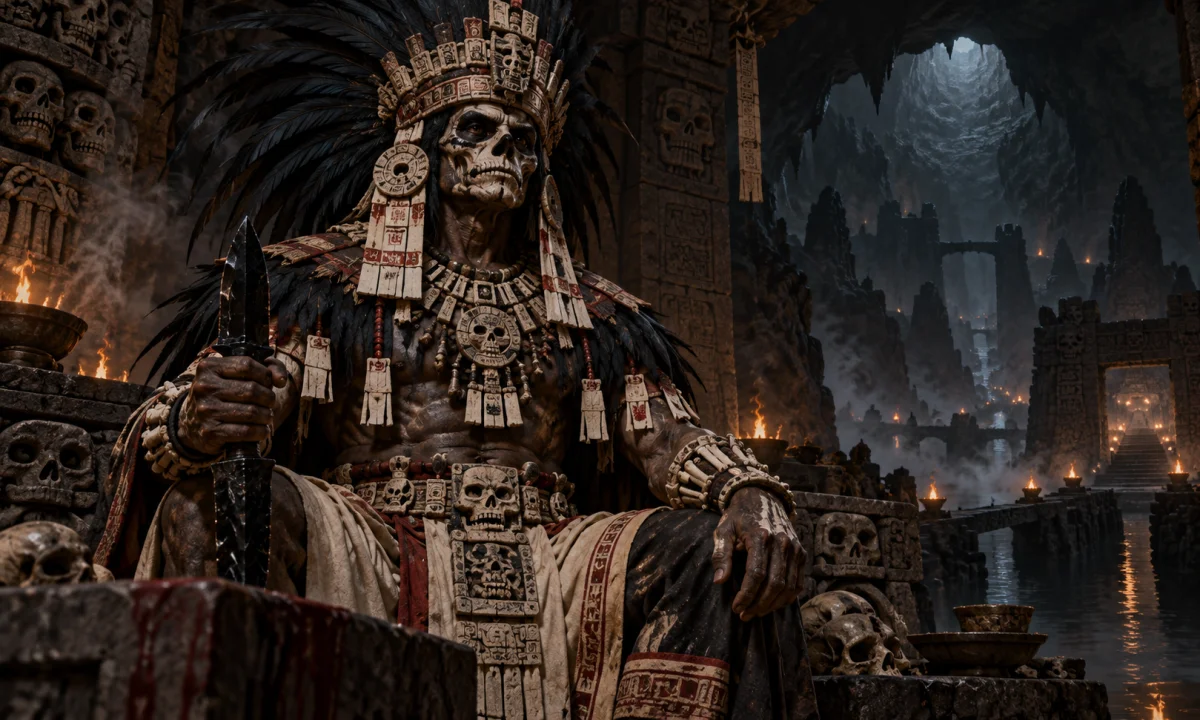
Chalmecatecuhtli
Chalmecatecuhtli is an obscure figure associated with Aztec, or more precisely Nahua, religious tradition in central Mexico. His name appears in colonial-era records and later catalogues of Nahua deities, but surviving e…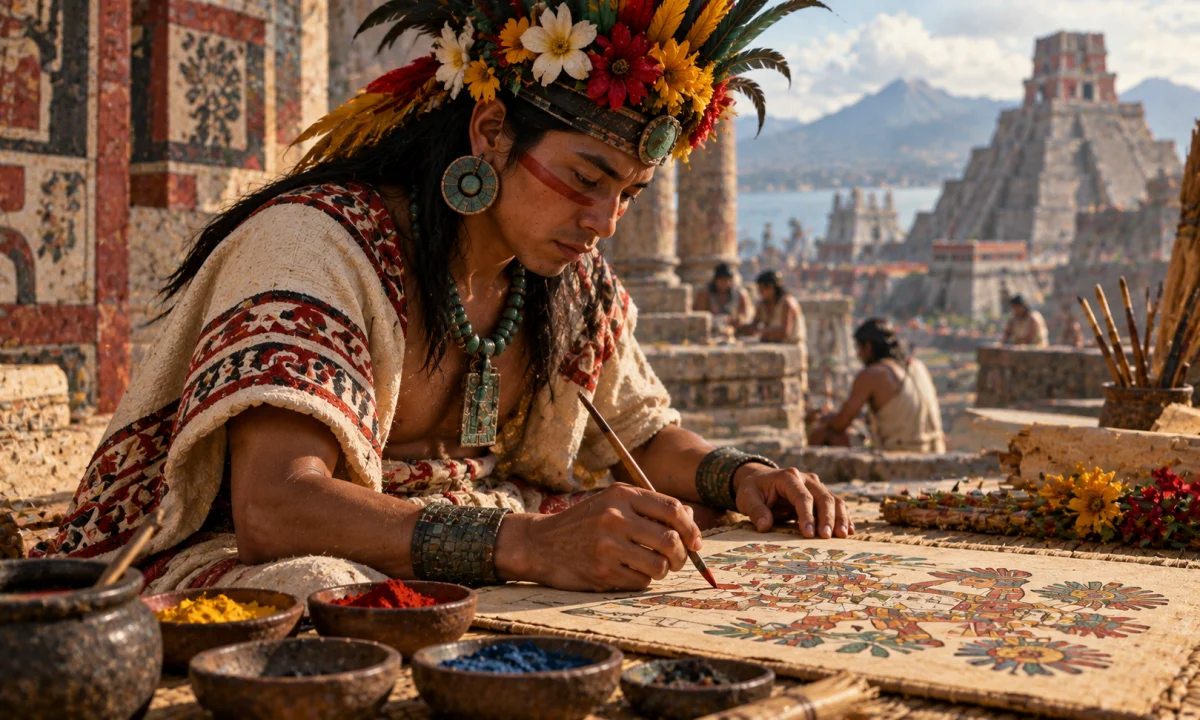
Chicomexochtli
Chicomexochtli is a little-known figure in the religious traditions of central Mexico. His name is usually written in English as Chicomexochtli or Chicomexochitl and is commonly interpreted from Nahuatl as “Seven Flower.…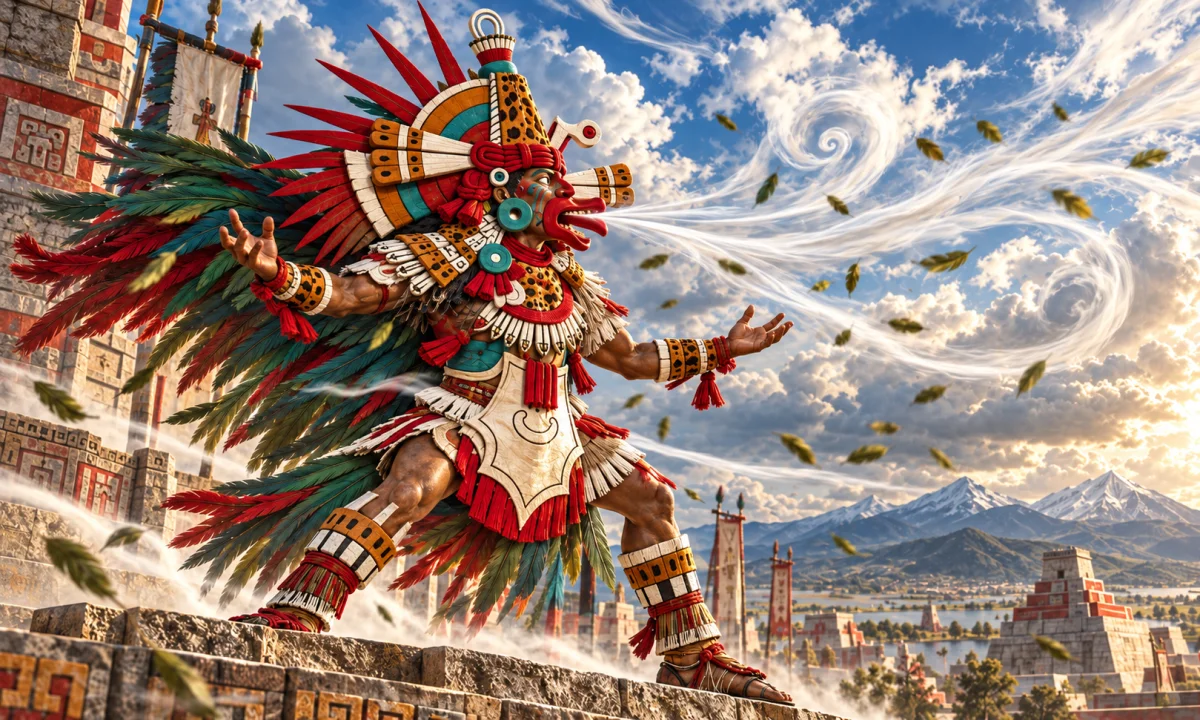
Chiconahuiehecatl
Chiconahuiehecatl is a Nahuatl name usually interpreted as “Nine Wind” or “Nine Wind-Breath.” In discussions of Aztec religion, it is most safely understood as a calendrical name, title or aspect associated with Ehecatl,…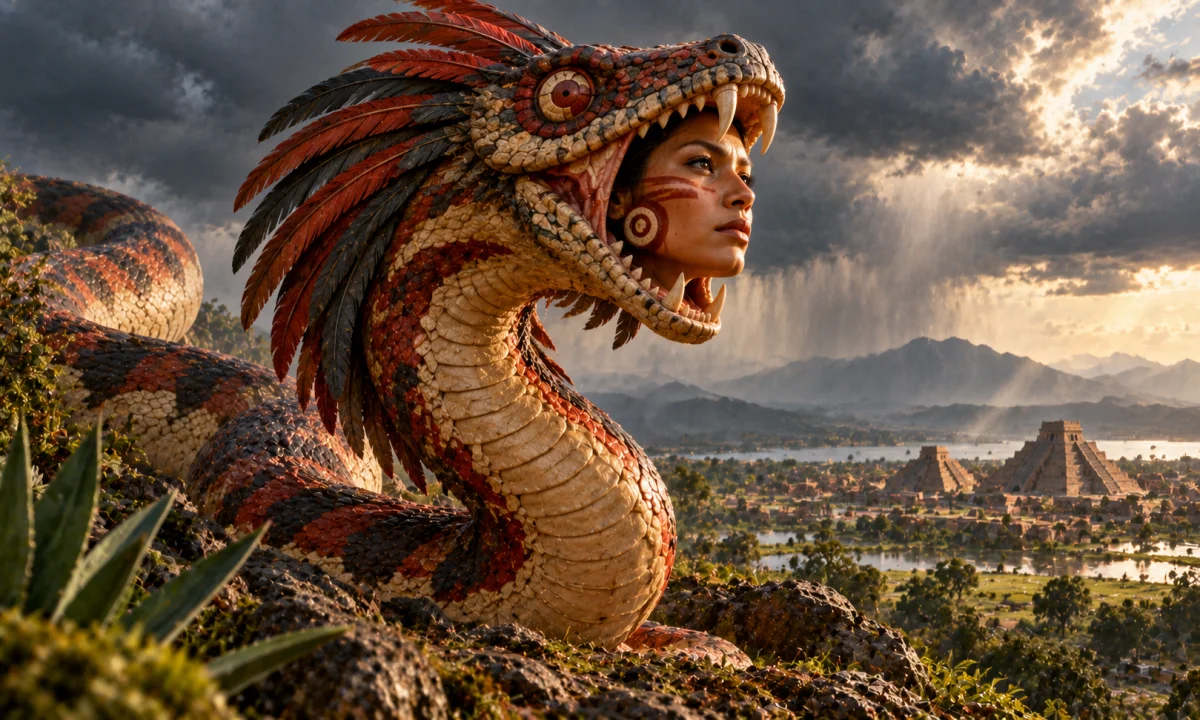
Cihuacoatl
Cihuacoatl was an important female deity and political title in the religious and governmental world of the Nahua peoples, especially the Mexica, commonly called the Aztecs. Her name is usually translated as “Serpent Wom…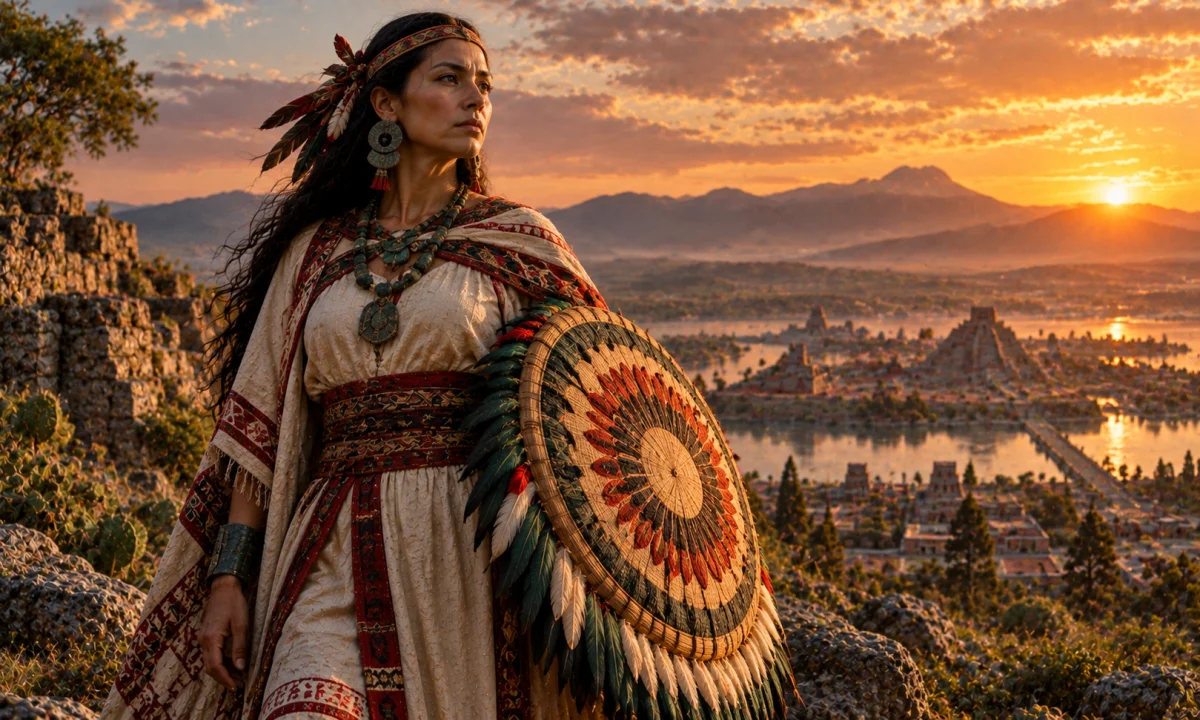
Chimalman
Chimalman, also written Chimalma, is a female figure in Nahua and Aztec-era mythological traditions, best known as the mother of Quetzalcoatl and the companion of Mixcoatl. She is important chiefly through her place in t…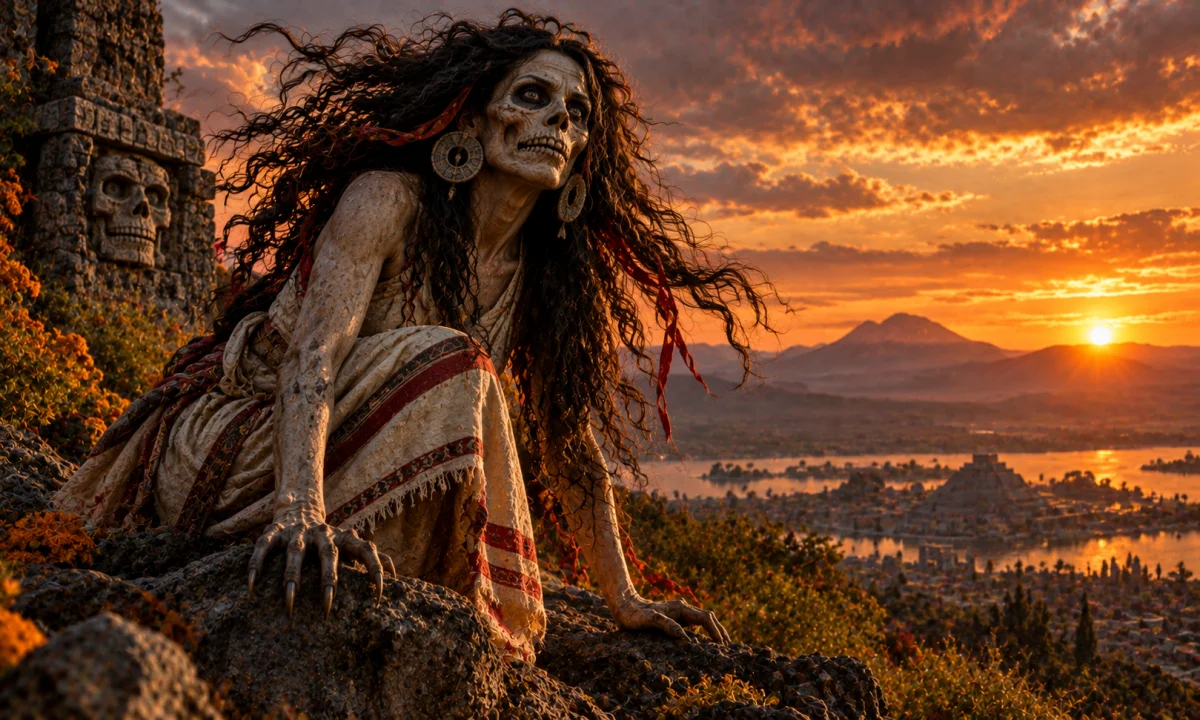
Cihuateteo
Cihuateteo are the sacred and dangerous spirits of women who died in childbirth in the religious traditions of the Nahua peoples of central Mexico, including the Mexica commonly known as the Aztecs. Their name is usually…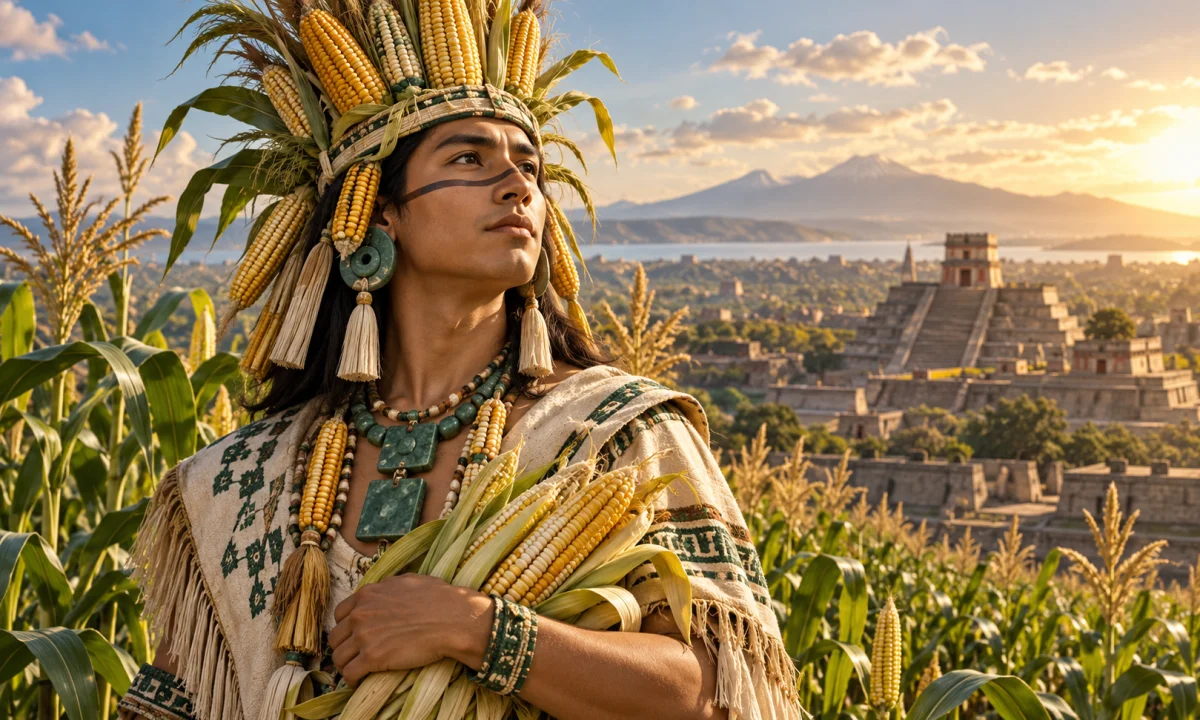
Cinteotl
Cinteotl is a Nahua maize deity associated with corn, agricultural fertility, nourishment, and the generative power of the earth. The name is often written Centeotl, Centéotl, or Cintéotl in English-language works. Cinte…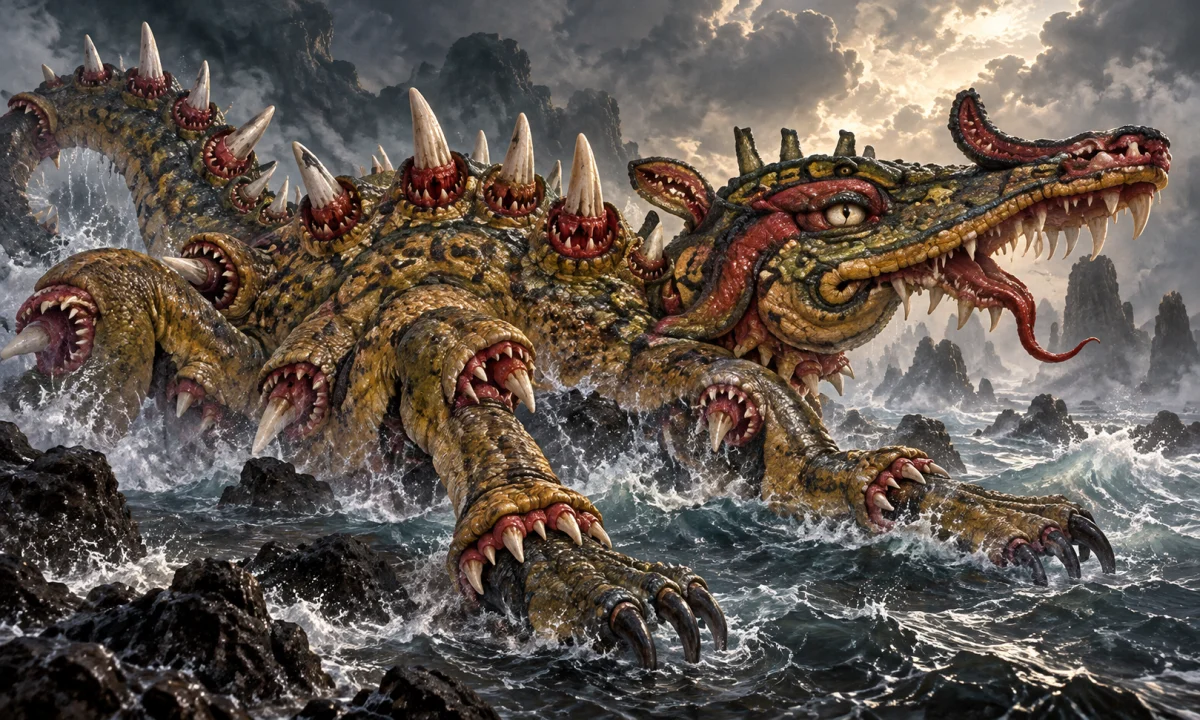
Cipactli
Cipactli is a primordial aquatic monster in Aztec and broader Nahua creation traditions. Described as a crocodile-like, fish-like, or otherwise monstrous creature that lived in the waters before the ordered world existed…Aztec mythology: myths, traditions and legends
Aztec mythology encompasses the sacred narratives, cosmology, divine beings, ritual traditions and legendary histories associated primarily with the Nahua peoples of central Mexico during the Late Postclassic period. The term Aztec is commonly used for the Mexica of Tenochtitlan and their allies, although it can also refer more broadly to Nahuatl-speaking groups connected by migration traditions, shared religious concepts and political relationships. These communities did not possess one completely uniform mythology. Cities maintained their own patron deities, local ceremonies and versions of sacred history, while the expanding Mexica state incorporated traditions inherited from earlier Mesoamerican cultures.
Knowledge of Aztec mythology comes from archaeology, sculpture, temple remains, painted manuscripts, Nahuatl-language texts and colonial accounts produced after the Spanish invasion. Much of the written evidence was recorded by Indigenous informants, scribes and artists working under colonial rule, often in collaboration with Christian missionaries. These sources preserve essential information, but they were created after severe political and religious disruption. They may reflect translation difficulties, censorship, missionary interpretation and attempts to reorganise Indigenous knowledge according to European categories.
Aztec, Mexica and Nahua terminology
The word Aztec derives from Aztlan, the legendary place from which several Nahua groups were said to have migrated. Modern historians often use Mexica more specifically for the people who established Tenochtitlan and nearby Tlatelolco. The Mexica became the dominant power within the alliance commonly called the Aztec Empire, formed with Texcoco and Tlacopan.
Not every Nahua community was Mexica, and not every people ruled by Tenochtitlan shared the same religious traditions. The empire contained many languages, local cults and political identities. Tribute and military power connected these communities without transforming them into one culturally uniform population.
Aztec mythology therefore includes material associated with Mexica state religion as well as wider central Mexican traditions preserved in Nahuatl sources. Some gods and narratives existed centuries before the rise of Tenochtitlan. The Mexica adapted this inherited religious world to their own history, political ambitions and patron deity.
Sources and surviving evidence
No single surviving text contains a complete Aztec mythology. Painted manuscripts recorded calendars, rituals, tribute, genealogy and historical events through combinations of images and signs. Some manuscripts predate the Spanish conquest, while others were produced during the colonial period using both Indigenous and European formats.
Nahuatl-language accounts preserve songs, speeches, historical narratives and descriptions of religious practice. The extensive work commonly known as the Florentine Codex was compiled under the direction of the Franciscan Bernardino de Sahagún with the indispensable participation of Nahua scholars, writers and artists. It records detailed information while also reflecting a missionary project intended partly to understand and oppose Indigenous religion.
Spanish conquistadors and clerics described temples, ceremonies and sacrifice, but their accounts were shaped by Christian hostility and the political need to justify conquest. Archaeological discoveries can confirm or challenge written descriptions, although physical remains rarely reveal the full meaning of a ceremony without textual context.
Sources also preserve differing versions of myths. Variation does not necessarily indicate error. Narratives could change according to community, ritual occasion, political purpose or historical period.
The structure of the cosmos
Aztec cosmology described an ordered but unstable universe composed of multiple celestial and underworld levels surrounding the human world. Different sources give complex arrangements of these realms, and modern diagrams can create a false impression of one fixed system accepted in exactly the same form everywhere.
The horizontal world was associated with four directions and a sacred centre. Directions could be linked with colours, gods, trees, birds and calendrical forces. The centre represented the place where different cosmic regions met, symbolically expressed through temples, mountains, caves and the axis connecting sky, earth and underworld.
The cosmos required movement and balance rather than remaining permanently secure. The sun had to travel across the sky and through the night, rain had to reach the cultivated earth, and ritual obligations had to be fulfilled. Human beings lived within networks of dependence involving gods, ancestors, natural powers and sacred time.
Aztec ideas about cosmic order should not be interpreted as a scientific model in the modern sense. They combined observation, ritual, political symbolism and religious explanation.
The Five Suns and successive worlds
Central Mexican traditions described several ages or worlds that existed before the present era. These ages are commonly called the Five Suns. Each earlier sun was associated with particular divine powers, inhabitants and a catastrophic end involving forces such as wind, fire, water or wild animals.
The present world was known as the Sun of Movement. Its name implied eventual destruction through motion or earthquake, although surviving accounts differ in detail. The sequence expressed the fragility of cosmic order and the possibility that worlds could be created, destroyed and renewed.
One influential narrative describes the gods gathering at Teotihuacan to create a new sun. The humble Nanahuatzin and the wealthy Tecuciztecatl were chosen to enter a divine fire. Nanahuatzin acted first and became the sun, while Tecuciztecatl followed and became associated with the moon. The newly created sun did not move until the other gods sacrificed themselves, establishing a model of divine and human obligation.
This story links cosmic movement with sacrifice, but it should not be treated as the only Aztec creation account. Other narratives concern the formation of humanity, the recovery of ancestral bones and the restoration of food.
Quetzalcoatl and the creation of humanity
Quetzalcoatl, the Feathered Serpent, was one of the most complex divine figures in central Mexican religion. Traditions associated him with wind, knowledge, priesthood, creation, Venus and cultural order. His identity developed over many centuries and cannot be reduced to a single function.
In one account, Quetzalcoatl descends to Mictlan, the realm of the dead, to recover the bones of previous generations. Mictlantecuhtli, ruler of the underworld, attempts to prevent him from leaving. The bones are damaged during Quetzalcoatl’s escape, helping explain differences among human bodies. The bones are then ground and mixed with divine blood to create the people of the present age.
Quetzalcoatl was also connected with Ehecatl, the wind, sometimes expressed through the combined name Ehecatl-Quetzalcoatl. As wind, he could prepare the way for rain. Circular temples associated with Ehecatl differed from the rectangular forms of many other sanctuaries.
Later sources connect the name Quetzalcoatl with the legendary ruler Topiltzin Quetzalcoatl of Tollan. The relationship between deity, priestly title, political memory and historical individual remains debated.
Huitzilopochtli and Mexica identity
Huitzilopochtli was the patron deity of the Mexica and a central figure in the religious identity of Tenochtitlan. He was associated with warfare, solar power, migration and political destiny. His importance increased with Mexica imperial expansion, although his origins and early development are not completely known.
According to migration traditions, Huitzilopochtli guided the Mexica from Aztlan toward their eventual homeland. The sign marking the place of settlement was associated with an eagle upon a cactus, an image later represented in Mexican national symbolism. Surviving versions differ, and the familiar modern image should not be projected unchanged onto every early account.
At Coatepec, Huitzilopochtli was born fully armed from his mother Coatlicue after she became miraculously pregnant. Her daughter Coyolxauhqui and her other children prepared to kill her, but Huitzilopochtli defeated and dismembered Coyolxauhqui. The narrative was represented ritually and architecturally at the Templo Mayor, where a monumental image of the defeated goddess lay near the base of Huitzilopochtli’s side of the temple.
The story has often been interpreted through solar symbolism, with Huitzilopochtli representing the sun overcoming the moon and stars. That interpretation is influential, but the narrative also concerned war, sacred geography and Mexica political identity.
Tlaloc, rain and agricultural fertility
Tlaloc was a major deity associated with rain, storms, mountains, water and agricultural fertility. His cult long predated the Mexica and appears in different forms throughout central Mexico. At the Templo Mayor, his shrine stood beside that of Huitzilopochtli, expressing the importance of both warfare and agricultural sustenance to the state.
Tlaloc was connected with mountain places believed to contain water and agricultural abundance. Rain, lightning and hail could support crops or destroy them, giving his power both beneficial and dangerous aspects. Ceremonies sought favourable rainfall and protection from destructive weather.
Small beings commonly called tlaloque were associated with Tlaloc, mountains and different forms of rain. Accounts describe them breaking vessels to release rain and thunder, although details vary among sources.
Tlalocan, a fertile and verdant destination associated with Tlaloc, received certain people whose deaths were connected with water, lightning or particular illnesses. It was not simply an Aztec heaven available as a moral reward to all virtuous people.
Tezcatlipoca and divine rivalry
Tezcatlipoca, whose name is commonly translated as Smoking Mirror, was associated with rulership, conflict, fate, night, sorcery, transformation and unpredictable power. He could protect rulers while also exposing their weakness and bringing about their fall.
Tezcatlipoca appears in several narratives as a rival or counterpart to Quetzalcoatl. Stories concerning the downfall of Tollan describe deception, intoxication and the collapse of sacred or political order. These accounts survive in different versions and may reflect later attempts to explain historical change through mythological conflict.
He could appear in multiple forms and under several titles. His associations with the jaguar, obsidian mirrors and nocturnal power reflect only part of his religious significance. Presenting him as a simple god of darkness or evil imposes a moral opposition not supported by the complexity of the sources.
Other major deities
The Aztec religious world contained many divine figures whose identities overlapped and changed according to ritual context. Coatlicue was associated with earth, fertility, death and motherhood. Her famous monumental statue combines serpents, claws, skulls and other imagery expressing the dangerous and generative powers of the earth.
Xipe Totec was connected with agricultural renewal, warfare and transformation. Ritual impersonators wore the skins of sacrificed victims, an act often interpreted in relation to vegetation and renewal. The symbolism should not be reduced to a single agricultural explanation because the ceremonies also involved political and military meanings.
Chalchiuhtlicue was associated with terrestrial waters, rivers, lakes and childbirth. Xochiquetzal was connected with beauty, sexuality, flowers, weaving and elite craftsmanship. Mictlantecuhtli and Mictecacihuatl ruled over Mictlan and belonged to complex traditions concerning death and burial.
Many gods had multiple names or manifestations, and some could be joined through paired or overlapping identities. This fluidity does not mean that all deities were interchangeable.
Sacred time and the calendars
Aztec religious life depended on interlocking calendrical systems. The tonalpohualli was a 260-day ritual calendar formed from combinations of twenty day signs and thirteen numbers. Each combination carried particular associations used in divination, naming and the interpretation of destiny.
The xiuhpohualli was a solar cycle of 365 days divided into eighteen periods of twenty days, followed by five additional days. Major ceremonies were organised through this cycle and linked with agriculture, warfare, rain, divine impersonation and political authority.
Together, the two calendars created a larger repeating period of fifty-two years. The completion of this cycle was marked by the New Fire ceremony, which renewed the ritual order and addressed fears concerning the continuation of the cosmos.
Calendrical meanings were not simply superstitious predictions attached to dates. They formed part of a specialised intellectual and religious system through which human activities were coordinated with sacred forces.
Sacrifice and reciprocity
Offerings formed a central part of Aztec religious practice. They included food, flowers, incense, precious objects, animals, human blood and human lives. Sacrifice was understood through relationships of obligation, nourishment, political power and communication with the gods.
Bloodletting allowed priests, rulers and other participants to offer part of themselves. Human sacrifice occurred during major ceremonies and could involve war captives, enslaved people or selected ritual participants. The meanings differed according to the deity, festival and status of the victim.
Sacrifice has often dominated popular representations of Aztec religion. Spanish sources sometimes emphasised its violence while overlooking the violence of conquest and colonial rule. However, archaeological and Indigenous evidence confirms that human sacrifice was real and religiously significant. Accurate interpretation requires neither sensational exaggeration nor denial.
Some victims became ixiptla, ritual embodiments or representatives of divine beings. Their role was more complex than that of an ordinary offering because they temporarily manifested a sacred presence within the ceremony.
War, captives and imperial religion
Warfare was closely connected with Mexica politics and religion. Military success provided tribute, territory, prestige and captives for ceremonial sacrifice. Warriors gained social status through achievement, and religious narratives helped present expansion as part of a sacred historical mission.
The so-called Flowery Wars involved organised conflict among rival states, but their purposes remain debated. Capturing warriors for sacrifice was important, yet political training, alliance management and territorial strategy may also have played roles.
Imperial religion incorporated the gods and sacred places of subject peoples while elevating the importance of Tenochtitlan and Huitzilopochtli. This process did not erase local cults. Communities continued to maintain their own religious identities, sometimes under conditions of tribute and political coercion.
Death and the destinations of the dead
Aztec beliefs about the afterlife were influenced strongly by the manner of death rather than by one universal moral judgment. Warriors killed in battle, sacrificial victims, people connected with Tlaloc and those who died in other circumstances could follow different posthumous paths.
Most ordinary dead were believed in many accounts to travel toward Mictlan. The journey involved difficult stages and eventually led to the realm ruled by Mictlantecuhtli and Mictecacihuatl. Mictlan should not be equated directly with Christian hell because it was not primarily a place of eternal punishment for sinners.
Women who died in childbirth could receive a status compared symbolically with warriors who died in battle. Their spirits were associated with powerful and potentially dangerous beings. Such beliefs reflected both honour and anxiety surrounding death during childbirth.
Funerary rites and offerings assisted the deceased and maintained relationships between the dead, family and community.
Spanish conquest and religious transformation
The Spanish invasion destroyed the political institutions that supported Mexica state religion. Temples were demolished, sacred objects were removed, ceremonies were prohibited and Christian churches were constructed within former ceremonial spaces.
Missionaries attempted to eliminate Indigenous worship while learning Nahuatl and documenting religious traditions. This produced a contradictory legacy: many sources survive because missionaries recorded them, yet the same colonial system suppressed the practices they described.
Nahua communities adopted Christianity under conditions of political domination while preserving languages, local memories and selected ceremonial patterns. Saints, festivals and Christian sacred images acquired local meanings, but colonial religion should not be described simply as Aztec mythology disguised beneath Christian names.
Contemporary Nahua communities are not unchanged representatives of the Mexica Empire. Their religious and cultural traditions have developed through five centuries of colonial and national history.
Modern misconceptions and popular culture
Aztec mythology is often reduced to human sacrifice, predictions of apocalypse and a small group of warrior gods. This ignores its sophisticated calendrical knowledge, sacred poetry, agricultural ceremonies, philosophical reflection and regional diversity.
Another misconception claims that the Mexica believed the Spanish conquistador Hernán Cortés was Quetzalcoatl. The evidence for a widespread identification is weak and shaped heavily by colonial narratives written after the conquest. Indigenous political responses to the Spanish were more complex than simple religious confusion.
Modern entertainment frequently combines Aztec, Maya and other Mesoamerican traditions into one fictional pantheon. These cultures interacted historically, but their languages, cities, sources and divine traditions were not identical.
Aztec mythology remains important because it preserves a complex vision of a living but unstable cosmos sustained through time, ritual, agriculture, warfare and reciprocal obligation. Its gods and narratives belonged to particular communities and political institutions, and they are best understood through the Nahuatl sources, archaeological evidence and historical circumstances that gave them meaning.